Month: October 2026 Page 1 of 2

Week 2: Arrival in Bermuda and Mooring Recovery

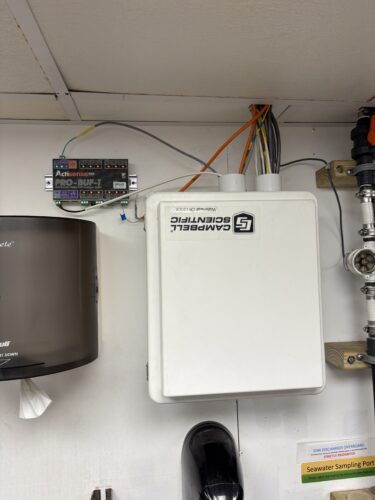
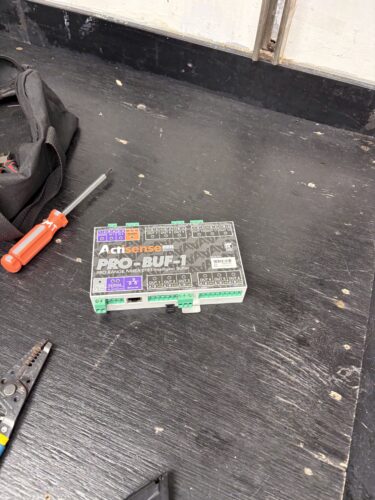
Week two has brought more time on deck and some more opportunities to get involved on board. I’ve started helping more with CTD rosette deployments and recoveries, along with a few other projects around the ship. One of those was installing an NMEA buffer/expander in one of the data loggers at the request of the next science team. This gives them access to a stream of data logged from instruments that are continuously sampling from the ship’s underway seawater system, which they could log separately or feed into other applications.
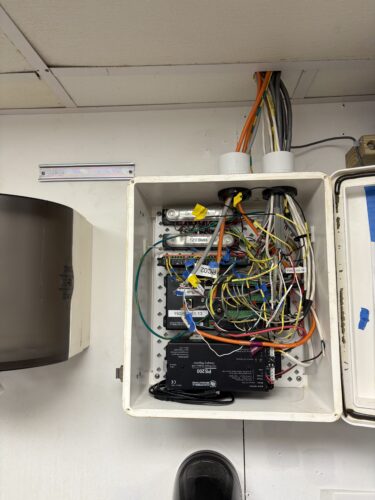
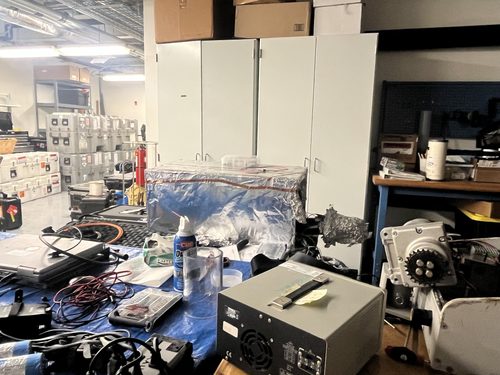
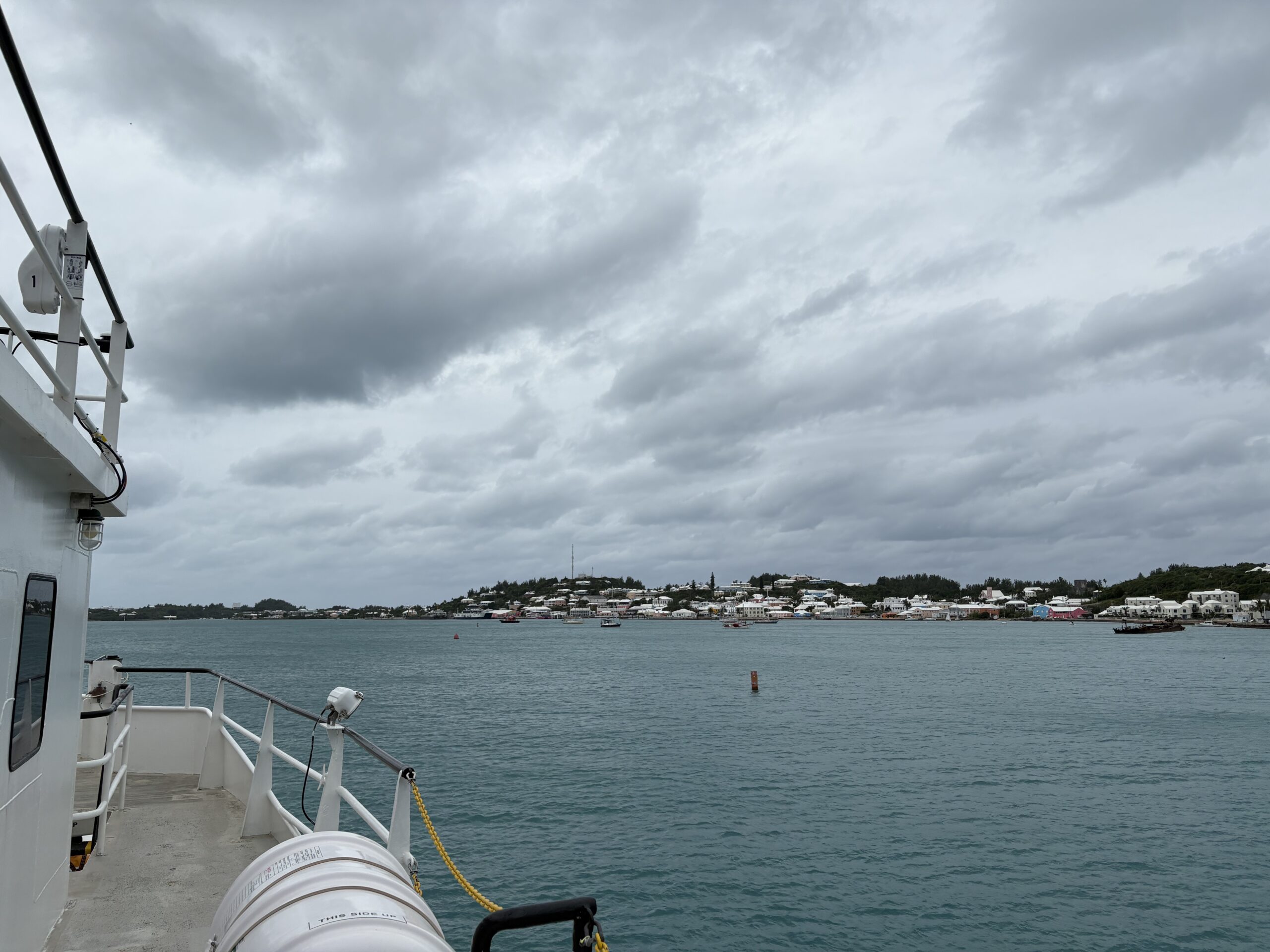
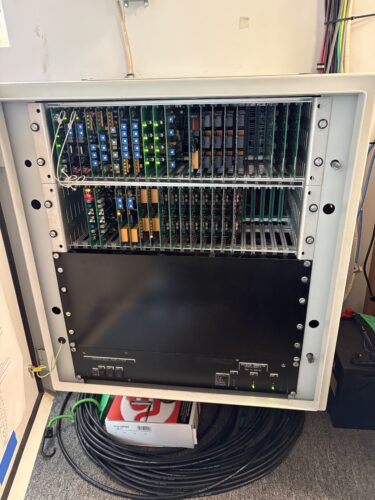
On Saturday, we arrived in Bermuda after our transit cruise from Barbados! With the stations completed, it was time to wrap up the BATS validation (BVAL) transit cruise, unload its gear, and prepare for the next trip with the Oceanic Flux Program (OFP). While we were in port, Vlad, one of the other technicians, came aboard. I spent some time with him taking some measurements for the new PA system the techs are planning to install. 
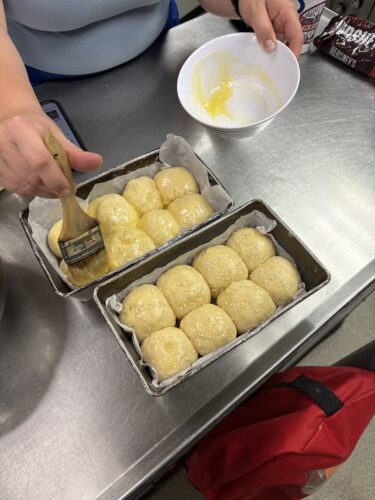
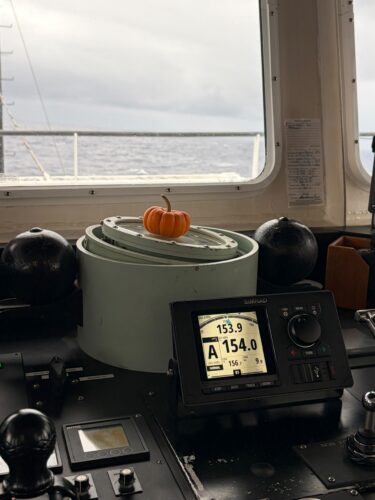
There was also time for a quick trip into town. Molly (2nd mate) and I took out the Zodiac to pick up snacks and a few festive decorations for Halloween, and we managed to fit in some late-night baking, too. 
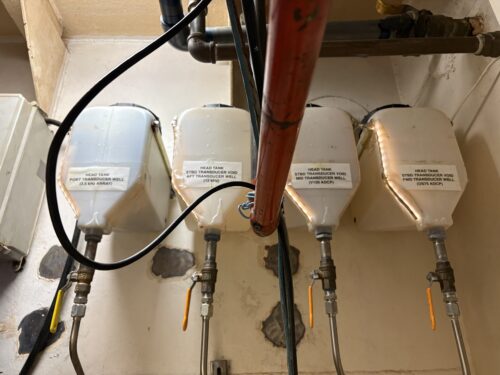
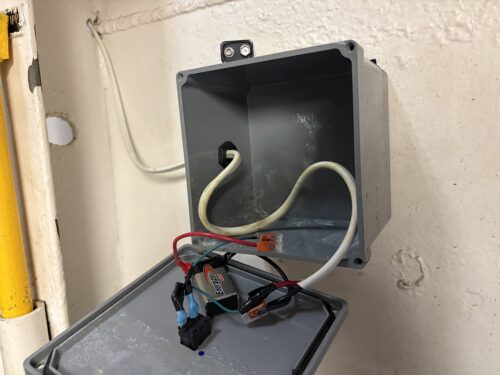
While in port, I spent some time with Emily working on some pre-cruise checks and preparations. One of these involves checking the water levels in the head tanks for the acoustic systems. The tanks serve as a quick visual check that the transducers are fully submerged. This is important for the acoustic signal to travel properly down through the water below. A light strip mounted beside the tanks makes the level easier to see, but this time it wasn’t working. Luckily, the fix was just a battery swap. Not everything is complicated! 😉
Heading out with the OFP

On October 27, we left Bermuda and headed toward one of the BATS sites to begin the Oceanic Flux Program (OFP) cruise. We also have some BATS folks aboard for CTD water sampling, and we arrived at the site earlier than expected.

The OFP team, based at the Marine Biological Laboratory (MBL), studies the particles that sink from the surface ocean into the deep sea. Alongside the mooring work, the OFP group uses GO-FLO bottles to collect “clean” water samples. They serve a similar purpose to the Niskin bottles on the CTD rosette, but for this operation, they were attached directly to the winch’s hydro wire and deployed over the stern. We had three bottles on the line, attached and lowered one at a time. Once they reached sampling depth, a messenger was sent down the wire to trigger the bottles to close.
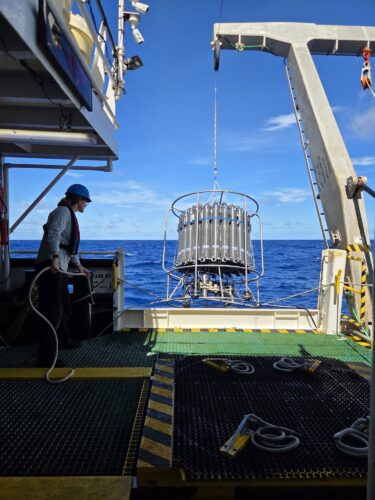
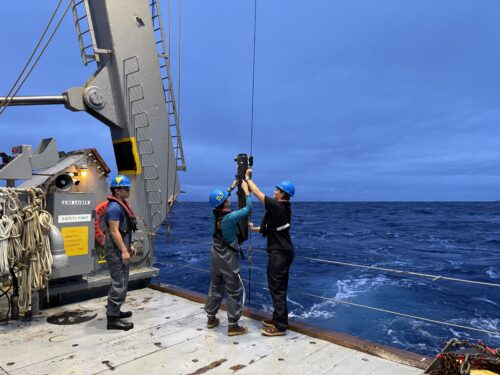


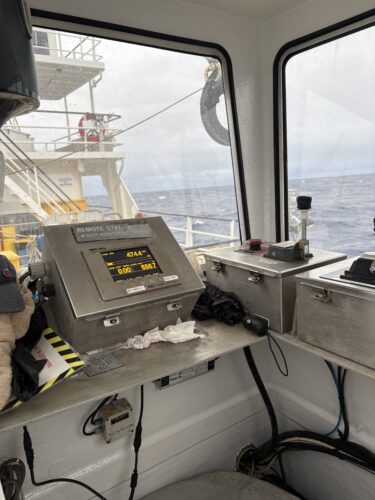
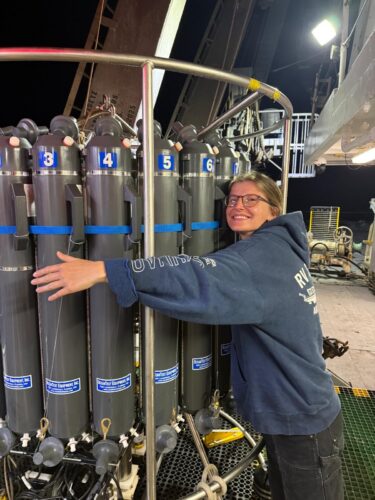
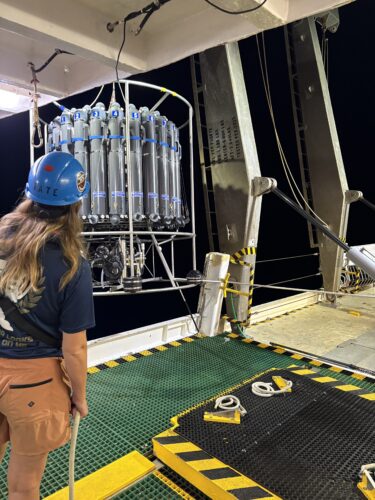
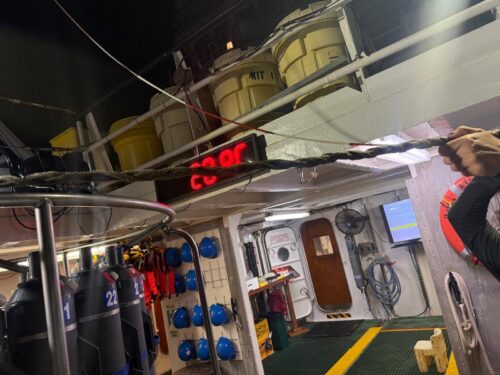
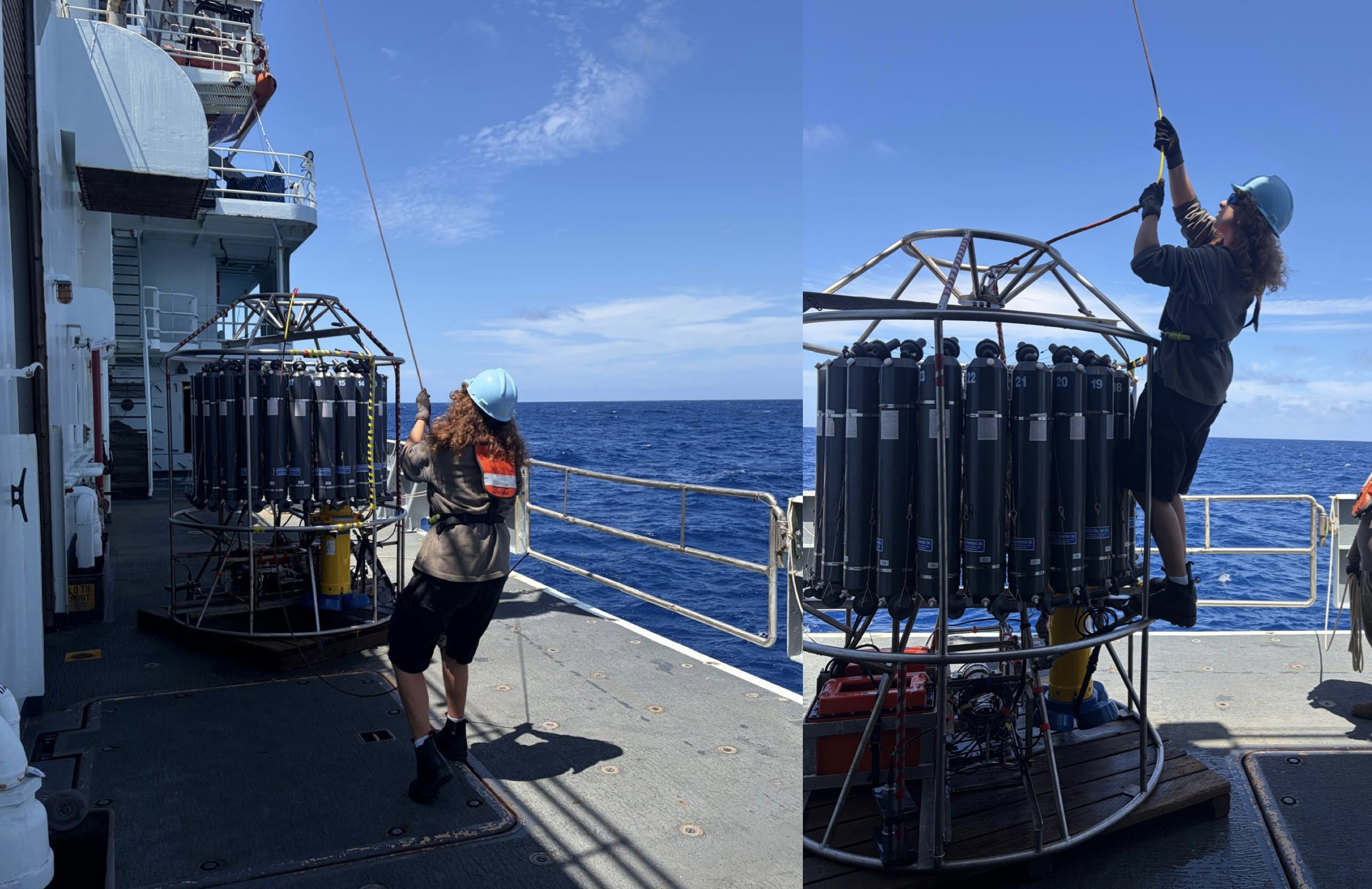
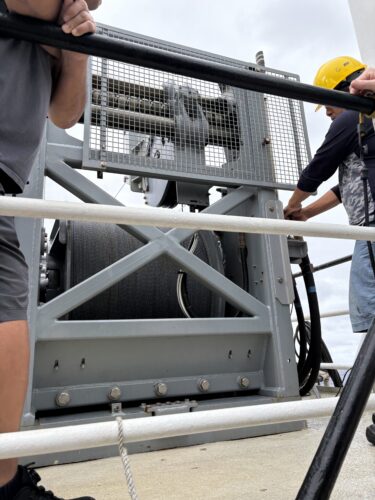
Recovering the bottles meant hauling in about 3,000 meters of wire, so I also got a chance to learn more about the OS42 winch. It was having some issues with “bad wraps” where the wire doesn’t lay nicely on the drum and can cross over itself, which can damage the wire over time. We did some manual adjustments to the “level wind”, and kept a close eye on it for the rest of the operation. Afterward, we did a CTD cast at the BATS site. The weather had picked up, so we used three tag lines instead of the usual two to help control the rosette during deployment and recovery. 
The main event

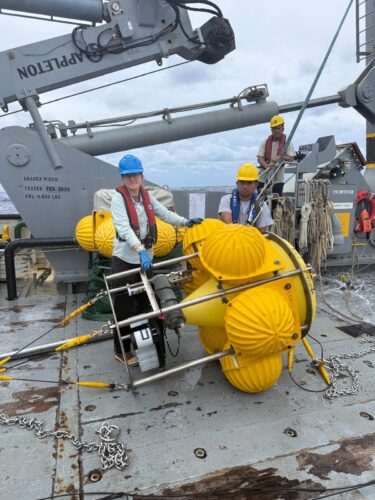
The star of the show for this cruise is the recovery and redeployment of the OFP mooring, and recovery day kept everyone busy. We started around 6:30 a.m. by trying to “interrogate” or communicate with the acoustic releases near the bottom of the mooring. Our initial attempts were unsuccessful, so we sent the release commands and waited for the mooring to detach from its seafloor anchor and rise to the surface. The upper part of the mooring normally sits around 300 meters below the surface. The first floats usually appear after about five minutes, with roughly 45 minutes needed for the rest of the mooring to surface.
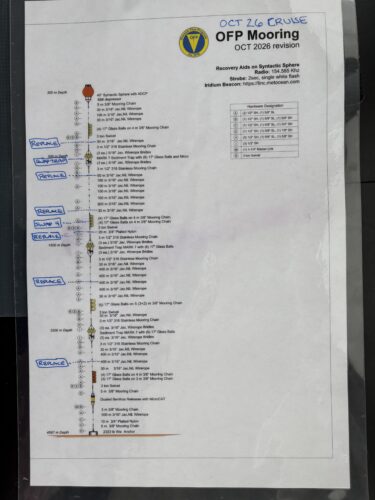
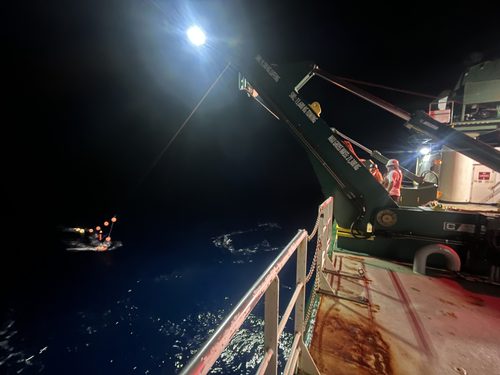
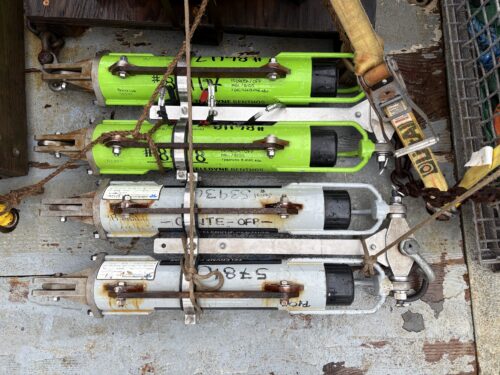
By about 8 a.m., the ship had pulled alongside the lower end of the surfaced mooring, and the crew threw a grapple to catch the line. The floating section was then brought around to the stern, where we began bringing everything aboard. The acoustic releases came up first. Working from the bottom end of the mooring toward the top, we removed floats and sediment traps as they reached the deck, winding the wire sections onto spools for redeployment. We work from the bottom to the top, to set up everything nicely for redeployment. 
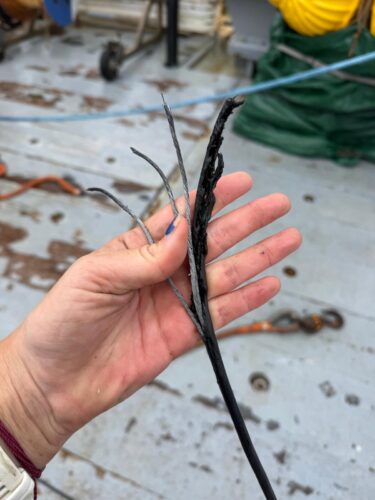
Pretty early on, the marine techs and crew spotted signs that we were going to have some tangles. Several sections were floating much closer together than they should have been, and those suspicions proved correct once we started hauling them in. Alongside the planned wire replacements, we had to manually spool several 400-meter lengths and a number of shorter sections on and off as we worked through the tangles and damaged wire. Definitely an arm-workout, folks on deck rotated through shifts to share the load! 
It was stressful and complicated at times, but also interesting. I got to see the Yale grip I mentioned last time put to use during load and tension transfers between the deck lines and winches. It helped us hold the load of the mooring sections that were still floating, while adding or removing sections of wire and disconnecting floats and sediment traps. There are a lot of moving pieces. Between the tangles and a few other gremlins, our estimated seven-to-nine-hour recovery turned into about eleven hours. Eventually everthing was brought back on deck successfully, and then the OFP group started getting everything set up for the re-deployment later this week. 
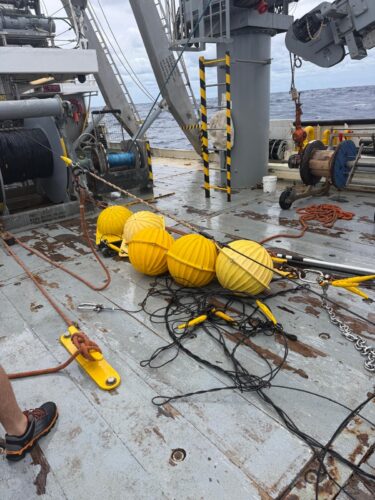
Getting ready to send it all back down

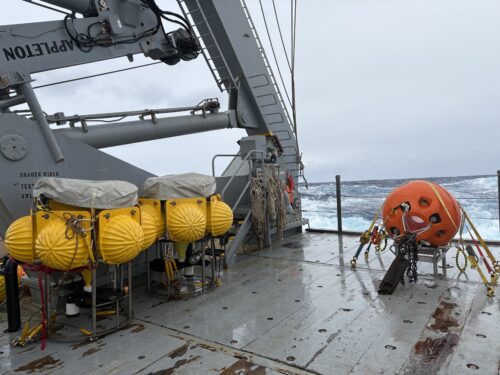
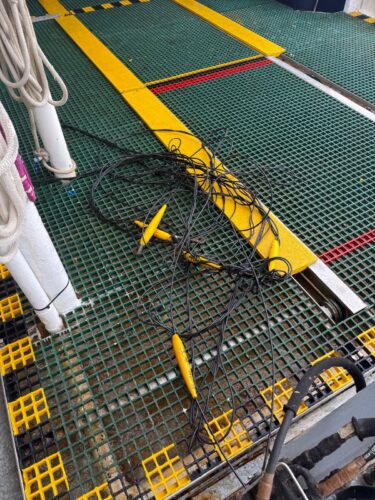
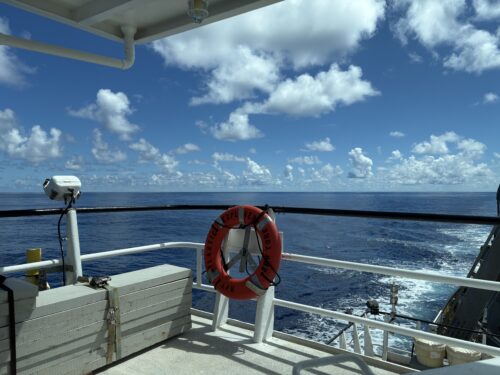
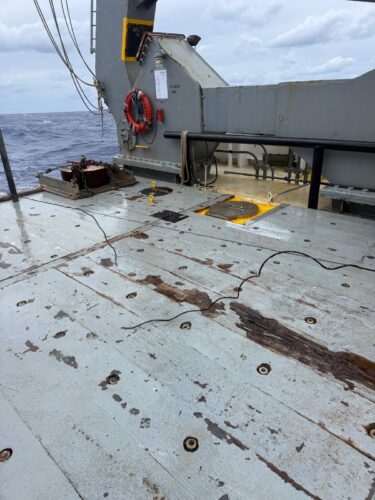
Today, the sea state has picked up a bit more. Waves are coming up onto the deck, and we’re all dumping water out of our boots. This morning, we tested the next set of acoustic releases for the mooring by lowering them over the stern (back of the ship) to 3,800 meters. We then deployed the Straza tower setup so the OFP team could try to “talk” to the releases in preparation for the mooring redeployment later this week. Better weather = better safety = better science 🙂
Drake Goes to Hawai’i: Week 4

Hello all!

This week, cruise prep continued for HOT368.

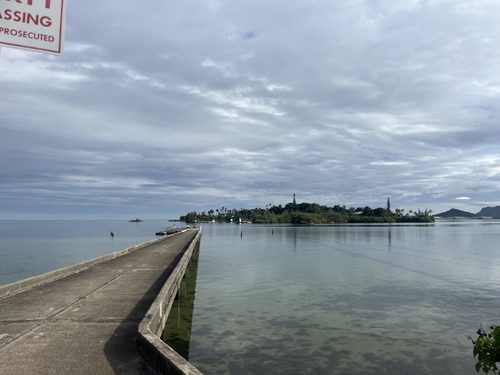
Tuesday morning, we were able to break away for a tour of the Hawai’i Institute of Marine Biology (HIMB) on Moku o Lo’e Island. A huge thank you to HIMB’s Vivian Chan for the excellent tour.

Moku o Lo’e Island (aka “Coconut Island”) is only accessible by small boat, and we were lucky to not have our visit get rained out despite some ominous weather.

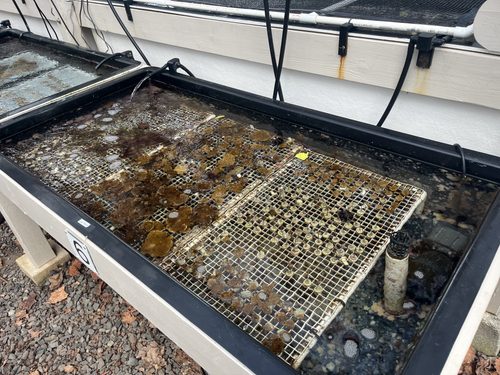
HIMB’s Coral Resilience Lab has a whole section of tables setup with various conditions to rear corals that can tolerate a variety of temperatures, radiances, acidities, and salinities. Above shows one table with the center full of medium-aged corals (~5 years old) that are brown due to their healthy algal symbionts. On the right of the table are coral “plugs” where individual polyps are seeded onto coin-sized metal plugs.

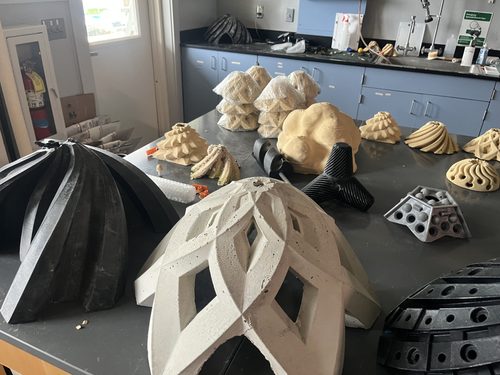
The tour also included stepping inside Dr. Joshua Madin’s Geometric Ecology Lab, who test coral colonization and survivorship on mounds of various shapes. Smaller prototypes are created using 3D-printed ceramics kiln-fired and tested to see which corals like best. The most successful shapes are scaled up to mold-cast concrete structures for further testing with the hopes of incorporating these designs into future marine construction (such as breakwaters).

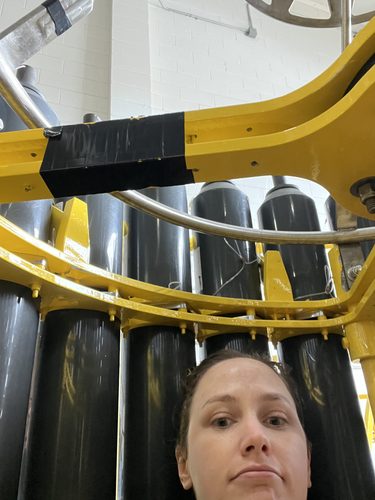
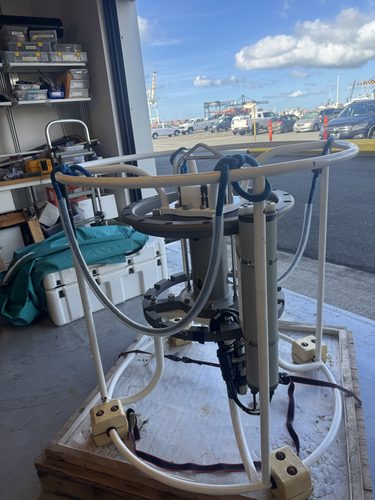
This week I got all up in the CTD Rosette to take apart and check the condition of the Sea-Bird SBE 32 Carousel Water Sampler.

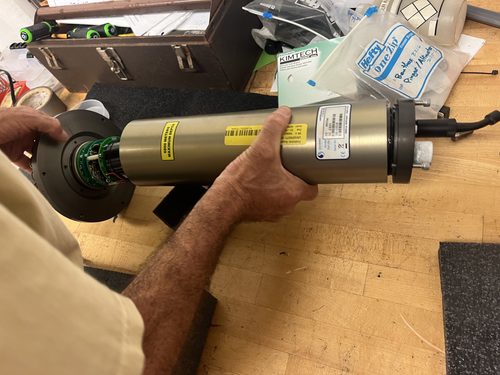
Dan Fitzgerald helped take apart the carousel water sampler so we can check all the o-rings and regrease the seals with critical anti-seize material. This instrument allows autonomous bottle firing at specific depths as controlled at the surface onboard the R/V Kilo Moana. In Dan’s left hand is a plate with ceramic solenoids which generate small electromagnetic fields to fire mechanical switches attached to each Niskin (not pictured). On the other end is an RS232 cable port to connect to the Sea-Bird CTD unit.

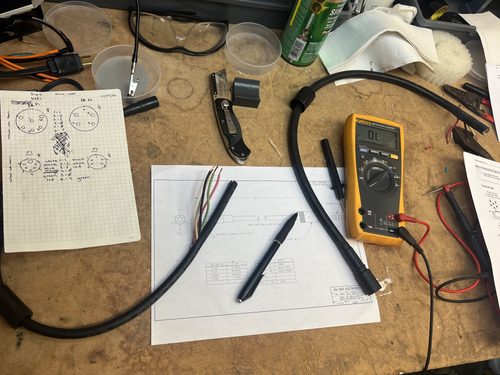
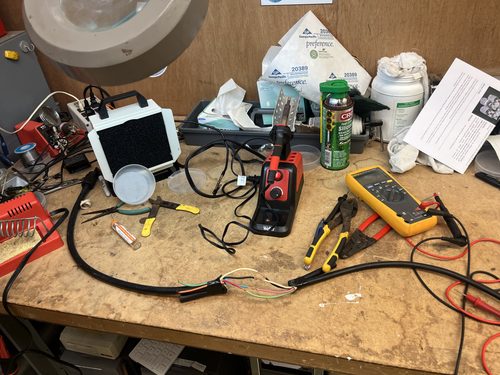
Later in the week, we practiced our RS232 serial cable splicing to create custom cables for PAR to CTD Aux (Cable 1) and BENTHOS altimeter to CTD Aux (Cable 2, not pictured). After pulling up the proper schematic and testing/mapping all pin connections using the multimeter, we guaranteed we had all the necessary components for this AG-206 to MCIL-4F cable.

With wires for Cable 1 connected using the Western Union splice, we then soldered the connections and waterproofed the whole connection using Scotchfil insulation putty and electrical tape. We’ll test our new cables tomorrow once we get the CTD Rosette setup on deck.

Tomorrow, we’ll load all our gear for HOT368 onto the R/V Kilo Moana, and head out early morning Sunday. The weather forecast is looking a little iffy, so please, everyone, keep all your fingers crossed for us.

Week 5 – Port Call, Pis, and Cups – Jessica Leonard

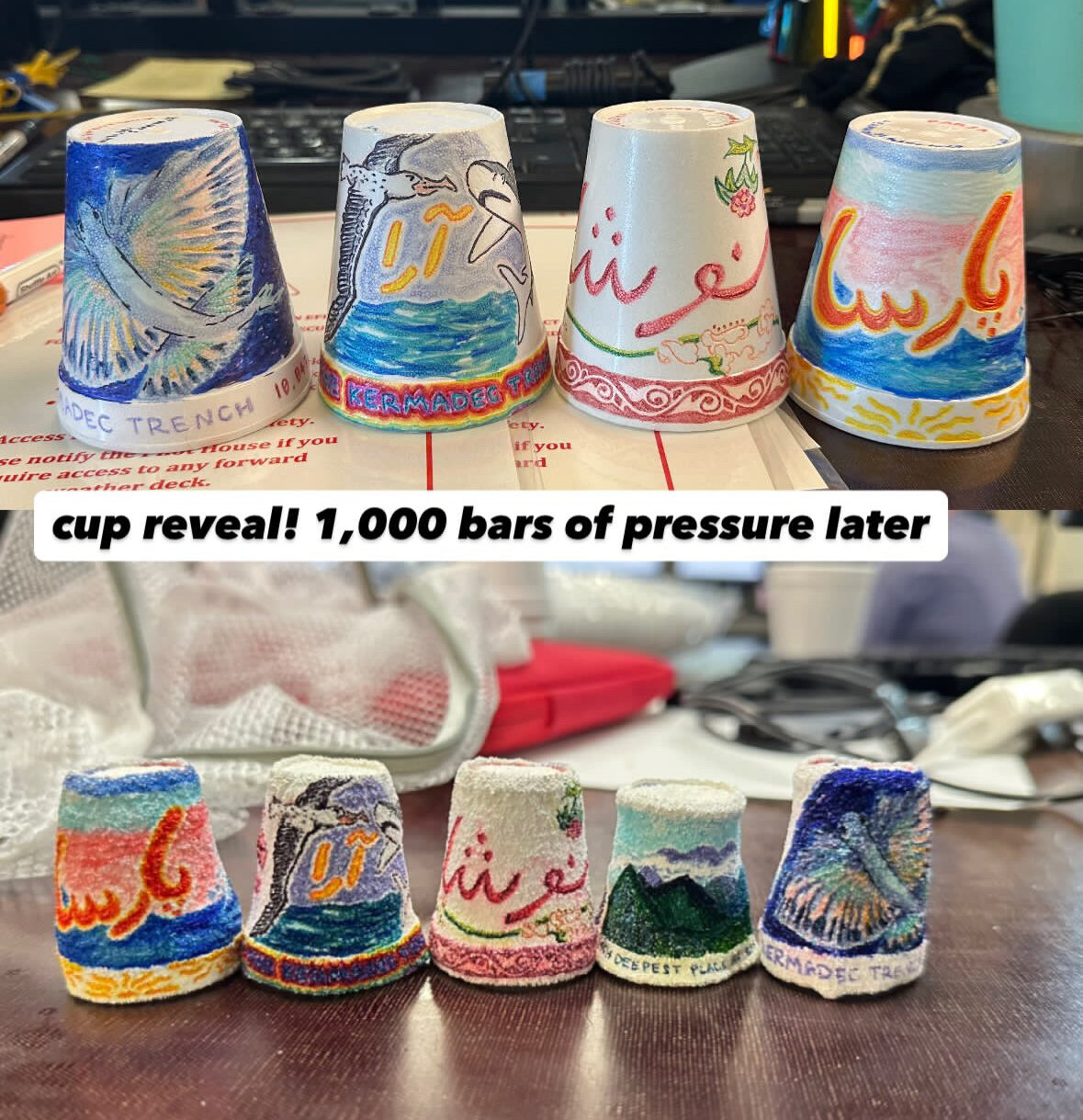
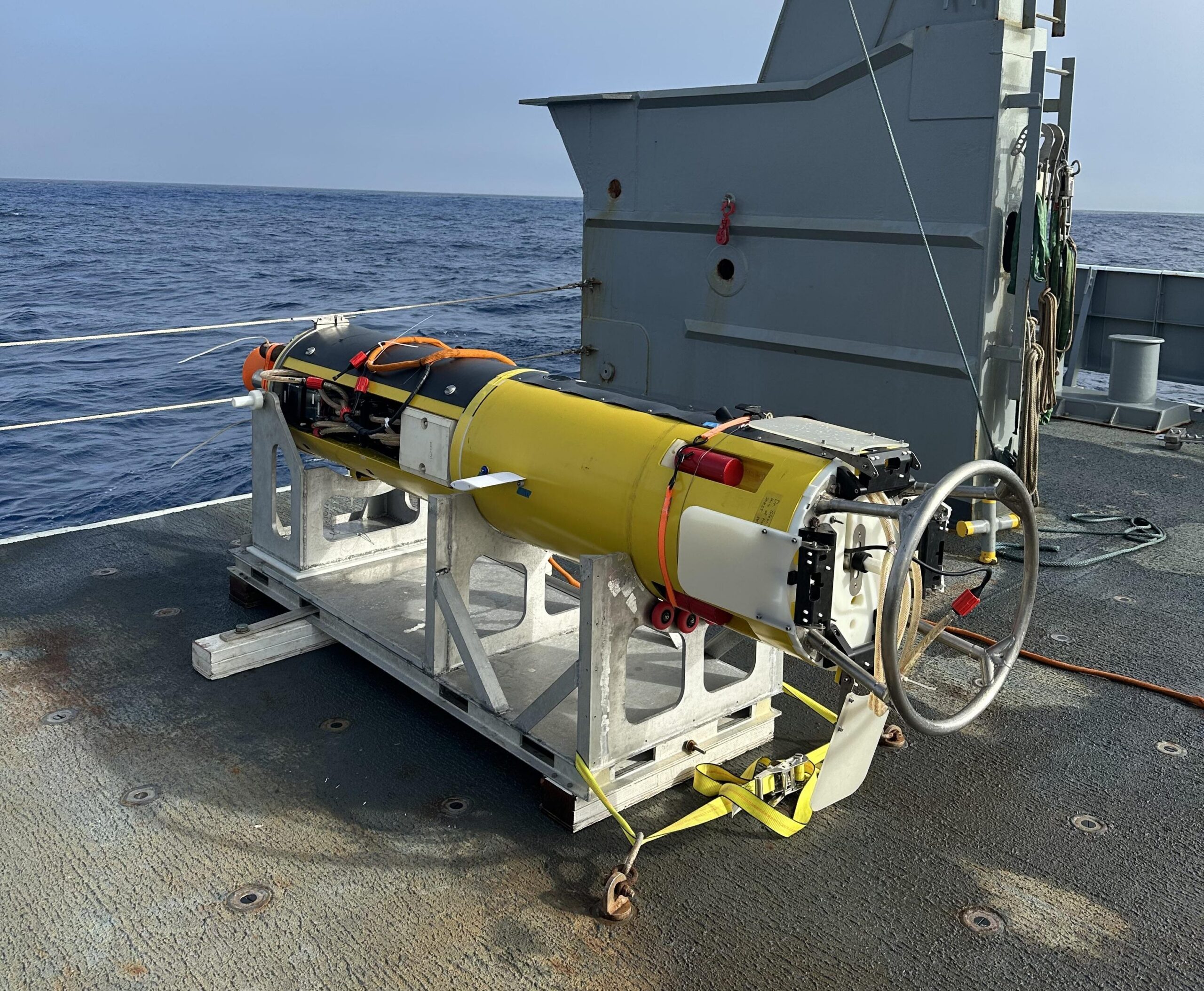
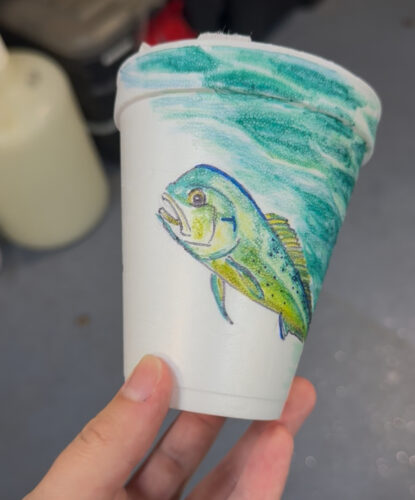
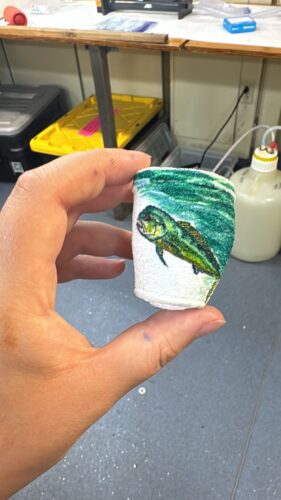
Before heading into Auckland for a short port call, the DAP (Deep Autonomous Profiler) succeeded in multiple deployments surpassing 10,000m in depth. On one of these deployments, we filled a bag full of styrofoam cups, a common practice by sea going marine scientists. Under pressure, these cups shrink, and now I can say I’ve sent cups past 10,000m which is a feat I’m not sure I’ll achieve again as there are only about 3 deeper places in the world.

We transited into Auckland to pickup a crucial piece of instrumentation that was delayed in shipping. UH’s HWCP (Hadal Water Column Profiler) will make observations in Tandem with the DAP within the Hadal Zone (>6,000m). We got some first looks of it in action once we got back out to the trench. Due to the nature of the instrument, deployment and recovery must be done slowly. There are shear probes on the bottom which can break just from touch and there are very few areas to grab onto as the profiler needs a slick surface to descend and ascend in the water column the way the scientists intend for it to.

University of Hawaii’s HWCP (Hadal Water Column Profiler)

While we were docked in Auckland, I was able to go into town and experience society and nature again. It was the perfect amount of time to take a break from staring at the ocean for a month straight.

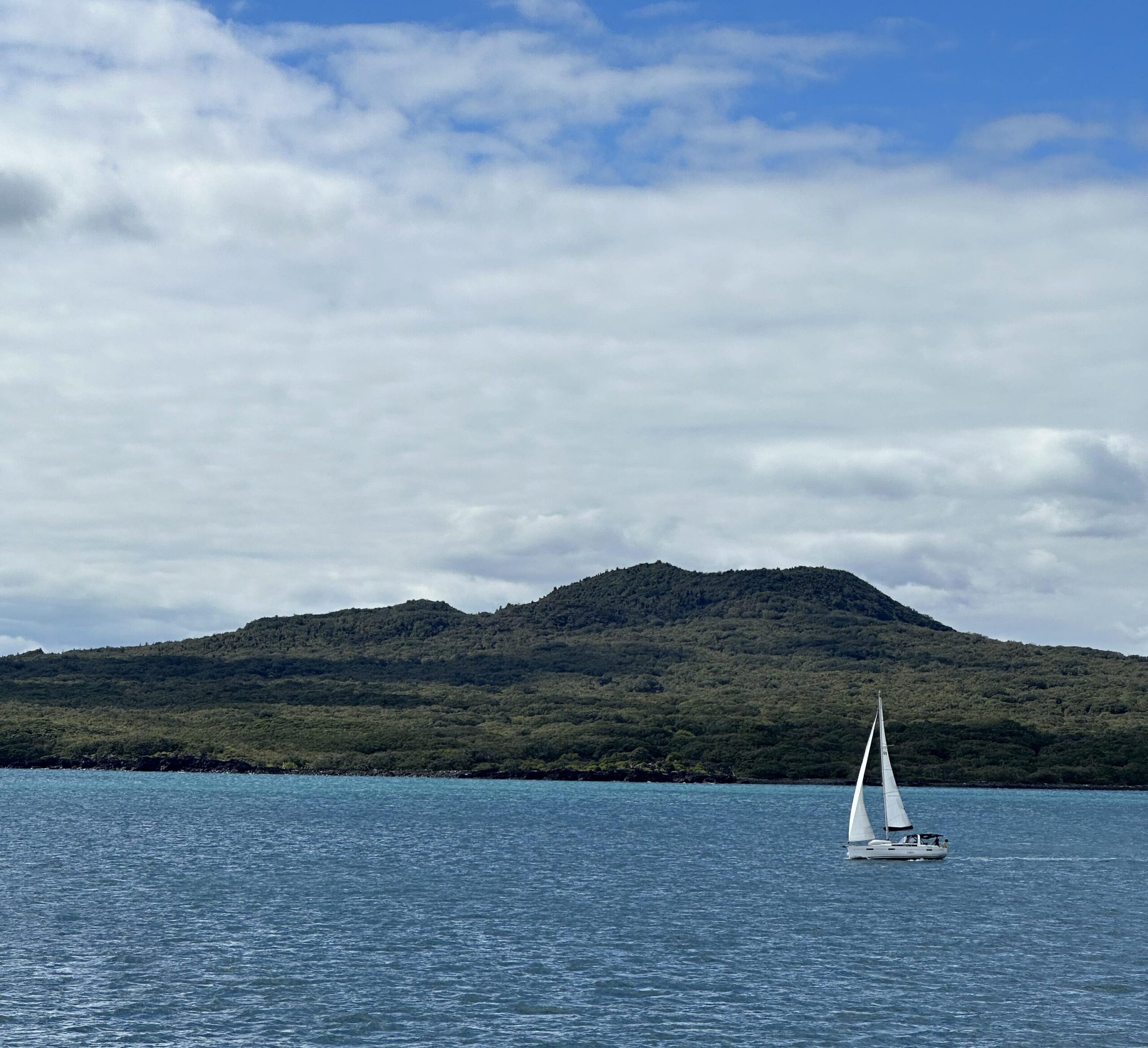
Rangitoto Island, NZ

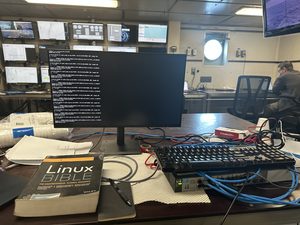
In less picturesque news, Andy has tasked me with learning basic networking using a Raspberry Pi and a network switch. I have been learning how to connect to other devices and send information via a network switch from a Linux-based computer (the Pi) to my Unix-based Mac both connected to the switch with ethernet cables. After learning how to communicate information between the two, I learned how to build and host a local web server that I could connect to from any other device on the switch. These local web servers are used for just about everything on the ship’s network except they can be accessed over the network. I also learned how to receive UDP packets and write cron jobs to parse the information automatically into a usable file. These IT skills are necessary at sea as some ships don’t have a designated IT/ET position and it is the responsibility of the SSSGs to update and troubleshoot systems when necessary, often on Linux-based machines. Lucky for us, there are plenty of Linux books and guides for us to reference as well as hand written documentation on our systems.

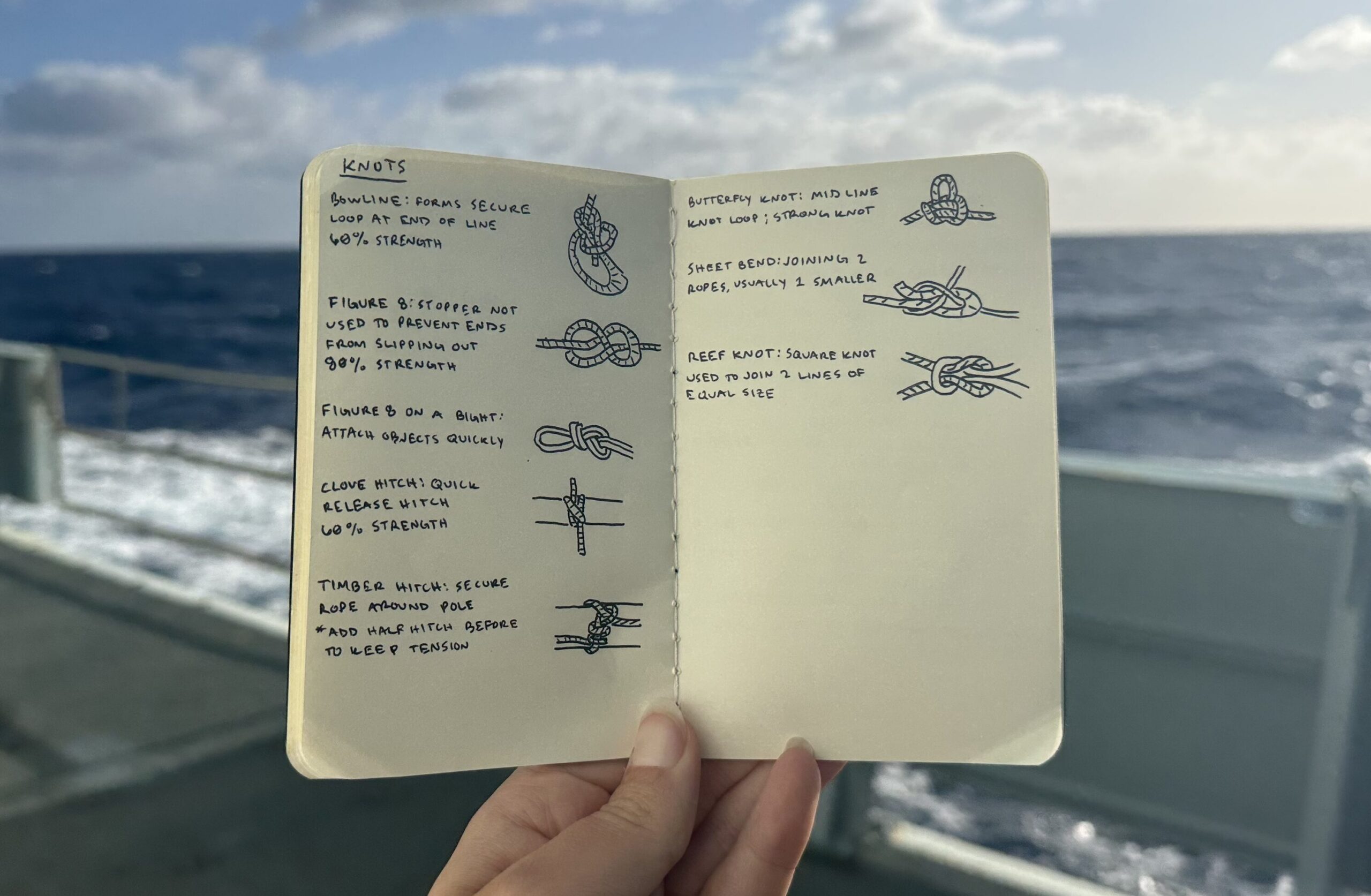
For this second leg we are short an AB meaning the SSSGs are stepping up to complete some deck tasks. Because of this, I have been brushing up on my knots and learning new ones that I can use on the fly during operations. It is important to be able to adjust and step into different roles at any moment on the deck as there are always moving parts and unexpected interruptions.

Common ship knots: Bowline, Figure 8, Figure 8 on a Bight, Clove Hitch, Timber Hitch, Butterfly Knot, Sheet Bend, Reef (Square) Knot

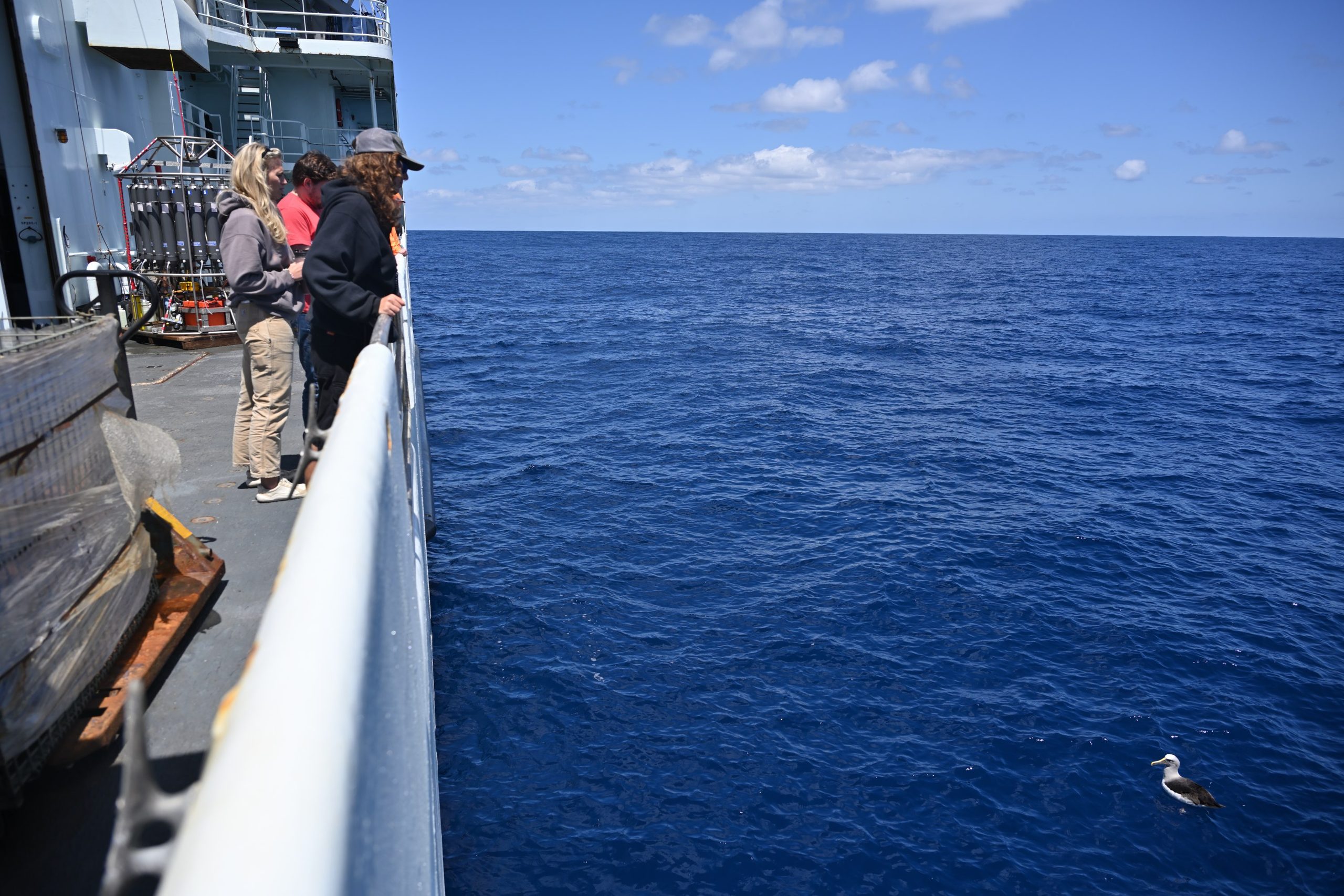
And for this week’s bird photo, we had a Buller’s Albatross camp out off the side of the ship for hours.

Buller’s Albatross off starboard deck

Week 3: Emily Pinneo

On Monday we took an official tour of all the spaces in the CMORE building associated with the HOT team. We had been introduced to the spaces we were using so far but it was cool to see the full picture!

Unfortunately due to an allergic reaction I was out for part of Monday and Tuesday, but by Wednesday I was feeling ready to jump back in!

On Wednesday I learned how the HOT team determines the total dissolved inorganic carbon (DIC) in seawater samples. They use a machine called a Single Operator Multi-parameter Metabolic
Analyzer, or SOMMA. Dan Sadler walked us through each step that the SOMMA uses, and I practiced running samples.

First, water samples are placed in a water bath to achieve a constant temperature. A second water bath surrounds the sample when it is connected to the SOMMA for processing. The SOMMA begins the analysis process by rinsing the interior plumbing twice with sample, then pumps a set volume of sample into a secondary flask, also surrounded by a water bath. The SOMMA uses an open circuit and the conductivity of seawater to determine when each chamber is sufficiently filled.

The set volume of sample then moves on to the ‘stripping chamber’, where it is reacted with phosphoric acid. This change in pH shifts the chemical equilibrium so that all DIC in the sample is in the form of CO2. In the same chamber in the SOMMA, carbon dioxide free air bubbles through a frit to carry CO2 derived from the sample on to the next processing step without any seawater or acid.

The CO2 derived from the sample moves through a condenser that removes water vapor by chilling the sample, then passing it through a column of magnesium perchlorate. Then, the gas moves on to the coulometer cell.

In the coulometer cell, the CO2 derived from the sample is returned to solution by reacting with an absorbent containing ethanolamine. As CO2 enters the coulometer cell, it acidifies the solution( producing H+), causing a blue indicator dye to fade to clear. A beam of light passes through the solution, and when the transmission of light begins to increase, the machine understands that CO2 is being added and starts to titrate.

The machine titrates by adding a measurable number of electrons to the coulometer cell. An electric current is applied to a silver anode submerged in an anode solution, attached as an ‘arm’ alongside the larger cathode chamber of the coulometer cell where the sample is deposited. The anode and cathode chambers are separated by a frit that allows electrons to pass through, so when more electrons are added to the anode chamber, the concentrations balance and more electrons are added to the cathode chamber as well. When the SOMMA detects CO2 in the coulometer cell and starts to titrate, it keeps a ‘count’ that directly corresponds to the number of electrons added, based on the time interval, current and voltage.

When electrons move into the cathode chamber, they react with water, producing hydrogen (H2) and hydroxide (OH-), a base that neutralizes the H+ created by introducing CO2 from the sample. This neutralization is reflected by the indicator dye, which becomes darker in color. When the transmission of light drops to 29%, the machine stops adding electrons and waits. The SOMMA records counts every minute, but since CO2 continuously moves into the coulometer during the analysis process, it doesn’t stop titrating until the count is below baseline for four consecutive minutes. When the count is at or below baseline, this means that no more CO2 is being introduced to the sample because all of the CO2 has already been ‘used up’, neutralized, and accounted for.

Finally, we can account for the number of counts included in the background rate (about 5 counts for minute with the HOT team’s current SOMMA) by multiplying the background rate by the time required for analysis, which can vary for each sample. Then, we can subtract this from the total counts and calculate the corresponding number of electrons needed to neutralize all of the CO2. Since the ratio of H+ to OH- is one to one, this also tells us the moles of CO2 present in each sample.

We already know that the SOMMA uses a fixed volume at a specific temperature, so with the moles of CO2 in the final step we can calculate the concentration of DIC per kilogram of seawater.

All of these reactions happen internally within the SOMMA, and proceed automatically after inserting the sample and starting the analysis process on the associated computer. It’s an incredible instrument and I was so excited to learn how it works!

The SOMMA only uses a small portion of each water sample for its analysis: so the remaining water is titrated to determine alkalinity. The HOT team collects enough water to redo either the SOMMA analysis or the alkalinity titration, in case any problems arise during analysis.

In the afternoon, I met with Dr. Fanny Girard, a professor studying deep sea corals. My undergraduate research focused on habitat mapping at a methane seep, and I’m also interested in deep sea ecology, so I was excited to talk in person! She was able to help me identify the family of some black corals that I had observed at my study site (Pythia’s Oasis) and show me some beautiful corals of her own from her latest cruise.

On Thursday, we went to work with Dan Fitzgerald and saw his lab at the Marine Sciences Building. He had recently returned from a WHOTS cruise where a mooring was recovered, so he had some ADCPs and mini-CATs with new data to download! ADCPs, or acoustic doppler profilers, measure current speed throughout the water column by interpreting the reflectance of acoustic pings off of particles moving with the water.

Mini-CATS measure conductivity (salinity) and temperature. We pressure washed the instruments to clean off biofouling before carrying them up to the office.

Dan uses a variety of cables to establish direct communication with each instrument, run commands, and download data, depending on the generation of each instrument. He gave us an introduction to serial communications and gave us some tips on navigating and troubleshooting. I got to ask lots of questions about ADCPs and take them apart to access the data! We learned that mooring ADCPs have additional considerations compared to shipboard ADCPs, since you can’t use a ship’s heading, and moorings can spin and tilt in the current. Instead, WHOTS ADCPs have a magnetic compass and tilt sensors. The magnetic fields around the battery packs, which are created in-house, can interfere with the compass – so Dan taught us that it’s important to degauss our instruments.

That afternoon, I had the chance to meet with Dr. Julia M. Hummon and Dr. Eric Firing, who lead shipboard ADCP management in the UNOLS fleet and beyond. They reach out to ships if they notice problems with any of their ADCPs, guide troubleshooting, and oversee installation, as well as leading workshops and processing ADCP data for their clients. They had some great insights about the skills and qualities necessary to be successful in their field.

On Friday, I traveled back down to the beach lab to work with Hunter Adams, a SUBSEAS technician. The SUBSEAS program focuses on understanding the cycling of organic carbon between the surface ocean and the mesopelagic. This program works closely with the HOT team and will be joining us on our next cruise!

While working with Hunter we learned how to replace hardware on a trace metal CTD rosette, and got an introduction to some of SUBSEAS’ other instruments.

We saw the WireWalker, a profiler that uses wave energy to ‘climb’ down its own tether to record data across the water column, and Hunter demonstrated how to talk to the instrument using serial communications. He gave us some advice for troubleshooting and walked us through testing the connection for each pin on a cable when interfacing between multiple instruments. WireWalker uses a CTD logger in combination with other instruments, so proper communication and programming is especially important for this profiler.

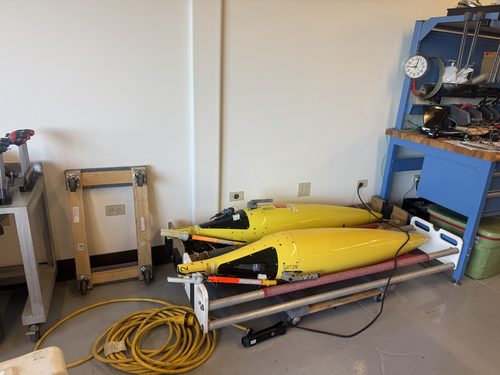
Though SUBSEAS’ Seaglider was all boxed up, there were some other Seagliders in the lab! Hunter talked us through their basic mechanics and deployment process. SUBSEAS’ Seagliders have a CTD, fluorometer, dissolved oxygen, and a fragile shear sensor that makes deployment and recovery a delicate operation!

Finally, we bench tested a Vertical Microstructure Profiler, an instrument that measures small differences in shear. We blocked off the instrument in a faraday cage of tinfoil connected to ground, turned off the lights, and avoided moving around the room while the instrument ran. The sensors operated as expected once we had blocked out background electrical noise, so they should be ready to go for their next use case.

All in all, I had an amazing week continuing to learn and meet new people!

Drake Goes to Hawai’i: Week 3

Hello, all!

This week was spent helping the HOT team to process HOT367 and prepare for HOT368. We have two weeks between cruises to get everything acid washed and reset for when we next go out.

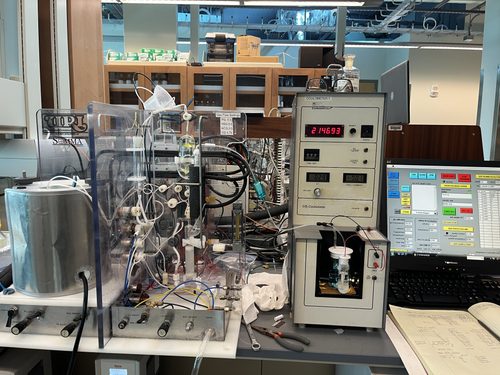
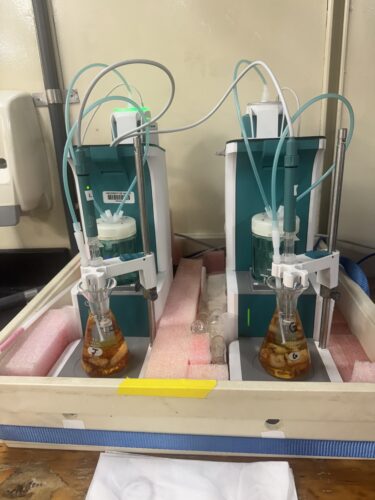
At sea, dissolved inorganic carbon (DIC) samples are collected from the CTD Rosette into glass bottles and spiked with mercuric chloride for processing back in the lab. Setting the standard to measure total DIC is the Single-Operator Multi-parameter Metabolic Analyzer (SOMMA), pictured above. Each sample (left) is plumbed up to the SOMMA where it is spiked with phosphoric acid (center), forcing all the DIC in solution into a CO2 form which is bubbled out of the solution sample using CO2-free air. The gas is then plumbed into an anode-cathode cell (right) which can measures the flow of electrons as a function of voltage. These same samples are then used in a separate titration rig to measure total alkalinity.

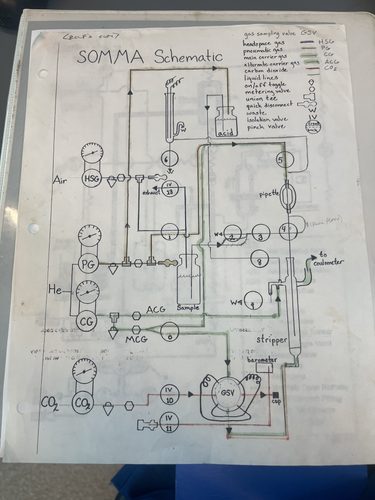
When something goes wrong, sometimes the notes left behind by past lab members are more helpful than the official manuals describing default setups. Here, we see a beautiful (color-coded!) schematic outlining the critical components of the SOMMA (excluding the lower portion using CO2 gas which has since been removed) made by a past member of the HOT team; thank you, Rolf! When the SOMMA stopped rinsing its pipette fully, we used this schematic to troubleshoot through potential problem sources, check our gas pressures, and eventually find the pinched line causing all our troubles. Once it’s happily set up, the SOMMA can chug through DIC samples fairly quickly.

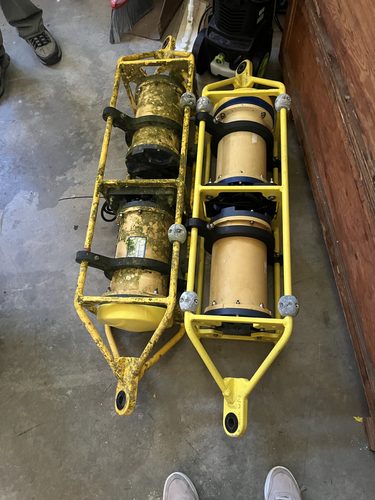
This past week also marked the return of the WHOTS21 cruise, where the WHOTS mooring was collected after about a year free-floating at sea. Suspended between an anchor at the seafloor and floating buoy is an array of sensors comprised of mini-CATs and ADCPs (pictured above) at two different depths. After a year at sea, the ADCP at 40m shows a lot more biofouling than the ADCP kept at 125m.

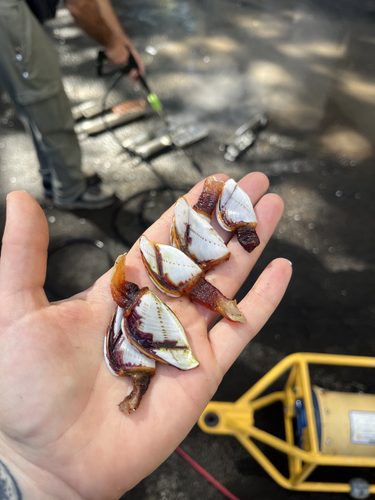
To keep all the WHOTS gear in working condition, we pressure washed all of the biofouling from the ADCPs and mini-CAT instruments and scraped off the barnacles. This helps equipment to last a longtime, and made things a lot less stinky when we brought the equipment into the office to pull the data off the loggers.

Our upcoming cruise will be a bit different than last, as Schmidt Sciences’ SUBSEA Project will be joining us onboard to collect complementary samples/profiles focused on nutrient and biogeochemical cycling between surface subtropical ocean gyres and deeper waters. We spent Friday with Hunter Adams, SUBSEAS’ technician and former MATE intern, to help service the trace metal CTD and take a look at some of the equipment they’ll be bringing out on the next cruise.

One really cool SUBSEA instrument is the WireWalker, which will be deployed onto a free-floating profiling wire that collects temperature, conductivity, pressure, and irradiance as it continuously runs up and down the wire. SUBSEA will deploy this instrument for a day or so, during which time the Wirewalker will complete hundreds of vertical water column profiles.

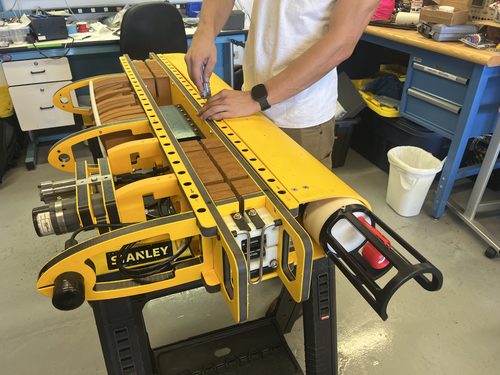
Another cool SUBSEA instrument is Vertical Microstructure Profiler, pictured here decked out in a tinfoil hat. This instrument measures very finescale changes in shear across density boundaries in the ocean using very sensitive “potato chip” shear sensors. To make sure everything’s working well before the cruise, we performed a bench test in the dark using dummy probes with the entire rig attached to a grounded Faraday cage. This helps to diffuse background magnetic radiation enough to show that all sensors were operating within proper ranges.

A special thank you this week to Dan Sadler, Dan Fitzgerald, and Hunter Adams for letting me get my hands on some really cool pieces of equipment!

Week 1: Transit to Bermuda

Last Thursday, I arrived in Barbados and had a couple of days to explore the island before heading out on the RV AE for the transit back to Bermuda. On Saturday, I went over to the port to meet the marine technicians (Emily and Rory), some of the crew, and to get a bit of a walkthrough of the ship. I also got to overlap with the science group from the previous cruise, who had been sampling in the Amazon River plume region. It was neat to hear about their successful mooring deployments! Later that afternoon, we had some free time and went snorkeling nearby. We went looking for a shipwreck (found it!) and were lucky enough to spot some sea turtles! After one more night in the hotel, I boarded the ship “for real” on the 18th.

From Barbados, we’re now transiting back to Bermuda with a group of scientists from the Bermuda Institute of Ocean Sciences (BIOS) working on the Bermuda Atlantic Time-series Study (BATS). The first couple of days were mostly spent transiting, which gave me a great opportunity to get more familiar with the ship and start working on a few projects.

One of those projects involves the ship’s winches. The RV AE has several winches on board, and the wires they use are borrowed from the East Coast Winch Pool (ECWP). As part of the agreement, the ship sends in an annual wire sample for break testing, along with a report documenting how the wires have been used. I’ve been working on a script to automate the processing of logged winch data, summarizing things like maximum tension, wire speed, and the amount of wire deployed during each cast. So far, it’s going well! I still have some work to do with the technicians to fine-tune how the script identifies individual “casts,” or periods of wire use. The goal is to make it easier to generate these reports and keep track of wear and tear on the equipment.

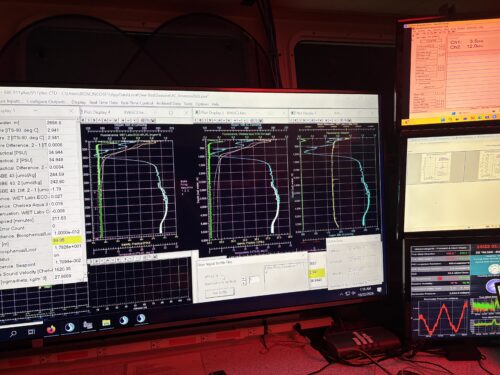
On the 20th, I spent some time with Emily and Rory talking through other projects I might work on during the internship. We also went over the process of deploying and recovering the CTD rosette, how to coordinate with the crew, and how to set up the software for data acquisition. The plan is to watch the first few deployments before doing it myself.

Around 1 a.m. on the 21st, we completed the first CTD deployment of the cruise, all the way down to about 5,800 meters! Over the next few days, we’ll be doing a CTD cast roughly every 12 hours, with most reaching depths greater than 5,000 meters. The atmosphere on board is pretty relaxed during these long CTD casts (~5 hours), so there’s plenty of time to get comfortable with the operation and work on some side projects.

After one of the casts, Emily noticed that the Yale Grip on the CTD wire was a bit looser than she’d like, so she showed me how to re-wrap it. The Yale Grip is a “braided” wrap that grips the wire and acts as a backup to the primary mechanical termination. If that termination were to fail, the grip provides an additional way to keep hold of the wire and rosette. We wrapped up the last CTD of the night around 1 a.m. and called it a night (or morning?). There was a pretty spectacular lightning storm outside, which was wild to see and hear from the ship, but it set up a cozy mood before crawling back into my bunk for some sleep.

video credit: Emily Tate

Week 4 – 4th Deepest Point on Earth – Jessica Leonard

This week we had some of the calmest waters one could ask for going right into 5 meter waves! This range gave me lots of practice deploying the CTD in variable weather conditions as well as the knowledge of when it’s just too much to deploy safely.

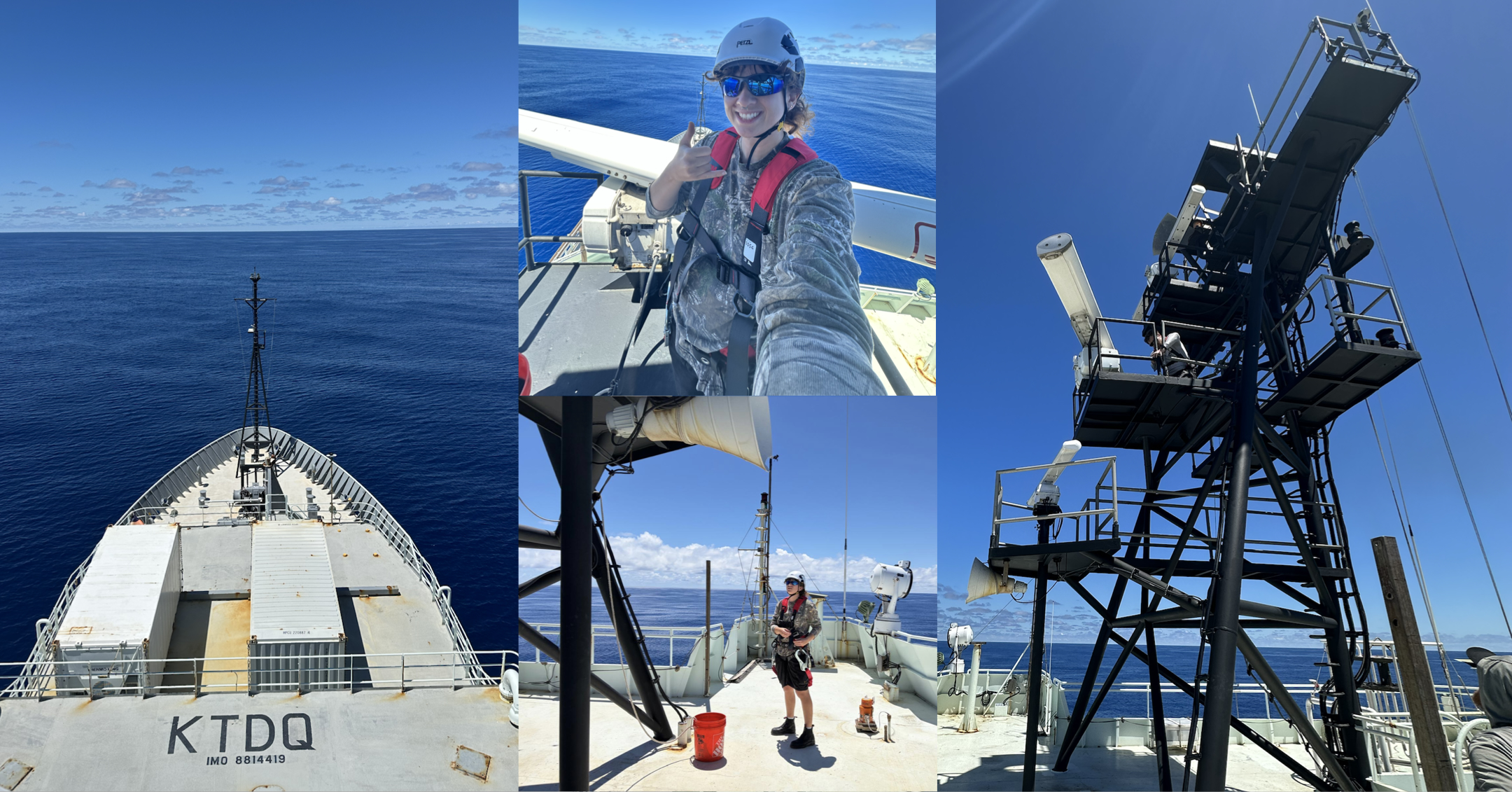
While the sea was dead calm, an AB and I went up on the flying bridge to assess some railing damage near one of our radars. Going up top means rigging up in climbing gear and using lobster claws to climb the mast. From the top you are able to get the best view of the ship! As some of the radars emit radioactivity, it is necessary to shut these systems down beforehand.

View from flying bridge along with the flying bridge itself.

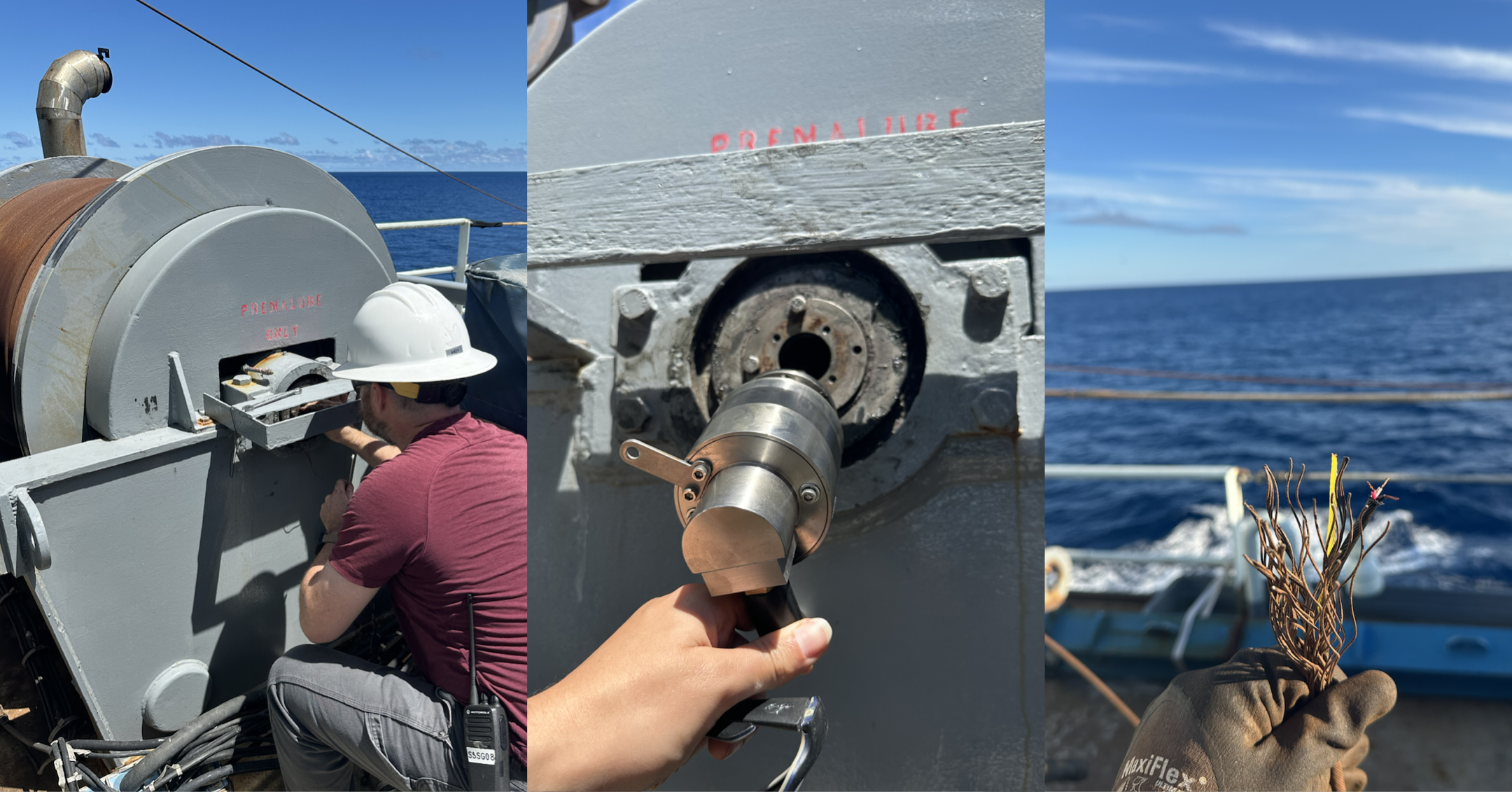
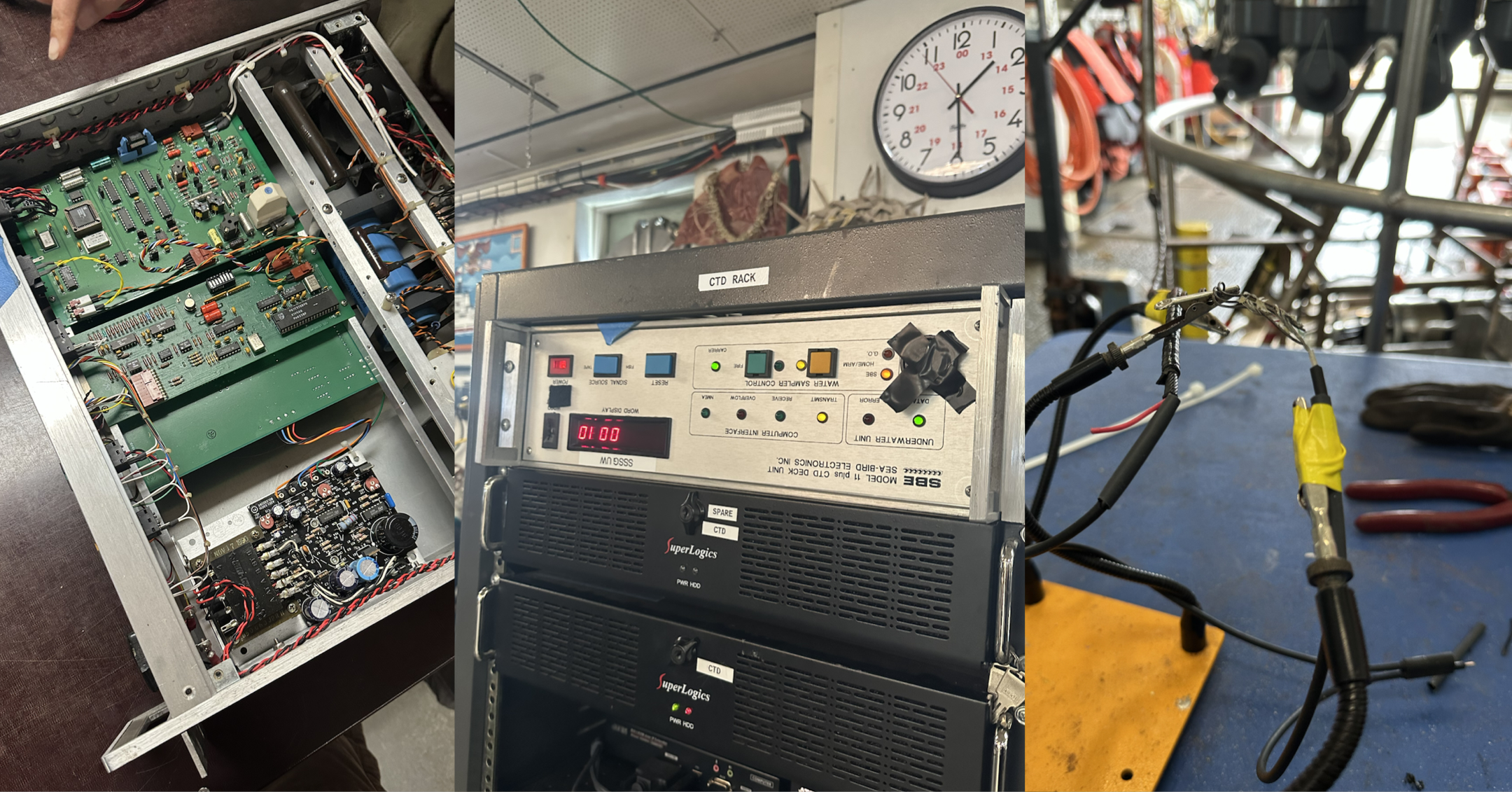
Our CTD is still experiencing issues so we spent our time transiting between stations and the bad weather days troubleshooting and reading as many manuals as we could to find our potential issue. We replaced the slip ring on our fore winch that serves as the connection between the winch wire and the SBE11 deck box for CTD power and communications while deployed.

Fore winch slip ring replacing and the inside of the winch wire

I spent some time Megger testing our aft winch wire and triple checking it was not suitable for use. We also checked out the SBE11 deck box’s electrical guts to see if a capacitor had fried or a wire had disconnected, but, there was nothing to be found. We decided to switch out the deck boxes anyway and electrically re-terminate the CTD which I got to do in full this time…in the 3-5 meter waves! Our CTD is still having some electrical troubles, not as many as before, but, zero issues are the preferred amount so we will continue to troubleshoot. By the end of this cruise I will have been trained as a decent at-home and ship-based electrician.

Inside of the SBE11 deck box and a CTD electrical termination

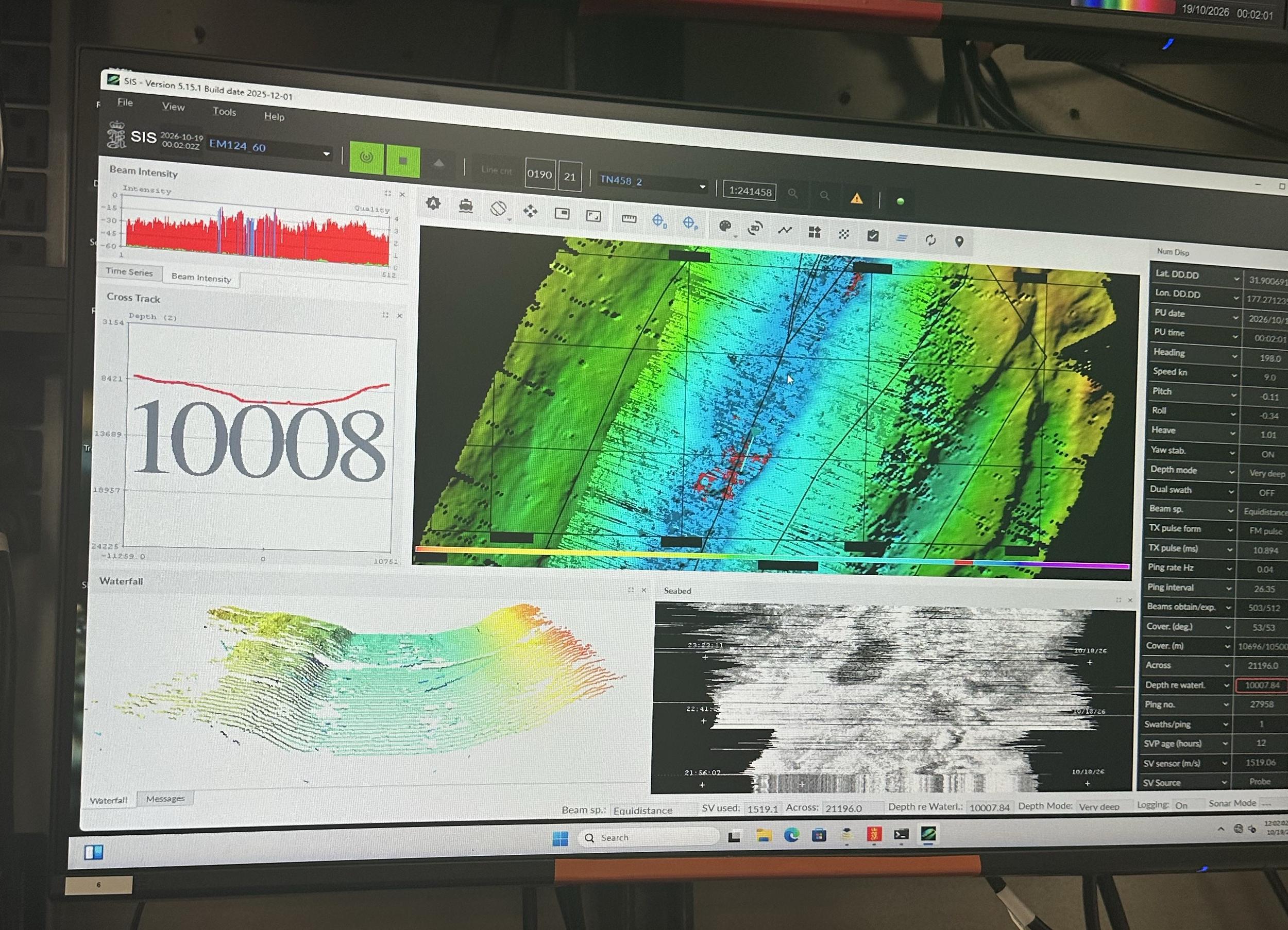
In science news, we reached our station that is the deepest point in the Kermadec Trench! Sitting at 10,049 meters in depth, this point is the fourth deepest point on Earth. URI’s DAP (Deep Autonomous Profiler) has already completed two successful deployments to this depth and will continue to for the next couple of days.

The EM124 multibeam mapping the deepest point in the Kermadec Trench

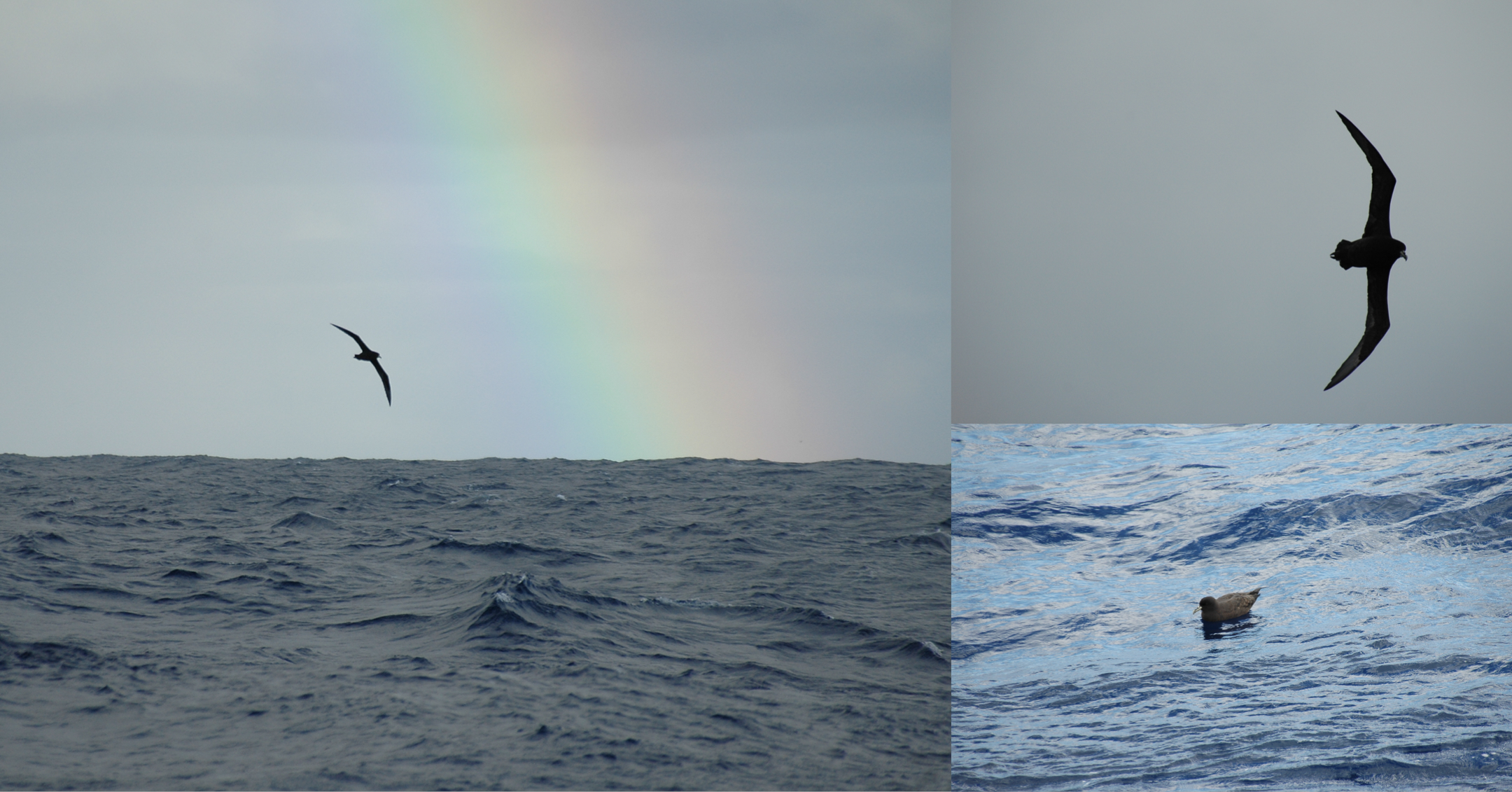
As always, featured are the petrels that have been following us for days along with a rainbow that graced us after the rough seas.

Week 2: Emily Pinneo

We embarked on HOT Cruise 367 early Sunday morning. After a little time to unpack, we completed our safety drills and left the harbor.

We practiced sampling a CTD for oxygen, chlorophyll, and nutrients on our first cast, and recorded the surface temperature with a thermometer over the side. We also shadowed a HOT technician while they prepared and analyzed pH samples from the CTD. Each sample was placed into a specialized container with a set amount of pH indicator dye, and run through a spectrophotometer. In order to ensure accuracy, the pH of the dye was tested and adjusted before use, and samples were kept at a constant temperature using a water bath.

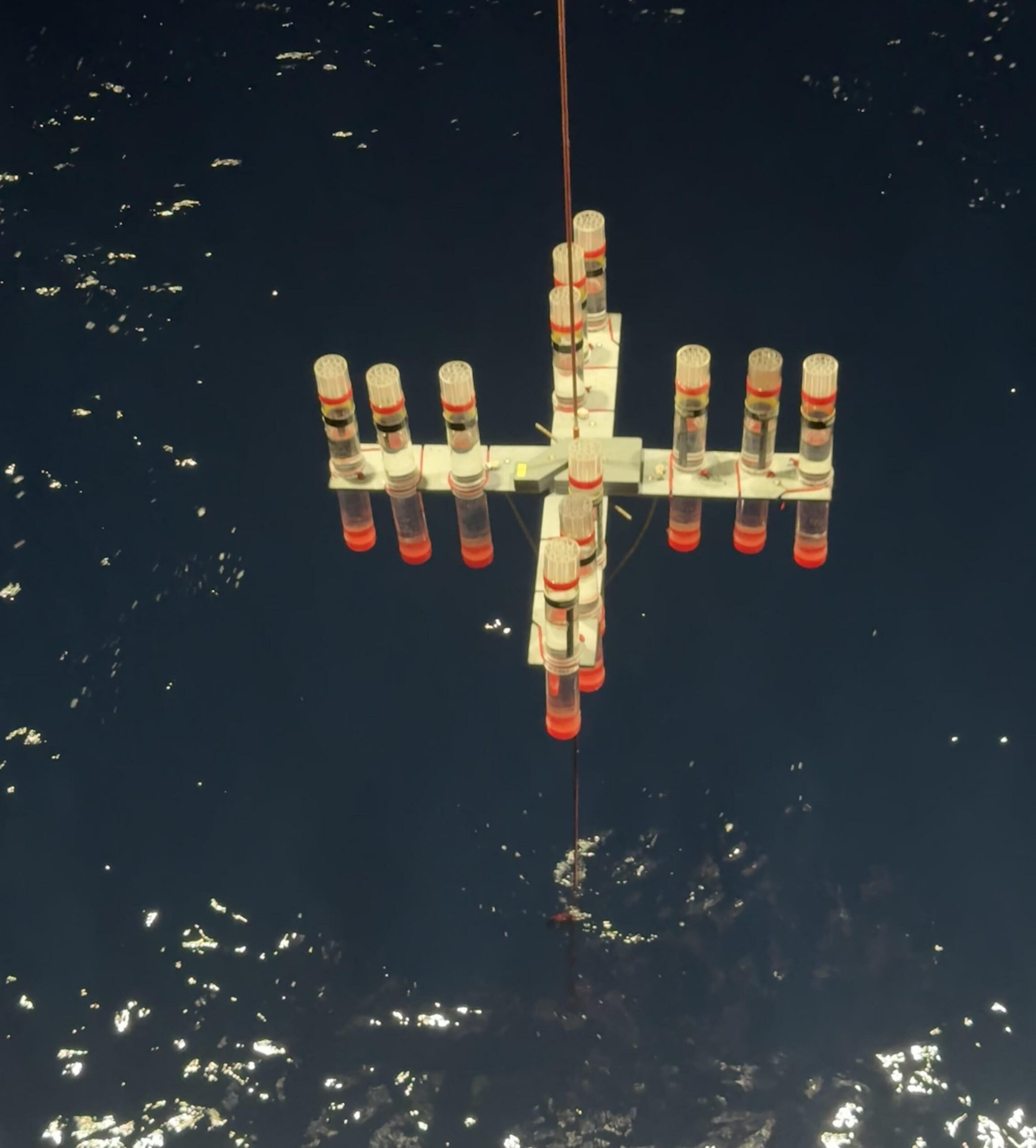
Next, we got started preparing sediment traps for deployment. The first step was preparing the ‘HOT sauce’: a mixture of formalin, seawater, and salt to fix sediment samples and keep them in place. After filling each sediment trap, we deployed them over the side on a cross.

Finally, we learned how to record meteorological observations. Every four hours, we recorded latitude, longitude, atmospheric pressure, and humidity. We measured the humidity manually using a psychrometer on the ship’s bow.

After my shift, I had the chance to go star gazing, and saw beautiful views of the Milky Way!

On Monday, we focused on sampling our CTD for particulates, including carbon, nitrogen and phosphate (BPO4).

For particulate carbon and nitrogen, we collected large carboys of water from each CTD bottle, then filtered each carboy using positive pressure (nitrogen gas). Some carboys took longer to filter than others – another HOT technician noted that certain depth ranges (~175 m) had more material in the water and clogged up the filters more quickly. Once each carboy finished filtering, we collected the filters for further processing. Back on shore, each filter will be combusted – thermal conductivity sensors can be used to determine the composition of carbon and nitrogen present on each filter. The filters themselves are made of glass microfiber and will not burn – in fact, they are combusted before use as well, in order to remove any contamination.

The process of collecting particulate phosphate (BPO4) samples was similar to collecting particulate carbon and nitrogen – large carboys were filled with water and filtered. However, the preparation and analysis is conducted differently. BPO4 filters are acid cleaned as well as combusted before use. After BPO4 found on the filters is combusted and converted into orthophosphates, they are dissolved in various acids to create a colored solution that is then measured with a spectrophotometer.

On Tuesday, we learned how to sample for ATP – a useful method to estimate microbial biomass (excluding viruses). First, we filtered the seawater from our CTD using negative pressure (a vacuum pump). This step captured ATP associated with living biomass but not ATP dissolved in the water, which passed through the filter. Next, each filter was boiled in a test tube containing Tris-buffer, to extract the ATP, before being frozen to preserve each sample for further analysis.

ATP samples are analyzed using the firefly bioluminescence assay, where the enzyme luciferase (found in fireflies) catalyzes the oxidation of ATP dependent D-luciferin to oxyluciferin, and emits light. The amount of light emitted is proportional to the number of enzymes activated, which is in turn proportional to the available quantity of ATP in each sample. By measuring the amount of light generated with a luminometer, we can measure how much ATP is present. I was super excited to learn about this method, which was new to me!

Next, I learned how to fix and flash freeze samples for microbial analysis. First, we added a low concentration of formaldehyde, and then we dipped each sample tube into a dewar of liquid nitrogen.

We continued taking samples from our CTD water. We sampled for chlorophyll, by filtering seawater and placing filters in test tubes with acetone to extract pigment. We were careful to wrap each chlorophyll sample with tinfoil to prevent the pigments from degrading with exposure to light. We collected water to test for salinity in order to ground-proof the conductivity sensors on the CTD.

I also shadowed a marine engineer while he collected zooplankton samples, and observed the plankton under the microscope.

Finally, we deployed our CTD on a deep cast to 4725 meters, and sent along a bag of Styrofoam cups! When we recovered the CTD, the Styrofoam cups had all shrunk in size due to the pressure at depth.

On Wednesday, I was trained on conducting Winkler titrations to determine the quantity of dissolved oxygen in a water sample. After my training, I worked on running titrations for the rest of my shift. I was excited to practice some chemistry!

On Thursday, I took a tour of the engine rooms belowdecks and finished up the rest of the oxygen titrations. I also spent some time familiarizing myself with the various instruments and data streams coming through the computer monitors in the CTD lab, including the ADCP. Near the end of my shift, a storm petrel flew into the loading bay and had to be relocated!

On Friday, we returned back to port in Honolulu. After packing up and cleaning our rooms, we unloaded all of our cruise gear and samples, and put them away back in the lab.

I loved spending time at sea, and I can’t believe my first cruise with the HOT team is already over! I learned so much about different instruments and sampling techniques, and I can’t wait to continue my work over the next couple of weeks.

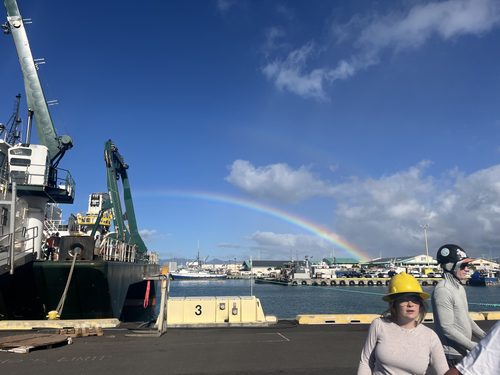
The weather was beautiful as we unloaded and we had a little bit of a rain shower. Apparently, the real treasure at the end of the rainbow is a CTD!

Drake Goes to Hawai’i: Week 2

Hello all!

We’ve successfully returned from Cruise HOT327, in and out from Honolulu. I got a chance to assist with lab and deck operations throughout the day shift (3:00-15:00). This is the HOT team’s 327th cruise in the time series, so it’s been fun to see the rhythm they’ve worked out to consistently sample across the ALOHA site.

Below are some photos, when I remembered to take them:

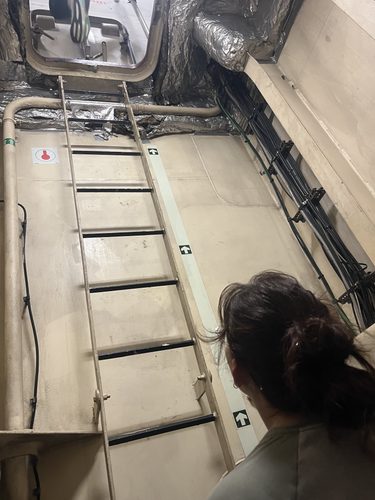
HOT scientists got a tour of some of the engine room spaces. Since the R/V Kilo Moana is a catamaran-style ship, these spaces are broken up into 16 individual compartments (with 16 separate ladders) across the two wings of the ship.

Recovering the sediment trap after 2 days at sea suspended at 150m. The array is left to float to see what particles are collected within the baffled collection tubes. To retrieve the array, grappling hooks are used to catch the float, and the image here is after pulling up ~150m of line to reach the cross that holds the sample collection tubes of very dense brine spiked with formaldehyde. The sample is then collected in bottles and on filters to be processed for HOT and collaborators’ many measurements.

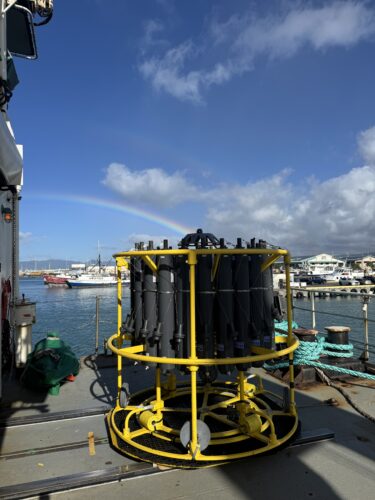
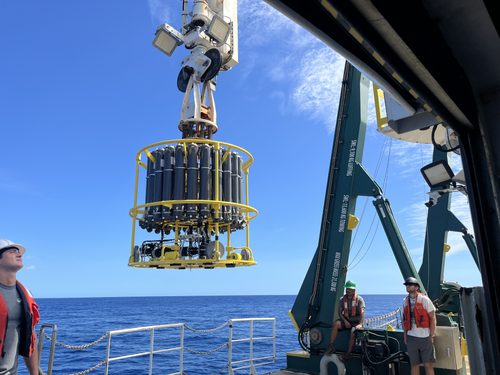
CTD Rosette being sent out over the back deck. Since the R/V Kilo Moana is a catamaran that sits very high on the water, the ship uses a specialized Hawboldt crane that can compensate for the ship’s motion (without taglines!). The 24 Niskin bottles are set open ready to snap at specific depths along the cast. At the bottom of the rosette frame are the conductivity, depth, temperature, O2, and altimeter sensors that provide a live data feed across the cast.

Safe and sound back at the U Hawai’i Manoa Marine Center. While we had a few sprinkles, the weather was otherwise perfect for us to offload all our gear for storage and sample processing.

I’d like to give a special shoutout to LeeAnn De Leon, an undergraduate volunteer from U Hawai’i Manoa who was supremely helpful and coming out for her last time in a while before starting her new job with Hawai’i Fisheries. I’d also like to thank the crew of the R/V Kilo Moana, and the Ocean Technology Group technicians Pete Felicijan and Joseph Soltis.

Week 3 – Transiting and Food – Jessica Leonard

That’s a wrap on 2/6 weeks at sea!

This week we spent the first half transiting to the northern most end of the Kermadec Trench and have been sampling here ever since. This means lots of downtime and lots of repeated operations. This week I added deploying the CTD in addition to A-Frame operations now working the hydroboom and working the communications line between the deck and the winch house. This includes ensuring safety of the deck, people, and the CTD. We watch the winch cable to ensure it doesn’t hit the side of the ship, bring up the CTD in a safe, controlled manner, rinse the CTD once onboard, and secure it safely in the bay for scientists to sample from the niskins.

Following the winch wire up the CTD keeping tension on it as the winch pulls it up to ensure no crossovers or gaps in the wire spool.

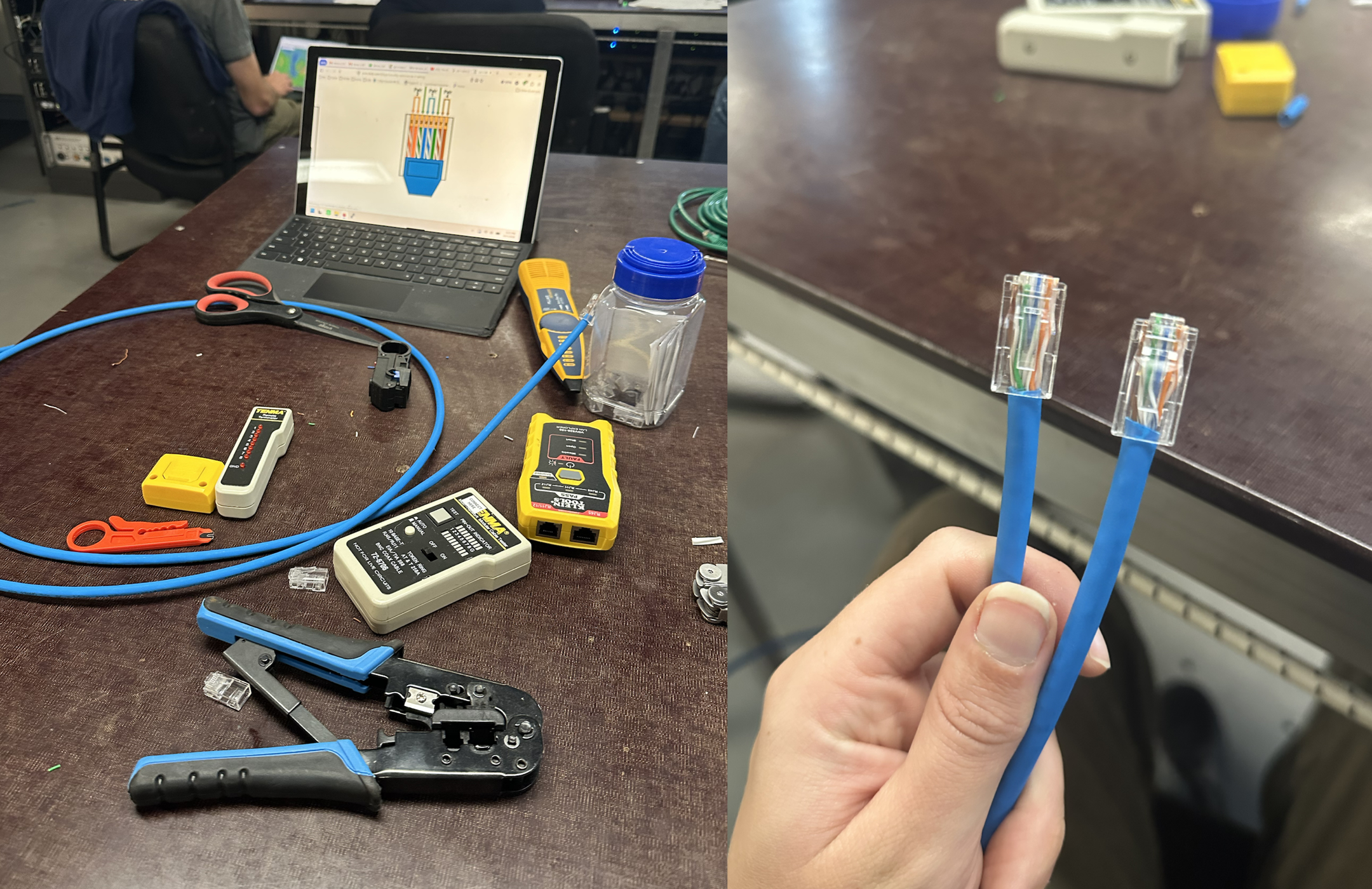
During the transit I learned how to make RJ-45 Ethernet cables which we’ll use on the switch boxes connected to the science servers. Electrical work and network management is just as important as deck operations in a marine tech’s role if not more important.

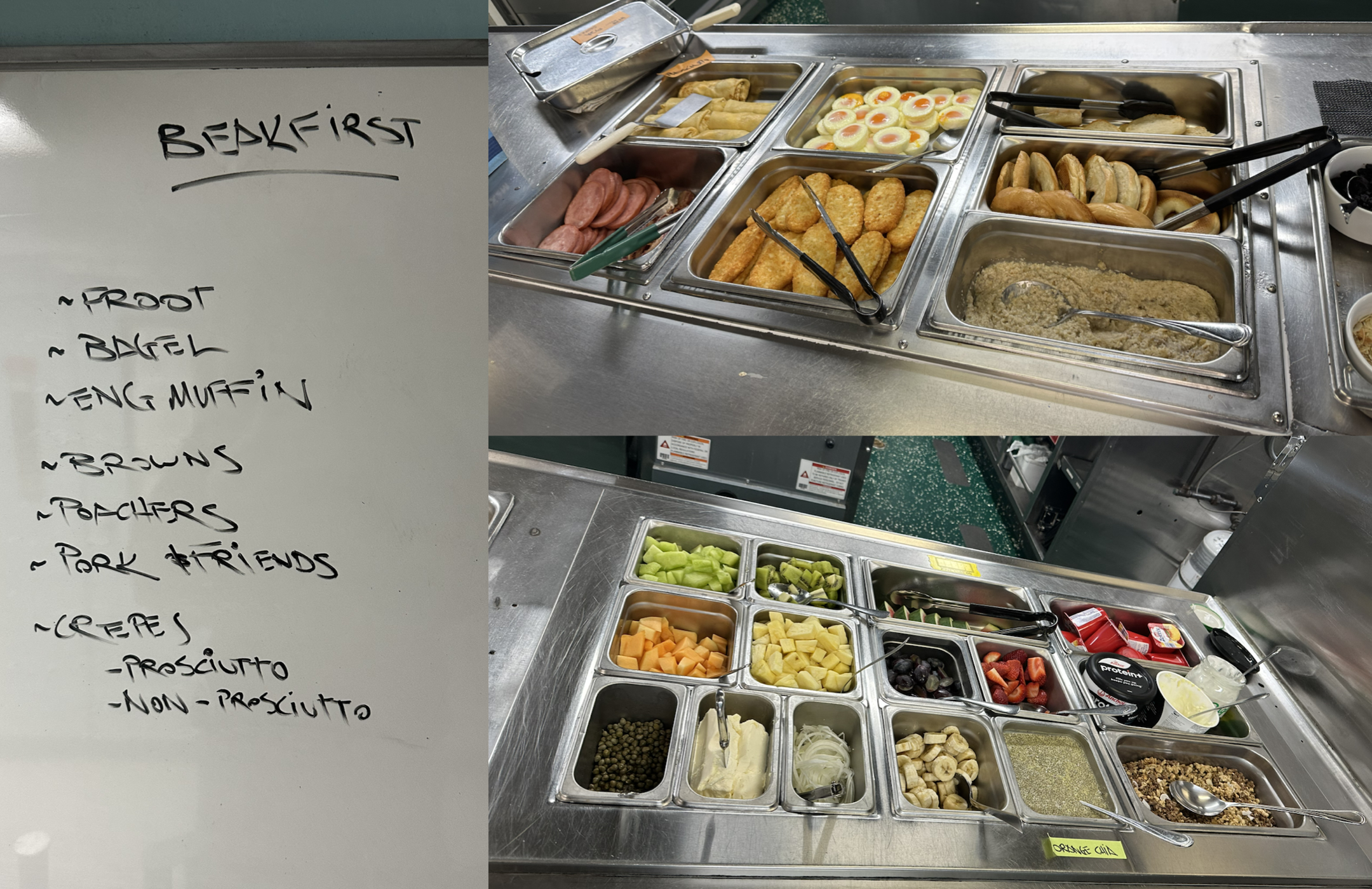
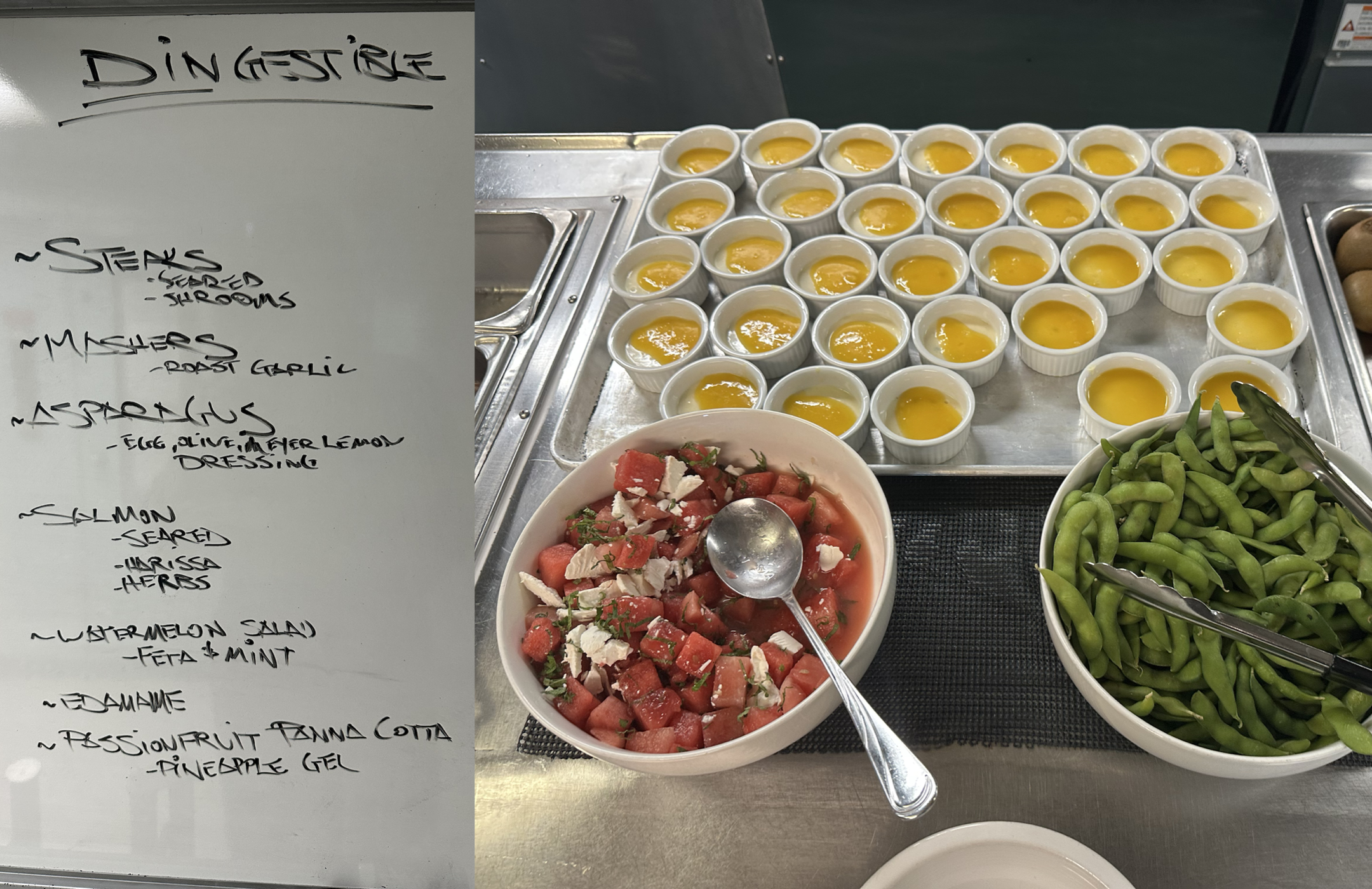
Because this has been a slower week, I wanted to highlight some non work related but very ship related content! Luckily, we have some of the best chefs in the fleet, and I want to showcase some of their offerings. Our chefs have been providing us with a great variety of meals, flavors, foods, and are accommodating to all dietary restrictions and preferences. Outside of meal times we have a plethora of leftovers, breads, cereals, ramen, snacks, cookies, candies, dried fruits, ice cream, sodas, seltzer water, juices, coffee, teas, milks, and coconut water available. Featured below is a standard breakfast for us and a particularly phenomenal dinner we had.

Breakfast: Cold Bar: Array of fresh fruit, greek, fruit, and dairy-free yogurt, granola, orange chia, and cream cheese, onions, and capers for bagels. Hot Bar: Steel Oats, Bagels, English Muffins, Hash Browns, Poached Eggs, Spam, Bacon, Prosciutto and Veggie Crepes
Dinner: Pictured: Watermelon Feta Mint Salad, Edamame, Passionfruit Panna Cotta with Pineapple Gel

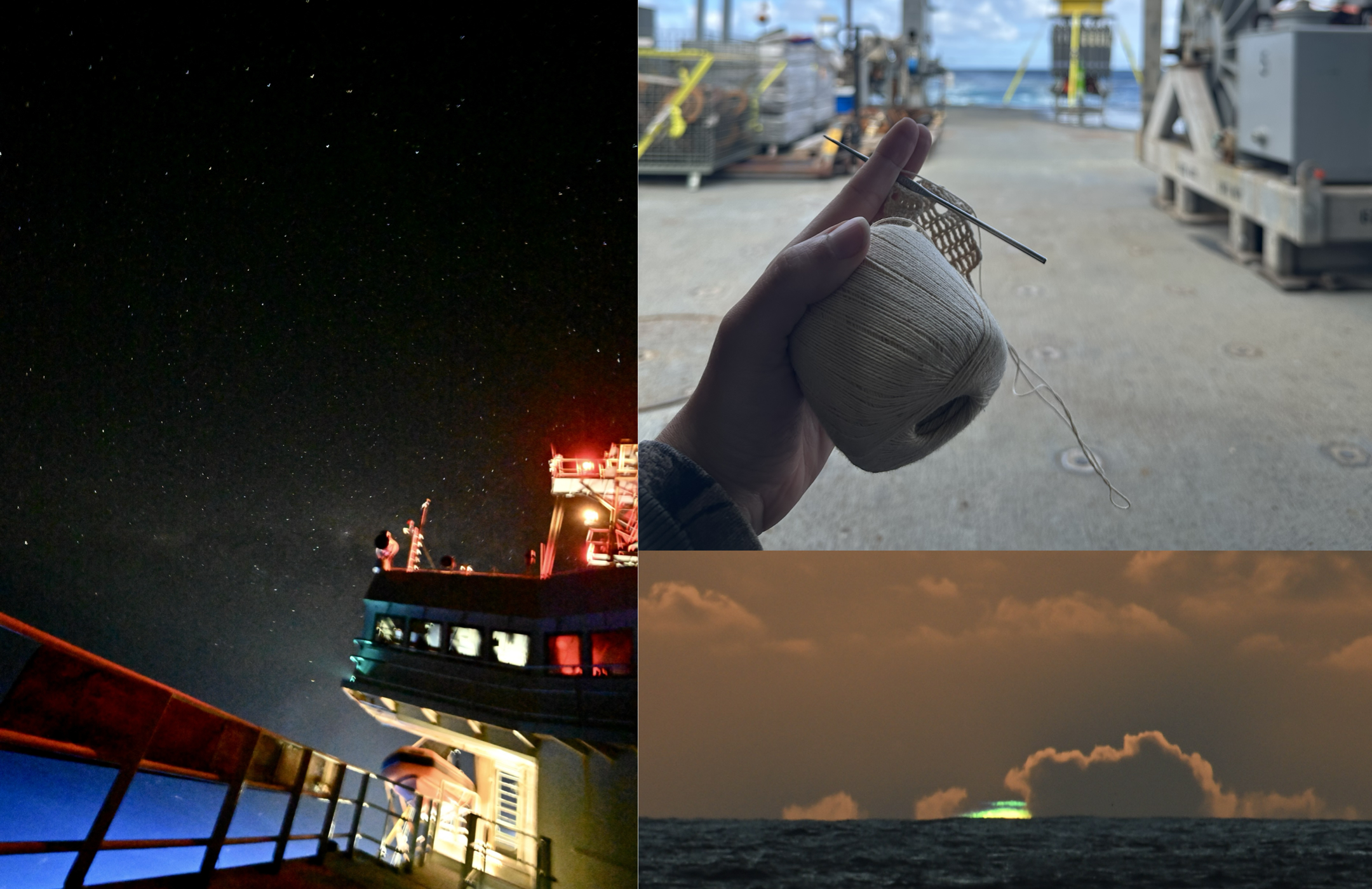
To follow the trend from my previous post I’ll include some fun happenings this week. On a clear night we got to see the Milky Way streak across the sky. I finally saw my first green flash after over 120 days logged at sea! In the downtime I’ve had plenty of time to tend to my hobbies including crocheting.

Page 1 of 2

Powered by WordPress & Theme by Anders Norén