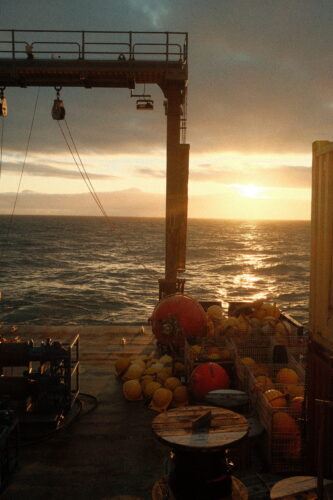
After a productive start to the cruise, the weather finally caught up with us early last week, so we stopped mooring operations. We continued with CTD casts for a while longer, but eventually the seas become too rough for those as well. We steamed away from the area and were able to avoid the worst of the storm.
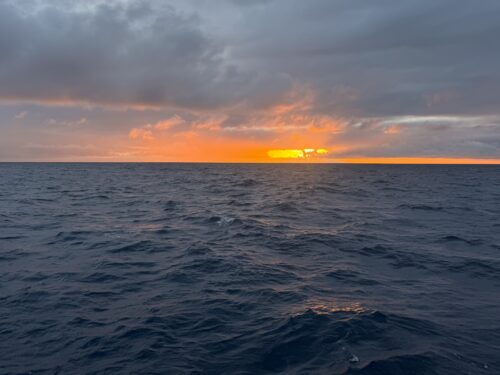
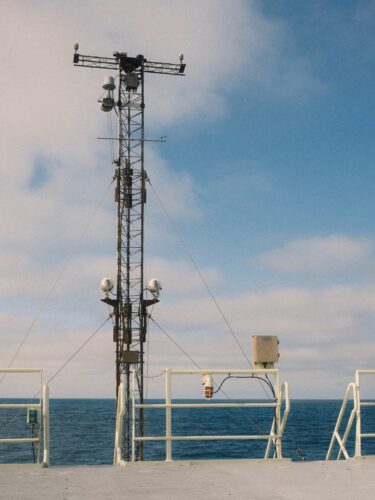
For the next few days, I kept busy with computer work and learning. I watched videos about various SeaBird sensors, started learning Python, and put together a poster advertising our 3D printing capabilities in case any of the scientists need parts. Emily also took some time to show me a few things around the ship. One day we exercised the HiPAP pole and gate valve to help prevent biological growth, and another day she walked me through the meteorological sensors on the mast (pictured below).
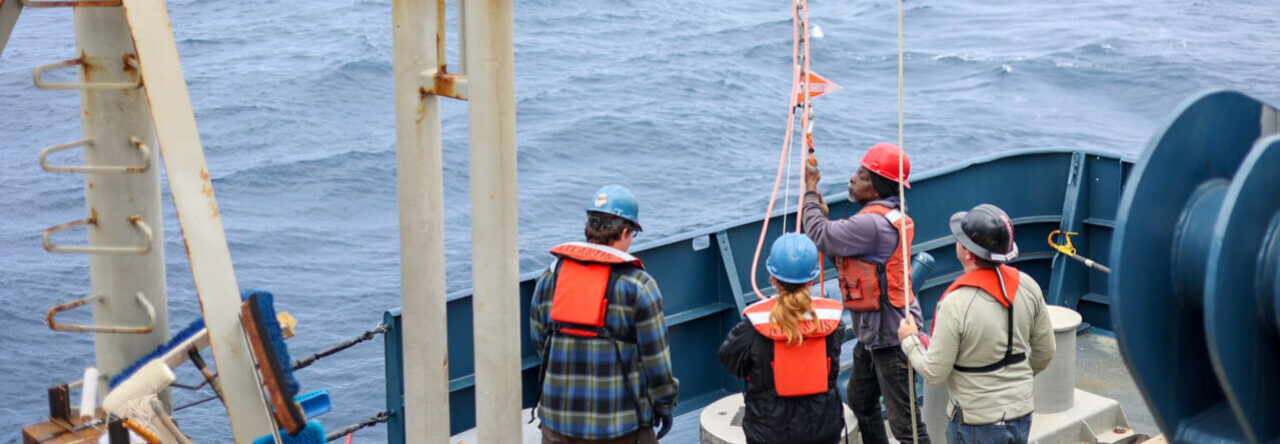
By Thursday evening, the weather had improved enough for us to resume CTD casts, and by Friday morning we were back to mooring operations. We still had two more NIOZ moorings to recover and redeploy, so I spent most of my time helping on the back deck. It’s been a great way to learn more about line handling and safety on deck. Once we wrapped up with the NIOZ moorings we moved onto the University of Miami moorings. It’s been interesting to see how each group builds and deploys their moorings since everyone has their own way of doing things. Just one more week at sea before we tie up in Reykjavik.