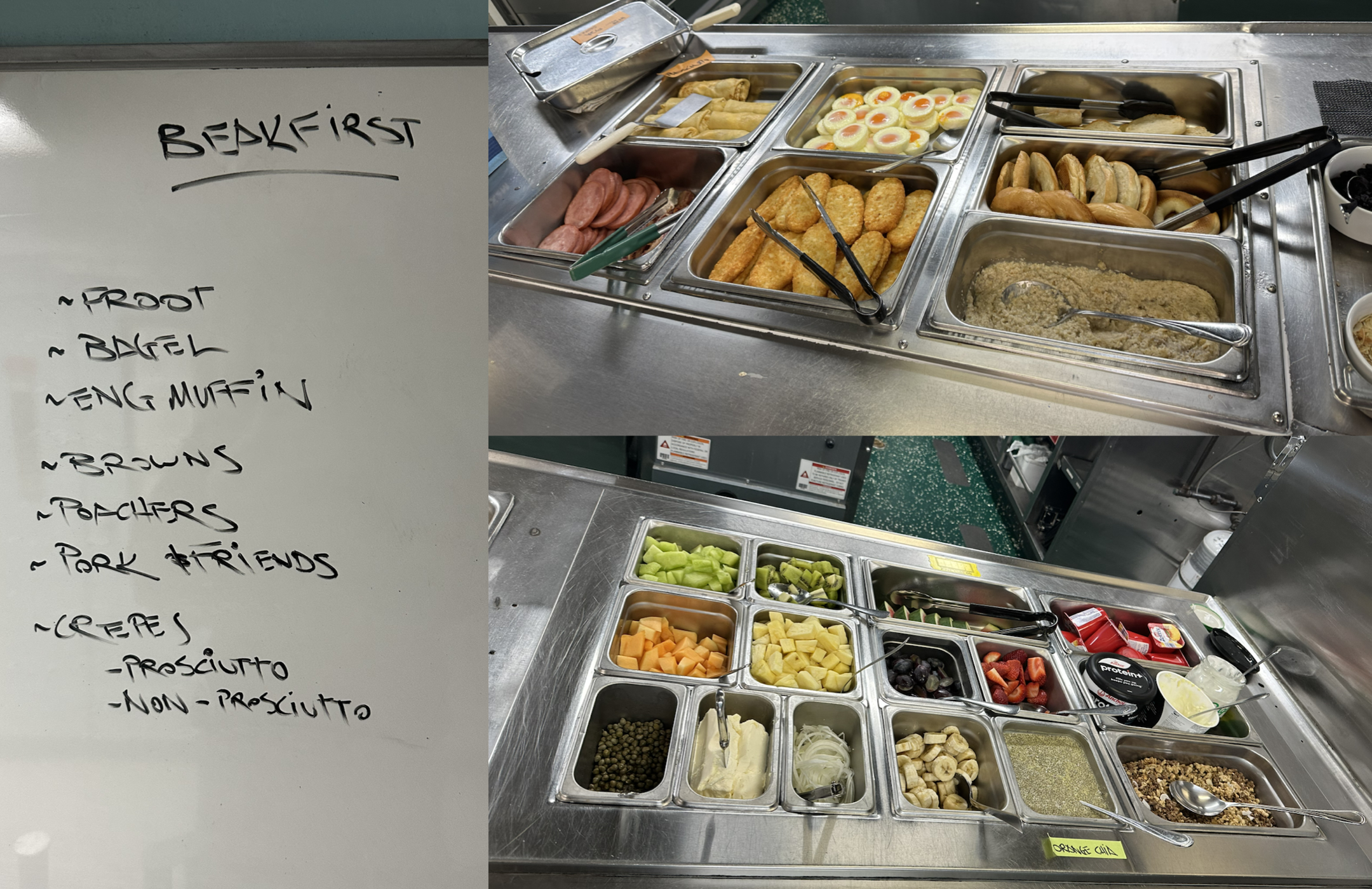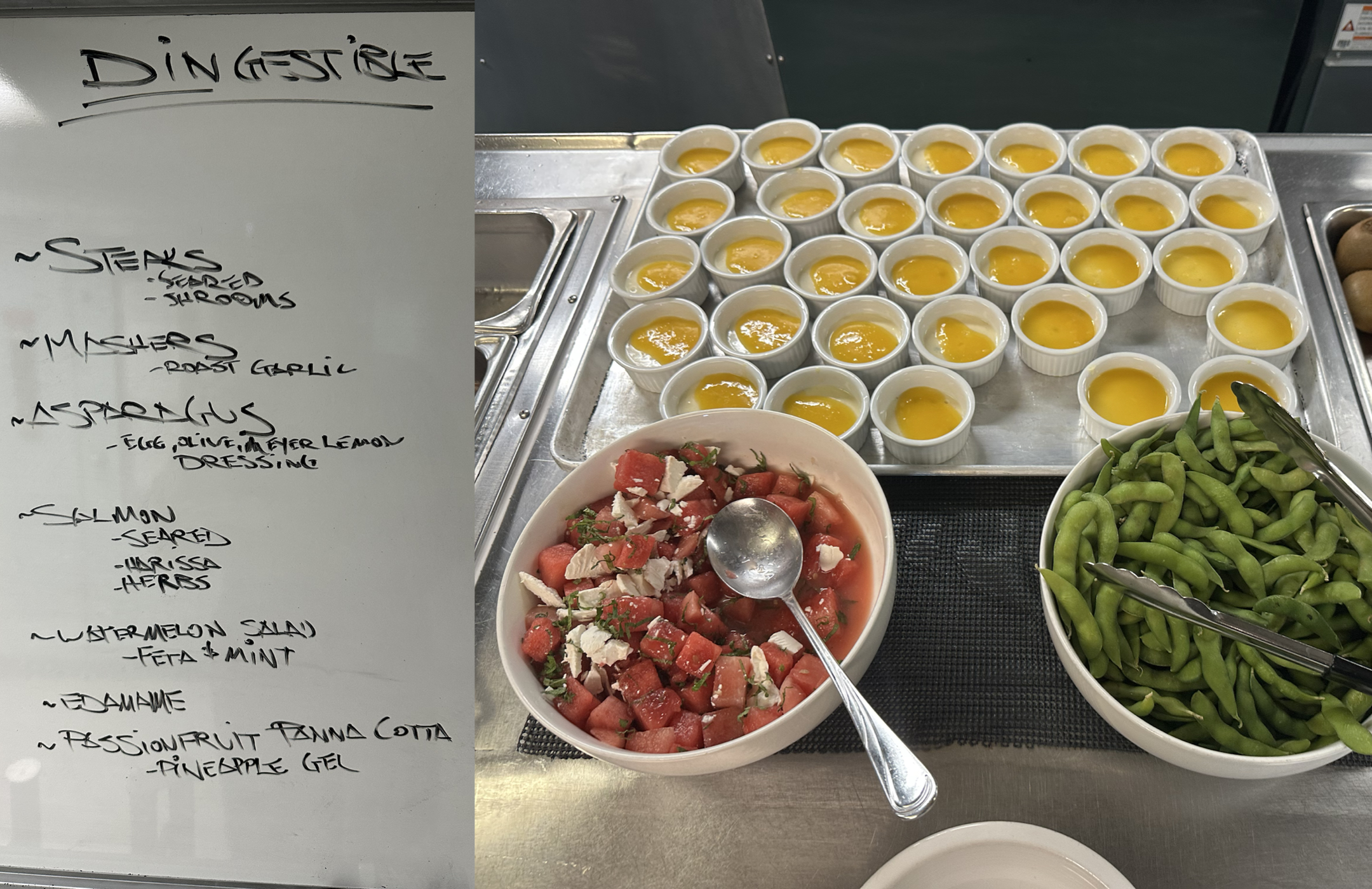
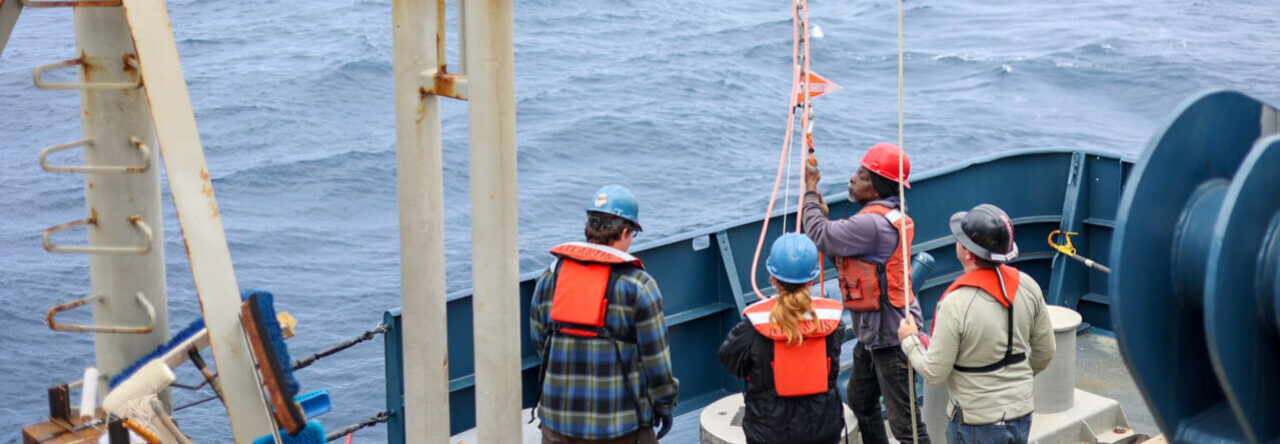
The galley staff picked up some pumpkins in Seward before we left!
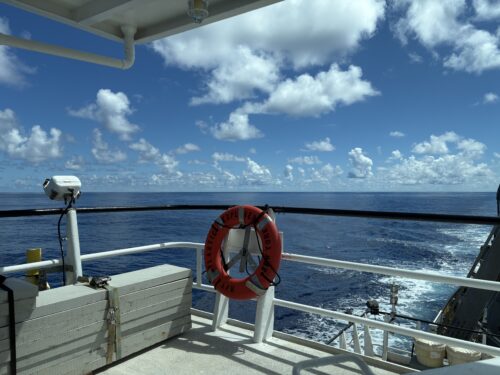
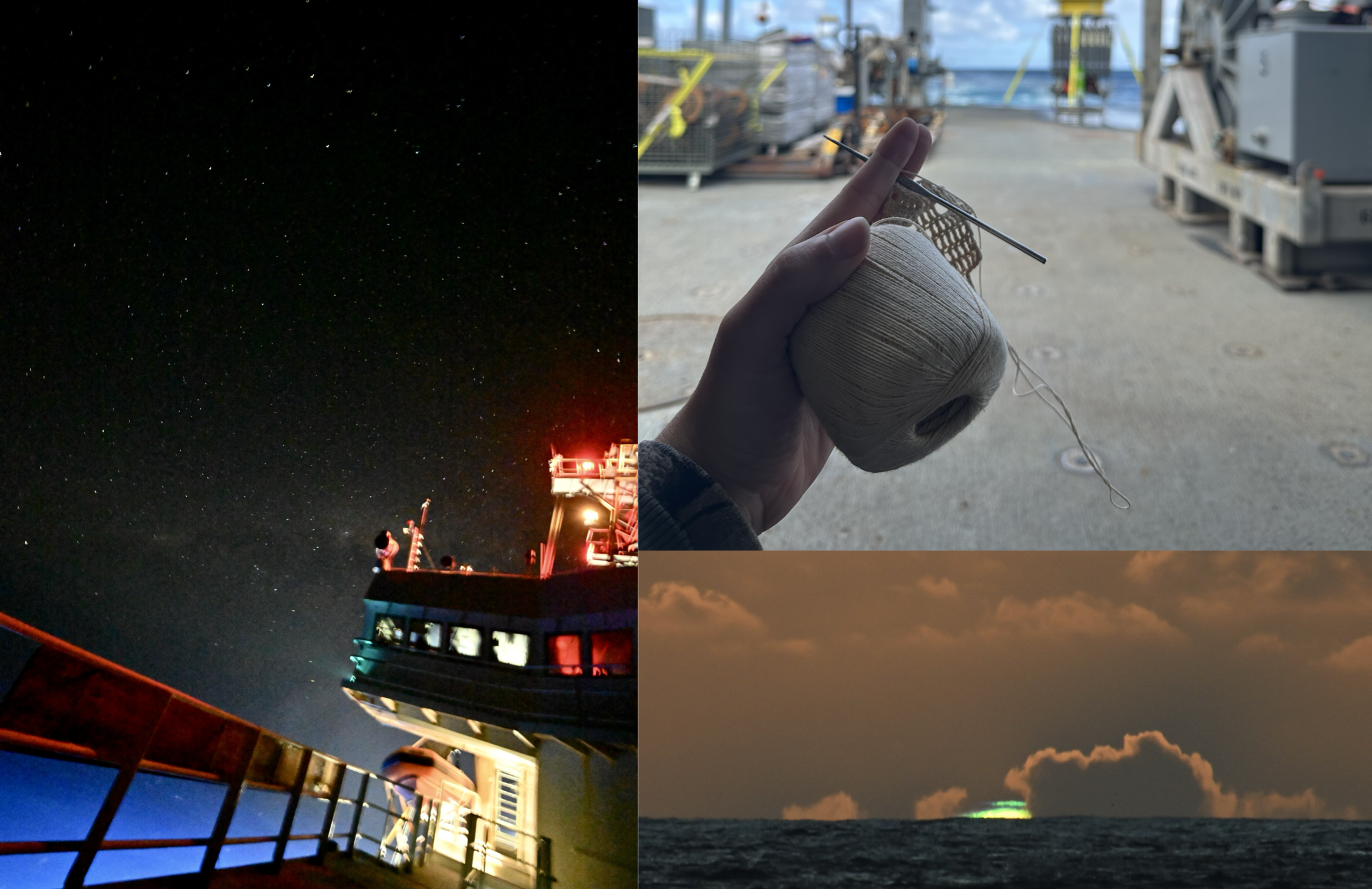
After fighting some rough winds through the Bering Strait, the Sikuliaq has arrived in the operations area as planned! And the rumors are true: the arctic is very cold. The ocean is green and black and so cold that every wave hurls sleet up onto the deck. We all stay inside as much as possible, except for a few nights ago when everyone gathered on the bridge deck to view the northern lights.
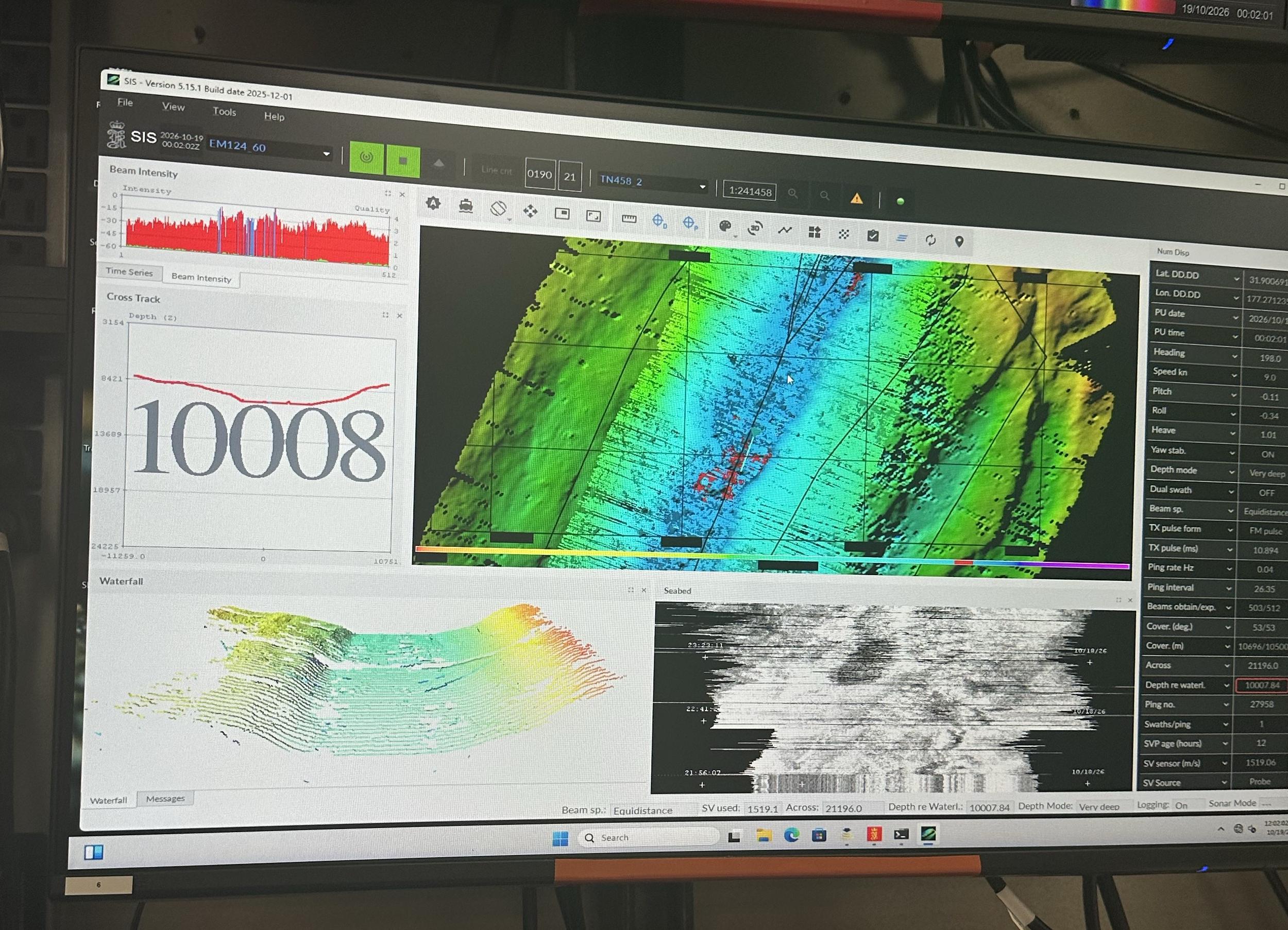
This second week has been all about getting into a steady routine. The science team is busy monitoring the multibeam seafloor map and sub-bottom profiler in between casting CTDs, collecting samples, and servicing meteorological buoys. Up on the bridge, the mates and the captain have been fighting the wind and waves (up to 40 knots and 10 feet tall, respectively!) to keep us stable and on the correct heading. And the engineering crew runs the tightest ship I’ve ever seen- a ship like the Sikuliaq requires a labyrinth of machinery to operate in extreme climates like the arctic, and they keep it spotless and running smoothly every single day.
We found ice!!!The science team takes the work boat out to gather ice samples
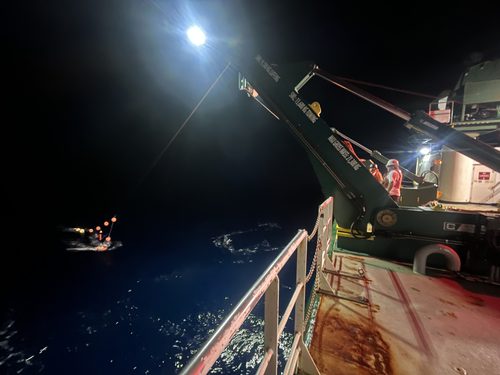
As a marine tech, my job is to collaborate with all of these groups and to help with operations in any capacity I can. I especially enjoyed helping the engineers service the A-frame hydraulics; machinery of that scale is fascinating to me, and I appreciated the chance to get some grease on my brand new work gloves! Another highlight was joining the crew in one of the small boats to recover a meteorological buoy. It’s hard to really appreciate the sheer size and power of the Sikuliaq until you’re sitting in a three-person raft and watching it bear down on you.
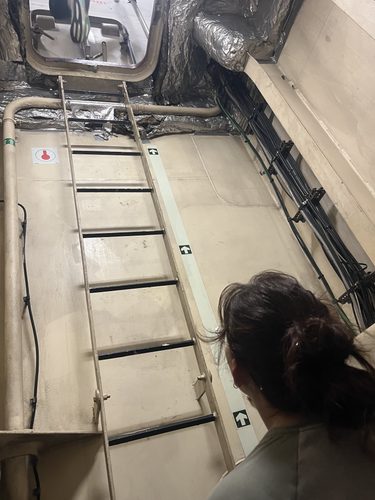
The A-frame, lowered for maintenanceBuoy recovery, viewed from sea
My name is Ken and I will be an intern assisting with the upcoming routine overhaul of the HOV Alvin for the next 7 months.
I’m a undergraduate robotics student and most recently built a USV for mapping small lakes, pictured below. I have some experience with boats and ships, previously sailing aboard the Sea Education Association’s (SEA) Corwith Cramer and Robert C Seamans as an engineer. But this will be my first time working with a submersible.
I have dreamed of working with Alvin for many years and am very excited for this opportunity. Tomorrow I drive down to Woods Hole, MA and early next week I meet the Alvin Team and begin my internship.
My first week aboard the R/V Sikuliaq has flown by! After arriving in Seward, Alaska, I leapt at the opportunity to do a bit exploring. Seward is a beautiful town with a lot of history, but it’s quiet this time of year as the tourist season winds to a close.
The weather cleared up as the Sikuliaq got underway! The extended maintenance period at the dock in Seward turned out to be a blessing in disguise: the delay prevented us from sailing through an intense storm cell in the Bering Sea. So, we began our transit that would take us through Unimak Pass, along the western coast of Alaska, and eventually through the Bering Strait and across the Arctic Circle.
Today is day 8 of our transit. Winds around 30 knots have been whipping up the waves and slowing our progress towards the Bering Strait– and the turbulence was enough to knock my sea legs right out from under me! I have noticed that the color of the sea has changed the further north we have gone; I have some theories but if anyone happens to know why this is, I would love to learn!
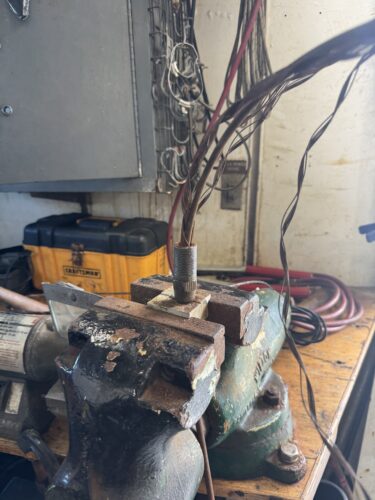
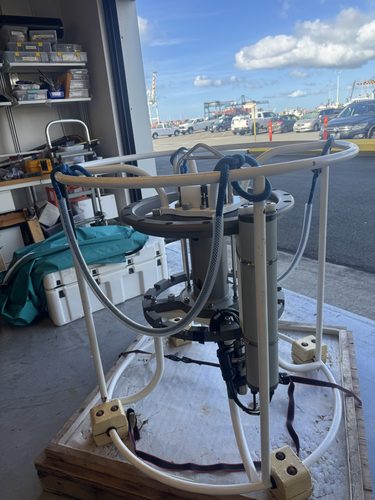
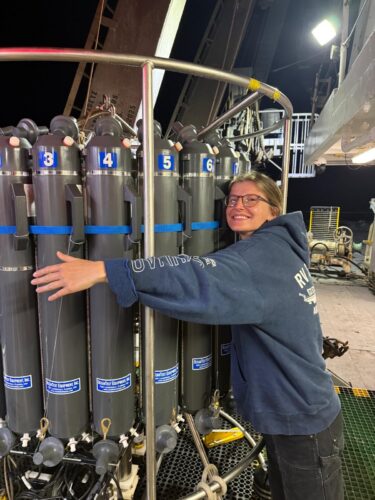
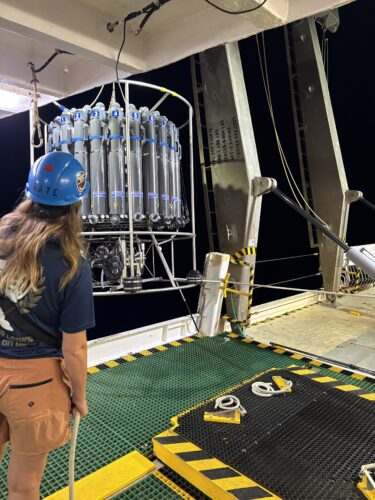
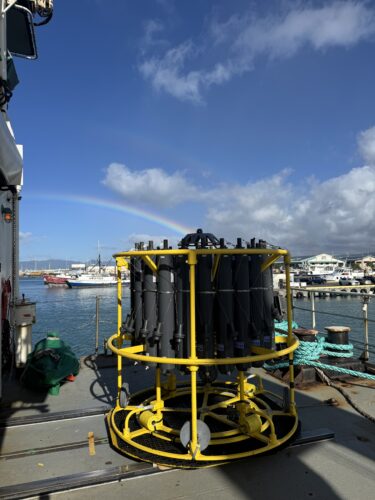
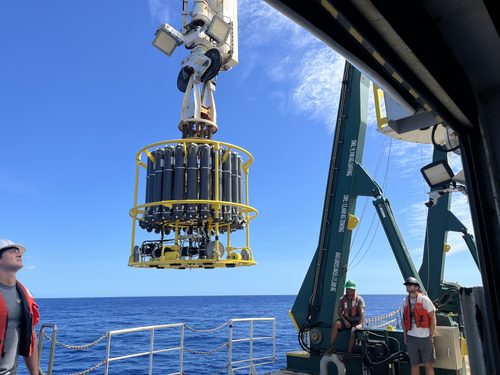
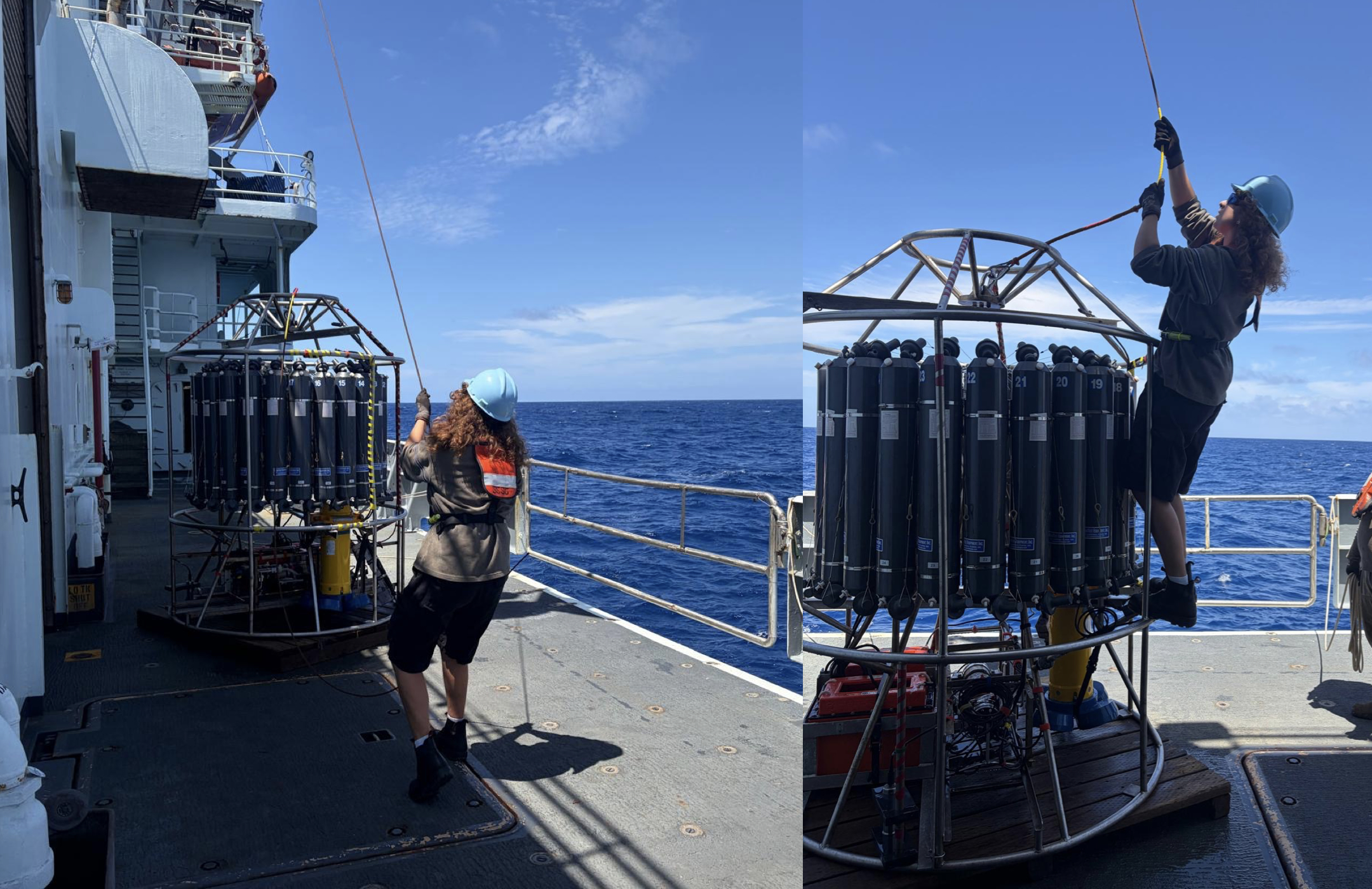
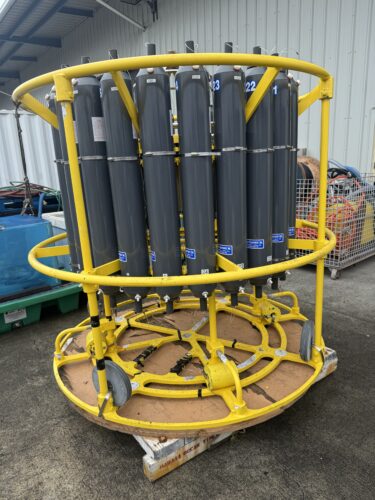
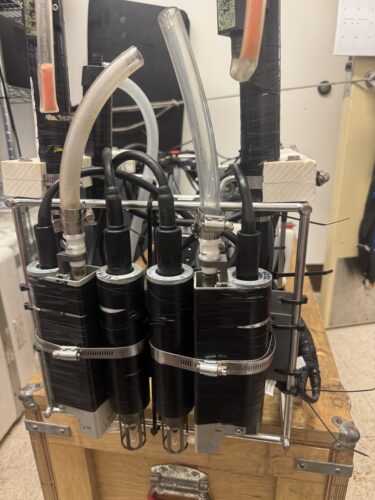
During the transit, I have been getting acquainted with the ship, the crew, and my duties and responsibilities as a Marine Technician. Some projects I’ve tackled so far are installing and calibrating sensors on the CTD array, replacing batteries in universal power system banks, and learning the daily maintenance of tools like the uncontaminated seawater system that allow for the continuous collection of valuable environmental data. In the next week or so, I expect that we will have crossed the Arctic Circle and reached the operations area; I hope to see some ice fields and maybe a polar bear (from a distance.)
Hi everyone! As a long-time follower of this blog, I am very excited to be sharing my upcoming experience aboard the R/V Sikuliaq as a Marine Technician Intern!
There’s not much ocean to be found in Missouri, but I make do.
My name is Mackenzie Hilburn. I love visiting new places, jamming out on my bass guitar, and watching/reading/writing/all things horror! Little known fact about me: I am afraid of deep water. In spite of this (or maybe because of it!) I have always had a profound love for the ocean. Vibrant shallow reefs, bleak and mysterious abyssal plains, teeth-chatteringly frigid polar shores– every part of Earth’s largest habitat is fascinating to me. My dream is to explore every unseen corner of the oceans; in other words, to boldly go.
Photo from a prior expedition; I absolutely love being out at sea!
I’m on the edge of my seat waiting for the beginning of this expedition! No small part of my excitement is due to the research cruise objectives, which have to do with the seasonal formation of coastal ice and how it affects the strength and frequency of waves impacting other coastal regions. This is a subject that is particularly close to my own heart; you can read about the specifics and further objectives here.
A large part of my excitement also comes from the fact that this will be my first time visiting Alaska! Earlier this year I had the incredible experience of sailing aboard Ocean Exploration Trust’s EV Nautilus in an expedition to the Mariana Islands backarc. In terms of geography, climate, and my own personal learning objectives, these expeditions are in such stark contrast, and I definitely intend to take this opportunity to broaden my experience in the field of marine engineering on the whole.
I just hope the winter jacket I ordered arrives before I have to travel!
This week I finished up my last days at sea, transiting from Astoria, Oregon, to San Diego, California. We had some Woods Hole donors join us in place of the scientists so they could see the vessel and Alvin. We also had another cookout on deck to enjoy the weather since we were making pretty good time to port.
Transit work wasn’t quite as fun as the dive days; we’ve been packing nearly everything from the ship, including the hold, for offload. The amount of equipment the team keeps on board is astounding—and everything has oil on it. So, I did some of the not-so-glamorous but completely necessary work of cleaning various valves and hardware so they could be neatly packed and shipped back to Massachusetts for the maintenance period. Since the work has been a little slow with all the packing, I got a tour of the engine room with the donors. It was fascinating to see all the machinery the ship uses to operate and the power required to run science operations. Apparently, the ship had been recently refurbished, which involved swapping the engines. To do this, they cut a hole in the hull of the vessel and rewelded it. It now uses two primary diesel engines to run electric motors. During the maintenance, the ship replaced six generators with four newer ones and implemented a single bus bar for redundancy and engine efficiency. During this time, they also added a bow thruster.
One of the highlights during the transit was seeing a pod of hundreds of dolphins swimming next to the ship and at the bow—seriously, I have never seen so many dolphins at once! As we were all on the bow enjoying the view of the sunset and wildlife, a SpaceX rocket was launched, which we had a perfect view of. It was truly an amazing evening and one of my top memories from the cruise.
We arrived in port at 9:30 a.m. at Scripps. It was, again, super cool to see the docking process. Just as before, a pilot came aboard to help the captain navigate the channel, but what made this unique was how the ship was maneuvered. Due to a bend in the channel, the captain sailed the ship so that the bow was nearly perpendicular to the dock—only about 30 feet away—and then used the bow thruster to turn on a dime, almost 360 degrees. It was impressive. Since there’s a Navy base near port, we also saw a huge aircraft carrier go by on the way in, along with several jets taking off.
This is my first time on the West Coast, so after work I’ve been making an effort to explore. I went out for sushi with some members of the team and walked a beautiful path along the water to get there. I’ll definitely be doing some more exploring as I wrap up the internship—with only one week left.
San Diego is here, and compared to the relative slowness and lull of the transit leading up to our arrival (we were out of packing boxes halfway through and couldn’t really get much offloading work done after that) I’m glad that things have started to pick up. We’ve been flitting around packing oceanographic instruments and Alvin hardware into shipping containers to be hauled off by the ship cranes.
We saw dolphins again at the same time the rocket went off which was an absolutely incomprehensible experience to live through
On our way to port we spotted what I assume is a SpaceX rocket launching Starlink sattellites from the Vandenberg Space Force Base in Santa Barbara. I’m pretty sure I heard the sonic boom go off as it was going into orbit. It was a neat coincidence that we were at the right place at the right time when this happened.
The captain and the chief mate let me pilot the ship for a little while which was a lot more difficult and nervewracking than I thought it would be. You can control the Z-drives that rotate the propellers 360 degrees from the ship’s bridge, and you have to manage your speed of rotation by angling them just right so that you can get to where you’re going. There’s a lot of things to keep track of, and even when you point the vessel in the right direction it’s easy for a large wave or swell to start pushing you slightly off course. Changing the rate of rotation isn’t super responsive either, so you have to be very careful not to turn too quickly and overshoot. I had fun though! It was an excellent experience.
They call me Snake Wake due to the way I sail in erratic zigzag motions
In the San Diego port, there seems to be a navy dolphin training facility next to us, which is crazy because I genuinely thought they stopped training dolphins for military purposes after the Cold War. I assumed it was military dolphins anyway, considering the entire region south of us is a naval base and I literally saw dolphins hop around in these little sectioned-off areas in the facility. Insane.
The dolphin training facility. This can’t be real, right?
After we fully docked, it was actually time to get to work for once. There was a lot of Alvin paraphernalia we had to haul on shore such as the two lead-acid batteries in the vehicle (as well as the one spare in our battery hold), various cargo containers full of cameras, scientific equipment, lights, metal frames and hardware, and more.
Lifting a cargo container with the crane
Actual crane(s)
I did also get to explore San Diego a bit. The view from our dock is already pretty good, and the crew and I have gone into the neighboring towns and downtown districts a few times after work just to see what’s out there. It does take around 15 minutes by car to go downtown and we don’t have a lot of rental cars available, so going there is mostly reserved to special occasions or weekends. I can confirm Mexican food down here is as good as they say it is.
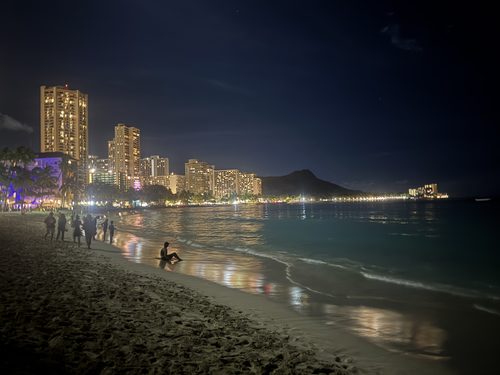
Downtown view at night
I just think this is a cinematic shot
who does this fella think he is
There was a great arcade here, highly recommend
I don’t really have much more to say about our work since it is mostly just packing and shipping of various items until the finish line, but I’ll keep you all updated if anything of note occurs. Look forward to my final post (or penultimate post? It’s unclear).
Hello everyone, This week has still been exciting even with the conclusion of all our dives. The ship still had some mapping routes to finish before we returned to port in Astoria, Oregon. During that time, we prepared for offload. Offload occurs once every five years, when Alvin, essential equipment, and parts are removed from the R/V Atlantis and shipped back to Woods Hole, Massachusetts, for maintenance and any planned upgrades.
As a mechanical intern, I spent two days draining all the oil from Alvin, including the compensation reservoirs. I think we drained about 70 gallons—way more than I anticipated—and it took a long time because, even though we created a vacuum to suck the oil out, we didn’t want to increase the pressure too much on the junction boxes and risk damaging them. I was also able to watch the post-dive process with one of the members of the electrical team inside the sphere, which was neat since I normally do not work with them. I did some other cleaning tasks, but the real fun of the week began when we docked in Astoria.
We went through the Columbia River Bar, which is extremely dangerous and difficult to navigate, so a pilot specifically trained to bring ships in and out of the bar was brought onboard by boat to help us safely dock. Conversely, on the way out of the Columbia a few days later, the pilot attempted to use a helicopter to get off the ship. Unfortunately, while the pilot was harnessed in and standing on the bow of the ship, the wind shifted, making it unsafe for him to continue, so he unclipped himself from the line to avoid injury. However, the pilot in the helicopter did not see him do this, so out of precaution the emergency line was cut from the helicopter. Apparently, the pilots at this location have not had to cut a line in many years, so it was a unique experience. Everyone erred on the side of caution and made all the right choices—so everyone was safe. The pilot then had to wait an hour for a vessel to come pick him up from our ship, which was still a really cool sight.
While in Astoria, the scientists hosted a science party at the Workers Tavern to thank the crew and Alvin team for collecting the data. It was a sweet gesture and a lot of fun to spend time with everyone before all the scientists left. The following day, the Alvin team all had the day off—which was wonderful. It was our first day off in weeks, so sleeping in was luxurious. Some members of the team and I went to Sunset Beach. Being from Florida, it was amazing to see mountains at the beach. It was also freezing, but I had a goal to swim in the Pacific Ocean, so I did—for about two minutes—because the water temperature was around 68°F and the rip current was strong. It was a nice change from Florida beaches; here there was so much space to walk and set up. We even stopped at a second beach where The Goonies was filmed and got to see the notorious boulder the ship sailed out from behind in the final scenes.
We proceeded to go into town for lunch before continuing our sightseeing. I went to the Astoria Column, where I climbed 186 steps for a breathtaking view. I was very lucky with our timing because, as I learned from speaking to a local named Boats, the weather had been rainy and foggy for some time and was expected to return, which would have obscured our view from the tower. At the same park, there are hiking trails, so I walked a couple of miles on one of them to reach the Cathedral Tree—a giant spruce. The weather and greenery made it a perfect hike.
Now, we are transiting from Astoria, Oregon, to San Diego, California, our final leg of the cruise. This has entailed much cleaning and packing, but I am looking forward to getting into port on the 30th.
Astoria has come and gone to usher in a new era! We left on the 25th and we may actually be on track to arrive earlier than expected, so we’re slowing down our transit a little just so that we get into port on the 30th as established just to avoid the logistic issues.
Astoria is a pretty nice port town all in all (plus the security at the port was slightly buffed compared to Newport’s – they actually asked for identification cards this time). It’s got a cute trolley that rolls around occasionally, a delightful sparkling lemonade at the Columbia River Coffee Roaster near port, and truly beautiful beaches. I’m told that the weather wasn’t usually as nice as it was when we were out exploring the town, so I’m glad I got to explore it in its full glory.
you would think that they would add some sort of protective measure to this thing
My haul from the coffee place. Excited to try when I get home
When I say that the beaches (specifically Sunset Beach) are beautiful, I mean they’re REALLY good. This is genuinely the most optimal place I’ve seen to run on sand – barely any people, spans for miles (probably), no sharp objects to step on, stunning view, you name it. Wish I could have gone on a couple more jogs here!
I haven’t gotten enough of the ocean yet, apparently
this place is HUGE
There was also a whale carcass here too. It was a little odd that there were no decomposers or flies or seagulls or anything chipping away at it, but I just assumed that it was pretty old and that the scavengers got to the good parts already. We were kind of worried about the corpse exploding from buildups of gas during decomposition (there have been several reports of this event occurring) so I observed it from a distance. Despite being decently old, it still smelled horrendous, as expected.
oh… that’s gore of my comfort character…
They have wild rabbits at Cannon Beach. I don’t mean the brown ones that graze on lawns and stuff, these ones look like people literally released the local pet shop population upon the ecosystem. Somehow they seem to be thriving – do they not have any predators in this region?? I can tell that they’re wild by the way they react to humans but they also seem very used to the presence of people. Intriguing.
bnuuy
Most of my actual work on the ship during our transit has been packing things up and getting ready for moving out. We started running low on crates to put supplies in, so things have been getting a little stagnant recently. I’m trying to counteract this by keeping myself busy designing printed circuit boards and having them fabricated and sent to San Diego so I can pick them up when I get there. There’s a lot of talented electrical engineers on the Alvin team that I can request advice from, so I’m grateful for this opportunity to bother them about extremely trivial KiCAD questions. I also gained a newfound hatred for tariffs.
please excuse my suboptimal pcb layout
you’re kidding me…
They gave a tour of the engine room today and showed us some of the tools and equipment they use to maintain smooth operations of the ship like power distribution and propulsion. It was very interesting and yet very loud. Also smelled like chemicals.
way bigger down here than I thought it would be
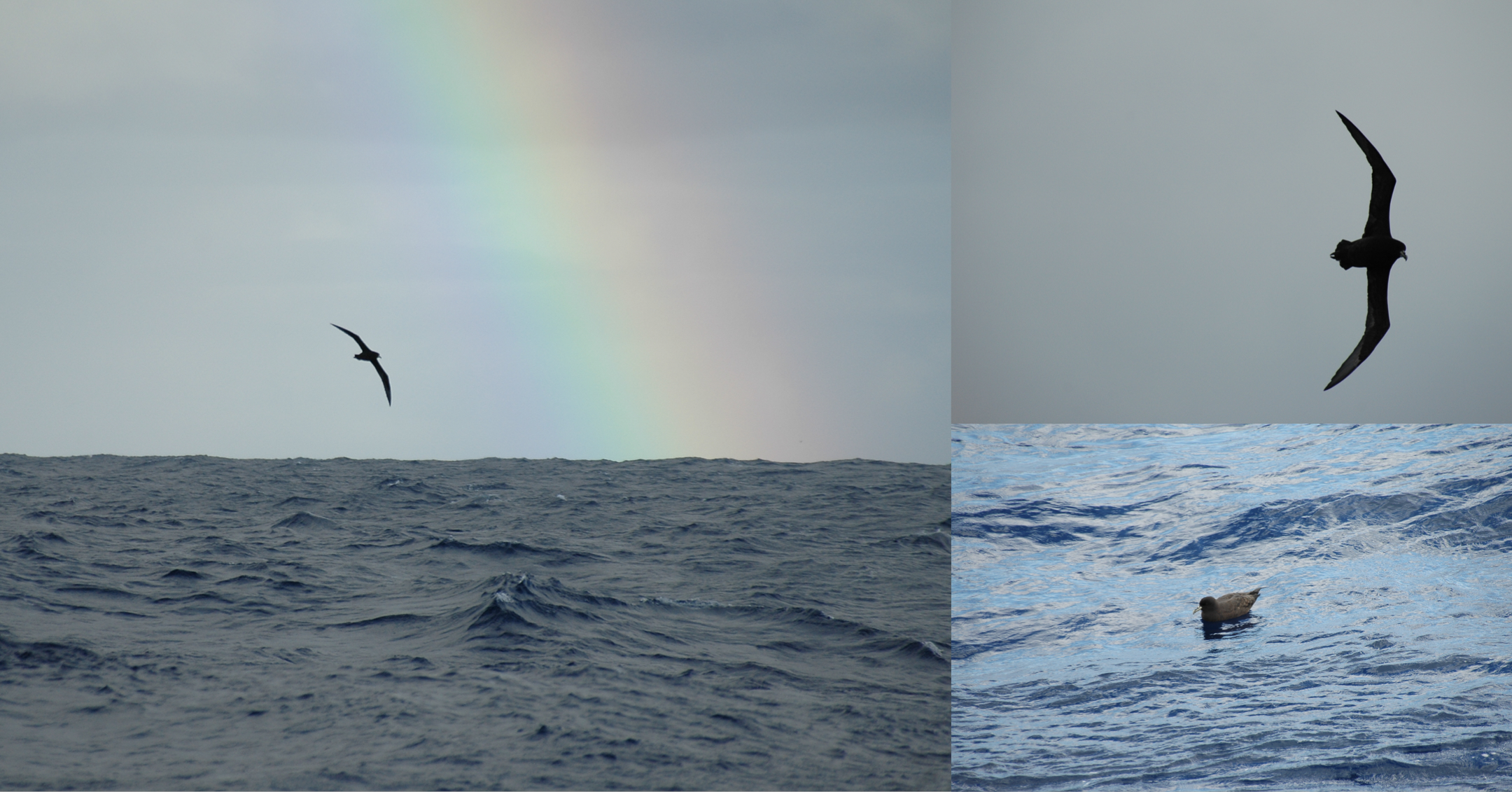
I didn’t expect to see so much wildlife on this stretch of the trip, but so far there have been a lot of sea lions, plus several whales! The whales have been frustratingly difficult to capture on camera, so you’ll just have to excuse the cryptid-like photo of this one. If you can figure out what species this is from this image alone, tell me in the blog comments or something. I’ll be very impressed.
top 10 haunting photos before disaster or something
im pretty sure these are sea lions?
I think I have one or two more blog posts left in me before the internship ends. Now that the end is so close in sight, the four weeks I spent out here didn’t feel so long. I’m a little sad that it’s ending so soon now but I’ve been having a lot of fun out here. See you guys in San Diego!
Let the science begin! At long last, the Coast Guard duties are over, and we’ve moved east for our science stations. The scientists’ morale had nearly hit rock bottom, and a collective thrill ran through them as the captain announced the end of the Coast Guard operation. Unfortunately, it was short lived. In the absence of foreign icebreakers, the wind and ice teamed up to thwart our science ops, and our first couple stations had the ship fighting tooth and nail to maintain position in 30+ knot winds and massive, drifting ice floes. Finally, we conceded defeat, and began a day long transit south to lower stations, hoping for gentler weather and less ice, which we found (along with more polar bears along the way!).
Science is now in full swing, and I’m not sure any of the scientists are sleeping. We’re doing round-the-clock CTDs and mooring recoveries and deployments. I was curious what STARC’s role would be in this- in my experience on other vessels, marine technicians are typically closely involved in every step of the process. However, the Coast Guard deck crew handles pretty much everything on the deck, and the science team has two members overseeing the moorings. It was beginning to seem like our role would be pretty small, but that impression didn’t last long.
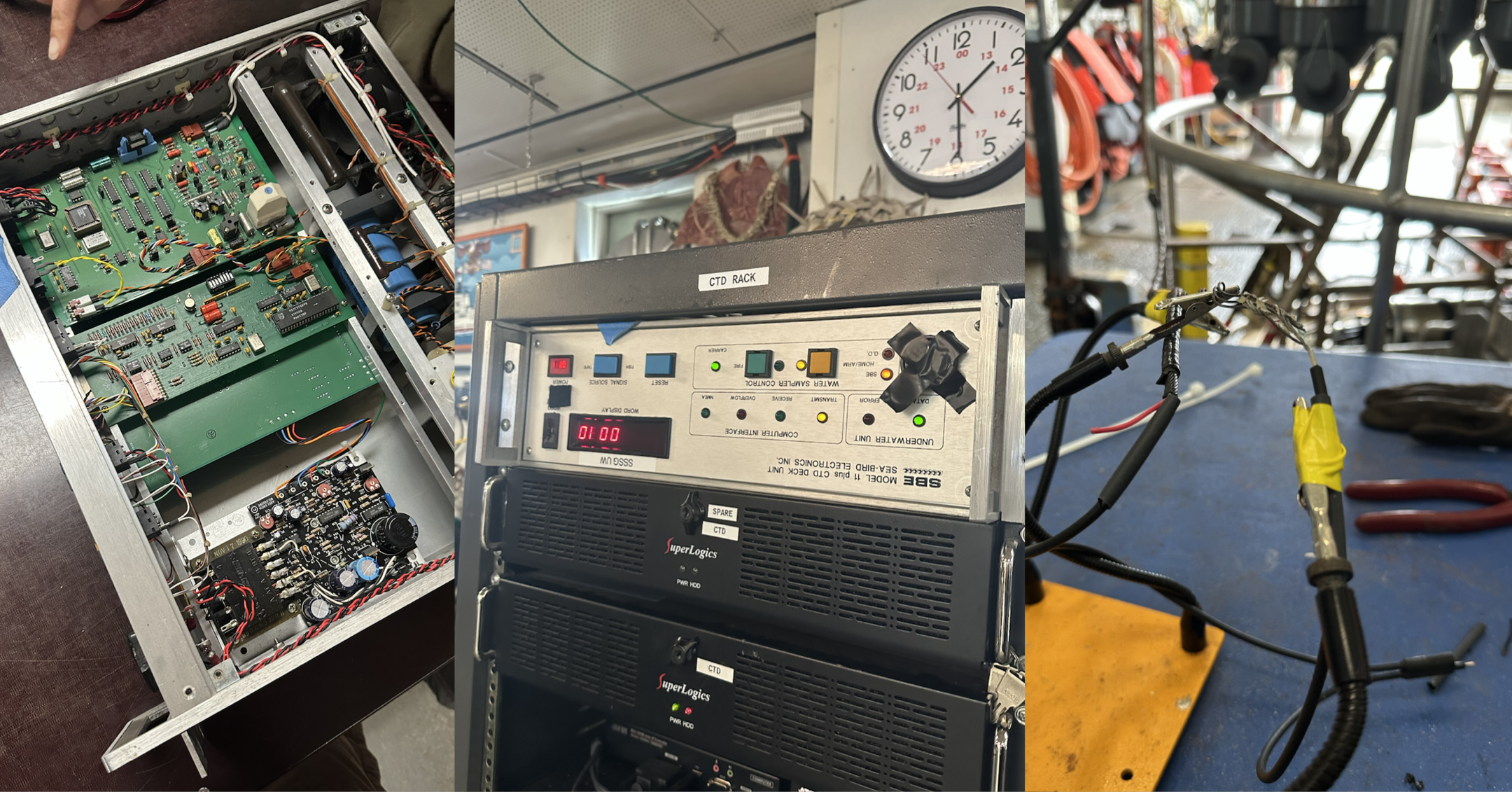
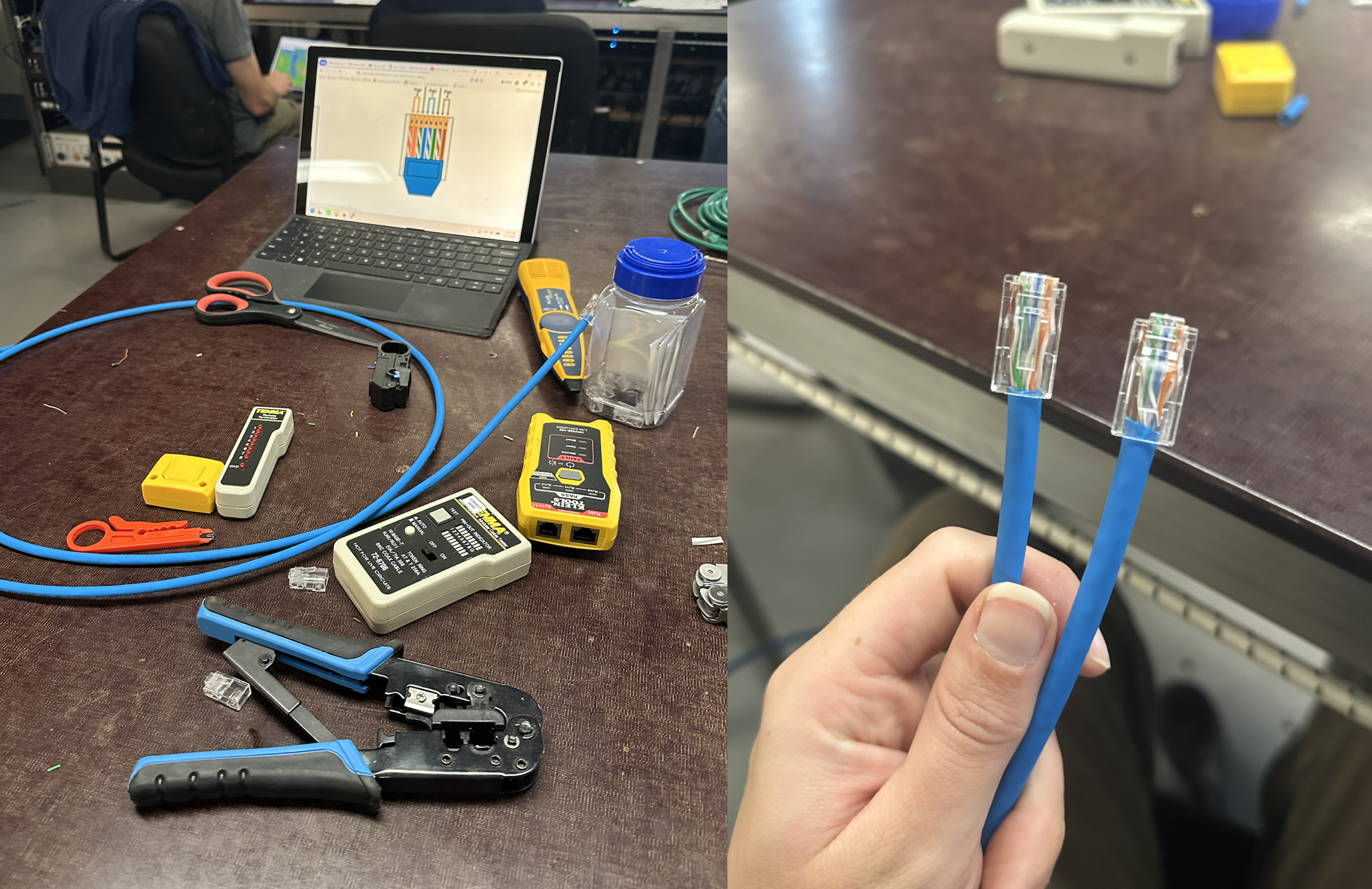
Between sensor maintenance, things going wrong and breaking, old issues being found as the gear gets put into use, and supporting the deck team and science, STARC has had plenty to do. I got an awesome opportunity when the CTD cable got kinked again and needed to be reterminated overnight for the next station. Because I’d walked through it the first time with Brandon and Cora and had the old one to check my work with, I felt pretty confident reterminating the cable solo. And I did for the most part! I stripped the new cable, soldered, and taped it while referencing the old one, and it worked like new. Brendon and Bowman helped me with the finishing touches, and getting the grips on where it attaches to the CTD- a deeply aggravating, multi-hand procedure. We all got it set and ready to go, and it worked! Additionally, we took the opportunity while the CTD was down to poke around the altimeter, which had been giving some funky readings as it approached the seafloor. We’d messed around with the positioning and had no idea what was going on, to the point I think we suspected the sensor itself might be malfunction. But Brandon and I poked around the cables and realized the cable itself was bad- apparently a pretty rare issue, and cool to see the problem in action as the multimeter’s beep-beep-beeeeep broke up while Brandon wiggled the cable.
The retermination in progress
In the quiet times during transit or a long CTD cast, I’ve started tackling design projects with STARC’s fancy 3D printer, which can print with rubber, a carbon fiber composite, and kevlar. I made some goofy little fish, then transitioned to functional things. I made a slip-ring-thing designed to keep the serial connections to the winch cables on board from getting twisted, which took four tries to get just right. I’m currently working on dummy plugs for some of our Seabird sensors while they’re not in use. My first four-pin plug came out perfectly- deceptively easy, as I’ve hit a wall with the two- and three-pin plugs. I’m on take 5, at least, and losing my mind- they’re off by fractions of millimeters EVERY time!
Digging for supplies in the hold.
Taking a break from that, I made a couple little shims for the mooring winch. Although the deck’s got it handled, I’ve been trying to get outside during the moorings to learn what I can about mooring ops. The mooring-tech-in-chief asked if I could print something to wedge under the joystick to fix its speed, so I printed some shims that stick it in the right place. My second iteration was a success, a triumphant breath of fresh air. In my procrastination, dreading returning to the dummy plugs, I’ve begun knitting a sweater when my hands aren’t busy. I started this sweater a few years ago on my first scientific cruise, and I’m determined to get it done now- I want an extra warm layer!
Sunrise… or sunset? The days are so long, it’s hard to tell.
Part of me feels like we’ve just begun science and part of me feels like it’s been going on forever, but the shocking truth is we don’t even have two more weeks before we head for home. It feels unreal, but so amazing, especially as it gets colder and we’re getting to watch the ice form. Today I saw pancake ice, an early stage of ice formation, for the first time, which speaks for itself:
Anyway, on to the next station! I’m having a great time, learning a lot, and only a little chilly. And the polar bear count is at 11- what a crazy experience!
It is officially day 21 onboard the R/V Point Sur, and… wait, is that… Land ho, land ho! Though it is a bittersweet time, demobilization of the cruise is a certainty. The science crew has concluded their work, gear has been packed up, and the deck swabbed. The only things left to do are unload it all and wave our white handkerchiefs in goodbyes. What else is there for it but to get started!
Science brought aboard their own winch with matching block. It is no small endeavor to take it back down, requiring two men to climb the A-frame, one to operate the crane, and at least one more on deck to help facilitate. Equipped with safety harnesses, the climbers take to the frame and attach the crane hook to the extremely heavy block. Once detached, the crane can support said weight and lower it to the ground. The ships standard block is put back into its rightful home, and our courageous climbers can make their descent.
Hey, that looks like fun! Seeing the strength and importance of the crane for this operation gave my mentor Grace an excellent idea: “Let the new guy try it!”
Though I am certainly still hesitant, I can now confess that I have a rudimentary understanding of crane operations. I wouldn’t quite trust myself to move anything too important, but it is a skill I look forward to cultivating more in the future. Having a multitude of people on the ships crew that know how to operate machinery can be a life saver! This ensures that at any one time, you can find a crane operator that is both on duty and not actively involved in another operation.
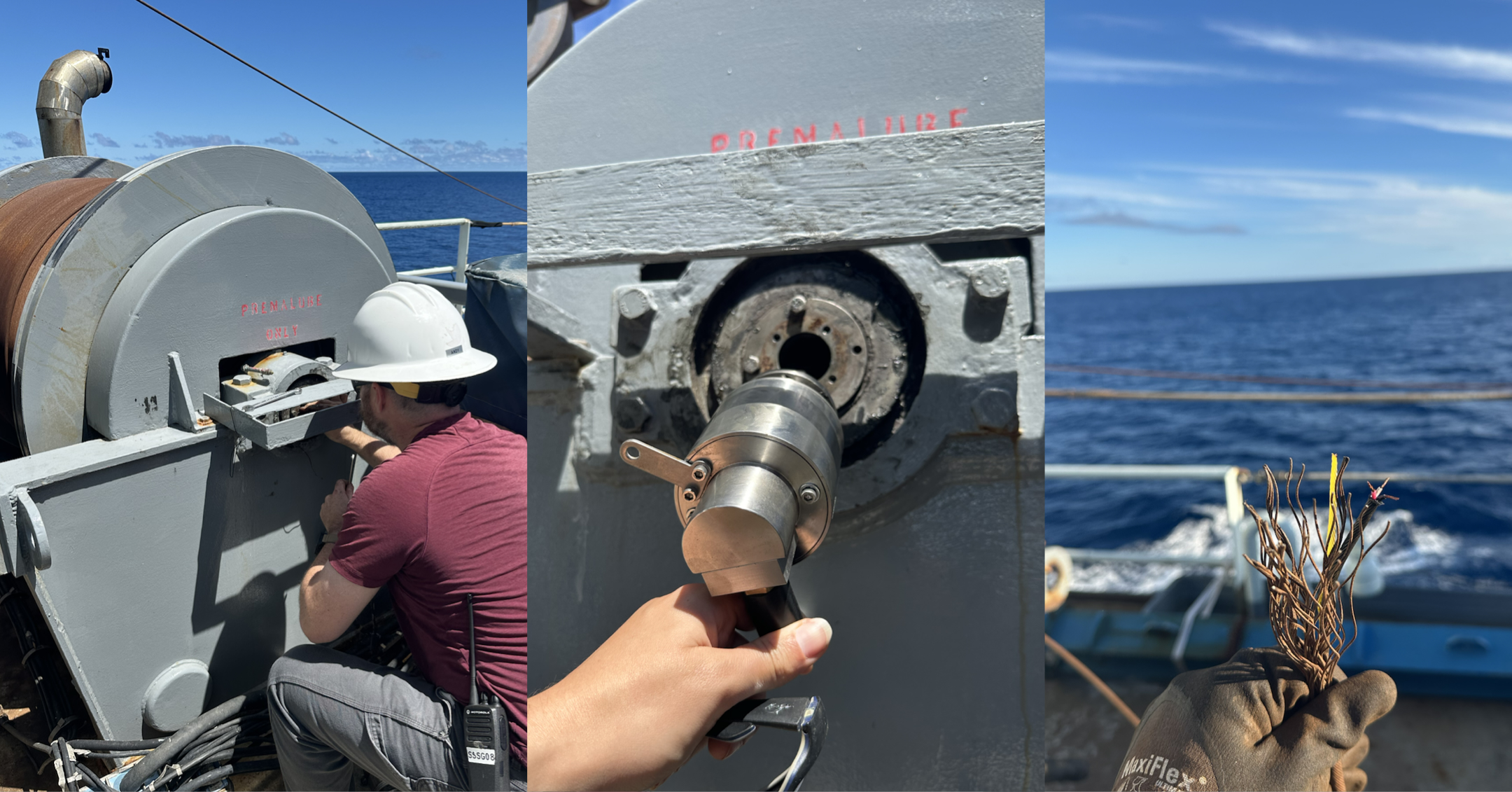
For deploying the ROV, the crew had attached a soft line to the end of the winch wire. While it worked perfectly for the operations of the cruise, it was no longer needed. For removing the line, we set up a clever little DIY station. All it takes is a boat hook and an empty spool, and spinning away we went! The line was coiled up for storage, and the tarp removed from the winch spool. All ready for the next cruise!
To complete our offloading, we needed a crane with a bit more power than the ones on board posses. We mosied on over to the port pier, where we could have some help with the lifting. This is the first time I have seen the forward crane used, to lower the gangway off of the bow. Unlike the crane on the back deck, this particular model has two ‘knuckles’. With two places to bend, it has a greater mobility but also requires greater skill to operate. Skilled crane operator mark slowly lifted and lowered the gangway to the pier, where forklift driver Grace could position it.
With demobilization of the cruise coming to an end, we began preparations for the next scientific mission. Part of our maintenance included cleaning! The whole boat gets a decent scrub down, and the tech lab gets a good polishing. We opened up some of the computers, and dusted out the insides with a high powered blower. The high seas have some serious dust!
A little back story no one asked for:
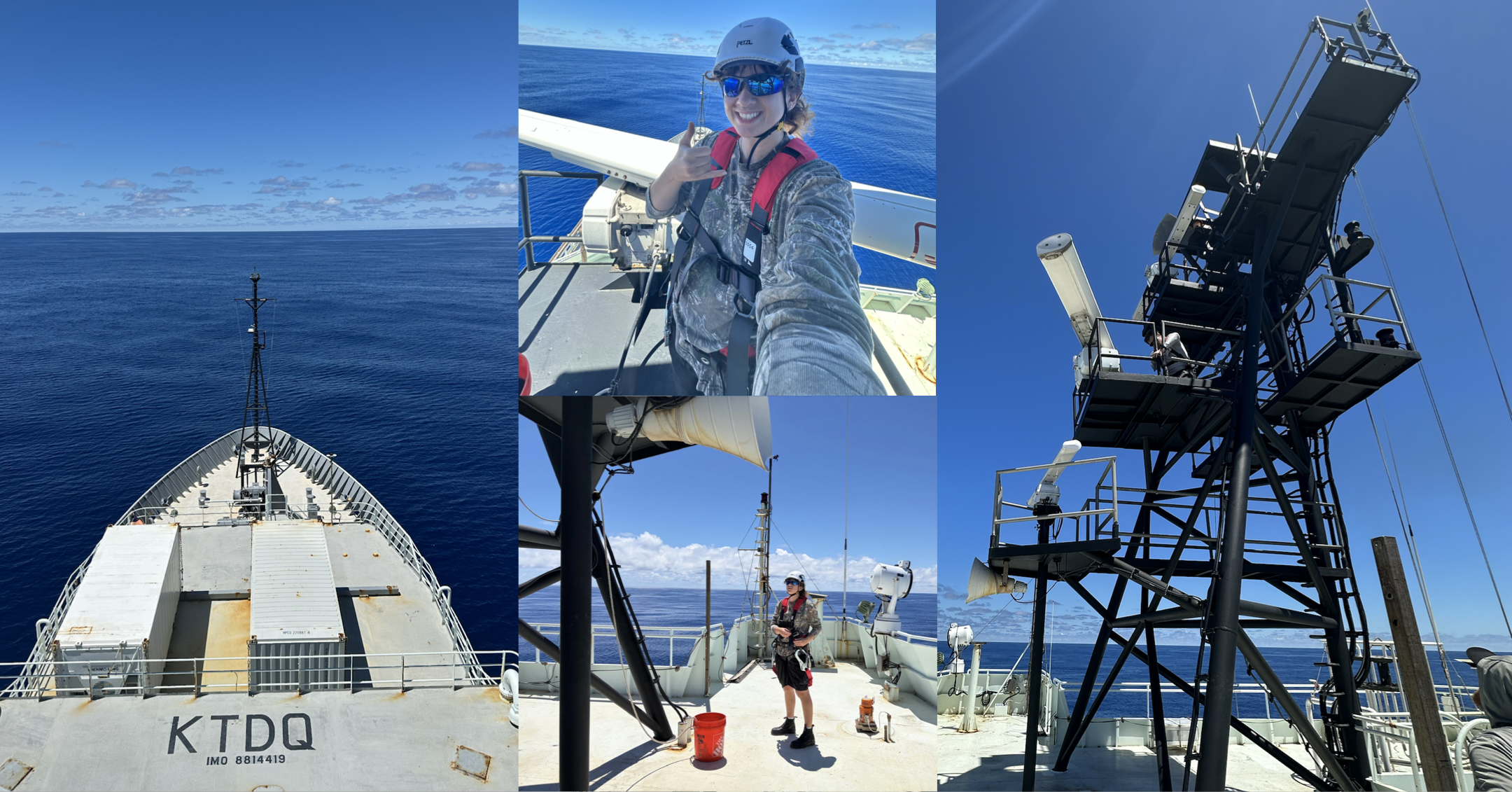
The Pt. Sur is the sistership to my school’s vessel the Cape Hatteras. A dream I always had while sailing on the Hatteras was to climb the mast, or the yellow ladder as we called it. For liability issues, obviously I was never able to as a student.
Though this mast did not include a yellow ladder, I finally was able to summit my mountain of the mast and had a little climb up while in port! Grace ensured I was harnessed in for safety, and up we went. It was a great view of the port from the top! Even though it is by technicality only, I can finally say I’ve seen my white whale.
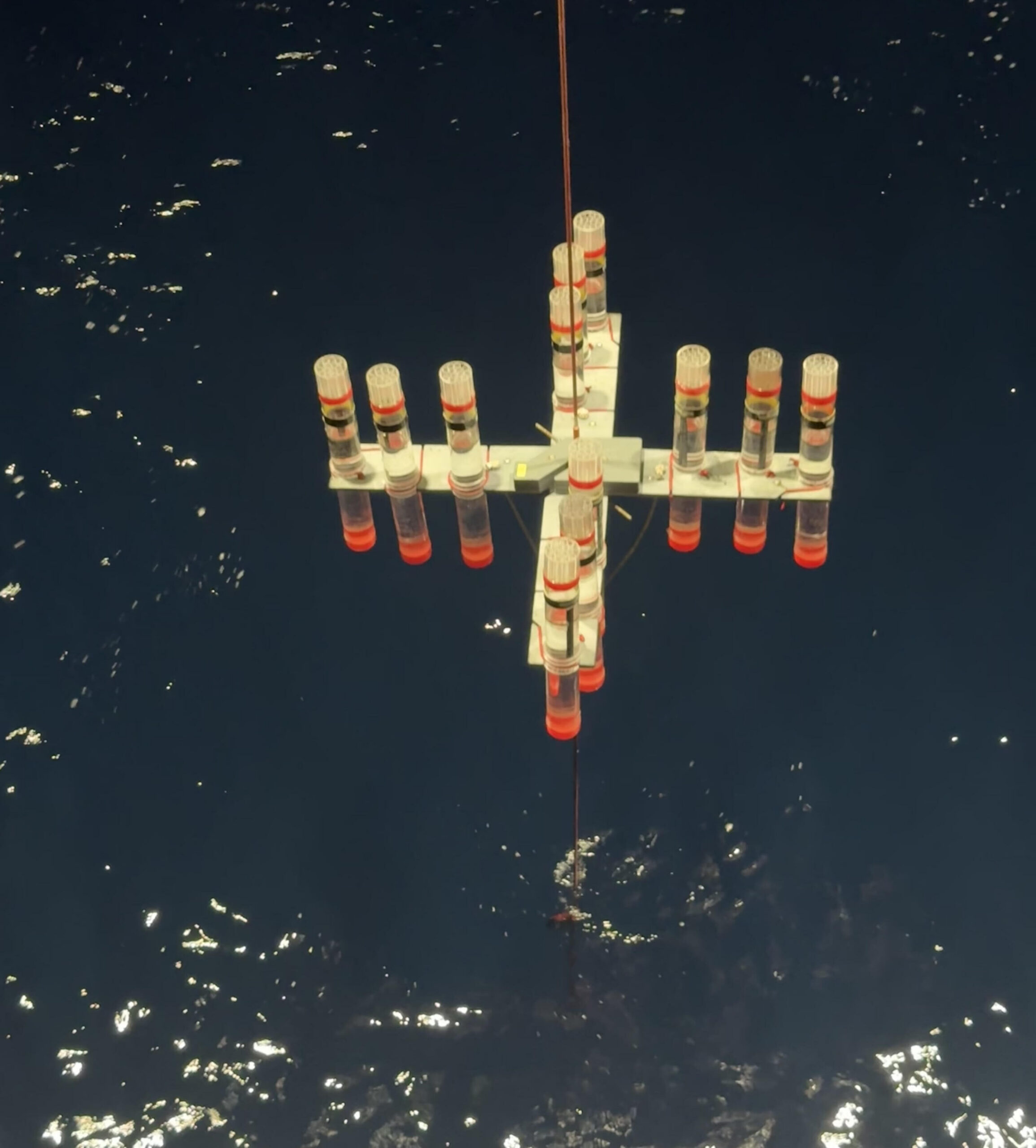
Now that mobilization of the next cruise had begun, gear was being moved to the ship in preparation. This is the primma donna of our mission- the Megacore. Even though the name sounds like something out of the Transformers movies, it has a fairly simple purpose. Mud is the name of the game, so much so that this science group refers to them selves as “The Mud People”. Equipped with 12 plastic tubes, this rosette sinks all the way to the seafloor to grab mud. All going well, we pull it back up with 12 perfect cores of mud. Fingers crossed!
The sight of this screen first thing in the morning makes you rub your eyes and wonder if you ever woke up in the first place! This seeming gibberish means that something is amiss within our software setup. It turned out to be a simple baud rate issue. Phew.
The lovely gentleman sitting next to Grace is Roy. He came aboard to help us set up the gear and ensure everything is working. Much like the previous trip, this group had brought a transducer to be mounted the the ships pole. This transducer specifically tracks the mud core as it sinks, which relays an accurate position of the mud sample. It takes a surprising amount of configuring to achieve this!
With all gear stowed, electronics set up, and science crew on board, it was time to head out! Even during transit, there is never any time to waste. The Megacore can be a finicky machine- every piece and part must be perfectly aligned and set in just the right way.
It was with baited breath and a stern glare that we deployed the core for the first sample of the trip…
The anxiety was well deserved, but as all things do, it worked out in the end. We successfully recover the core, and 11 out of the 12 tubes were full of delicious and delectable mud samples! Once the gear is on deck, it is an immediate all hands in to get the mud processed before the next station can begin.
The cores themselves detach from the frame, where they are photographed for documentations sake. Caps are added to each end of the tubes and sealed with tape to ensure no sample material is lost. One of the coolest aspects of these samples, in my uneducated opinion, is that the core also collects the water immediately above the sediment as well. This means that any benthic critters hanging out in the water come up with the mud! We got to see some polychaete worms in one tube, which are some of my favorite animals to witness. What a rare treat to see our wiggly little friends from the abyss!
The water is siphoned from the tubes for filter sampling, and then the mud processing begins. Some tubes are kept whole, to look at the layering of sediment, and some are chopped up into perfect 3 centimeter mudcakes. This allows the scientists to look through the material thoroughly. It’s messy work, but it looks pretty fun!
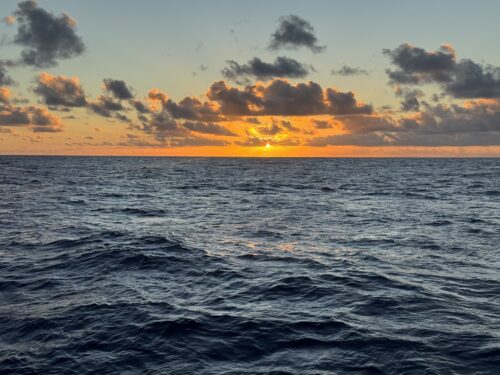
As the mud crew clean out their final cores for the day and turn to bed, a gorgeous sunset signals our time for the week has ended. Though a great deal has been accomplished, there is work yet to be finished! I’m hoping to find some wormy friends in the mud, and maybe even find friends in my fellow shipmates. Who knows! Until next week…