Category: R/V Thomas G. Thompson Page 1 of 8

Week 4 – 4th Deepest Point on Earth – Jessica Leonard

This week we had some of the calmest waters one could ask for going right into 5 meter waves! This range gave me lots of practice deploying the CTD in variable weather conditions as well as the knowledge of when it’s just too much to deploy safely.

While the sea was dead calm, an AB and I went up on the flying bridge to assess some railing damage near one of our radars. Going up top means rigging up in climbing gear and using lobster claws to climb the mast. From the top you are able to get the best view of the ship! As some of the radars emit radioactivity, it is necessary to shut these systems down beforehand.
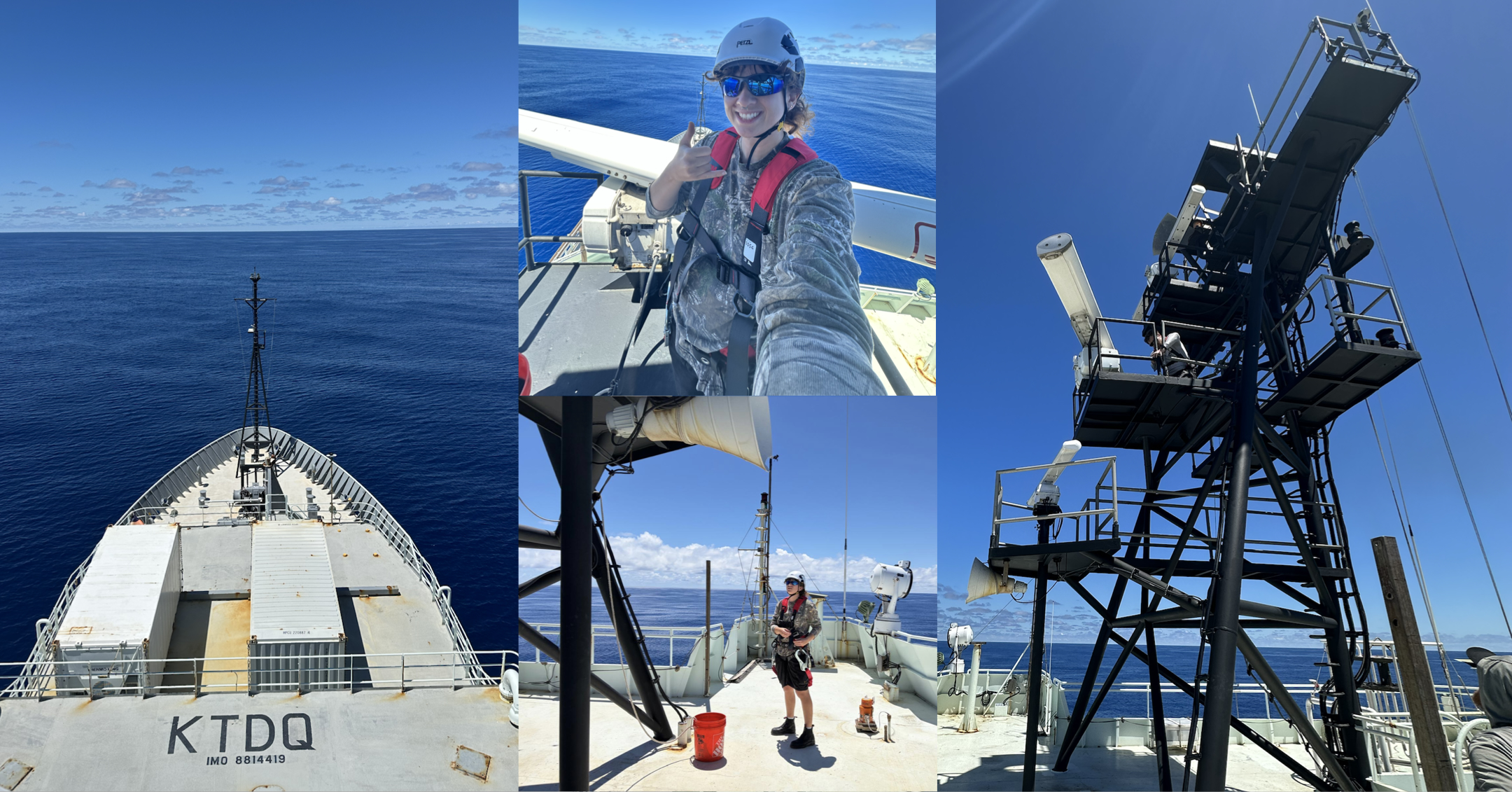
View from flying bridge along with the flying bridge itself.

Our CTD is still experiencing issues so we spent our time transiting between stations and the bad weather days troubleshooting and reading as many manuals as we could to find our potential issue. We replaced the slip ring on our fore winch that serves as the connection between the winch wire and the SBE11 deck box for CTD power and communications while deployed.
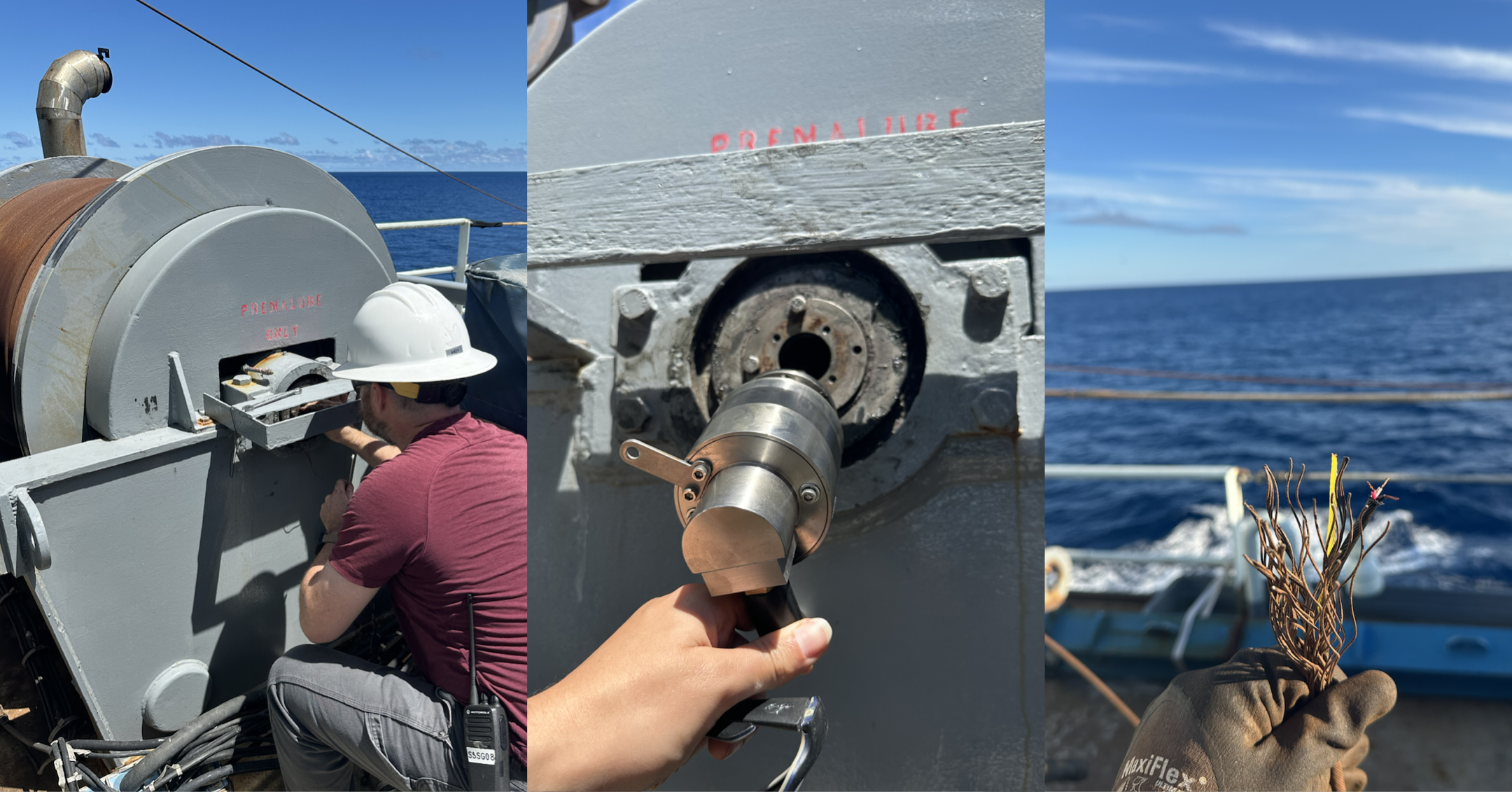
Fore winch slip ring replacing and the inside of the winch wire

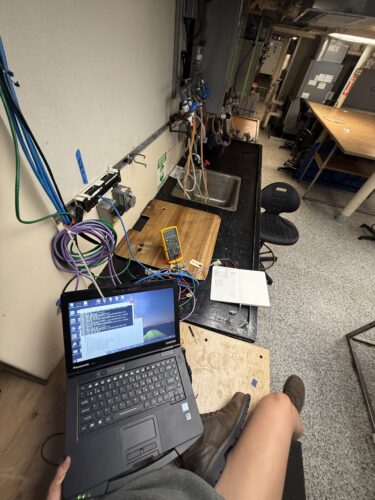
I spent some time Megger testing our aft winch wire and triple checking it was not suitable for use. We also checked out the SBE11 deck box’s electrical guts to see if a capacitor had fried or a wire had disconnected, but, there was nothing to be found. We decided to switch out the deck boxes anyway and electrically re-terminate the CTD which I got to do in full this time…in the 3-5 meter waves! Our CTD is still having some electrical troubles, not as many as before, but, zero issues are the preferred amount so we will continue to troubleshoot. By the end of this cruise I will have been trained as a decent at-home and ship-based electrician.
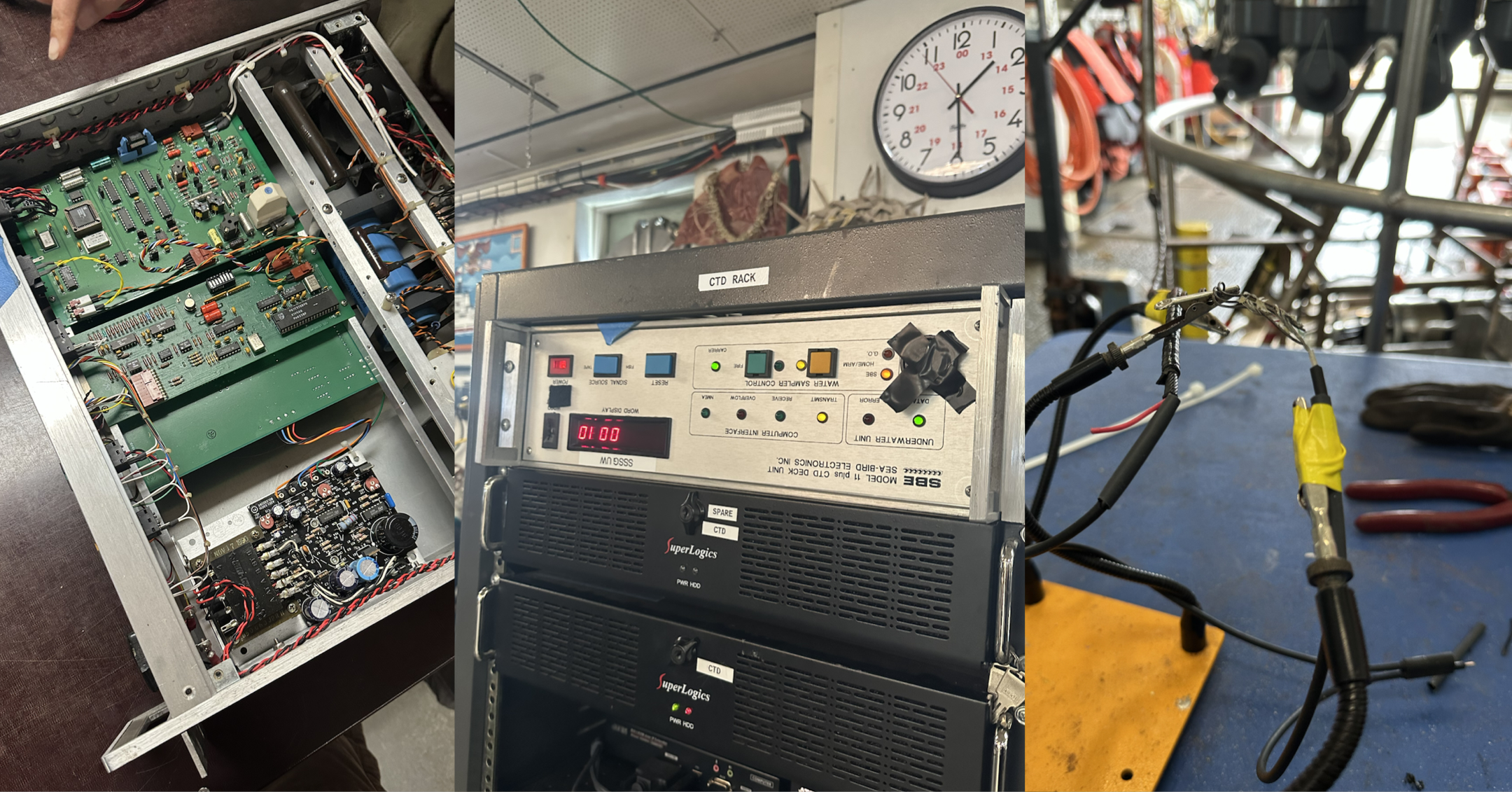
Inside of the SBE11 deck box and a CTD electrical termination

In science news, we reached our station that is the deepest point in the Kermadec Trench! Sitting at 10,049 meters in depth, this point is the fourth deepest point on Earth. URI’s DAP (Deep Autonomous Profiler) has already completed two successful deployments to this depth and will continue to for the next couple of days.
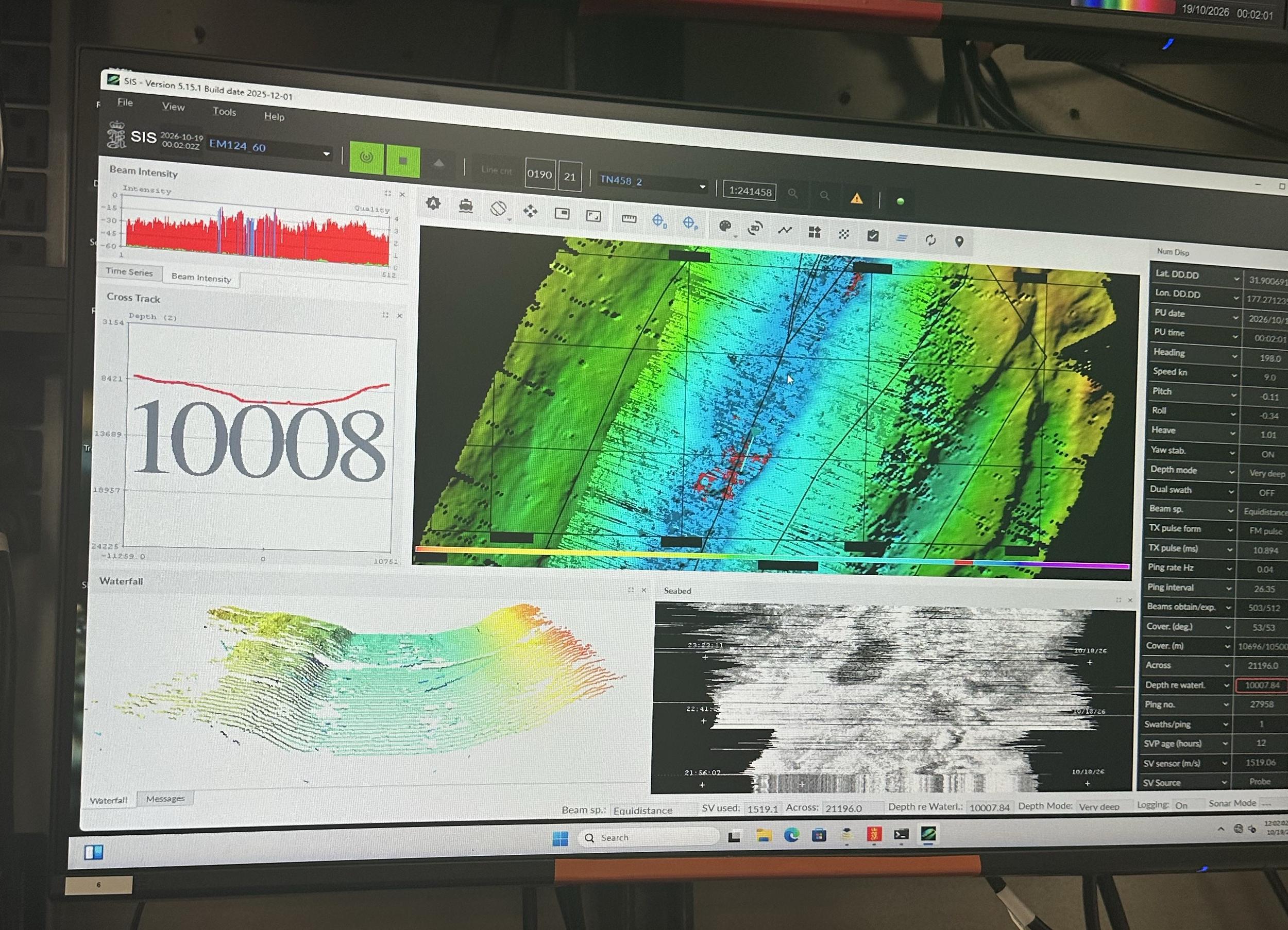
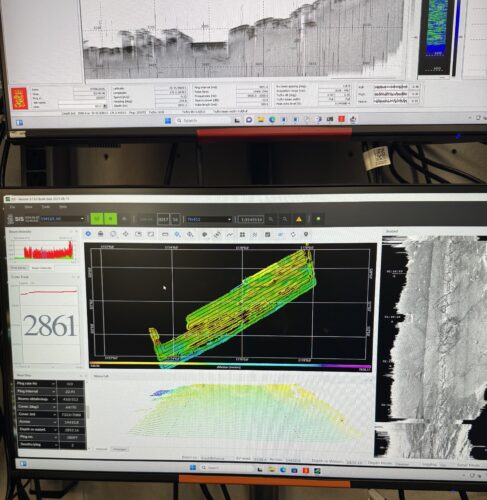
The EM124 multibeam mapping the deepest point in the Kermadec Trench

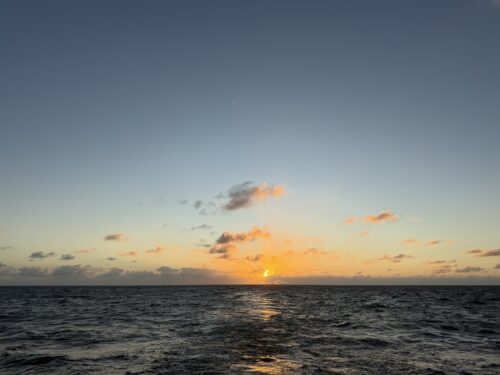
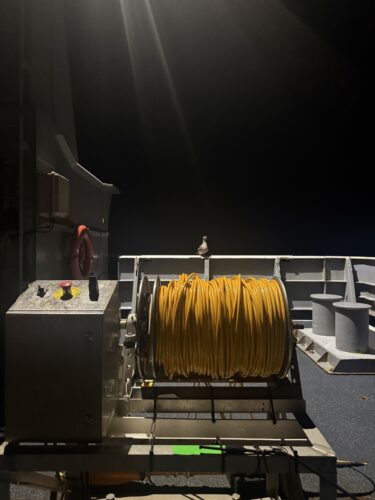
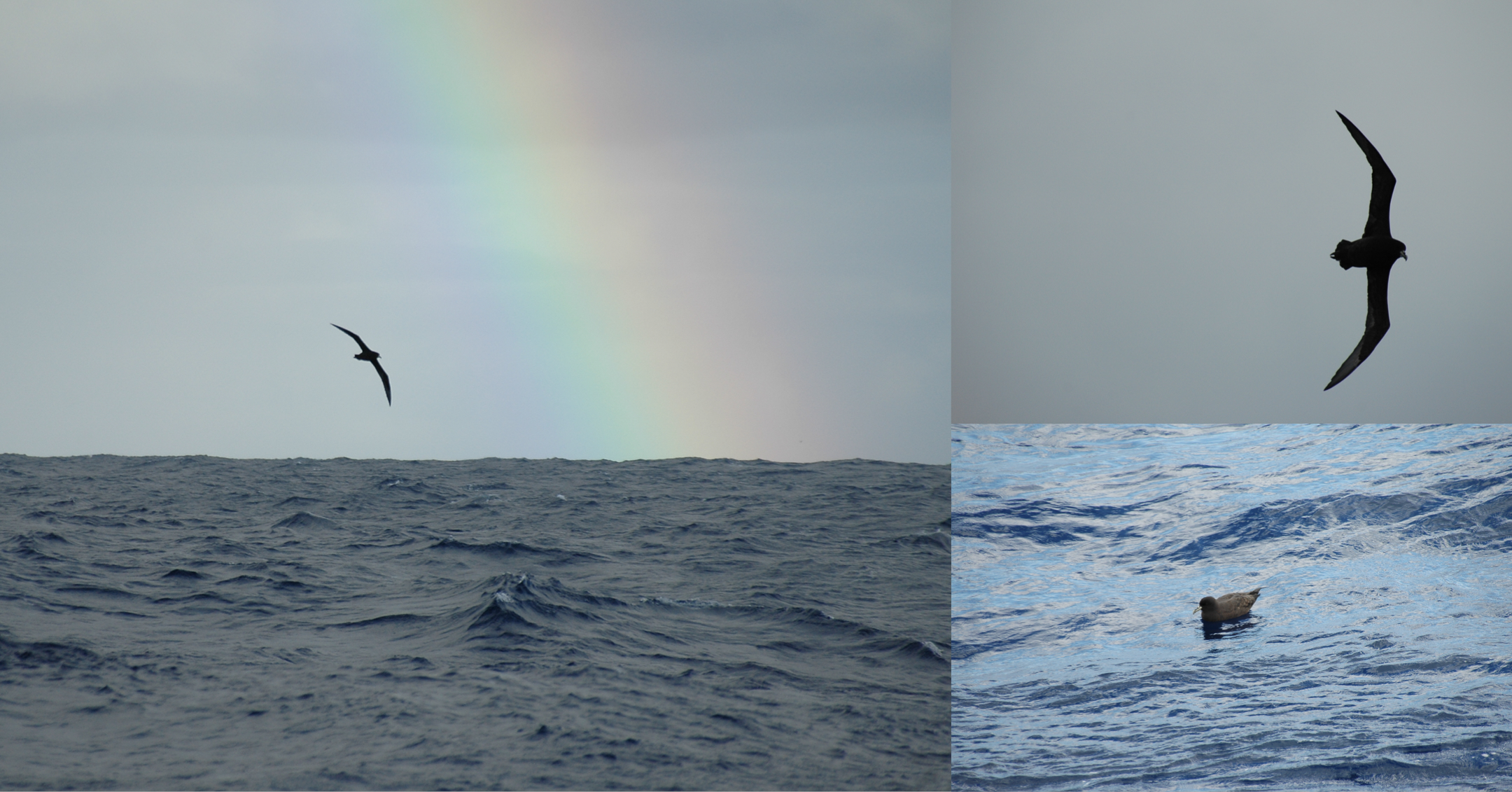
As always, featured are the petrels that have been following us for days along with a rainbow that graced us after the rough seas.
Week 3 – Transiting and Food – Jessica Leonard

That’s a wrap on 2/6 weeks at sea!

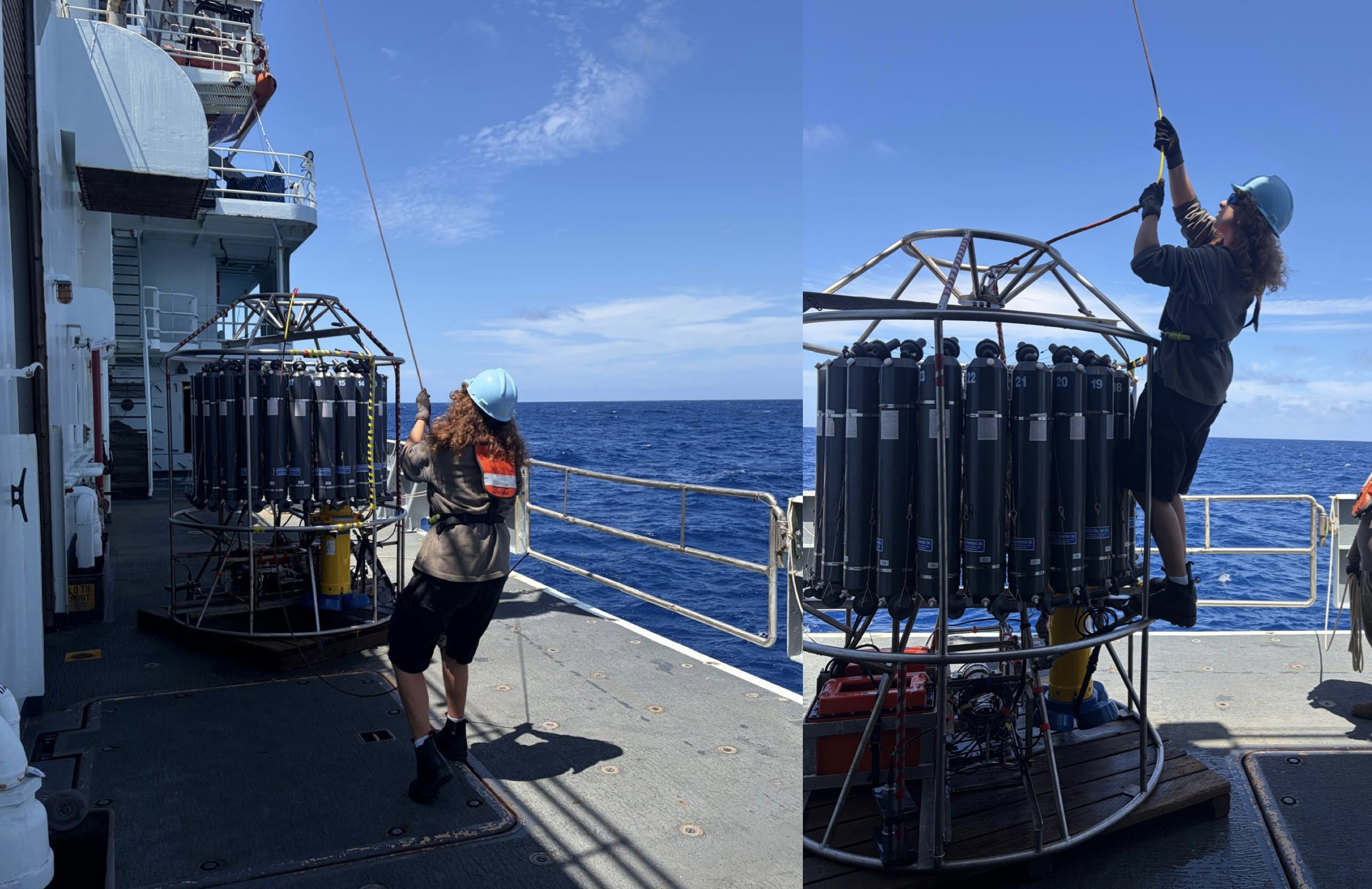
This week we spent the first half transiting to the northern most end of the Kermadec Trench and have been sampling here ever since. This means lots of downtime and lots of repeated operations. This week I added deploying the CTD in addition to A-Frame operations now working the hydroboom and working the communications line between the deck and the winch house. This includes ensuring safety of the deck, people, and the CTD. We watch the winch cable to ensure it doesn’t hit the side of the ship, bring up the CTD in a safe, controlled manner, rinse the CTD once onboard, and secure it safely in the bay for scientists to sample from the niskins.

Following the winch wire up the CTD keeping tension on it as the winch pulls it up to ensure no crossovers or gaps in the wire spool.

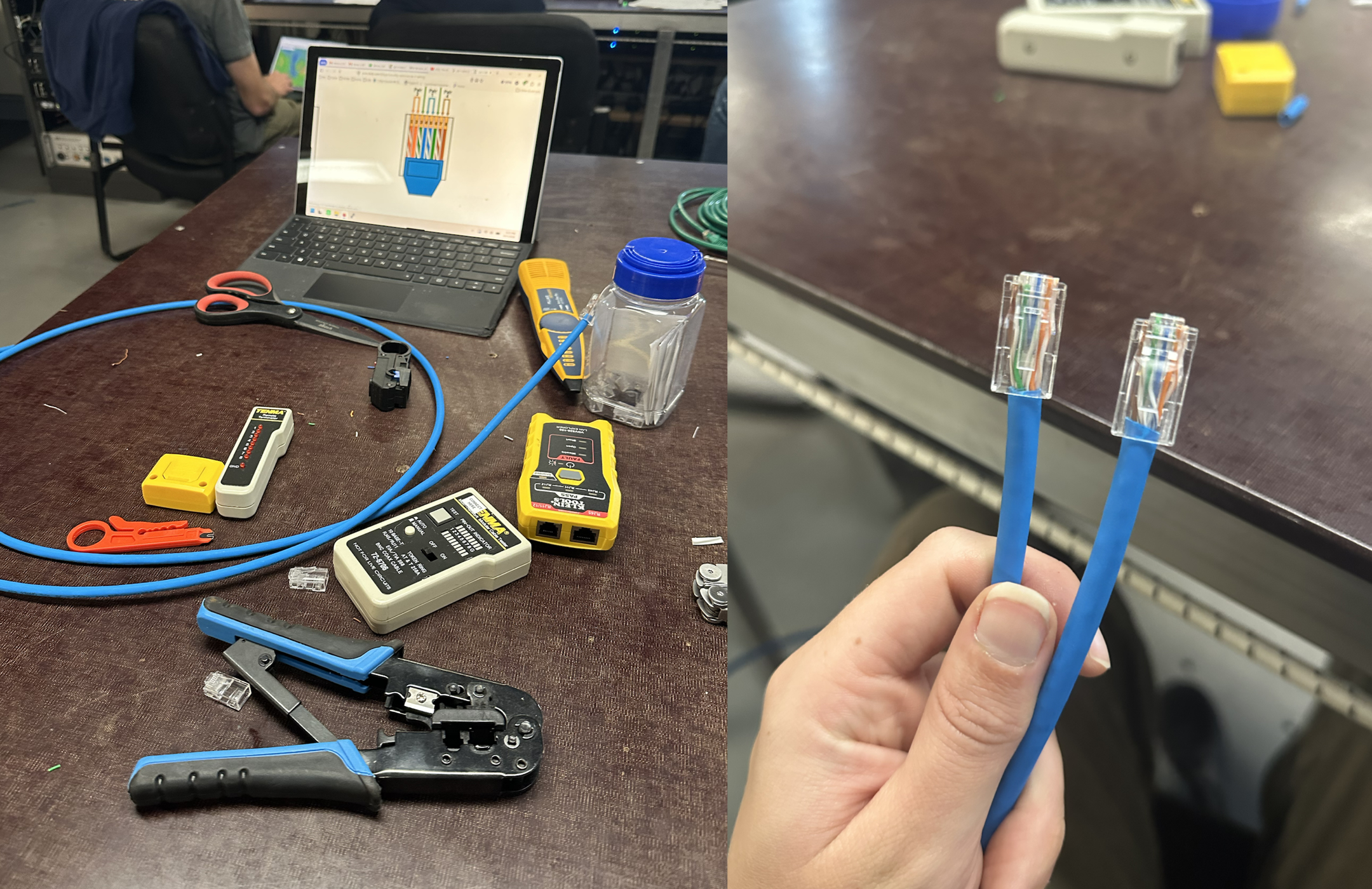
During the transit I learned how to make RJ-45 Ethernet cables which we’ll use on the switch boxes connected to the science servers. Electrical work and network management is just as important as deck operations in a marine tech’s role if not more important.

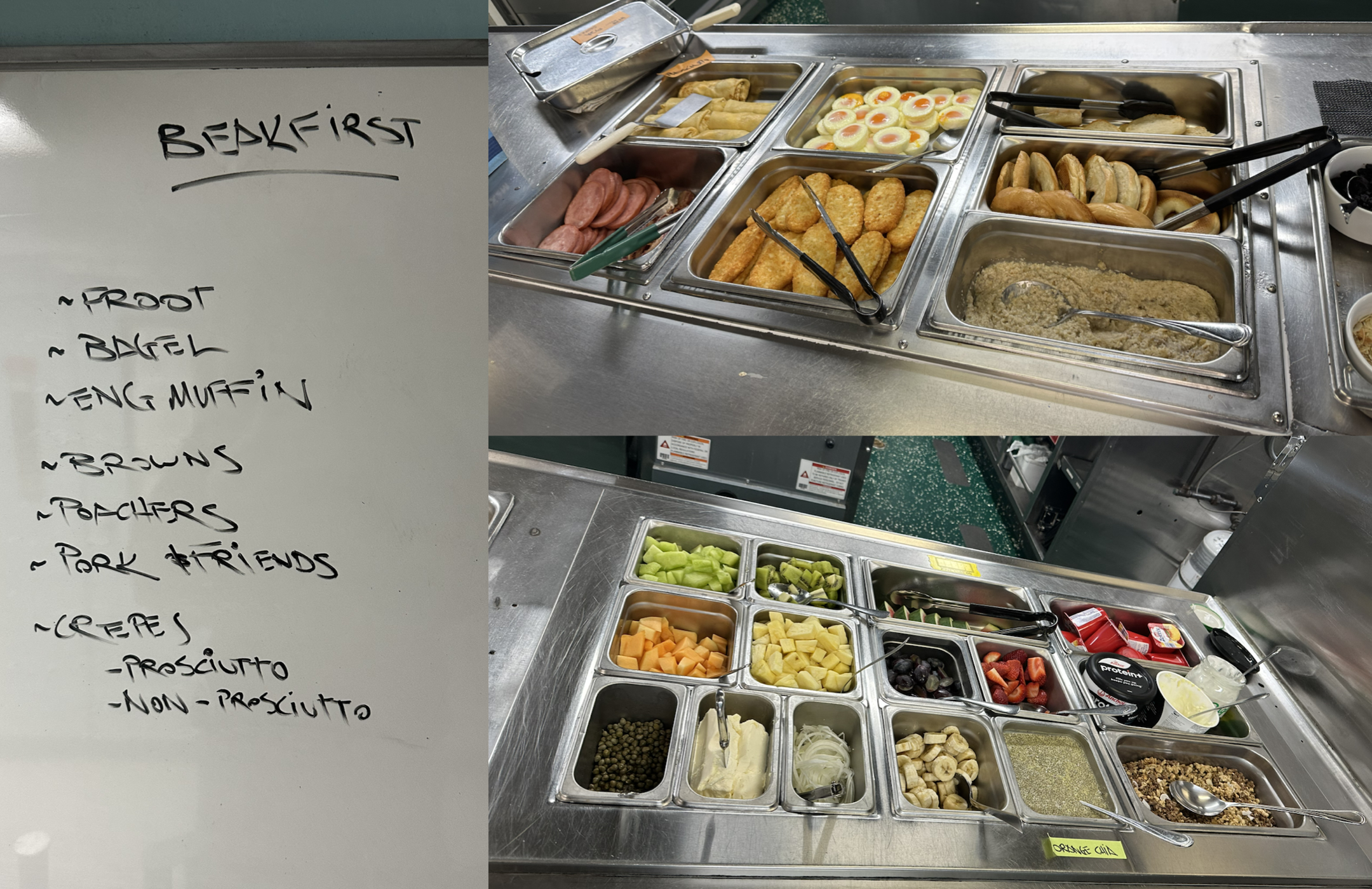
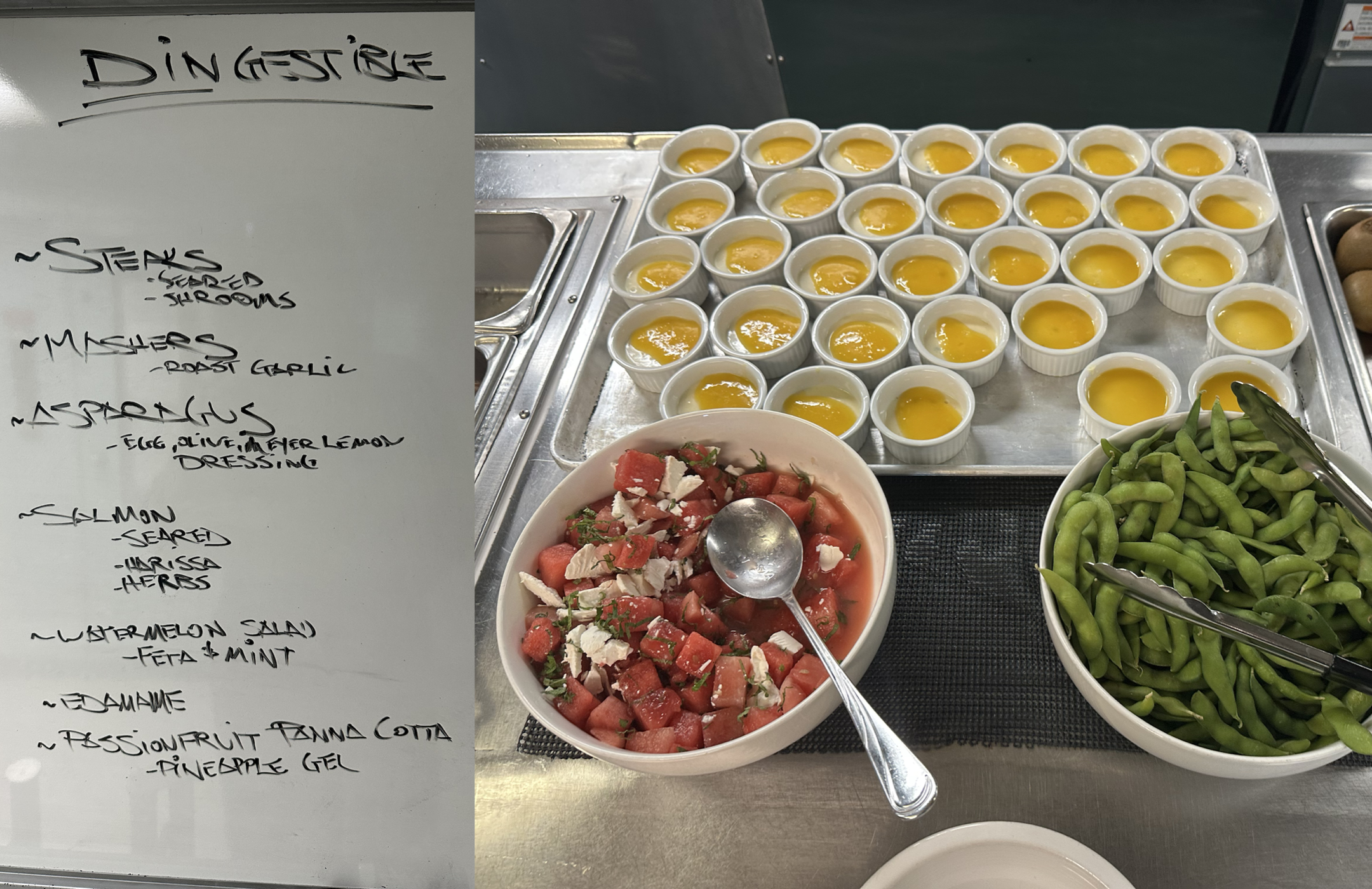
Because this has been a slower week, I wanted to highlight some non work related but very ship related content! Luckily, we have some of the best chefs in the fleet, and I want to showcase some of their offerings. Our chefs have been providing us with a great variety of meals, flavors, foods, and are accommodating to all dietary restrictions and preferences. Outside of meal times we have a plethora of leftovers, breads, cereals, ramen, snacks, cookies, candies, dried fruits, ice cream, sodas, seltzer water, juices, coffee, teas, milks, and coconut water available. Featured below is a standard breakfast for us and a particularly phenomenal dinner we had.

Breakfast: Cold Bar: Array of fresh fruit, greek, fruit, and dairy-free yogurt, granola, orange chia, and cream cheese, onions, and capers for bagels. Hot Bar: Steel Oats, Bagels, English Muffins, Hash Browns, Poached Eggs, Spam, Bacon, Prosciutto and Veggie Crepes
Dinner: Pictured: Watermelon Feta Mint Salad, Edamame, Passionfruit Panna Cotta with Pineapple Gel

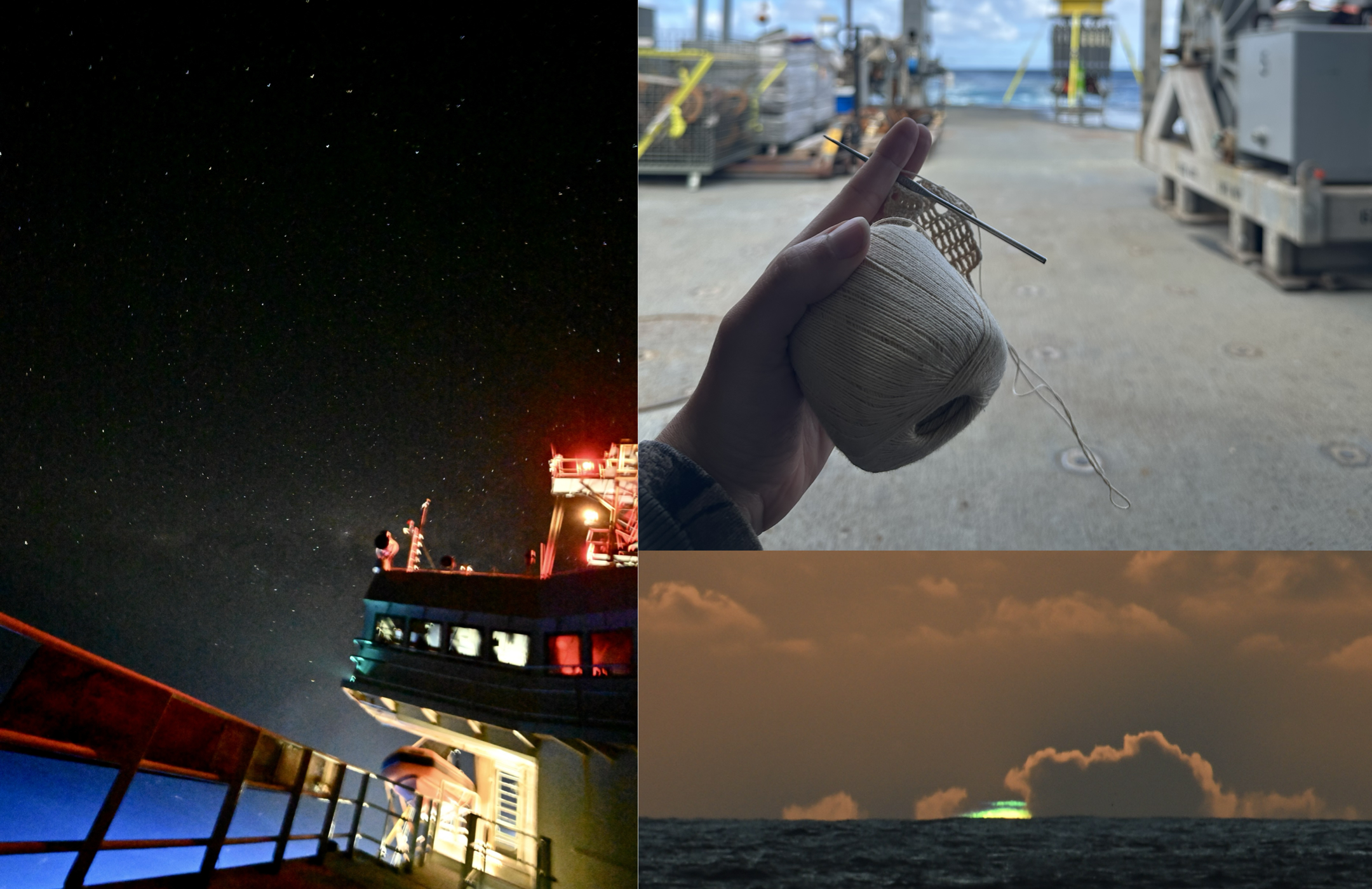
To follow the trend from my previous post I’ll include some fun happenings this week. On a clear night we got to see the Milky Way streak across the sky. I finally saw my first green flash after over 120 days logged at sea! In the downtime I’ve had plenty of time to tend to my hobbies including crocheting.

Week 2 – CTD Overhaul – Jessica Leonard

The first week after pulling of the dock was definitely an eventful one! We are at the base of the Kermadec Trench dropping a lander to the seafloor and running CTD casts to 6,000m. The whole week we experienced one issue after another with the CTD which involved days of troubleshooting. Alas, the CTD is now fully functional, and I have spent a great deal of time helping overhaul it while at sea.

Aside from CTD troubleshooting, I helped train the science party newbies on how to setup the CTD for deployments as well as use SeaBird’s Seasave and communicate with the CTD and winch house for deployments.

Dropping the lander to the seafloor involves using the A-Frame for deployments and recoveries which is the SSSG’s responsibility. Running many deployments a day, I am becoming a pro at operating the A-Frame.

For the CTD overhaul, after experiencing lots of modulo errors (electrical related issues), we opted to re-terminate the wire at least 4 times. I got to take a jab at this one of the times, but, this was unsuccessful (not by my termination likely, but other persisting issues). Calling it quits after this, we changed out some sensors, some wires, and after that didn’t quite do it, we replaced the whole SeaBird unit all together and moved winches. Luckily, as I have used lots of SeaBird products on gliders and in lab, I was able to help in this rebuild.

After our rebuild, no modulo errors! We got down to ~5,000m where the scientists wanted to collect water, and……the bottles wouldn’t fire. Just when we thought we’ve solved it, one more issue. We brought up the CTD and replaced the last electrical component on the CTD, the SBE32 carousel. Now, I can officially say I’ve done a full CTD build, minus the frame and the bottles.

Our CTD is functioning better than ever, and we are en route to the top of the Kermadec Trench ~700nm away (~60h transit).

We have had some lovely Cape Petrels, Wandering Albatrosses, and Common Dolphins following us around which I will showcase below.

Week 1 – Onboarding in Auckland – Jessica Leonard

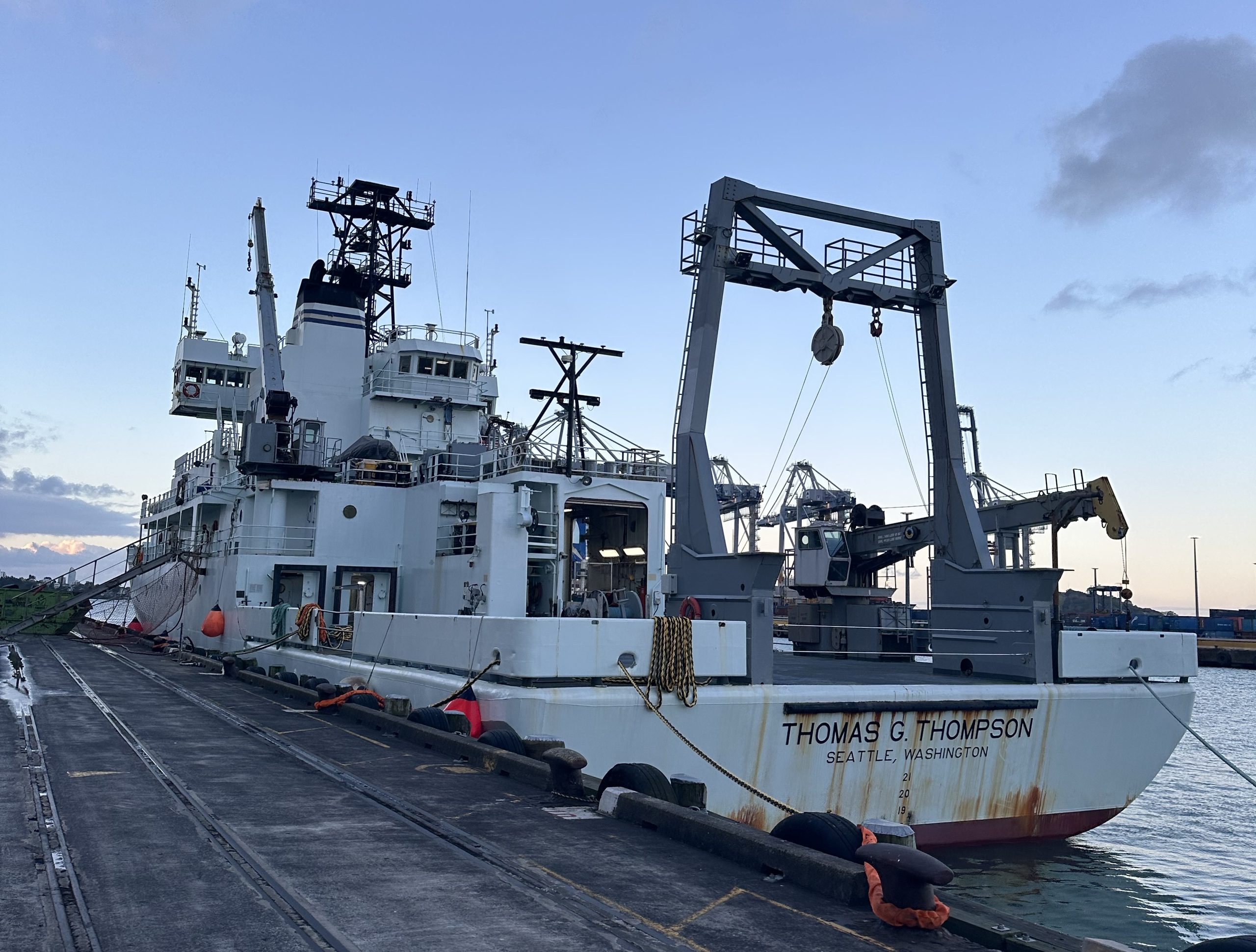
After flight cancelations and hours on the phone with United’s customer service, I am in Auckland, New Zealand experiencing the Southern Hemisphere to the fullest aboard the R/V Thomas G. Thompson. We have been in port running pre-cruise preparation, welcoming on the science party, and getting ready to set sail tomorrow.

Following some jet lag napping (8hr time difference from the East Coast!), I have gotten into a groove following around the SSSGs and learning everything I can.

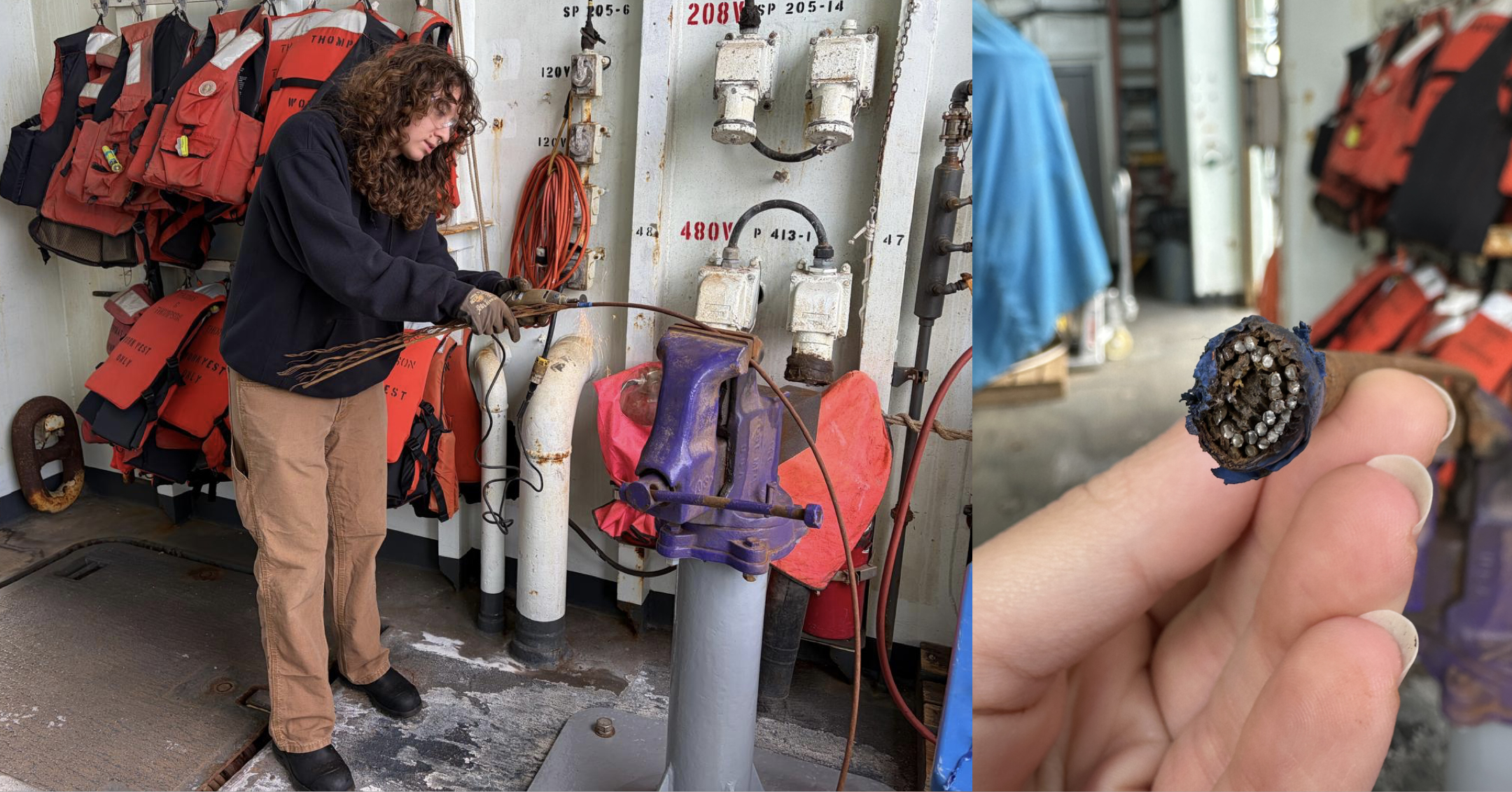
We replaced the slip disk on the winch which will be used for CTD operations and terminated the CTD cable both electronically and mechanically. This was a delicate task that the science party heavily relies on so because of that, Liz (SSSG) did the real termination, and I did my own termination on some spare wire on the side. After running some wire tests, we did a load test on the deck and calibrated the winch readout.

Left: Using a Dremel to cut through the outer layer of steel on the conducting cable used for the CTD.
Right: Cross section of the conducting cable.

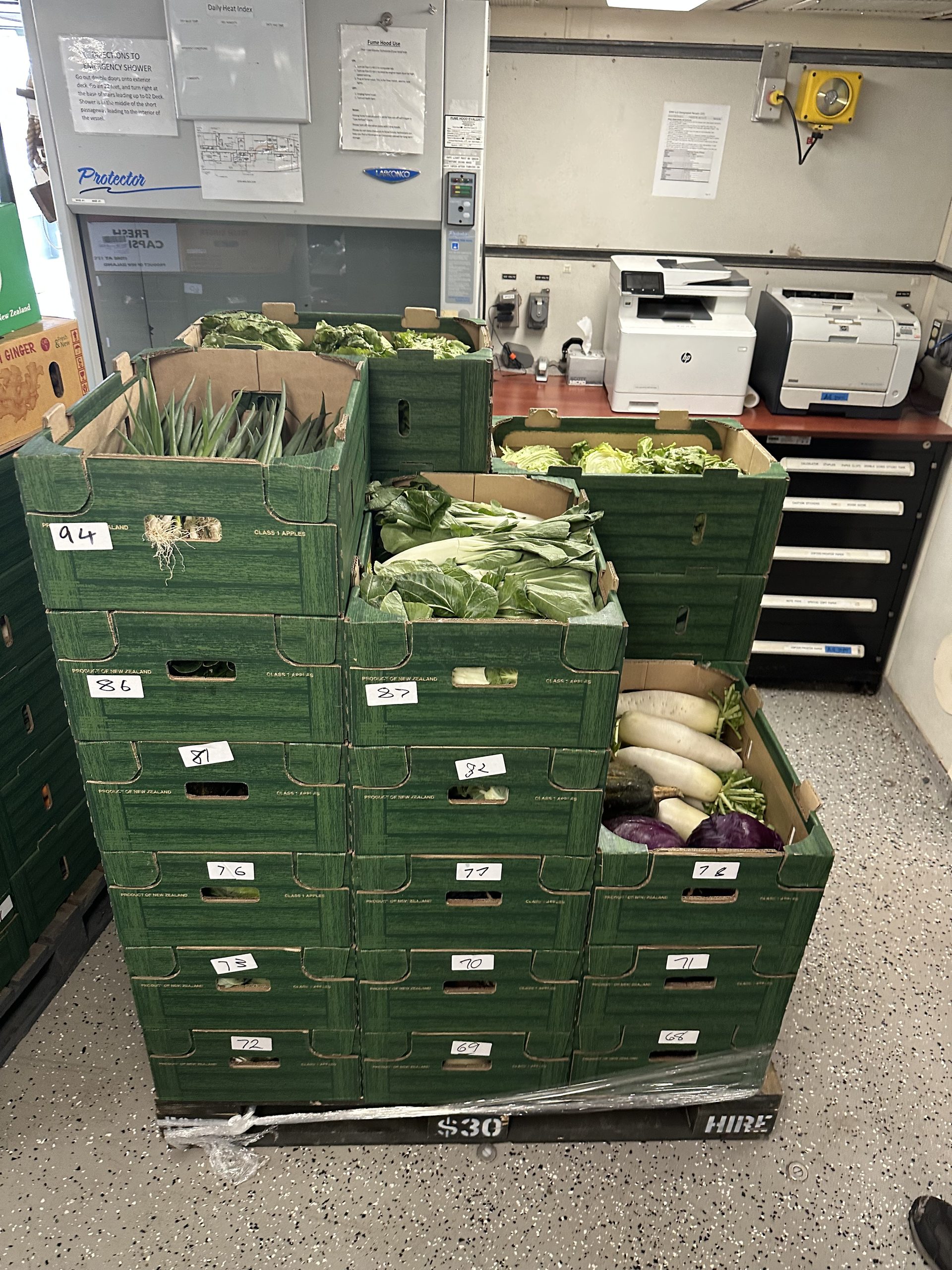
For the 24 hours before we set sail, I have been aiding the scientists in whatever they need to get going once underway which has consisted of moving tables, lending tools, and acting as an extra hand when needed. On the crew side, I helped unload stores (food for the cruise!) and shadowed the safety meeting.

One of many pallets of food for the cruise. We have roughly 45 people onboard sailing for 45 days making for over 6,000 meals total

Tomorrow we will be out of here at 1000 and on our way for 45 days at sea!

Introduction – Jessica Leonard

Hey everybody, I’m Jess, and I’m joining the R/V Thomas G. Thompson working with the SSSGs on a 6 week research cruise departing out of Auckland, New Zealand September 28th surveying ventilation in the Kermadec Trench.

This will be my 4th time at sea and my 4th vessel! While I have historically been a member of the science party, I am excited to bring my technical skills crew side and learn from some of the best expanding my skillset and working knowledge.

Writing about my work and experience is nothing new for me as I maintain an Instagram highlighting what it’s like to be in the field and what goes on behind the scenes. For those interested it can be found at:
@thatoceanographytech

Aside from work, I enjoy traveling, swimming, cooking, fiber arts, and curating music. While at sea, I hope to use my time off shift to enjoy these hobbies as well.

Docked, Demobed, and Dreaming of the Next Cruise

And just like that, we have docked up in Nouméa, New Caledonia. In this final week aboard the R/V Thompson, we transited across Vanuatu waters, completed the last OBS deployments off New Caledonia, experienced slightly larger swells (~10ft), and got to celebrate World Oceans Day at sea!

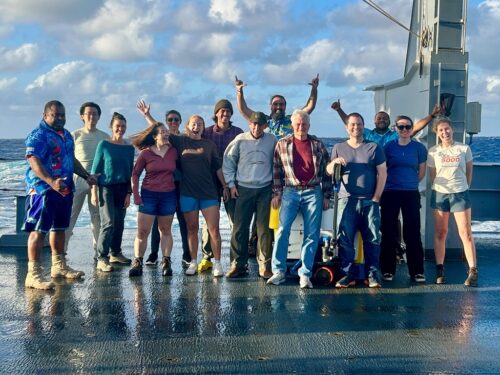
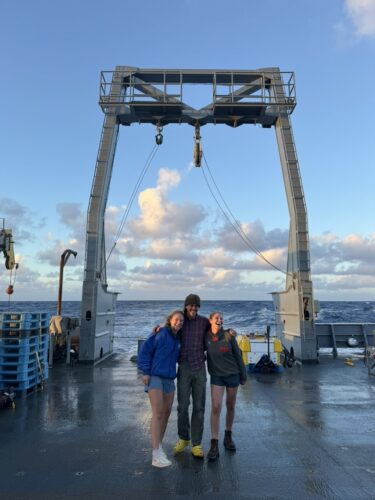
The seismology science party

During some of the final deployments, I was entrusted with the OBS release line. This is the high-stress job of ensuring the instrument is not released from the crane until it is in the water and all other tag lines have been released. Luckily, all of my deployments went smoothly!

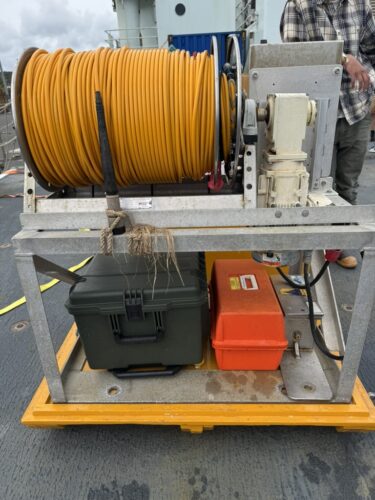
Once at the dock and the ship cleared customs, demobilization began. This primarily consisted of preparing the magnetometer gear for storage and eventual shipment from Guam. We retrieved the magnetometer, rinsed both the cable and instrument with freshwater, and level-wound the cable neatly onto the winch drum. The winch was then unbolted from the deck and placed inside its storage box with the rest of the gear.

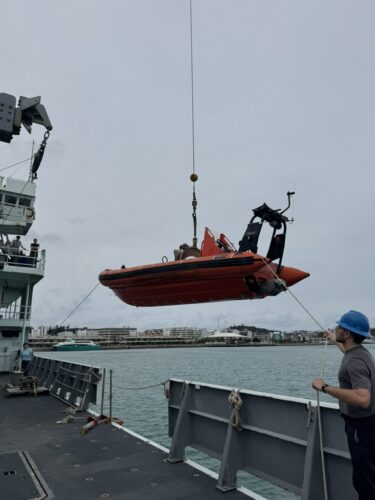
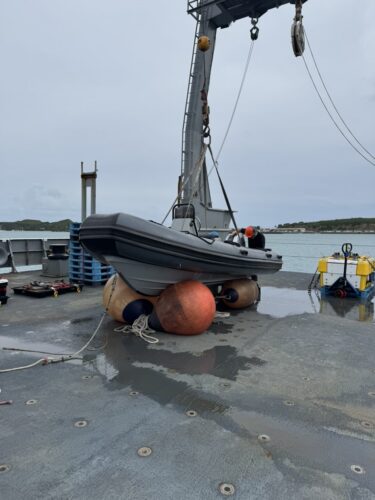
The ship’s crew planned to perform maintenance on the safety boats while in port. Flying boats do exist! They also created a makeshift cradle with fenders—sometimes you have to get creative out here.

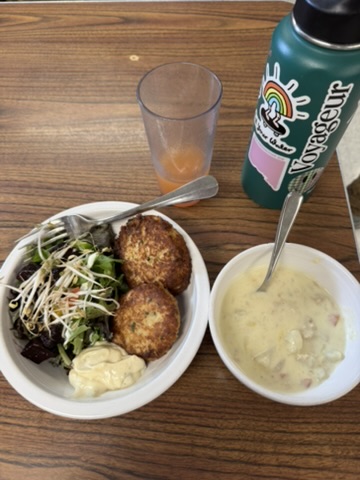
My favorite meal this week consisted of crab cakes and homemade clam chowder. A big thank you to Gabriel, Juanita, and Caleb for all the amazing grub!

This week, I had the realization that I was actively living out my childhood dreams. What an amazing experience for a landlocked girl from Colorado to travel the world and spend three weeks at sea assisting with marine research! I am beyond grateful for the opportunity to set sail as a MATE intern, especially with the amazing crew aboard the Thompson. I gained a lot of experience and knowledge, but the people onboard are what made this experience so valuable. I am already hoping to get back out to sea as soon as possible.

Until next time!

-Avery

I stopped reading Moby Dick after chapter 54

I write to you all from land! After a final week of deployments, we docked in Noumea, New Caledonia, marking a successful cruise.

In our final few OBS deployments, the interns got promoted to handling the OBS release. As the crane dangled the OBS rigs out over the water and lowered them into the waves, it became out responsibility to handle the line that controlled releasing the OBS into the depths. It made each deployment quite exhilarating as we were now given a task that we could royally screw up. However, each deployment went off without a hitch and it was very satisfying to master each stage of the OBS deployment from rigging and release to tracking the OBS with acoustics as it sunk 4000+ meters to the ocean floor.

As we approached Noumea, we began the process of demobilizing. We basically did everything from our first few days in reverse. The other interns and I reeled in the magnetometer for the last time (hooray) rinsing it off with freshwater and level-reeling it to the drum as we went. We packed up all the magnetometer lab equipment, unbolted the winch setup from the deck, and put it all neatly into its storage container.

After securing all our gear we were free to explore Noumea. Walking around was slightly surreal after spending several weeks confined to 274ft. As lovely as it was to frolic on land, I was also slightly bummed to finish out the cruise. Getting to sail in the Southwest Pacific was pretty much a dream come true and I have so much gratitude for the Thompson Crew, Science Party, and other MATE interns.

Peace out for now,

Benny

Chapter 35 of Moby Dick is the Relevant One

Today is our 15th day at sea. By now, I’m deep in my watch standing rhythm and the days have started blending together. This week, I’ve averaged 3 cups of coffee, 2 cups of tea, 75 twisties chips, and about 100 pages of Stephen Ambrose’s New York Times Bestseller, D-Day (borrowed from the ship’s library) a day.

We’ve completed our first cluster of OBS deployments so we have a lot more downtime as we cruise back and forth along the North Fiji Basin collecting bathymetric data. The magnetometer has still been putting up trouble; a few days ago, the 300 meter winch towing the instrument failed so we had to pull it in by hand while we prepared for an OBS deployment (this was the second occasion of such a task). It was nice to supplement the exercise I’ve been getting in the ship’s gym. Using the rowing machine in swell kind of turns it into a roller coaster.

That pesky maggie!

In between deployments, we’ve been learning general technician skills from Liz and Andy. I’m happy to report that my time spent as a youth playing video games has given me some great background in learning the ins and outs of IT networking. I also got intimately acquainted with how to terminate an ethernet cable when I wired it wrong 3 times in a row. Beyond that we’ve also practiced soldering wires and configuring network switches. I love when the techs give us a task to complete and leave us to figure out how to get it done. Sometimes it takes me a lot longer than it should but I feel like I learn the best when I’m left to my own devices to solve a problem.

“Weird Al” Yankovic spoke of this in his 2006 RIAA Platinum certified hit “White & Nerdy”

In addition to our technical duties, we’ve also been joining the science party for daily science presentation, where we rotate through sharing ongoing or past science projects. It’s forced me to brush up on my tectonics and I now feel more confidant discussing subduction zones than I ever have before. I also got to refresh my own presentation skills as I discussed some of my past work. I tried to remember Shakespeare’s maxim, “brevity is the soul of wit” but I also do love to hold the floor. In all seriousness, it was great to practice speaking about my research experience to a scientific audience.

All in all, it’s been a great week with calmer seas and good weather. The seas are forecasted to come up from a storm blowing out of the Tasman Sea so I’m glad I’ve been taking advantage of sunsets on the aft deck—I’m not sure how many more of them I’ll get.

Can confirm I was listening to Pirates of the Caribbean soundtrack

Oh also, I made it onto the instagram! Cruise is a huge success.

OBSessed

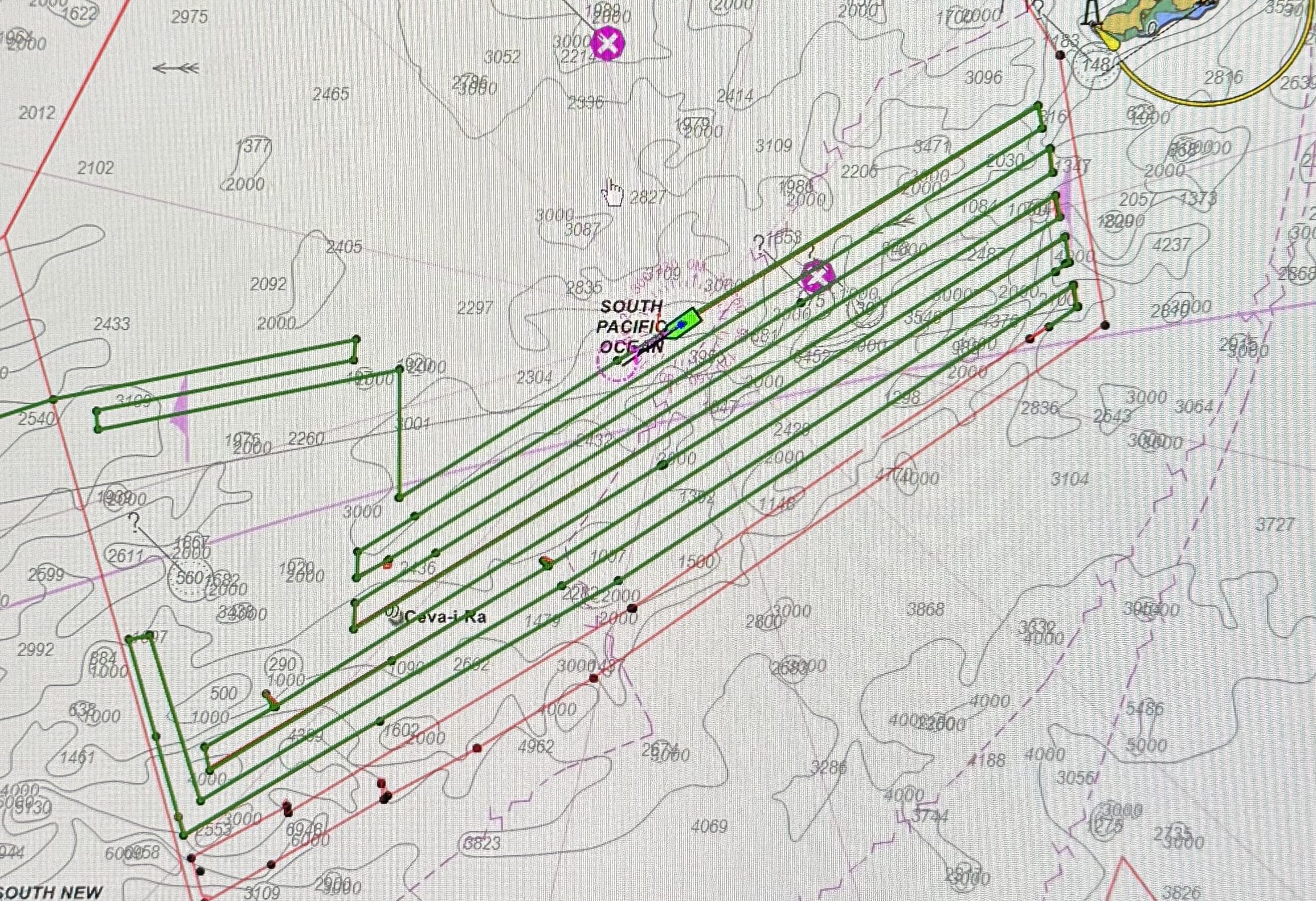
Another week down. This one was even calmer than the last, with only a few OBS deployments. The magnetometer continues to function as we “mow the lawn” southwest of Fiji, collecting bathymetric mapping data.

With the extra downtime, we’ve continued lessons and hands-on challenges to learn as much as possible from the onboard marine technicians. So far, that coursework has included networking challenges, cable management and termination, serial data communication, CTD setup, and a variety of other technical skills.

I presented some of my past research experience which was a fun opportunity to bring some physical oceanography and ecology topics to the onboard science team which largely consists of seismologists and geophysicists.

I am also learning an important lesson about the dangers of having auto updates enabled on a computer actively being used for data collection. Not only did we lose data during the update, but a driver had to be manually updated before we could resume data collection. Learn from our mistakes.

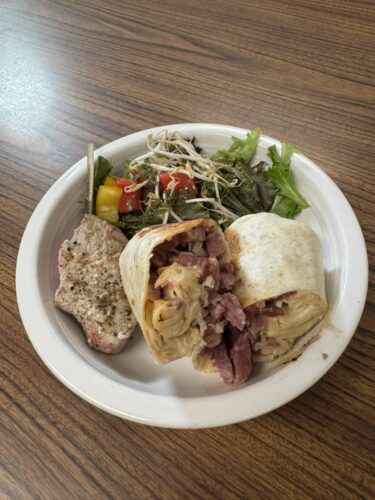
The menu onboard continues to impress. My favorite meal this week was a Rueben wrap, tuna steaks, and salad with Italian dressing.

The weather has been fantastic, with swell between two and five feet and many sunny days. I’m trying to enjoy the calm before the storm as we brace for a schedule packed full of deployments, larger swell, and rough weather in a few days.

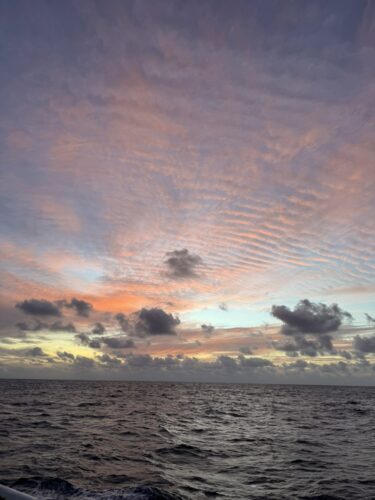
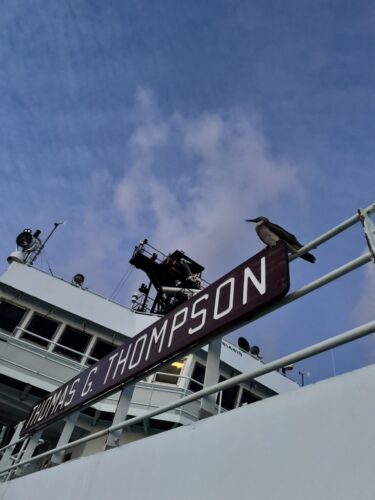
Please enjoy this amazing sunset, which included a visit from some red-footed boobies!

-Avery

Week 02 – Survey Central

This week on the Thompson we are finishing up the deployments of the first OBS array. After a final deployment Friday night, we are starting to head to the western array, taking a detour to map more of the seabed that is critical to answering this cruise’s research questions. 

The aftermath of deploying the magnetometer (Maggie affectionately) during a downpour

During these long stretches of multi beaming surveys, when deployments are on hold, we have more down time. Trying to take advantage of this time when we aren’t needed for operations, the marine technicians have been showing Avery, Benny, and me the components of being an at-sea technicians and the responsibilities they have during their 12 hour watches. 

Sunrise on the fantail. One of the perks of waking up at 0100

On the last few survey/transit days, we have been tackling all things networking and cables. Because of the central role that the ship’s server plays in all of the operations, networking has become a major component of the MarTech role. 

So far, Liz and Andy have gone over the basics of networking and how it is applied to the ship and their day to day activities. Once we have an overall concept of how things work, they give us tasks to apply what they taught us in scenarios similar to ones they would be responsible for troubleshooting. Andy started us out with a switchboard troubleshooting assignment where we had to reconfigure a switch and the setup of 2 laptops so that we were about to communicate with them through a management computer. Liz Then had us working with network cables starting out with terminating ethernet cables and splicing and soldering wires together. More recently, we had the task of taking an ethernet cable and terminating one end into a converted DB9 connector. 

Successful data stream from converted ethernet to DB9 cable activity

We have been very grateful to the technicians for going out of their way to introduce us to their jobs and keeping us busy, especially during these quiet survey periods. 

Bonus! A Booby impeded our Maggie deployment this morning. He was quite irked when we interrupted his feather cleaning

Page 1 of 8

Powered by WordPress & Theme by Anders Norén