Author: Drake Lee-Patterson

Drake Goes to Hawai’i: Week 5 (Fin)

Hello, all!

We’re back from HOT368 and I’ve successfully made it back to Atlanta, GA. I’d like to give a huge thank you again to the HOT team, especially mentors Dan Sadler and Dan Fitzgerald; Devin Hogate for bringing extra sea sickness meds; the UH Ocean Technology Group; and the R/V Kilo Moana crew.
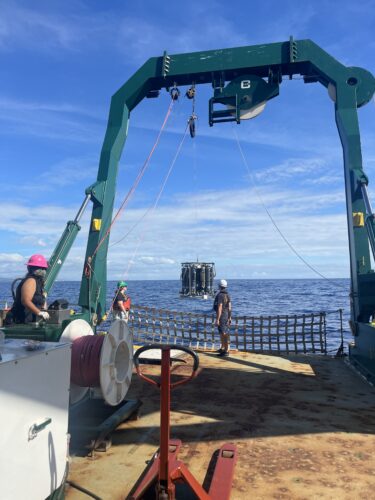
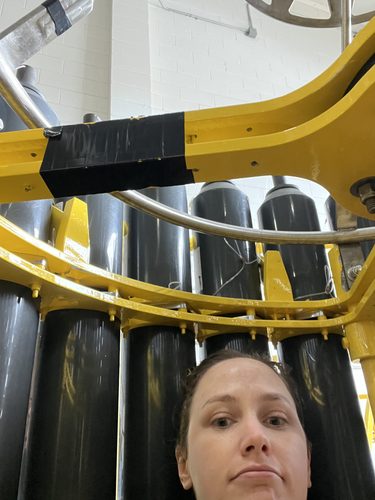
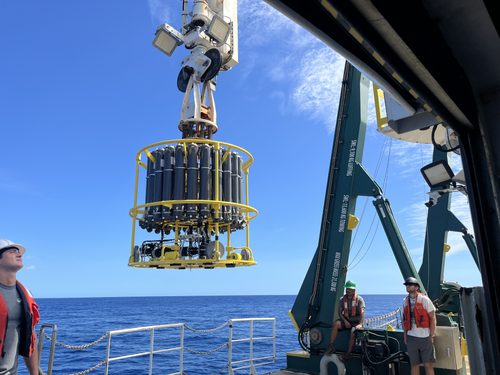
Most of the cruise was a repeat of the casts and methods of HOT367, with two major additions: We were out this time with both the SUBSEA group and Dr. Nick Hawco’s lab. Pictured above is a metal-free mini-CTD rosette to collect water for trace metal analysis. This rig even goes off its own winch and block to include only metal-free components. Since it does not use the standard metal RS232 cable to fire bottles, this CTD rosette is preprogrammed to fire once it reaches specific depths on its way back up.
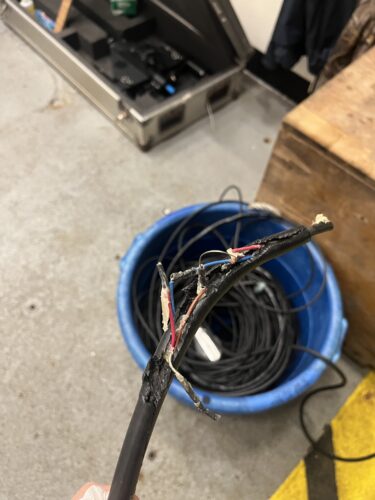
This cruise, I was on night shift (15:00-3:00). While this sometimes involves a lighter deployment/recovery schedule, downtime is spent getting things set up for as swift a schedule as possible. I had the opportunity to line the winch for upcoming sediment trap and WireWalker deployments, as well as perform some necropsy on a faulty fiberoptic cable splice as we trimmed what could be recovered for the next day’s HyperPro cast.
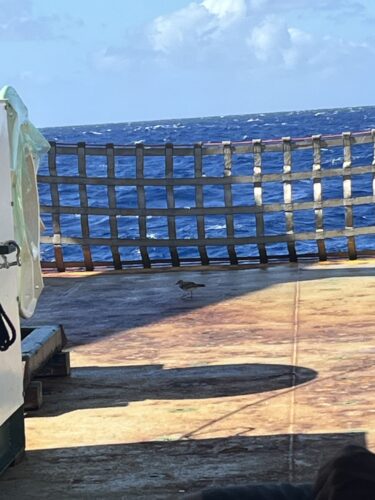
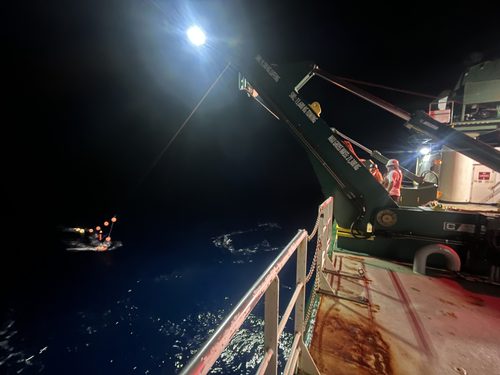
Halfway through the cruise, we took on extra crew, since named Ka’ena. She spent the last half of the cruise helping with back deck operations and was happy to be paid in fish scraps.
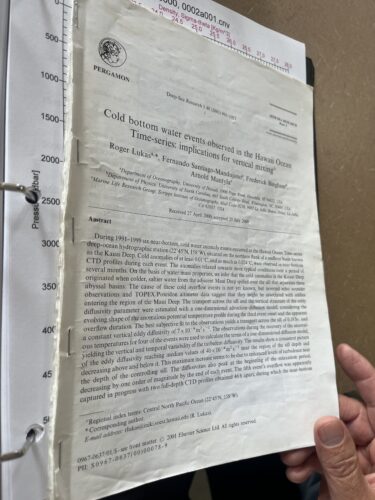
Chief Scientist on this cruise was Santiago Fernando-Mandujano (who’s been with the project since circa HOT20!) used some downtime to talk to use about some of the initial findings of the HOT programs, how this has grown into the program as it is now, and its future directions.
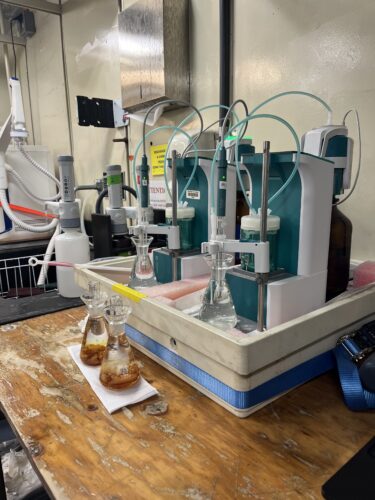
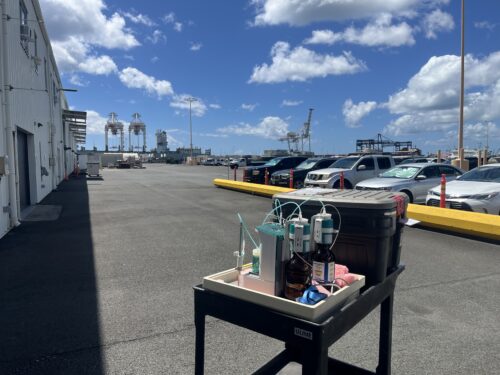
More Winkler Titrations! Night shift means helping to knock out some of the O2 samples collected across HOT368’s CTD casts. These measurements will be used to ground-truth the measurements from the two O2-sensors on the CTD Rosette’s Sea-bird.
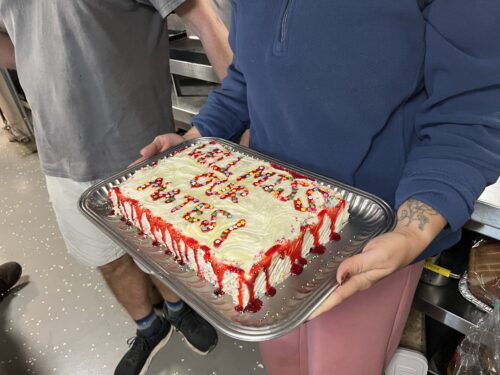
The R/V Kilo Moana’s cook, Manny, kept us well fed throughout the cruise, but surprised us the last night with an amazing cake (decorated by the talented Madi Davis).
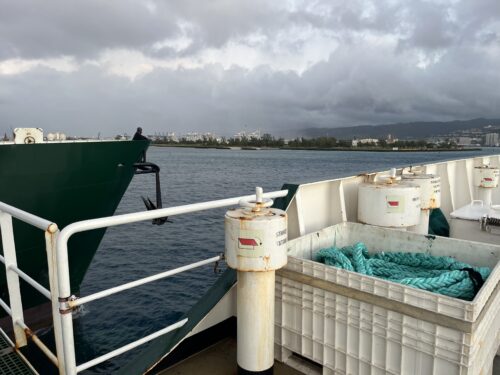
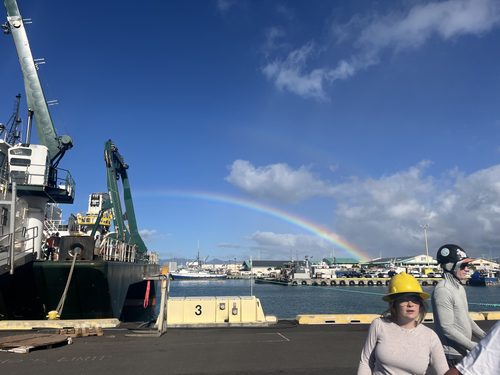
After a quick 5-day cruise, we were back in port for demobilization. Once the ship makes its way back to the UH Marine Center (aka “Beach Lab”), the whole science party hustles to get materials stored properly for the next cruise and to bring samples back for processing.

Thank you so much to everyone I’ve had the chance to meet this month; it’s been great to get to know the faces behind such a prolific dataset. It’s been an amazing experience to get my hands on so many cool methods and pieces of equipment, and it’s definitely strengthened my desire to get involved with marine technology. Special thanks to UH OTG’s seasoned Trevor Young and Scott Nunnery for showing us all the customizations set up for the R/V Kilo Moana. This coupled with the crew’s work will hopefully keep this ship running for many more years and many more HOT cruises. Thank you also to Dr. David Karl and Dr. Angel White for all they do shoreside to keep this amazing project going.

Of course, thank you to Maria Osiadacz for all she does to put these wonderful MATE internship opportunities together.
Drake Goes to Hawai’i: Week 4

Hello all!

This week, cruise prep continued for HOT368.

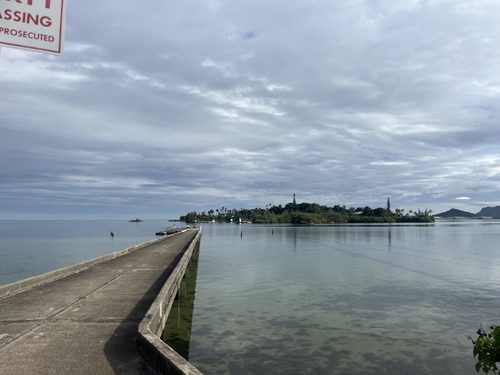
Tuesday morning, we were able to break away for a tour of the Hawai’i Institute of Marine Biology (HIMB) on Moku o Lo’e Island. A huge thank you to HIMB’s Vivian Chan for the excellent tour.

Moku o Lo’e Island (aka “Coconut Island”) is only accessible by small boat, and we were lucky to not have our visit get rained out despite some ominous weather.

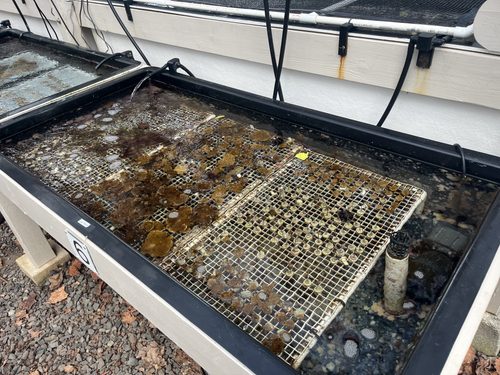
HIMB’s Coral Resilience Lab has a whole section of tables setup with various conditions to rear corals that can tolerate a variety of temperatures, radiances, acidities, and salinities. Above shows one table with the center full of medium-aged corals (~5 years old) that are brown due to their healthy algal symbionts. On the right of the table are coral “plugs” where individual polyps are seeded onto coin-sized metal plugs.

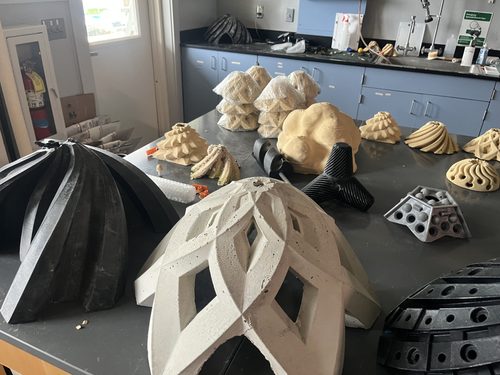
The tour also included stepping inside Dr. Joshua Madin’s Geometric Ecology Lab, who test coral colonization and survivorship on mounds of various shapes. Smaller prototypes are created using 3D-printed ceramics kiln-fired and tested to see which corals like best. The most successful shapes are scaled up to mold-cast concrete structures for further testing with the hopes of incorporating these designs into future marine construction (such as breakwaters).

This week I got all up in the CTD Rosette to take apart and check the condition of the Sea-Bird SBE 32 Carousel Water Sampler.

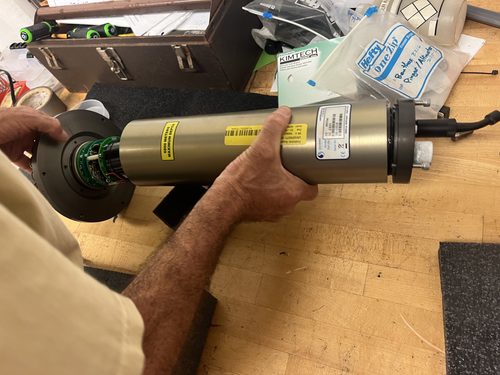
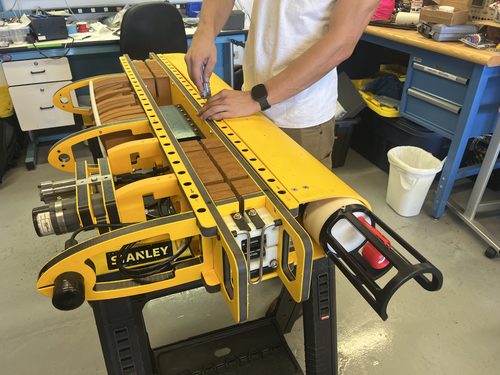
Dan Fitzgerald helped take apart the carousel water sampler so we can check all the o-rings and regrease the seals with critical anti-seize material. This instrument allows autonomous bottle firing at specific depths as controlled at the surface onboard the R/V Kilo Moana. In Dan’s left hand is a plate with ceramic solenoids which generate small electromagnetic fields to fire mechanical switches attached to each Niskin (not pictured). On the other end is an RS232 cable port to connect to the Sea-Bird CTD unit.

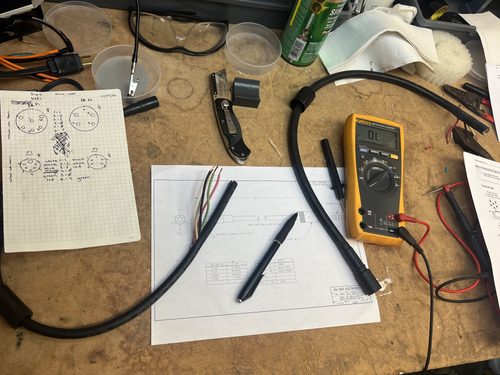
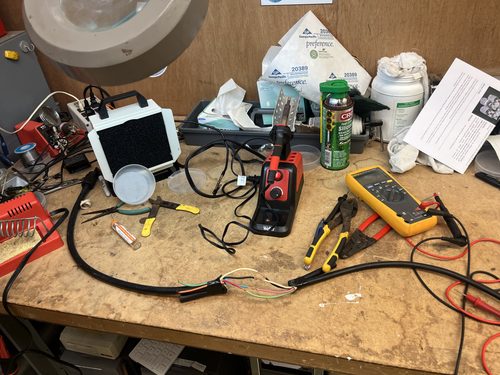
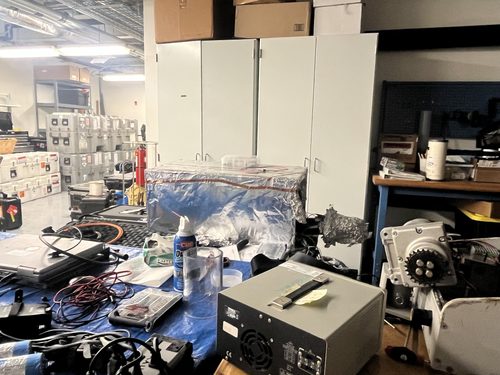
Later in the week, we practiced our RS232 serial cable splicing to create custom cables for PAR to CTD Aux (Cable 1) and BENTHOS altimeter to CTD Aux (Cable 2, not pictured). After pulling up the proper schematic and testing/mapping all pin connections using the multimeter, we guaranteed we had all the necessary components for this AG-206 to MCIL-4F cable.

With wires for Cable 1 connected using the Western Union splice, we then soldered the connections and waterproofed the whole connection using Scotchfil insulation putty and electrical tape. We’ll test our new cables tomorrow once we get the CTD Rosette setup on deck.

Tomorrow, we’ll load all our gear for HOT368 onto the R/V Kilo Moana, and head out early morning Sunday. The weather forecast is looking a little iffy, so please, everyone, keep all your fingers crossed for us.

Drake Goes to Hawai’i: Week 3

Hello, all!

This week was spent helping the HOT team to process HOT367 and prepare for HOT368. We have two weeks between cruises to get everything acid washed and reset for when we next go out.

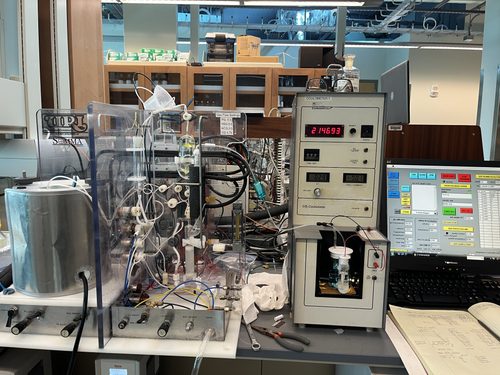
At sea, dissolved inorganic carbon (DIC) samples are collected from the CTD Rosette into glass bottles and spiked with mercuric chloride for processing back in the lab. Setting the standard to measure total DIC is the Single-Operator Multi-parameter Metabolic Analyzer (SOMMA), pictured above. Each sample (left) is plumbed up to the SOMMA where it is spiked with phosphoric acid (center), forcing all the DIC in solution into a CO2 form which is bubbled out of the solution sample using CO2-free air. The gas is then plumbed into an anode-cathode cell (right) which can measures the flow of electrons as a function of voltage. These same samples are then used in a separate titration rig to measure total alkalinity.

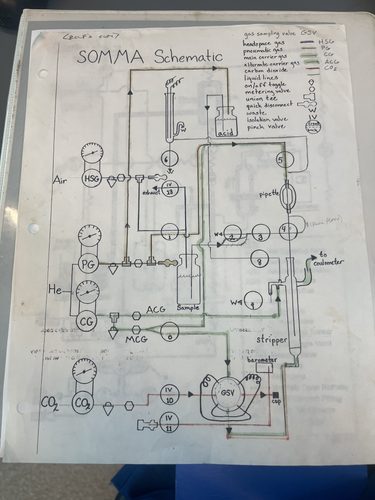
When something goes wrong, sometimes the notes left behind by past lab members are more helpful than the official manuals describing default setups. Here, we see a beautiful (color-coded!) schematic outlining the critical components of the SOMMA (excluding the lower portion using CO2 gas which has since been removed) made by a past member of the HOT team; thank you, Rolf! When the SOMMA stopped rinsing its pipette fully, we used this schematic to troubleshoot through potential problem sources, check our gas pressures, and eventually find the pinched line causing all our troubles. Once it’s happily set up, the SOMMA can chug through DIC samples fairly quickly.

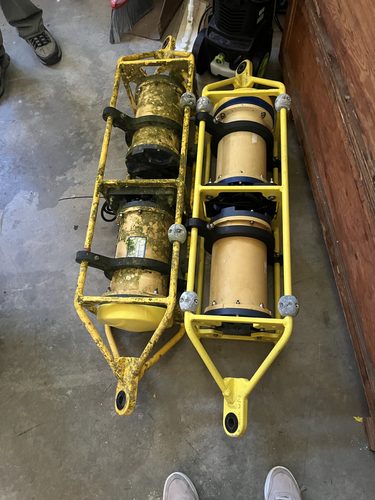
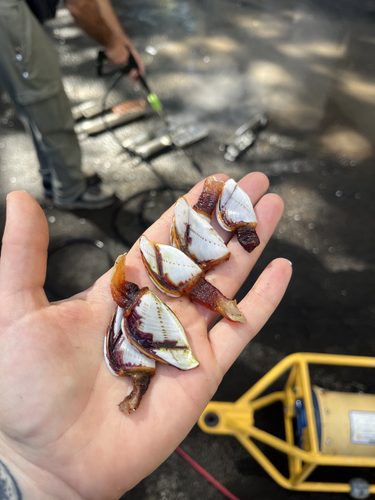
This past week also marked the return of the WHOTS21 cruise, where the WHOTS mooring was collected after about a year free-floating at sea. Suspended between an anchor at the seafloor and floating buoy is an array of sensors comprised of mini-CATs and ADCPs (pictured above) at two different depths. After a year at sea, the ADCP at 40m shows a lot more biofouling than the ADCP kept at 125m.

To keep all the WHOTS gear in working condition, we pressure washed all of the biofouling from the ADCPs and mini-CAT instruments and scraped off the barnacles. This helps equipment to last a longtime, and made things a lot less stinky when we brought the equipment into the office to pull the data off the loggers.

Our upcoming cruise will be a bit different than last, as Schmidt Sciences’ SUBSEA Project will be joining us onboard to collect complementary samples/profiles focused on nutrient and biogeochemical cycling between surface subtropical ocean gyres and deeper waters. We spent Friday with Hunter Adams, SUBSEAS’ technician and former MATE intern, to help service the trace metal CTD and take a look at some of the equipment they’ll be bringing out on the next cruise.

One really cool SUBSEA instrument is the WireWalker, which will be deployed onto a free-floating profiling wire that collects temperature, conductivity, pressure, and irradiance as it continuously runs up and down the wire. SUBSEA will deploy this instrument for a day or so, during which time the Wirewalker will complete hundreds of vertical water column profiles.

Another cool SUBSEA instrument is Vertical Microstructure Profiler, pictured here decked out in a tinfoil hat. This instrument measures very finescale changes in shear across density boundaries in the ocean using very sensitive “potato chip” shear sensors. To make sure everything’s working well before the cruise, we performed a bench test in the dark using dummy probes with the entire rig attached to a grounded Faraday cage. This helps to diffuse background magnetic radiation enough to show that all sensors were operating within proper ranges.

A special thank you this week to Dan Sadler, Dan Fitzgerald, and Hunter Adams for letting me get my hands on some really cool pieces of equipment!

Drake Goes to Hawai’i: Week 2

Hello all!

We’ve successfully returned from Cruise HOT327, in and out from Honolulu. I got a chance to assist with lab and deck operations throughout the day shift (3:00-15:00). This is the HOT team’s 327th cruise in the time series, so it’s been fun to see the rhythm they’ve worked out to consistently sample across the ALOHA site.

Below are some photos, when I remembered to take them:

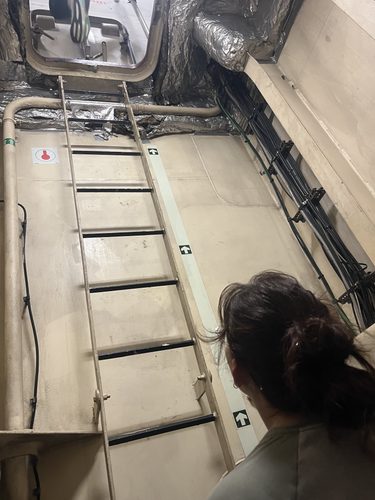
HOT scientists got a tour of some of the engine room spaces. Since the R/V Kilo Moana is a catamaran-style ship, these spaces are broken up into 16 individual compartments (with 16 separate ladders) across the two wings of the ship.

Recovering the sediment trap after 2 days at sea suspended at 150m. The array is left to float to see what particles are collected within the baffled collection tubes. To retrieve the array, grappling hooks are used to catch the float, and the image here is after pulling up ~150m of line to reach the cross that holds the sample collection tubes of very dense brine spiked with formaldehyde. The sample is then collected in bottles and on filters to be processed for HOT and collaborators’ many measurements.

CTD Rosette being sent out over the back deck. Since the R/V Kilo Moana is a catamaran that sits very high on the water, the ship uses a specialized Hawboldt crane that can compensate for the ship’s motion (without taglines!). The 24 Niskin bottles are set open ready to snap at specific depths along the cast. At the bottom of the rosette frame are the conductivity, depth, temperature, O2, and altimeter sensors that provide a live data feed across the cast.

Safe and sound back at the U Hawai’i Manoa Marine Center. While we had a few sprinkles, the weather was otherwise perfect for us to offload all our gear for storage and sample processing.

I’d like to give a special shoutout to LeeAnn De Leon, an undergraduate volunteer from U Hawai’i Manoa who was supremely helpful and coming out for her last time in a while before starting her new job with Hawai’i Fisheries. I’d also like to thank the crew of the R/V Kilo Moana, and the Ocean Technology Group technicians Pete Felicijan and Joseph Soltis.

Drake Goes to Hawai’i: Week 1

Hello, all!

I made it into Honolulu last Sunday, and have spent this past week getting the lay of the land at the University of Hawai’i Manoa to learn all about how the HOT team prepares for their cruises. They’ve done this a lot, roughly every month since 1988, so they were pretty much already all set for our upcoming trip leaving next Sunday, Cruise HOT 367.

The HOT team collects the same measurements every single cruise within the time series to very precise levels of detail to provide a consistent record of how the ocean changes over seasons and time. Getting to meet the team, one collecting nutrients, another oxygen, another chlorophyll, has been a really cool chance to get to put faces to each component of this amazing dataset.

Below are a few pictures I took as I spent this past week in the lab:

Grabbing the Winkler Oxygen Titration rig from the “Beach Lab,” the UH Marine Center with storage and lab space directly on Pier 34.

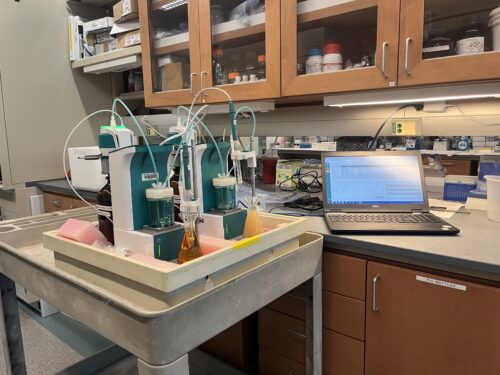
We brought the Winkler Oxygen Titration rig mack to the Center for Microbial Oceanography Research and Education (C-MORE) building on main campus for calibration. Here we see two samples running: (left) neutralized and (right) acidified, showing color changing with pH to find the specific O2 concentration of seawater.

Just outside the C-MORE lab space, this extremely technical piece of equipment is critical to the HOT research mission.

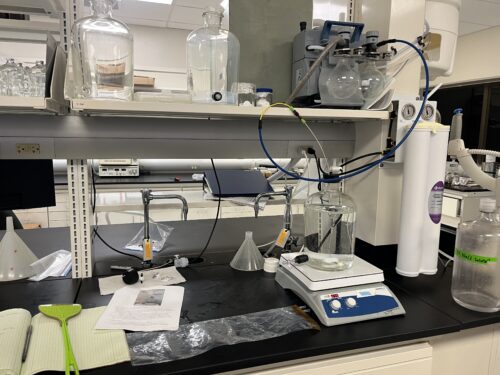
To mix up 15N2 tracer for Nitrogen fixation experiments, the team pulls all oxygen out of a batch of seawater under vacuum before spiking a chilled bag with 15N2 gas and slapping to dissolve all gas.

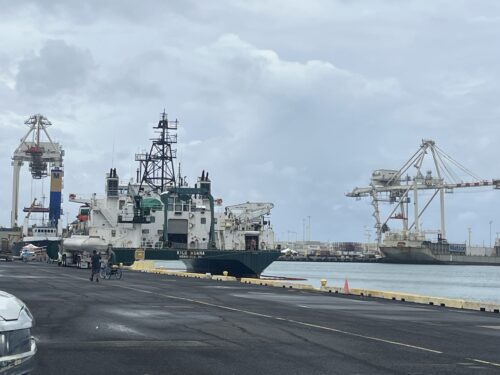
Our first view of the R/V Kilo Moana, back from her many different projects and now waiting patiently for us to leave for HOT 367 on Sunday.

My pictures make it look like a ghost town, but know there are many people hustling just out of frame to get everything going. With so much going on to get things cruise-ready, I’ve been snapping photos in the brief moments I have without stuff happening.

Intro: Drake goes to Hawai’i

Hello all!

My name is Drake, and I’m very excited to be joining the Hawai’i Ocean Time-series for their upcoming projects KM26-13 HOT 5 and KM26-14 HOT 6 cruises onboard the R/V Kilo Moana.

Currently, I work as a research technician in the Georgia Tech McGrath Lab, where we study the inheritance of physical traits and behaviors in Lake Malawi cichlid fishes using behavioral monitoring video tied to genomic and transcriptomic pipelines. Still, I’m excited to be getting back out to sea to look at geochemical features and learn more about oceanographic and marine technology endeavors.

Follow along this next month to see what all we get up to!

Powered by WordPress & Theme by Anders Norén