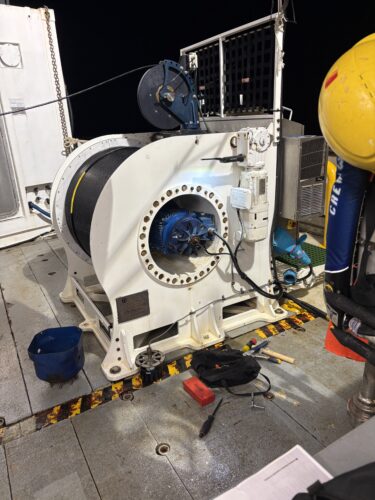
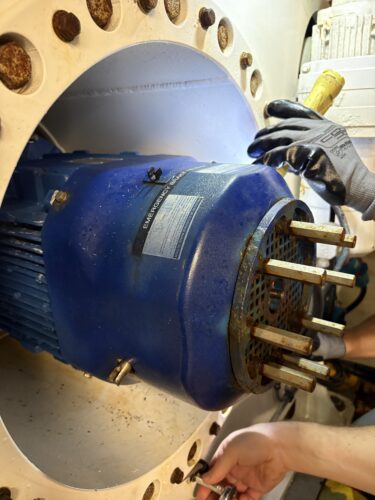
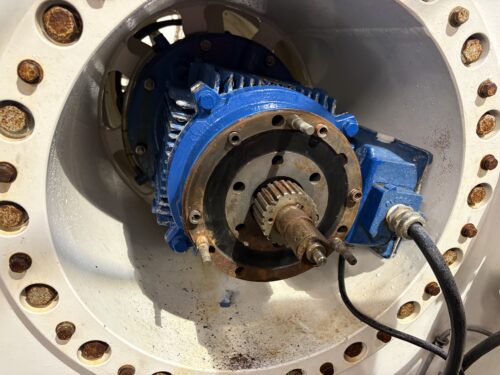
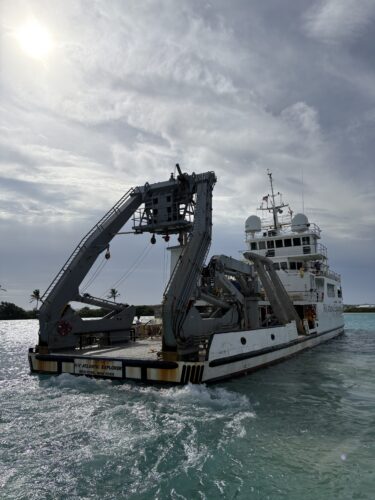
We wrapped up the Buck/BATS cruise aboard the R/V Atlantic Explorer with more trace metal sampling and plenty of CTDs. We started the week with some troubleshooting, as the trace metal winch started to misbehave. We decided to take apart the brake assembly and give some parts a good clean to help resolve the issue of the sticky brake release.
The next day, I got to see the TowFish from my last post in action. We tow it while the ship is underway, pumping surface seawater through clean tubing straight into the trace metal team’s clean lab.
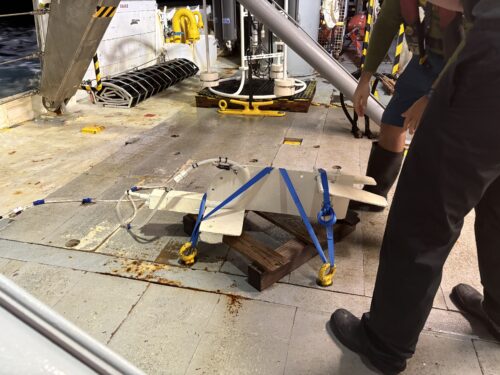
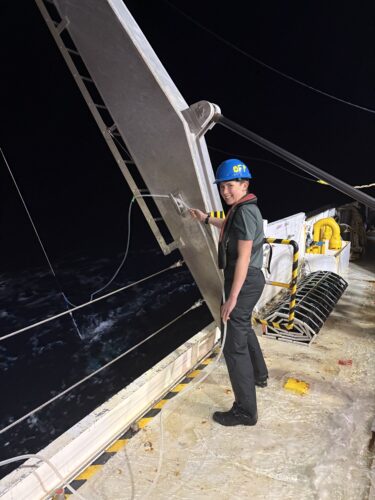
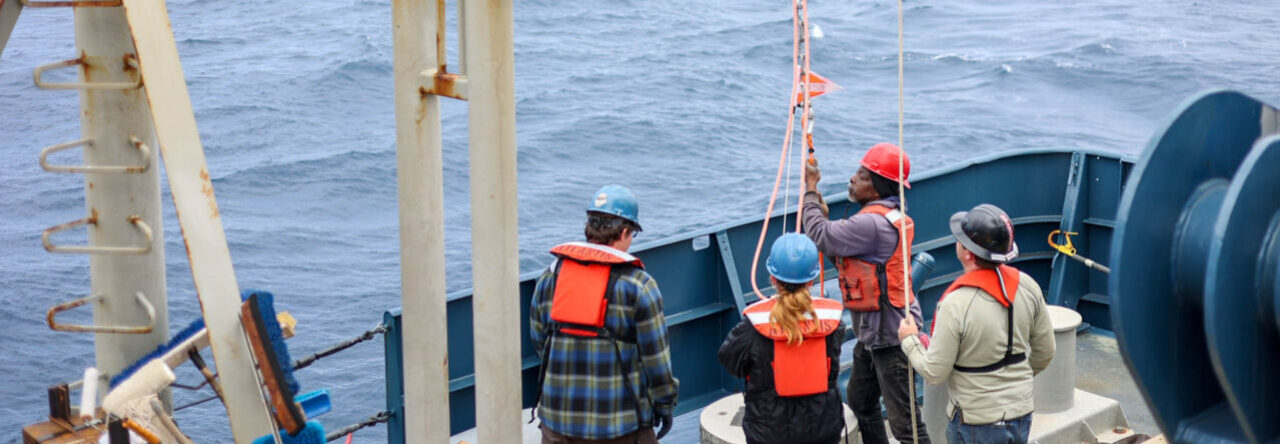
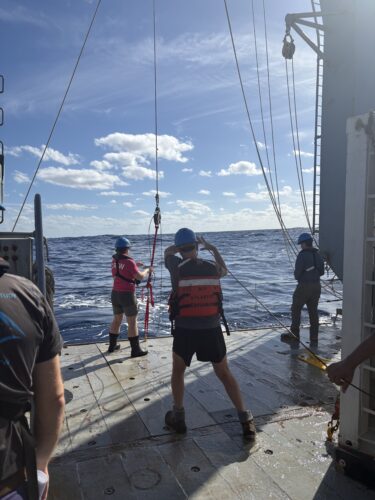
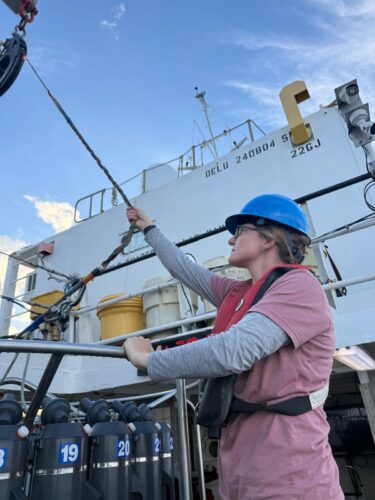
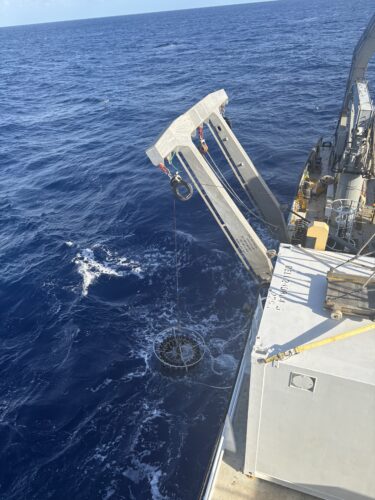
With the BATS group, we also deployed their HyperPro, which measures light and fluorescence in the water. We timed the deployment to a Sentinel satellite overhead pass so the BATS team could compare our readings with what the satellite “saw” at the surface. We paid out cable by hand from a small spool, then grabbed the line and walked (sometimes ran!) back toward the spool to bring the instrument up from about 40 meters. It felt a bit like an old-timey firefighter bucket brigade.
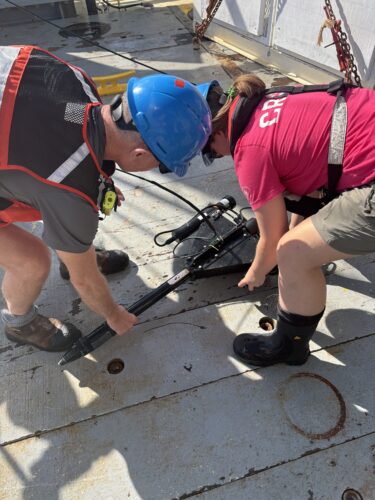
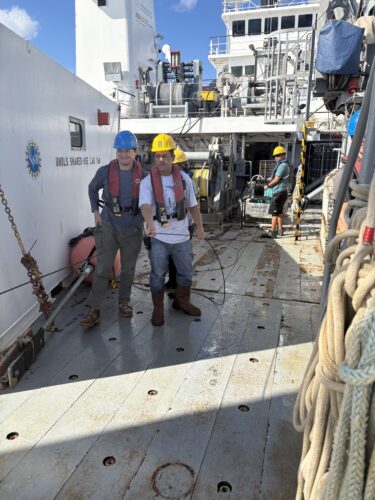
On our last day at sea, we did back-to-back CTD casts at stations on the BATS spatial grid as we approached Bermuda. The marine techs had a good rhythm going, with one person handling the rosette on deck and the other running the computer in the CTD lab on the bridge. It became a bit more sensitive of an operation as the water depth became shallower and shallower; the final cast only went down to seven meters! Quite different from our typical 1000-4500m depth range!
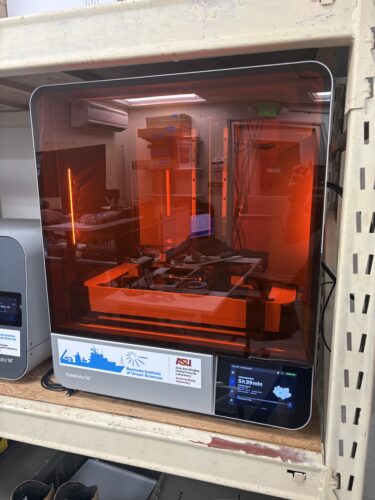
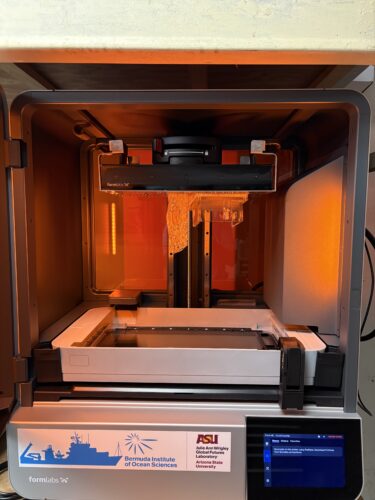
The next day was a big demob day, with some gear lifted off by crane and the rest carried off by hand. We had to move quickly because the incoming BIOS-SCOPE team had every lab and berth spoken for. I’m not joining the next cruise, but there are still some fun projects to work on in the mar tech shore office. I learned to use a resin 3D printer to make a mount for an oxygen sensor the techs plan to add to the ship’s “water wall,” where sensors monitor seawater as it flows through. The printer uses light to harden thin layers of liquid resin, upside down from how an extruding 3D printer works, building up the mount one layer at a time.
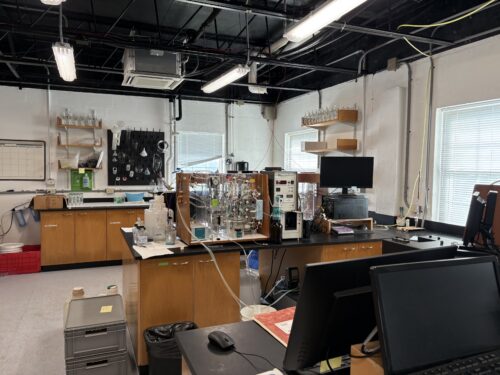
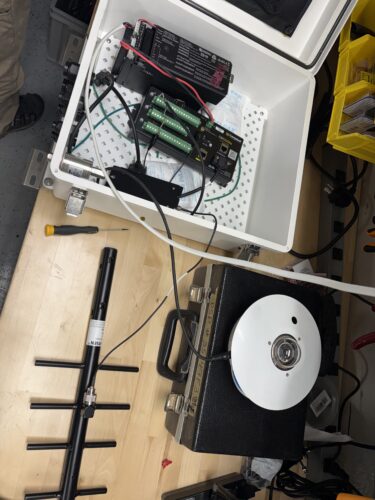
On November 13, we went down to the dock to wave goodbye to the RV AE as it headed out on the BIOS-SCOPE cruise. Claire from BATS gave me a tour of the labs at BIOS, and then I headed back to the marine tech office, where Vlad showed me how to wire the PIR and wind sensors for a weather monitoring station into a Campbell data logger, like the ones used on the ship, and use an antenna to send readings back to the office computer in real time.
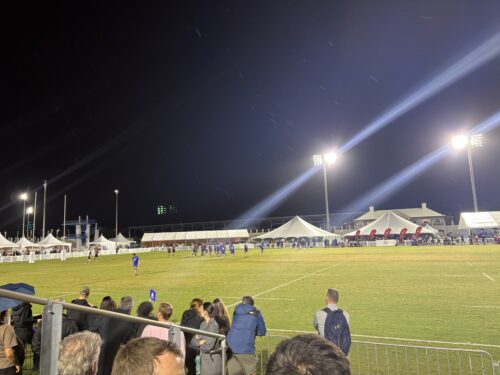
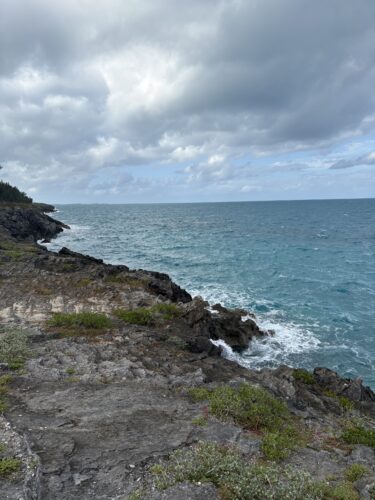
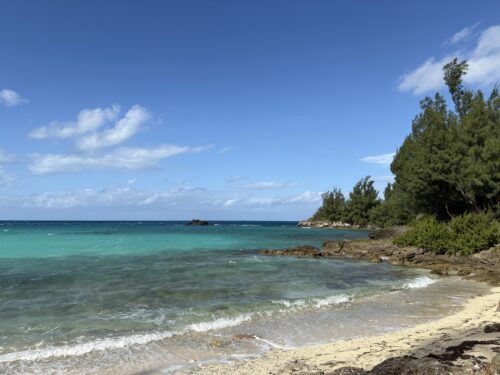
That evening, I caught the Bermuda World Rugby Classic (a rough night for the U.S., we lost 49–0 to France). I squeezed in one last hike and snorkel on the morning of the 15th before flying out. I’m sad to say goodbye to the RV AE and everyone at BIOS, and I hope I’ll be back!
Leave a Reply