Author: Hannah Kepner

Week 4: Final week with the RV AE

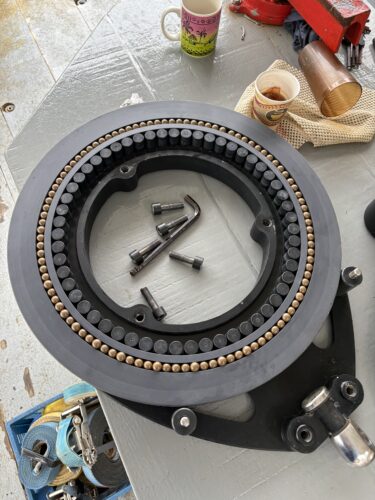
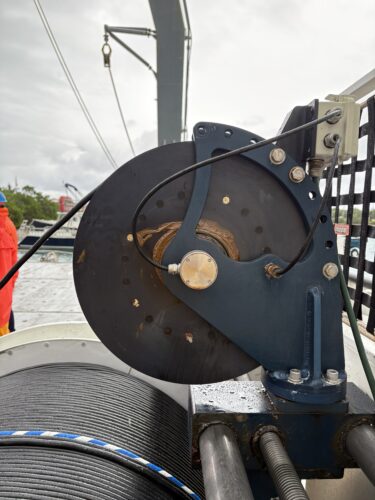
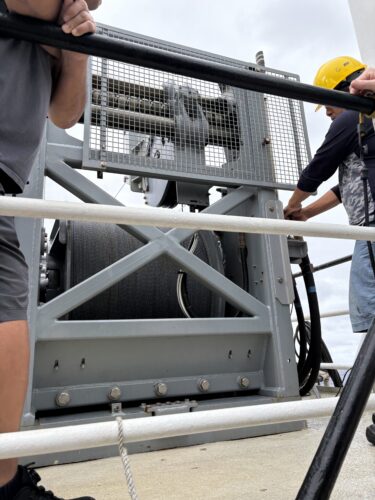
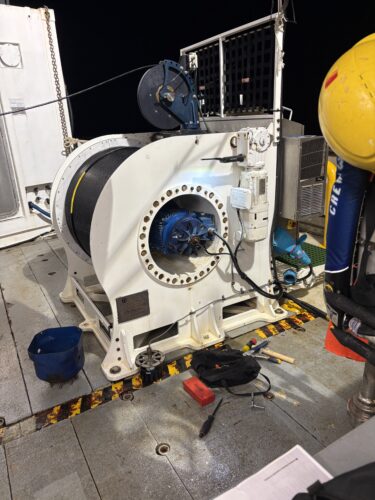
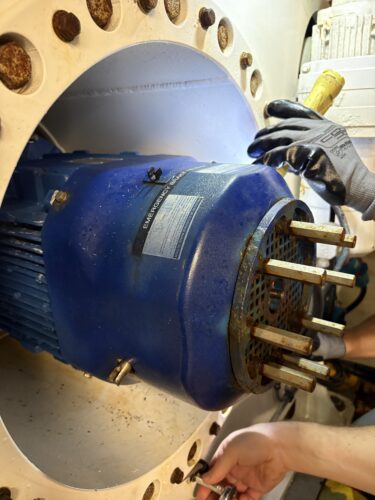
We wrapped up the Buck/BATS cruise aboard the R/V Atlantic Explorer with more trace metal sampling and plenty of CTDs. We started the week with some troubleshooting, as the trace metal winch started to misbehave. We decided to take apart the brake assembly and give some parts a good clean to help resolve the issue of the sticky brake release.
The next day, I got to see the TowFish from my last post in action. We tow it while the ship is underway, pumping surface seawater through clean tubing straight into the trace metal team’s clean lab.
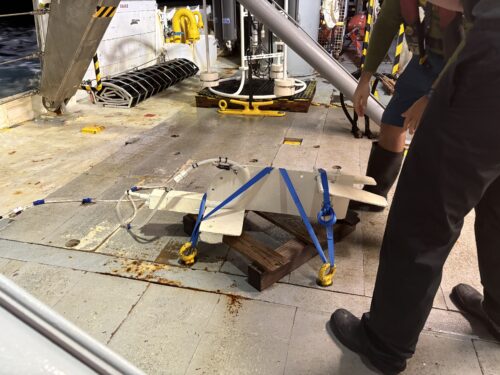
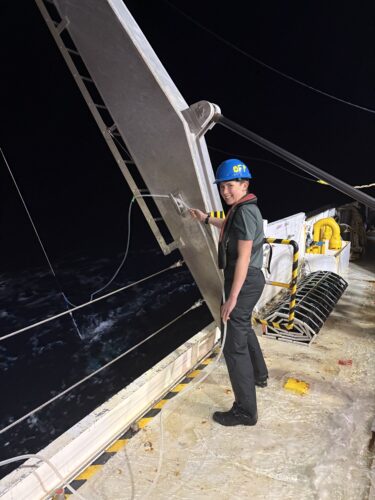
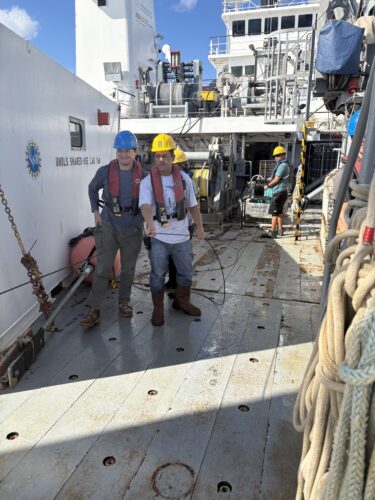
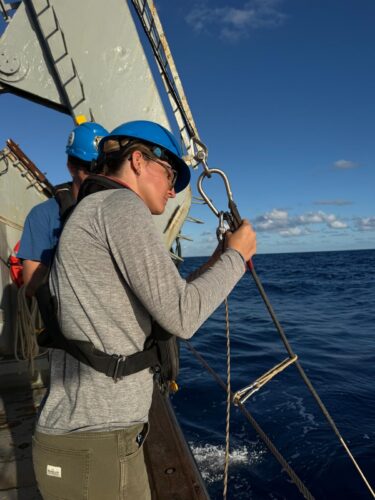
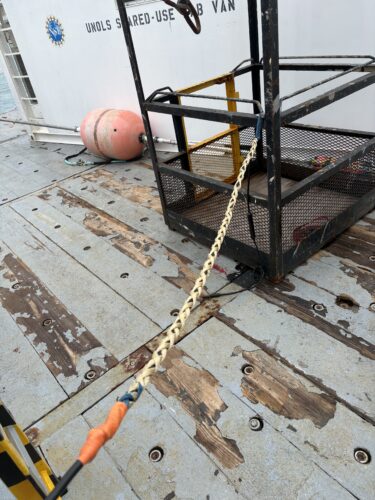
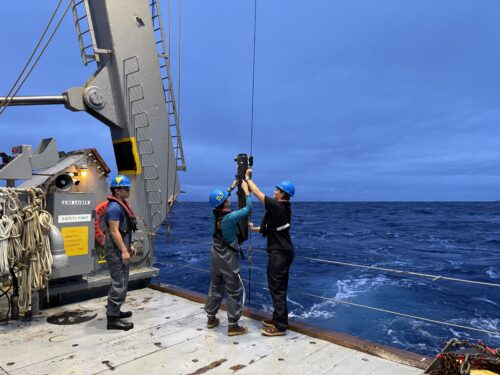
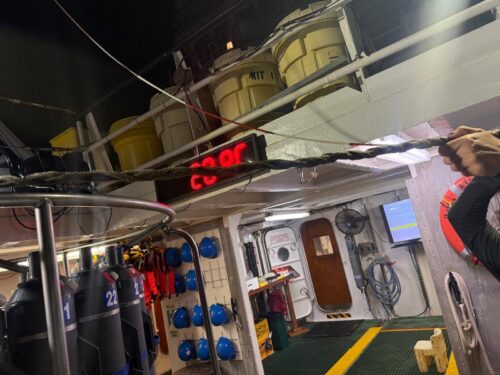
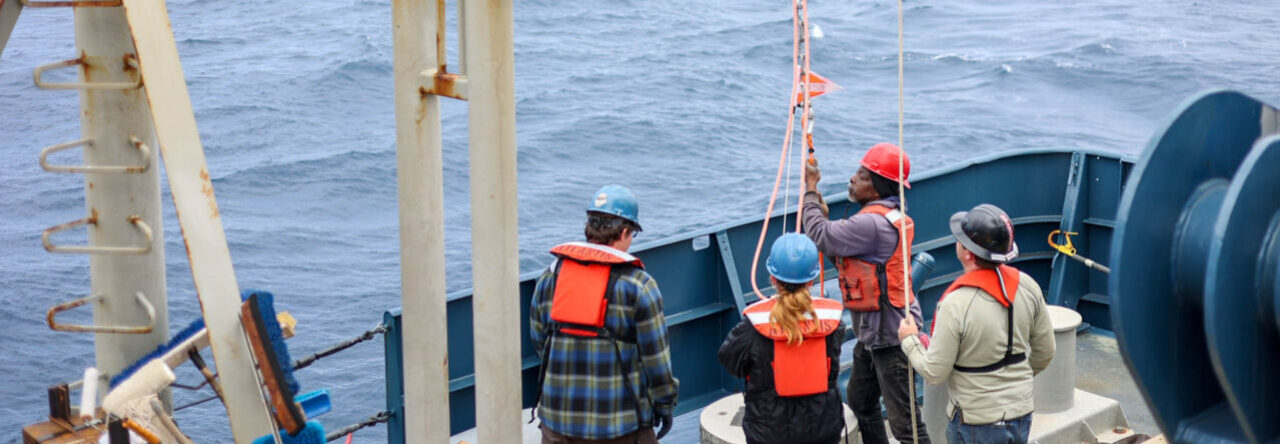
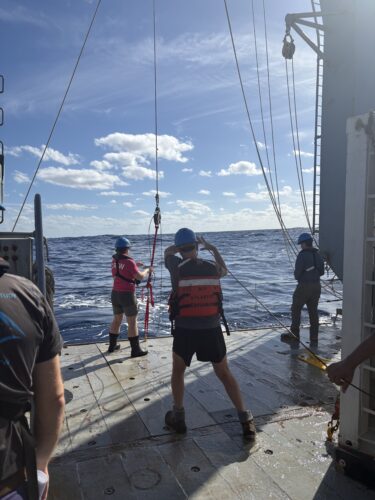
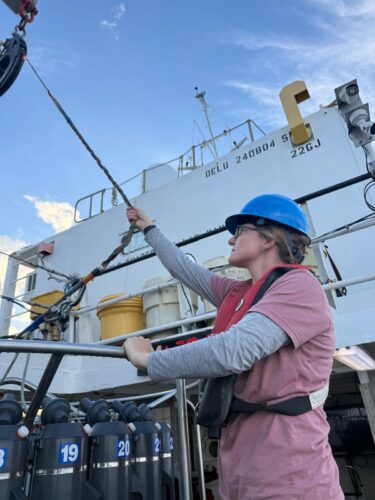
With the BATS group, we also deployed their HyperPro, which measures light and fluorescence in the water. We timed the deployment to a Sentinel satellite overhead pass so the BATS team could compare our readings with what the satellite “saw” at the surface. We paid out cable by hand from a small spool, then grabbed the line and walked (sometimes ran!) back toward the spool to bring the instrument up from about 40 meters. It felt a bit like an old-timey firefighter bucket brigade.
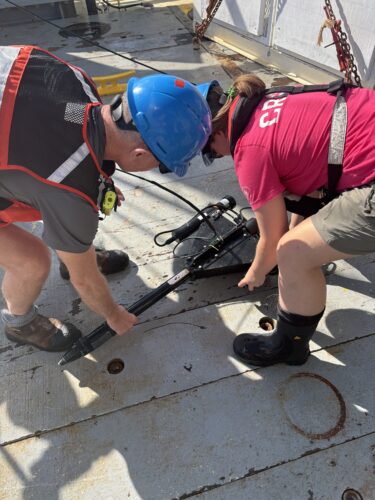
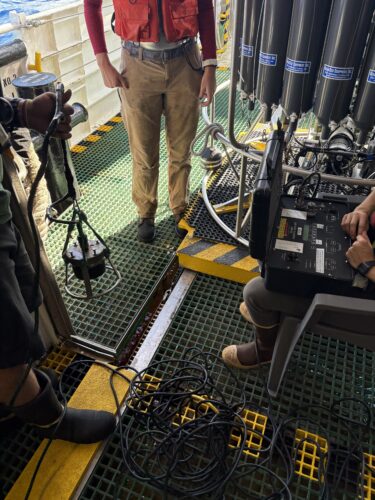
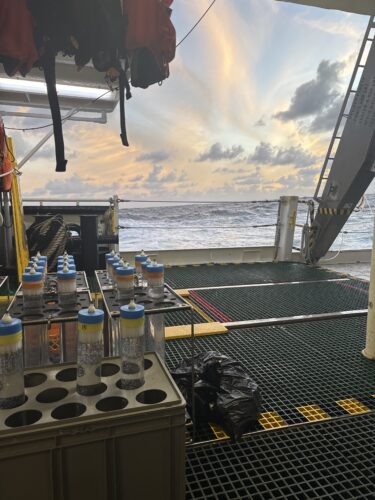
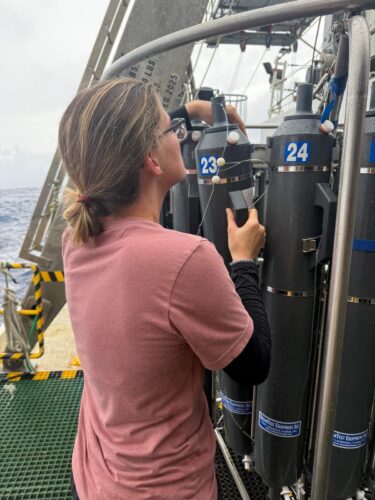
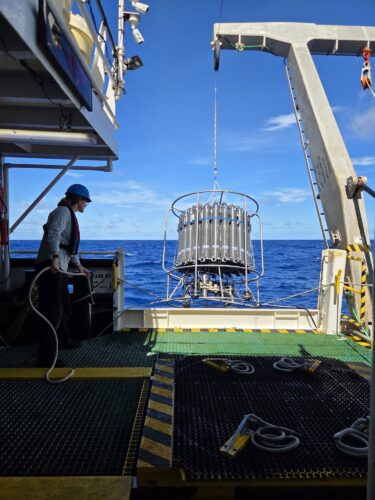
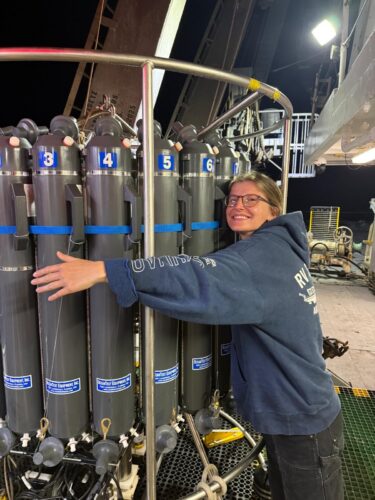
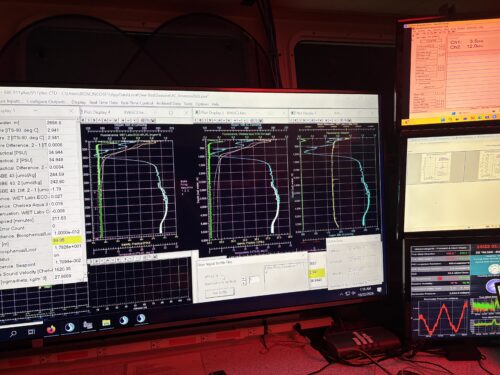
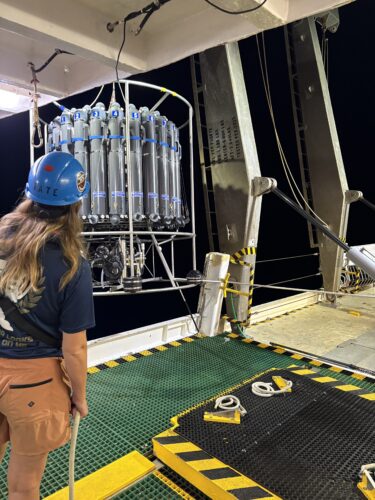
On our last day at sea, we did back-to-back CTD casts at stations on the BATS spatial grid as we approached Bermuda. The marine techs had a good rhythm going, with one person handling the rosette on deck and the other running the computer in the CTD lab on the bridge. It became a bit more sensitive of an operation as the water depth became shallower and shallower; the final cast only went down to seven meters! Quite different from our typical 1000-4500m depth range!
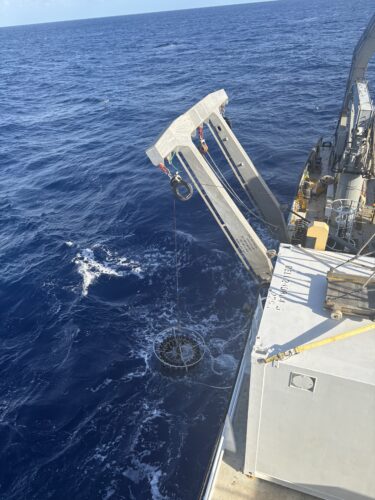
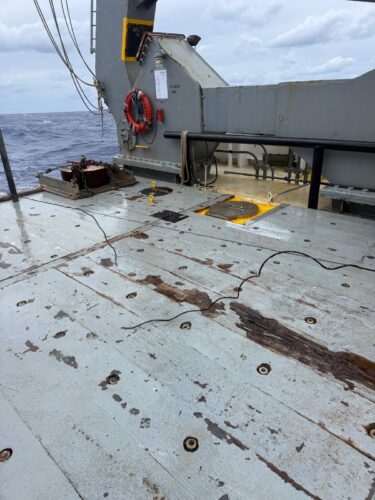
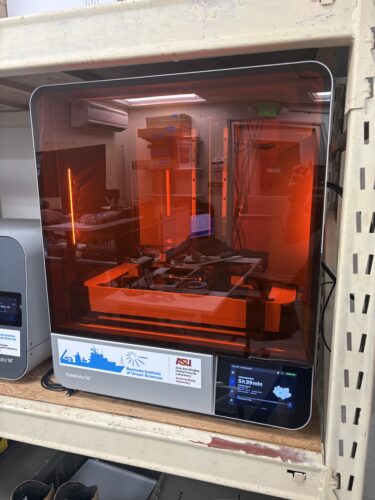
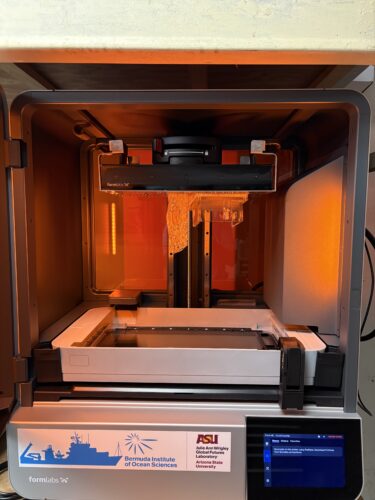
The next day was a big demob day, with some gear lifted off by crane and the rest carried off by hand. We had to move quickly because the incoming BIOS-SCOPE team had every lab and berth spoken for. I’m not joining the next cruise, but there are still some fun projects to work on in the mar tech shore office. I learned to use a resin 3D printer to make a mount for an oxygen sensor the techs plan to add to the ship’s “water wall,” where sensors monitor seawater as it flows through. The printer uses light to harden thin layers of liquid resin, upside down from how an extruding 3D printer works, building up the mount one layer at a time.
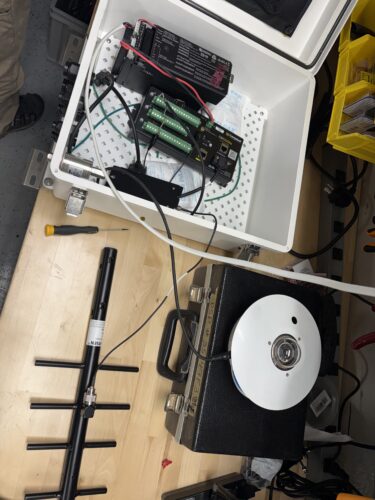
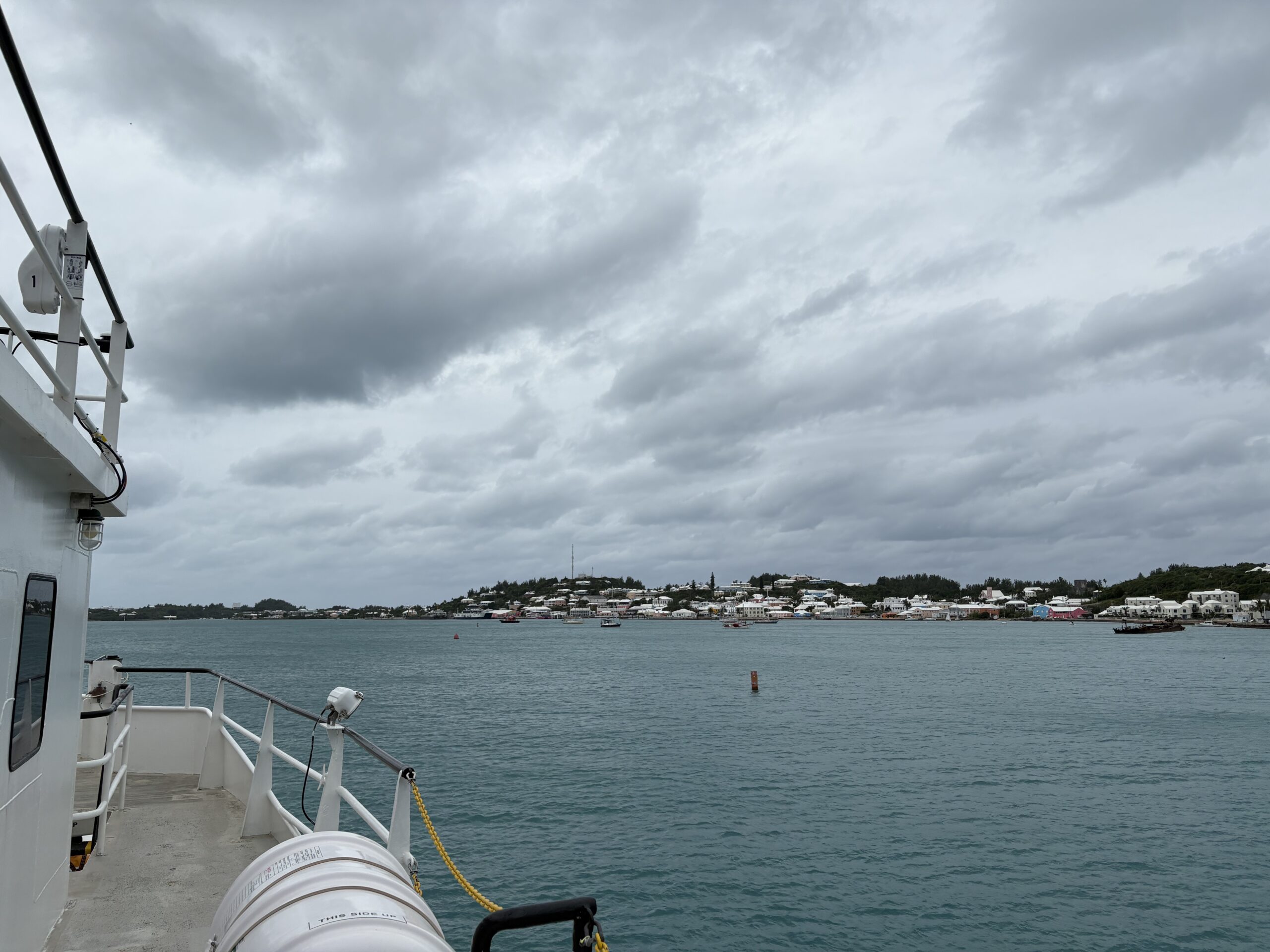
On November 13, we went down to the dock to wave goodbye to the RV AE as it headed out on the BIOS-SCOPE cruise. Claire from BATS gave me a tour of the labs at BIOS, and then I headed back to the marine tech office, where Vlad showed me how to wire the PIR and wind sensors for a weather monitoring station into a Campbell data logger, like the ones used on the ship, and use an antenna to send readings back to the office computer in real time.
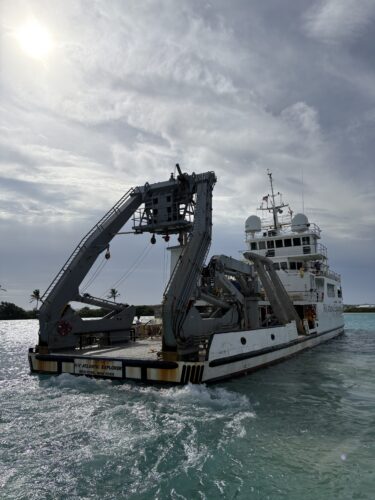
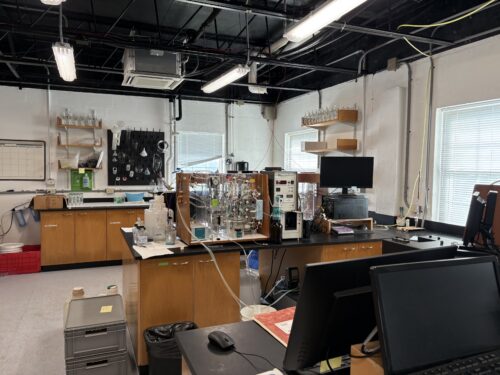
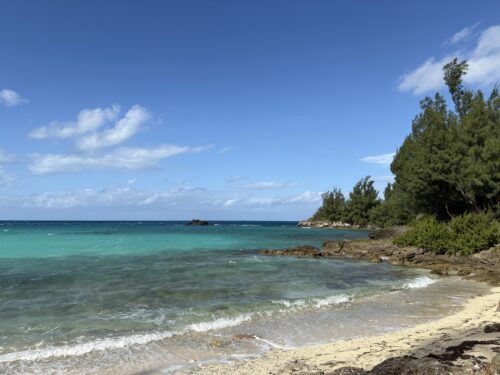
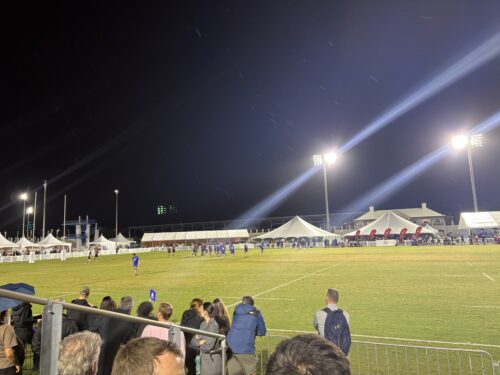
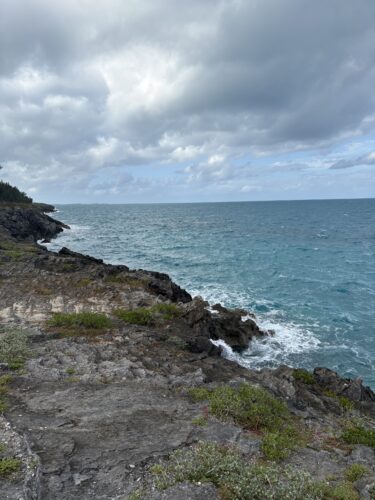
That evening, I caught the Bermuda World Rugby Classic (a rough night for the U.S., we lost 49–0 to France). I squeezed in one last hike and snorkel on the morning of the 15th before flying out. I’m sad to say goodbye to the RV AE and everyone at BIOS, and I hope I’ll be back!
Week 3: Halloween at Sea

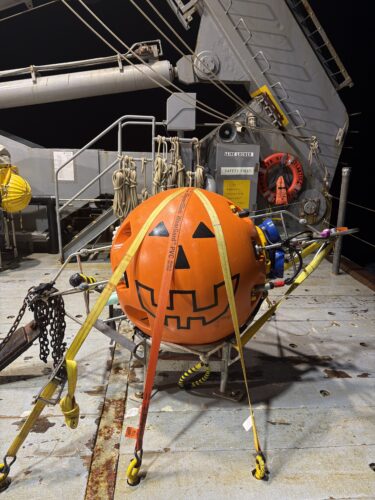
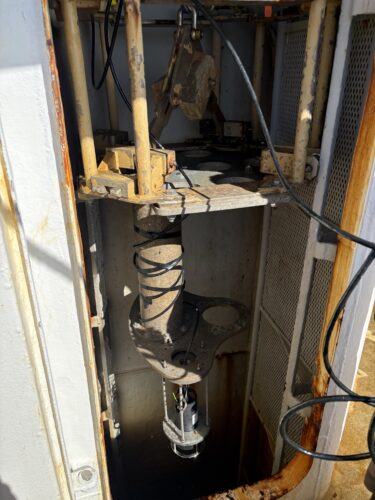
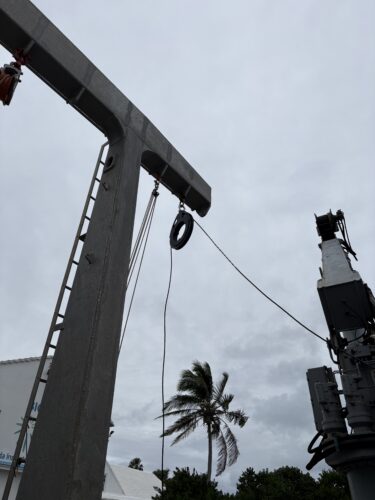
Halloween aboard the R/V Atlantic Explorer brought a successful mooring deployment and some decorating (good for morale!) The time and effort the group had spent on recovery day respooling line and paying close attention to the order of gear in the line-up (despite the complications brought on by the many many tangles) paid off on deployment day. The deployment went smoothly, and the mooring was back in the water in about three hours. We spent some time “interrogating” the releases to see if the mooring was successfully anchored at depth, which meant we got to use the Straza tower again. I think it’s very cool!
After repositioning, we deployed the GO-FLO bottles again, which was exciting because this meant that the OFP group has all the deep and clean seawater they need for their lab work for a whole year. During the Go-FLO cast, the data about wire length and speed from the winch stopped streaming, and we figured out it was a blown fuse in the control box. It was an easy fix, but stressful to troubleshoot with gear in the water.

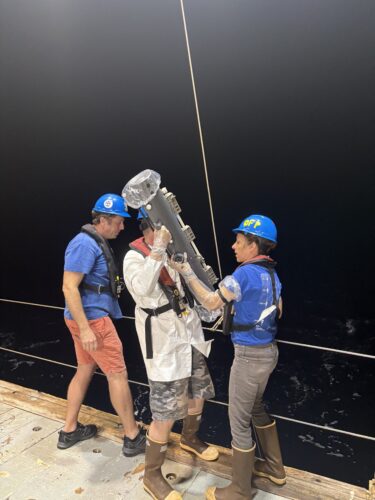
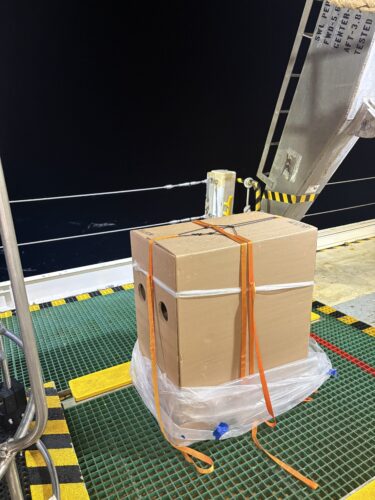
The final event of the cruise before heading back to Bermuda was deploying a deep Argo float from WHOI. This project opportunistically deploys these autonomous floats, which continuously profile the watercolumn measuring temperature and salinity. The deployment is pretty unique, and simple! It is stored in a cardboard box, and after cutting a small piece of paracord at the bottom, we lowered the package into the water. Once the bottom touched the ocean, a water-activated release allowed the float to separate from its packaging and begin its journey. The first data from the float we deployed can be seen here: https://argo.whoi.edu/wmo/7902464/index.html 

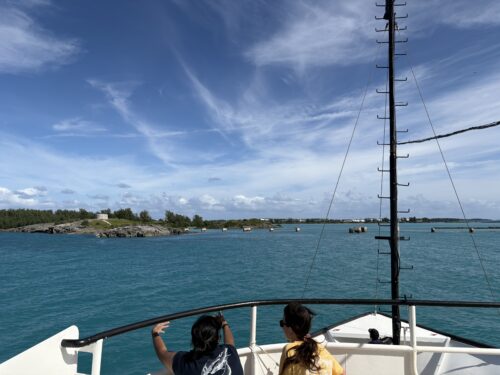
Then back to Bermuda! Somehow it’s already November. Post-cruise, we celebrated the successful mooring turnaround with karaoke and darts. We spent the next three days at the BIOS dock, unloading the OFP gear and getting the ship ready for the next group. Now that we were tied up at BIOS, I finally had a chance to visit the institute for the first time during my internship. 

For this cruise, the BATS group is joined by the science team on the ICONIC project, mostly out of Oregon State and Old Dominion. In addition to some more intensive sampling from the BATS group, the ICONIC group works with trace metals, studying iron and carbon in seawater. Their project has its own set of sampling gear, designed to minimize contamination from other sources of metals (giant metal ship!), which is important when trying to measure metals at such low natural concentrations in seawater. 

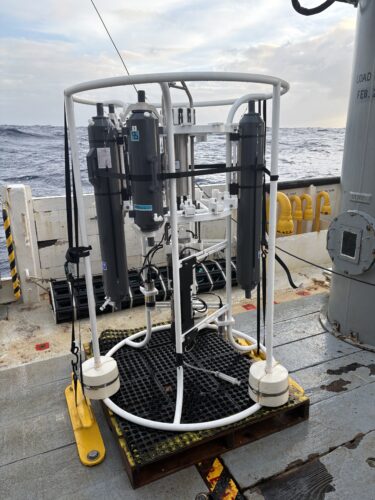
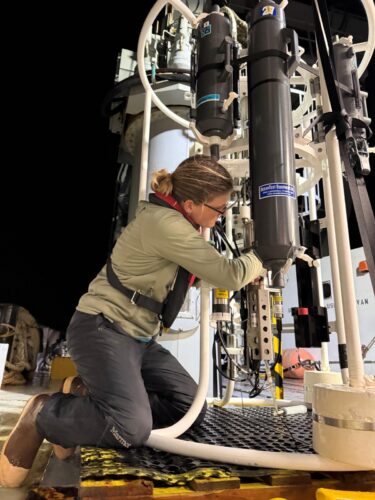
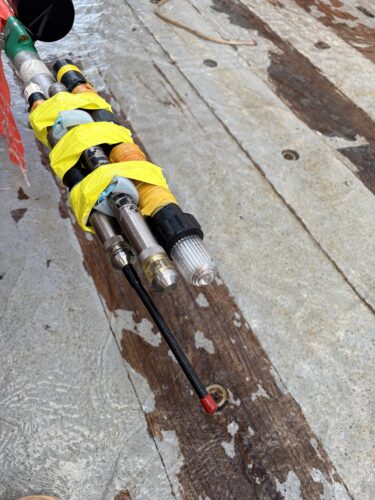
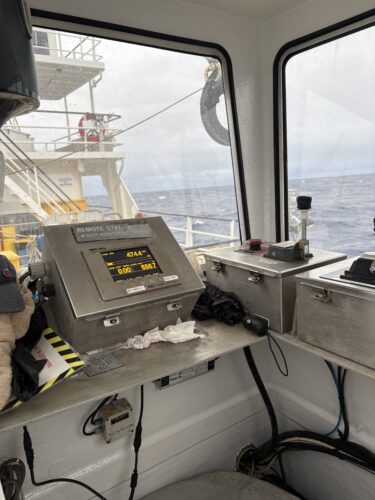
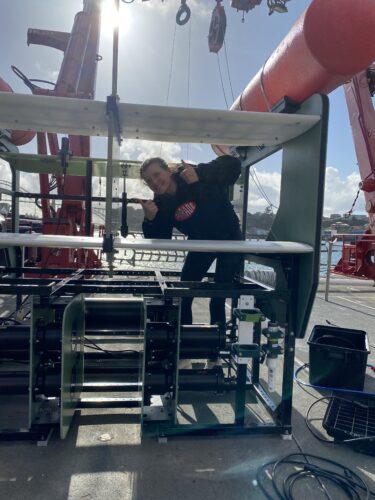
The group has a separate CTD and winch, along with a TowFish that pumps seawater aboard for sampling while the ship is underway. I helped to set up the trace-metal winch and CTD, and one of the jobs was to replace some worn-out bearings from the block under the A-frame, then remove the sheave from the trace metal winch, and replace some of the magnets inside. The sheave is a grooved wheel on the winch that guides the wire/cable, and as it spins, the magnets move past a sensor. With the correct calibration, this outputs data to track the length of wire being paid out or hauled in, and the speed the wire is moving. It’s an important part of the system, because we rely on this winch data for every deployment and recovery. I also did another Yale grip for the mechanical termination on the CTD. 

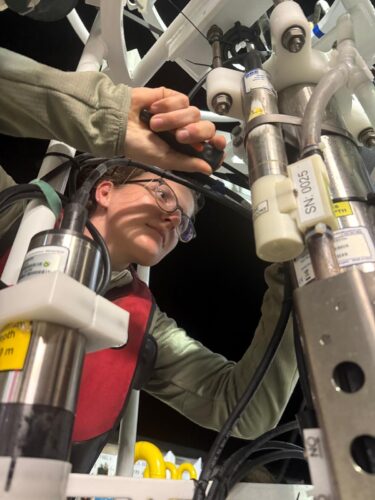
After the shore-side mobilization was completed, it was time to head out again. We left around 9am on November 5th, toward the Hydrostation S location. Here, we did 2 casts with the trace metal CTD. During the first cast, we noticed that the oxygen sensor was returning questionable data (-44 oxygen…?) After working through some troubleshooting steps with Emily, we decided the best fix was to remove the faulty sensor and replace it with a spare.

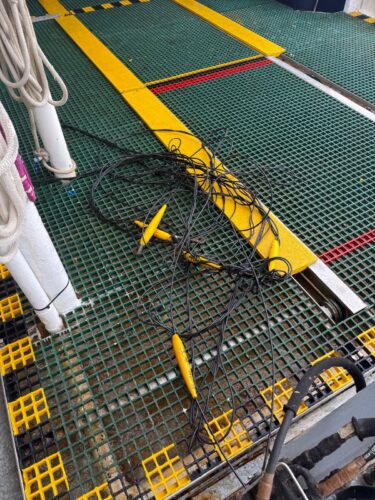
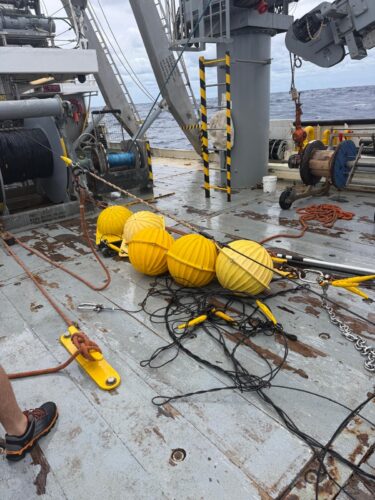
Now it’s today! Friday November 6th. This morning, we deployed an array of sediment traps at the main BATS station. The strategy is similar to the OFP mooring, but in reverse. This time, the weights went over the side first. Then as line is paid out and we move up the chain, it’s a similar back and forth of transferring tension between the winch and a deck cleat as the sediment traps and floats are attached. This deployment has a surface float, and the weights don’t sink to the seafloor; the goal is for the sediment traps to be nearly neutrally buoyant, with a bungee section to the surface float to dampen the effect of the surface waves and turbulence.  The surface floats went on last, along with an AIS beacon so we could track the array’s location. We’ll leave the traps drifting for a few days before returning to recover them. 

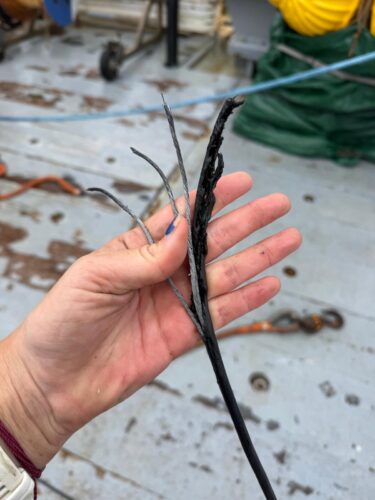
Next at BATS, we did 2 “regular” CTDs; the first to 1,200 meters, and the second to 4,500 meters. Both casts went well, but during some deck tidying, the trace-metal CTD cable was damaged, and needs to be re-terminated.

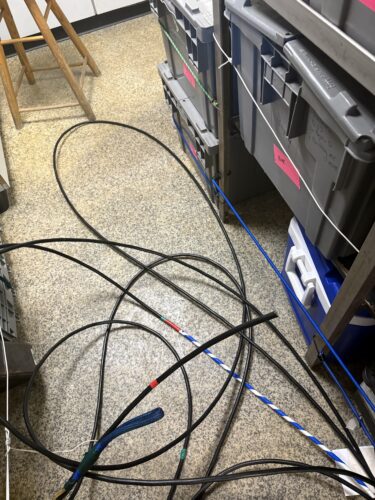
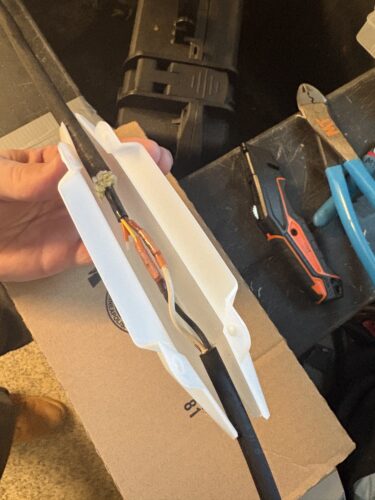
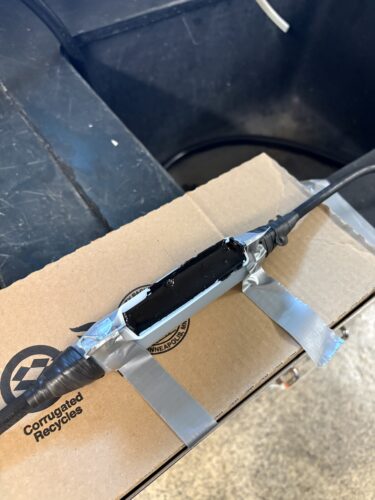
That was frustrating for everyone, but in general, all right. As an intern it was neat, because I helped with the termination, which is a tricky and time consuming thing to do. We removed the damaged section, redid the connection between the CTD and winch ends of the cable, and sealed the repair inside a mold filled with Scotchcast. This needs about 16-24 hours to cure, and it’s important for this connection to be solid, to withstand the tension from deployments and the pressure it experiences at depth. Originally we had planned for some zooplankton net tows this afternoon after the CTDs, but due to the rough sea-state, these are cancelled for now, and I’ll keep my fingers crossed that we’re able to do some later this week. 

Week 2: Arrival in Bermuda and Mooring Recovery

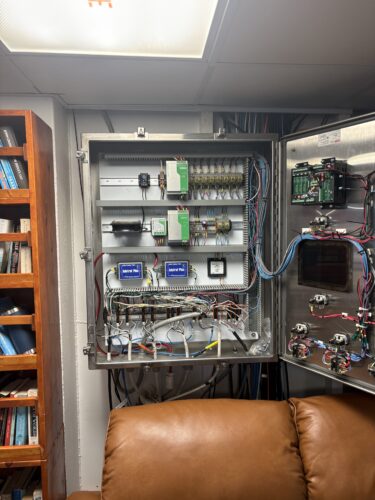
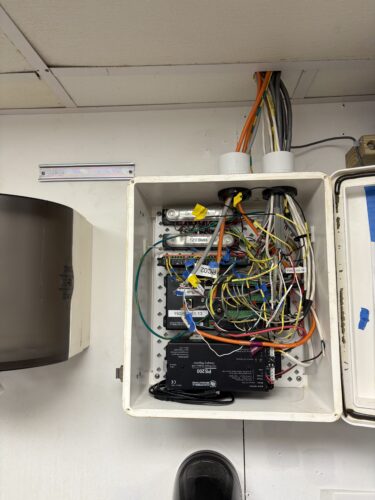
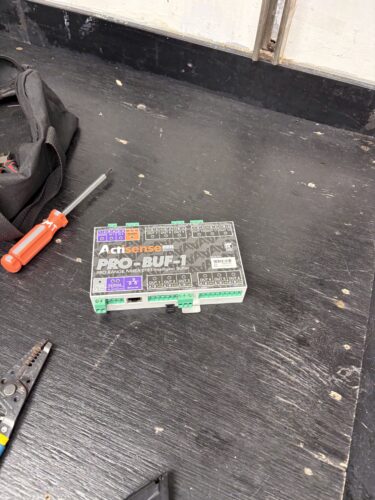
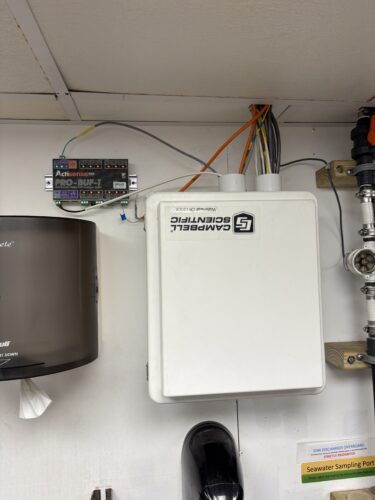
Week two has brought more time on deck and some more opportunities to get involved on board. I’ve started helping more with CTD rosette deployments and recoveries, along with a few other projects around the ship. One of those was installing an NMEA buffer/expander in one of the data loggers at the request of the next science team. This gives them access to a stream of data logged from instruments that are continuously sampling from the ship’s underway seawater system, which they could log separately or feed into other applications.

On Saturday, we arrived in Bermuda after our transit cruise from Barbados! With the stations completed, it was time to wrap up the BATS validation (BVAL) transit cruise, unload its gear, and prepare for the next trip with the Oceanic Flux Program (OFP). While we were in port, Vlad, one of the other technicians, came aboard. I spent some time with him taking some measurements for the new PA system the techs are planning to install. 

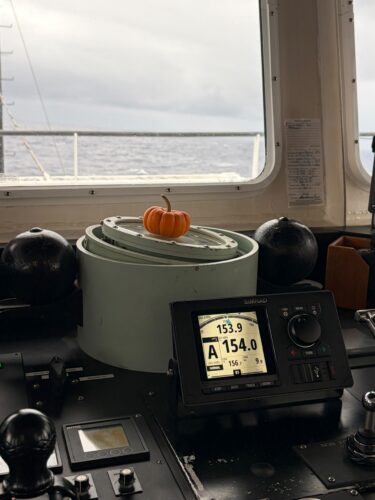
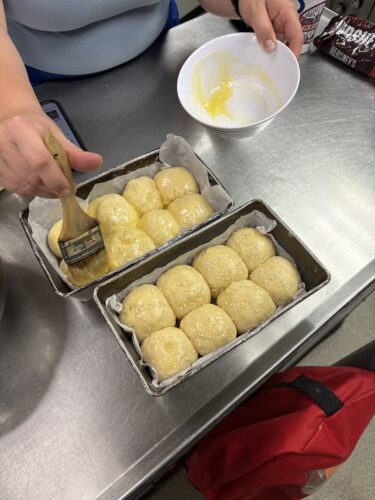
There was also time for a quick trip into town. Molly (2nd mate) and I took out the Zodiac to pick up snacks and a few festive decorations for Halloween, and we managed to fit in some late-night baking, too. 

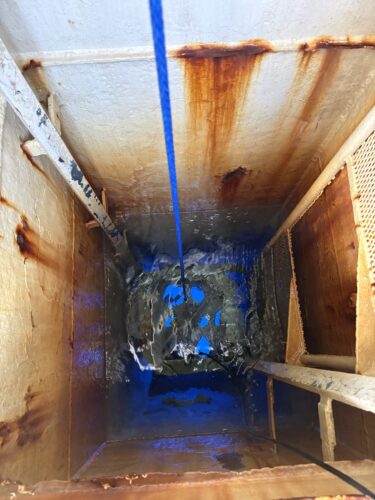
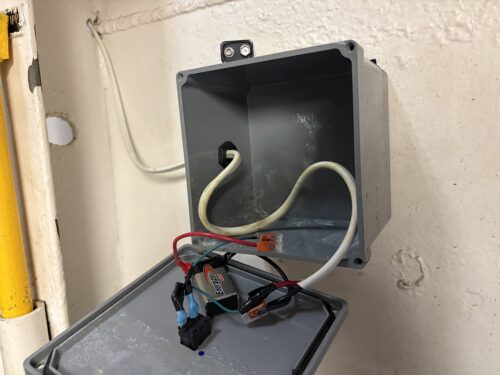
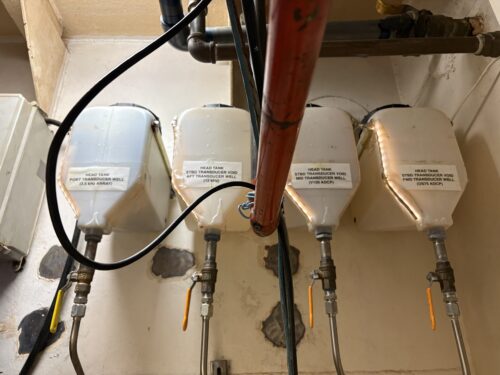
While in port, I spent some time with Emily working on some pre-cruise checks and preparations. One of these involves checking the water levels in the head tanks for the acoustic systems. The tanks serve as a quick visual check that the transducers are fully submerged. This is important for the acoustic signal to travel properly down through the water below. A light strip mounted beside the tanks makes the level easier to see, but this time it wasn’t working. Luckily, the fix was just a battery swap. Not everything is complicated! 😉

Heading out with the OFP

On October 27, we left Bermuda and headed toward one of the BATS sites to begin the Oceanic Flux Program (OFP) cruise. We also have some BATS folks aboard for CTD water sampling, and we arrived at the site earlier than expected.

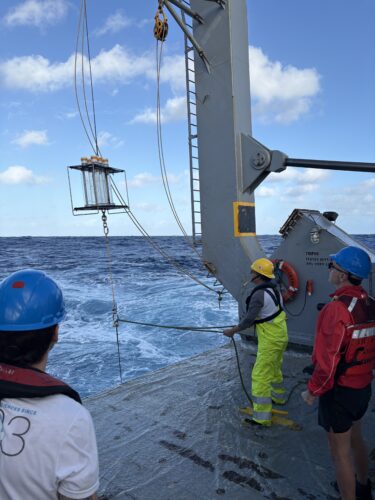
The OFP team, based at the Marine Biological Laboratory (MBL), studies the particles that sink from the surface ocean into the deep sea. Alongside the mooring work, the OFP group uses GO-FLO bottles to collect “clean” water samples. They serve a similar purpose to the Niskin bottles on the CTD rosette, but for this operation, they were attached directly to the winch’s hydro wire and deployed over the stern. We had three bottles on the line, attached and lowered one at a time. Once they reached sampling depth, a messenger was sent down the wire to trigger the bottles to close.


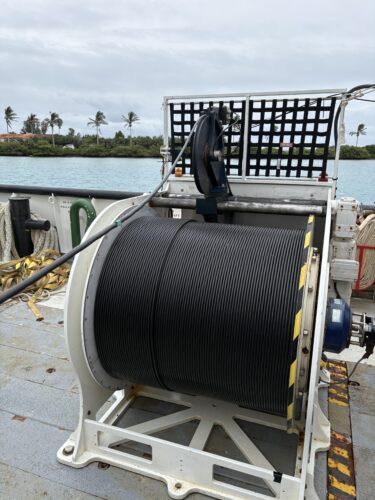
Recovering the bottles meant hauling in about 3,000 meters of wire, so I also got a chance to learn more about the OS42 winch. It was having some issues with “bad wraps” where the wire doesn’t lay nicely on the drum and can cross over itself, which can damage the wire over time. We did some manual adjustments to the “level wind”, and kept a close eye on it for the rest of the operation. Afterward, we did a CTD cast at the BATS site. The weather had picked up, so we used three tag lines instead of the usual two to help control the rosette during deployment and recovery. 

The main event

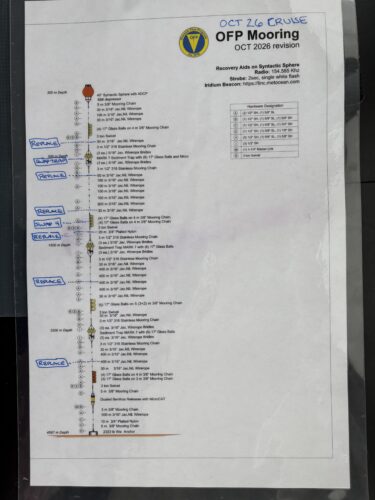
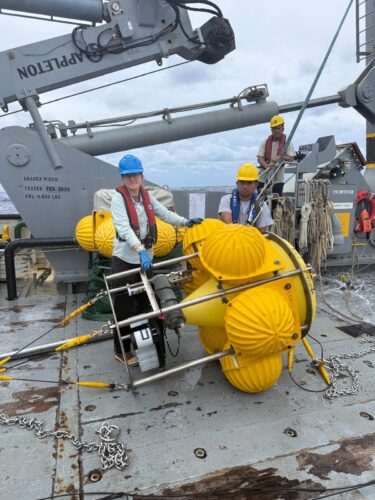
The star of the show for this cruise is the recovery and redeployment of the OFP mooring, and recovery day kept everyone busy. We started around 6:30 a.m. by trying to “interrogate” or communicate with the acoustic releases near the bottom of the mooring. Our initial attempts were unsuccessful, so we sent the release commands and waited for the mooring to detach from its seafloor anchor and rise to the surface. The upper part of the mooring normally sits around 300 meters below the surface. The first floats usually appear after about five minutes, with roughly 45 minutes needed for the rest of the mooring to surface.

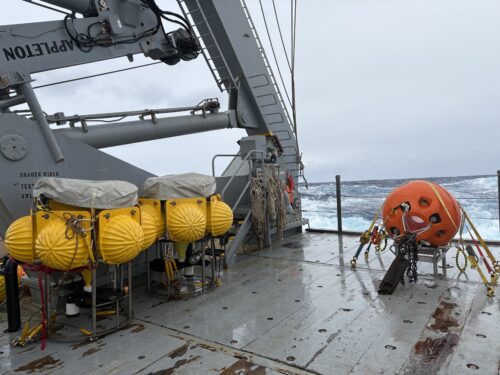
By about 8 a.m., the ship had pulled alongside the lower end of the surfaced mooring, and the crew threw a grapple to catch the line. The floating section was then brought around to the stern, where we began bringing everything aboard. The acoustic releases came up first. Working from the bottom end of the mooring toward the top, we removed floats and sediment traps as they reached the deck, winding the wire sections onto spools for redeployment. We work from the bottom to the top, to set up everything nicely for redeployment. 

Pretty early on, the marine techs and crew spotted signs that we were going to have some tangles. Several sections were floating much closer together than they should have been, and those suspicions proved correct once we started hauling them in. Alongside the planned wire replacements, we had to manually spool several 400-meter lengths and a number of shorter sections on and off as we worked through the tangles and damaged wire. Definitely an arm-workout, folks on deck rotated through shifts to share the load! 

It was stressful and complicated at times, but also interesting. I got to see the Yale grip I mentioned last time put to use during load and tension transfers between the deck lines and winches. It helped us hold the load of the mooring sections that were still floating, while adding or removing sections of wire and disconnecting floats and sediment traps. There are a lot of moving pieces. Between the tangles and a few other gremlins, our estimated seven-to-nine-hour recovery turned into about eleven hours. Eventually everthing was brought back on deck successfully, and then the OFP group started getting everything set up for the re-deployment later this week. 

Getting ready to send it all back down

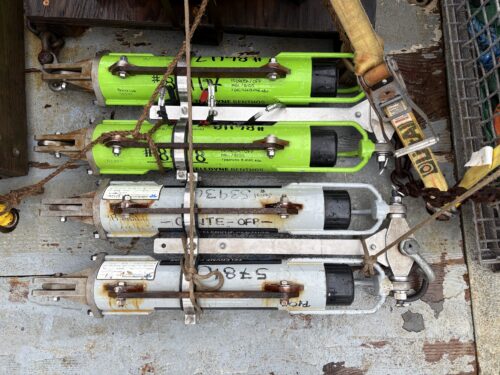
Today, the sea state has picked up a bit more. Waves are coming up onto the deck, and we’re all dumping water out of our boots. This morning, we tested the next set of acoustic releases for the mooring by lowering them over the stern (back of the ship) to 3,800 meters. We then deployed the Straza tower setup so the OFP team could try to “talk” to the releases in preparation for the mooring redeployment later this week. Better weather = better safety = better science 🙂

Week 1: Transit to Bermuda

Last Thursday, I arrived in Barbados and had a couple of days to explore the island before heading out on the RV AE for the transit back to Bermuda. On Saturday, I went over to the port to meet the marine technicians (Emily and Rory), some of the crew, and to get a bit of a walkthrough of the ship. I also got to overlap with the science group from the previous cruise, who had been sampling in the Amazon River plume region. It was neat to hear about their successful mooring deployments! Later that afternoon, we had some free time and went snorkeling nearby. We went looking for a shipwreck (found it!) and were lucky enough to spot some sea turtles! After one more night in the hotel, I boarded the ship “for real” on the 18th.

From Barbados, we’re now transiting back to Bermuda with a group of scientists from the Bermuda Institute of Ocean Sciences (BIOS) working on the Bermuda Atlantic Time-series Study (BATS). The first couple of days were mostly spent transiting, which gave me a great opportunity to get more familiar with the ship and start working on a few projects.

One of those projects involves the ship’s winches. The RV AE has several winches on board, and the wires they use are borrowed from the East Coast Winch Pool (ECWP). As part of the agreement, the ship sends in an annual wire sample for break testing, along with a report documenting how the wires have been used. I’ve been working on a script to automate the processing of logged winch data, summarizing things like maximum tension, wire speed, and the amount of wire deployed during each cast. So far, it’s going well! I still have some work to do with the technicians to fine-tune how the script identifies individual “casts,” or periods of wire use. The goal is to make it easier to generate these reports and keep track of wear and tear on the equipment.

On the 20th, I spent some time with Emily and Rory talking through other projects I might work on during the internship. We also went over the process of deploying and recovering the CTD rosette, how to coordinate with the crew, and how to set up the software for data acquisition. The plan is to watch the first few deployments before doing it myself.

Around 1 a.m. on the 21st, we completed the first CTD deployment of the cruise, all the way down to about 5,800 meters! Over the next few days, we’ll be doing a CTD cast roughly every 12 hours, with most reaching depths greater than 5,000 meters. The atmosphere on board is pretty relaxed during these long CTD casts (~5 hours), so there’s plenty of time to get comfortable with the operation and work on some side projects.

After one of the casts, Emily noticed that the Yale Grip on the CTD wire was a bit looser than she’d like, so she showed me how to re-wrap it. The Yale Grip is a “braided” wrap that grips the wire and acts as a backup to the primary mechanical termination. If that termination were to fail, the grip provides an additional way to keep hold of the wire and rosette. We wrapped up the last CTD of the night around 1 a.m. and called it a night (or morning?). There was a pretty spectacular lightning storm outside, which was wild to see and hear from the ship, but it set up a cozy mood before crawling back into my bunk for some sleep.

video credit: Emily Tate

Intro: Hannah Kepner

Hello! I’m Hannah, a soon-to-be UNOLS MATE intern joining the team at BIOS from mid-October to mid-November. I’ll be heading out on two cruises aboard the RV Atlantic Explorer, supporting the Oceanic Flux Program and Hydrostation S projects (two long-running time-series in the Sargasso Sea). 

I’m originally from Georgia, where I studied biology before moving to Alaska to study oceanography at the University of Alaska Fairbanks. My graduate research was part of the Northern Gulf of Alaska LTER, which provided the opportunity to spend quite a bit of time at sea aboard the RV Sikuliaq and a few other UNOLS vessels. Working with the Sikuliaq marine technicians is what motivated me to look into the MATE program. 

These days, I’m working as a technical analyst on a few zooplankton imaging projects. I’m excited to step away from my laptop for a bit and get back into hands-on fieldwork. I’ve worked a lot with zooplankton sampling gear, so I’m looking forward to getting more experience with other operations like CTD deployments and mooring turnovers during this internship. 

Outside of work, I’m usually backpacking, climbing, biking, knitting, or doing ceramics. I’m excited to spend the next month with the BIOS and RV AE team… stay tuned!

Powered by WordPress & Theme by Anders Norén