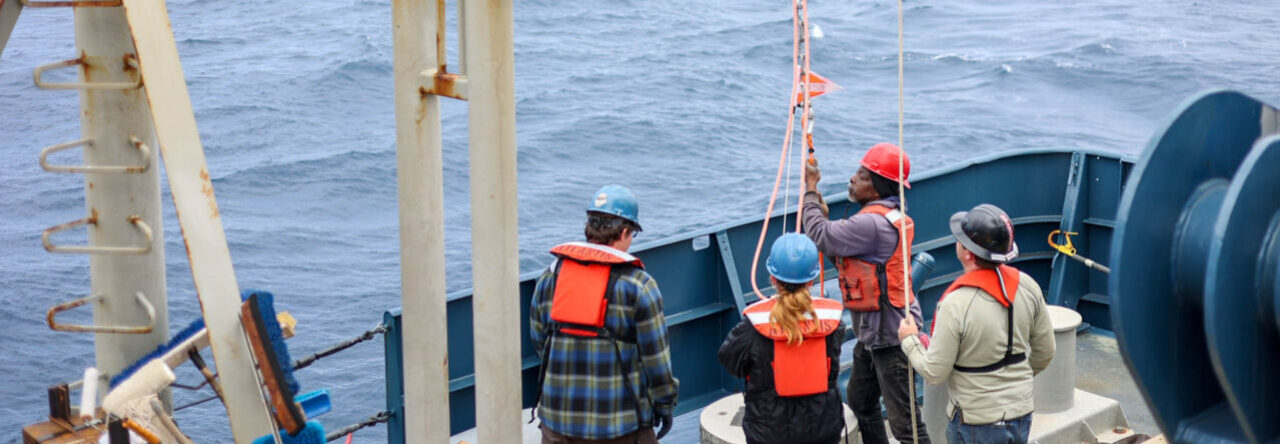
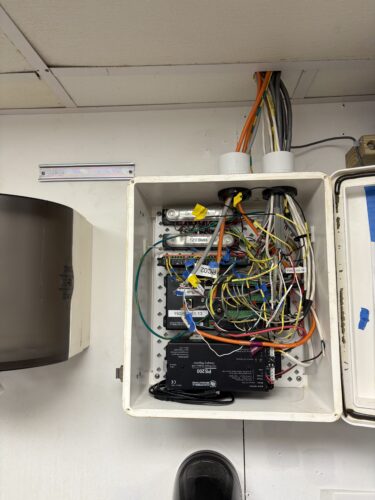
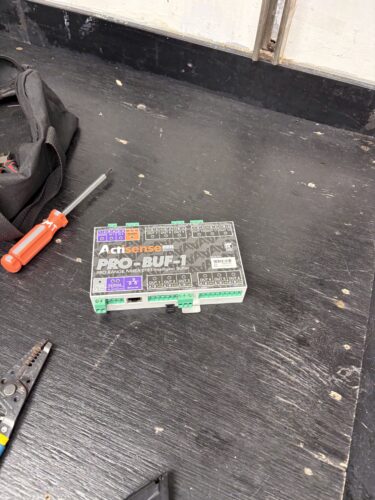
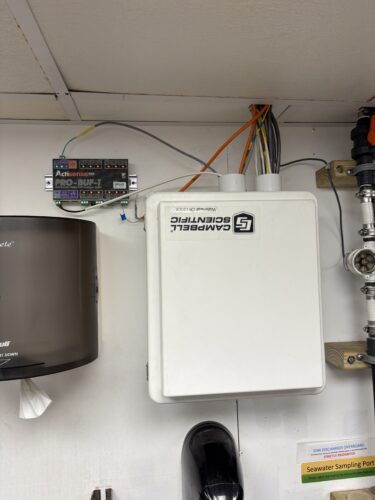
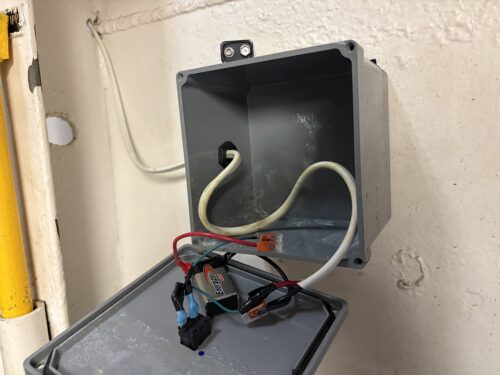
Week two has brought more time on deck and some more opportunities to get involved on board. I’ve started helping more with CTD rosette deployments and recoveries, along with a few other projects around the ship. One of those was installing an NMEA buffer/expander in one of the data loggers at the request of the next science team. This gives them access to a stream of data logged from instruments that are continuously sampling from the ship’s underway seawater system, which they could log separately or feed into other applications.
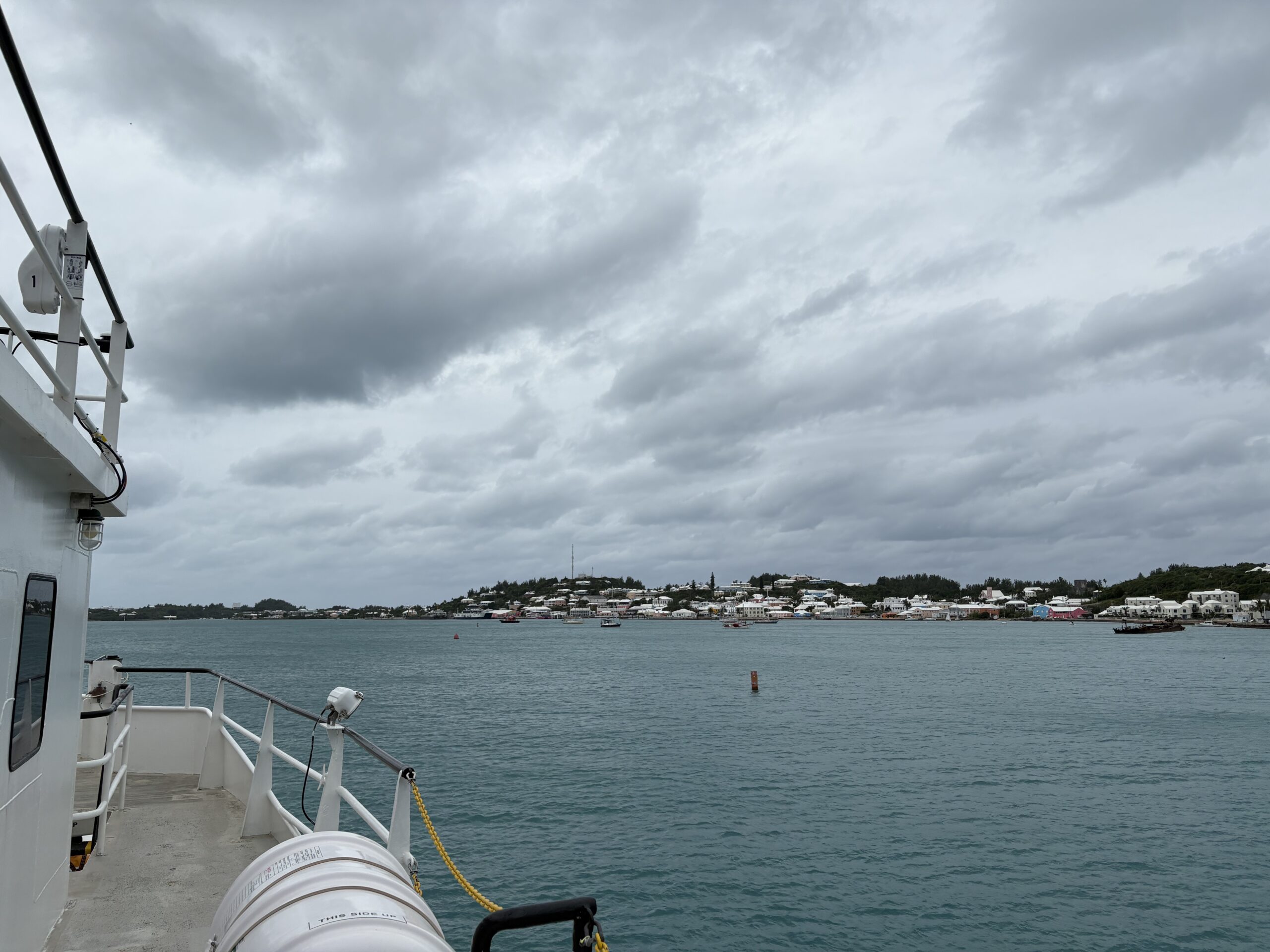
On Saturday, we arrived in Bermuda after our transit cruise from Barbados! With the stations completed, it was time to wrap up the BATS validation (BVAL) transit cruise, unload its gear, and prepare for the next trip with the Oceanic Flux Program (OFP). While we were in port, Vlad, one of the other technicians, came aboard. I spent some time with him taking some measurements for the new PA system the techs are planning to install.
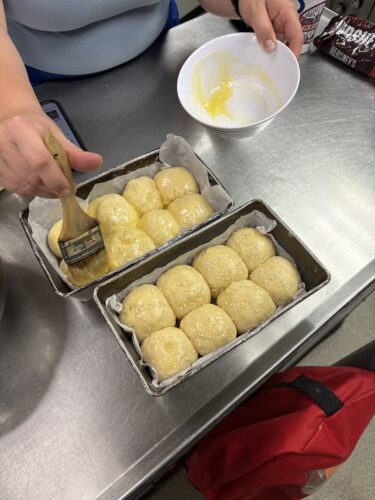
There was also time for a quick trip into town. Molly (2nd mate) and I took out the Zodiac to pick up snacks and a few festive decorations for Halloween, and we managed to fit in some late-night baking, too.
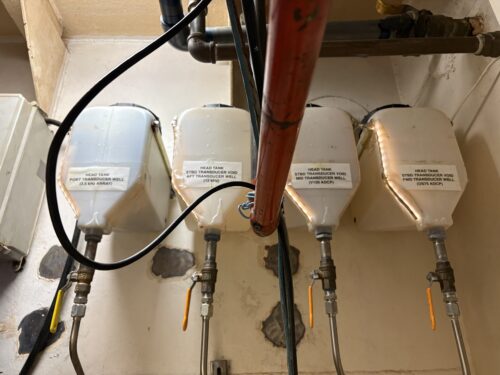
While in port, I spent some time with Emily working on some pre-cruise checks and preparations. One of these involves checking the water levels in the head tanks for the acoustic systems. The tanks serve as a quick visual check that the transducers are fully submerged. This is important for the acoustic signal to travel properly down through the water below. A light strip mounted beside the tanks makes the level easier to see, but this time it wasn’t working. Luckily, the fix was just a battery swap. Not everything is complicated! 😉
Heading out with the OFP
On October 27, we left Bermuda and headed toward one of the BATS sites to begin the Oceanic Flux Program (OFP) cruise. We also have some BATS folks aboard for CTD water sampling, and we arrived at the site earlier than expected.
The OFP team, based at the Marine Biological Laboratory (MBL), studies the particles that sink from the surface ocean into the deep sea. Alongside the mooring work, the OFP group uses GO-FLO bottles to collect “clean” water samples. They serve a similar purpose to the Niskin bottles on the CTD rosette, but for this operation, they were attached directly to the winch’s hydro wire and deployed over the stern. We had three bottles on the line, attached and lowered one at a time. Once they reached sampling depth, a messenger was sent down the wire to trigger the bottles to close.
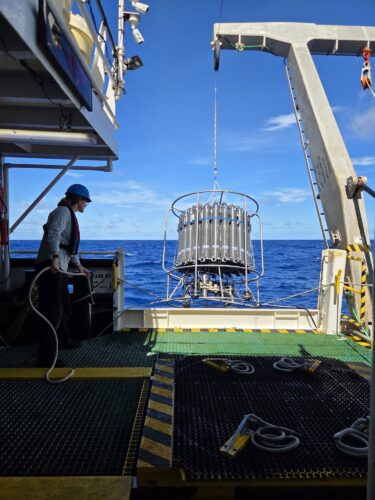
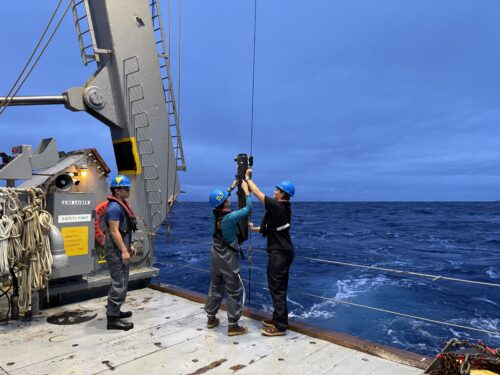
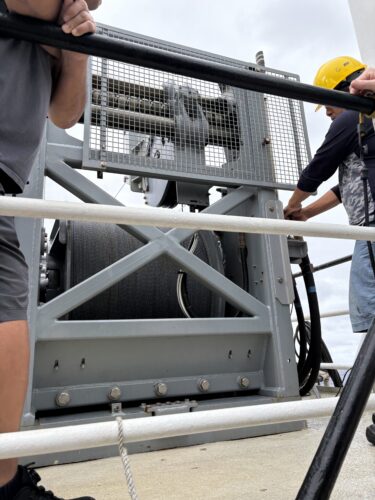
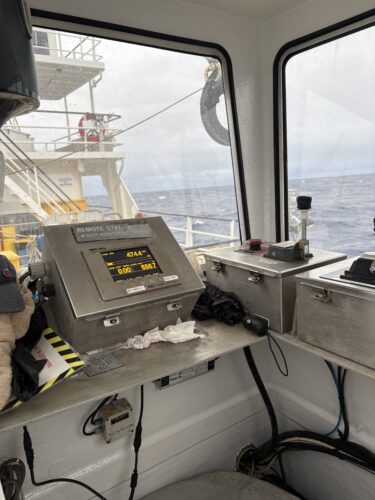
Recovering the bottles meant hauling in about 3,000 meters of wire, so I also got a chance to learn more about the OS42 winch. It was having some issues with “bad wraps” where the wire doesn’t lay nicely on the drum and can cross over itself, which can damage the wire over time. We did some manual adjustments to the “level wind”, and kept a close eye on it for the rest of the operation. Afterward, we did a CTD cast at the BATS site. The weather had picked up, so we used three tag lines instead of the usual two to help control the rosette during deployment and recovery.
The main event
The star of the show for this cruise is the recovery and redeployment of the OFP mooring, and recovery day kept everyone busy. We started around 6:30 a.m. by trying to “interrogate” or communicate with the acoustic releases near the bottom of the mooring. Our initial attempts were unsuccessful, so we sent the release commands and waited for the mooring to detach from its seafloor anchor and rise to the surface. The upper part of the mooring normally sits around 300 meters below the surface. The first floats usually appear after about five minutes, with roughly 45 minutes needed for the rest of the mooring to surface.
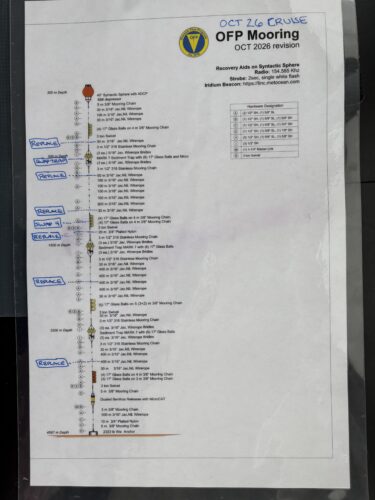
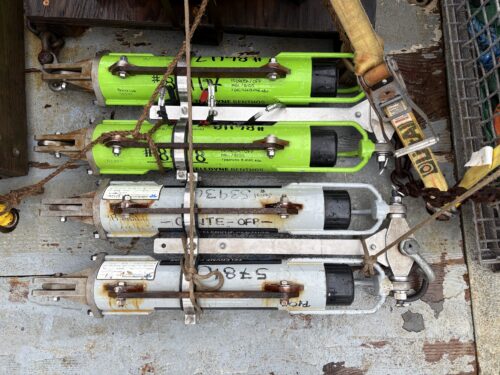
By about 8 a.m., the ship had pulled alongside the lower end of the surfaced mooring, and the crew threw a grapple to catch the line. The floating section was then brought around to the stern, where we began bringing everything aboard. The acoustic releases came up first. Working from the bottom end of the mooring toward the top, we removed floats and sediment traps as they reached the deck, winding the wire sections onto spools for redeployment. We work from the bottom to the top, to set up everything nicely for redeployment.
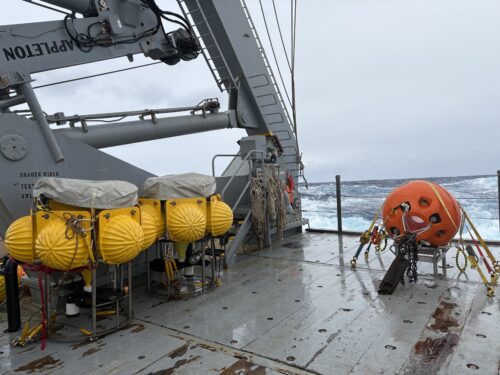
Pretty early on, the marine techs and crew spotted signs that we were going to have some tangles. Several sections were floating much closer together than they should have been, and those suspicions proved correct once we started hauling them in. Alongside the planned wire replacements, we had to manually spool several 400-meter lengths and a number of shorter sections on and off as we worked through the tangles and damaged wire. Definitely an arm-workout, folks on deck rotated through shifts to share the load!
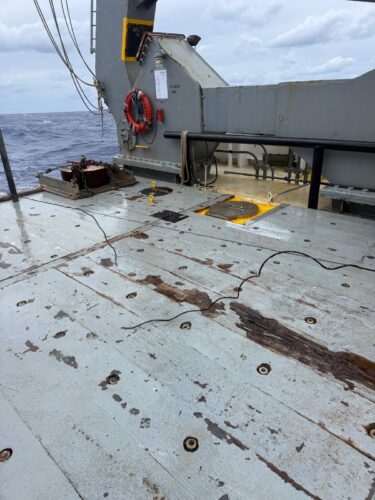
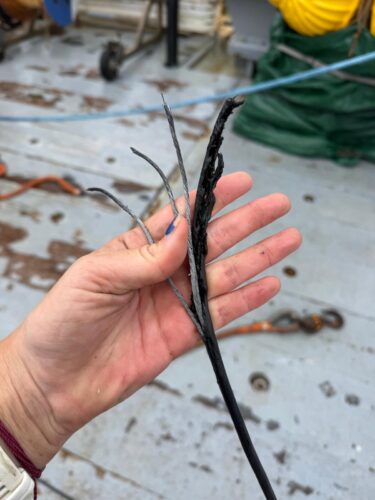
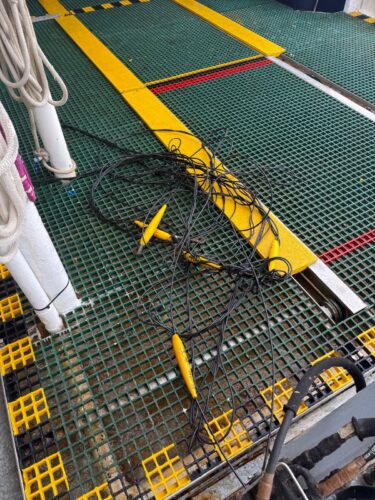
It was stressful and complicated at times, but also interesting. I got to see the Yale grip I mentioned last time put to use during load and tension transfers between the deck lines and winches. It helped us hold the load of the mooring sections that were still floating, while adding or removing sections of wire and disconnecting floats and sediment traps. There are a lot of moving pieces. Between the tangles and a few other gremlins, our estimated seven-to-nine-hour recovery turned into about eleven hours. Eventually everthing was brought back on deck successfully, and then the OFP group started getting everything set up for the re-deployment later this week.
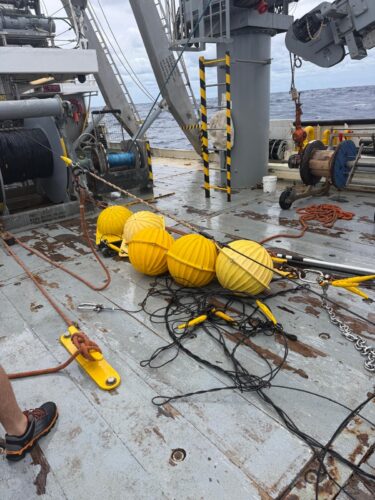
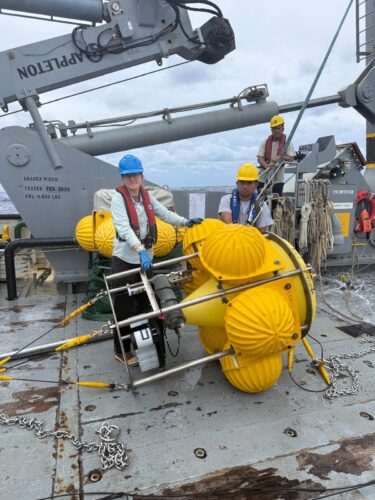
Getting ready to send it all back down
Today, the sea state has picked up a bit more. Waves are coming up onto the deck, and we’re all dumping water out of our boots. This morning, we tested the next set of acoustic releases for the mooring by lowering them over the stern (back of the ship) to 3,800 meters. We then deployed the Straza tower setup so the OFP team could try to “talk” to the releases in preparation for the mooring redeployment later this week. Better weather = better safety = better science 🙂
Leave a Reply