Time is weird and often feels nonexistent when in the middle of the sea in perpetual daylight. While I frequently don’t know what day of the week it is and am now used to eating my third meal of the day at midnight, time must be progressing anyway, as last week we hit the mid-way point of the cruise! In stride with that milestone, we also concluded mooring operations this week. (If you haven’t already, check out Micah’s blog for an awesome detailed operation summary!) Throughout this, it’s been really interesting to learn more about the science behind them and how that interfaces with the work we do as techs.
During our midnight shift transitions, my sunset is Micah’s sunrise!Clearly this is 2am…
The scientists onboard use the moorings to research pockets of the ocean where sound travels more efficiently, called sound speed ducts. Underwater sound speed is affected by variations in water temperature, salinity, and pressure, causing these ducts to form in warmer, saltier, and deeper (higher pressure) waters. The researchers communicate with the moorings that are collecting these observations through acoustic pinging. To avoid interference while they chat, we turn off our acoustic instruments for that time, including the multibeam and ADCP.
But, after we complete a successful CTD or XBT cast, we can use the temperature, salinity, and density profiles we collect to enhance these instruments using the same sound speed velocity that the science team is studying. By updating this profile in acoustic instruments like the multibeam, it can more accurately understand how quickly its pings are traveling through the water and provide us with more accurate seafloor depths and bathymetry (seafloor topographic features). Pretty cool!
Looking for a mooring that popped up underneath the ship! All was safely recovered.CTD time! We run the computer from a control room up here.
That said, we did indeed conduct some more CTD casts this week. One cast happened late enough in the afternoon that my mentor, Tyler, and I got to prepare it, which involves climbing around on the frame and muscling bottles clipped open, so that they are ready to snap closed later to collect water when they’re 2000 meters away. On previous casts, we had noticed that one bottle wasn’t closing correctly and therefore wasn’t collecting water, so Tyler and I did some troubleshooting. I hypothesized that the lanyard connecting the top and bottom lid was likely too short, causing the bottom lid to be pulled too high and get stuck on a lip that the others sat below. We measured and crimped together a new, slightly longer lanyard that we then installed, and on the next cast, it shut perfectly! A win for for the scientific method.
It’s basically a mid-ocean jungle gym!This is where the cap should be sitting; the other lid was stuck above that line.
The casts this week were also accompanied by some classic oceanography shenanigans. Because styrofoam cups have so much air in them, if you send them down with the CTD to the bottom of the ocean, the intense pressure crushes all that air out, leaving you with an adorable, tiny, shot-glass-sized version! Micah, Maya, and Christina organized the process to great success. The cup decorating skills around the Healy were impressive to see, and I’m stoked that I got to make two of my own. Under the pressure of about 3800 meters of seawater in the Beaufort Sea, they shrank to a little less than half their original size!
Check out the many talented artists on Healy!The before and after size comparison, featuring my cups!
While I’ve still been grinding on the ship diagrams and got to deploy an Argo float myself (my first on-deck bowline knot!), the biggest project Tyler and I have been tackling this week is the “cable factory.” We’ve meticulously inventoried all the STARC cables living in drawers and storage tubs across the ship, tested them, labeled them, documented them in the spreadsheet, and stored them in new, organized homes. Shoutout to Micah for finding a real laminator to replace my janky heat gunned QR codes for the inventory lists!
This project has taught me a lot about the use and maintenance of all sorts of scientific equipment cables: CTD cables, water wall cables, sea cables, test cables, Y-cables, pigtails cables, you name it! It’s also given me a chance to better understand the workflow of how often they’re used to determine how accessible to leave them and what organizational systems are most effective onboard. Additionally, it was just pretty satisfying to complete, and will hopefully make life easier for the next techs onboard. Everyone go look at the newly organized drawers and say ooh-ahh. Thanks!
Primary cable drawer, our magnum opus.Secondary cable drawer, transfromed from chaotic spaghetti.
This project has also meant a fair amount of time in the science hold, which is a big area in the hull of the ship that we access through a little porthole in the floor right onto a staircase. When icebreaking, you can really hear the thrash of ice all around you, which is pretty awesome. Micah and Maya have been absolutely crushing the inventory game for literally everything else onboard, so Tyler and I naturally have been complicating it by rearranging the sprawling collection of boxes down there and consolidating some more CTD parts.
Just dropping in!Time to practice your ratchet strap skills!
The festivities of the week gave us plenty of enrichment breaks from the “cable factory,” given two important holidays occurred: Coast Guard Day (which was celebrated jovially around the ship) and National Intern Appreciation Day (which had slightly fewer accolades). Coast Guard Day brought a feast of meats and sweets alongside a cornhole tournament on the flight deck, which Tyler and I promptly were obliterated at. However, we did secure second place in Star Wars trivia thanks to Tyler’s expertise, winning a new friend: Decibar the Inflatable Shark! The biggest win of the week for me, though, was that for one night, the galley served breakfast for dinner. Brekkie, oh, how I’ve missed you. Until next week!
Don’t ask what the final score was…Meet Decibar the Shark! And Tyler’s prize, Jam the Jelly.
Polar bear count: 0*
*Holding out hope as we return closer to land here soon…
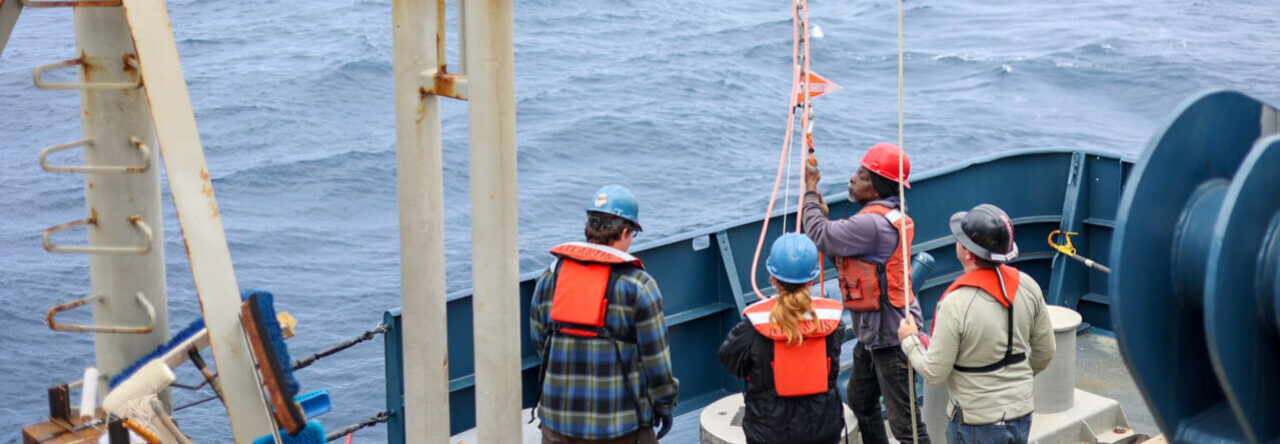
It is currently day 16 aboard the USCG cutter Healy! I am constantly surprised by the vessel and its capabilities, as well as the incredible crew that staffs her. The Healy is a coast guard ship where many freshly enlisted members come to train. Being such a large ship, with a variety of missions going on at any one moment, it makes for a new environment each day. On the back deck, you can see a rainbow of hardhats- each of the different colors have a different meaning! The green hats are those with the least experience, and as you gain knowledge and skills, you move up to a blue, yellow, and eventually a white hat. In this photo, you can see a yellow hat teaching the other deck members how to tie a knot. Seamanship skills such as knot tying, splicing, and line handling are of the utmost importance to work on the deck. This ensures safety of personnel and also the effectiveness of the scientific mission.
We arrived on station for our next evolution right as our night shift began. Science waits on no man, so we got to work immediately. I am very excited to finally get some science action on the night shift! Though, honestly, you could never tell that this photo was taken at midnight- it is all sunshine all the time in the arctic.
For a mooring recovery, there is an order of operations that we more or less follow each time. Every instrument package varies slightly, but it is the same process.
Once the scientists locate the mooring via a GPS transponder attached to the top float, the ship cuts ice in the area for several hours. The science crew then uses a pinger to communicate to the mooring release. Since the ship has other echosounders running at all times, it is the responsibility of the marine technician on shift to power down our multibeam and ADCP devices. This ensures that no interference will effect the mooring release. Once the anchor is released, the floats on the top of the mooring line drag it to the surface.
At this point, the ship can make its approach. We line up to the floats, keeping them on our starboard side. This can take some time and fine adjustments from the bridge, so the deck crew stands by patiently. We must be careful to avoid running over the mooring line, as well as potentially navigating around ice floes as they drift by. Dynamic environments require constant focus from every crew member involved!
Once we are along side the floats, you can see that they are attached to one another via line. Our goal is to hook onto the line, to pull it towards the deck. The man in yellow made quite an impressive grappling hook throw, and snagged the line perfectly. I always love to see people who have mastered their craft hard at work. Some of the green hats attempted to throw the hook, and Mr. Yellows skill was undeniable. A grappling hook is heavy, and a rather awkward shape to try and heave. So we were all thoroughly impressed!
Once the floats are at our side, we can hook the topmost one onto the winch line. The line is brought from the A-frame block, and held around the quarter by the deck crew. Once the floats are tied on, we allow the ship to float slowly forwards, bringing the floats aft to the A-frame. It takes many hands to ensure the line does not become snagged on anything while we can walk the float back assembly line style. Once it comes to our stern, it is time for the Lebus winch to start pulling the immense amount of gear onboard.
First up, the floats! Once the winch pulls up enough line to suspend them, the A-frame operator brings the frame inboard to the deckhands reach. They make off the line below the floats, so that the gear still in the water stays attached to the ship. At that point, the floats are no longer weight bearing, and can be removed from the main line. Special float stands are carried on a palette jack, so the floats can be stowed without rolling around like pinballs on deck. Once they are securely fastened down, the weight bearing line is attached back to the winch to haul up the next section of the instrument package.
The VLF is the next to be recovered! This device, which operates on a ‘very low frequency’ (hance the name VLF), communicates with seagliders. If you’ve been following along with my blog posts, you may remember seagliders from my time aboard the R/V Thomas G. Thompson. Those little yellow rockets dive up and down the water column collecting data, all by their selves! The VLF is so huge because of the extensive batteries that it must carry. It’s hard work under the ice, so they need their energy to stay awake until we come back for them!
This scientific crew has previously sailed in the area to deploy seagliders and moorings, which is what we are here to recover. These devices generally stay out for 1-3 years, autonomously collecting data which is critical for oceanographic research.
The VLF was brought back on board the same way as the floats, by transferring weight bearing lines. After that, its just a mere 3500 meters of line to hoist up! This takes a good chunk of time, as the winch can only pull in line so quickly. After a couple hours of line winding, the acoustic anchor release is the bitter end of the line. Finally the deck crew can head back inside and warm up for a bit!
While still sitting on the same station, science requested a CTD cast. After all of the testing we have put the CTD through, its time to put it through the true ringer- a cast to a depth of around 3700 meters! Luckily I was still on shift, so I was able to prep the CTD for deployment. We opened all of the bottles, and prepared them for water collecting. There I am, on deck finally! Hi me! I removed caps from all of the sensors, and the plungers from the oxygen sensors. I stood back as the deck crew deployed the rosette over the side, to ensure everything on the rosette looked correct. Similarly to how the line recovered from the mooring, it takes some time for the CTD to reach the requested depth. So it’s back to waiting around for you, deckies!
Go Kaleigh!That’s me!Thermocline my beloved… <3
Once the CTD was 3700m below us, dangling into the dark arctic waters, it was time for data collection. This was right around our turnover time, so it was lucky that both Kaleigh and I were able to fire some of the niskin bottles. Look at us go! The computer program, SeaSave, is fairly simple to use. It graphs the water column data in real time, and makes some pretty neat charts. You can clearly see the thermocline here, which is a depth at where the temperature changes drastically. I am a nerd, so this is fantastically exciting for me! To some it may just be a few lines, but it is a visual representation of all of the oceanographic theory I have studied before. I love to see science in action!
After the CTD came back on board during the dayshift, we allowed the full niskin bottles to settle and test for leaks. And wouldn’t you know it… Sigh. It’s back to testing for us! In an unusual turn of events, many of the bottles are leaking from the screws, which is a new one for me. Some drip from the spigots as well. So, time to try something else!
The niskin bottles we use are as big as I am! These bottles hold 12 litres of seawater each. With 24 bottles on the rosette at any one time, we can grab 288 litres of sea water in a single cast! Seldom will the science group need all 288 litres, but it does give them plenty to work with. Science needed no water for this station, it was actually just for our own testing purposes. We wanted to let the bottles sit so we could detect leaks, and detect them we did!
We couldn’t just pour the bottles onto the staging bay floor, so we had to take the bottles down while they were full. One full niskin bottle weighs approximately 35 lbs, so as you can see, it was a bit of a wrestle to pull them off the rosette. We emptied them all into the floor drains, and got to work with our repairs.
I have worked with rebuilding a niskin bottle as part of a school project, but never this many! We documented which bottles had which issues, and began trying to solve some leaks. We ran an experiment to try and figure out a solution. We replaced one bottles O-rings, one bottles spigot, and one bottles lower screws. We filled them back up and let them sit for a little while again.
When we came back to check, the only bottle that showed improvement was bottle number 2, where we replaced the spigot. This involves wrenching the bottles open, removing the spigot disc, removing O-rings, and popping out the old spigot. So, we took a sit down on the floor and got busy switching out all of the spigots. It is a bit of a delicate and involved process, so this took us much of our shift to accomplish. Once we had swapped out all of the affected pieces, we cleaned up the mess we made and hung the bottles back onto the rosette. Try again!
Another facet of the scientific mission on this deployment is ARGO floats. You can find out more about the floats and their mission on their website! These devices are deployed over the side and act much like a drifter. They go out and do their thing, collecting precious, precious data! An excitable member of sci allowed me to assist in the deployment of this float, which was a bit underwhelming and a ton of fun. More or less, we simply wait for a break in the ice and toss ‘er over the gunwale! We are a bit more precise than that, using a piece of line to slowly lower the float into the water, but you get the picture… Thanks, Justin!
The first sasquatch sighting in the arctic…They look like ants!
Oh right, this is the Coast Gaurd! Back to official matters. An incredible training opportunity presented itself while we are in such thick ice. Ice rescue! We spent a considerable amount of time looking for an appropriate floe, and posted up beside of the piece. Once the bridge felt confident it was a good spot, the deck department craned the gangway onto the ice, and the first man was down that quick. One small step for man!
They walked as far from the ship as the fog would allow. Each man on the ice carries equipment that they might need while off of the ship. They place little orange safety cones on spots where there might be tripping hazards or questionable ice. They even have a team member dedicated to watching for wildlife! With the fog, it would be relatively easy to accidentally creep up on an unsuspecting polar bear. It was a delight to watch them trudge across the frozen snow, and fade into to distant fog as ships in the night. The going is slow, walking carefully on slippery surfaces and uneven terrain.
Splish splash! Hi Nina!That’s us!
Then it was the time for their true trials- surviving a fall into the ice! If they were to step through a thin spot of ice, or have any other reason to end up in the water, they need to know how to respond. Their suits have a base of neoprene, which keeps them dry, and a snowsuit that keeps snow and wind off of them. These suits float very effectively, so theres no need to try and tread water. While in the water, they practice manuevers for rescuing an unconscious team member, best practices for crawling back up onto the ice, and more. This training, though surely strenuous, looked like the most fun you could have! What a crazy feeling it must be, floating in an ice hole with nothing but 4000 meters (13,000+ feet!) of ancient arctic water below you.Only those training were allowed to get onto the ice, so it is a bummer I was not able to participate. But even just watching was incredible!
My mentor Maya and I were jealous of the coasties play time on the ice, but we enjoyed our time on deck watching just as much!
It was surreal to see the vessel at a stand still in the ice, and I got this insane view of the bow. The ship is unbelievably huge, and I am always in awe of her stature. Once the ice training was complete, the coasties scaled the rather steep gangway back onboard, and we were back to crushing ice in no time. As we continue our efforts, with many more miles ahead of us, we say so long and farewell to our northern most point.
Fair winds and clear leads to you scallywags back home.
This week, it was finally time to put all our preparation to the test: we had a CTD deployment! Despite Tyler’s and my confidence in our setup, it was still a relief to see all the sensors working properly at 3700 meters and to watch everything come back in one piece. To give the system a little extra TLC after a successful deployment, I overengineered a new syringe (used to flush the CTD’s plumbing and keep the salinity sensors wet to prevent salt crystallization, which might skew later readings) since the old ones kept falling apart.
Poppin’ (Niskin) bottles!Don’t count how many zipties I used…
We were also able to observe more mooring deployments and recoveries in varying conditions. Moorings are essentially long lines of instruments placed at specific depths, anchored to the seafloor, and held upright by big buoys. If we’re lucky during a recovery, we’ll find a nice patch of open water where the mooring is expected to pop up. But more often, the ship has to spend a few hours breaking ice in circles to clear the area, which leads to some pretty silly-looking cruise tracks.
Deploying a very low frequency (VLF) device on the mooring that can communicate with underwater gliders.Science is about efficiency!
In an ideal world, scientists send a signal to an acoustic release at the bottom of the mooring, which tells us its location and triggers it to disconnect from the anchor so the whole array can float to the surface. The ship then spots the colorful buoys, drives up to them, and the crew uses grappling hooks to pull them closer and hook them to the winch line. The mooring is then dragged to the stern, where it’s hauled up and secured piece by piece using taglines to bear the weight below each instrument. In practice, the lines can tangle, buoys get stuck in ice, and many other complications arise. There’s more to learn every time!
We’ve also been deploying a couple of expendable bathythermographs (XBTs) and Argo floats. XBTs are corded probes launched off the ship that work almost like a single-use CTD. Argo floats are devices that take continuous temperature and salinity profiles for a global data network. Because the network relies on the accessibility of putting these floats out, they’re pretty simple to deploy. In fact, some cargo ships just throw them overboard in the cardboard boxes! We handled them a little more gingerly, though.
Making deck work look cool…It’s easy with that view.Tyler getting ready to deploy an Argo!
One of the most exciting deployments this week was…people! Which is to say, we had an impromptu ice station. Unfortunately, only the Coast Guard ice rescue team was allowed out to conduct training, but it was fun to watch anyway. While it was a serious exercise, seeing the team splash around in a pool on the ice looked like quite possibly the most fun imaginable. I was asked to take photos of the process for the NOAA Corps liaison on board, which felt like a fun crossover moment from my work back home.
Don’t you just want to take a dip?Tyler, me, Micah, and Maya on the ship during the ice station. It’s like we were there!
Back inside, Tyler and I started our next big project: taking an inventory of all the scientific cables STARC has onboard, which we affectionately refer to as “the cable factory.” That’s meant a lot of multimeter time for me, along with building a spreadsheet. And, if you know me, you know that the spreadsheet is beyond tricked out. The idea is to make it easier for the next person to fix or redo the CTD, with useful info like instrument-specific pinouts. To keep it accessible, I printed out QR codes that link to the spreadsheet and laminated them with a heat gun, since I couldn’t find the laminator. If it’s stupid but it works…
I’m beginning to believe there’s nothing a heat gun can’t fix!CCTV footage clearly shows me being an excellent water wall detective!
Coming from a science background, one of the coolest parts of being a marine tech is getting to test dozens of hypotheses on a cruise instead of just a few, like the science party. For example, we have two water walls onboard, each with two oxygen sensors. On one wall, one sensor consistently reads about 5 units higher than the others, no matter which sensor is installed in that spot. I hypothesized that the spinning flow meter between the two sensors was forcing bubbles through the line and causing the higher oxygen readout. Tyler gave me the okay to test my theory, and after several trials and alternative hypotheses (the Y valve is causing a pressure drop? the short tubing is causing too high local flow?), we’ve ruled them all out so far. Onto the next one! Maybe a float test…
Tyler has also been teaching me some cool basic tech skills, like tying nautical knots (I’ve got the bowline down) and soldering, which is super cool, though I haven’t quite mastered it yet. I’ve learned more “computer stuff” too, like serial and UDP communication, and SSH, amongst all the instruments and VMs onboard. Tyler tasked me with creating diagrams for related computer and electrical systems, so I’ve been enjoying applying my graphics skills to a new technical subject.
First time soldering! Don’t look at it too closely…You understand how to set up a CTD now, right?
Now that we’ve settled into the ship and its routine, I’ve begun to take more notice of the morale events happening. From Sunday sundaes and pizza parties to karaoke and crafternoons, there’s plenty of fun breaks to be found when you need them. Now that we’ve hit our highest latitude of the trip, I’m also happy to report: I’ve found the North Pole! Contrary to popular belief, it lives in storage in the hull of the Healy. Who knows what else we’ll find! Until next week.
Santa are you onboard?Coastie lore says this window sill is the best nap spot. Micah and I give it a try on a shift transition!
Side note: Thank you to everyone who reached out to check in on our safety following the massive earthquake off the coast of Russia and subsequent tsunami warnings. We are quite north and all safe! Tsunamis are generally not too big in deep water but grow to larger heights when they enter shallower water, so even if it did reach us, it would still be a small blip out in the open ocean. Thinking about those affected, and hope you are all safe!
It is currently day 10 aboard the USCGC Healy! Kaleigh and I have received the full onboarding experience, including donning our survival suits. These ones are extra nifty, and can even hook together so you don’t drift apart. They remind me of how otters hold hands while they sleep! Making sure that everyone knows exactly how to don a survival suit ensures that, in the event of an emergency, it is a quick process with no confusion. Reaction time makes a huge difference in dangerous situations at sea!
Along these same lines, we ran many drills. Most of them were for the sake of Coast Guard training, but they are vital for everyone on the ship. Man overboard, fire, gas leak, and medical emergencies are some of the various drills that are practiced frequently. Practice doesn’t make perfect, but it does make for efficient response times. Everyone knows their duty and where their muster station is. Confidence in ability is half the battle!
Coefficients, variables, offsets oh my!
The marine technicians onboard the Healy run 24hrs a day, in 12 hour shifts. I am on the midnight to noon shift with my mentor Maya, and Kaleigh is on the noon to midnight shift with Tyler. The tech lead of our team, Christina, is on watch from 0600 to 1800. Having this overlap ensures that our turnovers go smoothly, and adds an extra hand to the times when science is most likely to occur on the cruise. This setup does mean that I don’t get to participate as much in the science, but gives a realistic view into the life of a technician.
In this photo, Christina (left) and Maya (right) are troubleshooting one of the many softwares that keep science aboard running. On the wall of monitors, each system can be observed at a glance. Generally, green lights mean things are running well, and red ones mean things need to be checked. Hope you aren’t color blind!
Though having this many screens may seem overwhelming, it is an asset. Nothing can be forgotten when it’s right in front of you!
Gravimeter, don’t bring me down…
Being a marine technician has much to do with variety. Having a wide scope of skills and working with many different instruments means always learning. A new piece of equipment for me is the gravimeter. Measuring marine gravity is an interesting science, and a subject that I know little about. I won’t bore you with the details, but check out this short, informational video for more info. My mentor Maya walked me through the process of a weekly test called “Test points”, where we use a multimeter to check resistances. We track the numbers in a spreadsheet, as well as enter the numbers into the deck box for calibrations sake. Next week, it will be my turn to teach Kaleigh, our other intern, how to perform the test.
While on watch, we make several rounds throughout the ship, touring through any space that has equipment and instruments under our supervision. We inspect deck boxes and cables, and remain vigilant for alarms, red lights, or low fluids. One of those spaces is the gravimeter chamber where the unit lives. I have come to quite enjoy our rounds, as it is a nice break from the lab, and we occasionally are able to see others up and about in the dead of night.
That pesky vent screw.No bueno…Takin’ a leak…
While transiting to science stations, it is a perfect time to test equipment. The CTD was due for a thorough look over, bottles and all. The day shift was working on sensors and the CTD “fish” itself, so it was up to the midnight marooners to test the niskin bottles. First up: do they hold water? Well, they were all full already. So the easy answer was yes! We drained them all out, giving us the chance to test the petcock drain on each bottle.
Interestingly, one bottle refused to drain, even with the vent screw wide open. After dismantling the bottle trying to troubleshoot, we found that it was the fault of a defective vent screw. The vent screw had no vent! A simple replacement solved the issue.
One of the spare bottles had a small leak, and we identified a crack right at the base of the bottles handle. Unfortunately, there is nothing we can do to repair the bottle, so it is simply out of commission. All the other bottles got the A-OK, so I clambered back up into the hangar loft and got the bottles back onto their storage rack.
Babies first sea ice!The Arctic Circle!
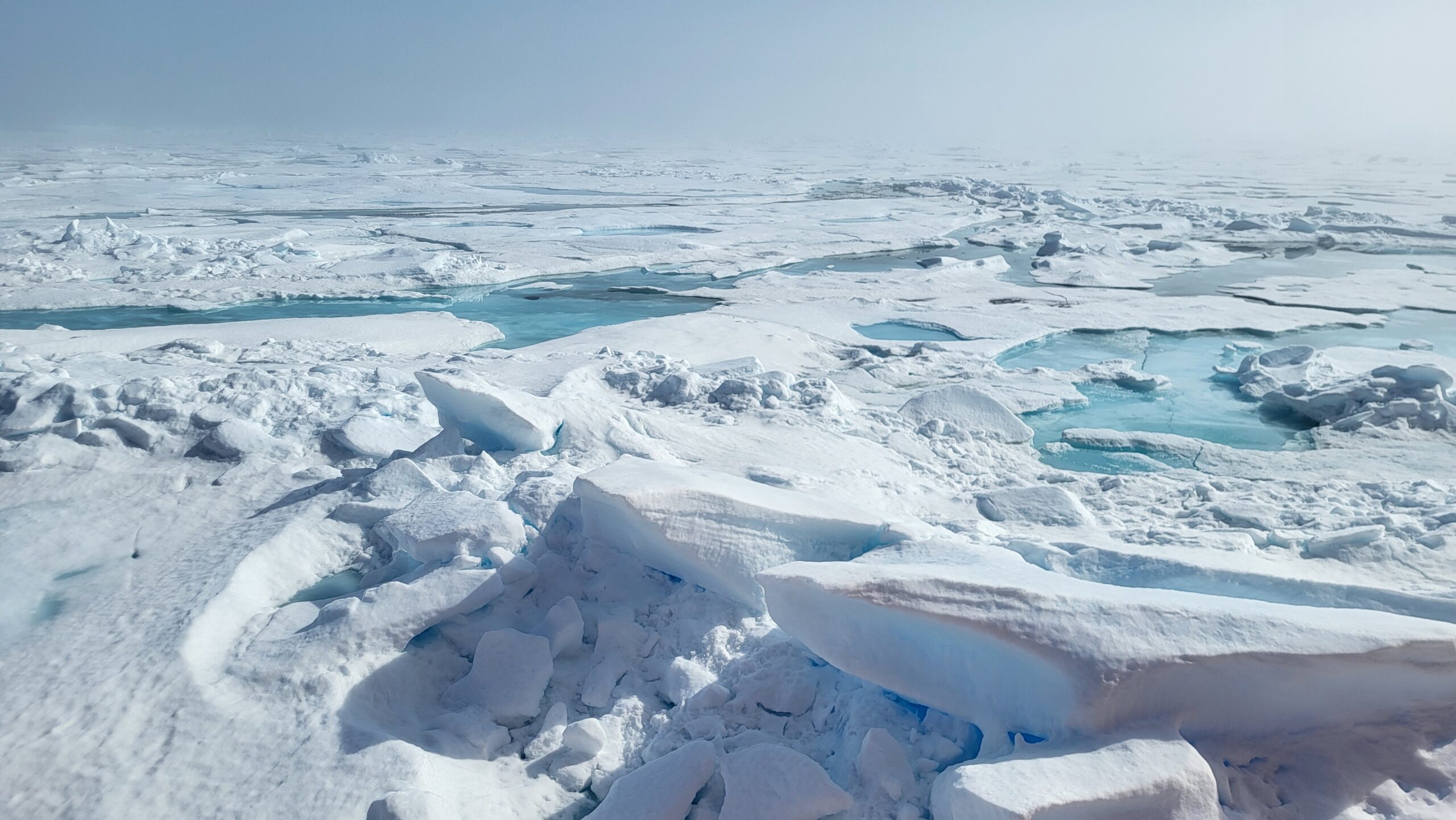
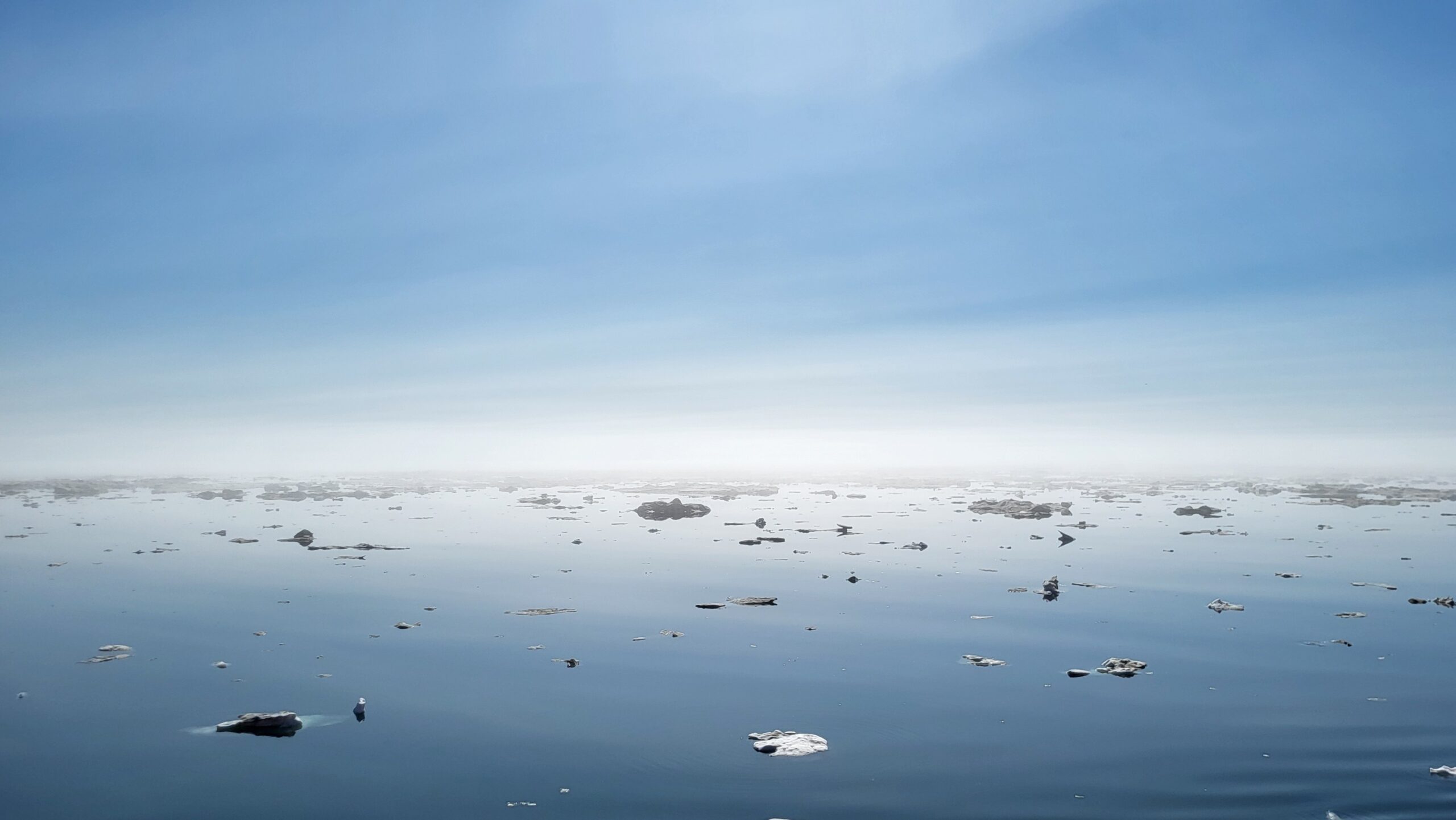
After a couple long days of work, we spotted our first patch of ice. And then another, and another! It’s official, we have entered into the Arctic Circle! This is definitely the most unique and incredible environment I have ever had the pleasure of experiencing. The farther North we chug, the thicker and more consistent the ice becomes. As it scrapes along the side of the hull, it sounds like a wild animal trying to escape the steel. The slow push against the floes sends cracks racing down the surface, and pierces the quiet air as a bullet through the fog. No polar bears yet, but we’re on the lookout always. Kaleigh is keeping a polar bear count in her blog posts, so be sure to keep an eye out for her updates as well!
The ice has quickly become a target of my fixation, and I wind down every day by just watching it float by. As an ice breaker, the Healy is specially equipped to come to areas that other ships are seldom able to traverse. As the ships local biology nerd, I am on the constant lookout for wildlife. Besides the occasional bird following the ship, there have been absolutely no signs of life up here in the ice. The binoculars are getting their fair share of sea time while we endlessly search the horizon for a polar bear, whale, or even just a seal. It is impossible to truly capture the ice and its presence in a photo, but it doesn’t mean I don’t keep trying!
I guess I better act right, or they might put me in here…
Another stop that we make on our daily rounds is the Mica stores. I have yet to find someone who can tell me why the space is called that, but it gets my Micah Stamp of Approval! A huge variable to take into account with science in the arctic is the cold, duh. Things have a tendency to freeze up here in all this ice! One of the systems that keeps things running smoothly are these ‘head tanks’. This creates a glycol-water mix for filling the transducer wells, which prevents freezing. Our only responsibility here is to check the levels, and to alert the engineering crew if they look low. We noticed that a few were low, so once they were freshly filled, we added labels to the level with the current date, for future reference.
You’re telling me farfalle doesn’t come out this end? Are you sure?
Another new piece of equipment I have encountered is this Lebus winch. I have worked with other winch types of winches before, but this one looks akin to a pasta maker! This machine is especially good at pulling loads with long lines and heavy instrument packages. It has special ‘gates’ that can be opened and closed to allow shackles and thimbles to be wound through with no problem. I have not been able to see this winch in action much yet, but I am hopeful that one of our science stations will be on my shift in the upcoming week!
Spaghetti…
Ice breaking is simultaneously an exciting and a rather dull activity. Essentially, once we arrive on station, we do donuts in the ship, which leaves us with some interesting track lines. We break the ice sheets up while steering in concentric circles at varying speed, which leaves behind a nice slushy spot in the middle for us to conduct our scientific endeavors within. Occasionally, we may get lucky, and our operation will happen right amidst a pool of open water, which saves hours of ice breaking. Either way, the science must go on!
As the sun sits stable on the horizon and watches us slowly crush the ice sheets, that’s all I’ve got for you today. At a balmy 2 degrees Celsius, I am hiking up my longjohns and getting to work!
No rest for the weary on a Coast Guard ship! My first morning on the Healy started with alarms—man overboard! Don’t worry, it was just the first of several shipboard safety drills that day to welcome us onboard. An abandon-ship drill later in the day brought me to the hangar, where Micah and I tested our ability to speedrun suiting up in immersion suits. As we did, an exciting announcement came over the speakers: we’d officially crossed into the Arctic Circle!
Micah and I demonstrating the unbreakable bond of marine safety preparedness.
Just one day later brought us something to show for our crossing: sea ice! I’ve found that no matter how much you stare at the glinting white and cyan shapes bobbing by, it never gets old. The Healy is an icebreaker ship capable of continuously breaking 4.5 feet of ice, or 10 feet when backing and ramming. The continuous shudder of icebreaking is definitely a unique feeling compared to the usual sway of open water. The ship’s hull is designed not to pierce through waves like most boats, but rather to slide up onto ice and crush it beneath its weight. Watching the ice break and churn alongside the ship is mesmerizing. I worry ice pictures may be beginning to outnumber dog pictures in my camera roll! Hopefully some polar bear pictures will bridge the gap…
Throughout the week, Tyler taught me systems essential to a marine tech’s job, like the Rolling Deck to Repository (R2R) data system and e-logging requests from the science crew. I also started learning about user datagram protocol (UDP) and virtual machines (VM), which we’ll likely get into more of later. Stay tuned! Tyler additionally gave me a crash course on more instruments, including the ADCP and gravimeter. The gravimeter is an instrument that detects tiny changes in the strength of the gravitational field to give us better insight into the geological topography under the ocean.
Our first big project was updating the CTD. CTD stands for conductivity (salinity), temperature, and depth (pressure), and is considered the “bread and butter” of marine tech. The CTD package is often mounted to a rosette that also holds other sensors and Niskin bottles to collect water at various depths as it is lowered into deep water. To make it a little more confusing, “CTD” often refers to the entire setup, not just the core instrument package.
The full CTD rosette in all its glory.Attaching new instruments onto the “fish!”
After a baseline deck test confirmed most of the system was in good shape, we discovered the fluorometer wasn’t working. A fluorometer is an instrument that can measure the fluorescence of the seawater to give an estimate of the volume of chlorophyll present, which indicates the primary production of phytoplankton (the photosynthesizing base of the marine food web). Using a power supply and multimeter, we confirmed it was faulty and tested its replacement along with new oxygen and colored dissolved organic matter (CDOM) sensors, which we would also be adding to the CTD.
While I had worked with a CTD previously, learning about how instruments work using frequency and voltage was a new and exciting lens to explore. Tyler emphasized the importance of matching instruments to their correct pinouts. This involved digging for the correct cables in the endless cable drawer down in the science hold, testing them with the multimeter, labeling them, and then securely routing and connecting the cables on the CTD. Attaching expensive instruments to something going thousands of meters down in the ocean can be a little nerve-wracking, so we made sure everything is neatly wired and secured using hose clamps, velcro, and zip ties. After updating calibration files in Seasave and running another deck test, everything was set.
Getting geared up! It’s always just about freezing outside.More ice!
This week had no shortage of exciting sidequests. I spent lots of time with the multibeam ensuring it was running as best it could with the racket of ice all around and turning it off when the bridge spotted marine mammals. Having the most dramatic flare of the week, the metal pole supporting the wind sensor on the forward jackstaff snapped, leaving the sensor’s cable to be the only thing to hold up both. Deeming it in need of an immediate fix, the ship came to a halt and Tyler climbed the dicey jackstaff ladder off the bow to safely take it down. I was just happy to support from the deck!
We also began some more standard deck work. As of today, we’ve recovered three moorings that have been collecting data in the Arctic Ocean for a couple of years. Navigating mooring recoveries with the added obstacles of constantly moving and refreezing sea ice has been a really interesting process to learn along the basics of winches, taglines (and also in this case, grappling hooks!). I’m looking forward to observing and potentially participating more in upcoming deck work.
This picture is dedicated to Tyler’s mom.Observing a mooring recovery!
As we tackle tasks big and small, I’m slowly gaining familiarity with the work of a marine tech and learning more each day. It’s hard to believe it’s only been a week! Don’t worry, though, the watertight doors and eating lunch for breakfast keep me humble. Until next week!
Polar bear count: 0.5*
*A Coast Guard public affairs specialist (PA) showed me a picture he took of one from far, far away during the first night onboard, but none have been seen since then. I did, however, spot some walruses swimming in the distance!
Belated post (ironically) due to technical difficulties! Originally written July 16, 2025.
It’s been a busy few days! This week, I traveled to join the Healy, but evidently, I didn’t even need to hop on a plane to meet my MATE mentor, Tyler! As I lined up to board my flight from Portland, Oregon, to Anchorage, Alaska, Tyler found me and introduced himself. He’s a marine technician at Oregon State University, coincidentally my alma mater! He was a MATE intern a few years ago who was mentored by other previous MATE interns, so I’m stoked to be reaping the benefits of a long line of program successes. I’m in good hands!
Tyler works on the Ship-based Technical Support in the Arctic (STARC) contract, which essentially provides marine techs for the USCGC Healy’s science missions. Although the Healy is first and foremost a Coast Guard vessel, it’s also a research vessel. The cruise I’m on now is in support of the Arctic Mobile Observing System (AMOS), a network of autonomous oceanographic instruments making long-scale autonomous observations of ocean and sea ice physics.
In Anchorage, we met up with Micah, the long-term MATE intern joining for the same leg of this expedition. Soon, we were all on the short flight to Nome, a small town known for being the last stop in the famous Iditarod dogsled race. There, we met a member of the Coast Guard and spent roughly the next couple of blustery days banding together to explore Nome’s historical landmarks, gift shops, and eclectically remote dining options while waiting for the Healy’s arrival. Highlights included seeing wild musk oxen, finding the finish line of the Iditarod, and ordering sushi at a pizza restaurant.
Musk oxen right outside town!Shoutout to my third-grade teacher for instilling a love of both science and the Iditarod in me!
Once the Healy was in position off the coast of Nome, we coordinated with more newly arrived Coast Guard officers for our onboarding. Suddenly a bright and sunny day after a perpetual rainy gray, we made our way to Nome’s port. There, one of the Healy’s small boats (just 26 feet long!) picked us up in small groups while a water taxi transferred our luggage. As an understatement, the small boat ride was awesome. Wearing a Mustang suit, speeding along up and down through waves on an endless sunny sea as the grand profile of the Healy grew closer and closer was definitely a cinematic experience.
Oversized and extra warm mustang suits!Off we go! (Can you see me waving?)
When we reached the Healy (a whopping 420 feet in length), we were faced with our next new and novel experience: climbing a Jacob’s ladder dangling off the Healy’s deck while our small boat bumped through the waves next to it. Once I started climbing the swinging rope, I understood why its name carried the carnival connotation. Despite some nerves, I made it smoothly to the top and was officially on the Healy!
After climbing up, Micah and I were given a tour (lots of muscling through watertight doors) from the STARC lead onboard, Christina, then hauled our bags up and got settled in the computer lab. Then, once Tyler was onboard, the real work began! As we started north, Tyler showed me the “water wall,” the system of seawater that flows through a set of sensors for continuous data collection while underway. It gives us information about the current seawater temperature, salinity, oxygen, and chlorophyll levels. Configuring the water wall involves a “seesaw” of opening and closing valves to allow flow through the full arrangement of all the instruments with the right water pressure. Here, our main goal is to keep it flowing, accurate, and not explode it!
Off the bow of the Healy!Tyler adjusting the flow of the portside water wall.
Tyler also gave me a crash course in some key sonar instruments the STARC team monitors on the ship: the multibeam echosounder, singlebeam echosounder, and acoustic Doppler current profiler (ADCP). The multi-beam echosounder is an instrument that emits lots and lots of sound pulses to map out the seafloor like a 3D model by detecting how the frequencies change as they bounce back to it. The single-beam works similarly, but with just one pulse point, which provides us with a cross-sectional line of the seafloor topography. The ADCP uses sound to measure water current speed and direction by emitting sound pulses that bounce off particles suspended in the water. It then calculates the speed and direction of the current by measuring the Doppler shift, which is the change in frequency of the returning sounds.
Finishing up the first of my noon to midnight working days, we ended with a walk on the weather decks, admiring the almost-sunset off the land of the midnight sun. I’m so stoked to finally be onboard and excited for the steep learning curves ahead. Until next week!
Polar bear count: 0*
*Polar bears are not native to the Portland International Airport.
Well, hello again everyone! I hope you have had a restful few weeks, and are enjoying your summer to the fullest. My days at home were full of catching up with family and friends, eating out, and taking plenty of naps. I walked my dogs, sat in the grass listening to the cicadas sing, and enjoyed the rolling hills of Carolina. Even though I enjoyed my break, you bet I’m going back to sea!
Flying solo becomes easier and less nerve racking with every connecting flight. I had a flight delayed by about 6 hours, so I landed in Anchorage, Alaska in the wee hours of the night. I scored a few solid hours of sleep before hopping on the next plane, and finally wound up at my final destination of Nome, Alaska, along with some of my colleagues.
Nome has a local population of around 3,600 people, and was part of the American Gold Rush. People flocked to the area to hunt for the valuable treasure, and gold mining is still relevant in the area today. This sign for Nome pays homage to the gold panning history of the town. The area is often a place of transit for people preparing to board ships, and has a very welcoming and kind community. We were privileged enough to have a full day to explore the area, talk to the locals, and enjoy some of the local businesses.
I met up with one of my mentors, Tyler, my co-intern Kaleigh, and even some of the members of the Coast Guard. We made introductions over dinner and a game of pool at the local pool hall. Check out Tyler’s signature move, which has roughly a 47% success rate!
A rental car allowed us to take in some of the sights on the outside of town as well. Rain and foggy conditions made walking a bit of a chore, so the car was a Godsend. We visited the local visitor center and museum, and everyone recommended we take a drive over the hill. The landscape and environment is so beautiful, and bustling with life. We saw birds of prey such as Osprey, small mammals, and many sea gulls and song birds. Just as we were ready to turn home and call our sightseeing quits, we stumbled upon some Musk Ox, or Ovibos moschatus. You can read a quick article about their conservation efforts here!
Once our tourist activities were over, it was time to embark on our mission; join the US Coast Gaurd Cutter, Healy! The ship was at anchorage, so a small boat shuttled us from the shore. It seemed to be a bit of a daunting ride in the wind and cold, so we donned our mustang suits and hardhats, and held on tightly for the trip. Thanks to the skilled crew, we made it safely to the shipside and climbed the Jacob’s ladder up. Once all personnel was on board, the luggage came shortly after. Everyone and their things made it safely aboard!
The ship itself is massive, by far the largest I have had the pleasure to step aboard. At 420′ long, she is called the most technologically advanced ice breaker, and also the largest vessel within the Coast Guards fleet. The Healy is a beast of a scientific platform, and for good reason! Research in the Arctic is difficult and harsh, which takes the grit and drive of a vessel such as this. Pictured is the back deck, complete with the all familiar A-frame. In the background, Nome slowly fades out of view as we sail out to sea.
As we begin our transit, we earn ourselves a tour of the humongous ship. Our mentor Tyler was also once a MATE intern, and it is very rewarding to see how different life paths can all converge into one outcome. Seeing how someone in my position can proceed in life and succeed in their career instills hope and even more ambition.
So, this begins my journey of sailing on the Healy. Even though I will most definitely still get lost behind a long line of watertight doors, trust that I am somewhere on board trying my best. I am super excited to see how the Coast Guard functions on board a research vessel, and learn how a marine techs skills can assist the science party in their mission amidst the training drills and station bills. Stay tuned for more, and come rescue me from the labyrinth of hallways if you hear yelling coming from the inside of the bilge!
For my final week on the Healy we arrived in Unalaska, better known as Dutch Harbor. It is the largest fishery in the United States by volume of fish caught, as well as the home port for Deadliest Catch. It was also invaded by the Japanese during World War II, with pill boxes and bunkers scattered across the island and its hills and beaches.
Being part of the Aleutian Peninsula, this place is very remote with a population of around 4000 people. This allows for an abundance of wildlife to flourish, including wild horses, seals, whales, ground squirrels, foxes, otters and bald eagles everywhere you look. The weather was decent so I was able to do a short hike and see plenty of these animals up close and personal, with great views of the town and surrounding landscape.
On the Healy side of things we had to close out the cruise as this leg of the season was coming to an end. I got to learn about data transferring and backup, as well as shutting down our sensors while we were in port. After leaving Dutch, I learned about starting a new cruise and was in charge of doing the freshwater flush and flow setup for one of the water walls, as well as cleaning out the filters(being in port allows for a lot more bio-fouling).
This was an invaluable experience and window into life at sea and science research instruments, and I would like to give special thanks to my mentor Howie, as well as Christina, Joe, Maria, PSN Boo, PSN Brian, Captain Serumgard, and the Healy crew.
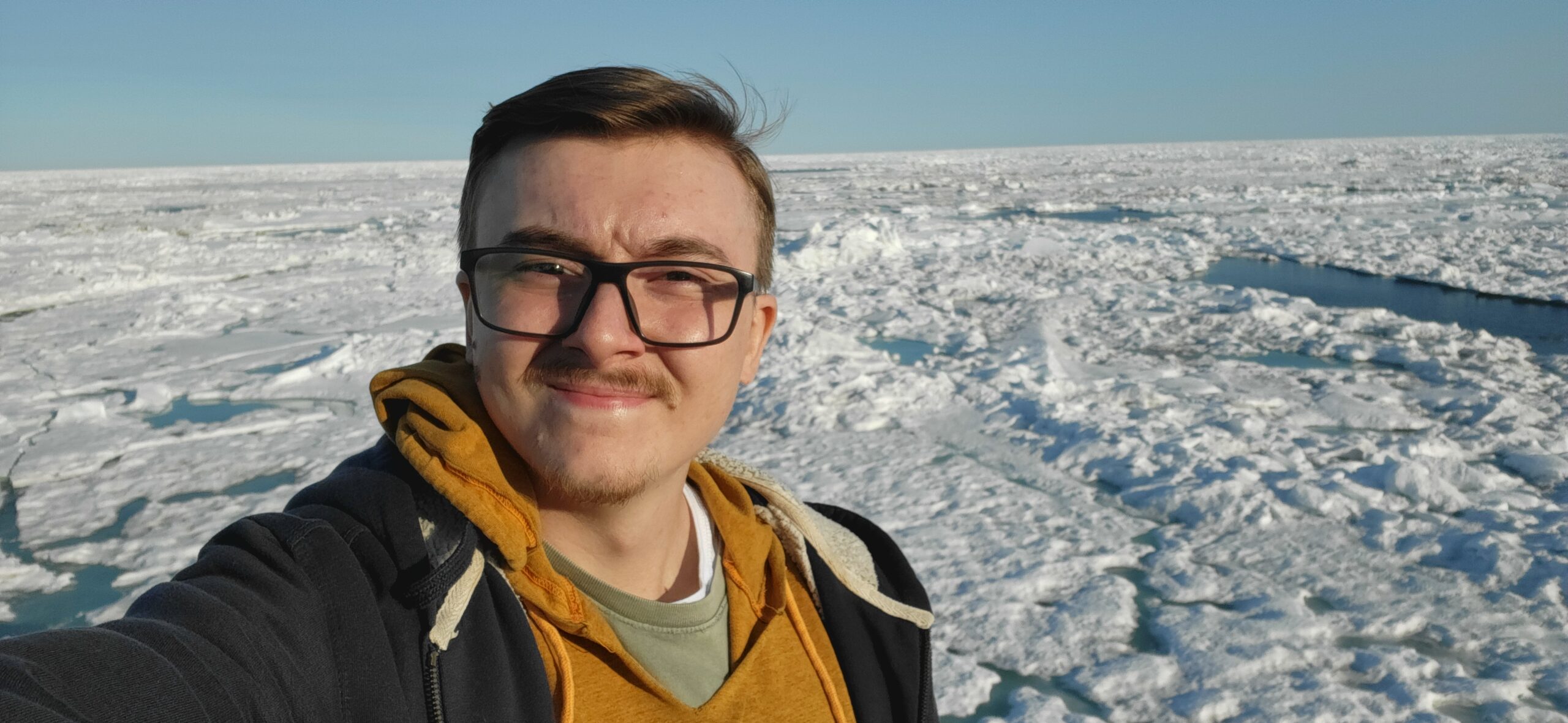
Hi everyone! My name is Kaleigh, and I’m so excited to be a MATE intern this year. I graduated from Oregon State University last year, where I studied environmental sciences with concentrations in oceanography, scientific communication, and a minor in graphic design. A bit of a mouthful, I know, but these topics combined together into my love for visual science communication. That passion led me to the NOAA Office of Education (and now the NOAA Digital Program too!), where I work as a communications specialist and graphic designer.
Rewinding a bit, I had the opportunity to do my first research cruise in my sophomore year of college on a small boat called the R/V Elakha. For a biological oceanography class, we went out on the Newport Line on the open ocean, and I immediately fell in love with working on the water. Pursuing this in stride with my love for high-latitude environments, I was then lucky to be an REU intern with the Northern Gulf of Alaska (NGA) Long-Term Ecological Research (LTER) program. Because I wasn’t conducting research on the ship (my project used glider data to study the physical factors affecting the spring bloom), I spent a month on the R/V Kilo Moana (KM) running CTD casts, helping other labs where they needed it, and shadowing the marine techs.
Fun attaching sensors upside down in the KM’s new CTD!On deck of the KM with my fellow REU interns. I’m on the right, repping NOAA!
Once again, I fell in love with the work, admiring the creativity and problem-solving of the marine techs’ job. Having multidisciplinary interests, I was fascinated with how they got to be involved with all the different research projects on the ship, and be so essential to their success at that. Since then, marine technology has been an interest chipping away at the back of my mind, especially as I look to the next phase of my academia and career. I love my science communication work at NOAA, but I miss doing the science! I’m so excited to be on the legendary USCGC Healy and learning all I can about the world of marine technology. As a lover of polar science and a self-described cold-weather-girly, I’m thrilled that I get to experience that in the Arctic, no less!
A big thank you to everyone who helped me get here, and everyone following along on this adventure now. Special thanks to Dr. Seth Danielson, Dr. Maria Kavanaugh, Marissa Jones and the rest of the NOAA Education team, the NOAA Digital Program, my family, friends, Declan, and, of course, the Coast Guard, NSF, and UNOLS.
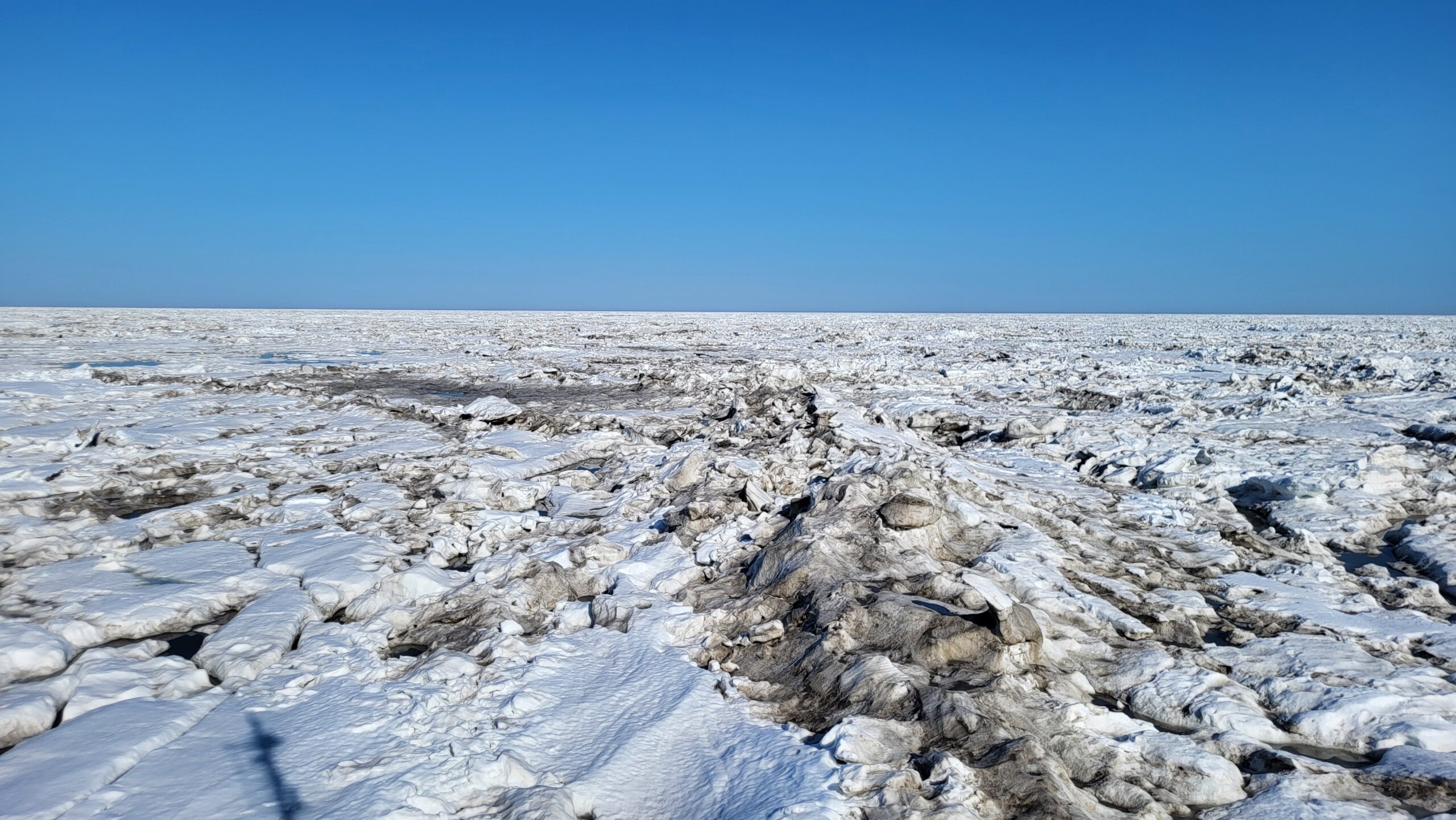
This week was a little slow on the Healy (literally and figuratively). We were transiting through really thick sheets of ice, and also celebrated the 4th of July. The festivities included movies like Independence Day and American favorites like grilled burgers, hotdogs, and of course popcorn. Although I did miss out on celebrating with friends and family back home, not many people can say they celebrated a major national holiday while transiting through ice in the Arctic Ocean.
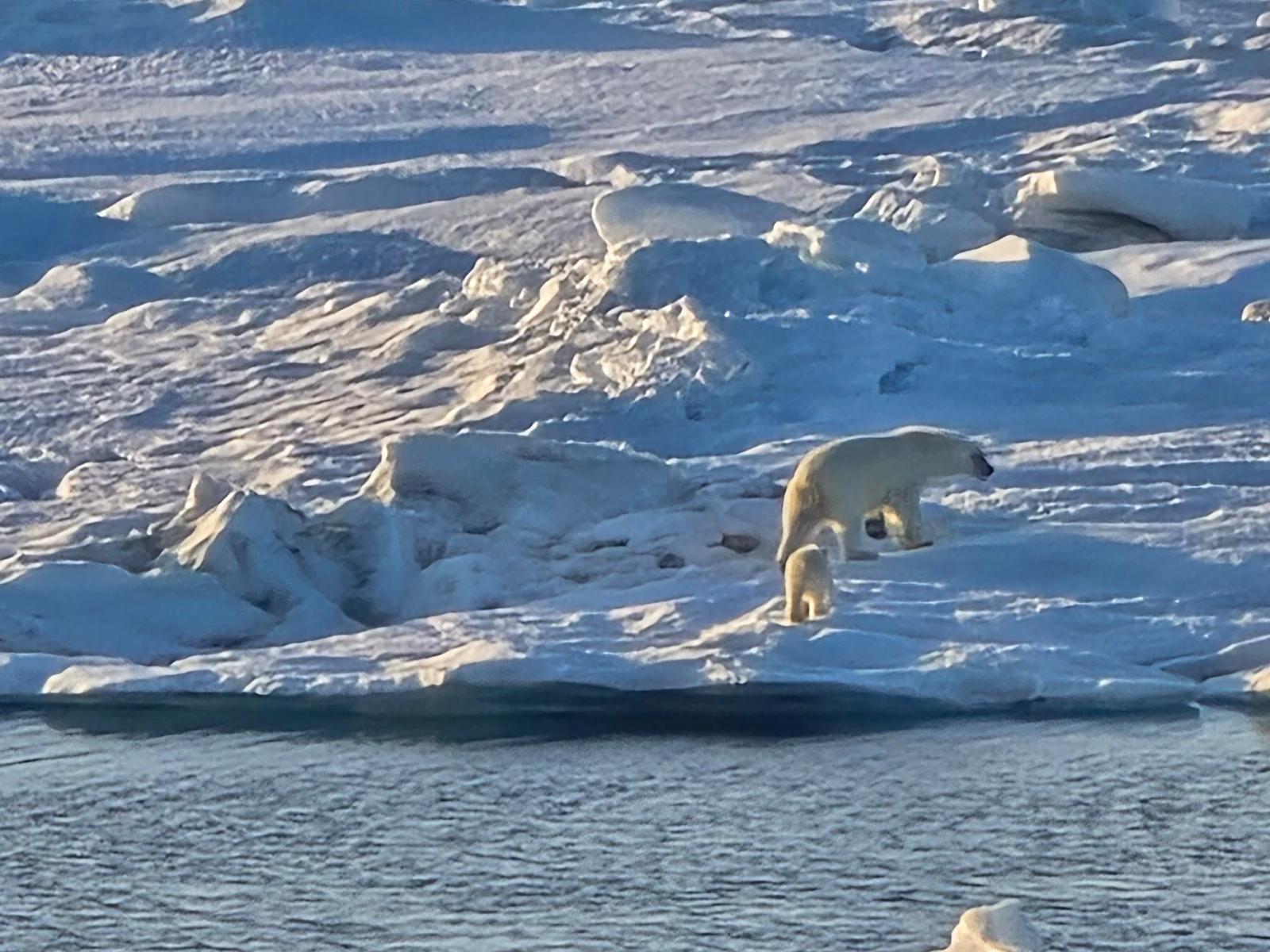
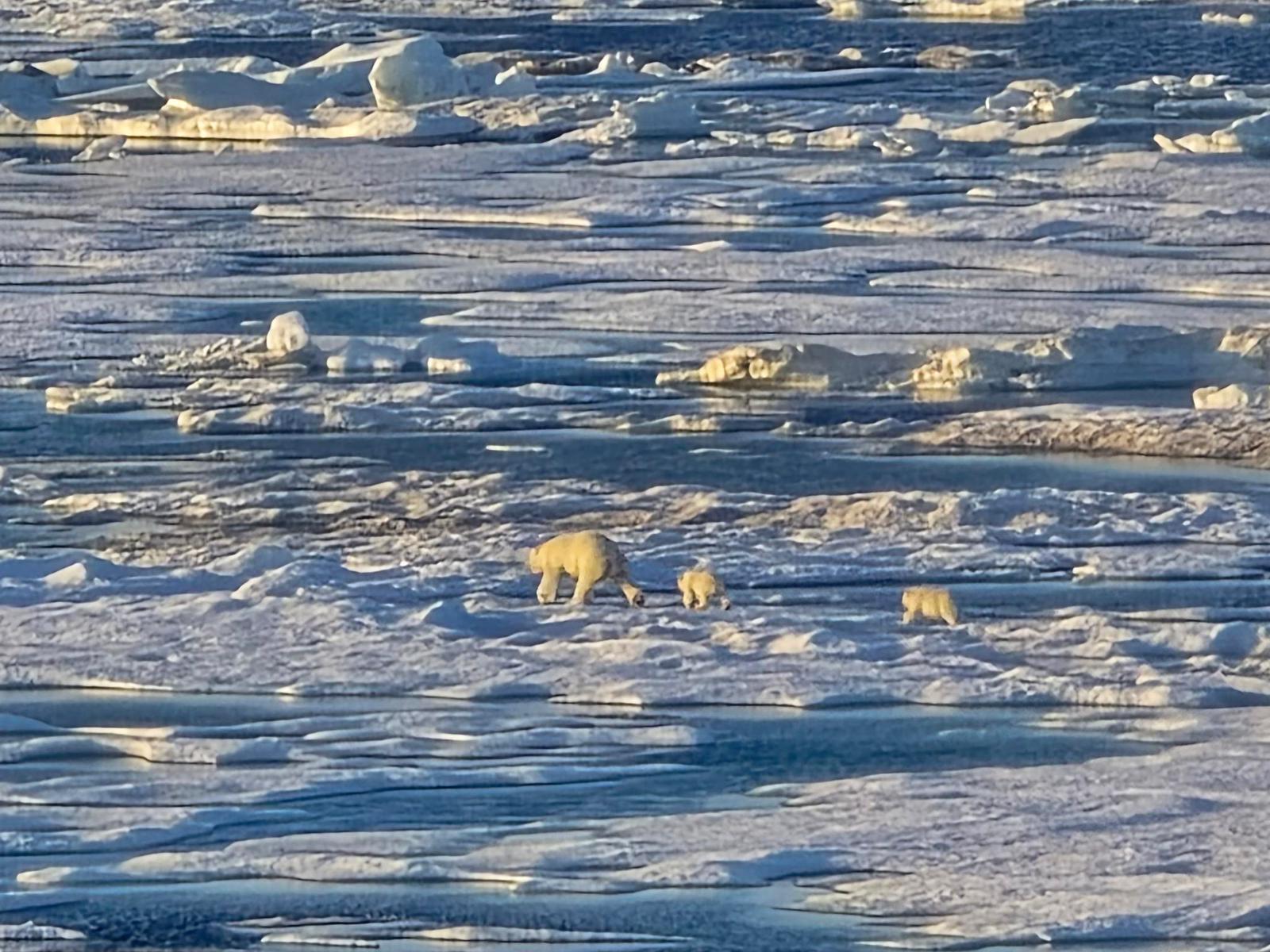
Even though we had a slow week, we had some amazing wildlife encounters, seeing plenty more pinnipeds, but more amazing was seeing numerous polar bears, including a mother escorting her two cubs! Seeing these wild creatures in their natural habitat was truly exciting and it was fun seeing all the crew trying to find them with binoculars or telescopes.
As this leg of the cruise is coming close to an end, I have become much more versed in the more important underway collection equipment like the echo sounders and the water walls. While a wastewater dump was happening, we realized we had to turn off our seawater collection to avoid contamination and bad data. This allowed me to learn how to use the freshwater systems to flush both water walls. Now that I have more experience I was tasked with opening one of the water walls entirely on my own while Christina was opening the other water wall. It is beneficial to open both at the same time because the seawater flow goes through the main wall, then continues on to the second wall so when you adjust the flow on one it affects the flow to the other. You generally want the flows to stay the same across both water walls during data collection.
It’s now been a few days since we have been out of the ice but it was a crazy experience hearing and feeling the crushing and scraping against the hull and a totally different experience to being rocked to sleep by the waves. Not to mention not seeing a sunset for almost two weeks!