Category: Vessel/Laboratory Page 20 of 89

Week 1: The Human Orchestra

Greetings from the Gulf of Mexico, everyone!

It’s Norman from the R/V Roger Revelle with my first update. It’s been about a week since I first got on this ship, and I’ve already picked up a lot about life and work at sea. As a refresher, I’m working with the AUV Sentry team from Woods Hole Oceanographic Institution (WHOI). Both the AUV Sentry and ROV Jason teams from WHOI are here on the R/V Roger Revelle, and the two robots are working together to look at seafloor hydrothermal seeps in the Gulf of Mexico. The plan is to have Sentry survey the seafloor for seep locations within the area we’re interested in, then have Jason enter the fray and take a detailed look at the seeps we find.

A lot of my work so far has focused on getting Sentry prepared to take its underwater survey. So far, I’ve helped re-attach Sentry’s fins and propellers, attach various sensors and related components onto Sentry, and cleaned out some small O-rings to keep certain compartments watertight. I figured I would get to help maintain the robot at the start of the internship, but I was surprised by just how much work also goes into setting up the spaces needed to run Sentry. Alongside my work on the robot, I’ve helped run ethernet cables across the ship, secure tables and equipment down within lab spaces to keep the ship’s motion from tipping them over, and de-rusted, cleaned, and organized lots of the tools in Sentry’s work van.

All of the Sentry team’s work has paid off. I felt exhilarated as I watched the Sentry and Jason teams work alongside the Revelle’s crew to get Sentry over the ship’s starboard side and into the ocean. I saw firsthand how the Sentry team watches over the robot as it performs its deep-sea mission, and I even did a mini-watch stand in the morning right before it was time to recover Sentry! The recovery process was just as exhilarating to watch as Sentry’s deployment. After a bit of math, we moved the Revelle to its recovery position at the perfect time. I then climbed up to the bridge to help lookout for the surfacing robot, and I rushed down to the deck soon afterwards to help get Sentry out of the water and back into its cradle. I’m happy to say that Sentry is safely secured and ready for some post-dive maintenance!

I’ve been impressed by a lot of stuff on this cruise so far, but nothing marvels me more than thinking about how many hands have come together to make a cruise like this one possible. I see the mass of electronics, wires, nuts, and bolts within Sentry and Jason and wonder how many hours of human effort went into making these behemoths work. I’ve watched the Revelle’s crew working and appreciate how their efforts got us out to and into the sea. Finally, I’ve thought about the scientists whose research gave us reason to go out into the Gulf of Mexico and look at hydrothermal seeps in the first place. It’s a gargantuan, concerted effort which in my mind I dub “the human orchestra.”

As we enter the second half of the cruise, I’m excited to watch Jason in action and to see what’s lurking around the bottom of the ocean through Jason’s eyes. Here’s hoping everything goes smoothly.

Thanks for reading!
Norman

Week 3 “Seas the Day”

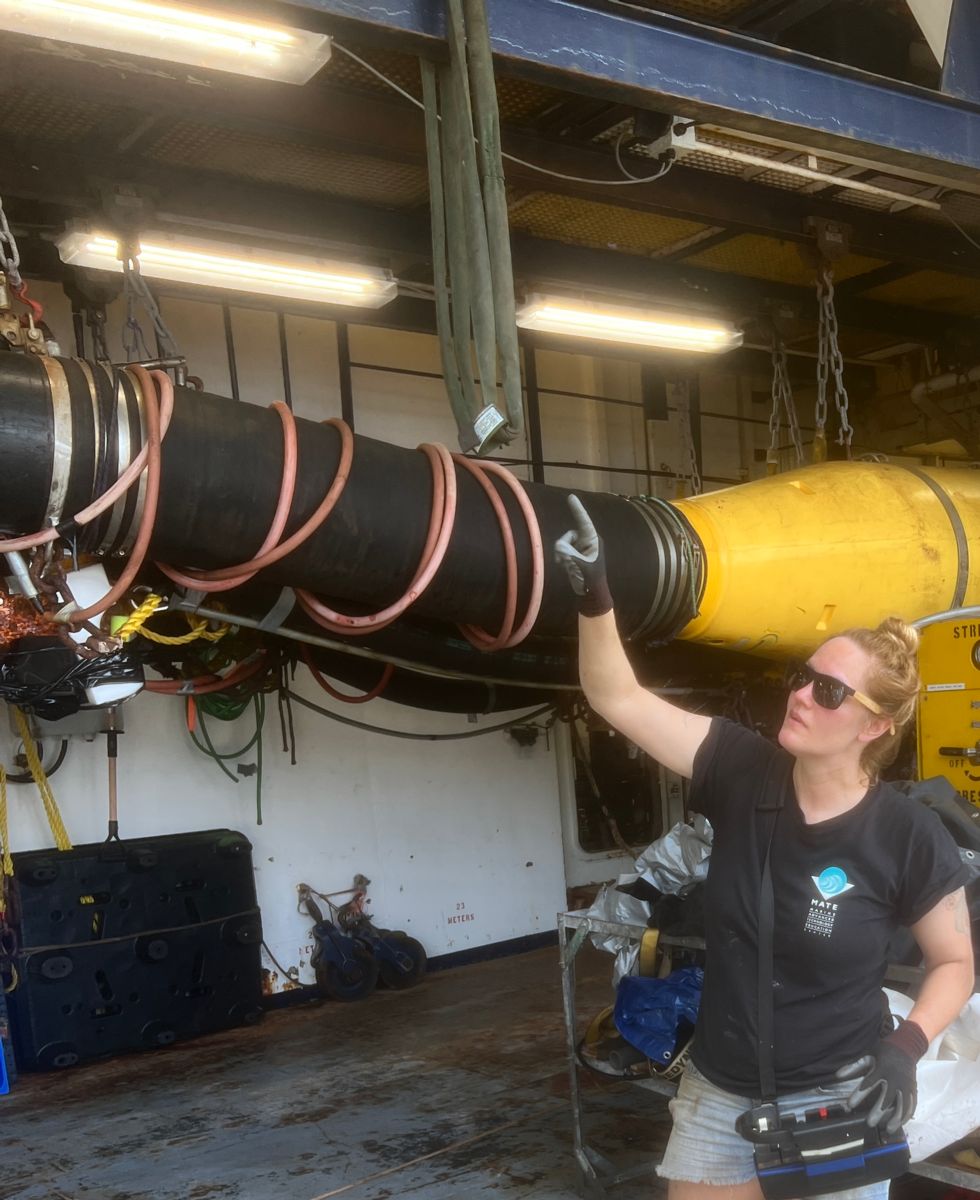
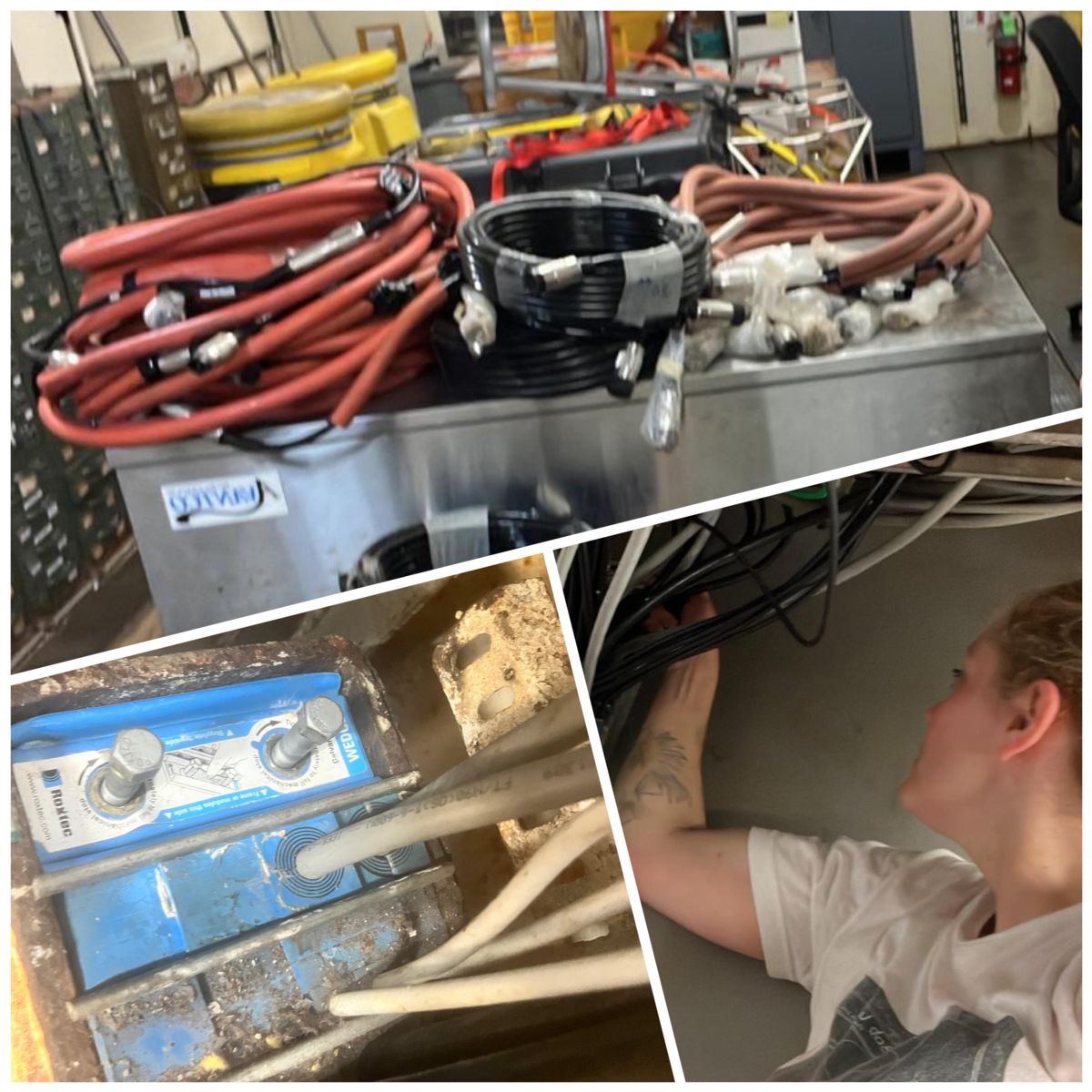
Hey everyone, Ray here, giving you an update on my third week across the Atlantic Ocean on the R/V Marcus G. Langseth. As we move farther away from the equator and closer to New York, the temperature and humidity have dropped dramatically. For my third week, I have been assigned a multitude of tasks. One of my tasks this week was to work with Josh, our chief source mechanic, to test the continuity of the wires within the octoblocks of the arrays and trace them back to our junction box while verifying our resistance with a multimeter. Our vessel has four arrays that trail hundreds of meters off the stern via large cables, (streamers).These arrays consist of various components that transmit the data collected by the hydrophones from the sound waves emitted by the air guns, which reflect off the ocean floor. Within the arrays, there are components called octoblocks. Essentially, an octoblock acts as a sensor placed along the array to receive different signals such as DI/PI (Depth Indication and Pressure Indication), GPS signals, NFHS (Near Field Hydrophone Signals), and other types of data being collected.
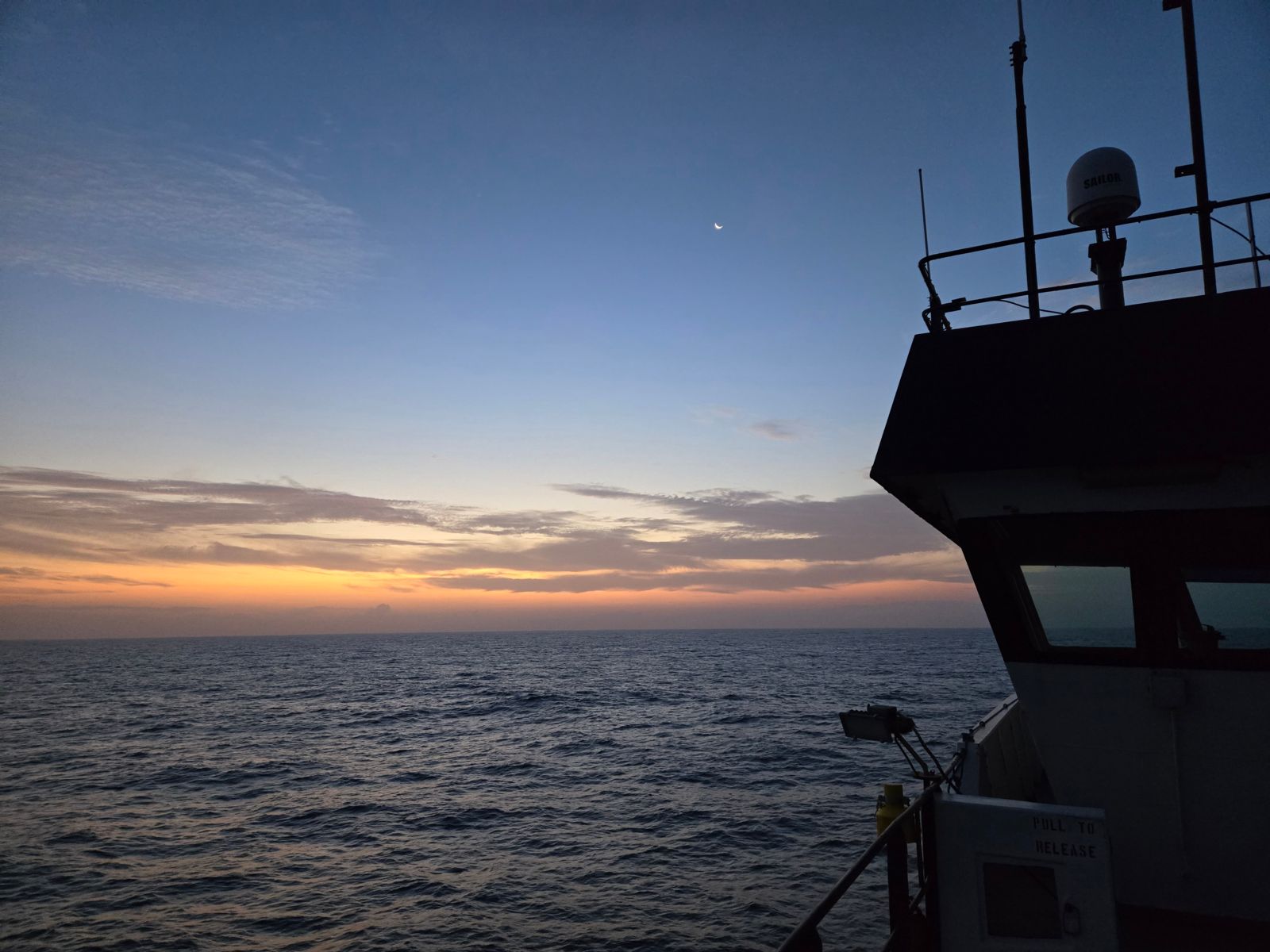
Another task I have been assigned is testing the strength and continuity of our large collection of Ethernet cables, which seem to have accumulated into the thousands over time. I used a network and cable tester that also measures the length of the cables by measuring their resistance. After a long workday, we are always exhausted but are still eager to enjoy the sunsets every evening on the bow of the vessel. Almost every sunset on the ocean is a humbling experience, to say the least.

Here are some pictures of my week; stay tuned for my final blog post in 7 days!


WEEK 3 – Be Here Now, Because You Are

Retrospect on the deck of the R/V Langseth, with the vast expanse of intense blue of the ocean stretching out before me, I can’t help but reflect on the journey that led me here. This Marine Technical internship with the US Academic Research Fleet, in collaboration with Columbia University, has been a long-awaited milestone in my career. Months of preparation and hard work have culminated in this moment.

As we learn daily maintenance of the scientific and navigational systems that are crucial for seismic research, I feel a deep sense of accomplishment and gratitude. Every task, no matter how small, contributes to the larger mission of scientific discovery. Being at sea, surrounded by the relentless rhythms of the ocean, I find a sense of peace and purpose.

It’s hardly appropriate to keep saying …but sometimes I really can’t believe that I’m here. If you really think about it, how many actual times can you send your family this when they want something. Kidding, I love you idiots. 


It goes without saying that I’m a part of something very unique. And without the support of my home university and the various programs offered to me, I would have never been able to have the financial freedom to leave for a transcontinental internship at-sea or weeks on end. I have so much gratitude for that – to all you out there at the University of Southeast Ketchikan Maritime Center and the folks at the STEP Grant offices, THANK YOUUU! I have never felt more supported as a student and I wanted to show how thankful I truly am. (Special shoutout to Professor Boss, Professor LaBarge, Lisa, Angie, Jensen, and Deepwater Bill!)

With the support and guidance of the UAS Maritime Center, this experience was able to happen and is more than just a professional achievement; it is a personal journey of growth and learning. I think of the words of great authors who have inspired me along the way, and I realize that this experience is a chapter in my own story, filled with challenges, triumphs, and the boundless curiosity that drives me forward. And this doesn’t come without failure. To thrive, we must sustain the internal human operation – because who you are when things aren’t going great…matters a great deal. “We are what we pretend to be, so we must be very careful what we pretend to be.” (Vonnegut)

This trip has been a significant retrospective and introspective – on many things beyond academia. I think that’s why it has so much meaning, it’s taught me a lot about myself and who I get to be. As the days pass and we continue our research, I am grateful for the opportunity to be a part of something so meaningful. And as I look ahead, I know that this experience will shape the path I take in the future, guiding me toward new horizons and endless possibilities. And if I’m lucky, it’ll be the first step I ever took to make the biggest life change that I never thought possible in a three-dimensional state of mind.

Here’s to the 3rd week on the road…

-Rachael

Week 3: A True Taste of Life Aboard

5/11/2024 – 5/17/2024

The last few days have been busy, which is very usual and a bit repetitive at the same time. Can you say DigiBirds, Air Guns, and inventorying equipment over and over and over again?

Since there was a lot of repeated work this week, I want to take this week’s blog in a different direction. The weather has been really hot and humid, but the waves are rather calm. I’m sure many of you know about “slimy pollywogs” and crossing the equator!!! Well we crossed it and Sunday afternoon we had our ceremony. It was a riot. We all received a subpoena to appear before Neptune, but first we had to ask the “dolphins” over the side of the ship for directions to Neptune (on the muster deck). Then we had to get into these makeshift boats and paddle our way to the muster deck. But apparently, we were all swallowed by a whale and had to crawl our way out of the mouth of the whale (two tarps connected and filled with water and soap). It was messy and so much fun. Then we finally made it to Neptune where the charges against us were read aloud for all to bear witness. 

The first charge was the same for all of us, but the 2nd and 3rd were written specifically for each individual. I do believe they got mine pretty spot on!! Check these out…


CHARGE I:   In that Colton Borresen now sailing with the ship MARCUS G. LANGSETH, has hitherto willfully and maliciously failed to show reverence and allegiance to our Royal person, and is therein and thereby a vile land-lubber and a slimy pollywog.

CHARGE II:   It is inconceivable to even mention. It has been rumored in the mud flats, deltas and river estuaries that this park bench warmer has been masquerading as an honorable shellback by his unrighteous activities of; SCUBA Diving, Training Dolphins (as if they need to be trained), studying for Marine Biology and other unholy acts of a landlubber. As all honorable shellbacks know, only one who has been inducted into our depths, has sailed the seven seas, has seen the green light at sunset or who has crossed the equator can truly understand the denizens of the waves.

CHARGE III:   That this lounge-lizard has been doing his gym time while working as he has been using the excuse of forgetting tools to be able to run the stairs to the PSO tower multiple times a day as an honorable shellback waits in the sun, far from the sea. In addition this chicken chaser has failed to crack a smile or giggle while in my domain.

The whole thing was a riot and the effort that the crew put into it was greatly appreciated.

Also, I had another incredible moment this week. I found out that my Pop Pop (going to be 91 in October) sailed with Marcus G. Langseth in 1956 when both were Junior Scientists. Pop got goosebumps and cried when my parents told him the name of the vessel I was on. Now Pop is digging through his archive of memories and pictures and recalling so many great times long forgotten.  I have now seen pictures that Pop took of Marcus G. Langseth when they were young Junior Scientists in 1956 aboard the (chartered) vessel Theta. Such a small and incredible world.


I hope you have enjoyed an honest and true taste of life aboard the R/V Marcus G. Langseth.

Stay tuned for my next posting as we get ever closer to NYC.

Week 2: The Sharp and the Steel Photographer

Howdy all,

I have some exciting updates to share with you, so let’s dive in! For the last two weeks, I’ve had the privilege of working alongside ship crew, researchers, engineers, and fellow marine technicians to conduct a multi-leg sea scallop survey aboard the R/V Hugh R. Sharp. This survey aims to gather data regarding regional sea scallop populations, their maturity, and their range. It’s a joint effort involving the National Oceanic and Atmospheric Administration (NOAA), Woods Hole Oceanographic Institution (WHOI), and various other universities. The data we collect will help shape fisheries policy for years to come and is essential for understanding changes in scallop population trends!

– The R/V Hugh R. Sharp at port in Woods Hole, MA

To collect this data, we’re using some awesome tech on the Sharp, including a specially designed habitat camera (which looks like a giant stripped down derby car) and an autonomous underwater vehicle (which looks like a giant hotdog).

– The derby car aka habitat camera aka HabCam

– The hot dog aka autonomous underwater vehicle aka AUV

The HabCam is a large (and heavy) vehicle packed with a system of CTD sensors, cameras, flashes, sonar, and an altimeter, all wrapped in a sturdy steel frame that is towed behind the vessel. The HabCam is piloted about 2 meters above the sea floor, capturing three images per second. These images are transmitted to the Sharp via fiber optic cable and are immediately interpreted by two teams of annotators working 12-hour shifts. These annotators play a challenging game of Where’s Waldo as they search for and measure sea scallops in each image. As I write this post partway through Leg 2, some annotators have scanned through approximately 11,000 images!

-Piloting the HabCam! Notice the sonar, tension/payout graph, LCI90i winch controller (the cosole I have my hand on), and depth readout

The HabCam is essential for this survey, but it hasn’t been without its challenges. During Leg 1, moisture found its way between the fiber optic cable and its bulkhead connector, distorting the light data signal and causing a loss of communication with the vehicle. We had to interrupt Leg 1 and port in Woods Hole early to get the necessary parts and equipment for repairs. While this was an unfortunate setback, it did give me the chance to perform fiber optic splicing and troubleshooting. During our transit to Woods Hole, the AUV stepped up, capturing vital seafloor data and then meeting the boat after. Now in Leg 2, we’ve had a mix of successes and setbacks. The HabCam worked perfectly for the first few days, but high winds in the survey area have forced us to wait behind Nantucket for the last few days. These high winds are generating large waves that could stress the tow cable’s safe working limit, and we don’t want to risk losing the HabCam to rough seas! 

Besides troubleshooting and maintaining the HabCam system, I’ve gained a lot of hands-on experience under the guidance of Sharp’s marine techs, Alex Dominguez (a fellow MATE alumni) and Christian Kernisan (lead tech)! Since coming aboard, I’ve had the opportunity to troubleshoot LCI-90i winch displays and a Knudsen 3260 echosounder deck box, learn about the Sharp’s data management protocols, review the ship’s network architecture, pilot the HabCam, and perform a variety of deck operations, including the launch and retrieval of the HabCam and AUV. The only experience I’m missing during this cruise is dredging for scallops since this task was outsourced to another ship! This would have been a great (and tasty) skill to learn. The rest of the crew has been incredibly welcoming, and it’s been a fantastic opportunity to work with the engineers and researchers from WHOI and NOAA as well. One of my favorite parts about this job is the people you get to meet and this has been a great team to work with!

– Christian and Alex with some friends the HabCam picked up

-Gunnar, Christian, Zach, Cam, Huxley, Alex, and me (right to left)

In my next blog post, I’ll update you on the progress of my internship and dive into a little bit more detail about the hands-on technical experience I’m gaining and how I’m using it to be a better marine technician!

Until then,

Hunter

Week 2 Across the Equator!

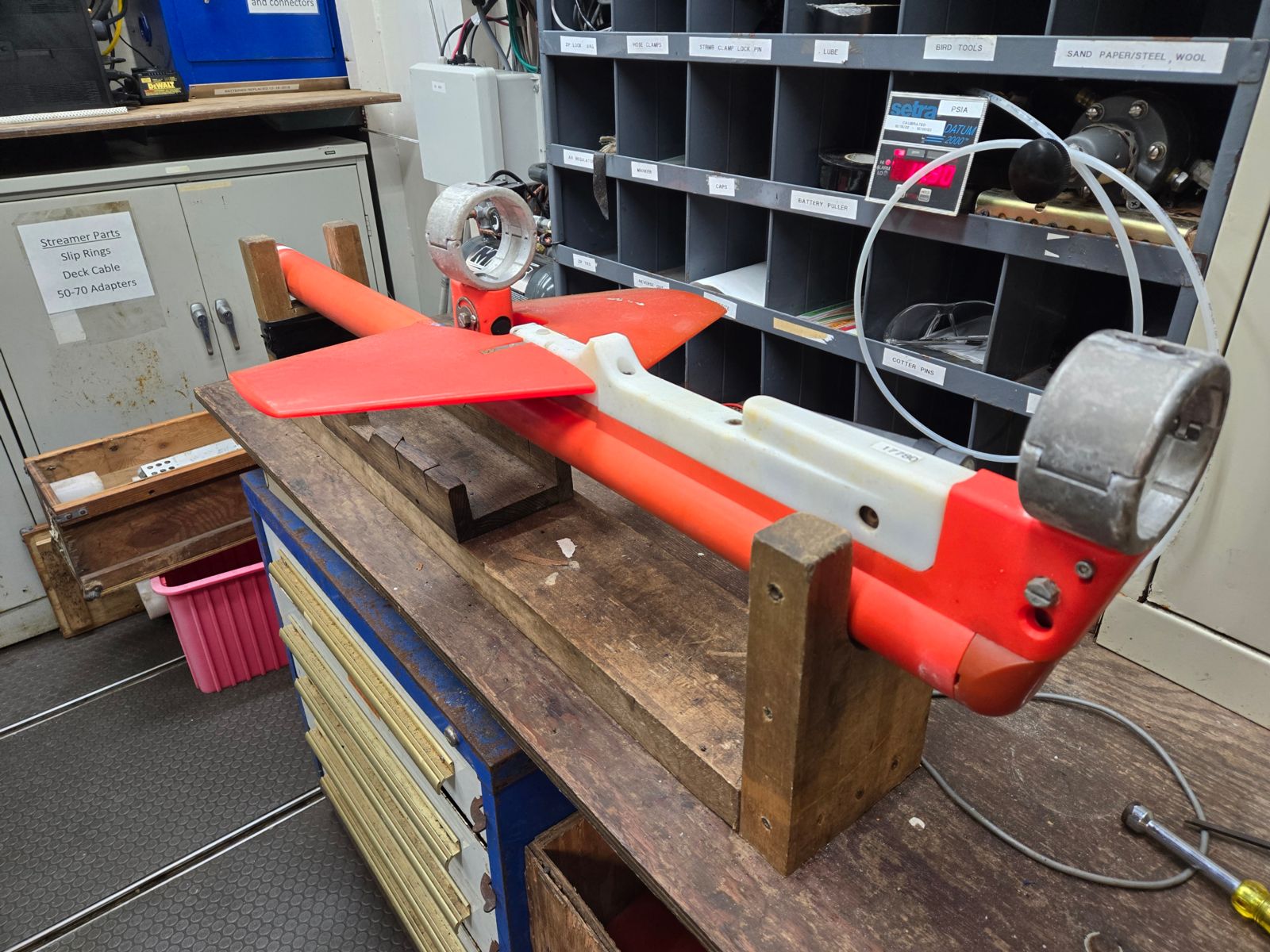
Hey everybody, Ray here giving you an update on my second week across the Atlantic Ocean on the R/V Marcus G. Langseth. This week has been extremely hot, with humidity ranging from 80%-90%, very sticky! As an intern I’ve been assigned to multiple tasks to complete this week. One of my tasks was to troubleshoot and calibrate these semi-autonomous devices called “digibirds” or digital birds. These digibirds are placed in the water which are being guided by a long rope connected to a big winch called streamers. In between the digibirds, there are devices called hydrophones that are also attached to the streamers. The hydrophones main job is to receive soundwaves from the air guns that are being fired and reflected off the ocean floor, or even layers beneath the crust. The digibirds are in charge of making sure the hydrophones are at the correct depth to interpret the sound waves being emitted. The data is then transmitted back to our ship in order to create maps and undergo further analyzations. Some of the features that can be determined from this data include subsurface structures, seabed composition, and other types of geological formations. However, overtime these birds can become misaligned or may require maintenance such as replacing batteries, motors, or compasses. This is one reason why calibrating and troubleshooting is so important! Another task I have been assigned to is collecting data on our gravimeter and entering it into our historical data spreadsheet. A gravimeter is a device used to measure variations in Earth’s gravitational field, also providing information on subsurface features and geological structures beneath the ocean floor. Every day we are using the gravimeter to precisely map these gravitational fluctuations across the Atlantic Ocean. By using a multimeter to verify amps and voltage values, we can guarantee the reliability and accuracy of our data so we can then draw conclusions on the ocean’s geological characteristics and even potential hidden features beneath its surface! 
One last thing I’d like to add is that everyone on this vessel are hardworking people. Especially in this heat and humidity, the fact that we can complete so many jobs and tasks is truly remarkable.

Stay tuned for my next update on our transit!


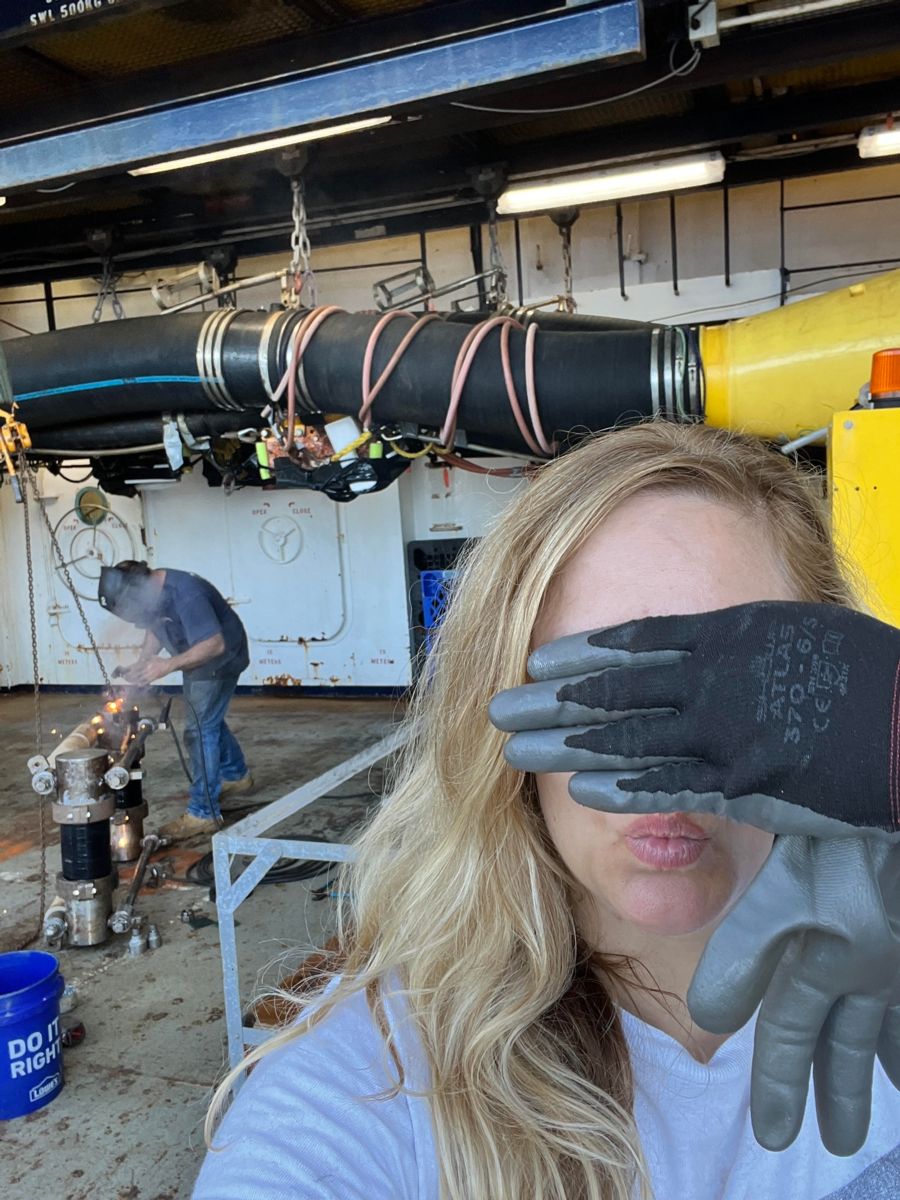
Josh, our Cheif Source Mechanic is also a great welder!

WEEK 2 – Capricorn, Meridian, Equator


i crave infinity, but love limitation – roon


(5/5/2024 – 5/7/2024)

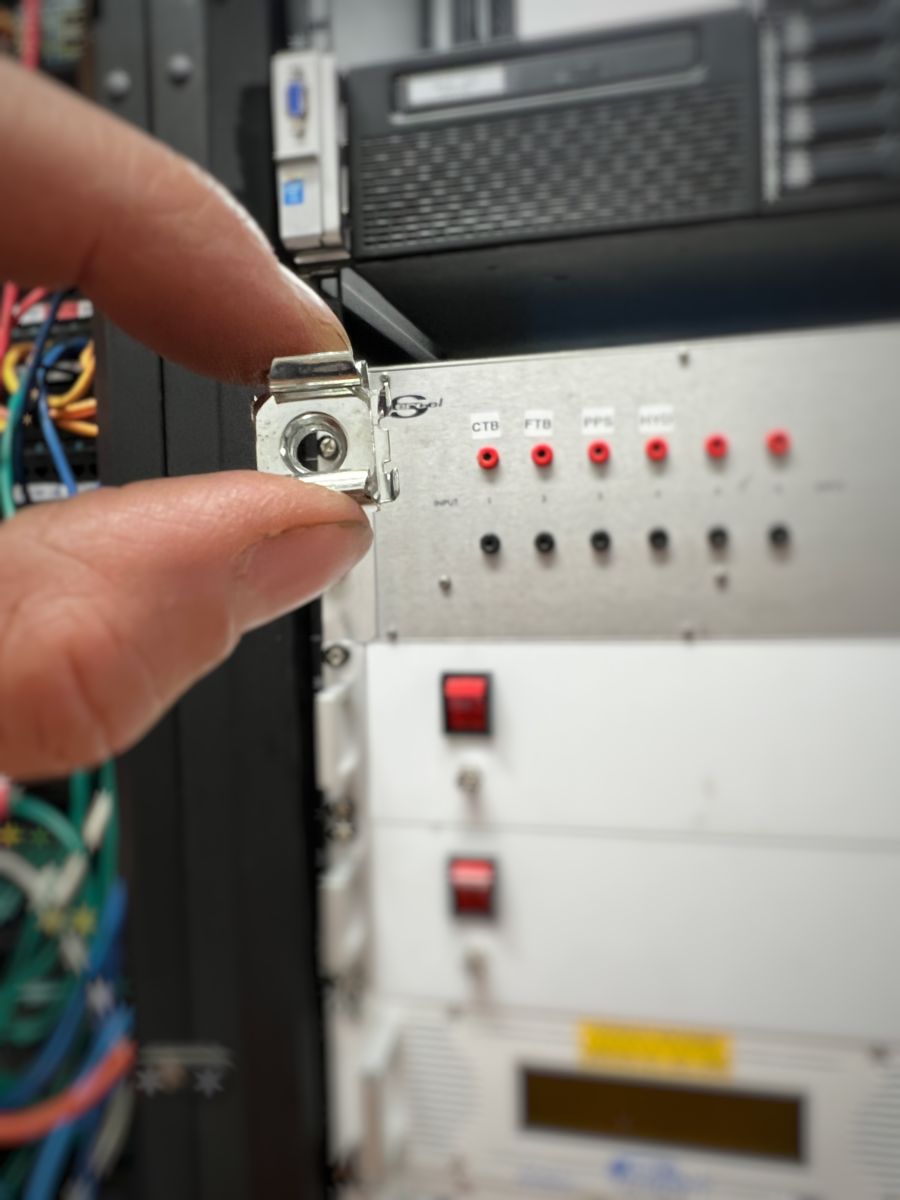
Continuation of reorganizing server racks with marine technician Riley; installation of new acquisition systems, rearranging cords/data rack interface:

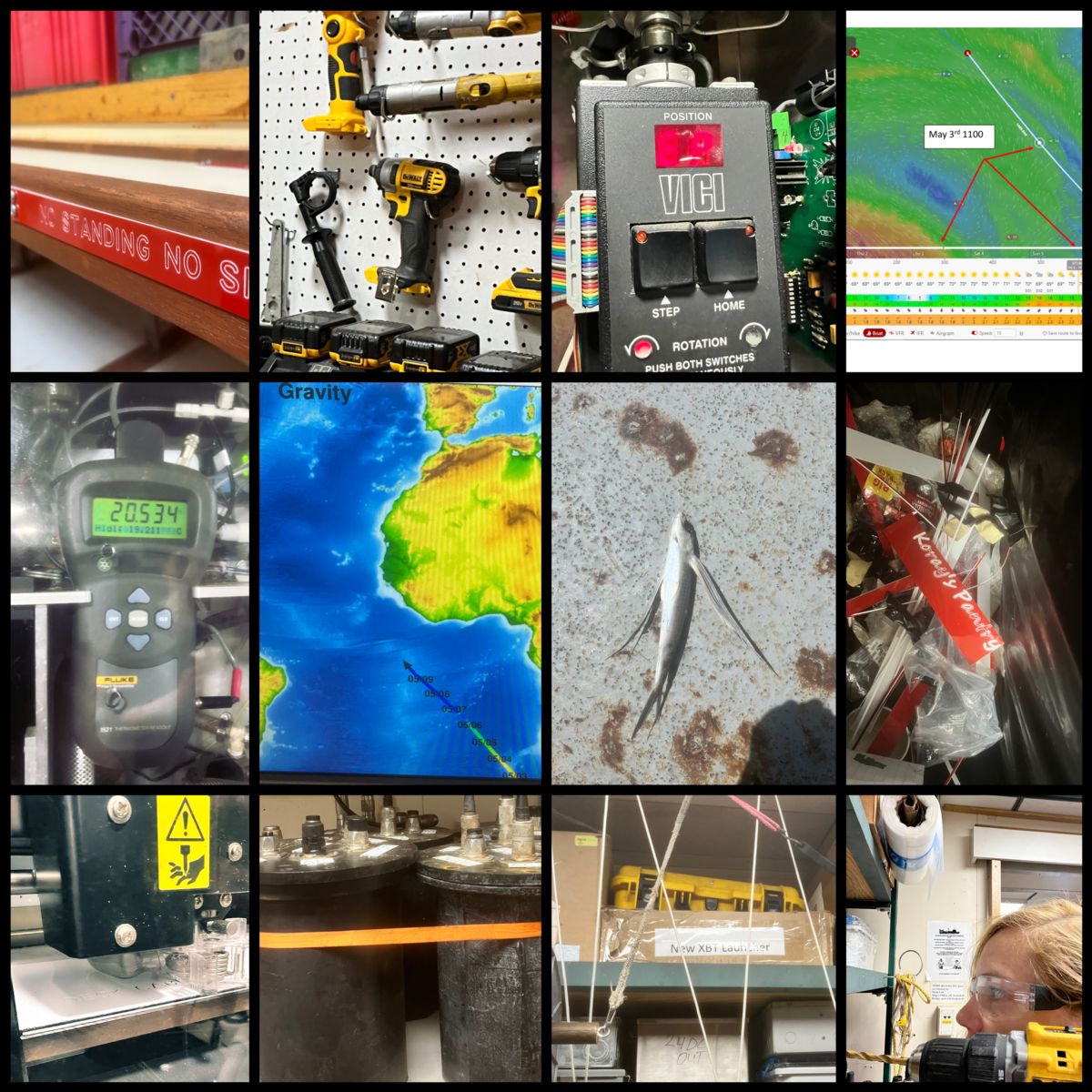
       – Sorted extension cords, made (2) wall-hang areas for power tools on adjacent wall in tech shop for extension cords and power tools. Disposed of old/frayed extension cords. Intermittently checked Serial Data updates and maps 

       – Continuation of tech shop reorganization; mounted tools on board, moved/consolidated batteries, vacuumed. Made “No Sitting No Standing” signs (4) with the engraver and attached to top and side of counter with screws. Moved (13) mustang suits out of lower cupboard and into a large box in the side room behind main printer station. Made a sign with the engraver for the fridge, removed cupboard doors from lower cupboard to make room for fridge.

Are you about to jailbreak the sim? Be sure to tell us what it’s like on the other side. Hoping it’s not just racks of servers humming in darkness. – George


5/8/2024 – 5/9/2024

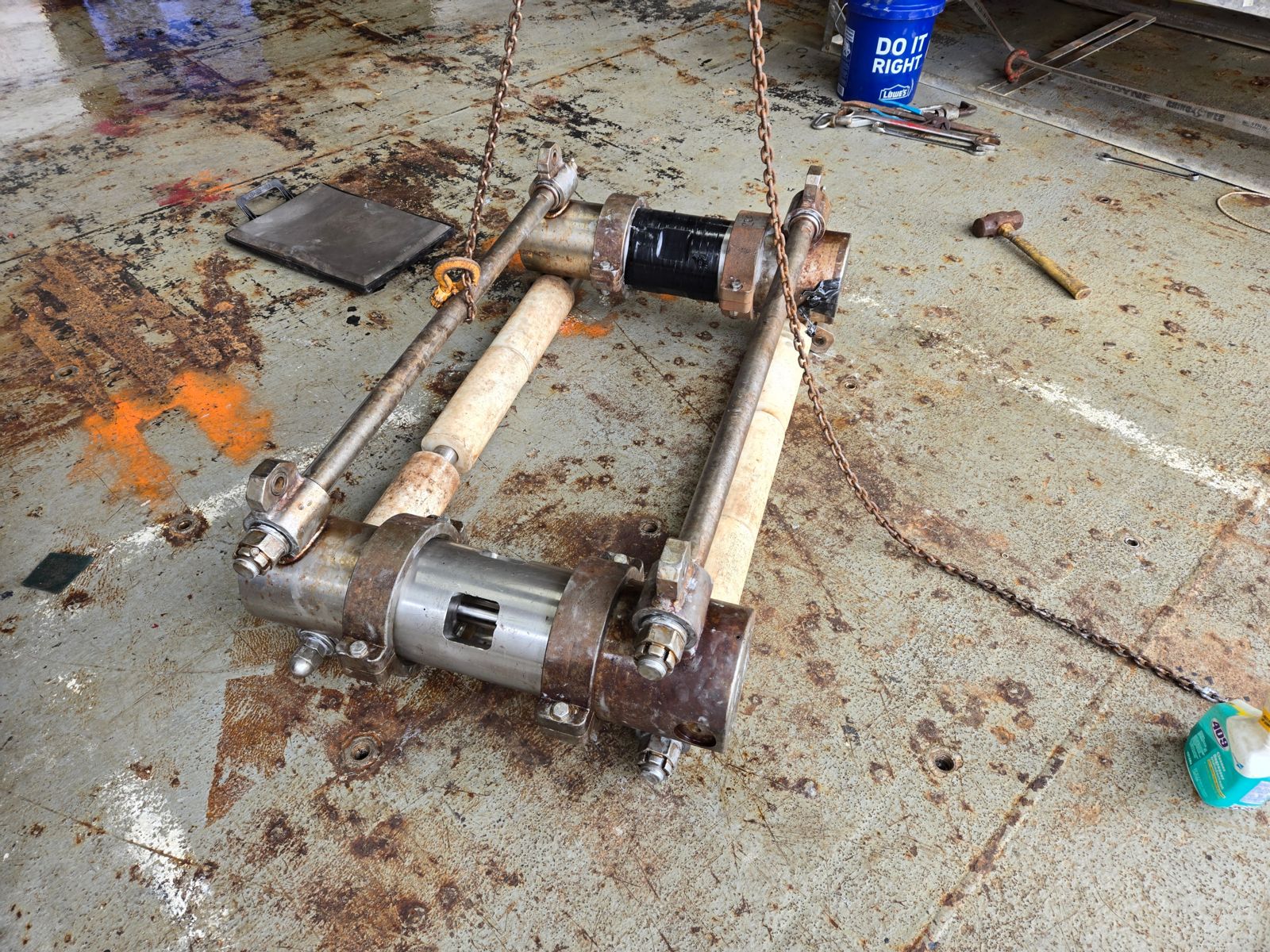
       – Disassembled and cleaned all parts of 1900 LLXT source element (seismic airgun). Reassembled replacing Al o-rings/bolts, tested with shop air for leaks. Cleaned out airguns w/ sandpaper, mystery red oil spray and paper towels. 

Per aspera ad astra. – Latin anon 


5/10/2024 –  5/11/2024

 – Made signs on the engraver for various projects (Riley, Chief Mate, and Cody). Small scale organization of various items on desks/tables while waiting for engraver (consolidated ratchet straps/ropes, etc). Put up curtains in wet lab with Colton and Ray.

 – Tech shop organization; organized hoses, cables, ratchet, straps, and miscellaneous tools. Modified shelf space for Combi bins, battery signs/policy up, moved, cables, and chargers, above battery shelf. Drilled metal holes for crisscross rope reinforcement on adjacent shelf wall.

No matter how lost you feel, remember that your whole life has led you here, as a sort of comforting causal tautology. – Yudkowsky

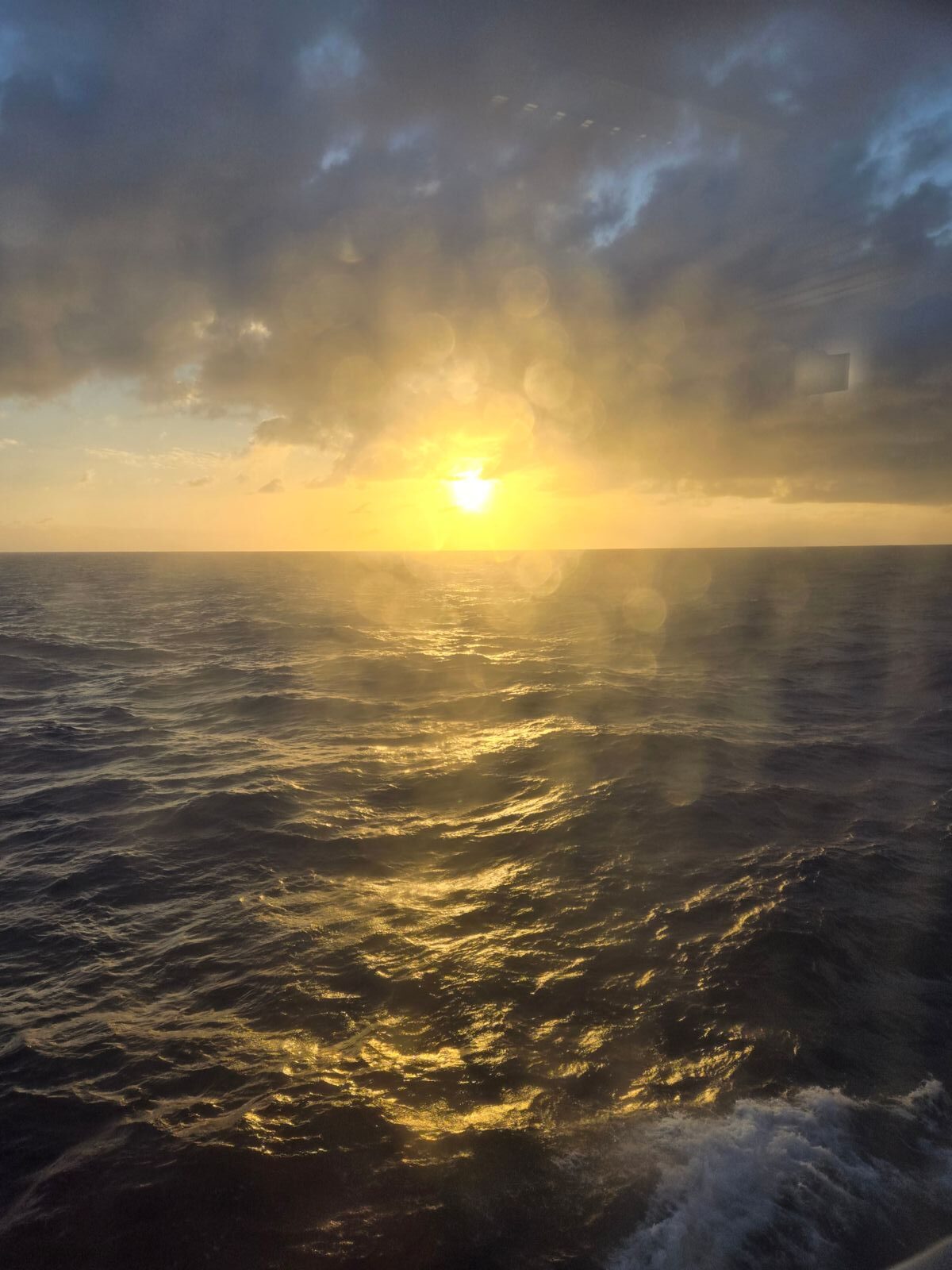
 

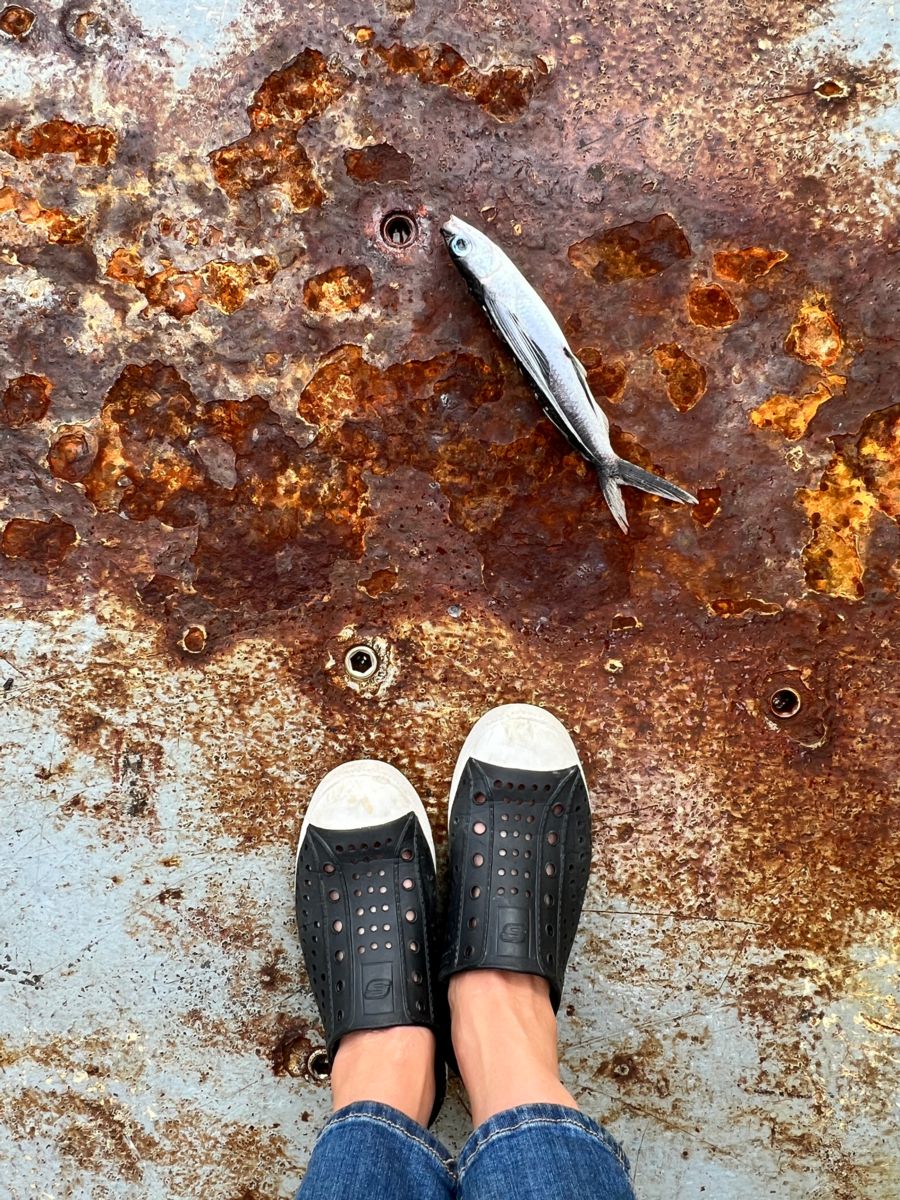
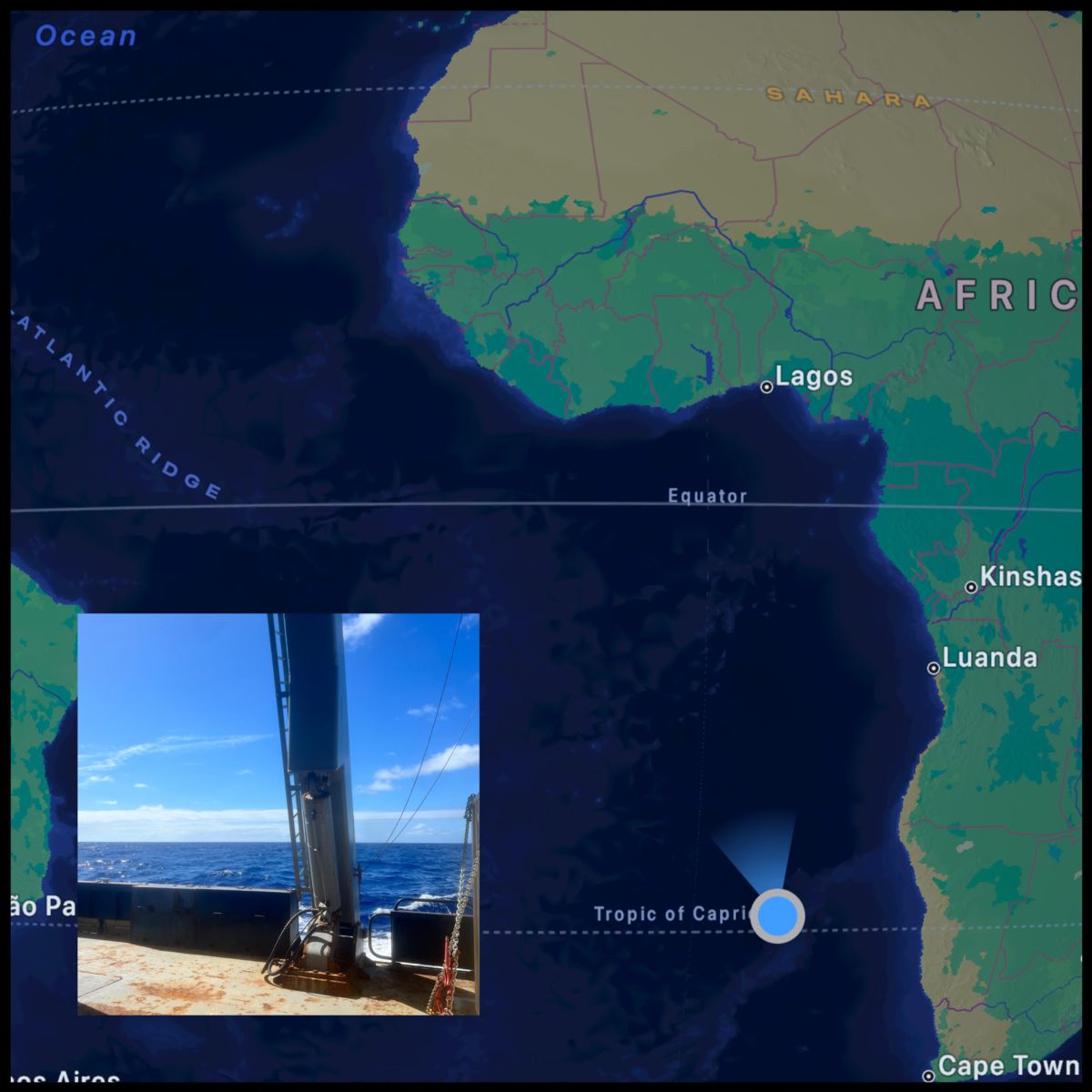
We passed the Tropic of Capricorn, we slept. We passed the Prime Meridian, we slept. We passed the Equator, we slept. The water remains astoundingly blue. We work on several engaging and challenging projects daily in a deep-ocean humidity, all systems go. At days end, we either hide inside or flutter mirthlessly like heavy petals until sunset. 

The sea is everything. It covers seven-tenths of the terrestrial globe. Its breath is pure and healthy. It is an immense desert, where man is never lonely, for he feels life stirring on all sides. – Vonnegut


– Rachael

Week 2: Sunrise to Sunset

5/4/2024 – 5/10/2024


At the time this blog is written we have been at sea for 12 days. I can’t describe the feeling I have each morning waking up and seeing nothing but ocean for miles in every direction. I have seen some of the best sunrises of my life looking out my porthole each morning and the best sunsets after a hard day’s work. There’s nothing like going out to sea and being the only ship for miles to make you realise how small we truly are in this big and beautiful world of ours.


Saturday 5/4 and Friday 5/10 were spent working on the air guns. These “guns” are able to release powerful sound waves that are capable of reaching the seafloor and pass through multiple layers of sediment before bouncing back allowing us to be able see what the seafloor (and below) looks like. The guns need to be routinely serviced to prevent damage and corrosion from sea water, but mainly to replace all of the O-Rings. Once a gun is disassembled, cleaned, and put back together it is test fired on deck to insure that it is working properly. When firing the gun on deck all safety protocols are taken and the guns are fired at approximately 100 psi. At this strength, you are definitely able to feel the force of the blast in your chest, but when the guns are in the water and in use they are fired at approximately 2,000 psi. 


Sunday 5/5, I spent the morning greasing and covering various pieces of equipment on board. The rest of the day was spent inventorying the streamer recovery devices (SRDs). These SRDs allow the ship’s crew to be able to recover the streamer in the event that it is lost at sea.


Monday 5/6 through Wednesday 5/8 was spent working on the Digibirds again. During that time I was able to test all Digibirds on board and create a document that contained information on all of the birds to include: their serial numbers, whether they are operational or not and other problems with the Digibirds. The next step would be to go through all of the non-operational birds and try to fix them.


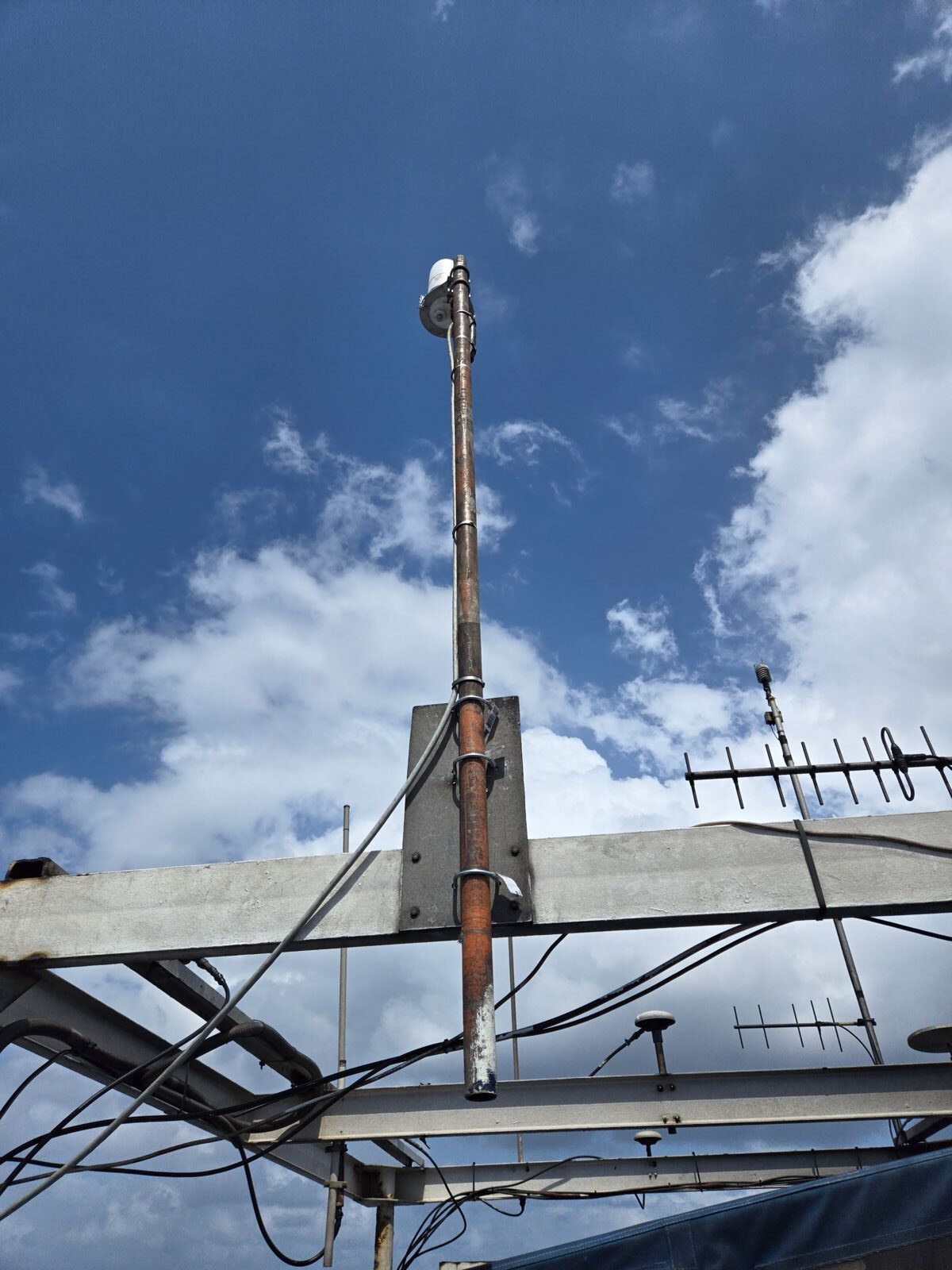
Thursday 5/9 was spent assisting in installing a new radio antenna on the observation tower. This required a lot of work and planning to ensure that the antena was level and would be secure for the inevitable rough seas. 


Stay tuned for my next post!

WEEK 1 – Sailing the South Atlantic

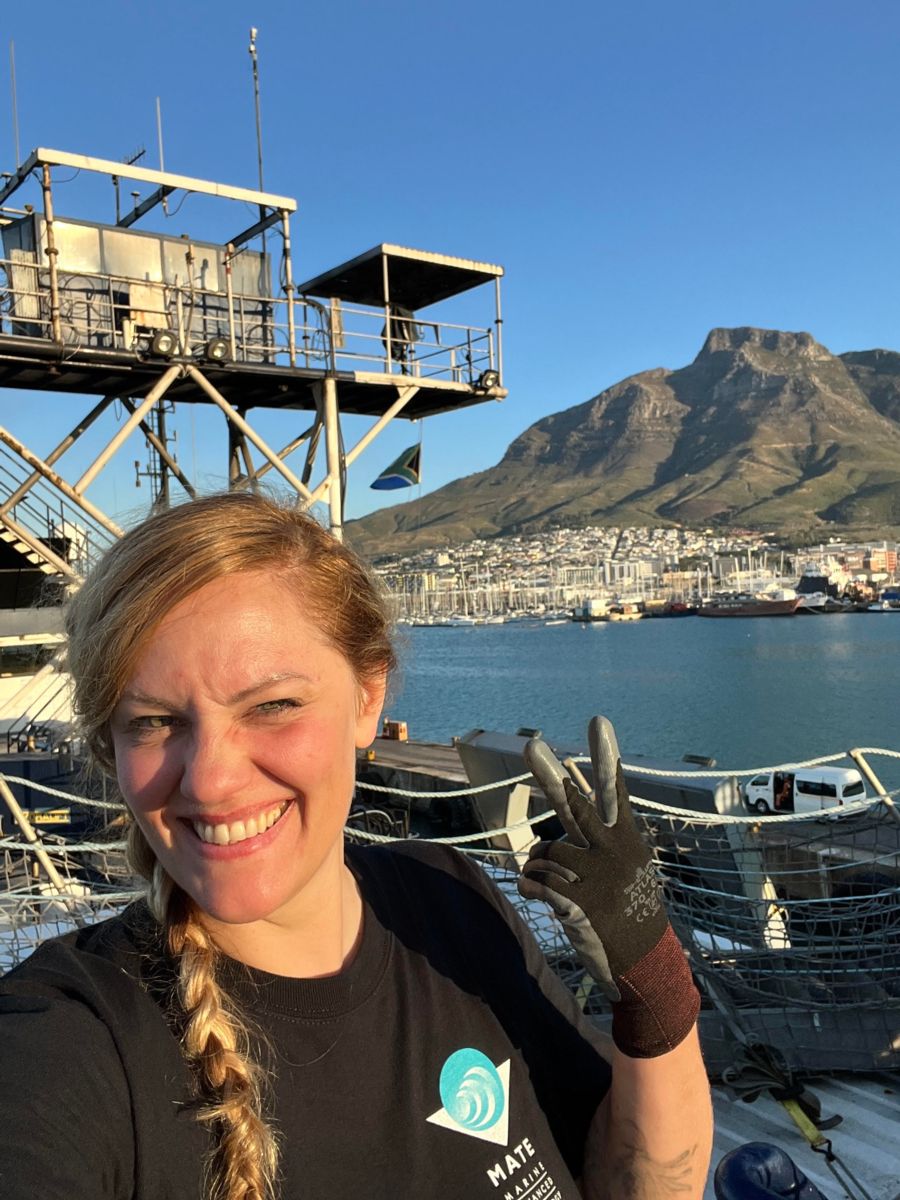
After flying several hours from Alaska to lower-America, then several more hours over to east-America, then flying 14 more hours over the oceans… I finally made it to Cape Town, South Africa on the afternoon of April 27. After a quick tour of the RV Marcus G Langseth, I unpacked only critical items and fell into a well-deserved slumber in sleep cavern #103. 

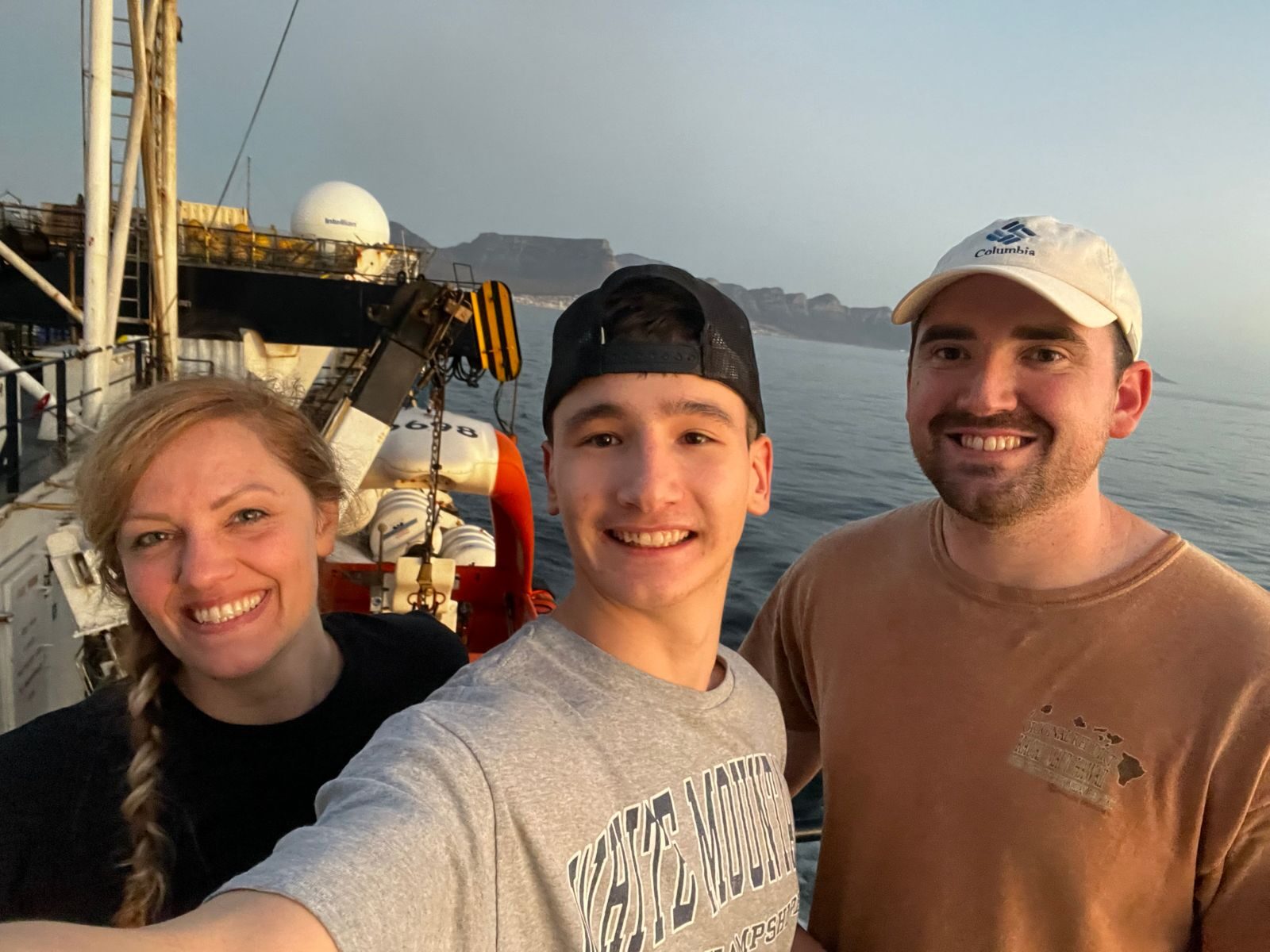
April 28: After a generous tour of the 230ft seismic vessel, the other interns (Ray & Colton) and I headed out to explore Cape Town. It turns out that it’s helpful to have the Uber app. Maintain your app, do not be me. We toured the wharf and shopping area, locally known as the V&A Waterfront.

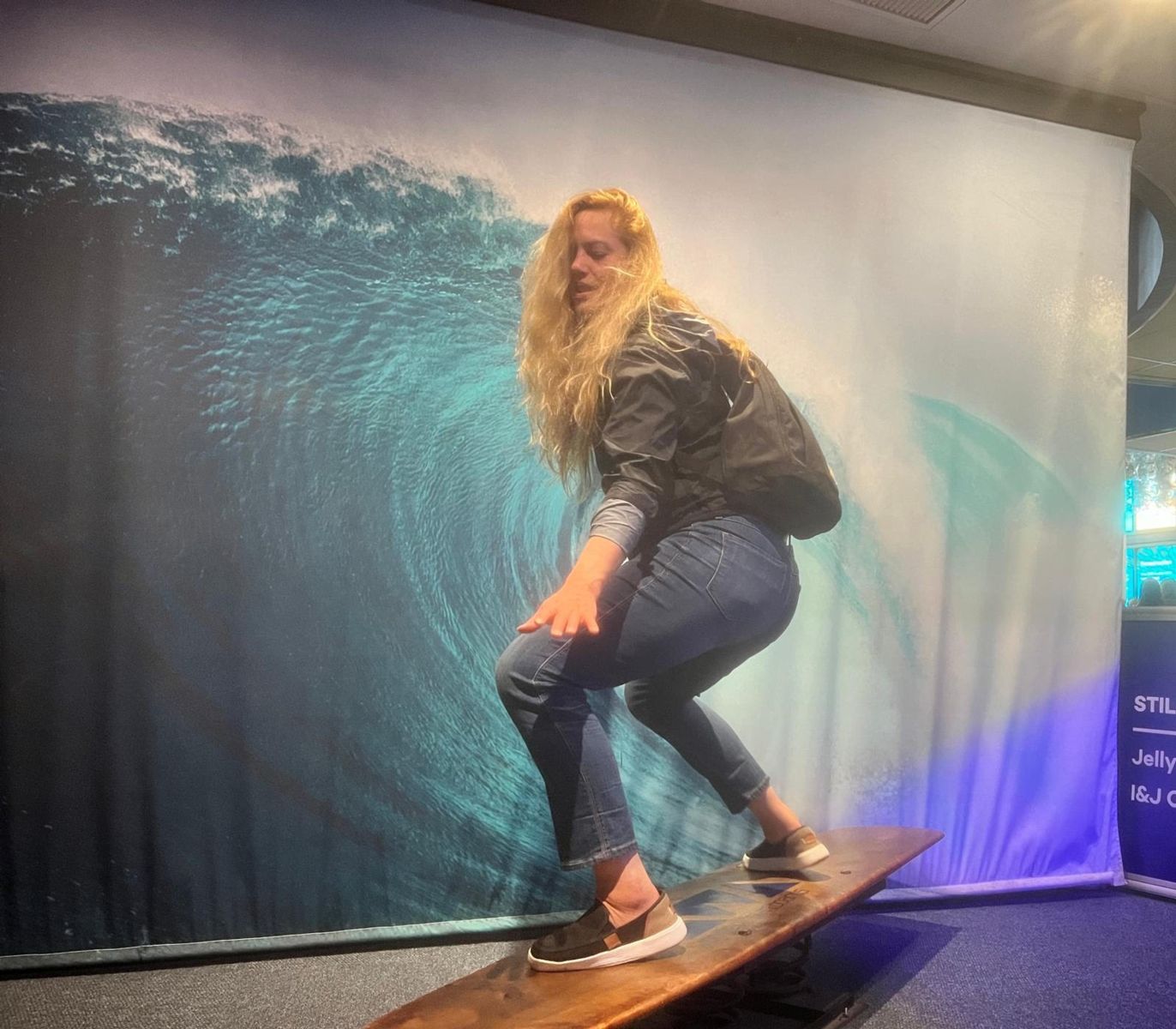
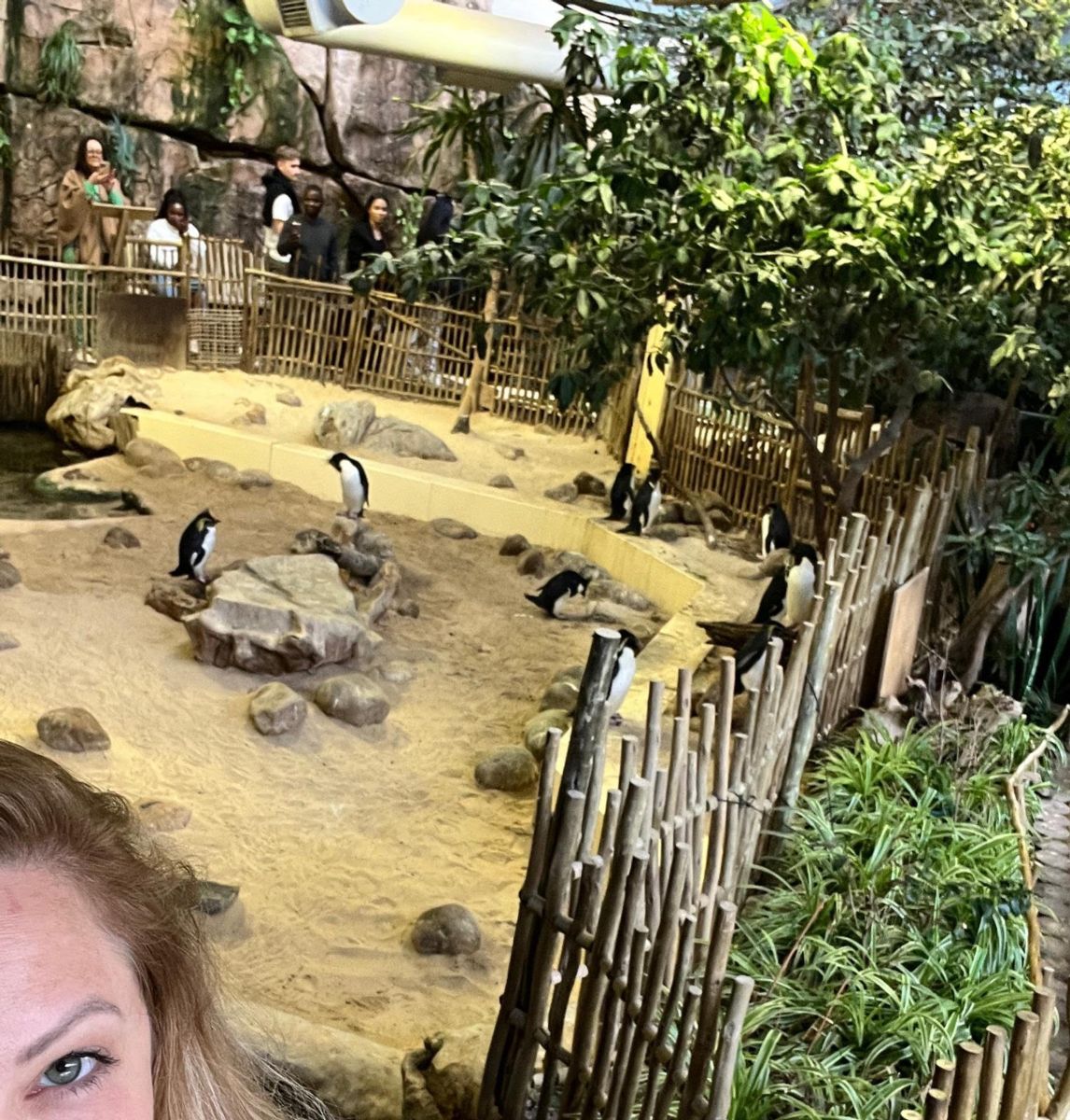
We went to the Victoria Aquarium where I learned how to surf and to telpathically communicate with subequatorial avians, see photos below:

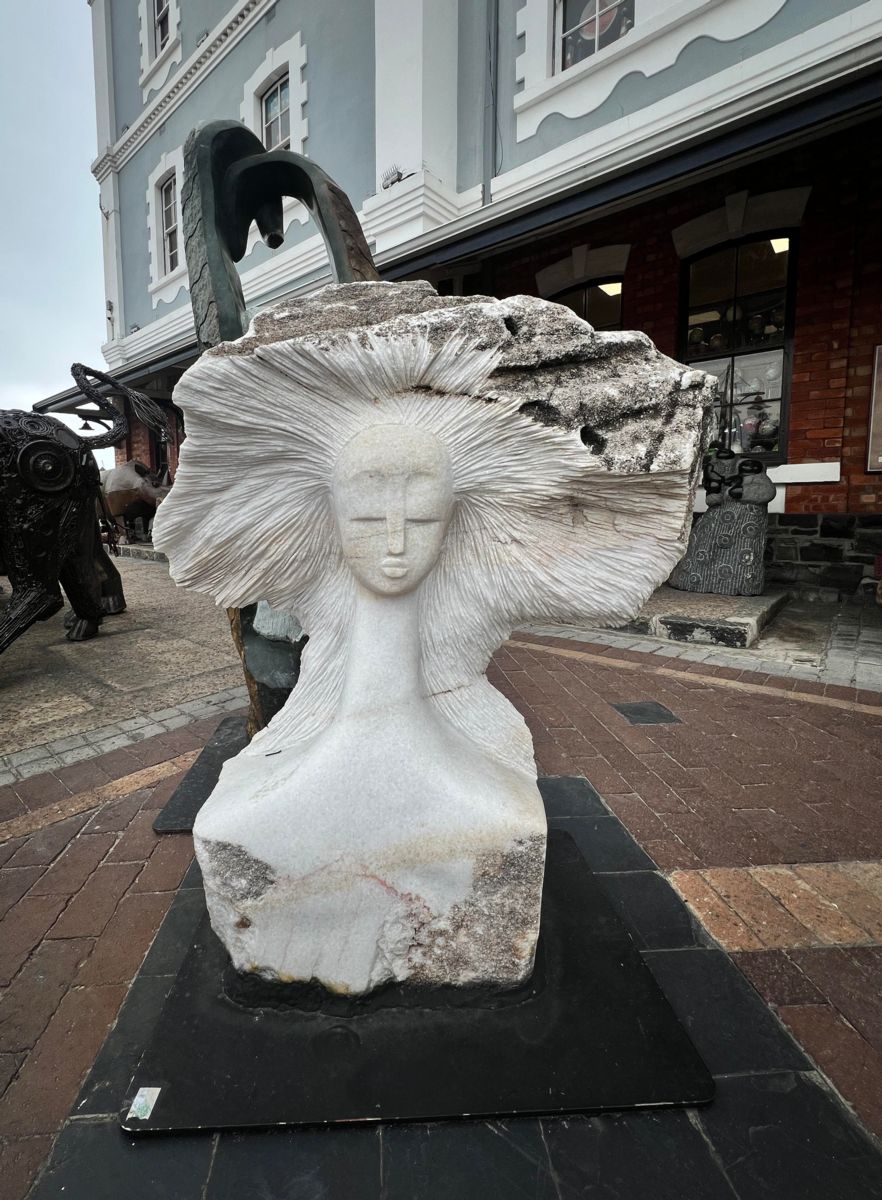
Additonally, we went to the South Africa Trading Post and saw some incredible artworks. Here is a sculpture in front of the trading post overlooking the bay…

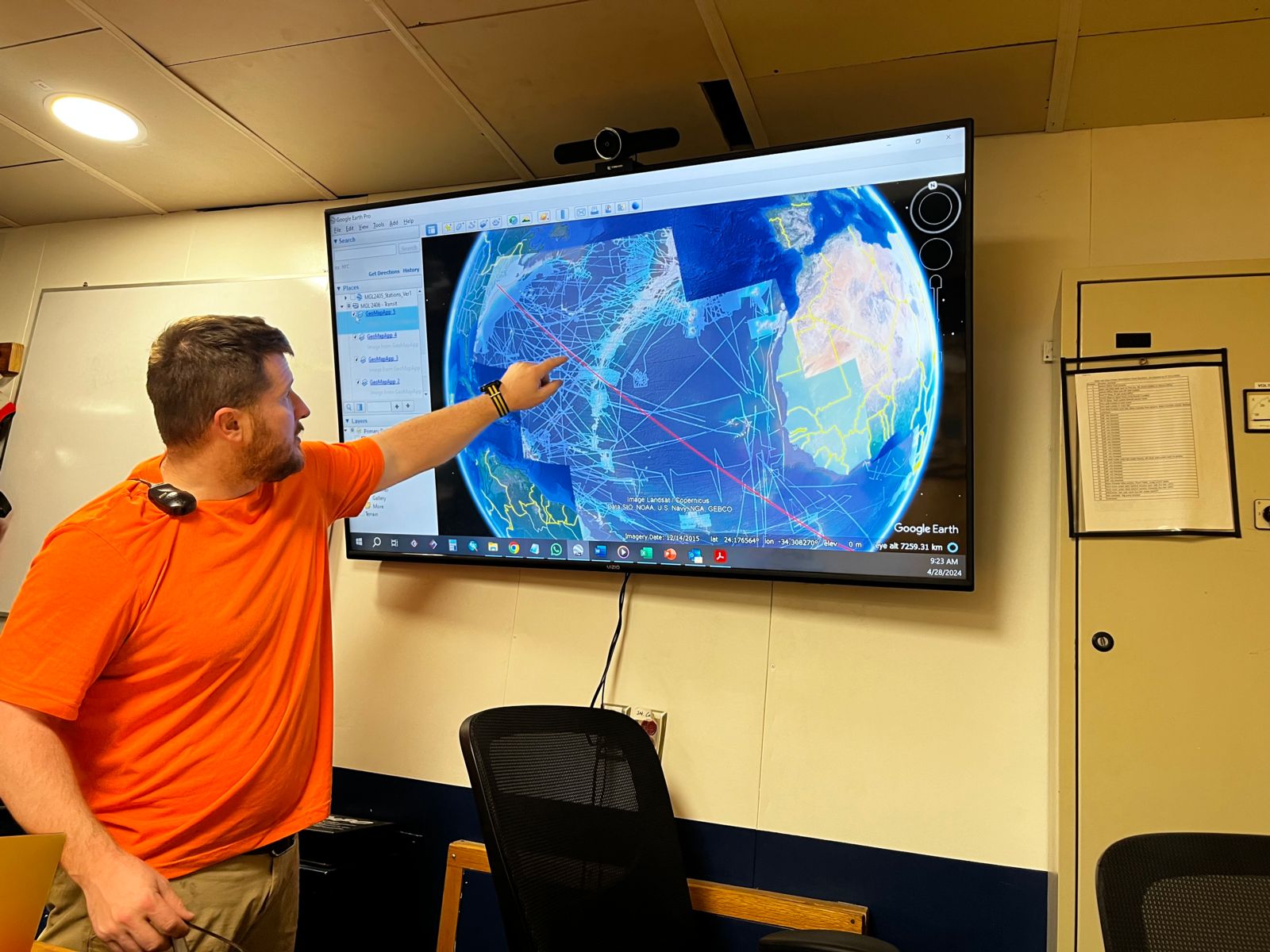
April 29: We set sail from Cape Town, South Africa to the city of New York. Good bye Cape Town, I’m sorry my $20 bill was torn and that the local shops wouldn’t let me turn you into any rand.

And now, we work…

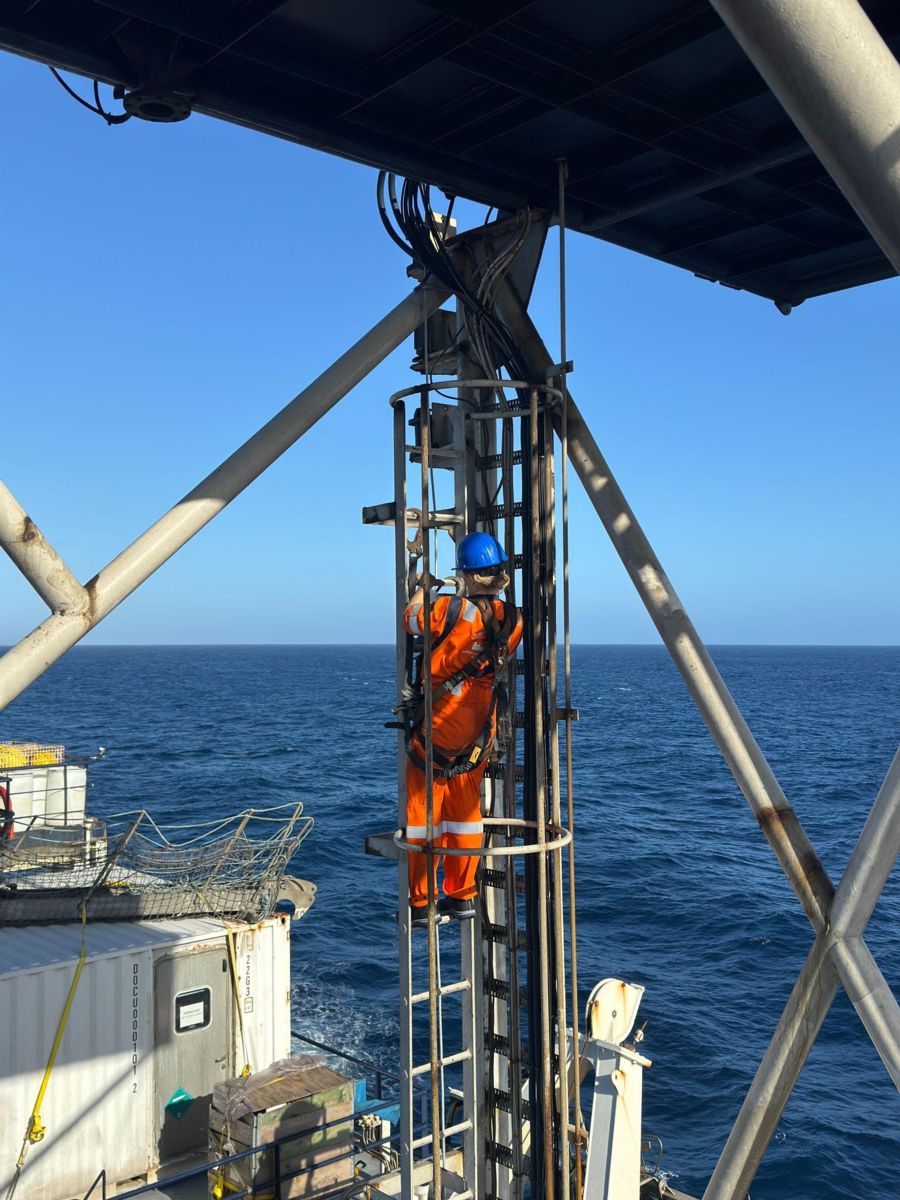
April 30: Worked with marine technician Riley rewiring the seapath receivers; pulled out roblox, fed cable through various parts of the ship, crawled into small spaces. Had to fill out paperwork on bridge for permission to feed wire upwards, geared up, went aloft, adhered cable with metal fasteners.

May 1: Climbed up the side of utility closet in the bird lab to remove roblox and feed cable through wall down to the crawl space in the port lab. Organized excess cables in bird lab crawl space to continue feeding cable into the main lab. Removed false walls at top of stairs next to bird room, fed cable through, put walls back and cleaned walls/ceiling.

May 2: Daily walkthrough Wet and Dry Labs (AM/PM). Checked Serial Data updates and maps. Learned how to use and adjust certain settings with the multibeam echosounder. Worked with marine technician Josh in the gun lab learning the basic deconstruction of the air gun, cleaning interior components, testing and rebuilding. Stop looking into the flashing light, Rachael.

May 3: Helped marine technician Josh again, this time to rebuild an airgun cluster; changed main housing, broken spreader bar, and worn flange. Additionally, had a diligent time trying to resolve a seized bolt that occurred during a routine air test^.

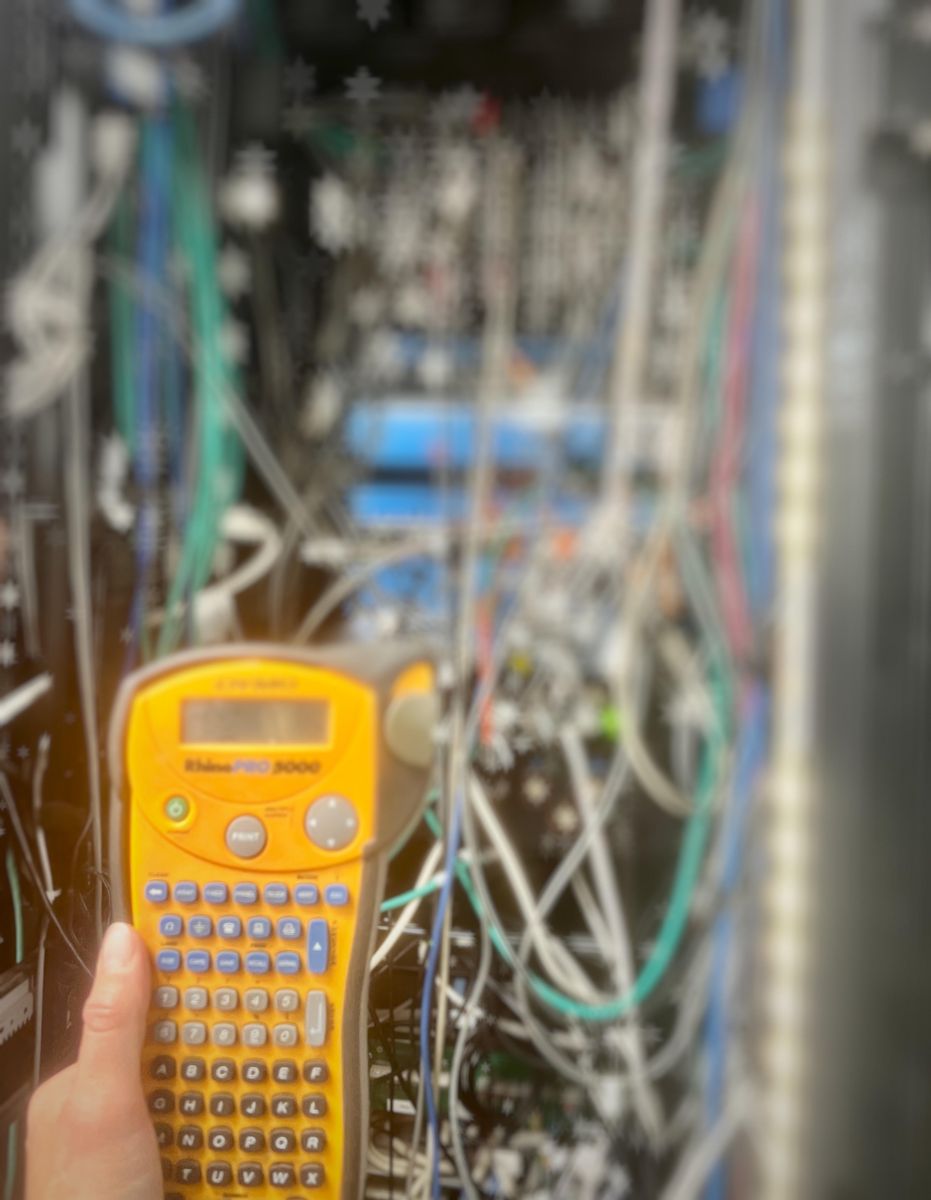
May 4: Worked with marine tech program coordinator Cody to learn step-by-step for digibird inspection/calibration/troubleshooting, both in visual and data system. Helped intern Ray with jumper cable project; cable labeling, taping, coiling, and organizing. Assisted marine technician Riley with the server racks; drilling, organizing, zip-tying, lifting, ratcheting, vacuuming, pulling apart, putting together, and labeling various cords and racks.

Been a very rewarding and very fun week here aboard the RV Langseth, very grateful and happy to be here and I’ve said this about one hundred times to anyone that will listen. Quite excited to continue learning under the wings of the fantastic marine technician team while aboard for the next 23 days. (Fyi, the meals are fantastic, so thank you Galley for nourishing us!)

– Rachael 

Week 1 Across the Atlantic!

Hi everyone, Ray here with an update about my first week as an intern on the Marcus G. Langseth research vessel. Colton, Rachael, and I arrived in Capetown, South Africa on April 27th around 5:00 P.M. The following day we had an orientation of the vessel. Our mentor Cody, gave us a brief introduction to the ship and a thorough summary of the different tasks and assignments that will be given to us on our transit. We expected to set sail the following day (4/29/24), so we actually had time to explore Capetown for the rest of the day! Colton, Rachael, and I eagerly explored as much of the city as possible, and the culture was astounding! We finished our evening eating Ostrich Filets and fancy assorted seafood appetizers, all of which was paid for by Cody for which we are extremely grateful! The next day our vessel started to set sail across the Atlantic towards NYC at 5:00 P.M. The past six days aboard this vessel have been incredibly productive, with a multitude of tasks that have been completed. Among these tasks was the disassembly, cleaning, and reassembly of the air guns. These instruments fire at 2k psi, sending signals to the ocean floor, which then bounce back for collection by the hydrophones. This data is essential for creating detailed 2D and 3D images of the ocean floor beneath us. My plan is to continue making blog posts with more updates on our tasks as we approach NYC! 

Stay tuned!

!                                                     

Page 20 of 89

Powered by WordPress & Theme by Anders Norén