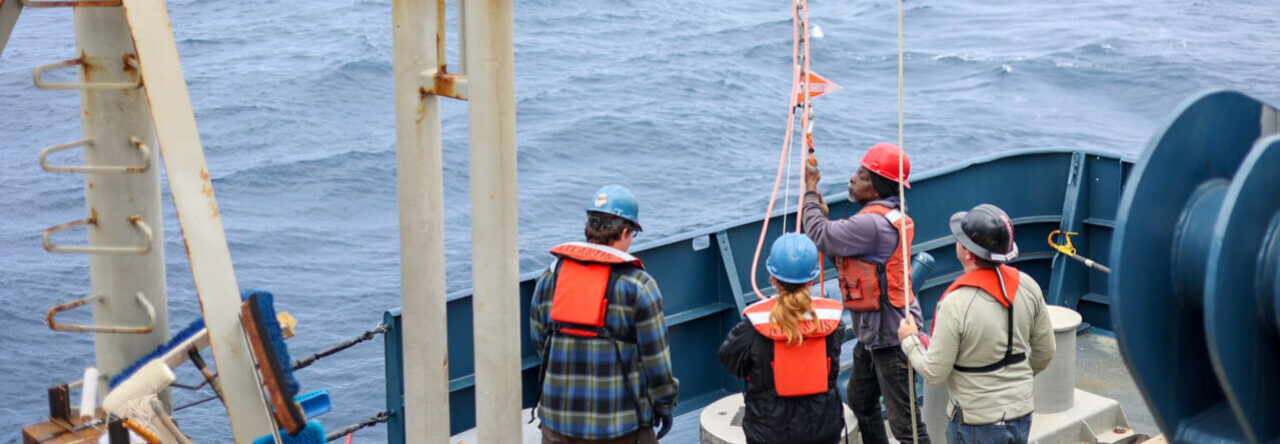
We’re done with dives! Yesterday was the last Alvin dive of the cruise and we’re heading back to Astoria, Oregon to drop off the scientists before we go on our transit to San Diego for offloading. Most of the week has felt relatively routine by now – getting Alvin ready for dives in the morning, turning on various beacons and radio devices, cleaning camera lenses, refilling CO2 scrubbers, etc. so I’m going to be recapping some notable highlights. Hard to believe we’re already done with dives and switching to a new schedule right as I was getting the hang of things!
The variety of people on board the Atlantis has been pretty interesting to talk to. Since our professions and backgrounds are so different, it’s been fun to chat with scientists, maritime crew, and educators about their roles on and off the ship.
Every time Alvin returns from a dive with the bio box used for collecting organism samples, it’s always entertaining to see what fruits the depths have yielded for us that day. In this picture, they’re mostly tube worms with bacterial growths (the white fuzzy parts).
horrifying creatures of the deep, as usual
Some students from Arizonan schools have sent in decorated Styrofoam cups for the sub to bring down to the seafloor. Due to the extreme water pressure (more than 200atm at over 2000m of depth) that’s down there, the cups end up getting squashed into these cute Shrinky Dink-like crush cups. I made one for myself on Monday, and the result is in the pic below. I’m quite fond of it.
Little alien I drew on a crush cup
On the final dive, I got to ride on the small boat that retrieves the swimmers. It was a nice feeling to be out on the water on a smaller dinghy, and I got some new POVs of the dive procedure. All in all it was quite entertaining, and I feel like I got a better understanding of the diving process from all roles.
Alvin and Atlantis, taken from the small deployment boat
It’s not all work out here anyway – there’s also plenty we do to keep morale high during monotonous hours when work feels stressful. Once when the seas were calm and the sun was out, the galley moved out onto the front deck for lunch to grill burgers and hot dogs. I really wasn’t expecting something like this, so it was a nice change of pace to rewind with a soda and chat with the crew.
we like having fun sometimes and by fun i mean a truly absurd number of grilled burgers
benefits of being in the middle of the ocean with literally nothing
A silly picture of me in the sub helping pilots run end-of-cruise maintenance checks. Learning about all the procedures and failsafes built into the sub was very intriguing.
Joyous whimsy
This evening, another pod of dolphins came to visit the bow of the ship again! There’s no way to really tell if they were from the same pod, but they were of the same species at least. It felt like there were a lot more than last time – I’m taking it as a sign of good luck and safe voyages seeing as they also greeted me when I came out to the ocean for the first time.
Dolphins on our way back!
Offloading at Astoria and transit starts tomorrow, so that’s what my next update is going to be about. See you soon!
Welcome back everyone! It is now my second week aboard the R/V Point Sur. Morale on the ship is high as science is rolling smoothly, the weather has calmed down, and we all wear our matching Hawaiian shirts on Fridays! Let’s take a look at the week, shall we?
To get my day kicking, I always like to go straight for the power tools! Yippee! The winch wire is more than just a long line of tough metal- it’s special metal. On the inside of the slightly rusty exterior, is an electrical communication cable that is able to send data back and forth to equipment and sensors. This enables whatever we send into the water to communicate with us in live time! To connect the wire to equipment, we must make a connecting end called a termination. This process is begun by dremelling off the hard exterior layers as you see pictured. (Hi me!)
After the metal is removed, you reveal the inner wires which are coated in rubber insulation for protection. Once you have your winch wire and the cable for your equipment ready, you begin the process of joining them together. The wire is soldered together, and tested for communication. Once it is confirmed they can ‘talk’ to each other, you have to make a semi-malleable shell to protect this connection. It’s going in the ocean after all!
Heat shrink, many layers of hot glue, and electrical tape are the ingredients in this special recipe. These onion like layers work in tandem to offer protection from water, cross talk between cables, mechanical strength and shielding, and ensure that the termination lasts for many, many casts.
The ROV, affectionately named “Mohawk” by the team, has been swimming nonstop these days. While piloting over a smooth seafloor with limited obstructions, the ROV team decided it was a safe place for test drives! Anyone who wanted to was allowed to pilot the ROV and get a feel for the operation of the machine. With a simple videogame style joystick, Mohawk can move in 3D. Being covered in cameras and lights, the vehicle is surprisingly nimble and well equipped to navigate the dark and often murky depths.
Deep sea ROVs have been a passion of mine for quite some time, and piloting one has been on my science bucket list forever- CHECK! A huge thank you to the Mohawk team for allowing me to achieve one of my science dreams!
This screen may look like gibberish- and that’s because it totally is! This is a classic “blame the intern” moment, but allow me to back up a bit. When performing a CTD cast and sending the rosette down, we get a live stream of data from the sensors. The instrument package is connected to the winch wire with the same hot glue termination as previously displayed, allowing data to stream back to the computers shipside. This screen is where we watch the data come in, see how deep in the water the rosette is, and any other information we need to know while operating the machine. Those wide streaking lines however, are not normal. Why is my graph broken!
In this CTD software, there are a few steps that must be taken prior to launch. One of those steps includes turning the water pumps on. You know, the one that pushes water past all of the sensors. Kind of the important part. Yeah, so I forgot to turn those pumps on. My bad team.
When we recovered the CTD, we noticed this- a busted O-ring! My arch nemesis returns, the faulty niskin bottle… thankfully, its a quick little swap and all is well. Daily checks and routine maintenance are an often overlooked aspect of keeping life at sea running, but they are ever so important! Making immediate repairs, and ensuring all equipment is working well with each use keeps the malfunctions and disasters at bay.
These gloves were made for workin…Goop!
Oh yeah, we’re doing ROV ops! One of my jobs on the back deck is to keep a wrastle hold on the winch wire as mentioned in my last blog. This is a much thicker winch wire than what the boat usually has onboard. When in use, these wires must be heavily greased for corrosion resistance and for smooth recovery and deployment. This makes handling the line a bit of a sticky situation. The science crew brought their own pair of sacrificial grease gloves for me to use, which keeps my normal work gloves looking spick and span in comparison!
Let’s take a better look at whats happening when we deploy Mohawk. The winch wire I have been handling comes out of a large pulley hanging from the A-frame at the top, just like the empty one that is hanging in the picture. It is raised and lowered with the winch spool by the winch operator.
Attached to the end of this thick line is the “clump weight”. Pictured in my previous blogs, this weight acts as a landmark for the ROV, and is covered in lights and additional sensors. From the weight, the ROV has maybe a hundred meters of tether line attached to it. This keeps the ROV communicating, and ensures that we can’t lose the little guy even if steering and propulsion of the vehicle fails. We could just drag him up by his tail, worst case scenario!
When we deploy, we first send the ROV into the water and allow the tether to ‘pay out’, or unspool into the water. After the ROV is driven away from the ship as far as it can reach, we can safely send the weight to the seafloor. The two sink down to depth together, holding hands. Once the weight is settled securely, and the ROV operators have their bearings, it’s off to explore!
Coral!Marker!FISH!
The ROV has spent considerable hours in the water this trip which has been an absolute delight. The Mohawk teams focus is mainly on this white coral, that really loves to take over these shipwrecks. They collected a huge assortment of samples for studying!
Other important places to see are the yellow markers. They are named and cataloged, and every time they visit they redocument the same place. Over time, they are able to see how the feature shifts and changes, and how the animals grow or die.
The ship wrecks may be one of the most fascinating things I have seen on my adventures so far! This little guy is called a Blackbelly Rosefish, or Helicolenus dactylopterus. He is sat right on an old bollard of the ship, like a king on his throne! We saw many of these guys and a wide assortment of other spectacular species.
Once the ROV is back on deck, the science crew has a field day with their samples. They are examined, photographed, cataloged, and stored properly. The lab becomes a busy space when samples are being processed! I have thoroughly enjoyed watching the limitless passion and curiosity driven brilliance at work on board this cruise. It is inspiring to see so many intelligent people coming together in big ways.
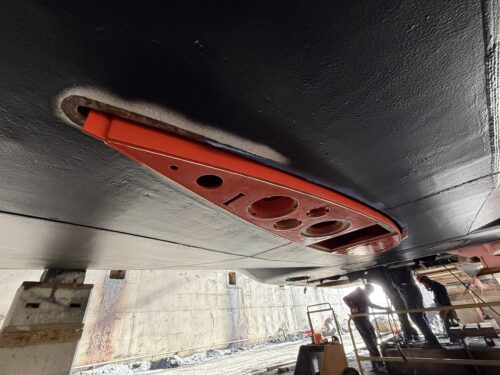
Many ships have the ability to install what is known as a “transduer pole”. Thie is simply a large metal pipe, that can swivel up and down over the side. At the end, the scientists can attach any transducer they need to have in the water for their operations. This allows for a very easy installation of sensors, rather than trying to find a way to mount them to the hull of the vessel. For this cruise, we used the pole for one small transducer, which helped with positioning of the ROV.
When the pole is in the water, we have to reduce our travelling speed for vibration and drag. Meaning, when it is time to steam to the next site, we use the crane to lift the pole from the water and secure it upright. As we wrapped up this cruise, we secured the pole out of the water, and science was free to remove their transducer from it.
With ROV operations finished for this cruise, we began steaming back to the dock. When we arrive, busy days of offloading the ship will begin, and the next science crew will come aboard. I can’t wait to see what the next cruise will hold, so come along with me!
We are officially into the Chukchi Sea, and the Arctic Ocean! The difference is palpable. The Bering is shallow, muddy, and full of life, and the water has a more greenish hue that reminds me of fluoride. The water here is blue. Bright, sharp, cold, empty. Jellyfish don’t drift lazily around the surface up here, or at least not in the quantities of the Bering. The Chukchi feels like a sleeping sea, drifting quietly as ice crusts over its face. We haven’t gone through big ice yet, but small chunks- ice floes? Have begun bobbing by. Some are small chunks, the size of a chair or coffee table, but others are massive- the size of large rooms or the science labs on the Healy. And some of them have polar bears on them!!!!!!
The call came while I was working out in the Healy’s weight room. A person working out nearby suddenly dropped their weight, spun to me, said “We’re passing a polar bear!” And raced out of the room. I followed, heart in my throat, and after racing up several flights of stairs we popped out onto a port-side deck, where at least fifteen scientists and crew members were pointing everything from iPhones to absurdly large, telescoping cameras at a distant ice flow. I couldn’t see jack. But, as the Healy made a slow circle back around, I could make out a fuzzy, yellowish shape. I peered through binoculars someone handed me and there was not one, not two, but THREE polar bears! A mama stood up on the flow, regarding us suspiciously, while her two babies, probably the size of Great Danes, bumbled around the ice. The cuteness was unbelievable. Cora got a video of one of the babies flopping over. Coming from someone who ranks lower on the bear appreciation charts, I’m still utterly awestruck. I sent my extremely-fuzzy-shot-through-binoculars video to everyone I know. One of those moments I’m so, so grateful to be here.
We also saw a vaguely walrus-shaped lump! I really can’t describe it as anything but a lump, perched on a far ice floe floating away into the mist. I don’t *really* count it as a walrus sighting, but cool to have seen one in theory.
We’ve taken a break from our transit to the science locations for various Coast Guard activities, which has given the STARC team more time to troubleshoot and work through old issues before we get on station and it’s all-hands on the CTD. I’m amazed by how many problems can be solved just by turning something off and on again. Our ancient gravimeter, which Brendon introduced to me as a decrepit, suspicious machine so old its manual was carved on stone tablets lost to time, went dark a couple days ago, and at first everyone was like “Well, we saw it coming.” After a few days floating around the Chukchi with our to-do list getting shorter, Cora and I finally ventured into the depths of the ship to poke around the gravimeter, affectionally labeled “James” with a sticky note by some long ago martech of yore. Cora and I poked around, restarted the computer James was hooked up to, and lo and behold- gravimeter data.
Polar Blurs!
The largest project of the last few days has been reterminating the CTD. During a winch operation, its massive cable got kinked, so the last 20 feet were cut off. Brandon taught Cora and I how to strip and solder wires, something I’ve wanted to learn for a while. We practiced on some junk cable, and then took it to the real thing! I couldn’t believe they trusted the intern to touch the cable, but they let me solder one of the connections. It was a long process: stripping the wires, removing the cable from the CTD, soldering, wrapping in tape, reconnecting, reattaching the “thimbles” that hook the cable to the CTD, and more, but we finished just in time for lunch. It was an awesome experience to learn such a useful skill like soldering, then turn around and actually apply it. As I write this, the Coast Guard deck team just weight-tested the cable, and it sounds like it held up. I’m nervous but excited for its first deployment.
Practice……and the real thing!
I’m not sure what’s next on our agenda. I think the Coast Guard is going to continue their activities in the Chukchi for a while longer. The science party is definitely getting a little stir crazy, but I’m sure we’ll all miss the calm once we’re recovering and deploying moorings and doing CTD casts ‘round the clock. For now, I’m going to continue my current project- trying to build a bathymetry chart in QGIS that we can use on OpenCPN, our map/tracking software. The process is painstaking and frustrating at every turn, and thus far I’ve had no success. Hopefully my next blog post has a better update.
Cheers, Wil
Wildlife count:
1 walrus (kind of)
3 polar bears
1 lost looking shorebird that almost flew into Cora
It has been a busy second week. This week I finally got to see the launch and recovery process of Alvin, which was amazing. The weather was ideal at first, with very calm seas—almost flat for the first couple of days, which is uncharacteristic of the Juan de Fuca Ridge. Later on, the swell returned to double digits, which took some getting used to. Nevertheless, I had the opportunity to get my hands dirty with the pre- and post-dive operations alongside the mechanical team.
Most mornings during pre-dive, I helped flush the lines of any air or water with either Carnation, hydraulic, or Brey oil, depending on the system. This ensures proper pressure compensation in the junction boxes that house the electronics for the ballast systems, communications, etc. Brey oil, I learned, is used instead of Carnation to prevent arcing in electrical boxes that draw more current. I also helped load the sub after the pilot finished their pre-dive checks inside the sphere. During this time, I handed down CO₂ scrubbers, towels to remove condensation, blankets for comfort (since it gets quite cold), and lunch for the pilot and observers.
The sphere is very well taken care of. Before each dive, all passengers must shower and wear clothing made of natural fibers to ensure safety. Synthetic materials can be flammable and may wedge themselves in the window seals, which play a crucial role in maintaining the pressure boundary. Even when the hatch is inspected in the morning, the person conducting the inspection must be free of oil and dirt to maintain cleanliness. After the sub is launched, we scrub the hangar and refill the oil containers so that everything is ready for any evening maintenance.
Post-dive operations can be a little fast-paced. As soon as the Launch Coordinator indicates the sub is secured on deck, we quickly rinse down the entire sub to prevent corrosion, cover the windows, and remove access panels to begin inspections. I always do a general “mech inspection,” which involves walking around the sub and checking for any loose bolts, wiring, or abnormalities. This past week we had water intrusion issues with the port main ballast blow box. We spent a few late nights draining and pressure testing the box, as well as testing the check valve and bladder for leaks. Unfortunately, we still haven’t found the culprit, but hopefully by the next update I’ll have an answer.
Additionally, there was water in the port thruster—which is bad, but also good for me, because I got to help take it apart. First, we swapped the motor for a ready spare so the sub was dive-ready, then made the repairs. We drained the motor of hydraulic oil, replaced a damaged O-ring and crane seal, and then carefully refilled the motor. This was fun but tedious, since every bit of air introduced into the system has to be removed. You wouldn’t think it would be much, but it is—so we had to slowly fill the motor using a tube while shaking it to release all the air.
All in all, it was a great week. I was able to watch the recovery process from the bridge and see the captain’s role in retrieving the sub, and I even got to check out some of the critters scientists collected in a bio box from the hydrothermal vents!
It feels kind of odd to say that it’s only been two weeks since I left, but I found that being on a vessel tends to screw up your sense of time. I’m sure the other members of the crew agree with me.
We’ve had a total of five dives so far, and dredged up plenty of interesting things. The dives for yesterday and the day before were cancelled due to unfavorable weather conditions, but it went somewhat back to normal today so we got to have a pilot-in-training dive, albeit the deployment was later than usual.
There’s a wide variety of samples that we collect on this specific cruise – sometimes we take water samples of the hydrothermal vents using isobaric gas-tight samplers (IGTs) which help keep contents pressurized when the scientists are doing experiments on the nitrogen-cycling properties of the microbes in the water. Sometimes we also bring up freaky little creatures like tube worms and this scale worm in the picture below!
A scale worm we dredged from the Endeavour hydrothermal vents
Depending on what kind of samples we want to collect, naturally we would have to change tools for the job. The basket in front of the HOV Alvin typically holds all the equipment needed to complete the dive objectives of the science team for a dive, and it is our duty as the maintainers and technicians of Alvin to swap these out as needed per dive.
Us handling a Universal Fluid Obtainer (UFO) on the basket
As an intern, my daily routine usually consists of getting up early start helping the team with pre-dive checks – making sure that cameras are striped, calibrated and properly cleaned, ensuring parts on the HOV are secured, refilling CO2 scrubbers, etc. We roll Alvin out on the tracks leading to the A-Frame at the aft of the ship, where we attach stacks of ballasting weights to it and put the pilot and observers in before we send it into the water.
Sending Alvin out using the hydraulic-powered A-Frame
Once the HOV is in the water, swimmers on a smaller boat will go to it and do some last minute checkups like unhooking safety lines and verifying communications are good to go. The phone the swimmers use to talk to the passengers of the sub is actually not waterproof, so while they’re verifying comms they also have to be very careful not to get it wet. The design is kind of counterintuitive, but the fact that the phone does not need to be powered independently makes the drawbacks worth it. Still, it is pretty comedic to see the swimmers make their way back to the little boat raising what looks like an old landline phone above them the whole time.
Almost done with deployment. Boat and swimmers.
After the sub goes down, we have someone in the top lab to monitor GPS position and to maintain communications with it every so often. Us interns usually take this time to clean up our messes from the morning of deployment, and then it’s time to muck around until we get the signal to get ready for retrieval.
swabbin timeBringing him back in
During retrieval, we finish up with post-dive tasks like hosing down the sub to wash off the saltwater and securing him back in the hangar for safety and in case bad weather starts rocking the boat around. We usually get some sort of report from the pilot about equipment or components that didn’t work so well and may need to be fixed or replaced, and our evenings are pretty much occupied with post-dive and fixing up the sub for tomorrow’s dive.
Of course, if the weather conditions are unsafe for swimmers or pilots we may have to call off some of our dive days. The swells were pretty big yesterday and the day before that, and we used the time not diving to finish up any maintenance that we’ve been putting off – fixing of lasers, replacement of important wires to the propellers that route inside the sub, things like that.
The weather’s getting a little rougher…
I’m learning lots of things out here. I haven’t needed to do any of this in my daily work, but the crew and the Alvin team taught me a whole array of knot-tying techniques which I’m sure is going to come in handy someday…? During downtime I also try to see what the other departments are up to, like bothering the scientists in the lab to find out what they’re doing with the water samples we bring them, or pestering the bridge about navigation. It’s been lots of fun, but it’s also starting to feel like I already spent a month or two at sea. Time is not real on this vessel.
My second week on the Healy! And still no science- mostly. Our long, long transit nears conclusion, but we’re still in the scientific doldrums. Thus far the science party’s just been preparing their equipment, although a couple small buoys have been literally tossed over the side with zero fanfare. If this sounds unenthralling, it’s anything but.
WE’RE IN THE BERING STRAIT!!! The last few days in the Bering Sea have been beautiful. Not clear, but the reflection of the hazy sun on gray waters turns the sea into quicksilver, and if you’ve read my last blog post, then you know how I feel about the nights here. Looking over the prow, I can see fat puffins failing to get airborne as they half flap, half flail away from the ship. Moon jellies, lion’s mane, and sea nettle jellyfish zoom by us just below the ocean’s surface with surprising frequency.
This morning we passed Nome, and I’ve been watching OpenCPN, which tracks our ship, as we neared the Diomedes and the narrowest stretch of sea in our journey north. We were still ten miles away when Brendon encouraged me to look on deck. I bundled up, and was astounded to see Little Diomede to our port side, Big Diomede peering out of the gloom behind it. We’re quickly entering fog, but the haze only consumed the island tops in that moment. Fairway Rock, or Ugiiyaq, south of the Diomedes, shone in a runaway beam of sunlight.
Although it’s been four years since I moved to Alaska, the sense of wonderment still hasn’t eased. Climbing frozen waterfalls, watching Denali’s shadow piece the clouds during sunset, or even just dodging a moose on campus strikes me with awe and disbelief, with a Wow! I’m really in Alaska!
I got that sense as I stood on the flight deck, the last retreating rays of golden sun giving the world a hazy, heavenly feel. Disbelief at where I’ve come in life, from the dry desert, and immense gratitude to everyone who encouraged and helped me get here. I wished they could join me as I stood on the edge of the world, sailing farther north than dreams could reach. These Wow! I’m really going to the Arctic! feelings strike every time I step out on deck, and I treasure this experience and everything it offers.
And while the science party waits in anticipation for our approach to their sites, STARC has been active: troubleshooting, repairing, and, for me, getting the hang of things. Our CTD checklist is complete. Niskins have been re-gasketing, springs re-tensioned, bottles re-placed when nothing else worked. Brandon (not Brendon) walked me through the tech of the CTD, and him, Cora and I teamed up for a final blitz, rewiring and reattaching sensors.
An attempt at a polar bear I crocheted out of scrap wool for Cora. Omen of things to come?
We also tackled disassembling the multicore a few days ago. Unfortunately, the multicoring aspect of this cruise was cancelled last minute, but the multicore was already assembled on deck. It sat there like a giant spider on the back deck, gray and mourning the Arctic sediment it wouldn’t collect, for a week or so before we decided it was time to take it apart. Brandon, Cora, me and the deck crew attacked it in a flurry of activity one calm morning, and within a couple hours it was was returned to its coffin-like wooden storage boxes. I’ve done a lot of sample collected from multicores, so it was cool to get familiar with the hardware itself.
Goodbye, multicore! It was nippy out so I broke out my froglaclava. / Cora McQuaid
I’ve been getting familiar with the sonars lately, watching as a land based technician remotely battles the EK80, a bottom-finding sonar determined to freeze when synced externally with other sonars. I read a short manual for our multibeam, but mostly have been playing with the Knudsen Echosounder, which gives a two-dimensional profile of the seafloor as we pass over. On a previous cruise, I’ve used it (as in watched, while a martech adjusted the settings) to make crisp sub-bottom profiles, but at our high speeds, when it isn’t the primary sonar, the Knudsen doesn’t look so great. So much so, in fact, that Brendon was concerned something was wrong- maybe heave compensation? Brandon and I traced the “serial string data” of the ship’s heave all the way to the Seapath 330, one of the positioning programs, but couldn’t find an error, and we were finally forced to admit it’s probably just our speed, and the fact the Knudsen doesn’t do to well in the shallow, muddy Bering. We won’t be here much longer, and I look forward to learning the sonar settings in deeper waters- and ice!
And just like that folks, we’re back at it again! This time, I hopped aboard a flight headed for Gulfport, Mississippi! The flash temperature change from the arctic to the deep south has me feeling like a defrosting lizard, but that won’t stop me!
Ahh, what a lovely sight- I finally get to join the boat from a pier this time! My previous two journeys started with a smallboat ride and a sketchy climb up the Jacob’s ladder. This is the R/V Point Sur. Though I have not sailed on this ship before, I am all too familiar with it. The R/V Cape Hatteras, the ship I sailed on for my education, is an exact copy of the Point Sur; sister ships! It feels familiar and foreign all at once.
Work had already begun by the time I arrived. The crew was set about fabricating some metal mounting gear for the equipment that the scientists had brought on board. Crew member Todd will be wielding an oxyacetylene torch, ready for action!
The night is always young onboard a ship. As many people went off ship for dinner, I stayed behind to get settled in properly. No later than everyone left, an engine room alarm began blaring! I found this light blinking red, and sent a message out to the responsible parties. All was well, but you have to stay on your toes at all times! There is truly no telling when things can go downhill.
This cruise is focused on ROV operations. The remotely operated vehicle (ROV) will be sent to the seafloor, to collect samples and take a look around the area. Deep sea corals are the main focus for their research!
On the deck, you can see the configuration of their gear; Left is the ROV, which is attached to the yellow tether line. On the right, you have a weight package that is sent to the bottom to help control and sense the ROV. All three of these pieces are deployed together and work in tandem to complete the dive!
Our last night in port gave us a lovely sunset as we made our final preparations for sailing out to sea. We set our ‘sails’ out at exactly midnight, for a somber march out of the bay. Leaving behind the glow of the city for the inky black of the open ocean. It’s good to be back out at sea.
No time for poetry, you have a steaming plate of cable spaghetti to deal with! As an older ship, there are many bygone years of outdated technology being replaced. In the process of revitalizing the equipment, some cables get… let’s just say left behind! We installed some new monitors on the bridge for the captain to keep tabs on the ship, which meant running HDMI cables to each one of them. Many hours spent detangling, and the monitors are up and running perfectly.
Another facet of science on this trip is EDNA. Using the fancy gizmos and gadgets you see attached to our CTD, the scientists can extract environmental DNA from the water. Meaning, they can tell what critters went through the water! They can compare this data with ROV footage.
Speaking of ROV footage! Once the ROV was deployed and settled on the bottom, the real work began. Many eyes spent many hours watching the continuous stream of video. An incredible sight to behold! On it’s first descent to the seafloor, around 500 meters down, we landed right near this handsome fella- I have roughly identified it as a Gulf Hake, or Urophycis cirrata. I am by no means a biologist, but that is my semi-educated guess!
The ROV had just lighted onto the seafloor, when the operators noticed something was amiss. The systems weren’t operating as they should, and the team made the executive decision to recover immediately. Unfortunately, their suspicion was well met. A connection point on one of the attached components failed, meaning it completely flooded with water. This melted all of the components and wiring on the inside, which is something that is not repairable at sea.
After a few brainstorming sessions, adjustments to the ROV, and more than a couple prayers, the team found a temporary solution. The ROV was set up excluding the flooded components, which makes it usable but with greatly reduced function. Though it is less than ideal, it does at least mean the cruise can continue rather than heading back to port immediately.
On the second dive, the ROV was able to collect a few small coral samples and bring them back to the surface. The ‘arm’ you see pictured has an apposable hand that can be controlled from the ship, and a little container to drop samples into.
My mentor for this trip, Grace, instructed me during the first few CTD casts, and trusted me to operate the computer for the next one! Though I may have forgotten to take off my hardhat, we successfully recovered another batch of water samples. The water we bring up will be used for sampling and for storing the live coral recovered with the ROV.
During this cast, we found that bottle #9 did not close at all, meaning it came back completely empty. We investigated, and determined the bottle to be operating smoothly. The next step was to ensure that the firing mechanism worked! We disassembled the housing, and found corrosion on the magnet responsible for releasing the lid of bottle nine. A quick scrape removed the corroded material, and a deck test proved that the issue was solved. Huzzah! If only every problem was so simple…
Yikes… This is the interior of the flooded compartment from the ROV. As it turns out, delicate electronics don’t like saltwater! This not so simple problem could not be solved while offshore, as the parts and personnel necessary are simply not on board. A integral part of working at sea is repairing what you can, and working around what you can’t!
Even with some non functioning parts, the ROV process is still well underway. After each deployment and recovery, the science team jumps into action. They remove the sample compartments from the ROV housing as quickly as possible, as coral is extremely sensitive to temperature fluctuations, and they want their samples live. Once they are inside, they separate the samples into individual holding spaces, full of fresh seawater saved from the most recent CTD cast. These tubs go directly into a refrigerator, where the temperature is set to the same as their natural environment. It’s cold in the deep sea! This gives the animals the best possible chance at survival for testing and studying.
Oh hey, I know her! During ROV operations, my job has been between operating the A frame, and adding tension to the winch wire (pictured). This ensures the wire spools correctly, and makes every elses lives a bit easier. Well, my first week on the Point Sur has been busy and very exciting! I’ll be out here getting grease everywhere and pulling the line tight, while the scientists decipher hours of ROV footage; I know you’re jealous, but fear not! There is to be a public broadcast from the ROV team. Please join us to see some of the action live!
I just wrapped up my first week with the Alvin Team, and it’s been amazing in more ways than one. Upon arriving in Oregon, I finally got to meet the team in person. Everyone has been wonderfully patient and kind, showing me the ropes of both their operations and, of course, the engineering behind Alvin. I also met the crew of the RV Atlantis during a Labor Day picnic and cookout they hosted on the dock before we set sail.
This week, I was introduced to the sub and its critical systems. Since Alvin hadn’t been operated for about a month, we spent three days on maintenance, which I was able to observe and help with when possible. Some of the tasks I participated in included ensuring pressure compensation in the junction boxes and tubing that house communication cables, pressure testing the check valves on the main and variable ballast systems, and installing the seawater filter for the variable ballast. I also learned how the team inventories and stores spare parts, as well as the strict protocols for replacing them. Their attention to detail is remarkable—every component must meet precise standards, and even the slightest thread damage can make a part unsuitable for dive operations. I also witnessed the installation process of the batteries; they provide 120 volts to the sub. We rolled out Alvin to expose a hatch between the tracks in the hangar that allows access to the hold where the batteries are stored and maintained. The batteries were lifted into the sub using hydraulics.
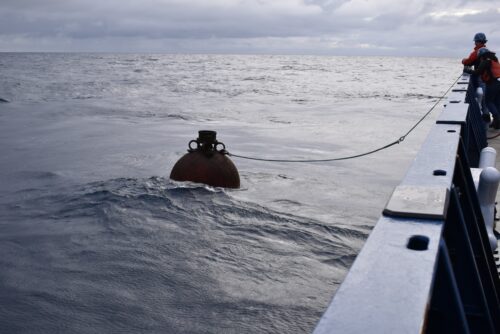
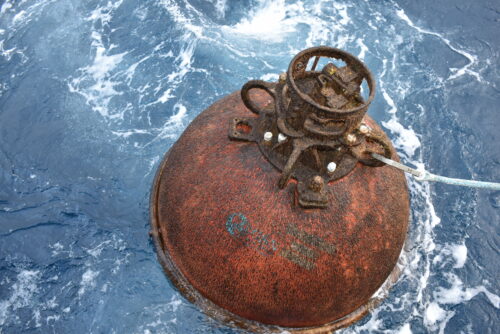
In preparation for the first engineering dive, I helped remove the coral-cutting claw from the robotic arm and replace it with a three-pronged gripper more suitable for this expedition, collecting high-temperature water samples at hydrothermal vents. We also held the “weight party,” where we stacked steel plates to aid Alvin’s descent on the Juan de Fuca Ridge. Unfortunately, our first dive was canceled after a recovery buoy detached from a Canadian mooring line. Since we were nearby, the RV Atlantis was asked to recover it, which we did.
Even so, I’ve already learned so much about plumbing and mechanics in just one week, and I’m excited to see the data and pictures that Alvin collects after all our dives are complete!
Week 1 is already over, and it still feels kind of surreal to be out here. There have been so many exciting things and interesting people that I’ve encountered that it’s difficult to recount them all in one post without boring everyone who reads this, so I’ll show the most important things.
I met up with the Alvin team after flying down to Portland from Seattle, where we drove down to Newport where the Atlantis was docked together as a group. When we got there, I got to take a quick tour of the premises. As someone who’s never been on a research vessel, the Atlantis felt pretty average from the outside but was way bigger on the inside – rooms and halls were pretty spacious to move around in. Onboard amenities were much more fleshed-out than I thought they would be (there was a punching bag in the science hold?!), and the galley cooks up meals way better than I ever did in my entire college career. Shoutout to the cooks who greet me by name every meal.
First time seeing the Atlantis!I WILL be wailing on this punching bag during my time off
As for the HOV Alvin itself, it was also pretty big – maybe the size of a small whale or an orca perhaps. During our pre-cruise maintenance and housekeeping work I got to walk around the top of the sub and climb into the sphere where the pilot sits. Alvin recently got a refitting recently with an ergonomic seating area, and I have to say it was decently comfortable in there.
Me with the HOV Alvin in the upper portion of the hangar.This is one of the submarines of all time.
Most of my work on the sub has been checking in on little things like searching for air or water bubbles in the tubes of oil inside the HOV or draining said oil from junction boxes in the front so that we can wire scientific instruments to the electronics systems. I helped with loading provisions and stores to feed us during the cruise onto the ship and checked the windows on the sub for scratches or blemishes. The two most exciting events that I helped out with were replacing one of the fridge-sized lead acid batteries and distributing and stacking steel plates which will eventually be used for ballasting.
To access the batteries in the first place, we had to move Alvin forward in its hangar to operate a crane that would open the hatch in the floor that led to the room with the battery in it, which was process that took a little time to complete. The battery that was supposed to go into the Alvin didn’t come with a casing on it, so part of our duties during the pre-cruise was to get the casing off the old battery and slide it onto the new one – main issue being that the casing is basically filled with oil. One aspect of this job I learned very quickly was that literally everything is covered in oil since it helps mitigate the effects of pressure in the deep ocean, and that I should give up on the prospect of having any unstained clothes on this cruise.
One of Alvin’s lead acid batteries returning to its designated slot via hydraulic lift.
The stacked steel plates are used for the sub used as ballast to control its buoyancy underwater, and it dives down or resurfaces by jettisoning some amount of these steel plates that we attach to it. As such, we had to prepare several stacks since every dive would have at least 3 stacks of plates weighing more than 300 pounds per stack. Picking up these rusty steel plates all morning was a decent workout for my forearms. I also got rust all over my clothes, but I brought all the clothes whose safety I didn’t care about so it was expected. It’s for that grimy mechanical engineer aesthetic anyway.
Fellow MATE intern and coworkers chatting during the weight party.
We left Newport yesterday on the 5th. Due to the size of the vessel the boat rocks pretty slowly, which is nice to fall asleep to but kind of annoying when you’re doing fine, detailed work with small instruments and tiny probes. It’s better than the smaller boats I’ve been on though. Seeing the vast expanse of water on every side of you with nothing to keep you company except the ship and the gray clouds overhead feels kind of surreal. Liminal, even.
The views of Newport, Oregon.
I lied about that last part, actually. There were other things keeping us company – there was a massive pod of dolphins that swam up to the ship as it was traveling to our dive site, and they were just frolicking and being silly on either side of the ship and under the bow, racing the ship and jumping around. We guessed that they were Pacific white-sided dolphins based on their coloring and our location. Genuinely one of the most breathtaking experiences I’ve ever had.
My poor attempts at capturing the moment.
I’ve been having a lot of fun the last few days, and I expect to have even more fun when we actually get around to Alvin dives tomorrow. It’s around 9pm when I post this, and I do have to wake up at 5am for deployment preparations, so I’m going to leave it at that for the time being. Will update next week.
Hello everyone! I’m Katie Wade, a recent Ocean Engineering graduate from the Florida Institute of Technology. Soon I’ll be heading to Oregon to join the WHOI Alvin Team on the RV Atlantis for a research cruise along the Juan de Fuca Ridge, where I’ll be working as a Mechanical Engineering Intern.
I grew up in Merritt Island, Florida, which fostered a deep love, respect, and curiosity for the ocean. For me, nothing beats a day on the water, so I’ve always hoped to blend fieldwork into my career. I never expected that pursuit would lead to such an incredible adventure—I’m deeply grateful to the Alvin Team and the MATE Program for this opportunity.
During my undergrad, I spent two years at the Center for Corrosion and Biofouling Control (CCBC), where I worked in a multidisciplinary environment that deepened my understanding of how marine life intersects with engineering. I also helped design and build an ROV as part of a team project, which inspired me to pursue underwater robotics. So, I’m excited to continue growing both my ecological knowledge and technical skills on this cruise to become a better engineer!
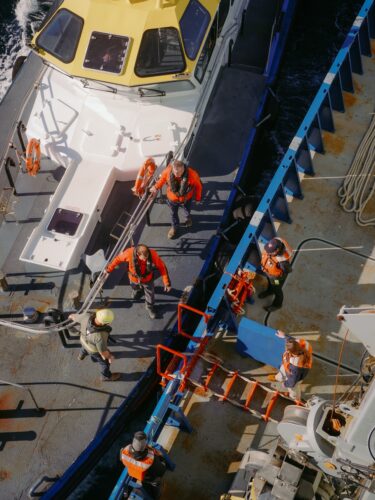
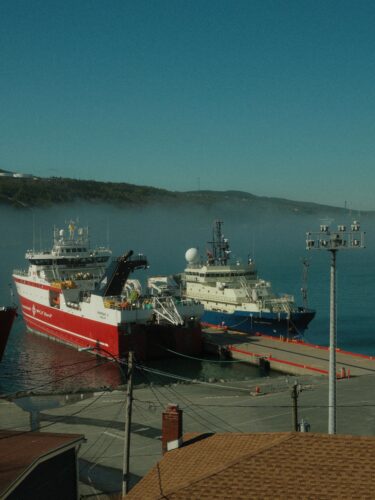
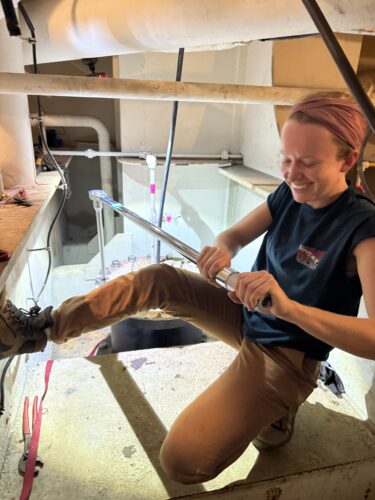
Here are some pictures of me with other students from the CCBC and working on deck the RV Hogarth during a marine field project last summer.