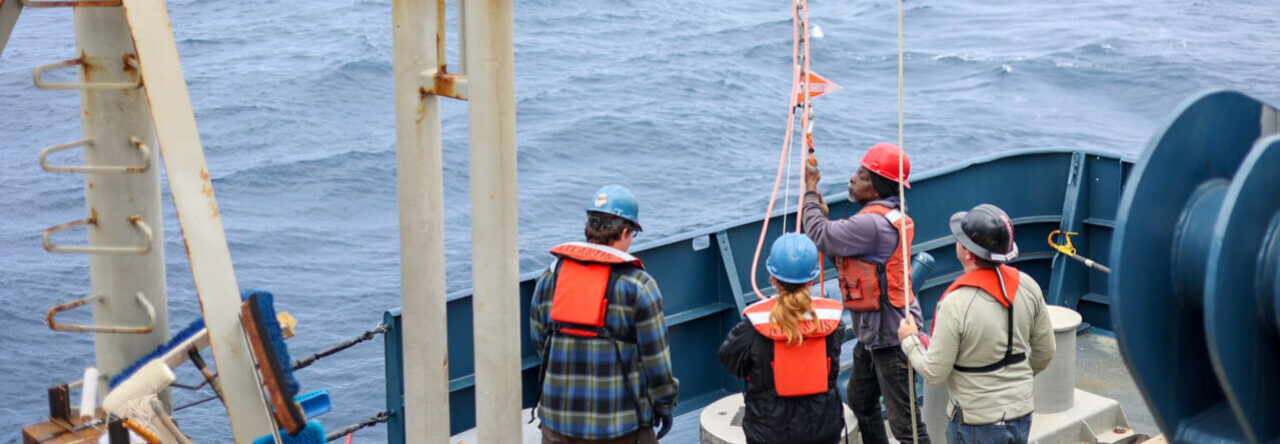
–Underway from San Diego—
During the second week of this expedition to Majuro (April 24-30) we were able to successfully reterminate the CTD sea cable and through doing so solved the persistent shorting problem we had noticed during the end of the first transit week.
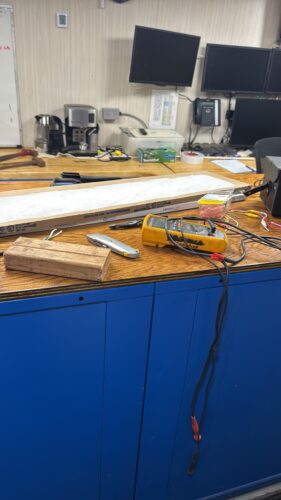
As such we immediately began testing and re-assessing the communication between the deck box and CTD, which we found to be nominal. To add to the excitement we also crossed the Tropic of Cancer a few hours after, marking our approach to the islands of Hawaii. As our next objective we began fixing and preparing the ship’s deck equipment for future use, such as attaching metal fasteners to allow our extension poles to hold boat hooks.
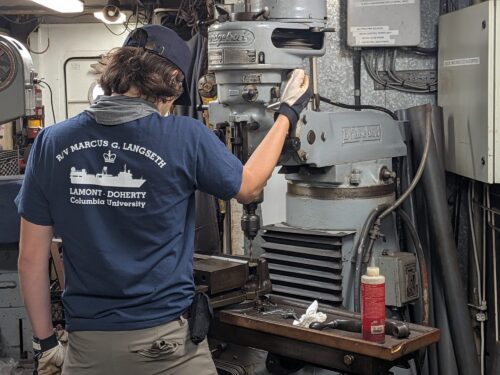
By drilling pilot holes using the ship’s mill press, we were able to bolt the fasteners and poles together at a point that would allow them to reach their maximum height. Shortly after, we began preparing for our arrival in Honolulu by further securing sensitive cargo such our CTD with a tarp and cleaning our major workspaces such as the “gun shack”, “tech shack”, main lab, wet lab, dry lab and our metal shop.
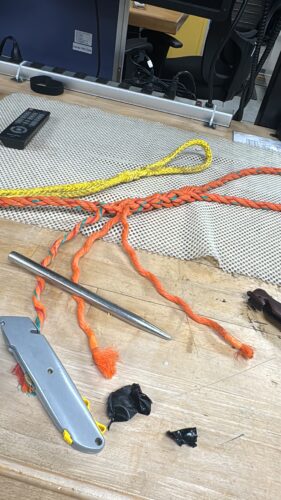
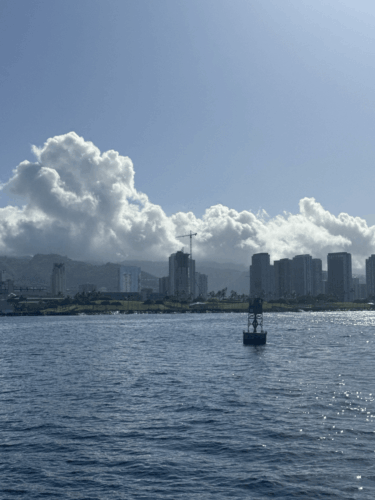
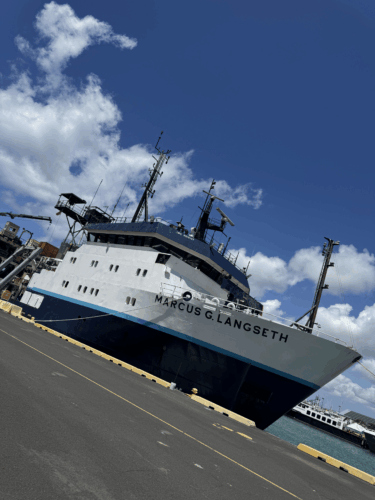
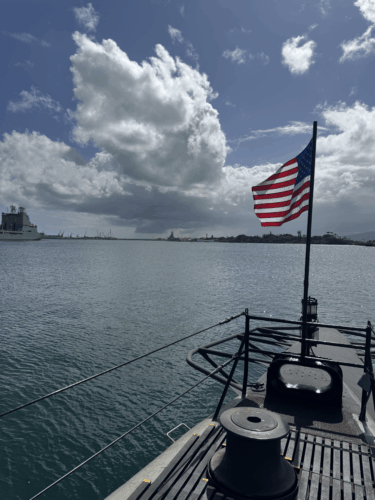
Taking advantage of the bit of downtime we had available before having to shut down our sonar systems, I had the opportunity to practice splice knots and learn how to terminate CAT5 cables. In the last few hours of our approach to Honolulu we shut down our major sonar systems and did our final set of checks before shutting off analytical systems such as the pCO2 system in port, and had the great opportunity of exploring some of the island before our departure the next day. I took the opportunity to visit sites like Pearl Harbor, Waikiki beach, and the site of Sailor Jerry’s original tattoo shop where he developed the modern americana style of sailor tattoos.
–Underway from Honolulu—
The next morning we began making our way out of port and headed out for Majuro, as our first priority, my mentor Cody Bahlau and I began talking about the objectives we would be working on during the transit to Majuro which varied from terminating new cabling to installing a new FLR camera on the OBS deck.
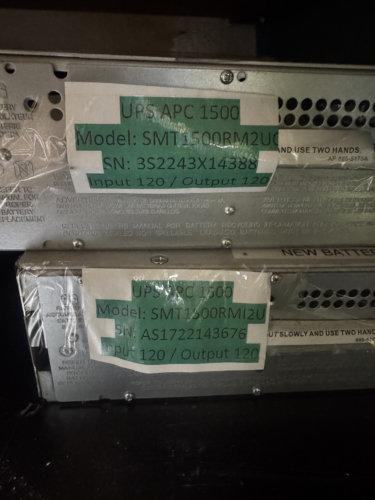
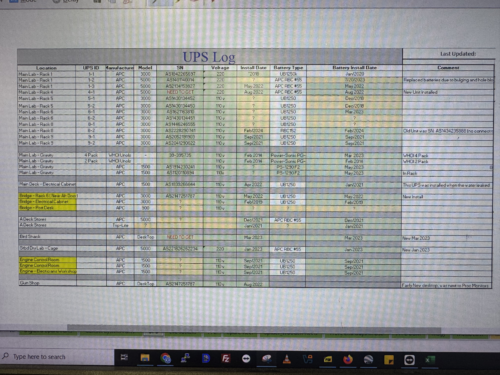
Taking advantage of our initially calm waters we decided to start by fully inventorying and organizing our APC battery supplies, we also updated our logs to identify if any batteries in use were due to be swapped from the ship’s power. Further on we launched the first SoFar buoy/sensor of the transit and had our weekly check in with the rest of the tech team to review our current goals, ongoing projects, and a review of any pending questions or issues.
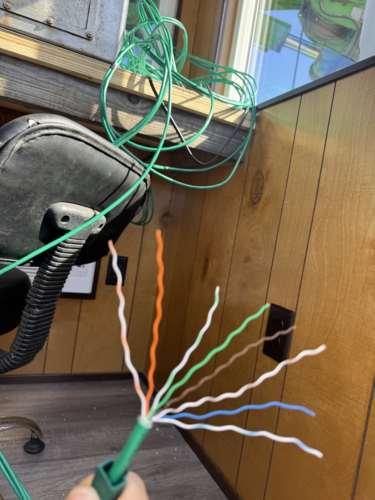
The next day we wrapped up the week by reterminating our remaining CAT5e and CAT6 cables along with setting up the working directories for interdepartmental phones that will be installed inside the portable scientific workspaces found throughout the ship.
Our work continues on the ship and weather has remained calm on our departure from Hawaii, although it has begun taking a turn for choppier waves.
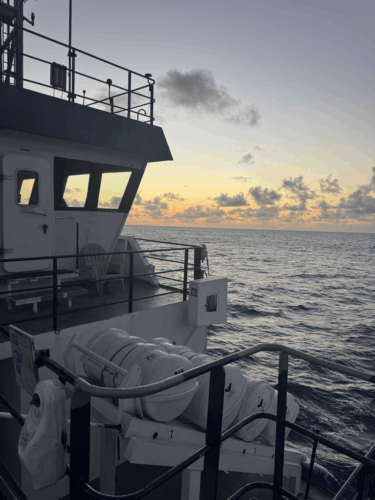
I’m excited that we continue to approach the antimeridian and will successfully cross it during the last set of days in our journey, completing the sailor’s achievement of “Domain of the Golden Dragon”. Sadly we will be crossing just 2 degrees north from the equator and won’t complete the “Golden Shellback” achievement. This internship has been a tremendous aid in sharpening my skills and further understanding a marine technician’s role aboard oceanographic research vessels, and I greatly thank everyone who has been a part of supporting and mentoring my journey!
Fair Winds and Following Seas,
-Conrado A.B.