
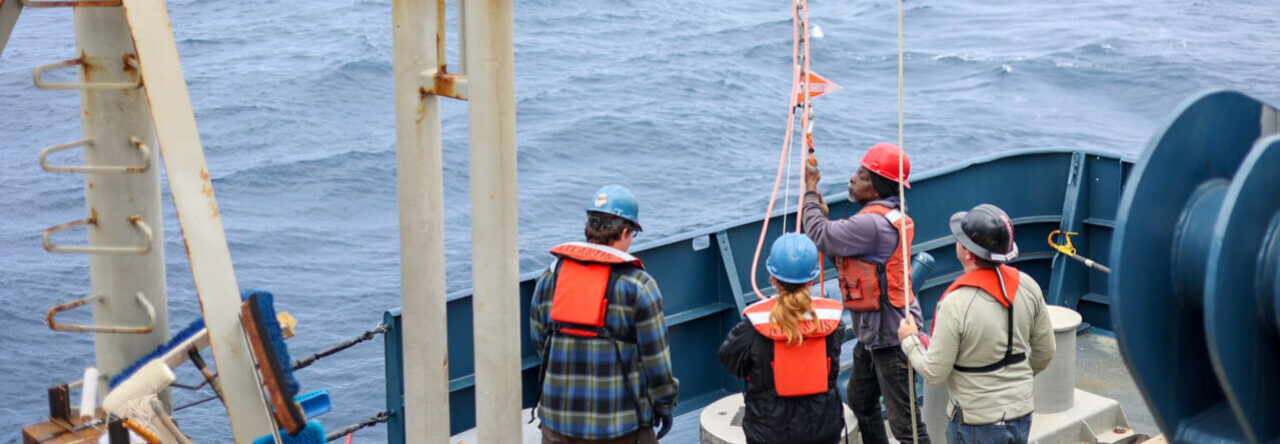
The dynamic fashion of the marine environment makes the idea of placing something like a grid (or a buoy) in a spot and expecting it to be there the next day, let alone a year later, a special task. The buoy, or what’s left of it in the photo, is just one of the issues we encountered that caused our route and plan to be adjusted. We had set this buoy and did the obligatory checks to ensure it was functioning properly before moving on to out next destination, just to be recalled to it within a day; we had lost all transmissions. In route to another maintenance recovery, we were informed just about a day before scheduled arrival that the buoy had moved 12nmi before losing contact; we didn’t find that one. Add to the fluid nature of the ocean, the corrosive environment and punishing ultra-violence of the sun, it’s little wonder that buoys have been such a reliable source for data at all. For instance, we’ve had to cut the mooring line twice now as the release mechanism did not respond properly to the release code, yet we recovered the buoys and most of the moorings. We cannot say with any certainty why the mechanisms did not release as average depth for these two devices hover around 3500m. The ocean is a world filled with hazards and unknowns. In spite of all these variables and possible derailments, the science team, through triangulation, determined that the last two buoys were located within 3m and 1m respectively of their designated stations, and we have managed to stay on schedule, pretty impressive. I believe these accomplishments speak volumes about the entire team’s ability to communicate, prioritize and function as a unit to fulfill our best laid plan.