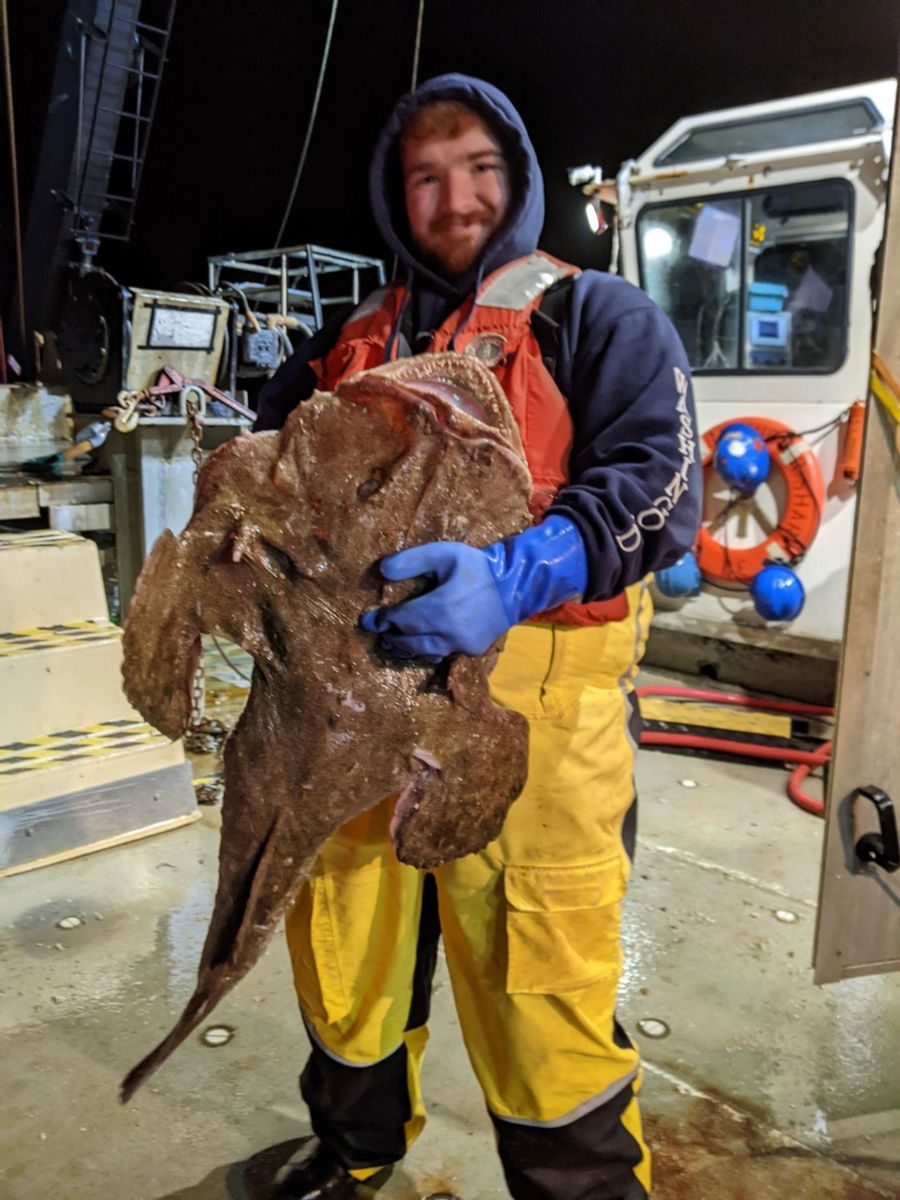
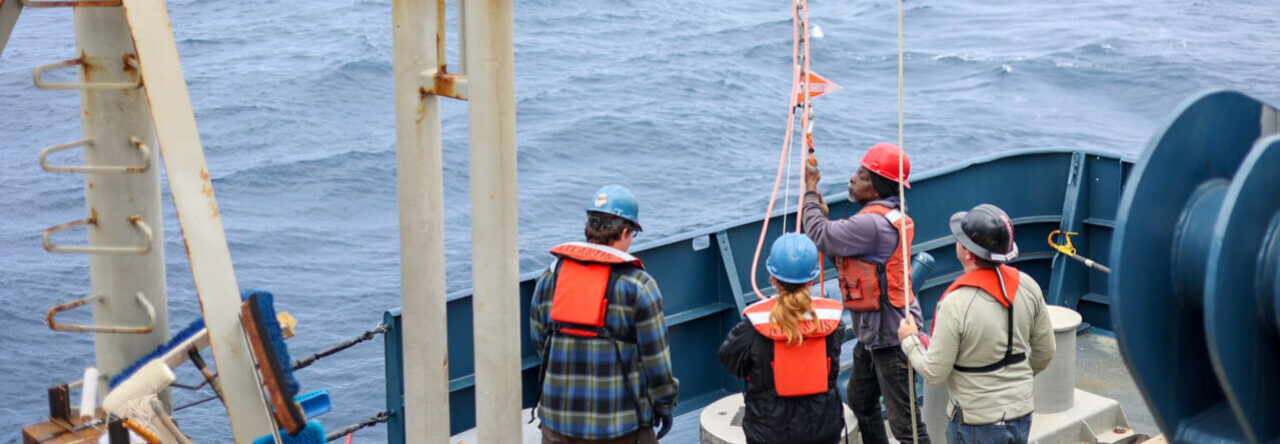
This week we finished up leg 2 in its entirety both in dredging and habcamming. We started by briefly switching from dredging to habcamming in order to take pictures of the ocean floor and determine scallop numbers from that as well. I assisted in annotating some of the obtained pictures, many of which this time included seeds which are basically baby scallops that require special markings different from regular scallops. This continued for a few days and then we got right back to dredging. The loads often varied between what made up the majority of the catch sometimes it was sand dollars and other times it was groups of barnacles or shell fragments. The sizes also varied, sometimes it was a very small load that only took about five minutes to massive loads that could take up to thirty minutes and needed help getting all of the catch out of the bag. In between these different dredges, we would take a device called a CTD which we would prep and send down to nearly the ocean floor to measure the salinity, temperature, oxygen level, and fluorescent level along the water column occasionally taking water samples from the bottom. I was typically in charge of setting up the winch camera and watching the data, communicating with the winch operators when it was close to the bottom and when to bring the CTD back to the surface. I also sometimes helped wash it down with fresh water to keep salt from building up on the CTD. We continued this schedule,(finding many interesting species like the biggest monkfish I had ever seen), until around Saturday where we once again docked at Woods Hole to bring on the last round of supplies and replacement scientists for the third and final leg of the survey. I have been very much enjoying this voyage and I have been learning many practical skills such as how to transfer data and identify many of the native species. I hope to learn even more on the final leg.