Author: Daniel Brunet

Week 4 R/V Sharp

This week started the last leg of the survey as we headed out of Woods Hole and back out to sea. We started with habcamming briefly reverting back to a 12 on 12 off schedule to better assist the science team with the habcam and with annotating the pictures from the habcam. While it was mostly more of the same with the species seen through the habcam we did see plenty of younger scallops, more than were in leg one I believe. After a few days of habcam we went right into dredging once more in which we managed around 5 dredges per shift, though these dredges were smaller than dredges on the previous leg. Near the end of the dredging, the CTD winch stopped being able to rewind itself in the middle of a cast so the crew was forced to pull it back by hand, and we stopped doing CTDs after that as it wouldn’t have worked as well without the automatic rewinder. Dredging itself, minus the increase in loads done and the decrease in what was being brought up, was more of the same with the exception that halfway through dredging the net had to be switched out and replaced with a newer net as the previous one had some damaged links and was no longer completely safe to be using. It also had to be set up with a rock chain on it to prevent very large rocks from being brought up to the surface, rocks were brought up but nothing that couldn’t be brought to the side and thrown back into the sea. Other than those instances the final leg went by as usual dredging and collecting any scallops that came up with it until it was over. We took the scientists back to Woods Hole where they disembarked and took both the habcam and the dredging nets as well as several other items from the ship that they used over the course of the cruise. It was then an uneventful cruise back to Delaware where we took apart the rest of the machines and facilities used during the survey and stayed on the ship able to relax until the next day when the other intern and I would fly back. I really enjoyed this survey and I would be happy to do it again if I ever got the chance. I learned a lot of practical skills involved in working on a boat and I had a good time overall.

Week 3 R/V Sharp

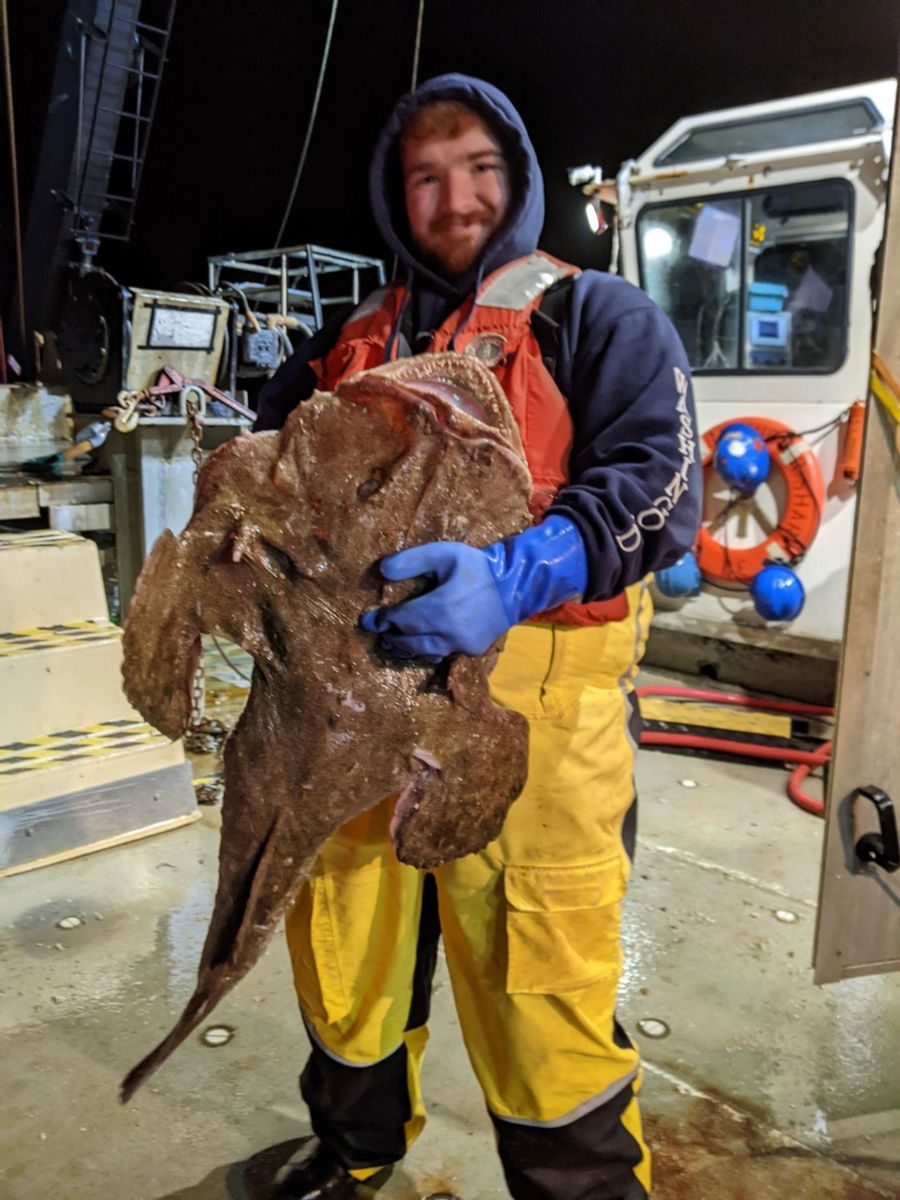
This week we finished up leg 2 in its entirety both in dredging and habcamming. We started by briefly switching from dredging to habcamming in order to take pictures of the ocean floor and determine scallop numbers from that as well. I assisted in annotating some of the obtained pictures, many of which this time included seeds which are basically baby scallops that require special markings different from regular scallops. This continued for a few days and then we got right back to dredging. The loads often varied between what made up the majority of the catch sometimes it was sand dollars and other times it was groups of barnacles or shell fragments. The sizes also varied, sometimes it was a very small load that only took about five minutes to massive loads that could take up to thirty minutes and needed help getting all of the catch out of the bag. In between these different dredges, we would take a device called a CTD which we would prep and send down to nearly the ocean floor to measure the salinity, temperature, oxygen level, and fluorescent level along the water column occasionally taking water samples from the bottom. I was typically in charge of setting up the winch camera and watching the data, communicating with the winch operators when it was close to the bottom and when to bring the CTD back to the surface. I also sometimes helped wash it down with fresh water to keep salt from building up on the CTD. We continued this schedule,(finding many interesting species like the biggest monkfish I had ever seen), until around Saturday where we once again docked at Woods Hole to bring on the last round of supplies and replacement scientists for the third and final leg of the survey. I have been very much enjoying this voyage and I have been learning many practical skills such as how to transfer data and identify many of the native species. I hope to learn even more on the final leg.


Week 2 R/V Sharp

This week we finished up the first leg of the voyage doing the last bit of habcam piloting and annotating after briefly bringing it back on deck for maintenance and putting it back in the ocean. We briefly docked in Woods Hole, Massachusets to restock on supplies and switch out the leg one crew with the leg two crew. Starting on leg two we switch from a 12 on 12 off schedule to a six on 6 off schedule to better accommodate the dredging schedule. We start dredging this leg which involves sending a large net behind the ship which then collects different creatures which are then brought up and sorted depending on what they are. The main species we are after is scallops but we also pull up skates, crabs, hermit crabs, lobsters, and many other different types of fish species like halibut or sea robins. It’s very exciting seeing all of the different species that I previously only saw in habcam pictures and I am excited to possibly see more species.


Week 1 R/V Sharp

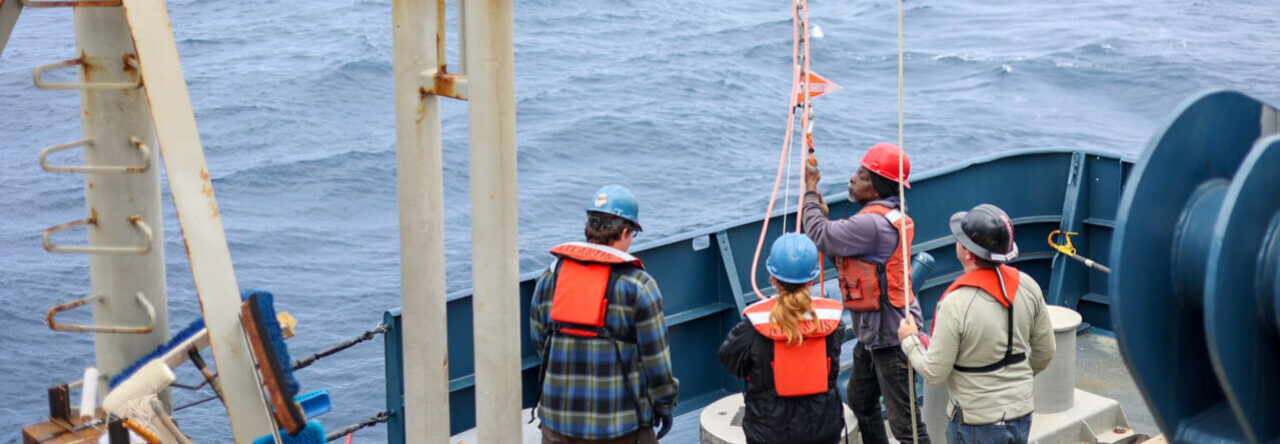
This week the other MATE intern and I were introduced to our mentor for the voyage and given a tour of the R/V Sharp and its different functions as well as how data is collected and stored within the ship’s computer system. Our job is to work with a NOAA fisheries science team and assist them with their scallop survey where ever we are needed. For the past few days, this has mainly been in the form of co-piloting or piloting the habcam directly, keeping it about 2 meters off the seafloor and taking pictures as it is dragged along, or in annotating the many pictures that come from the habcam marking any species of mention like sea robins or snake eels. and measuring the scallops we are able to find. So far this is all we have been required to do as this entire first leg will habcam only, the next leg will have both habcam and dredging up the many different species we have seen and marked with our annotations. I am looking forward to getting to see the different species in person.


Introduction

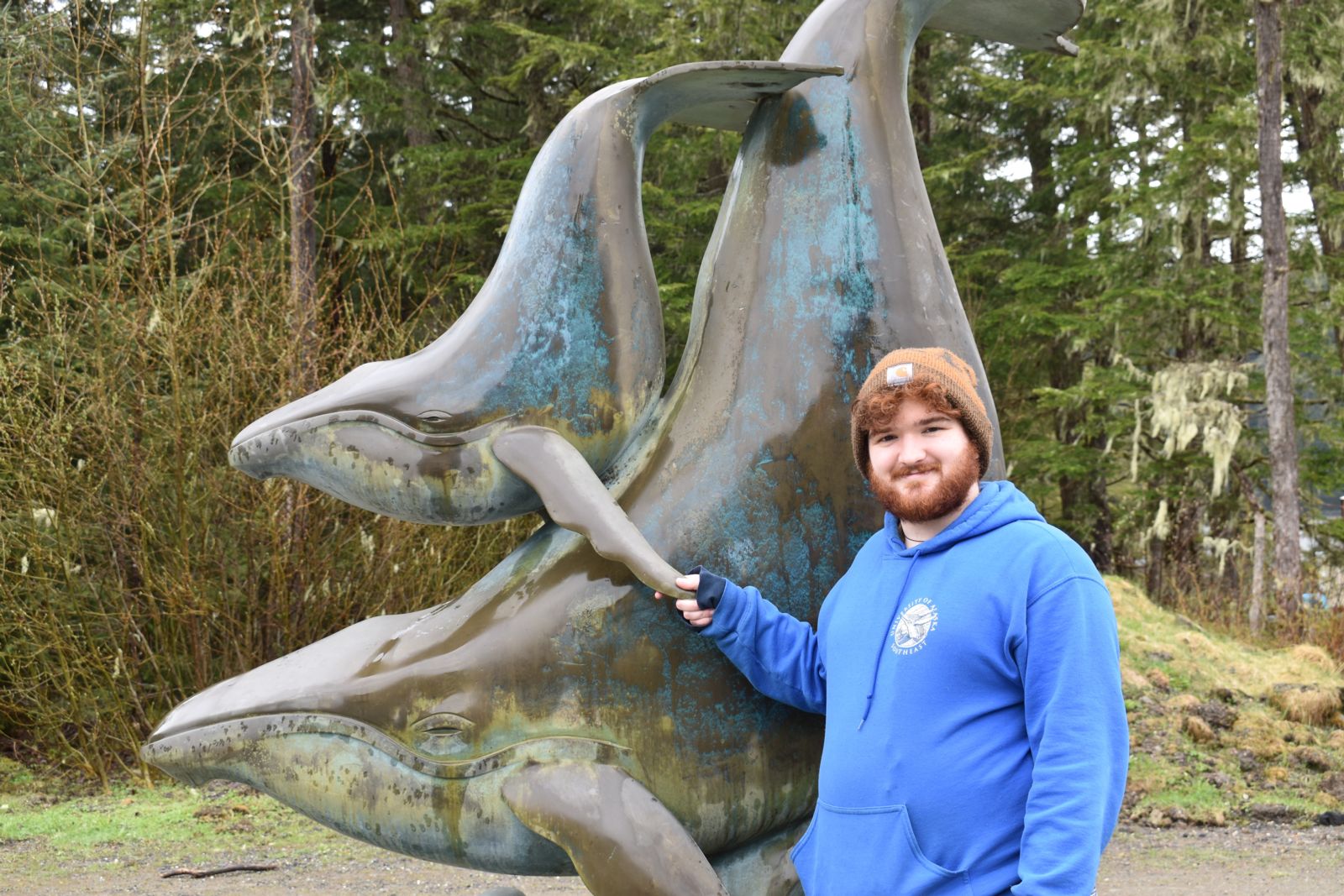
I am Danny Brunet and I am headed to Delaware to board the R/V Sharp to support an NOAA Fisheries Science Party with a Scallop survey as a Marine Tech intern. I have just finished my junior year at the University of Alaska Southeast and am pursuing a Bachelor’s in Marine Biology.

This is my first time going offshore for multiple days as my prior experience has been limited to day trips on smaller research vessels. I have had some experience with different marine technology before but I am excited to learn even more especially about the operation of the Scallop Dredge and Hab-Cam. I’m excited to learn plenty from this survey and see all the different technologies and meet the crew that I’ll be working with as well.

Powered by WordPress & Theme by Anders Norén