Category: Vessel/Laboratory Page 37 of 89

R/V Sharp week 4

Operations during leg 3 consisted of Habcam Operations and dredging along with troubleshooting down systems with the ship’s marine techs. 


From the technician side of things, Habcam operations are very low maintenance. My tech duties consisted of Habcam deployment and recovery, backing up data, and monitoring the ship’s sensors. Because my tech duties were very low maintenance I was able to assist the NOAA Fisheries science party with piloting the Habcam and image annotation. 


Dredging operations during this leg were very high tempo compared to leg 2. A full dredge typically takes about 1 – 1 ½ hours and we were completing 4-5 dredges per 6-hour shift This meant I was typically busy and on my feet which was great compared to Habcam operations which can be mundane (if everything goes correctly). During dredging operations, my job is to help secure and dump the dredge and then I shovel the contents of the dredge to the sorters from the science party. 


During my watch, I noticed the ship’s CTD computer was unresponsive. I went to reset the computer but the computer was not able to power up. I then removed the computer from the rack and opened it up and found no signs of damage in the power supply or motherboard. One of the ship’s marine techs used a pinout of the power supply along with a multimeter to test if the power supply was powering the motherboard. He found that no power was reaching the motherboard so I swapped the power supply with one from an identical spare computer and we still were not able to power up. Then we decided that the failure was either in the hard drive which would be bad because we had non-backed up data in there or it was in the motherboard. To test this I connected the CTD hard drive to the spare computer. The computer powered up and was able to read the CTD hard drive. Immediately after we restored function we made multiple copies of everything on the hard drive so if it failed we would have a backup. 


Other than a weather delay and some down computer systems operations for leg 3 went very well and we were able to conclude operations one day early. After dredging operations were finished we steamed to Woods Hole and offloaded the science party and all of their equipment including the Habcam. During demobilization, I helped with crane operations by tying and handling a tagline to help guide loads like the Habcam and dredges in the correct orientation for transport. I also helped detach the recovery ramps for the Habcam and dredge and along with the other MATE intern helped secure them to the deck using ratchet straps. After everything was secured we steamed back to the R/V Sharps homeport Lewes Delaware and we demobilized the science van and the dredge table along with some other equipment. 

I had an amazing experience aboard the R/V Sharp. I got to experience what life is like aboard a Research Vessel at sea for a month from playing cards during downtime with my scientist buddies to hectic dredging and demobilization operations. The crew from the marine tech to the ship’s engineers did a great job at answering my frequent questions and I am incredibly thankful to the NOAA and WHOI techs who allowed me to work with them during troubleshooting on the Habcam. I was able to learn a lot about everything from seamanship skills like tying knots and securing equipment to software troubleshooting and wire tracing to find lost signals and troubleshooting advanced marine equipment like the Habcam. I’m proud I was able to make a real contribution to this science mission.

Week 5: Removing Erroneous Electronic Components, Replacing A/C Units, and Fighting Ants

Following a weekend full of exploring the mangroves in a kayak looking for fish and alligators and cracking coconuts on the back deck, we have an ant infestation which we adamantly were pulling up the wood planks on the back deck to find where they were coming from. We discovered a few possible places of entry in the tonnage bulkhead that held the main doorway, that was sealed with 5200 marine adhesive. Upon pulling up the metal from the steps on the interior of the doorway, we discovered the wood was dryrotted and needed to be replaced. I appreciate the great value in how a small problem like ants can lead us down a rabbit hole that discovers a project of a potentially bigger problem such as safety. 

We are still waiting on the arrival of the engines (one of them has shipped) and therefore are continuing working on small projects around the boat, wherever we can be the most help. We got some training on using some more scanners and troubleshooting wires, tracing them throughout the ship, making sure that they were transporting information at the rate they were certified for, and how long they were. Then, we were asked to take out a box that contained all of the electriconic components for the old Dynamic Positioning (DP) system located under the bridge. The system had troubles as the bow thrusters are severely underpowered for the system and size of the boat. Therefore, the box has been sitting there unused and depowered for a long time and the F.G. Walton Smith kept getting hit with not taking it out in their NSF inspections. There is a lot that can be learned from taking things apart like this as each electrical component is attached differently and the connections have to be traced out. It is almost as methodological to remove electrical equipment like this as it is to install it, I feel like. Here is a picture of the box and me in the tight space underneath the wheelhouse control console. 

We have also started projects to to take out some of the old A/C systems left and reinstall some newer (but not marine-grade) A/C systems that are a little more compact and simpler. The new ones we are installing are the same ones we cleaned a couple weeks ago and will update one of the scientist berthings, the dry storage, and the wet lab units. Here is a picture of the old A/C unit removed and a selfie of me on the back deck with it about to throw it away! This was in my room and after seeing the grimy, slimy, thing uncovered I was a bit repulsed! Glad we’re changing it out!

Week 1 – Syenna Graham

Hello!

After travelling to Oregon, and preparing Sentry on the docked ship for Friday/Saturday, on Sunday we left to go explore the Axial volcano in the Juan de Fuca ridge. Here we will be gathering depth and pressure measurements to compare to measurements from a few years ago. This should teach the geophysicists more about how volcanos systems work and possibly give them a hint of when the axial volcano will explode. 

As I am writing, Sentry is in the water and we are tracking her with DVL (a device which uses the doppler effect to get our position from the boat). We are also tracking Sentry with Wifflenav which uses acoustics and shows us where Sentry is in relation to the ground. Wiffle nav is the most reliable way to track Sentry in the water. I am on watch while Sentry is in the water from 7pm-12.

I have also been checking logs and reporting any errors to Sentry’s software guy, reading about serial and udp communications and playing with a homemade trigger board.

-Syenna


Walton Smith Week 5: Lots of poop (human and rodent, as well as grey water) but finished off on a good note

This week was a doozy and very eventful to say the least. To sum this week up in one sentence: this week was poop, poop, poop, almost (basically) poop, and almost (basically) poop. As I put in my last blog post on Monday, we took apart the pump for the black water tank (poop). We took the diaphragm off, attached the new diaphragm to the connecting rod and placed silicone around it as per manuals instructions. Overnight the silicone dried and Tuesday morning it was time to reattach the diaphragm and get the head system back up and running. This was a tedious job because we had to ensure the diaphragm was seated properly and did not unseat as we were tightening the bolts. IN the process we also replaced 4 duck bills, 2 before and 2 after the pump. Duck bills are a check valve that are an effective way to stop reverse flow within the system. By the time we finished it was lunch and we were told we could take the rest of the day off as we were closely dealing with poop for far too long.

Wednesday morning, we had a pre-vibrations analysis test performed to measure the vibrations that are given off be the engine when we are full speed ahead. These measurements will them be compared the to the measurements taken after the new engines are installed. This is all measured to ensure the ship can maintain its structural integrity with the new engine. While underway the captain tasked Kyle and I to measure the length of the docking lines because it is not a job that can done while dockside. Later that day after arriving at the dock and tying up, we had to remove the life rafts that way they can be sent out and recertified. To finish the day, we removed ceiling tiles from the mess area to find a path to run Cat 6 wire for a new camera on the starboard side. This is where the third day of poop came into effect. Upon removing a bulkhead to take a ceiling piece off, rodent poop came down too. This delay the task a little bit because it was another mess that we had to clean up. After cleaning up the mess we stopped for the day.

Thursday we were able to run the Cat 6 wire from the tach space up into the dry lab, into the mess then through the ceiling. After this job was completed, we helped the chief engineer put a new check valve into the preexisting hot water pipes. While this job happened, we came to the conclusion that the other hot water heater is not properly working. We had to shut the water off the heater that was having a new check valve added leaving only one heater supplying water, which ended up only being lukewarm, were thinking the heating element might have short. That will end up being another job later in the future. Sone once the check valve was placed, we moved onto the next job, gaining access to the electrical outlet behind the commercial refrigerator. We wanted to be able to plug in an electrical cord to it and run that cord to the toaster that way it is off a different breaker as the microwave and coffee maker because the breaker would always be tripped. In the process of raising the pallet jack to raise the refrigerator, one of the forks caught on a piece of piping that would be used for an ice maker. So, that piece snapped off and water started gushing towards us from under the fridge. The water was quickly shut off by the engineer who managed to hurdle 2 trashcans to get down to the shutoff valve. We dewatered the area and then cut a larger hole in the wall around where the pipe was to be able to cap the existing pipe. After we finished with the pump, we brought it down to the laundry area where the grey water tank (almost poop) overfilled and came out onto the floor and drained into the bilge, creating a nasty smell that rang throughout the boat. Unfortunately, we didn’t have time left in the day to pump the grey water, so it was done the next morning, along with cleaning behind the fridge and placing it back. While pumping the grey water out, the pump got clogged. We were able to take apart the pump, remove the clog, and put it back together. I thought this was a really good learning experience as it was a simple pump to learn from. That was the end to a very chaotic work week.

For the weekend Kyle and I were dedicated to our project that started when we cracked open a coconut. After trying the meat inside and realizing that it was so much better than store bought shredded coconut, we decide to collect 7 more and crack those open as well. We saved the coconut water and puled all the meat from the shell. At this point we were already dedicated on making a coconut cream pie and it would be worth it for the 2-3 hours of work that we already did. We made the coconut milk that is used in it by adding the coconut meat to a blender with the coconut water. The pulp that was formed was pressed and the resulting liquid is coconut milk. If allowed to settle and separate, coconut water would be on the bottom and coconut cream would be on top. Once we got all the ingredients needed to make the pie, I started it and let is chill in the fridge overnight. The coconut cream pie was consumed the next day, as we spent it relaxing by the water.

The process of dewatering the gallery area. Refrigerator is to the left outside of this photo. (Photo creds. Kyle Hebert)

The first coconut that we got inspiration from after trying the meat. And yes, we used a fire axe to crack them open.

Separating the shredded coconut meat from the coconut milk. I was there with a fine strainer pressing all the liquid out. (Photo creds. Kyle Hebert)

On the left, blended coconut meat, once dried it can be put into the food processor to make it finer and is then considered coconut flour. I think coconut chocolate chip cookies are next on the list to make. On the right is the coconut milk and if you look closely the water is separating from the cream. The clearer liquid on the bottom is the coconut water.

The final result of the coconut cream pie. It came out delicious!

Last week on the Escanaba Cruise

Week 4 – End of Escanaba Cruise and back to Port (6/10-6/17)

The last week of the Gartman Cruise finished off strong!

Thursday afternoon last week the team was unable to launch JASON due to weather conditions, but by Friday (6/10), it cleared up and we were able to launch at 2pm for a 12hr dive.

Friday – Monday (6/10-6/13)

Each day JASON was successfully launched, completed dive missions, and recovered. The samples obtained during this cruise met the scientific party’s objectives and the last dive was spent exploring a new area that had not yet been mapped.

During this time, no vehicle issues or malfunctions occurred so turn-over time from recovery to relaunch was minimal.

Monday (6/13), after recovering JASON at 9am, the ship began its voyage back to port and JASON crew member’s shifts adjusted back to 8am-5pm.

The afternoon was spent demobilizing JASON and prepping it for the next cruise.

Some tasks included:

  • Draining the vehicle’s oils and prepping it for the next cruise.
  • The front “basket” or “porch” area that held the sampling equipment was dismantled and cleaned.
  • Washed down the vehicle to clean the saltwater off
  • Tested hydraulic swingarm lines and found blockage issues, so then removed faulty lines.
  • Secured vehicle for transit

Tuesday (6/14)

Today the demobilization/preparation continued with:

  • Removing and cleaning all bio-boxes, side-arm boxes, and crates.
  • Began cleaning the winch area (de-greasing everything) to prepare for land crew members to replace the wind-level motor
  • Tested primary and secondary auxiliary lines, light cables and drained the boxes.
  • Replaced cable fluids and bled air from lines.

At 3pm, the ship arrived in Newport and the crew were able to have the rest of the afternoon off to pick up rental cars, clean their bunks, and do laundry.

At 7pm, all the crew members (JASON, SENTRY, Science Party, Thompson Crew) met in town to celebrate together. We found an outdoor venue (covid protocols) and spent the evening reflecting on the trip.

Wednesday (6/15)

Demobilization/Prep continued with tasks such as:

  • Removing and replacing the swingarm motors. (The swingarms are located on the starboard and port side of JASON) They house the bio-boxes (sampling boxes) and when triggered, the swing the boxes from underneath JASON to the front section, where the arm manipulators can open them, insert samples, and close them back up to preserve whatever was obtained. Then you trigger the swingarm to rotate back into its “home” position in JASON’s belly.
  • Since the oil lines leading to the swingarms were found to have slight blockage, we replaced the lines and had to reroute, label, and secure them.
  • Removed the grated fencing from the back of the winch system so the wind-level motor replacement could begin.
  • Terminated JASON’s tether cable
  • Began cleaning, organizing, and preparing specific parts/equipment for shipping back to WHOI’s office in Massachusetts.

This evening the JASON crew met at the top of Tsunami Hill and had an end-of-cruise barbeque. The team leads picked up a small grill and loads of food! For the last time this trip, the team worked together, and each person took a role in either preparing, cooking, organizing, overseeing, or taste-testing the buffet-style dinner. It was bittersweet to share stories and a lot of laughs with each other!

 Thursday (6/16)

This morning the crew members who are departing spent the morning packing their belongings, cleaning their berths and workspaces, and wrapping up loose ends.

The people who continue onto the next mission (myself included) prepare the hydro lab (JASON’s main work area) for the new crew members. The previous crew is scheduled to depart at noon while the new team arrives shortly after.

The boat’s crane system is being used to transport equipment on/off the ship and the winch wind-level motor is also being replaced, so crew are remaining inside to keep the deck clear unless instructed otherwise.

This first cruise I was able to accumulate:

  • 20 days at sea
  • Mobilization Days: 3
  • Demobilization Days: 3
  • Co-Piloting JASON (engineering chair): 57hrs
  • Piloting JASON: 1hr

Tip of the week: Cutters/snips and a knife

  • Seems like we are always applying and removing zip ties, cables, or ropes so I have found to always have a decent pair of cutters on you! As soon as you think you are done and put them away, you will find something else that needs to be removed. Specifically on this cruise, there was a brand-new pair of diagonal cutters, and everyone wanted them. It is quite satisfying to be the one who obtained them for the day, and the ease of snipping away zip ties without struggle was coveted by all.
  • Having a good knife is especially handy for this line of work! When you have to secure and remove lines non-stop, having one that clips to your side is more convenient and saves a lot of time!

Week 4: Making connections to the Network and Plumbing Projects

I am really enjoying the work environment and crew onboard the F.G. Walton Smith, it is very collaborative as we brainstorm solutions on how best to do projects or how to fix problems that arise. Everyone trusts, respects, and has each other’s backs while also joking around and having laughs all day. It’s the little things. Over the weekend, we went kayaking out to an old wooden shipwreck ~2nm offshore, where we anchored up and went snorkelling, it was super fun! 

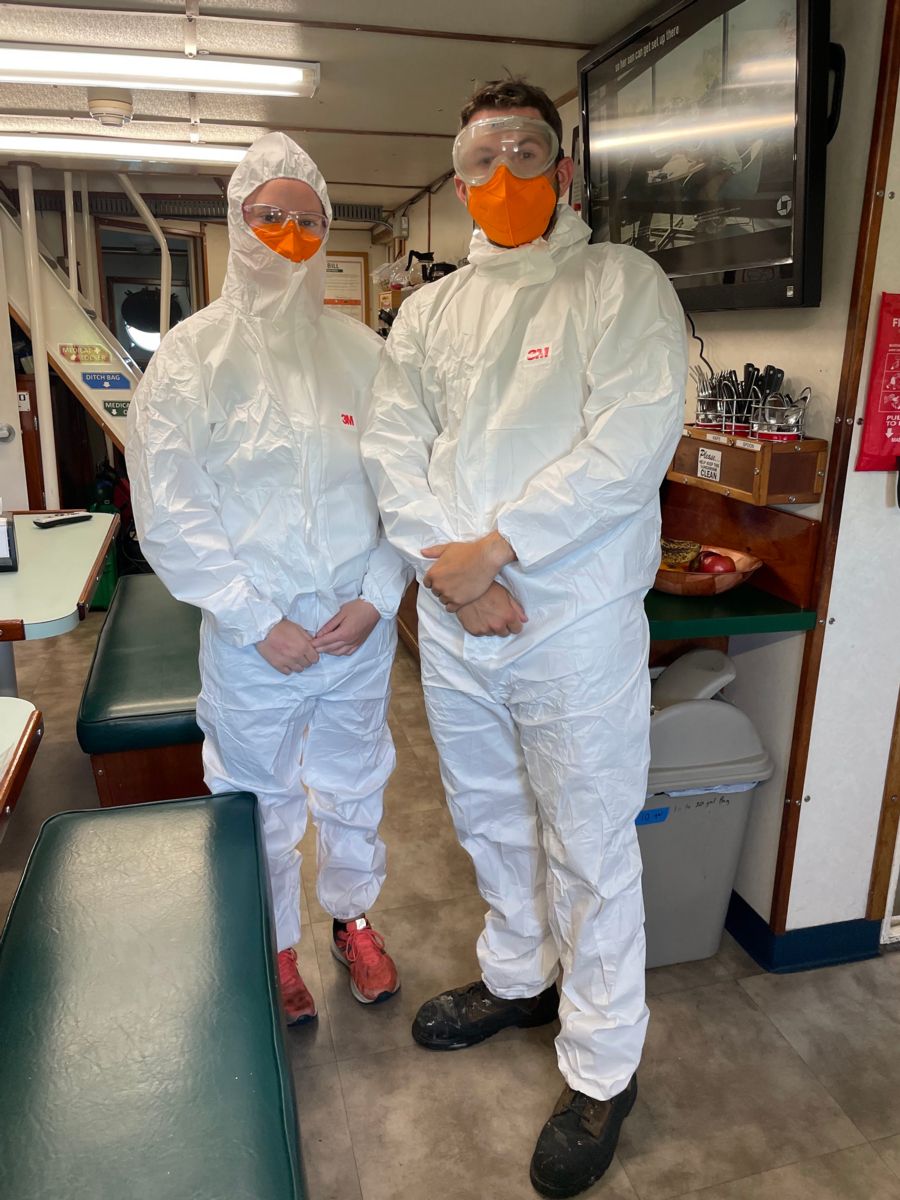
On Monday, Alesha and I attacked the Head Vacuum Pump that created suction for the head system and fed into the blackwater tank. It was a dirty job, nonetheless we suited up and took the pump apart, cleaned the duckbill valves, and replaced the torn rubber gasket that created the suction for the pump. This is a picture of us suited up in Tyvex suits, goggles, and gloves:

Tuesday morning, we finished putting the vaccuum pump back together, after the silicon had dried on the rubber seal and pump shaft. In the afternoon, we continued our project with the Marine Tech on running Cat 6 wire from the Marine Tech Lab (where the terminal port is to connect to the switch, which then can be connected to Campus Safety’s server). Eventually, we will set up two more exterior cameras that will look down the port and starboard sides. We will use our newly acquired skills to make RJ45 connections to make a terminal connection in the overhead so that we can run an exterior grade wire out of the main superstructure to an overhang on both bridgewings. The picture below are the common tools that a Marine Tech may use for testing, creating, and removing connections through wire. This includes a multimeter to test voltages, amperages, resistance, and continuities when troubleshooting electrical issues, a scanner that can determine length of wire, connections between pins, wire cutters, and crimpers. 

On Wednesday, we started up the engines at 0800 and got underway around 0930 for a quick jog down through Stiltsville as a Vibration Technical Expert ran a vibration analysis on the hull of the ship. They are testing the ship before and after the engine swap in order to make sure the hull doesn’t lose any integrity from the vibrations of the engines. We made it back around 1100, just in time for lunch. Around 1230 we helped out with some crane operations to get the two life rafts off of the O-1 Deck to send off to get recertified and checked out by the manufacturer. We continued removing bulkheads to find a pathway for our wires in the afternoon. 

On Thursday, we got our wiring figured out, had to make a few cuts in the 2x4s in the overhead and fix some of the wooden bracings in the bulkheads. We then worked with the Chief Engineer to fix the broken check valve in the hot water system. After fixing the hot water system, we attempted to move the commercial sized refrigerator to do a favor for the cook and plug in a cord leading to the toaster. As we started pallet jacking it up, we accidentally snapped an old pipe that was from an older ice-box system, and water rushed out flooding part of the kitchen. We quickly shut off the potable water (part of the system we had just been working on with the hot water heaters) and went to work dewatering with a recipriocating pump. We ended up cutting a hole in the wall to put a permanent plug on the leftover piping. 

It has been a busy but highly productive week and it is rewarding to check some projects off the list and to work with this stellar crew. I learn a lot everyday and enjoy the people I am working with. 

Week 4 R/V Sharp

This week started the last leg of the survey as we headed out of Woods Hole and back out to sea. We started with habcamming briefly reverting back to a 12 on 12 off schedule to better assist the science team with the habcam and with annotating the pictures from the habcam. While it was mostly more of the same with the species seen through the habcam we did see plenty of younger scallops, more than were in leg one I believe. After a few days of habcam we went right into dredging once more in which we managed around 5 dredges per shift, though these dredges were smaller than dredges on the previous leg. Near the end of the dredging, the CTD winch stopped being able to rewind itself in the middle of a cast so the crew was forced to pull it back by hand, and we stopped doing CTDs after that as it wouldn’t have worked as well without the automatic rewinder. Dredging itself, minus the increase in loads done and the decrease in what was being brought up, was more of the same with the exception that halfway through dredging the net had to be switched out and replaced with a newer net as the previous one had some damaged links and was no longer completely safe to be using. It also had to be set up with a rock chain on it to prevent very large rocks from being brought up to the surface, rocks were brought up but nothing that couldn’t be brought to the side and thrown back into the sea. Other than those instances the final leg went by as usual dredging and collecting any scallops that came up with it until it was over. We took the scientists back to Woods Hole where they disembarked and took both the habcam and the dredging nets as well as several other items from the ship that they used over the course of the cruise. It was then an uneventful cruise back to Delaware where we took apart the rest of the machines and facilities used during the survey and stayed on the ship able to relax until the next day when the other intern and I would fly back. I really enjoyed this survey and I would be happy to do it again if I ever got the chance. I learned a lot of practical skills involved in working on a boat and I had a good time overall.

Introduction – Syenna Graham

Hey guys!

My name is Syenna and I am a junior in ocean engineering and computer science at Virginia Tech.

Ocean exploration is my dream job after reading 20,000 Leagues and then proceeding to obsess over deep sea fish and submarines since. 

Something rememberable about me for you all:

  • I drag race submarines 
  • I have a tortoise named thortoise

Looking forward to having you guys read along on my ocean robotics journey this summer.

Walton Smith Week 4: Completing many jobs for the Marine Tech, Chief Engineer, and Bos’n

This week has been very unique to say the least. We started by finding out that one of the crew members aboard had contracted the COVID-19 virus. They were put into isolation onboard and there was limited crew working each day.

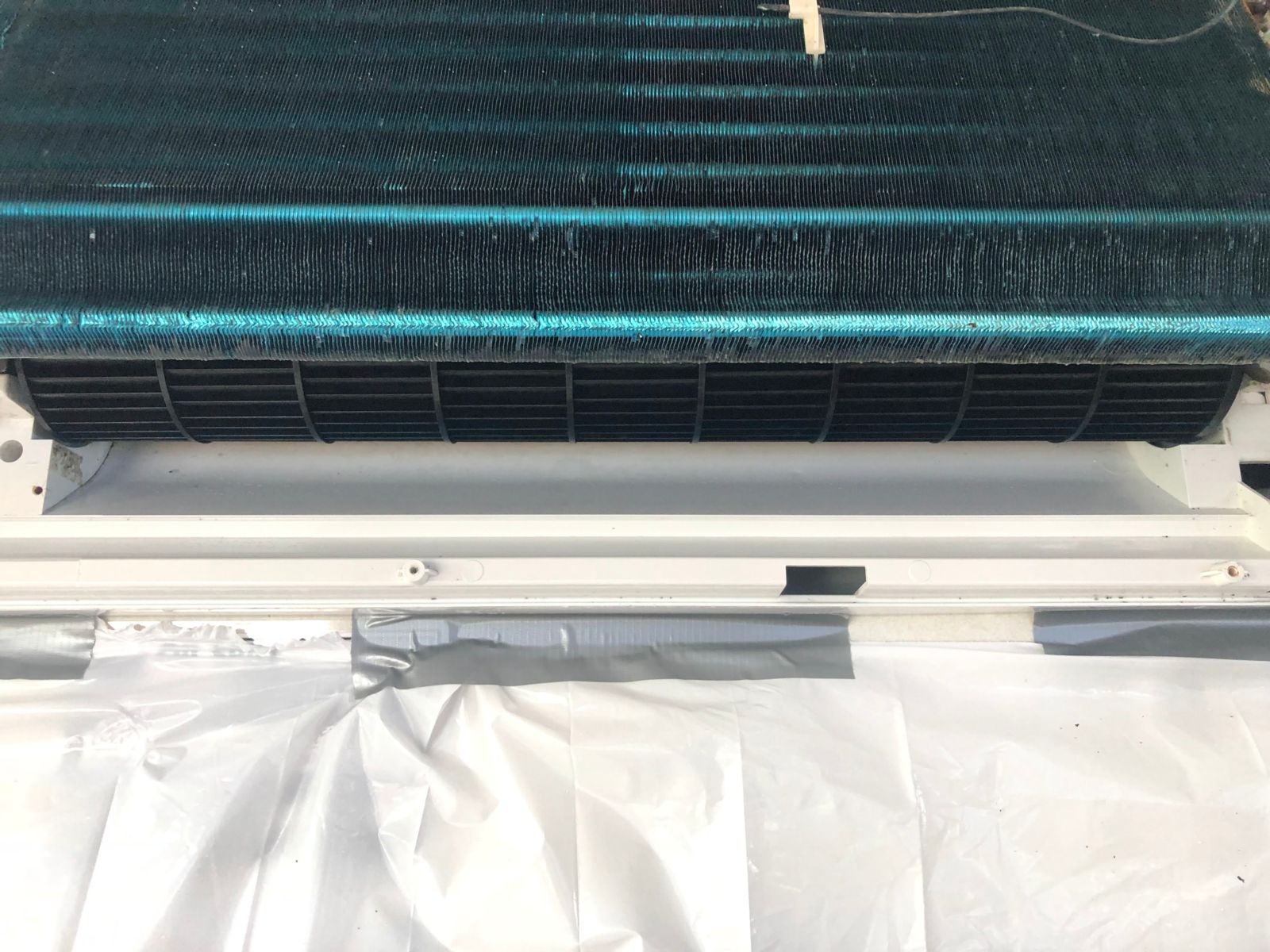
Over the week, Kyle and I cleaned all the AC units onboard, with a biodegradable all-purpose cleaner, to remove any mold growing within the turbines. This took a few hours to do each as we had to take off the case, filters, and condensate drain to be able to access the turbines. All of that was cleaned along with the turbine before the AC unit was put back together and ran again. This was a nice project to do as it was very repetitive for each AC and did not require any assistance from any of the crew. I was just a small project for us interns. Another job we did was cleaning out the back of the golfcart. There was junk in the back to throw away as well as tools that were organized and put away. The back was then washed along with the rubber mat too.

At one point, the Marine Operations Manager passed along a video about a future cruise (October/November ’22) about deploying moorings. This was a very interesting video to watch. These moorings were to be set along a transect from Jupiter, FL to the Bahamas to record current data about the Gulf Stream. This data would show how the currents change over time and between stations. The data would be collected with nine inverted echo sounders, one at each station and would be collected for five years.

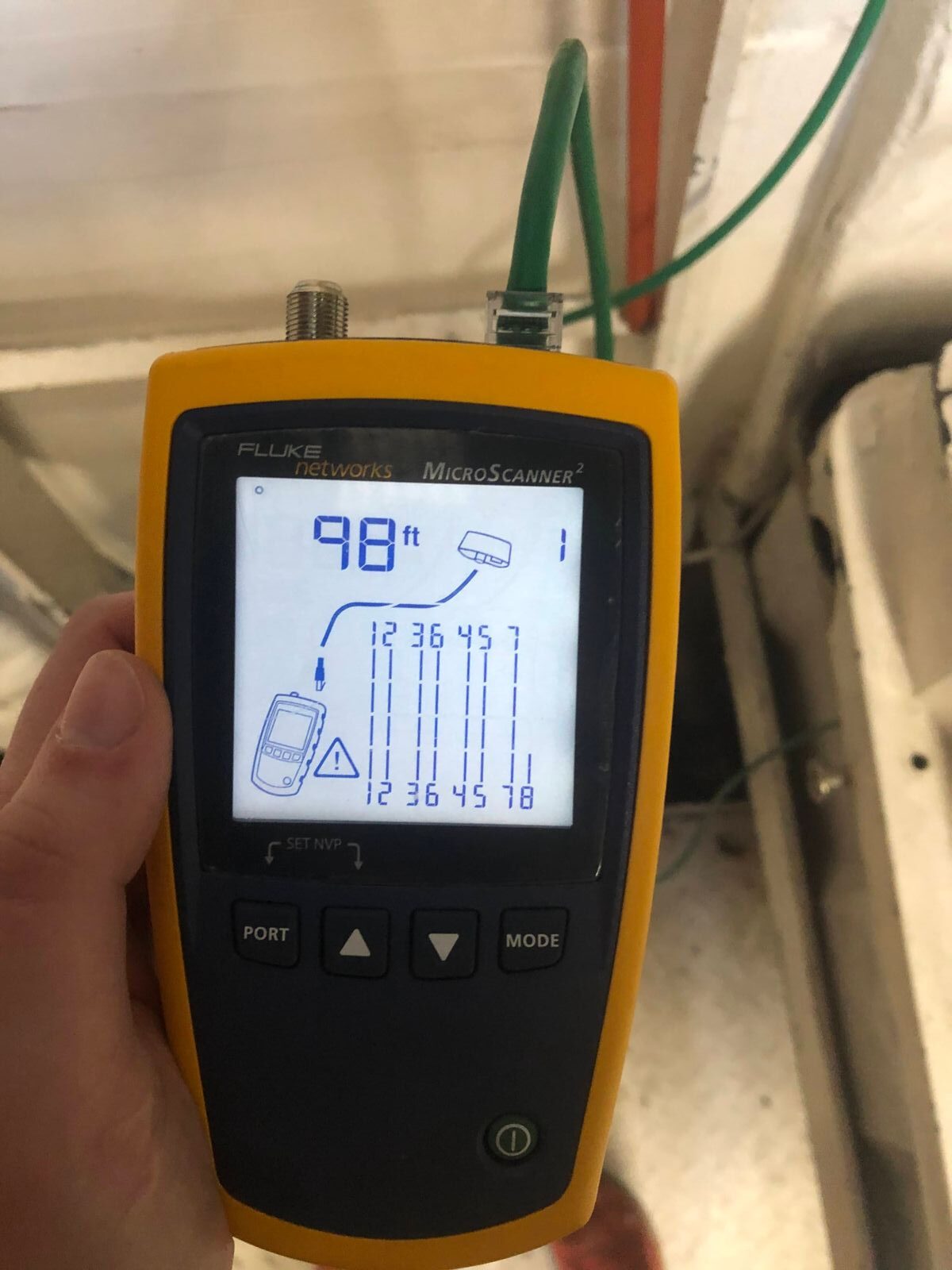
On the tech side, I watched some YouTube videos about Linux, networking basics (switch, router, gateway, firewall, and DMZ), IP addressing, and subnetting. We learned how to crimp Cat 5 wire to a RJ45 connector along with the keystone jack. After given that knowledge Kyle and I were tasked with the job to add a keystone jack to the existing wire to the camera in the bridge and then create a patch cable (length of Cat 5 cable with RJ45 connectors on each end) to connect the camera to the existing wire. Once that was completed and the camera was connected it was finally working again. We than did the same thing to the port engine room camera wiring. Once done, we connected the bridge camera, as the engine room camera is broken, to find out it still would not work. The marine tech then showed us some of the tools he has onboard to test cable to ensure that the cable is in working condition. We used a MicroScanner Cable Verifier to troubleshoot the cable and connections. This device was able to tell us if there was a short in the wire, open or crossed wire, and the length of the wire. After scanning from different connections that the wire would transmit to, it was determined that the wire was in working conditions and this was a problem on the campus IT side. After this project, our new project was to run cat 5 cable from under the port and starboard nav light platform (to add new cameras) all the way down to the tech space to connect to the switch. In a few hours we were able to run the cable through the ceiling of one of the staterooms and onto the racetrack where it then was able to follow the other wires down to the tech space.

The last job completed with the engineer was finally replacing the rubber diaphragm to the pump for the black water. Today, 6/13, Kyle and I were able to remove the diaphragm, with guidance from the engineer on the best way to remove the connecting rod and assembly. We were able to remove the diaphragm and connecting rod and clean it and then silicone it to the new diaphragm per the manual instructions.

Over the weekend, I took it easy and relaxed one day, while getting a nice sunburn. The next day Jon invited Kyle and I along on a paddle board/kayak trip to a shipwreck on a shoal off Key Biscayne where we snorkeled the wreck. It was interesting to see as there was growth all over the ship the many fish lived in and around it. The ship sunk nearly 100 years ago and is now Florida’s seventh Underwater Archaeological Preserve. After we came back from the trip, time was spent relaxing in the water when there was word of a manatee coming our way. It passe within 6-10 feet of us. It was a great experience to see.

A freshly cleaned AC unit cleaned with PurplePower

The Microscanner Cable Verifier. It is showing that the cable it is connected to is 98 feet long, there is no crossover in the wire (all the numbers match to each other and not a different number i.e., 1&3, 2&6), and there is a connection problem with prong 8 of the other end of the cable that is connected to the wiremap adapter (not shown).

Kyle and I all suited up in our Tyvek suits getting ready to fix the head system pump. It was a gross job the included my glove ripping.

3rd Week with JASON

Week 3 (6/4-6/10)

Saturday (6/4)

Today the R/V Thompson went back to shore to drop off a member of the scientific party. The trip back was approximately 14 hours, and as soon as the “drop off” was concluded, we were on our way back to the mission site.  

During this time, the JASON crew had extra time to work on miscellaneous tasks such as:

  • Rewiring the Brow pan/tilt Camera. It spontaneously will refuse to pan for one shift, but then be completely operational for the next. This camera is perched at the central top of JASON’s “face”.
  • We also replaced the connections from the motor-control pods to the thrusters. The previous dive ended when three thrusters had to be disabled due to grounding issues. JASON was able to still operate with two thrusters down, but when the third became problematic, the dive was aborted, and JASON was recovered.

Sunday – Thursday (6/5-6/9)

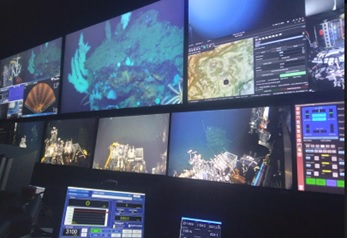
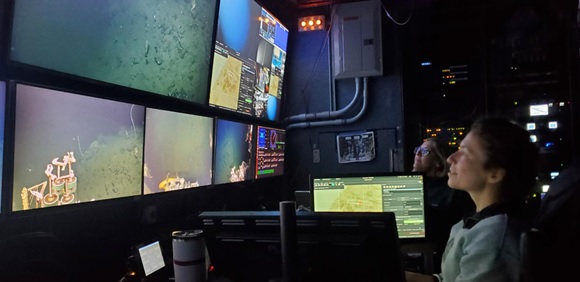
Each day JASON was launched and recovered within 20 hours. The launch and recovery procedure takes approximately 30 minutes to have JASON deck-to-water and vice versa. It is the ascent and decent of 3200 meters that usually takes around two hours. While the rise or dive is being initiated, the pilot and navigator stay in the motor-control van, while the engineering member is on Winch Watch.

This week’s dives have all been successful with no issues and all desired samples were obtained.

Thursday evening the weather was too severe for another launch, so it was postponed until

Friday(6/10) afternoon at 2pm.

This week was especially exciting not just because of the success of the dives, but I was able to pilot JASON for a portion of the dive on Tuesday (6/7). I was surprised how stable JASON was when maneuvering around the area. A big difference from the smaller observation ROVs that I have flown in the past. Though it was a shorter dive, it was one of the most exciting moments I have ever experienced!

What extra time I had this week was spent learning different hydraulic fittings. I was even quizzed on them later in the week.

We only have a few days left on this cruise, so the team will try and get in as many dives as possible before we head back to port. I am lucky enough to remain on the vessel and accompany the next cruise, which will go until July 2nd.

This week’s tip: Napping & Rain Gear

On a cruise such as this with the different shift times, you will most definitely want to become accustomed to napping. Some days that may be the only sleep you get. If recovery and launch times fall in between your shift, then a few naps are what you will get. But after a couple days of this reoccurring, your shift leader will work it out to where you can take a whole 6–7-hour sleep time.

Also, if you are to venture out on a project like this, make sure you bring rain gear. Even if it is not raining, it comes in handy! When recovering JASON, you complete post-launch checks which require you to climb up into the vehicle. And you WILL get soaked! I brought a pair of water-proof bibs, so those have been quite beneficial for this endeavor.

Page 37 of 89

Powered by WordPress & Theme by Anders Norén