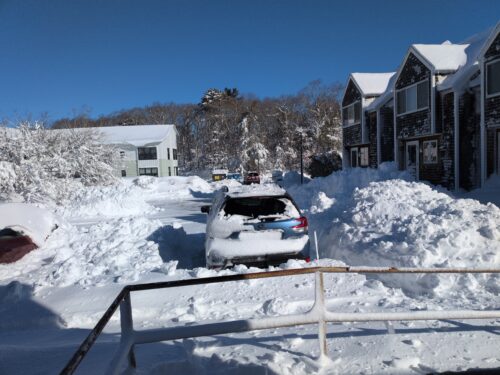
This one is short. A significant blizzard moved through the region and shut down WHOI campuses for the first four days of the week. Roads were closed to unnecessary travel and many of us were without power for days. It was certainly an interesting time, though some of us did fit in some sledding and board games.
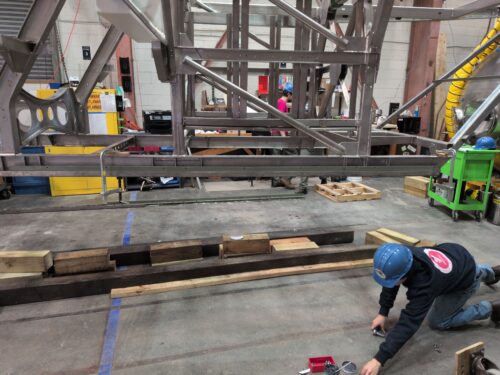
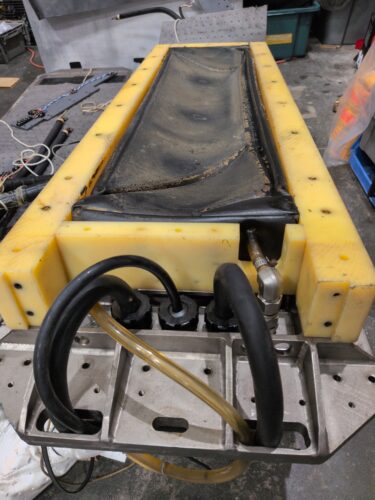
Fortunately, the crews working to clean up after the storm and restore services had things back in order by late Thursday, and work resumed Friday. I picked back up on the oxygen rack cleanup where it had been left off. And helped the mechs remount the skids to the bottom of the frame. These protect the extremely expensive titanium frame by taking the brunt of the damage caused by Alvin resting on rough surfaces like concrete, rocky seafloor, and the ship deck.
Week 15:
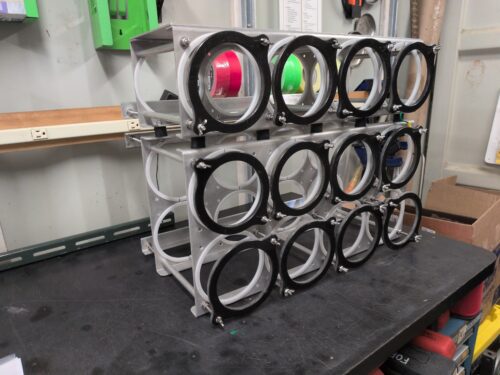
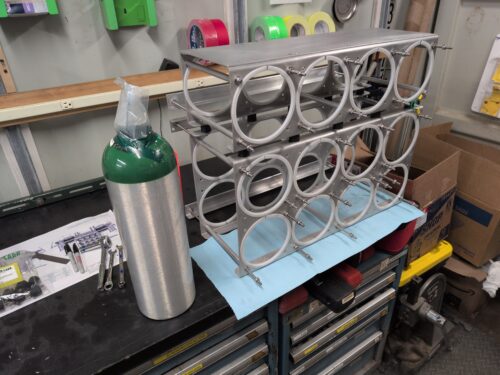
The oxygen rack cleanup wrapped up Monday, bringing that project to a clean close.
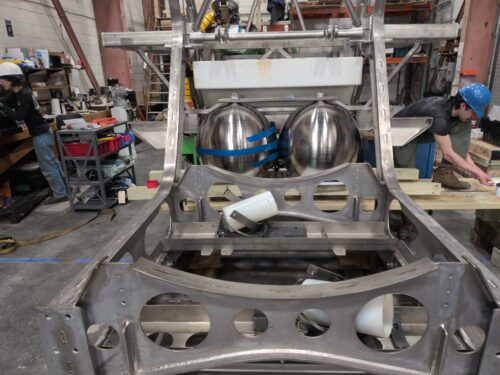
Tuesday brought continued work with the mechanical side of things. I helped the mech team reinstall the forward variable ballast spheres, the same titanium spheres that were cleaned and borescoped previously, now making their way back into the vehicle as reassembly builds momentum.
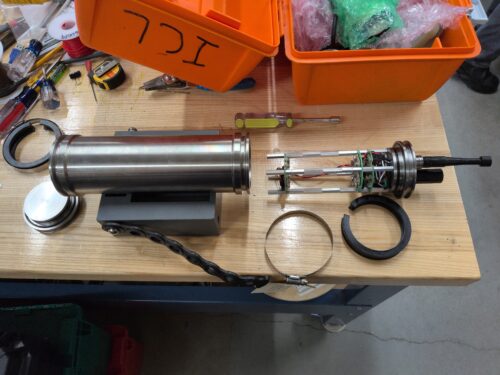
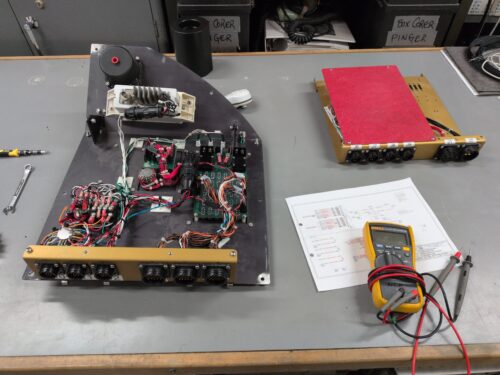
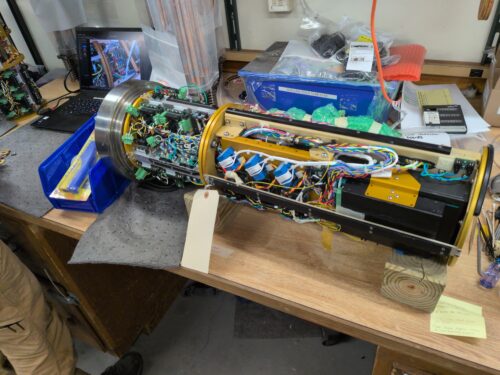
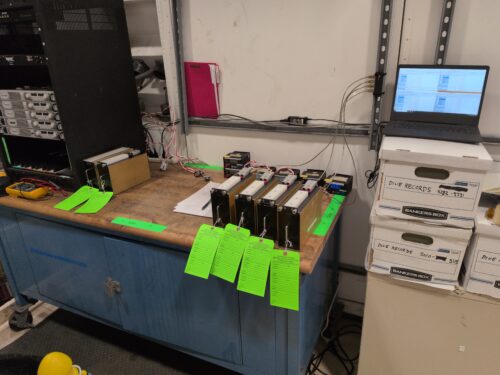
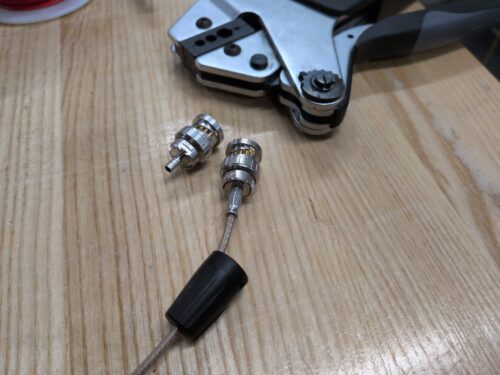
On Wednesday we were testing the Inductively Coupled Links (ICLs) after they had been loaned out for a non-Alvin cruise. ICLs use inductive coupling to create a very short range wireless communications link between temperature probes and Alvin, allowing collection of seawater temperature data without each probe being wired directly to the vehicle. This allows multiple temperature probes to be mounted on the science platform with only one required wired connection into Alvin, as the manipulator arm can move the reading device between whichever probe is needed. Testing included the usual visual inspections, probe calibration checks, and verifying the expected data over the serial link. One faulty ICL was found but repaired easily, as it was simply a failed solder joint on a wire-to-board connection.
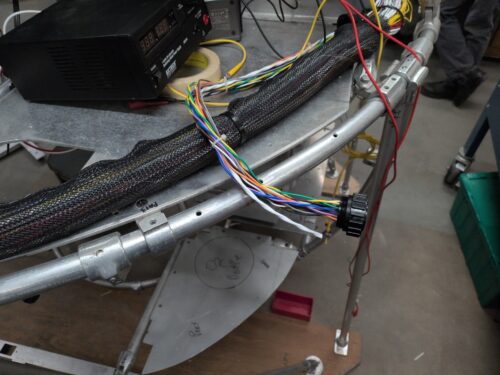
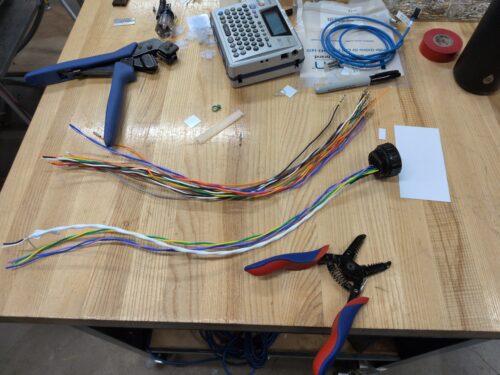
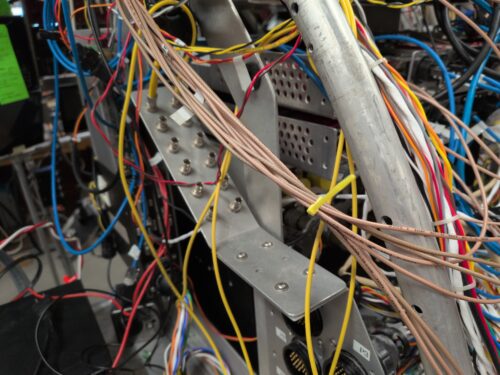
The rest of Wednesday was spent back in the birdcage, continuing the AV wiring work, along with a few control system wires, and some improvements to component labeling.
Thursday I remained in the birdcage, finally completing the wiring work. Sadly I didn’t manage to get any pictures of the finished AV wiring. You’ll just have to believe me that it looked very clean, as the birdcage began disassembly soon after for re-installation of the wiring harness and equipment back into the sphere.
The week ended a day early for me, as my Friday was spent in bed sick.
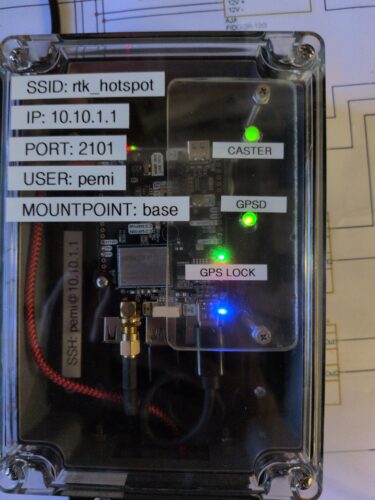
Over the weekend I finished a school project that I had been working on over many weekends this semester. A mobile GPS base station that provides RTK correction data to an aerial drone, giving it more precise positioning than the drone’s onboard GPS receiver alone. The tough part was building it to operate as a standalone system in remote regions with no cell service or internet connection. Made easier by the control of configuration provided by device using open source software and mostly open source hardware.
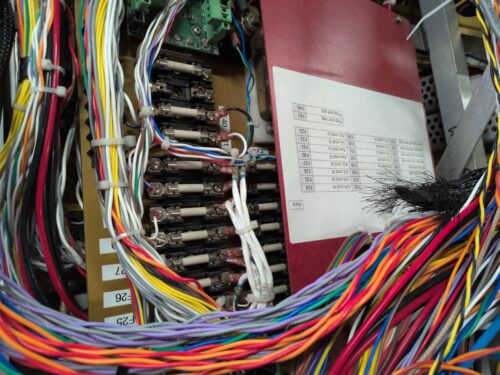
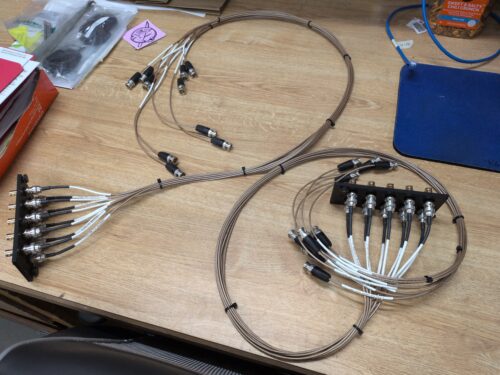
The AV wiring cleanup that began at the end of week eleven stretched into the majority of this week as well. Working through the sphere’s video system is slower going than it might sound. With so many cables going different directions, cable routing can be complex. Progress is real, just not dramatic on any given day.
Monday was spent continuing that work.
Tuesday had an important task: verifying Ben’s repair work on the in-sphere panel responsible for detecting vehicle grounds. Grounds are a persistent reality when working with a system that spends its life in and around seawater. Everything is wet, and grounds can be genuinely difficult to track down while causing a variety of issues depending on the electrical system affected. Having a reliable detection panel is important, and verifying the repair with a second set of eyes is a required step.
Wednesday brought a major turning point. The team officially kicked off reassembly with a meeting, covering the plan and sequence for bringing everything back together.
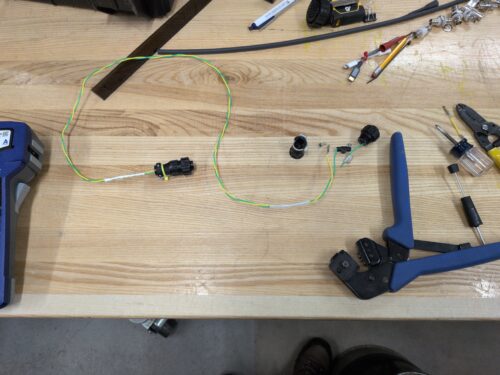
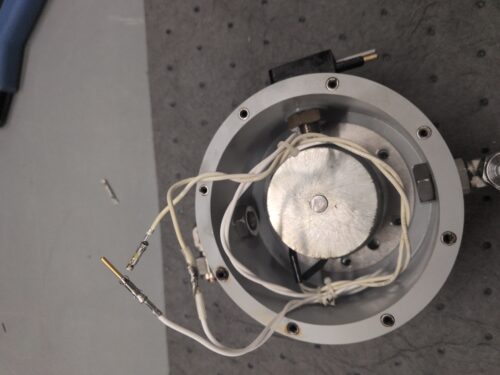
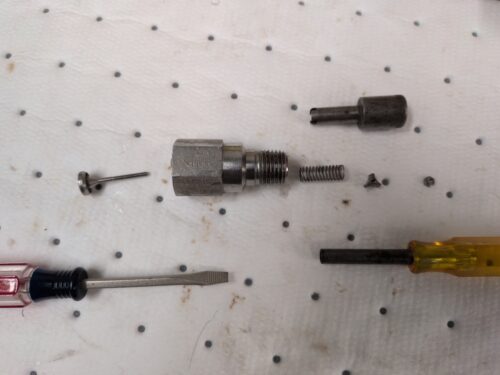
A smaller task filled Thursday, cleaning up the wiring inside the main ballast vent valve. This is an electrically controlled valve that releases the air held in the main ballast tank when Alvin is ready to begin descent. Existing solder connections were replaced with a pin connector. Solder joints get the job done, but a connector makes it much easier to isolate and test individual components.
Friday held no surprises, simply continued work on the audio visual system wiring.
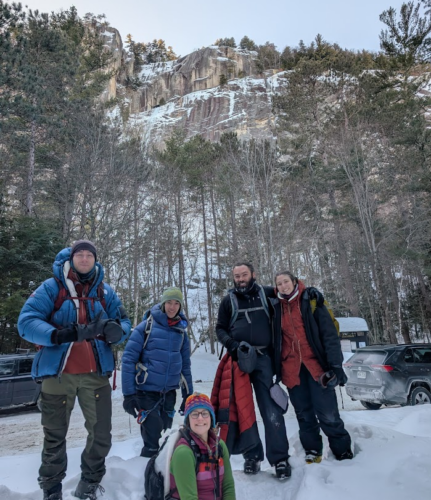
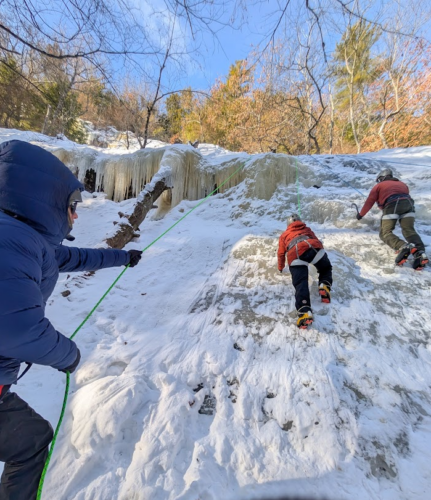
The weekend held a big adventure. Around ten members of the Alvin team headed up to New Hampshire for ice climbing and mountaineering. My first time ice climbing.
Week 13:
The AV wiring cleanup continued through Monday, Tuesday, and into part of Wednesday.
On Wednesday I also helped Scott begin reassembly of the data bottles, specifically attaching the endcaps back onto the chassis of each bottle and threading the associated wires back through the bottles. A finicky task, as the bottles are densely populated to utilize space as efficiently as possible.
Thursday was spent servicing the pressure relief valves on the compensation system. The compensation system generally does not see a pressure difference between the oil inside and the seawater outside, as the comp bladders are squeezed by the water until the pressure equalizes. If an issue causes the internal pressure to rise above the outside, the relief valves open. They are set to an unusually small threshold of 2 to 3 PSI, because anything greater will damage housings.
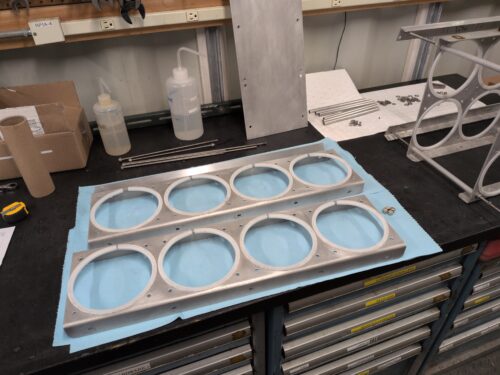
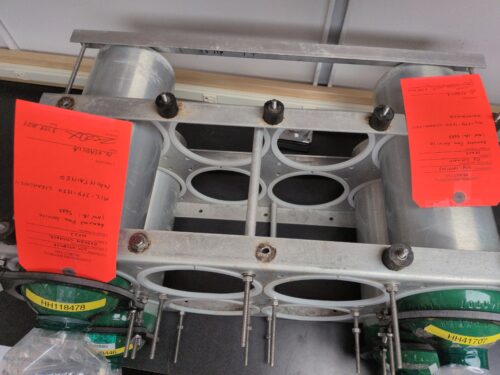
A new project came in on Friday, pulling the in sphere wiring work aside for the time being. Inside the sphere, the oxygen supply bottles are stored in a rack, and I began a disassembly and cleanup of that rack. The oxygen system is part of Alvin’s life support, and though the rack itself is not a complex component nor in direct contact with the gas supply or people, the cleaning was done with mild chemicals to ensure no contamination to the oxygen system in the future. Small repairs were made to bent components and damaged threads, and a few screws were shortened to make installing the bottles easier going forward.
The bulk of this week belonged to finishing the Pressure Balanced Oil Filled (PBOF) tube inspections that had carried over from the prior week. While inspecting, I was also cataloguing the types and quantities of replacement materials that will be required for repairs, so nothing holds up the schedule later. Methodical work, but the kind that quietly prevents bigger headaches down the road.
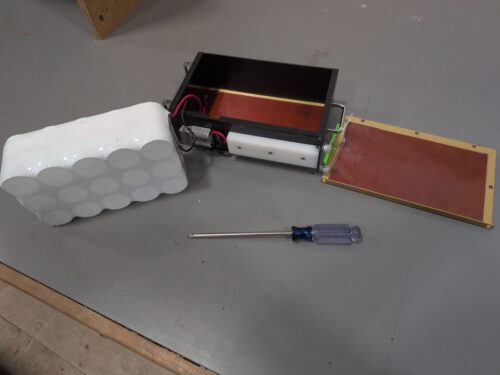
Across parts of Monday and Tuesday I joined Ben for emergency battery maintenance. These batteries supply power to vital systems inside the sphere if the main batteries were to have an issue, though not the same emergency lights from a couple weeks before. The process was similar but longer and more complicated, as these batteries are larger and more critical. We opened each battery case to inspect for damaged or leaking cells and any other issues, then each pack went through multiple rounds of charging and discharging to make sure they could hold at least the minimum required charge.
A highlight of Wednesday was attending a cosmology lunch and learn presented by retired WHOI scientist Jim Lynch. It’s one of the better perks of being at an institution like this. Occasionally the workday just opens up into something completely different. Ocean engineering one hour, the structure of the universe the next.
Thursday was dedicated to re-terminating a number of in-sphere wires. Several bundles had been made intentionally long during the last overhaul to allow flexibility during maintenance. Now that the team had confirmed that length was no longer needed, I shortened the bundles, recovering space inside an already crowded pressure vessel.
To close out the week, the PBOF inspections were officially finished. More importantly, the Alvin frame returned from the vendor on Friday. It’s a significant milestone; seeing major structural components come back signals that the overhaul is beginning its long turn toward reassembly.
Week 11:
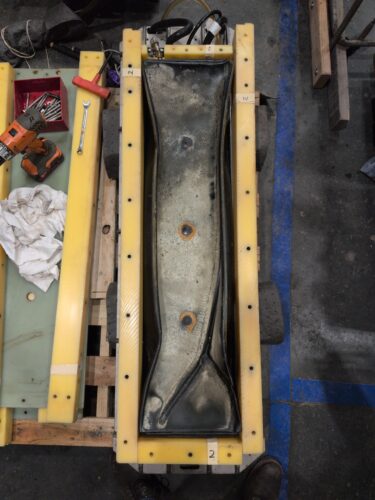
Battery bases were the centerpiece of this week. These are the large multi-faceted titanium bases for the main batteries, which also incorporate HDPE and fiberglass pieces surrounding rubber bladders that hold an oil reserve, there to compensate if any oil filling the main cavity containing the battery cells were to escape. The task was to clean everything down and inspect for faults. The main concern was the compensation bladders, which received multiple rounds of rinsing and inspection of the particulate exiting them, to judge the state of the inside surfaces and seams.
Picking up loose ends kept me busy across Monday and Tuesday. The engineering team followed up regarding the outer skin redline drawings from a few weeks back, and I worked through their list of clarifications, cross-referencing my notes and measurements so they could move forward with confidence on the updated official drawings. On top of that, the mountain of O-rings grew a little taller. A few small stashes had turned up around the shop, which I inventoried and added to the cabinet.
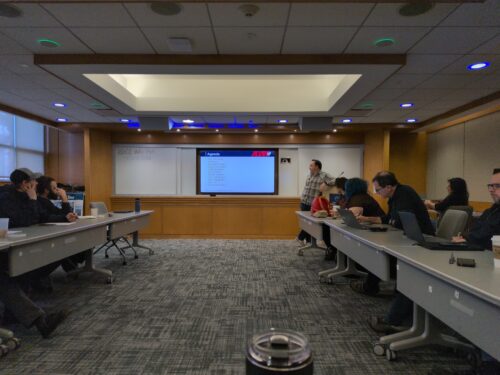
Wednesday brought an interesting and sobering meeting. The agenda covered updates to Alvin’s Emergency Response Plan, a structured framework defining how the sub, the ship, and shoreside personnel would communicate and coordinate in the event of a serious incident. That covers everything from initial response to how a rescue operation would be organized, who owns each decision, and how different teams stay aligned under pressure. All of this while any additional help could be days away. The level of forethought that goes into this kind of planning reflects how seriously the team treats operating in an environment where the nearest help is thousands of meters overhead.
The current stage of the battery base project wrapped up on Thursday. Like many maintenance efforts on during overhaul, it’s not a task completed in one go. Multiple teams are involved, parts are on order, further work will continue across the weeks ahead as modifications might be made, and final steps will only be complete as the larger system’s pieces are brought back together.
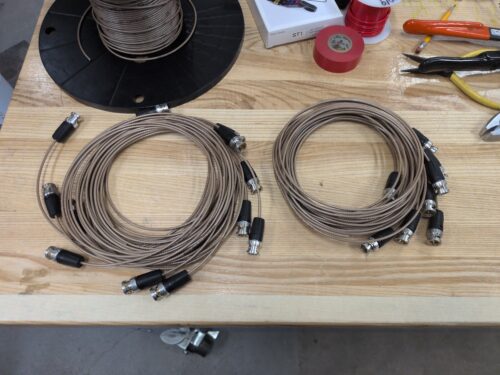
That brought Friday, and a new project. I started sorting out the coaxial cables carrying SDI camera signals for the sphere’s video system. The video system was a major addition during the last overhaul, and like the wires re-terminated earlier in the week, the cabling had room for improvement in how it was managed. Clean, traceable cabling is easier to inspect, faster to troubleshoot, and less likely to cause confusion for whoever works on it next.
The large project that started this week was an inventory of the O-ring cabinet. The cabinet contains thousands of O-rings, in hundreds of sizes, made of four different materials, and in three different styles. It’s quite a large selection, ensuring the team has all the O-rings required for Alvin components and, hopefully, to fix any tools or machines used to maintain the sub as well.
Monday’s highlight was the start of testing the in-sphere emergency lights. These lights would, unsurprisingly, provide illumination in the sphere during an emergency involving loss of main battery power. Testing was a simple process of charging all the lights to maximum capacity and then verifying they stayed lit for the minimum required amount of time. Followed by general inspection of the lights to check for any damage or failing parts.
On Tuesday, I helped electrical engineer Scott inspect and measure the wires that connect to the Power, Data, and I&I bottles. These bottles are titanium pressure vessels that contain electronics related to power conversion, data processing, imaging, and other instruments that do not fit in the main sphere. The wires travel through polyurethane tubing filled with oil to create what are called Pressure Balanced Oil Filled (PBOF) tubes. The electrical signal of the wires enter the bottles through specially designed penetrators made of titanium, ceramic, gold plated copper pins, and other materials to maintain pressure differences and keep water/oil out of the bottles. We performed initial inspections of the wires, tubes, and penetrators for obvious flaws, with further inspections to occur later. We also measured the wires and tubes to ensure we have enough material for replacing parts if needed.
There was a faulty DC power supply that Ben began troubleshooting on Wednesday. I was able to observe some of his troubleshooting while discussing PCB design and related topics. Ultimately, the repair was fairly simple, consisting of a failed capacitor that had also damaged an inductor.
On Thursday, we had a meeting to review the Navy’s findings from their visit the month prior. As I had heard previously, the visit went very well, with the Navy finding no major issues.
Throughout the week, I continued inventorying O-rings in between other tasks. Friday brought an interesting one. It was time for the mechanical team to begin inspecting the sphere, and a dial indicator used for precise measurement of surface dimensions was in need of calibration. As the calibration lab was located in Boston, it was easier for me to make the drive there than to arrange for the tool to be shipped.
Week 9:
The mountain of O-rings from last week stretched into this week as I continued to catalogue them. It was not a simple process of counting, as I was also disposing of any that were past their shelf life or would reach it before the next overhaul, along with reorganizing the cabinet for easier use. To properly categorize and sort the O-rings, I had to dig into some research, as I was not familiar with many of the materials and styles. I spent some time reading through Parker’s O-Ring Handbook and SAE’s AS5316 standard on O-ring storage.
I was tasked with troubleshooting a faulty battery charger on Monday. As we were preparing for maintenance of the main batteries, it was time to repair or replace a charger that had failed some time ago. The unit would power on but would not begin the charge cycle. Prior to the task being handed to me, the first person to notice the fault thought it was a broken button, but then Ben noticed that the voltage reading the charger uses for feedback was not accurate. My initial troubleshooting began by swapping components with a known good charger until I was able to isolate the issue to the main board. From there, further troubleshooting was made difficult by a clear protective conformal coating applied to the entire PCB and by the lack of any obvious failed component, as in the DC power supply repair. Ultimately, I was not able to locate the root fault, but I was able to treat the symptom by adjusting a trim potentiometer related to voltage feedback until the unit once again had accurate voltage readings. After that, the battery charger was back in service. It will require monitoring to see if the issue returns.
Tuesday, I was able to spend some time with the mechanical team making hydraulic hoses using Swagelok fittings. It is a fairly simple process if you have the correct tools and dies, but it was a fun task since I had not worked with the Swagelok brand before. It was also informative, as I had previously inspected a number of hydraulic hoses for faults and had to double-check with the mechanical team because I did not yet know enough about Swagelok fittings at the time to verify they were acceptable.
On Wednesday, I finally wrapped up my work on the O-ring extravaganza and started my next multi-day project, inspecting and measuring the 35 PBOF tubes that connect to the various wire junction boxes throughout Alvin. Similar to my previous PBOF inspections with Scott, this involved measuring the length, outer diameter, and inner diameter of the tubes and inspecting them for discoloration, hardening, or other faults. Work continued on this into the following week.
The end caps for the Power, Data, and I&I bottles returned on Thursday from inspections by outside vendors. They were among the first major items to return and signaled that reassembly was on the horizon. The end caps are large titanium discs, roughly 2 to 3 inches thick and 9 to 11 inches wide. I helped Scott carry them up to the electrical office for receipt inspections.
Later that night, we had our usual D&D adventure. The special event for the evening was that I cooked dinner for the group. I made fresh chana masala, dhal, and basmati rice, along with an assortment of frozen samosas and other pastries.
Rick had begun disassembly of the main batteries earlier in the week, and on Friday I helped for a bit. The batteries, like many components on Alvin, are filled with oil to compensate for the pressures experienced during dives. This creates an interesting situation in which the lead-acid battery cells, of which each battery contains 60, with each cell being roughly half the size of a normal car battery, can accumulate oil at the top during normal operation. Part of reconditioning the cells involves removing the oil to top up the electrolyte solution. I helped siphon oil from the cells using a vacuum pump and collection chamber.
Monday kicked off the Navy’s inspection visit. They were on site for most of the week, though I didn’t interact with them much directly. I continued to spend the majority of my time helping out the mechs. Unfortunately, I don’t have any photos from this week because my phone’s camera was damaged the week before.
One of the first tasks I helped with was preparing for the inspection of the 12” and 17” viewport windows for the sphere. This meant cleaning out the back end of a shipping container that’s used as a workshop, so the windows would be protected during inspection. After clearing out tools and parts, we scrubbed all surfaces, edges, corners, ceiling, etc to knock loose anything that might fall later. We vacuumed up the debris, blew the area out with compressed air, and finished by covering the counter with cloth pads to create a cushioned base. Work in the clean area paused at that point since the actual window inspections were delayed.
Tuesday was spent continuing window prep. After the team performs a visual inspection to check for obvious defects, the windows are sent out for more detailed inspection using a non-contact coordinate measuring machine, lasers. To safely ship and store the windows when they’re not installed in the sphere, the team uses Pelican and other branded rugged protective cases. While the spare windows were already stored in padded cases, there weren’t enough cases for all the windows being removed, and not all the existing cases matched in size, which made stacking messy. I was tasked with finding enough correctly sized cases to store both the in-service and spare windows. Fortunately, the Alvin team has a stash of empty rugged cases for situations like this. After a lot of digging, I found the right quantities in each size. I then padded each case to securely hold the conical windows. For foam being transferred between cases, I trimmed or added padding as needed. In one instance, I used a bandsaw to make clean, tapered cuts in a large piece of custom foam so it fit perfectly in its new case, was a beautiful fit.
On Wednesday, I shifted focus to inspecting the Alvin “skins.” These are carbon fiber and HDPE panels that protect certain areas of the sub and help with hydrodynamics. There are around 25 skins total, ranging from relatively flat, square panels to highly complex curved shapes. I checked them for damage, but my main responsibility was verifying the dimensions of all features. Over time, these skins can be modified for fit or function, and it was my job to identify any deviations from the official engineering drawings. Working closely with both shore-side and seagoing engineers, I produced redline engineering drawings documenting all changes. This took up most of the rest of the week and carried into the following one.
Thursday marked the end of the Navy’s visit, which sounded like it went smoothly overall. After work, we had the NDSF (National Deep Submergence Facility) department Christmas party, where I got to meet a lot of great people from the ROV Jason and AUV Sentry teams.
Friday wrapped up the week on a high note with the larger WHOI Christmas party in the evening.
Week 7:
Monday was a continuation of skin inspections. The skins were a constant presence throughout the week, and I returned to them each day whenever other tasks did not take priority.
On Tuesday, I was back assisting with the visual inspections of the viewport windows. Removing a window from the sub is a coordinated process that requires three people. Two remove the bolts securing the retaining ring, while a third supports the window using a large suction cup.
Once the retaining ring is off and the window finally releases from its tapered seat (often the most challenging part) the window is carefully carried to the cleaned bench space for inspection. All surfaces are thoroughly wiped down, followed by an even more detailed inspection for any signs of damage. The entire cleaning and inspection process is observed by a second person, who signs off to verify everything was completed correctly.
After the visual inspections, the windows were packed into their shipping cases for further evaluation. The original manufactured dimensions of each window are well known, which allows them to be measured using a Coordinate Measuring Machine (CMM). This inspection is non-contact and uses lasers to scan the window’s geometry, creating a highly accurate 3D model. The data is then compared to the original specifications to check for distortion, shrinkage, or other subtle changes that wouldn’t be visible to the eye.
Wednesday involved a trip to the warehouse to pick up a large quantity of syntactic foam buoyancy blocks. Several of the buoyancy foam components on Alvin have damaged sections, and these blocks are sent out along with the larger pieces so repair shops have matching material to work with
Thursday’s highlight was a lunch-and-learn session presented by Danik, one of Alvin’s pilots and the Training Coordinator. The talk, titled “Red Hat vs. Blue Hat Thinking,” focused on how to train for emergencies and high-stress situations aboard a ship. It covered strategies for preparing ahead of time, managing emotions in the moment, and responding effectively when things don’t go as planned.
Then came glorious Friday, the skins were finally conquered. I handed off the last of the redline drawings to the engineering team and wrapped up the week with a relatively relaxing task: printing and binding a large stack of Oxygen Worker Safety Training manuals. These manuals cover procedures for preventing contamination and other issues while inspecting and maintaining oxygen-related life support systems, problems that could otherwise lead to system failure or, more seriously, fire or explosion.
Monday continued the inspections of the motor-controller pods. There are four pods in total: two units that control four motors each and two units that control two. The main purpose of these visual inspections is to verify the condition of the housings as part of a larger inspection of all implodable volumes. While inspecting the pods, we noticed damaged wiring and took the opportunity to repair it while the pods were already open.
It was my first time working with Molex Micro-Fit connectors, a fairly standard connector, but also my first time working with silver-tinned, Teflon-insulated wire. Compared to other jacket types, the Teflon insulation presents a new to me challenge; it’s so slippery that inserting the pins into the connectors requires more care and patience.
Motor-pod inspections continued through the end of Wednesday. No major flaws were found in the housings. We did, however, bring out and learn to use the optical micrometer to verify that a few worrisome scratches were below the maximum allowed depth of 0.005″. The deepest we found was around 0.002″, well within tolerance.
Thursday and Friday were spent working down the list of other implodable components. The highlight of the week came on Friday with the mech team’s removal of the sphere. After days of preparation and planning, followed by a morning of discussion, the team spent about an hour and some change performing a slow, methodical sequence of bolt removal and lifting the sphere onto its temporary stand.
Week 4:
This was a short week due to the Thanksgiving holiday. Monday and Tuesday were spent continuing the inspection of the remaining implodable volumes, with no concerning flaws found in any of the equipment.
The big event of the week was the retirement party for Lane Abrams, a Senior Electrical Engineer who has been part of the Alvin team for 34 years.
Week 5:
Monday and Tuesday turned into paperwork-heavy days. Many parts and consumables connected to or used in testing critical systems require verified histories so their material quality can be tracked. Many of the tools used on these systems must also be calibrated by certified labs. We received several shipments of calibrated tools and materials, and I spent time checking every page of the accompanying reports, verifying that correct procedures were followed, materials met the required specifications, and all serial, order, and reference numbers matched across every document. I also checked stock levels for components and made lists of cables/wires that may be replaced during the overhaul.
On Wednesday and Thursday, I began helping out the mech team. Our first task was cleaning and inspecting the variable ballast spheres. These are four titanium spheres, roughly 2 feet in diameter, that are used to adjust Alvin’s buoyancy. Following standard procedures, we rinsed each sphere with fresh water for a set amount of time. This took a while, since each sphere requires the crane for moving, and managing the water flow took some planning to avoid turning the shop into a pond.
Next, we set up the spheres for visual inspection. The process was similar to the inspections performed on the smaller implodable volumes: cleaning the spheres, buffing any scratches that drew attention, and, if a scratch still looked questionable, using the optical micrometer to confirm it was within acceptable depth. No concerning flaws were found. The main difference with these spheres was the internal inspection. Each sphere has only two openings, each about half an inch wide, located at the top and bottom. Inspecting the interior required using a borescope, which turned out to be an interesting exercise involving a bit of a dance around the spheres to see every angle we needed to check.
Thursday night marked the third session of our team’s D&D campaign, and I’d been, mostly in secret, putting together a costume for my druid. The highlight was an oak staff topped with a quartz crystal, illuminated from within by a bright LED I could control by wireless remote. The reveal was a hit, and now it sounds like a couple others are planning to bring costume pieces next week.
Friday was spent cleaning the shop and preparing for next week. The Navy will be visiting for the majority of the week to conduct an inspection.
Since this is a long-term internship running through nearly the end of May, I will be providing updates roughly every two weeks.
The Alvin team is an amazing group and has been welcoming at every step. I am housing with Wren (mech engineer) and Randy (expedition leader). During the first weekend, they made sure I was settled into our housing and fully prepared for our first day. I work alongside the sea-going operations half of the team for much of the regular workday, where my endless, excited questions are always welcomed and answered. I also regularly spend time with the shore-based team during lunch, enjoying stories and getting to know the entire group. I will primarily be working with the electrical engineering team during the overhaul, but I also hope to spend time with the mechanical engineers when possible.
Day one started off slowly, as nearly the entire Alvin group and a few other WHOI personnel gathered in an auditorium for the first half of the day for a presentation and discussion on how the next seven-plus months will proceed. Meticulous planning has clearly gone into ensuring the overhaul goes as smoothly as possible. After a generous lunch of pizza, we headed to WHOI’s Smith Laboratory High Bay to meet the Alvin and begin our hands-on work.
Alvin on day 1
Week one quickly gained momentum as the electrical and mechanical teams continued the disassembly of Alvin, which had partially begun before all team members arrived in Woods Hole. My own start was a bit slower, as I spent much of the first week completing on-boarding training and other administrative requirements. Fortunately, I still had time to assist with disassembly occasionally.
During the removal of one of the syntactic foam blocks, which provide buoyancy, I noticed tiny cracks in the bend radius of a bracket. The bracket was tagged for later review by the mech team to determine whether it would need to be re-fabricated. I also assisted with the crane lift of the wiring harness from inside the sphere and transporting it to the birdcage. The birdcage is a replica of the framework inside the sphere, providing a way to manage equipment and wiring during testing of the sphere’s electronics. One of this weeks most important discoveries was the very important WHOI tradition of office dogs. There are so many, and they are all friendly and loving, truly great for morale.
Week two continued with disassembly. Much of the work involved straightforward manual tasks, such as disconnecting and pulling the dozens of cables from their pathways snaking throughout the vessel, then coiling them up at the junction boxes. Once each j-box was completely free of its tethered connections, we removed it so the mech team would have full access to the components they handle.
A major highlight of the week was the first session of our overhaul DnD campaign. Multiple team members met up Thursday night for character creation and planning. If the first session is any indication of the campaign ahead, there will be no shortage of laughter.
On Friday, Ben (a new electrical engineer) and I began visual inspections of the motor controllers. These are titanium pods that contain a motor driver and a WHOI designed supervisor board. The inspection process involves disassembling and cleaning the titanium housings to inspect for damage, replacing o-rings, and checking the cable fittings for signs of wear. A slow and purposeful procedure that will continue into next week. With full testing of the electrical components happening at a later stage of the overhaul. Though Rick (senior electrical engineer) was able to provide us a lesson on how the motor controllers function, how the supervisor boards cleverly manage the motor controllers when the pods are fully sealed during normal operation, and a bit of history on how and why the current versions differ from the older designs.
Two stellar weeks down and 27ish more to go. I’m excited for all the fascinating things I’ll continue learn throughout this internship and for the opportunity to keep working with such amazing people.
My name is Ken and I will be an intern assisting with the upcoming routine overhaul of the HOV Alvin for the next 7 months.
I’m a undergraduate robotics student and most recently built a USV for mapping small lakes, pictured below. I have some experience with boats and ships, previously sailing aboard the Sea Education Association’s (SEA) Corwith Cramer and Robert C Seamans as an engineer. But this will be my first time working with a submersible.
I have dreamed of working with Alvin for many years and am very excited for this opportunity. Tomorrow I drive down to Woods Hole, MA and early next week I meet the Alvin Team and begin my internship.
This week I finished up my last days at sea, transiting from Astoria, Oregon, to San Diego, California. We had some Woods Hole donors join us in place of the scientists so they could see the vessel and Alvin. We also had another cookout on deck to enjoy the weather since we were making pretty good time to port.
Transit work wasn’t quite as fun as the dive days; we’ve been packing nearly everything from the ship, including the hold, for offload. The amount of equipment the team keeps on board is astounding—and everything has oil on it. So, I did some of the not-so-glamorous but completely necessary work of cleaning various valves and hardware so they could be neatly packed and shipped back to Massachusetts for the maintenance period. Since the work has been a little slow with all the packing, I got a tour of the engine room with the donors. It was fascinating to see all the machinery the ship uses to operate and the power required to run science operations. Apparently, the ship had been recently refurbished, which involved swapping the engines. To do this, they cut a hole in the hull of the vessel and rewelded it. It now uses two primary diesel engines to run electric motors. During the maintenance, the ship replaced six generators with four newer ones and implemented a single bus bar for redundancy and engine efficiency. During this time, they also added a bow thruster.
One of the highlights during the transit was seeing a pod of hundreds of dolphins swimming next to the ship and at the bow—seriously, I have never seen so many dolphins at once! As we were all on the bow enjoying the view of the sunset and wildlife, a SpaceX rocket was launched, which we had a perfect view of. It was truly an amazing evening and one of my top memories from the cruise.
We arrived in port at 9:30 a.m. at Scripps. It was, again, super cool to see the docking process. Just as before, a pilot came aboard to help the captain navigate the channel, but what made this unique was how the ship was maneuvered. Due to a bend in the channel, the captain sailed the ship so that the bow was nearly perpendicular to the dock—only about 30 feet away—and then used the bow thruster to turn on a dime, almost 360 degrees. It was impressive. Since there’s a Navy base near port, we also saw a huge aircraft carrier go by on the way in, along with several jets taking off.
This is my first time on the West Coast, so after work I’ve been making an effort to explore. I went out for sushi with some members of the team and walked a beautiful path along the water to get there. I’ll definitely be doing some more exploring as I wrap up the internship—with only one week left.
San Diego is here, and compared to the relative slowness and lull of the transit leading up to our arrival (we were out of packing boxes halfway through and couldn’t really get much offloading work done after that) I’m glad that things have started to pick up. We’ve been flitting around packing oceanographic instruments and Alvin hardware into shipping containers to be hauled off by the ship cranes.
We saw dolphins again at the same time the rocket went off which was an absolutely incomprehensible experience to live through
On our way to port we spotted what I assume is a SpaceX rocket launching Starlink sattellites from the Vandenberg Space Force Base in Santa Barbara. I’m pretty sure I heard the sonic boom go off as it was going into orbit. It was a neat coincidence that we were at the right place at the right time when this happened.
The captain and the chief mate let me pilot the ship for a little while which was a lot more difficult and nervewracking than I thought it would be. You can control the Z-drives that rotate the propellers 360 degrees from the ship’s bridge, and you have to manage your speed of rotation by angling them just right so that you can get to where you’re going. There’s a lot of things to keep track of, and even when you point the vessel in the right direction it’s easy for a large wave or swell to start pushing you slightly off course. Changing the rate of rotation isn’t super responsive either, so you have to be very careful not to turn too quickly and overshoot. I had fun though! It was an excellent experience.
They call me Snake Wake due to the way I sail in erratic zigzag motions
In the San Diego port, there seems to be a navy dolphin training facility next to us, which is crazy because I genuinely thought they stopped training dolphins for military purposes after the Cold War. I assumed it was military dolphins anyway, considering the entire region south of us is a naval base and I literally saw dolphins hop around in these little sectioned-off areas in the facility. Insane.
The dolphin training facility. This can’t be real, right?
After we fully docked, it was actually time to get to work for once. There was a lot of Alvin paraphernalia we had to haul on shore such as the two lead-acid batteries in the vehicle (as well as the one spare in our battery hold), various cargo containers full of cameras, scientific equipment, lights, metal frames and hardware, and more.
Lifting a cargo container with the crane
Actual crane(s)
I did also get to explore San Diego a bit. The view from our dock is already pretty good, and the crew and I have gone into the neighboring towns and downtown districts a few times after work just to see what’s out there. It does take around 15 minutes by car to go downtown and we don’t have a lot of rental cars available, so going there is mostly reserved to special occasions or weekends. I can confirm Mexican food down here is as good as they say it is.
Downtown view at night
I just think this is a cinematic shot
who does this fella think he is
There was a great arcade here, highly recommend
I don’t really have much more to say about our work since it is mostly just packing and shipping of various items until the finish line, but I’ll keep you all updated if anything of note occurs. Look forward to my final post (or penultimate post? It’s unclear).