Category: University of Hawaiʻi at Mānoa, SOEST Page 2 of 5

Halloween and Equator Crossing Ceremony! (Week #4, Briana Prado)

Equatorial Musings While in Transit to 5°S!

Hey there! Things are well underway! When we are not conducting underway CTDs (uCTDs) or performing our daily grabs using the regular CTD Rosette 3 a.m. grab, we are cruising at a solid 9 to 10.5 knots!

Our cruise plan has changed a bit since the start of the journey due to challenges presented by weather and field conditions. Unfortunately, we were unable to conduct a long station in the northern hemisphere, but new opportunities to sample at 5, 10, 15, 20, and 25 degrees south have emerged. Therefore, the updated plan is to steamhead to 5 degrees south to begin the first long station and get underway with the bulk of our work.

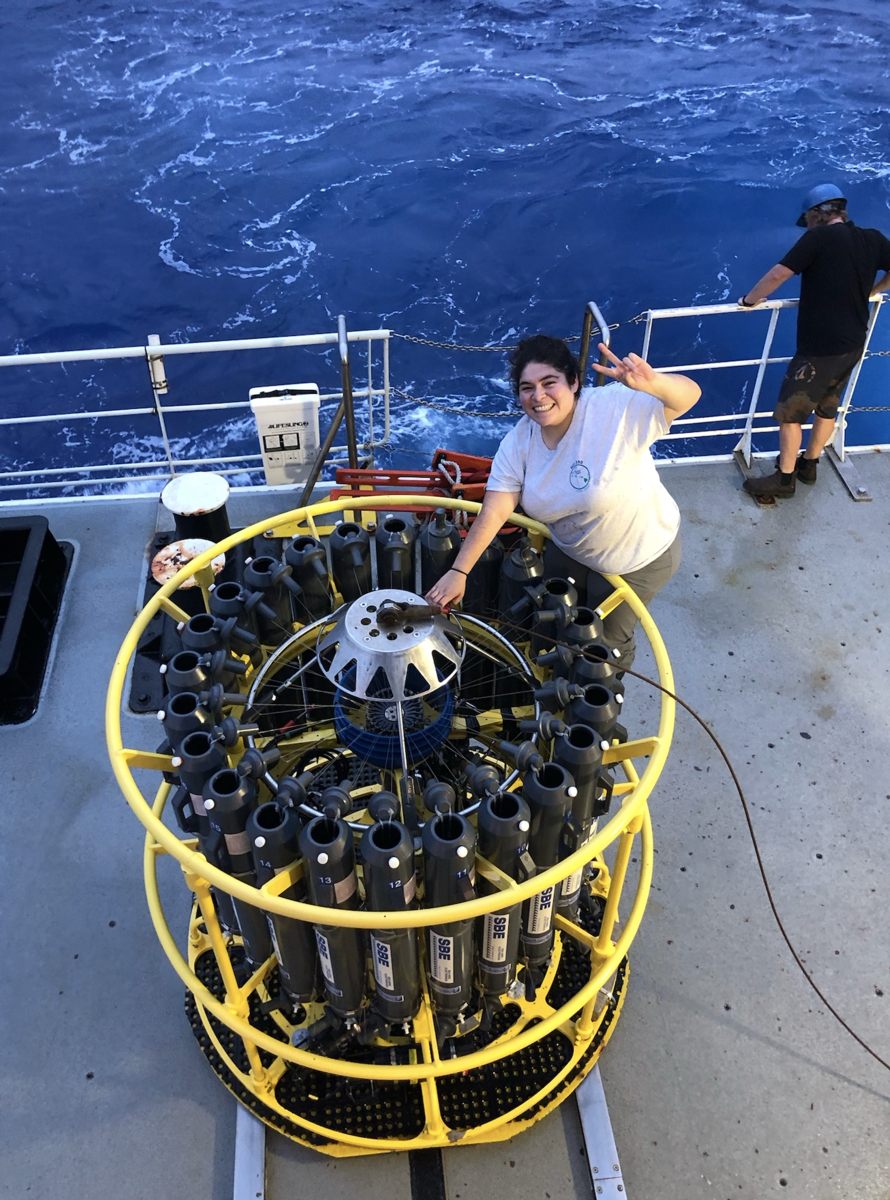
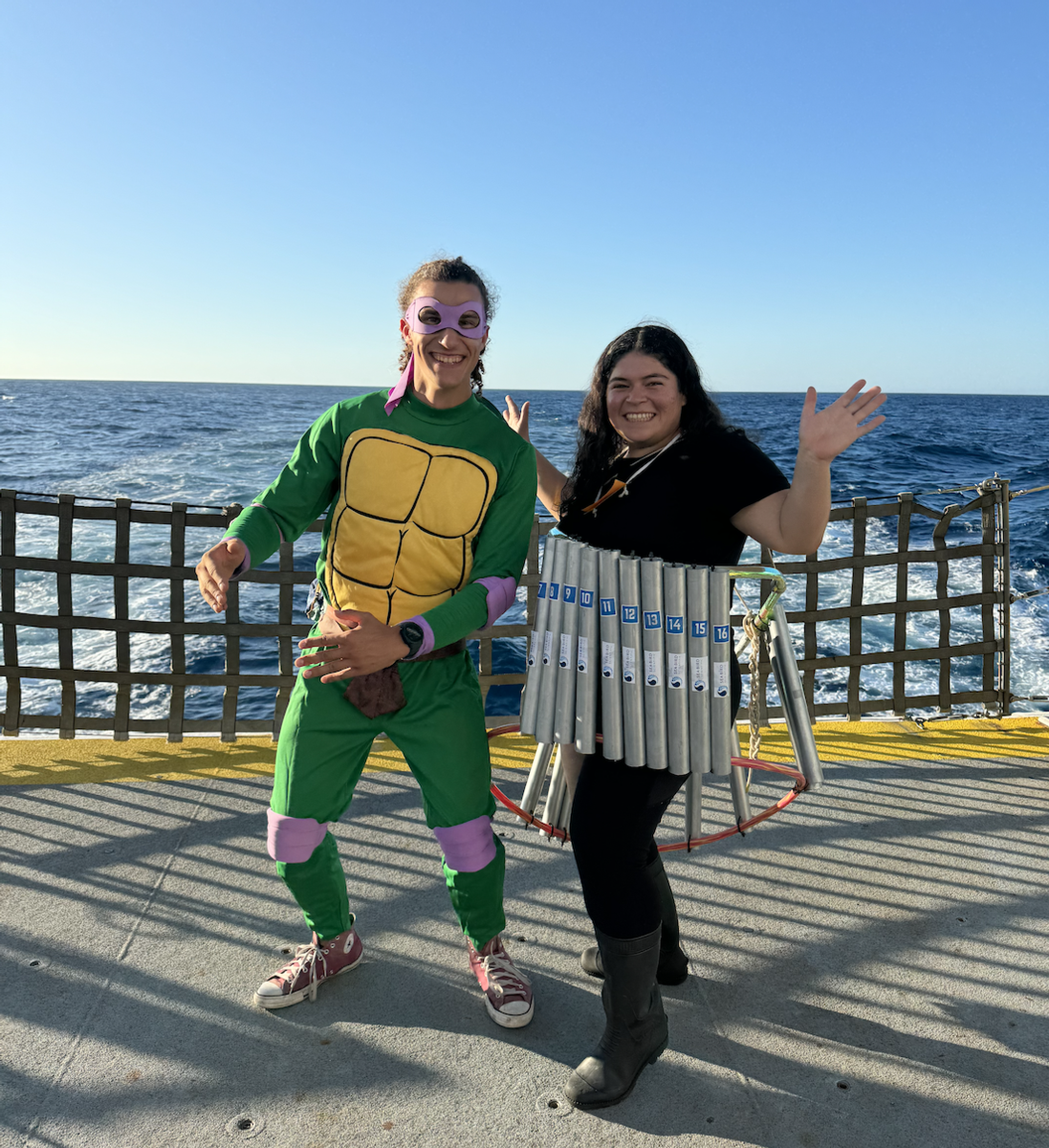
While in transit, we crossed the equator on Halloween, which was highly anticipated! It was soooo anticipated that I even made a CTD Rosette costume while we were still in port, largely because I was inspired by the CTD, and I had heard that the equator crossing would be a pretty big deal,  especially because it was on Halloween!

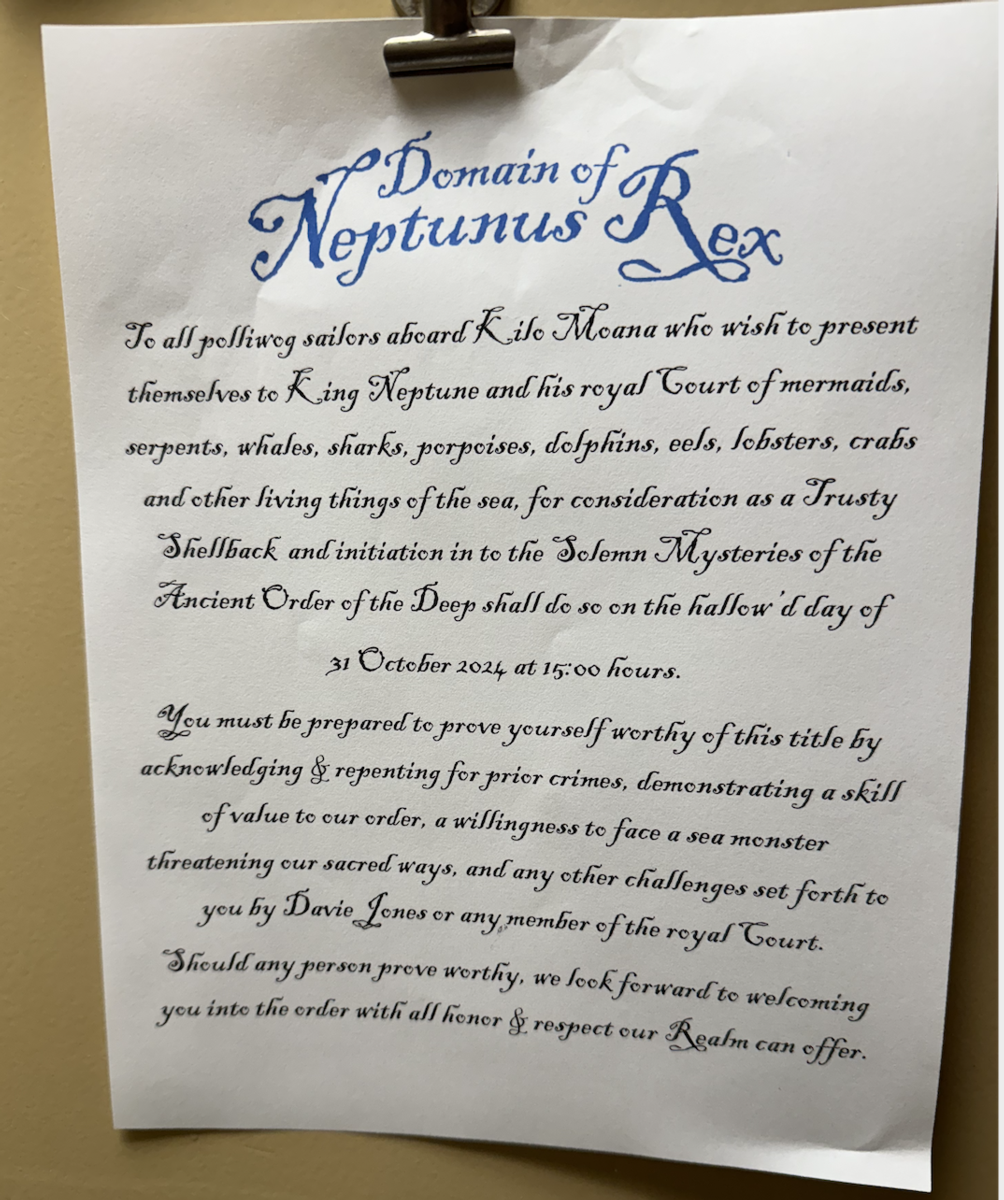
The subpeona inviting us to present ourselves before King Neptunes Court

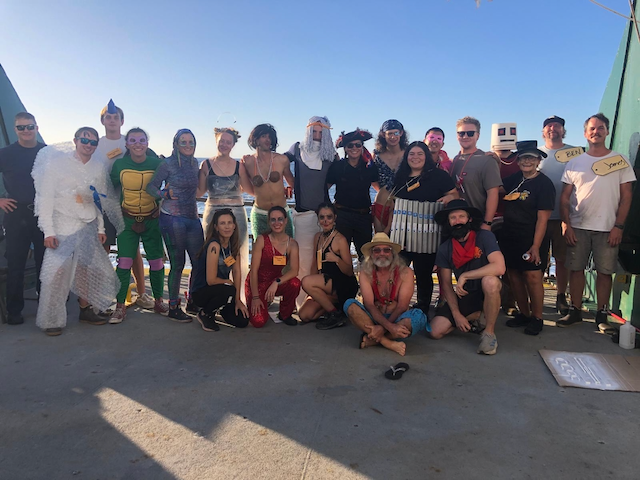
Since the 1600s, crossing the equator (0°00.00) has been seen as a rite of passage, a good opportunity to boost morale and prove your seaworthiness. Despite its many variations, this seafaring tradition has persisted into modern times. The celebration typically involves a series of dares that Pollywogs, those who have never crossed the equator must complete to prove their seaworthiness. The Court of King Neptune and Davy Jones, along with his Committee of Shellbacks (those who have crossed the equator before), then judge your performance and decide whether to welcome you to the Kingdom of Neptune. In the past, they might have asked you to do some gnarly things, like crawl through chutes of rubbish, drink a “truth serum,” and eat uncooked eggs. Luckily, the Court of King Neptune aboard the Kilo Moana are much nicer and asked us humble Pollywogs to either perform a talent or sing karaoke while reading out the “crimes” we’d committed during our time on the ship. The “crimes” are not really crimes but more like hilarious superlatives. I was accused of enjoying the solitude of the night shift, hiding Hi-Chew candy, and being obsessed with the CTD, which they are not wrong… To repent for my “crimes,” I chose to sing karaoke to “Rich Girl” by Hall and Oates. Some of my fellow crewmates performed skits, told stories and jokes, and even did a whole dance routine! It was so cool to see everyone let loose and have a little fun on the back deck as the sun went down!


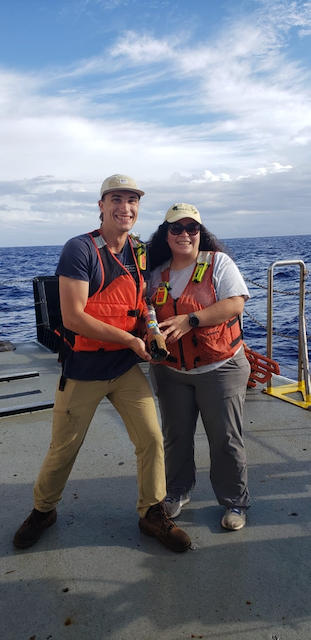
-Fellow Mate Intern, Hunter Adam and I in our Halloween Costumes 

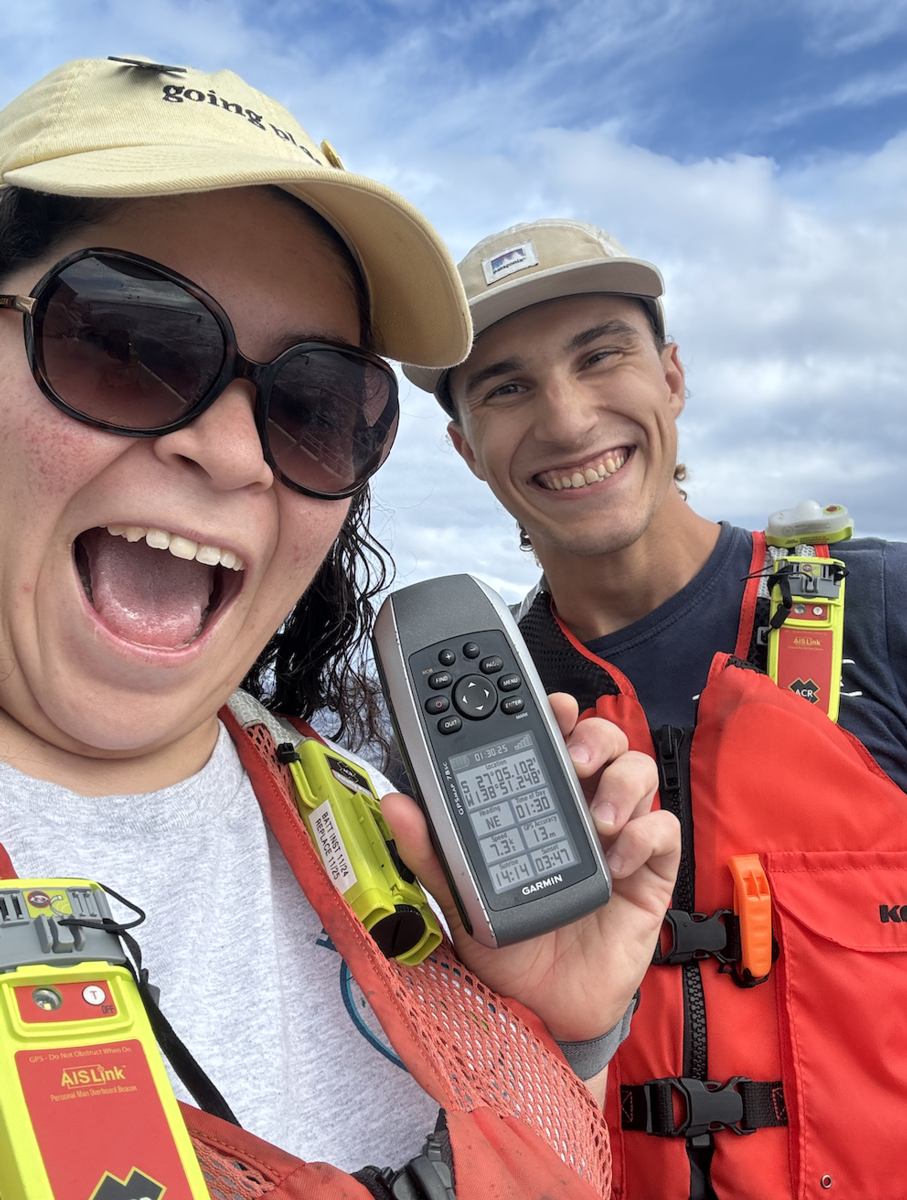
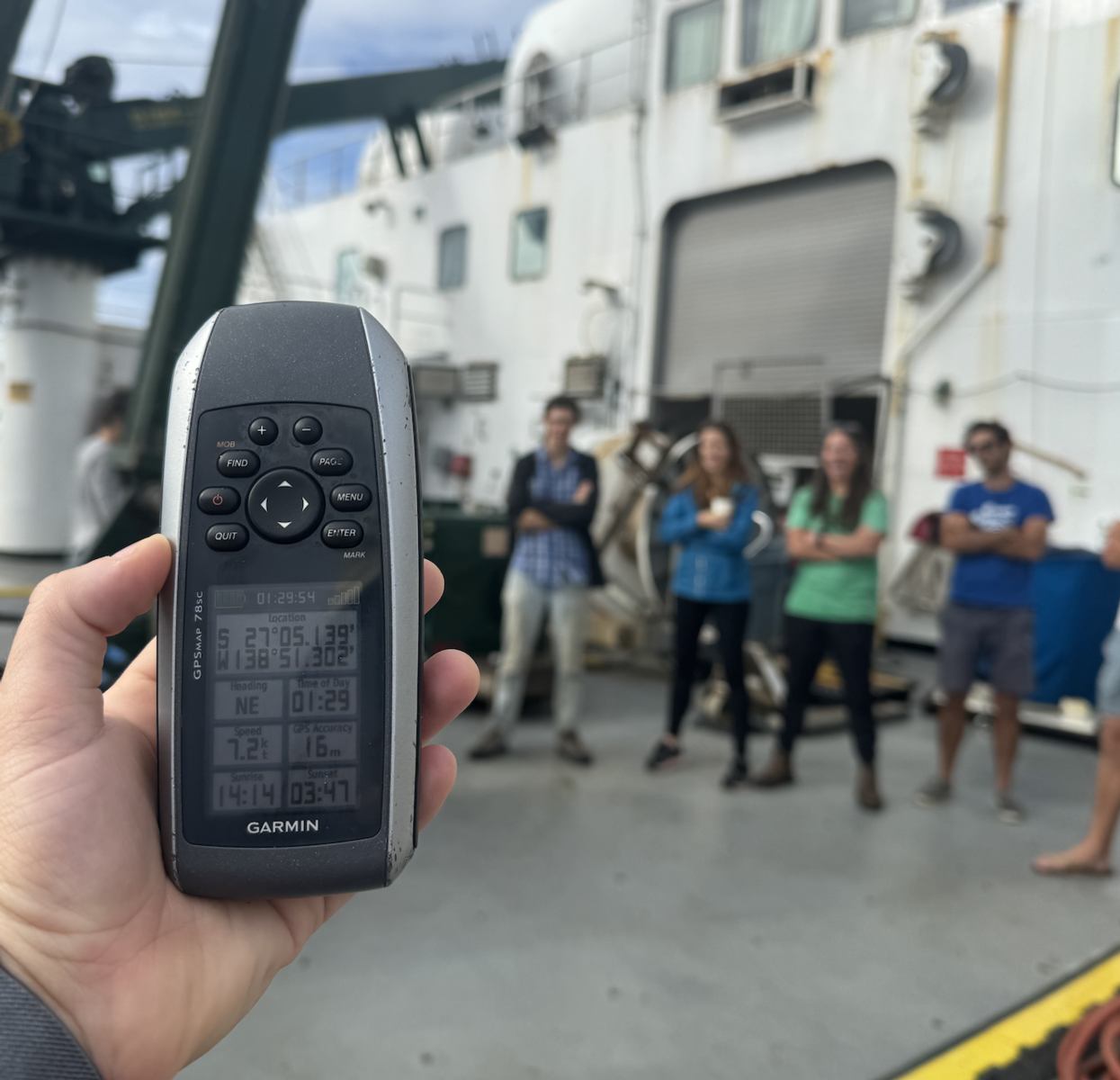
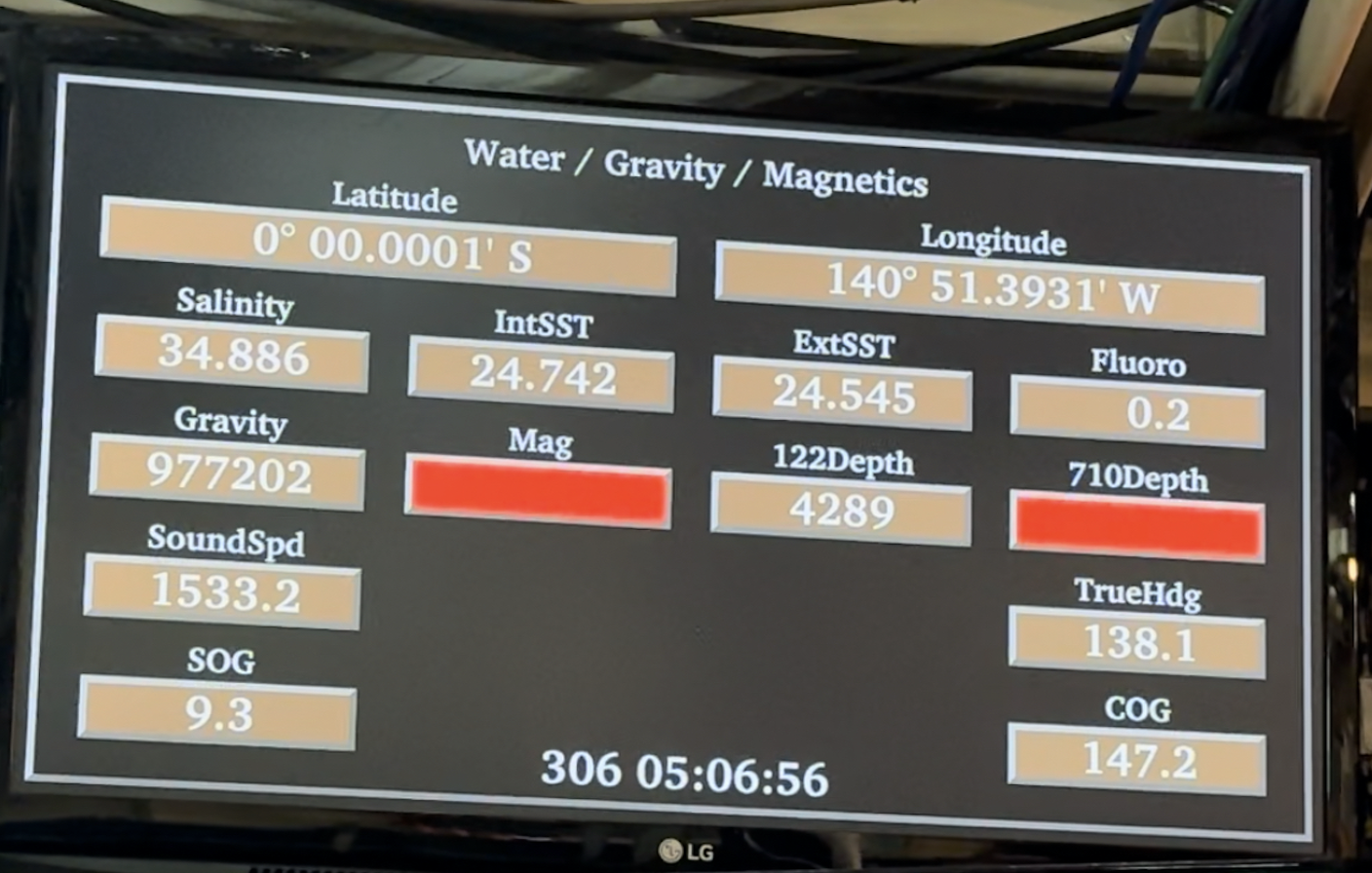
We ended up crossing the equator later that day at around 05:06:56 UTC. My friend and I crouched by one of the consoles for a few minutes, counting down every second until 0°00.0000. The console only delivered 0°00.0001, which was a bit disappointing but still neat nonetheless.

– 

With one day away from our first long station, the Halloween/Equator Crossing was a nice “rest day” or, like its original intention, a good morale booster—a calm before the sampling science storm!

Cheers,

Briana

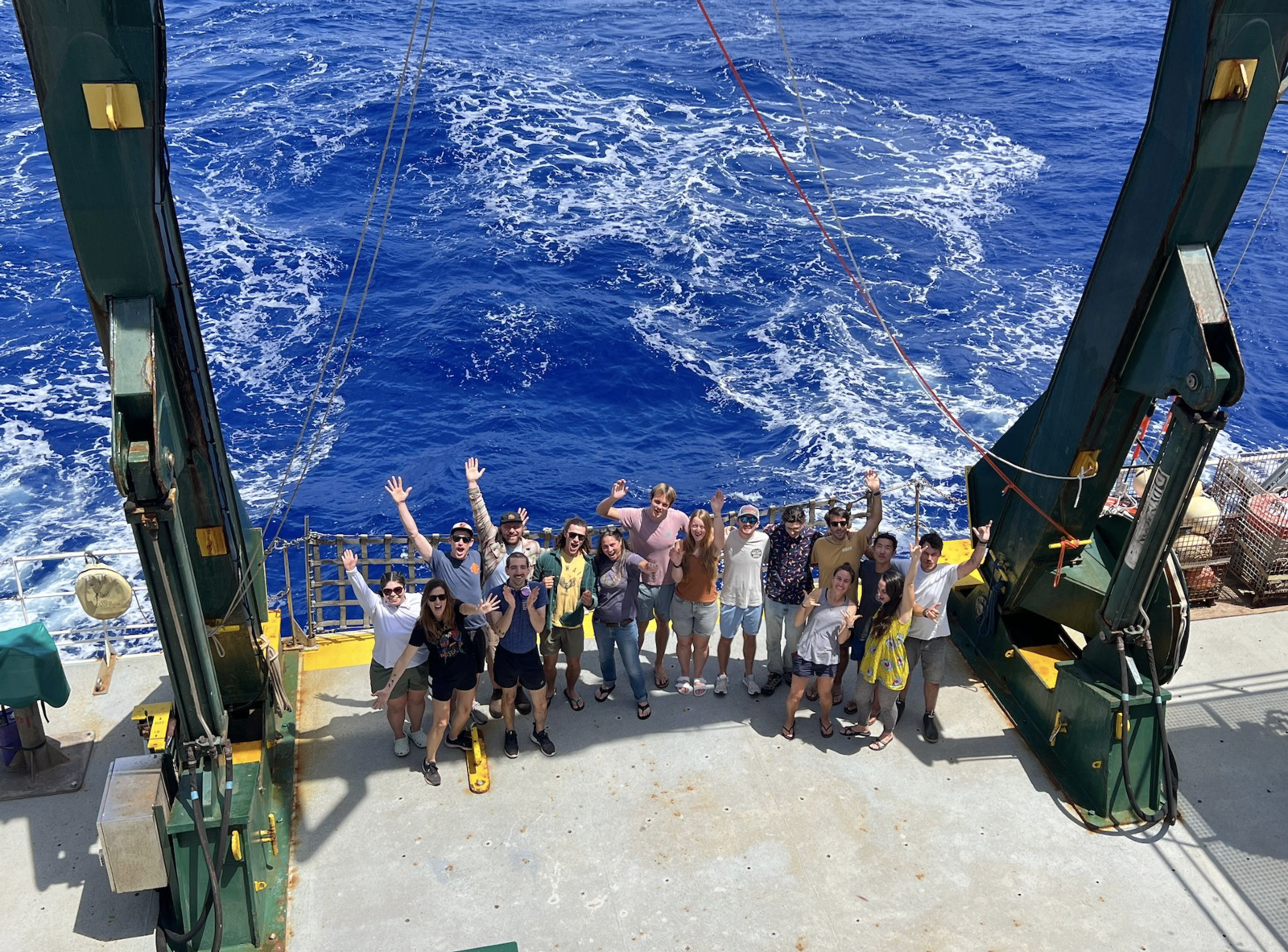
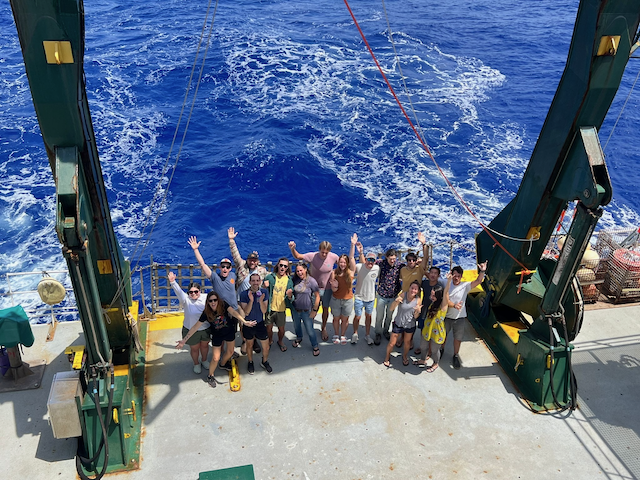
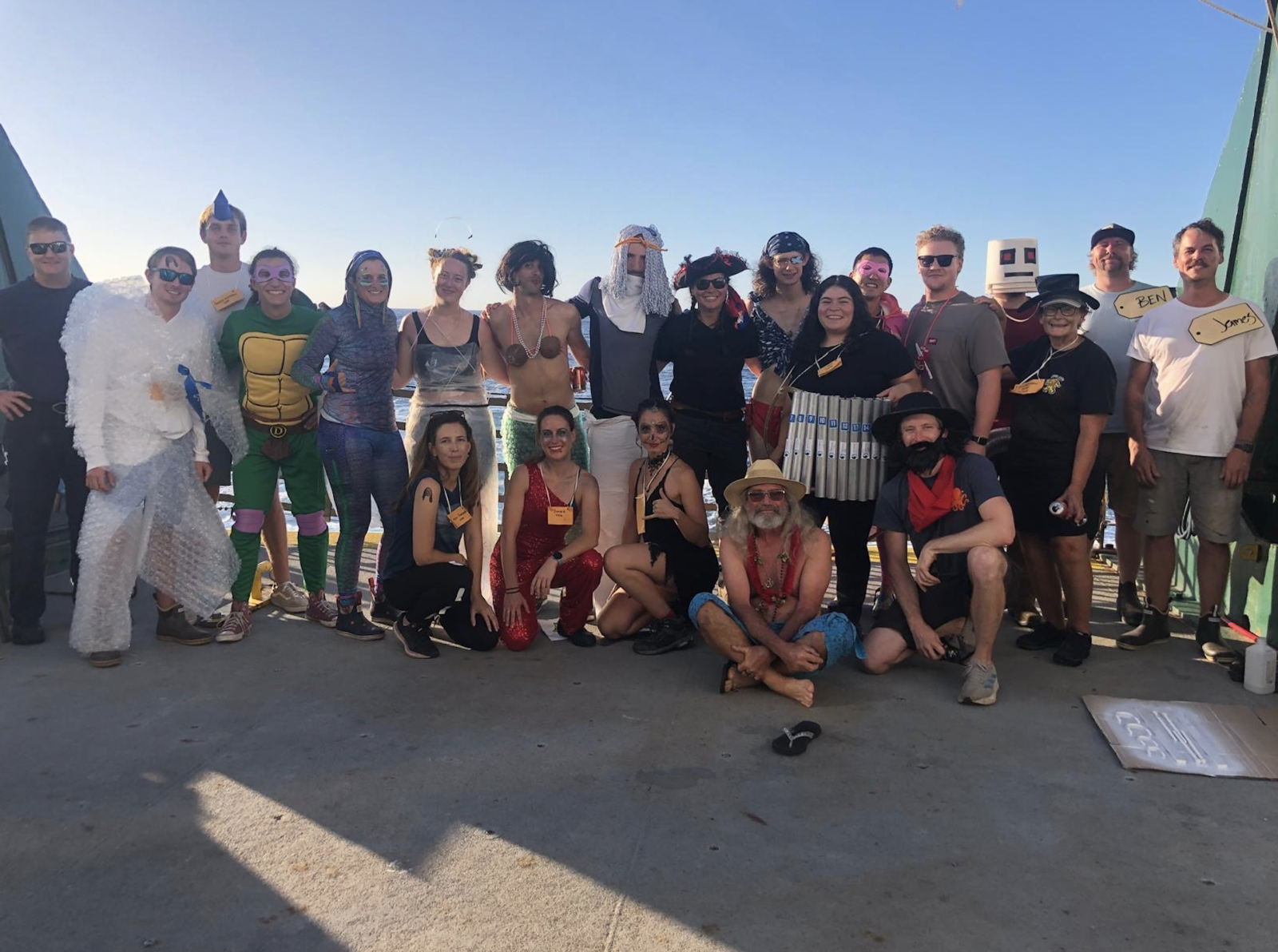
– Kilo Moana crew dressed for Halloween and Equator Crossing 

Setting Sail and Befriending the Underway CTD (Week #3, Briana Prado

WEEK #3 (10/21 – 10/28)
Underway to Tahiti and Befriending the Underway CTD

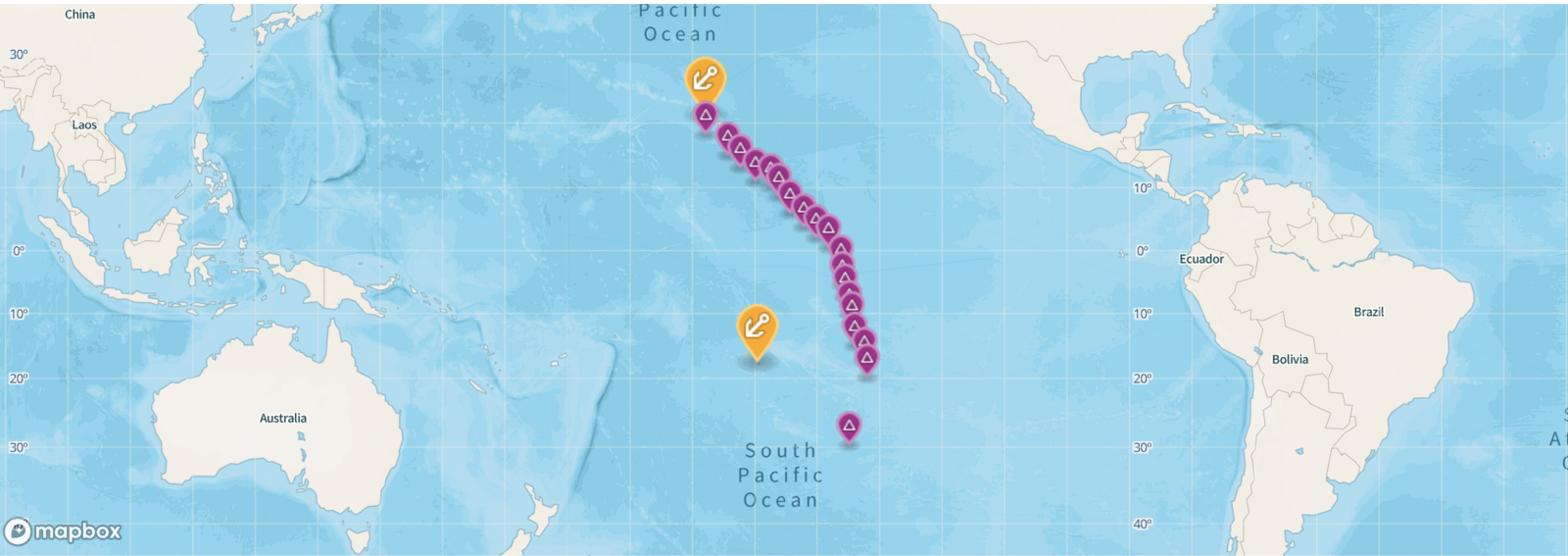
– The proposed Kilo Moana’s SPOC 2418 expedition cruise track. 

Unfortunetly, per my last blog post, within the first few hours of the South Pacific Cruise, the Kilo Moana had to return to dock to address some repairs in the generator room and wait for a component to come to the island.

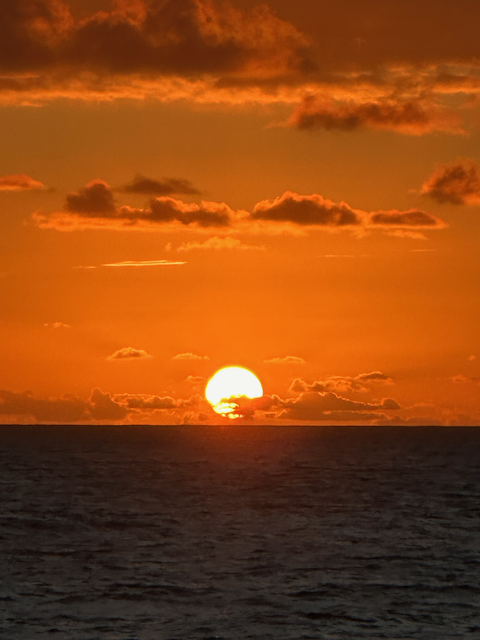
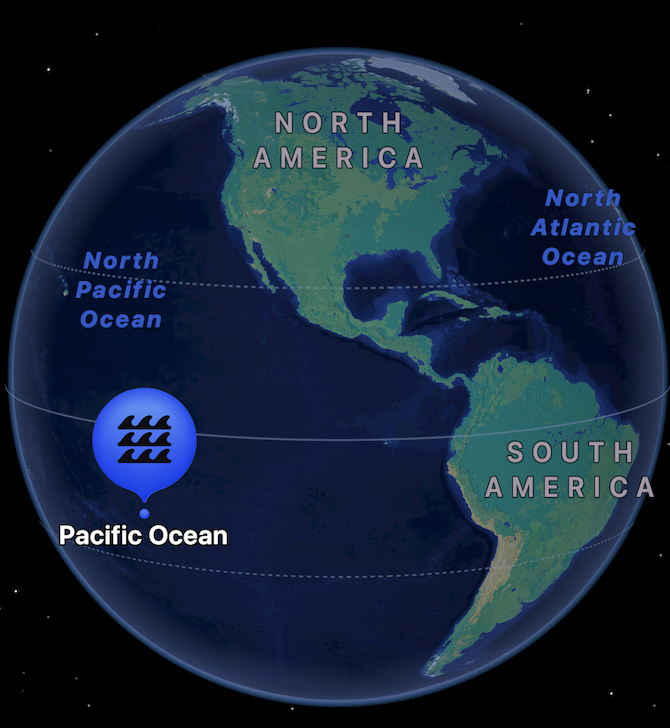
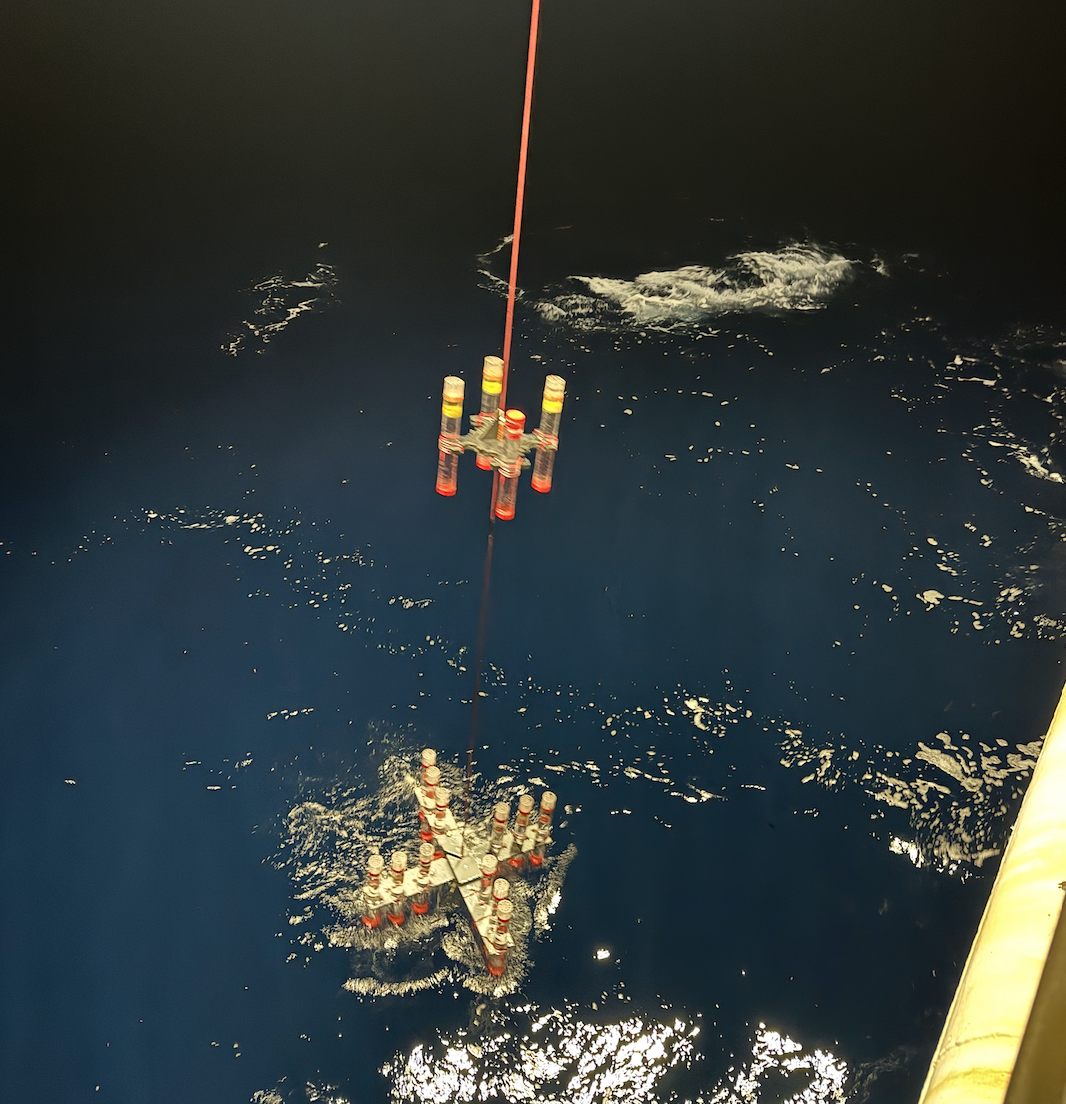
Sailing day couldn’t come soon enough! The Kilo Moana left Pier 35 on Oct 23 at 1730 Hawaii time into a gorgeous sunset. The goal of this mission is to characterize oceanic primary production and metabolic rates to further understand the carbon cycle along a transit of about 15° N to 30° S. This is done by collecting oxygen and optical proxies for carbon on a daily basis. This involves conducting in situ (on-site) incubation experiments using gas arrays, primary productivity arrays, and sediment traps that look at the rate at which organisms are growing in the water column (arrays) at depth or what is floating out of the photic zone (sediment traps). Additionally, we use profiling methods such as a CTD-Rosette cast every 3 hours (to varying depths), Hyperpro (which measures the optical properties of the ocean), an Underwater Vision Profiler (UVP) (which measures the size and abundance of particles and zooplankton in the water column), zooplankton net tows, and a wire walker (a CTD-like instrument that is attached to a buoy and can take up to 70 water column profiles a day)! Not to mention a wide suite of underway/continuous data like the Acoustic Doppler Current Profiler, which uses sound waves to measure the speed and direction of currents throughout the water column, the Imaging Flow Cytobot, which takes images of the phytoplankton that get sucked into the ship’s underway seawater system, meteorology, and the underway CTD!

The expedition will consist of a combination of long and short stations that last 2.5 days and 3 hours, respectively. When we are not at station, we will be doing daily water grabs for nutrient analysis as well as deploying an underway CTD (uCTD) every 2 hours.

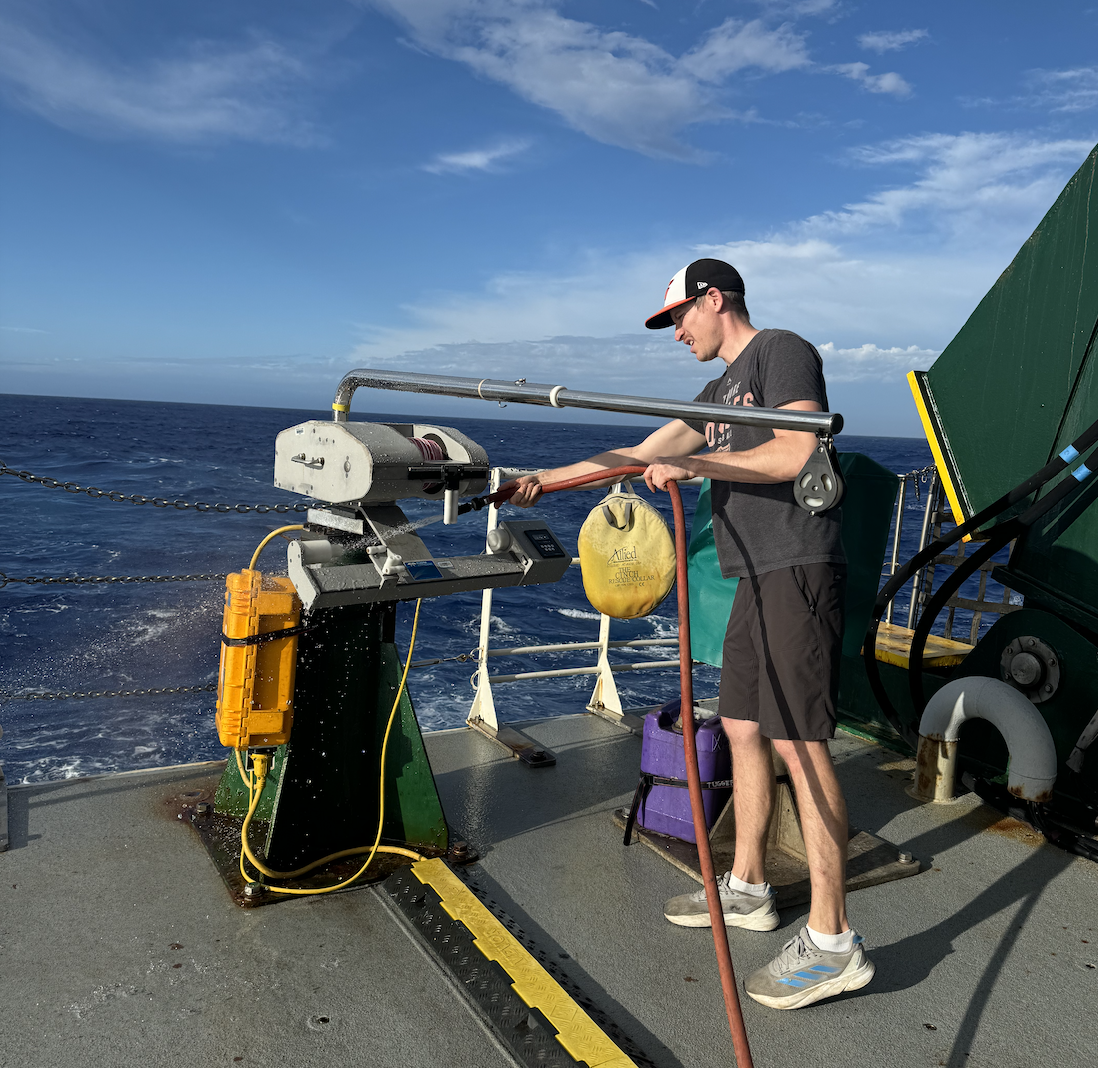
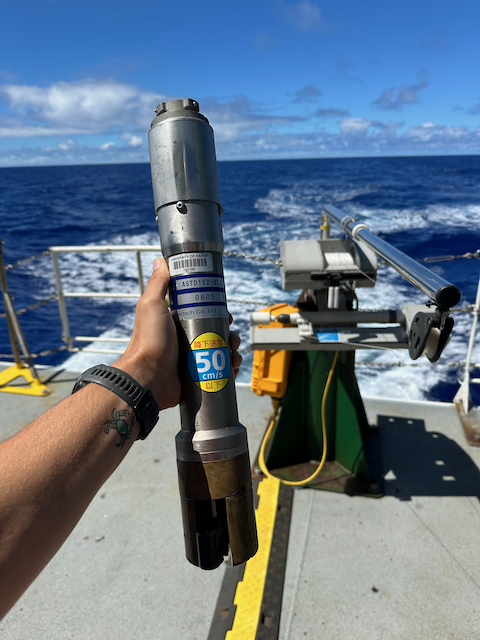
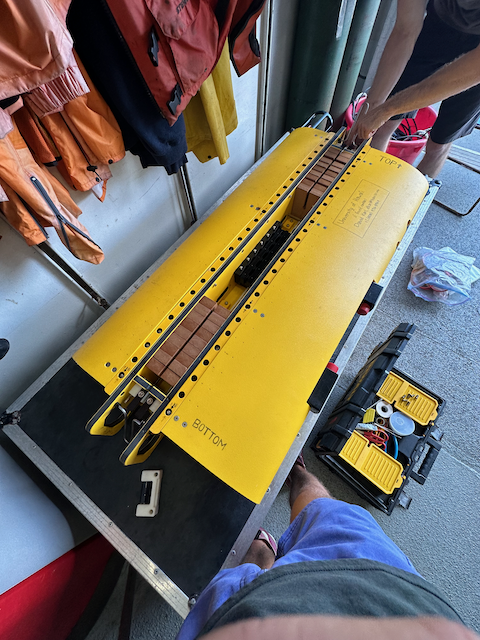
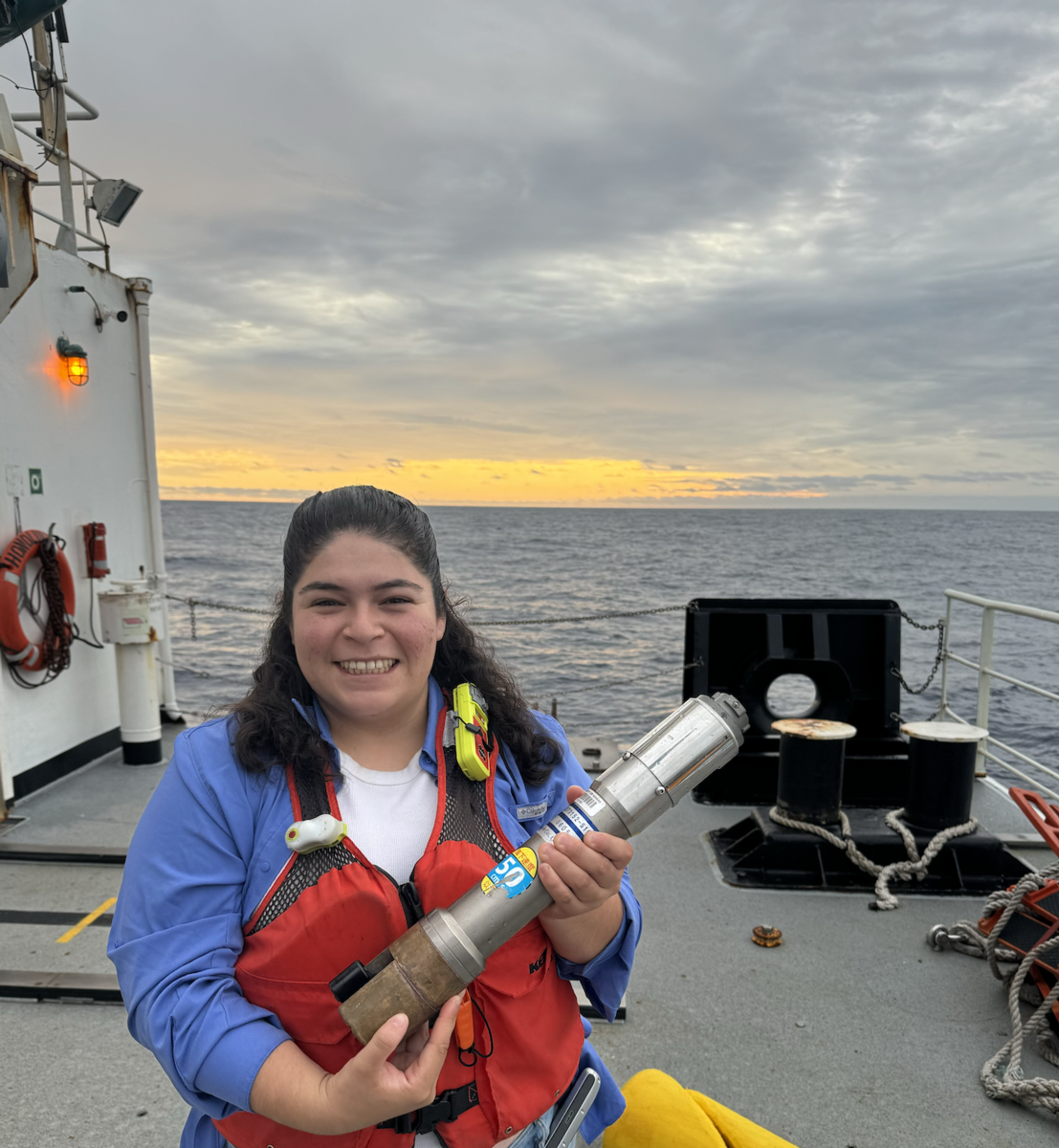
– Briana Prado holding the underway CTD 

I’ve learned to love the underway CTD. It’s so cute! The sensor is a titanium pellet-looking thing that contains conductivity, temperature, and depth sensors; it also contains a fluorometer, turbidity, and dissolved oxygen sensors. It sits on the starboard side of the boat and can be deployed while the ship is in motion as long as the ship is going under 8 knots. Unlike a regular CTD-rosette, the uCTD does not collect water and does not need the ship to stop, therefore making it a great way to efficiently get an idea of what the water column looks like below. Plus, it provides the perfect excuse to go watch the waves for at least 20 minutes every 2 hours.

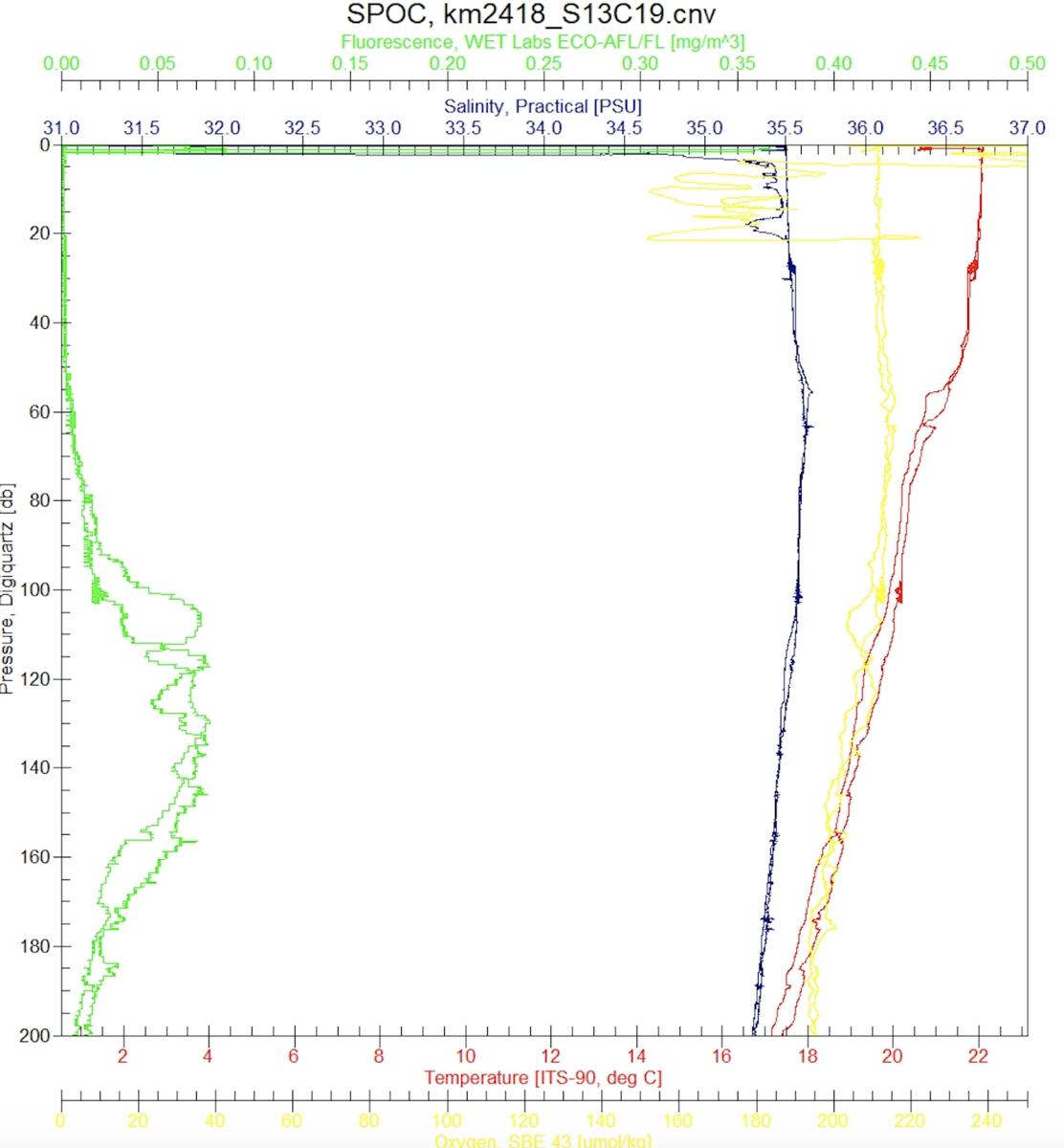
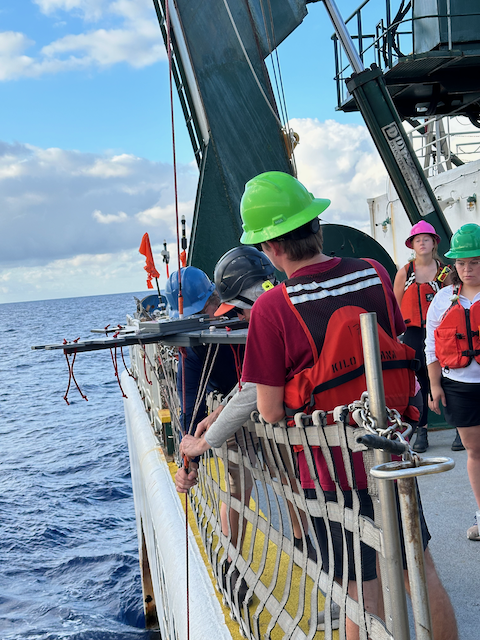
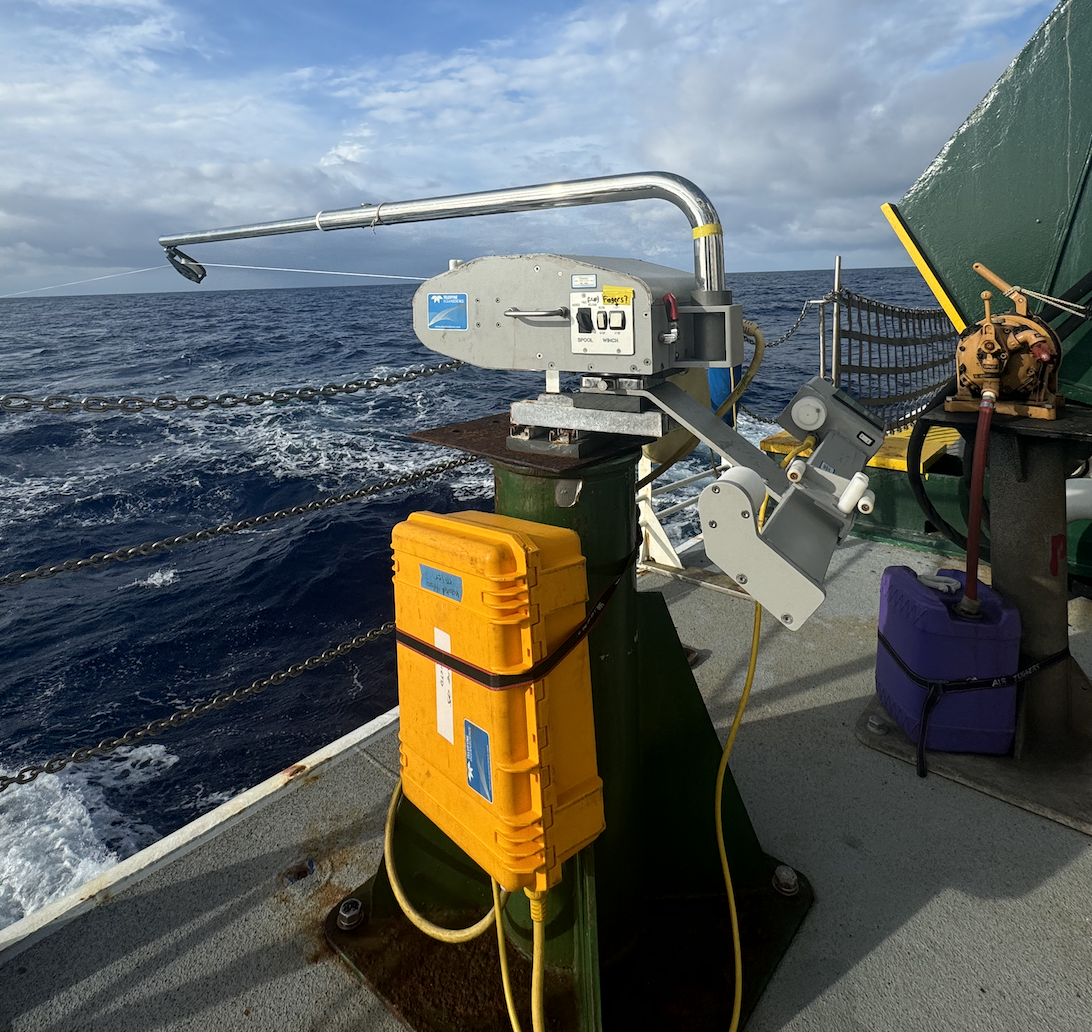
 To deploy it, you detach the spindle from the overboard handling system (OHS), set the instrument to free, and then you just drop the uCTD in the water. We’re largely interested in what’s happening at the surface, so we set a timer for 100 seconds to only collect the top 400 meters of the water column.  Once we reach 100 seconds, we apply the brakes to the feeder line, change the setting to rewind, and wait until the CTD is close to the surface. Once we can spot it on the surface, we get a cushion foam ready to slide through the line so we can reel the line in without banging the uCTD on the stern of the ship.

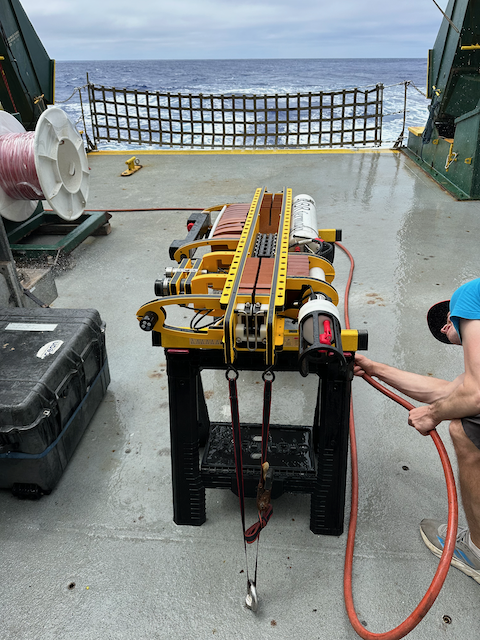
–  The Underway CTD overboard handling system.

Due to the high frequency with which we are deploying the underway CTD, issues can arise quickly. During the 12th cast of the cruise, while returning the line back into the spool, the power on the OHS stopped working, and the line kept spooling out until I finally realized to pull the brakes. We were startled that it had already stopped working so early in the cruise but also not surprised given the high frequency with which we use the instrument.

Tully, Ben and I were about to reel in over 400 meters of wire by HAND when we remembered that we could insert a bolt into the winch drum and use a powered tool to reel it in! Phew, that just saved us a couple of hours!

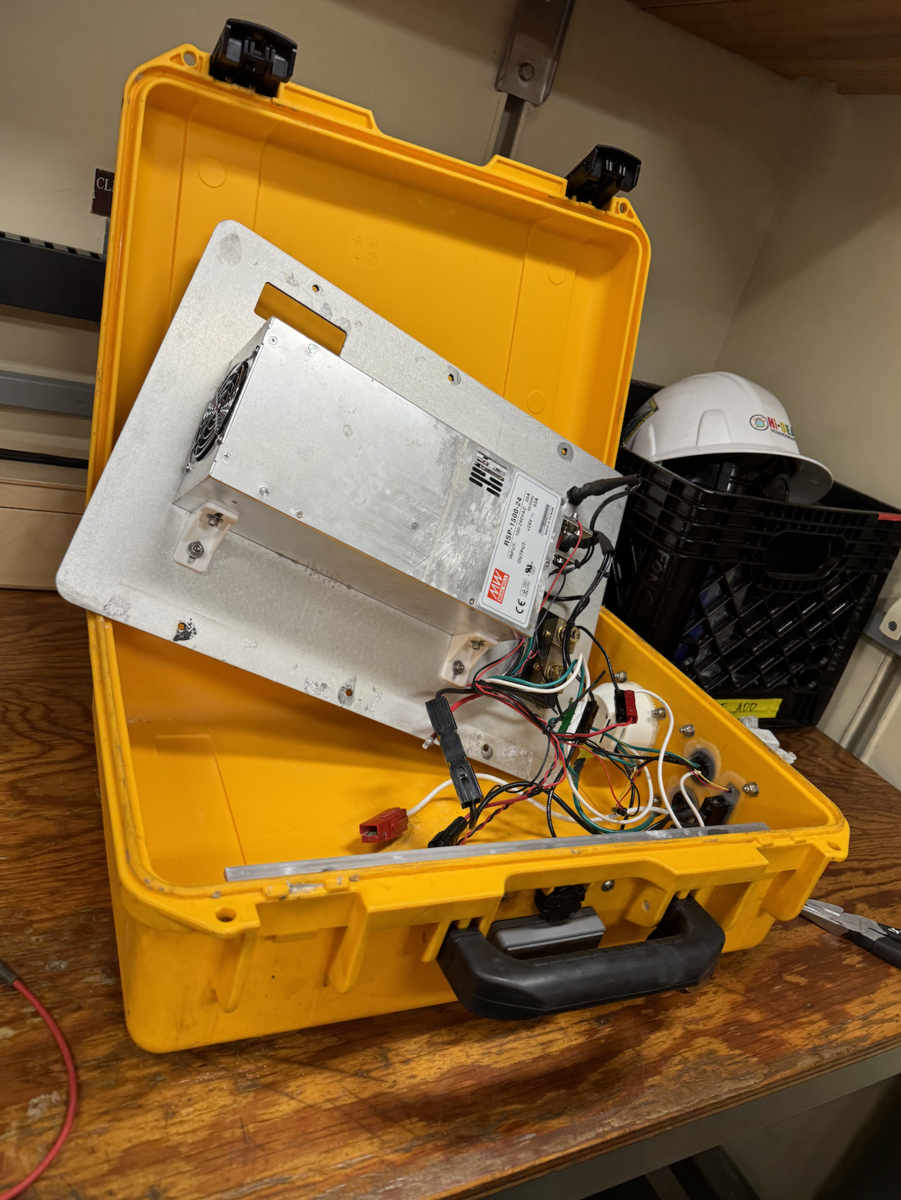
Once we reeled all of the line, we finally got to investigating what went wrong. Originally, we thought that maybe the motor on the uCTD had gone bad, but with a voltmeter in hand, we realized that the issue lay in the Pelican Power Junction box since it was not reading out any voltage.

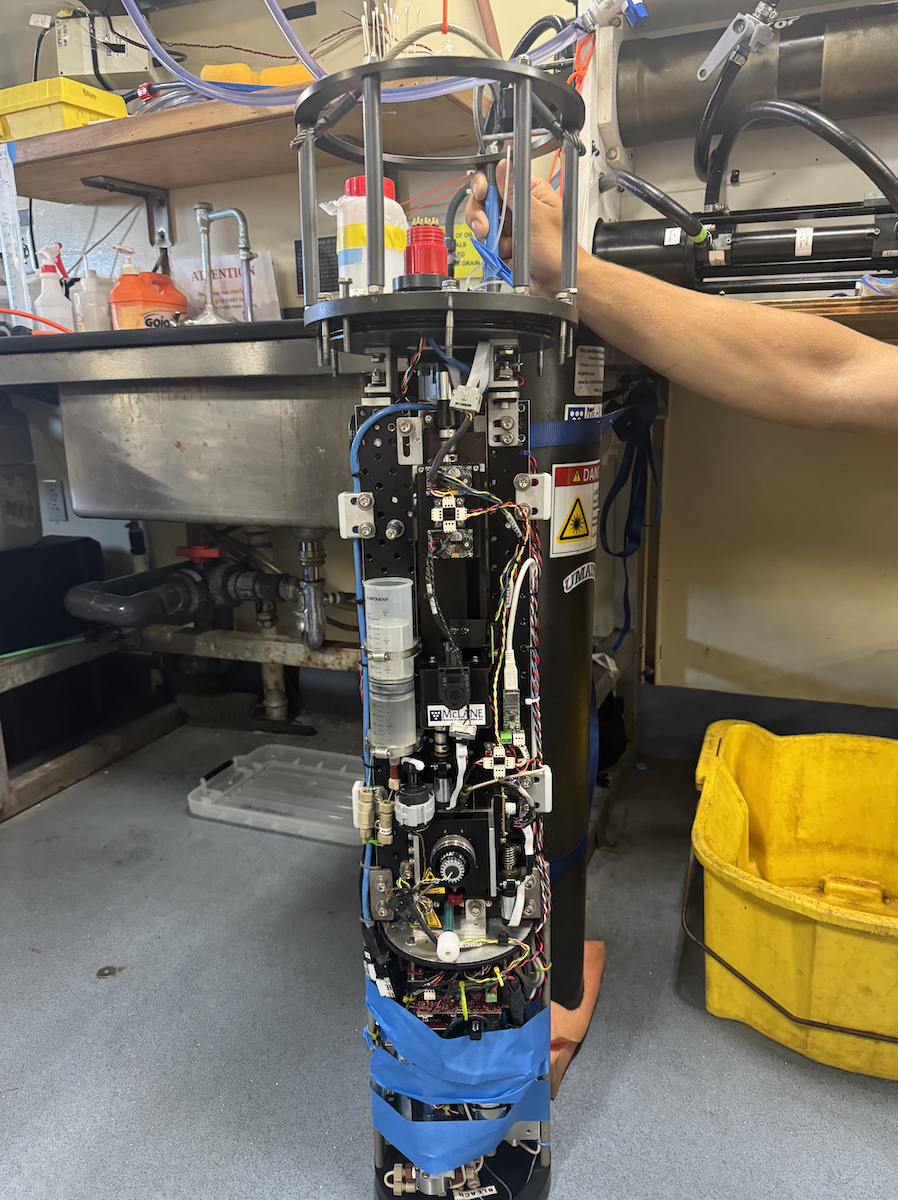
– Taking a peak inside the underway CTD pelican box. 

After a quick dinner, Tully and I took a look at the inside of the box and realized that the positive lead in the power box had come undone, most likely due to how corroded it was. Phew, this is a workable issue! Now we just need to cut back some of the wire, attach a butt connector, and heat it into place. Once we put the box together, we double-checked with the voltmeter, and it was reading a value, so we had fixed it and could now re-install it back into the OHS and proceed with our routine underway CTD. We did it, lo hicimos! I now cross my fingers and hope that we can continue doing uCTDs throughout the cruise and that any issues that arise have workable solutions!

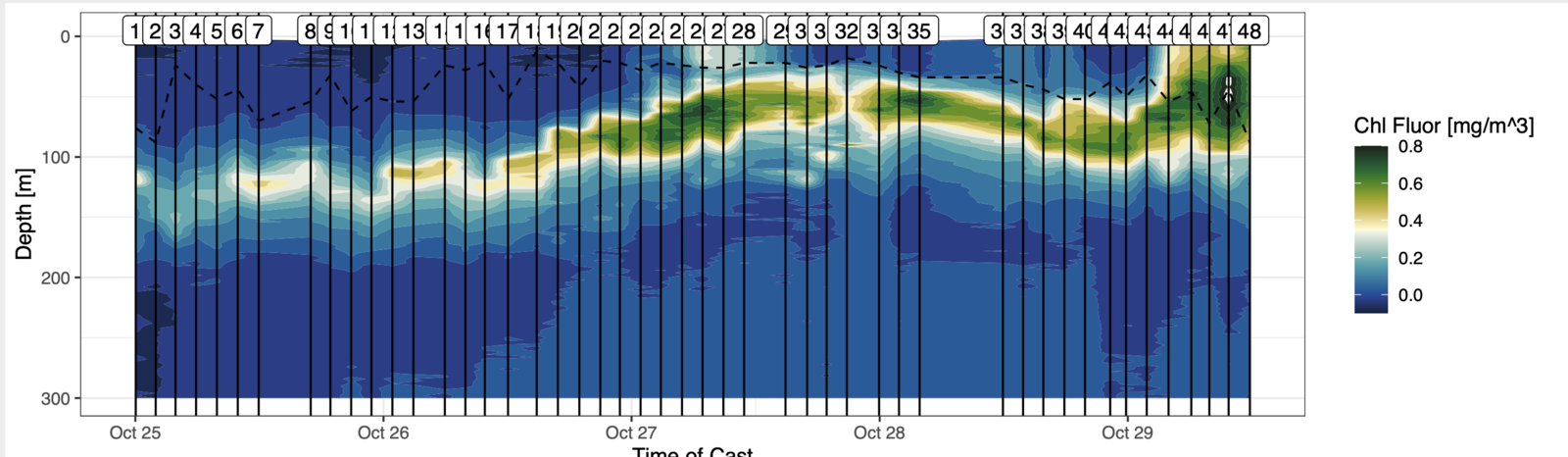
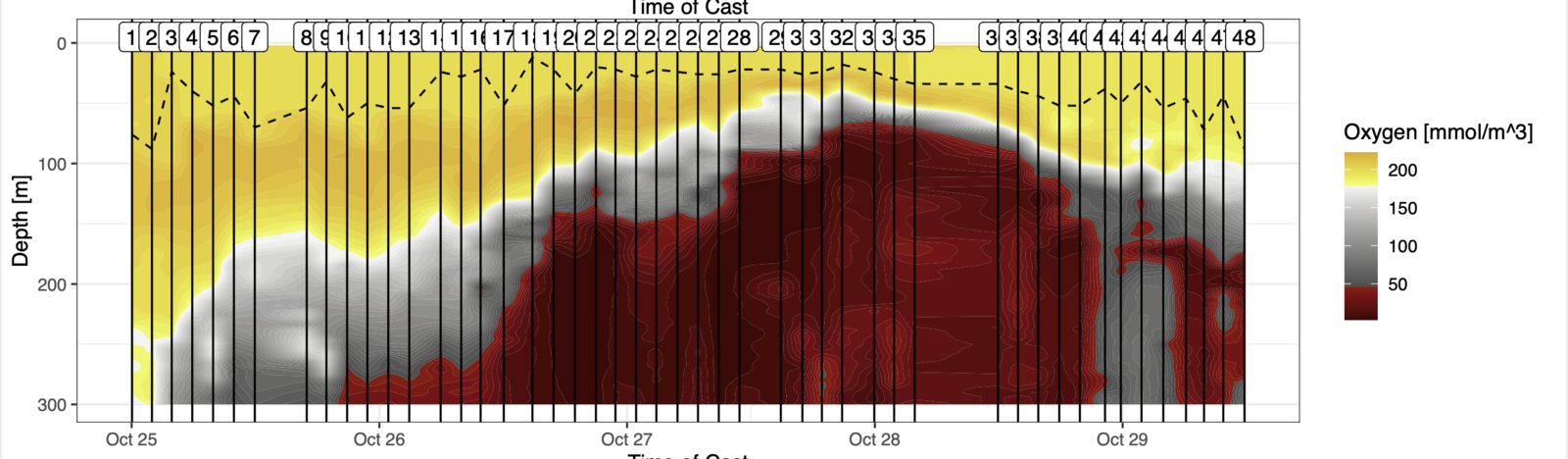
We’ve done a number of these so far; take a look at our data! These profiles help inform the team on areas of interest to sample as we are underway! Gaps in the data are often a result in fixing the instrument or bad weather.

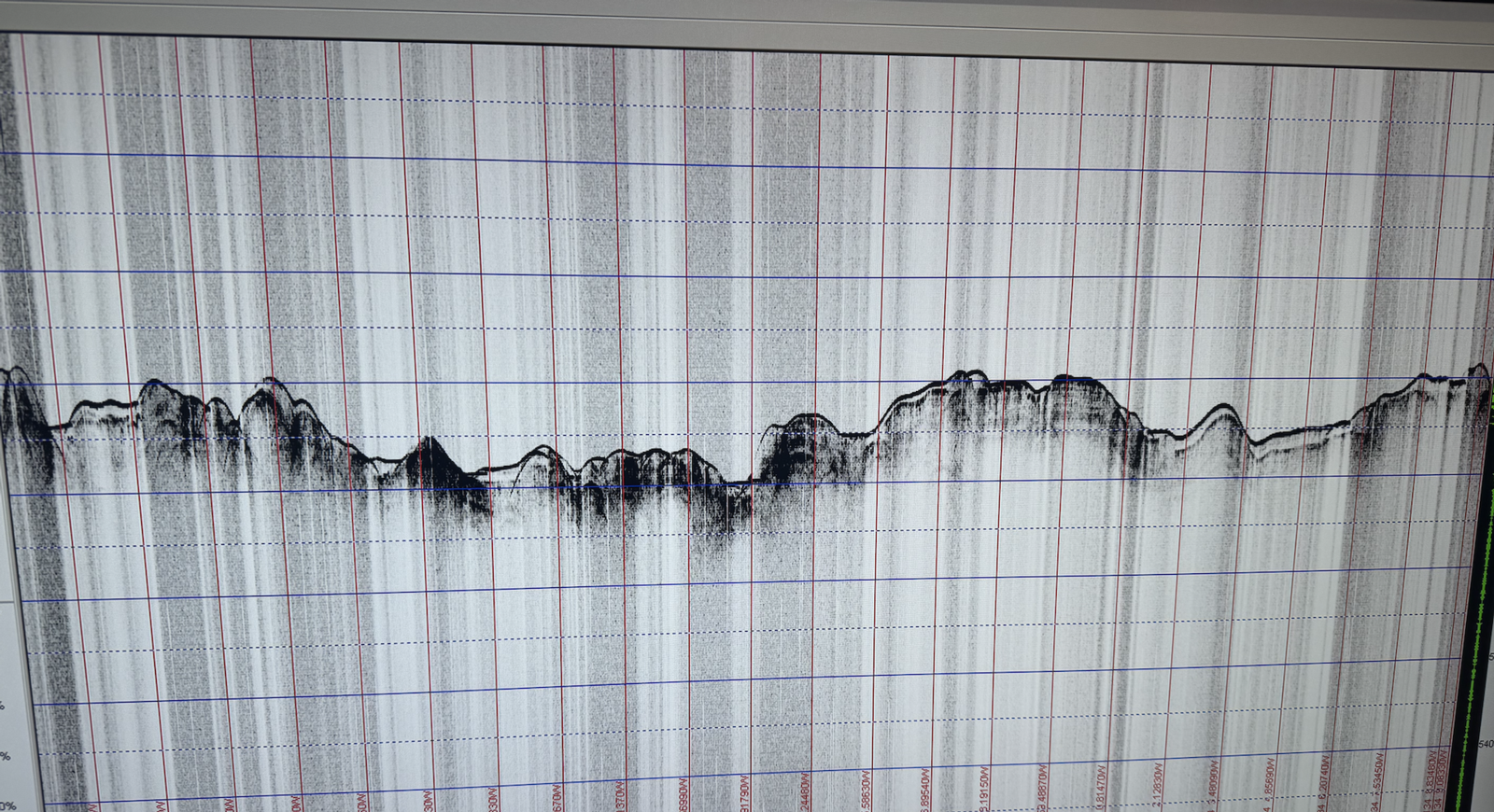
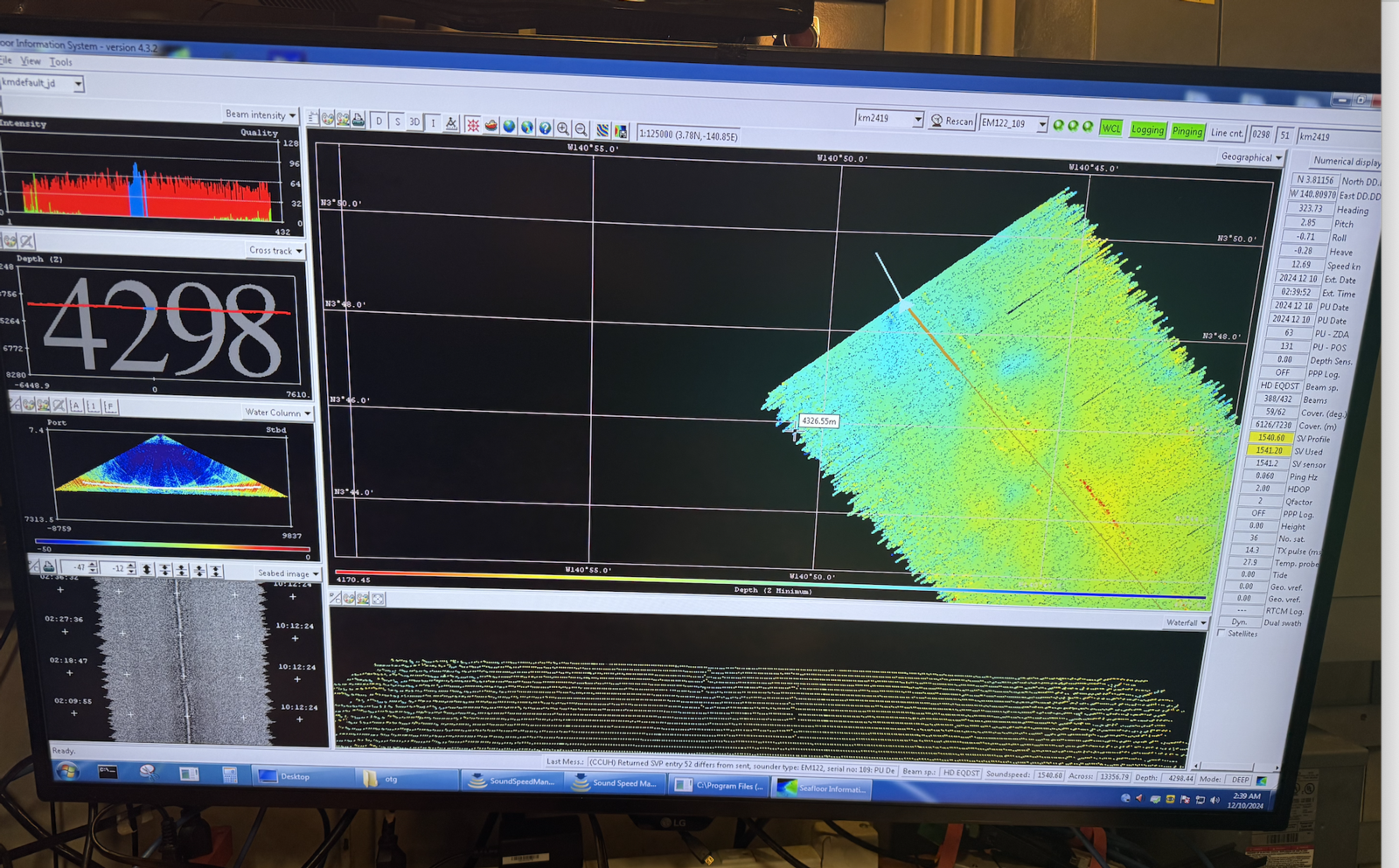
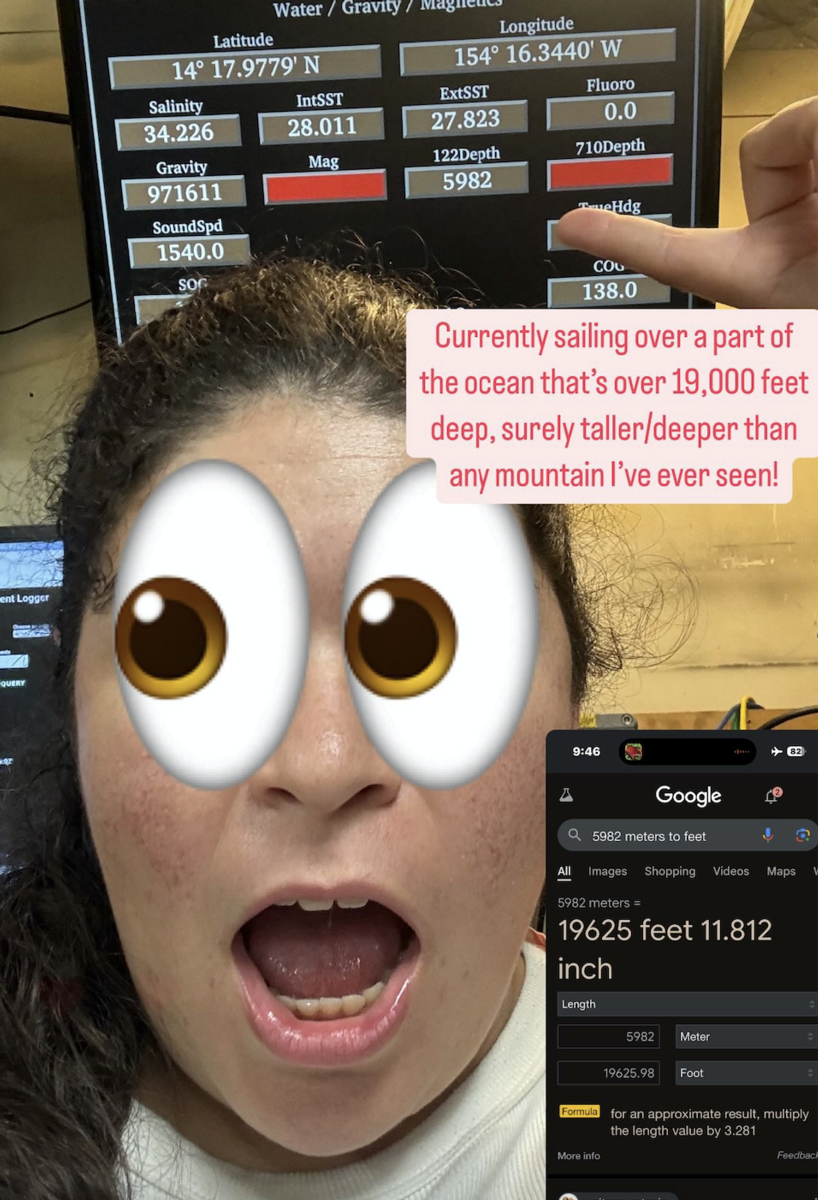
Amongst other things, we got to sail over a part of the ocean that is over 19,000 ft deep (5,982 m), which really blew my mind! Wish us happy sailing! <3


L3W4: Boats, Beasts, and Space Ice

Alohowdy, everyone! Welcome back to another blog post!

We’re officially one month into the third leg of my 6-month internship with the HOT and OTG teams aboard the R/V Kilo Moana. The past two weeks have been packed with excitement, including a fantastic HOT 354 research cruise, sightings of comets, whale sharks, falcons, and even an abandon ship scare. So, there’s plenty to chat about!

For those unfamiliar with the Hawaii Ocean Time-series (HOT) or who haven’t caught up on my previous posts (shoutout to my long-term subscribers), here’s a quick refresher. The Hawaii Ocean Time-series is a long-term study focused on the North Pacific Ocean at Station ALOHA, about 60 miles north of Oahu. Since 1988, this program has been working to create a comprehensive picture of the physical and biogeochemical properties of the North Pacific subtropical gyre by collecting and analyzing various data samples. This is neato because researchers worldwide use this data to understand long-term ocean changes due to factors like climate change. If this sounds familiar, it’s similar to what I wrote about BATS a few months ago. It’s been amazing to see how HOT and BATS compare from both research and operational perspectives.

– Sunrise from Station Aloha

Now, onto the 354th HOT research cruise! This four-day adventure focused on CTD casts, array deployments, and net tows. I had the freedom to roam without a set schedule (at large), which allowed me to observe all array recoveries and deployments—a major operation I’ll be assisting with on the upcoming SPOC cruise. I even got to try grappling an array for recovery for the first time (and almost got it first try)! I also helped with CTD deployments and recoveries, as well as sample collection and processing.

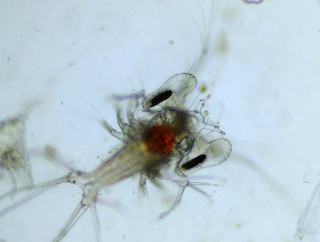
– A Lil Zooplankton we picked up from a net tow

Here’s a full list of what we deployed and recovered on HOT 354:

– Sediment trap array

– Primary production array

– Gas array

– CTD

– HyperPro

– Underwater Vision Profiler (UVP)

– Zooplankton net tows

– Video Plankton Recorder (VPR)

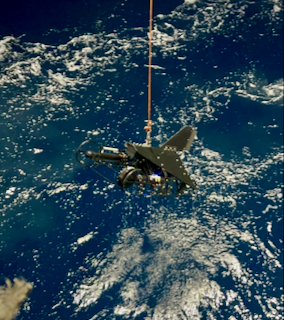
– The Video Plankton Recorder (VPR) being recovered

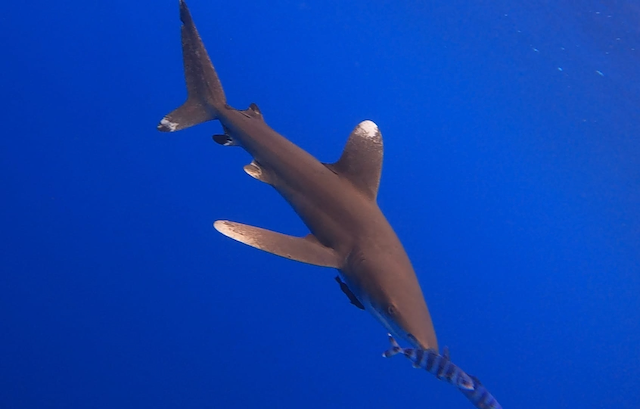
Besides all the exciting science operations, we were treated to some incredible wildlife sightings: oceanic white tip sharks, petrels, boobies, a whale shark (my first), a peregrine falcon (also my first), and even the Tsuchinshan–ATLAS comet (a first and last for all of us). It was a wonderful cruise filled with great people—thanks to all the volunteers, crew, techs, and scientists for making HOT 354 such a blast! I can’t wait for the next one.

– Our whale shark friend off the bow of the Kilo Moana. He ended up hanging out with us for around an hour or two!

– Tom Petty the storm petrel (if you know you know)

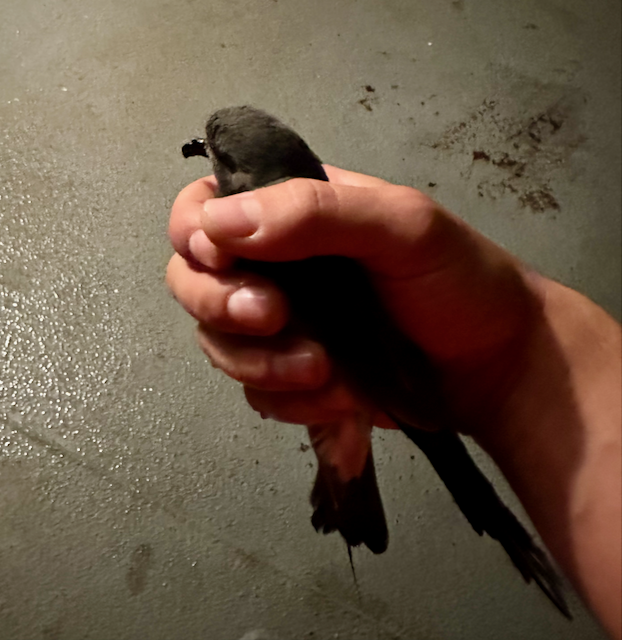
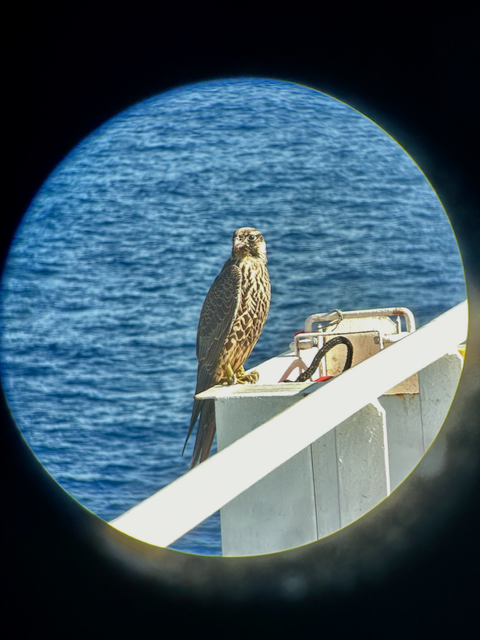
– A peregrine falcon who decided to hang around the boat for a few days (if you know you know)

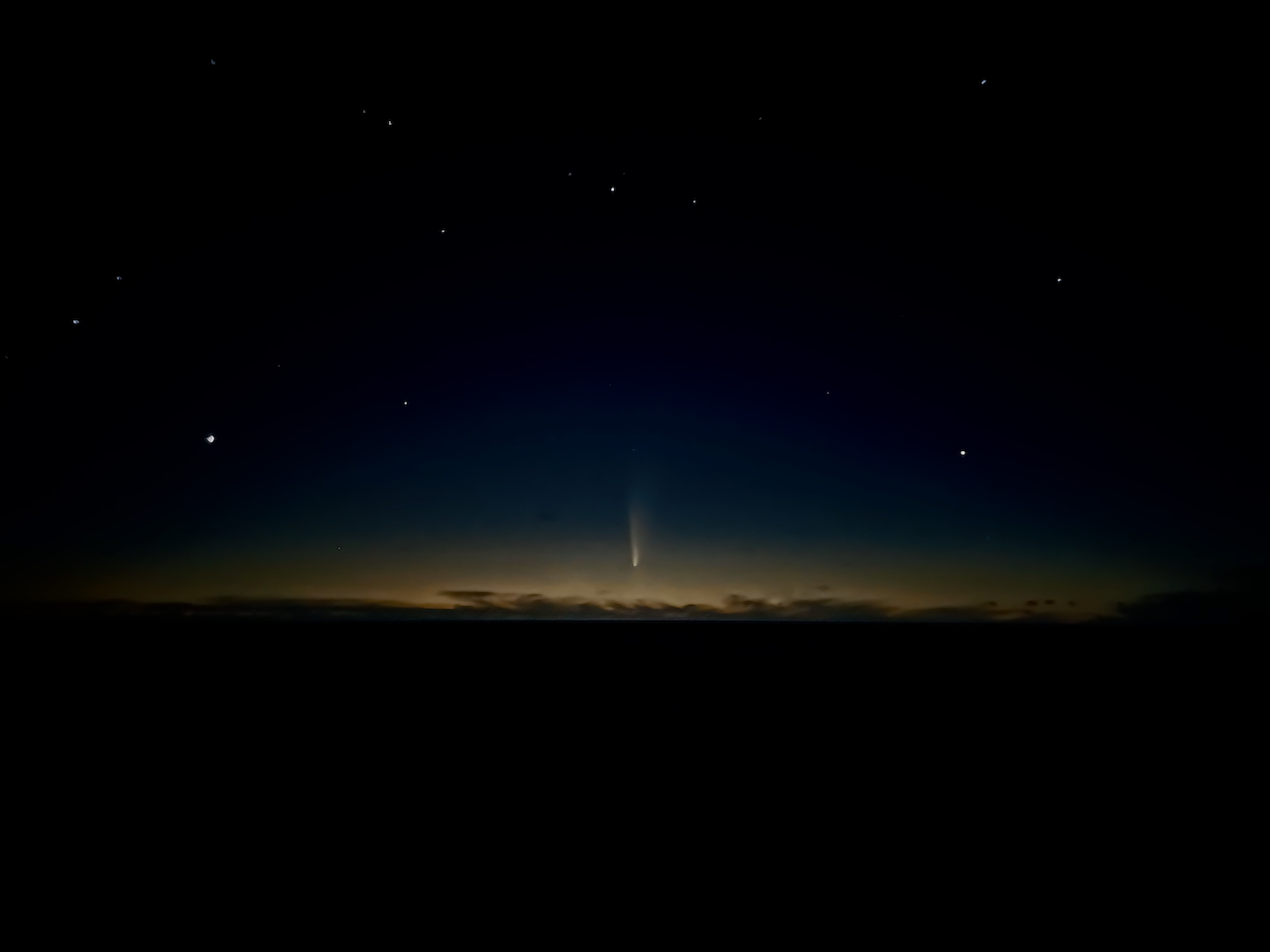
– Tsuchinshan–ATLAS from the back deck of the Kilo Moana at Station Aloha

After returning to Honolulu and unpacking, we enjoyed a few days of downtime before embarking on one of my longest scheduled cruises aka the South Pacific Ocean Cruise (SPOC). The purpose of this two month trip to Tahiti and back is to expand the measurments of oxygen- and carbon- based production and respiration rates across multiple biomes, throughout the euphotic zone, and over the full seasonal cycle. New technology has made big leaps in how we’re able to observe these rates and this cruise will be an excellent opportunity to expand the number of measurments made in the open ocean and also help validate satellite-based production estimates. The cruise will cover 18 stations between Honolulu and Papeete French Polynesia whith a mix of long (~2.5 day) and short (~0.5 hours) stations. 

This is a very exciting cruise to be on in terms of the science it aims to do and the operations it will conduct. I’ll learn how to use instruments like the underway CTD, wire-walker, and various floats. Plus, I’ll be running CTD casts with Briana on the opposite shift. We left port Saturday morning after completing our safety drills and successfully conducted the CTD test station near Oahu. However, shortly after that, the ship’s general alarm sounded—we had a “oh this is not a drill” moment as water was discovered in the starboard generator room. Thankfully, it was only a loose coolant hose, but we did have to return to Honolulu for repairs.

With everything fixed and checked over, we’re back at sea at the start of the SPOC cruise! My next post will be in two weeks once I’m more settled into my routine. I’m excited to share my experiences and everything I’ve learned!

Catch you in the next post,

Hunter

In Between Days ~ In Between Cruises (Week #2, Briana Prado)

Week #2 – In Between Days ~ In Between Cruises

Offloading HOT and Preparing for Tahiti

We arrived at port early on 10/14 after an exciting and pretty well running cruise. The scientists were quick in offloading boxes and materials, and we were off to the University of Hawaii at Manoa by about 9:00. Dan, Hunter, and I offloaded the boxes in Dan’s office, and we were done with the day by 10 a.m! Again, the HOT team has got these routine field work sampling campaigns down to a ” T”, so the rest of the day was ours!

– Dan Fitzgerald and I cheesing it up after a succesful HOT Cruise 🙂

The following day (10/15), I got a ride from Dan to the UH Marine Center to help the Ocean Technology Group, Ben and James set up a Connectivity, Temperature, and Depth (CTD) sensor in preparation for the Tahiti cruise. Since this is not a HOT Cruise the Ocean Technology Group (OTG) crew needs to set up a new CTD Rosette (which they have 2 of!). This is also in the best interest of the HOT Team since those cruises happen so frequently and are so short, that nothing must mess up with the instrumentation that HOT uses.

To prepare the CTD, we replaced three different types of sensors (Oxygen, connectivity, and temperature) and their duplicates. The CTD contains duplicates of each sensor as a way to verify that the data is sound and to limit the amount of sensor drift, a phenomenon where the data slowly gets skewed as it progresses through the cast. Marine Technicians or OTG observe the CTD data on the computer console inside the ship as the CTD-Rosette travels to depth, to make sure that we are not getting any drastic results that would tell us that the sensor is not working. 

Once the CTD sensors are replaced and calibrated, we lodge the CTD head back into the frame of the rosette and start strapping the CTD with zip ties and electrical tape ensuring that we don’t cross any wires or cause unnecessary rubbing on metal-to-metal or chords directly on metal that could cause bends in the wires that could damage communication from the CTD to the ship. We also strapped in other auxiliary sensors like the Photosynthetically Active Radiation (PAR), Video Plankton Recorder (VPR), Transitometer and a Radiometer that give us other information that enhances our understanding of what the water column looks like.

Drilling in the CTD Bridal that helps hold the CTD up while its being casted. 

On Wednesday 10/16, we began loading for the South Pacific Cruise that was to set sail on Saturday 10/19. This looked like moving a lot of boxes containing incubators, filters, and bottles onto a UH van and then transporting them onto the ship, sorting them into their respective rooms and labs, and starting to unpack. This process feels a bit chaotic but it definitely builds excitement. In this process of moving in, it finally dawned on me that I was going to be at sea for 37 days, which simultaneously felt really long and very short and kinda intimidating. We are going to be so far and isolated from the rest of the world that if anything were to happen, we’d be a couple days away from your typical medical amenities which is totally not scary at all right, right?

Thursday was a bit of a rest day as the ship was on sea trial. Sea trial describes the process of taking the ship out to sea under realistic conditions to make sure that the ship’s machinery is operating properly, that equipment is working well, and getting a realistic view of the ship’s speed, maneuverability, and safety features. Due to this being ship-focused, the science team was not needed that day, which I used to catch up on some reading and emails. 

On Friday (10/18)  however, I got pretty cool training on how to utilize the Hawboldt Winch. A Hawboldt winch is the machinery that pays out or retracts coil to the Launch and Retrieval System (LARS) , a mechanical looking arm that transports the CTD Rosette on and off the boat. The Hawboldt winch is largely specific to Kilo Moana, as most other research vessels typically deploy their CTD-Rosette using an A-frame or from the side of the ship. Although I will not be using the Hawboldt winch, the OTG figured it would be good for me to know how it operates and to understand what the operator is seeing when we are deploying the rosette. It’s definitely helpful when maybe there is a miscommunication or just understanding what the winch is capable of and I could help the operator or they can help me, best handle the situation.

– Learning all about the Hawbolt Crane from one of the OTG techs aboard the KM!

On Saturday 10/19 we arrived at Kilo Moana at 0800 am to set sail at 0900. On sailing day there are a few orders of business… 

Safety Meeting – understand what the ship’s safety measures are, typically hosted by the captain and the chief mate.

Safety Drills – where we learn about the different drills and practice one. When we are dismissed from the safety meeting we go to our rooms to pick up our life vest and GUMBY suits and meet in the staging bay.

Test our instrumentation (CTD and Trace Metal CTD) in our underway station.  

We had just finished with both of our test casts when we heard a call that sounded like a dog yelping but actually turned out to be an abandoned ship siren! There had been a failure of the cooling hose which resulted in some flooding in the generator. Thankfully the crew responded to the situation swiftly, but it did result in the ship having to return to port to assess the damage, let things dry out, and get any new parts that may be needed. Not surprisingly this really dampened our spirits but we were thankful that everyone was safe and that we could make it back to port.

I stayed back on the ship to finish unpacking and to decompress. And finally got to visit Ala Moana- Magic Island to watch a nice sunset and catch a glimpse of what’s left of the comet. 

– Sunset from the Ala Moana Magic Beach Park

Cheers,

Briana 

H-O-T (#354) T-O G-O (Week #1, Briana Prado)

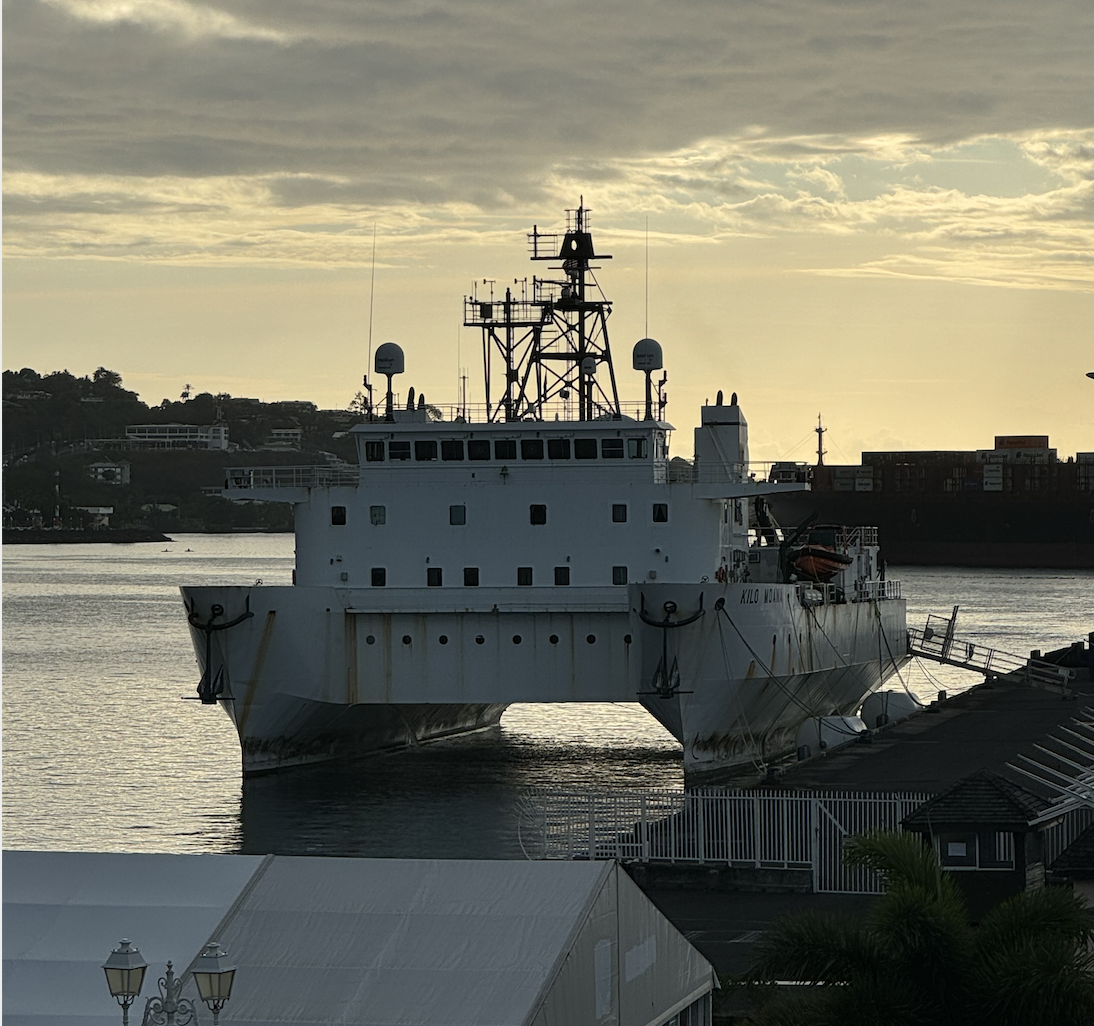
– The Kilo Moana ^

Week #1 with the Hawaiin Oceanographic Time Series (HOTs), expedition #354 proved to be a HOT dive into the wide variety of science that takes place at Station A.L.O.H.A (A Long-Term Oligotrophic Habitat Assessment)! This is an area of the ocean that is about 60 miles north of Oahu that has been routinely sampled since 1988 and is one of the longest oceanographic time series in the world! I am very thankful to been given the opportunity to work with them this week as this short cruise was a really nice training ground for all things CTD and working at sea! 

My internship started on October 7th, 2024 with a mini symposium held by Schmidt Sciences and University of Hawaii at Manoa (UH) oceanogrpahy professors and scientists. They presented on the work that they were working on and could potentially collaborate with the larger and developing Ocean Biogeochemistry Virtual Institute (OBVI) that is supported by Schmidt Sciences. 

This symposium was really insightful as it introduced to me a lot of the researchers and the science that they do and I might be supporting in the next 10 weeks. The symposium also drove home the impact and importance of the Hawaiian Oceanographic Time Series (HOTS) is to the larger scientific community which gave me a lot of context into the spirit of this mission. Models have demonstrated that it takes about 42 +/- 7 years for climate change signatures to appear in models, but unfortunately many time series don’t get enough funding to reach that length, thus it is essential for long standing scientific endeavors to get the consistent funding and resources they need to continue.

On Wednesday 10/9 I assisted in “Loading Day” and got to meet members of the science party, ship crew and one of my mentors, Dan Fitzgerald . After we loaded boxes onto the ship, I got to observe Dan create a termination on the sensor cable on the CTD, a HOT cruise monthly tradition. The sensor cable is responsible for relaying all the information to the ship in live time, without it can be really difficult to know where you are in the water column, or observe areas of interest that you might want to take a water sample from.

– Hunter Adam and Dan Fitsgerald working on the CTD Rosette 

Conducting a new termination (the process of exposing new wire from the cable, splicing, crimping and soldering wires together) is essential to maintaining and repairing any issues caused from things like corrosion and rusting. Conducting new terminations monthly is essential for ensuring signal integrity from the CTD and keeping things running smoothyl given that HOT cruises are short (anywhere from 4-5 days) and ship time is expensive.

Once we set sail the following day, we got to check the integrity of the CTD termination with a test deployment of a set of weights with the bridal attached in Station Kahe (an underway practice station), before deploying it later that evening at Station A.L.O.H.A. During these troubleshooting trials we observe that there was a mechanical issue with one of the oxygen sensors on the CTD so I also observed how Dan swapped out sensors while in the rosette frame, which is quite tricky! Once we left Station Kahe, I went straight to bed to get ready for my 12 hr shift starting at 3am the following morning.

– The CTD Rosette being transported by a Hawbolt Whinch crane overboard in preparation for a cast

In the following days I helped with the deployment of atleast 8 CTD Rosette Cast. I learned how to caulk the bottles and reel it in and out of our CTD shed and general CTD Rosette handling. As well as learned how to communicate with the wrench crew when firing bottles over walkie talkies. Additionally It was really interesting to learn about the wide varieties of cast to be done and how the water is used based on the researchers’ different water needs. For example some scientist are looking at oxygen, or dissolved inorganic carbon (DIC), dissolved organic carbon (DOC), nutrients (Nut), salinity, ATP, particulate carbon (PC), particualte Nitrogen (PN) all of which contribute to the great collection of data that is the Hawaiin Oceanographic time series.

– Cast sheet and schedule posted showing what depth the CTD is being sent to and what depths the bottles will be fired at. 

– I got to sit at the CTD console and fire some bottles, this is me holding my cast sheet. 

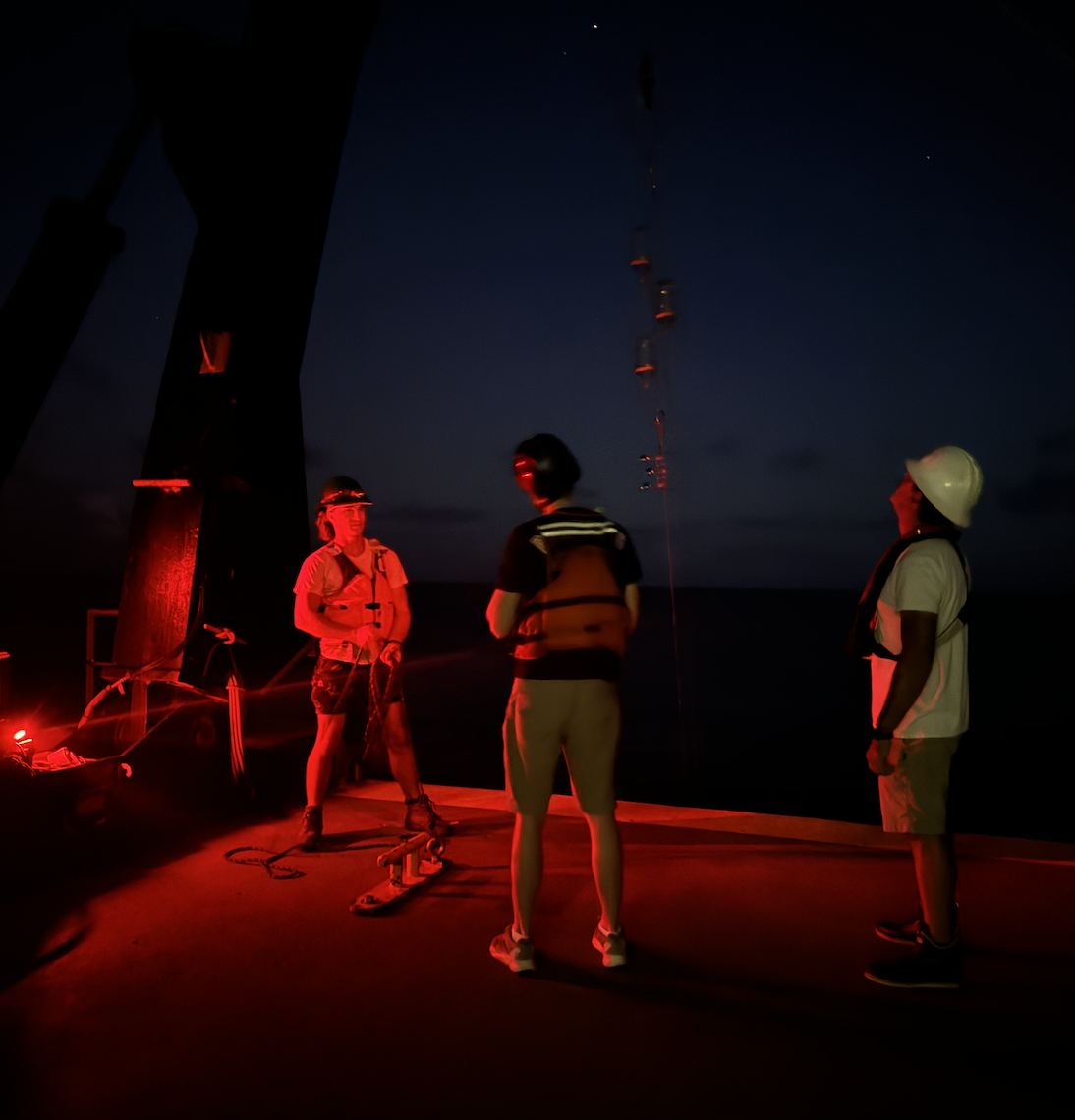
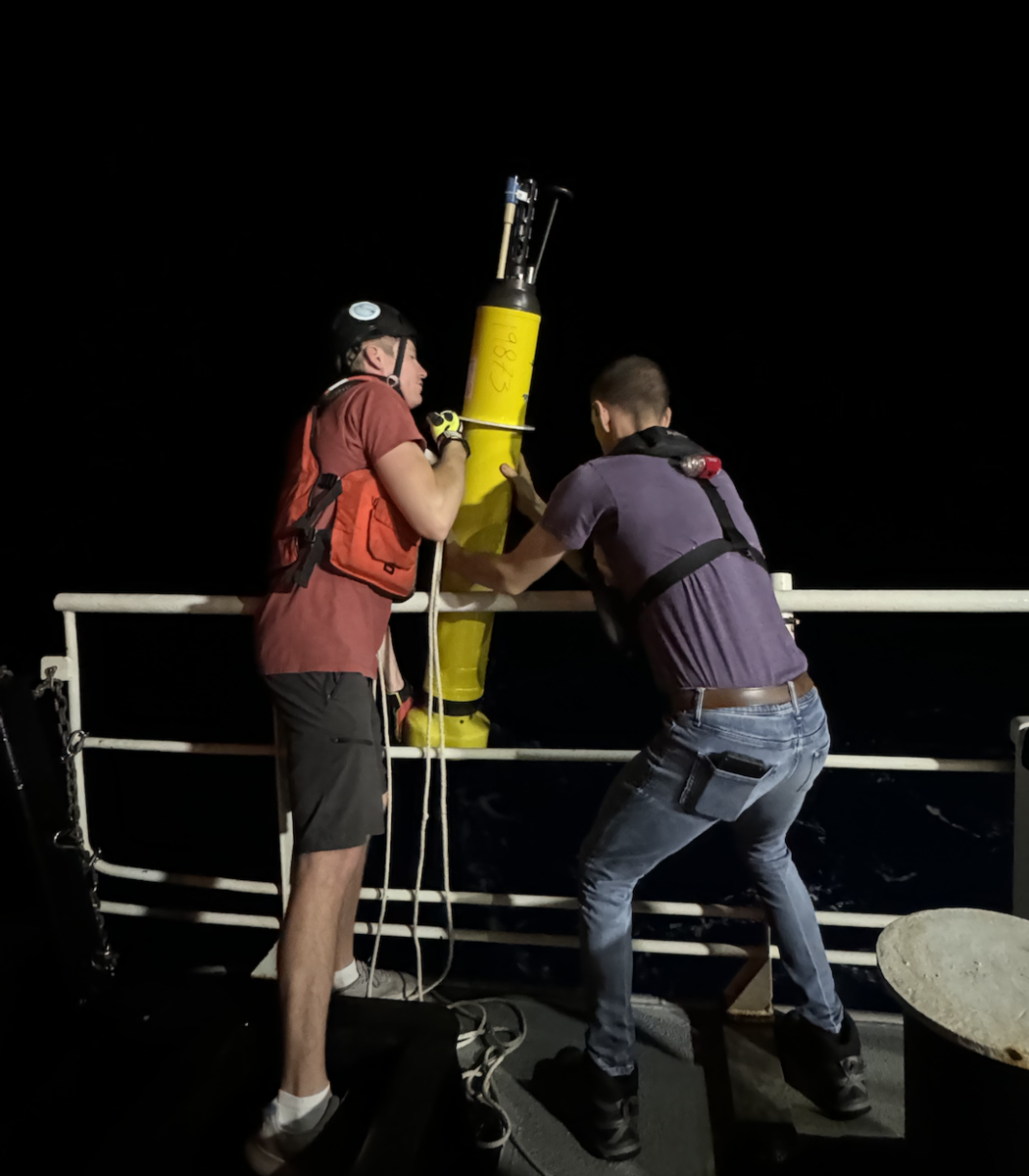
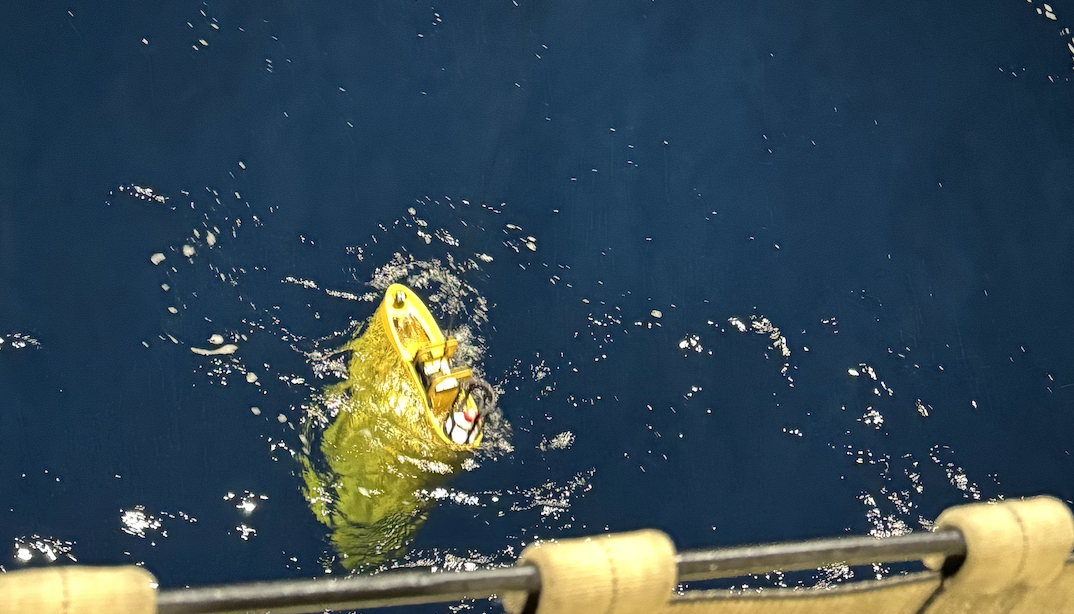
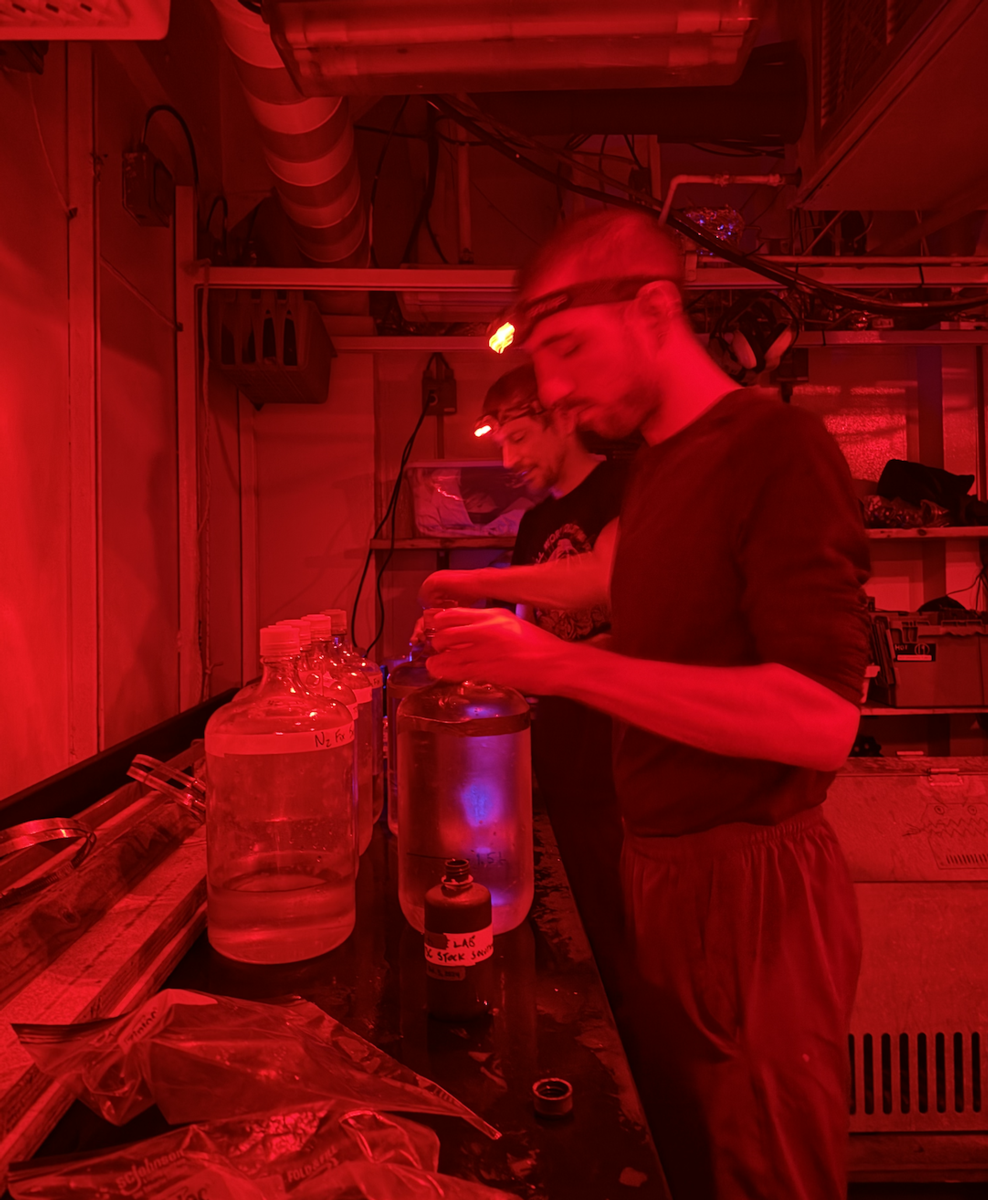
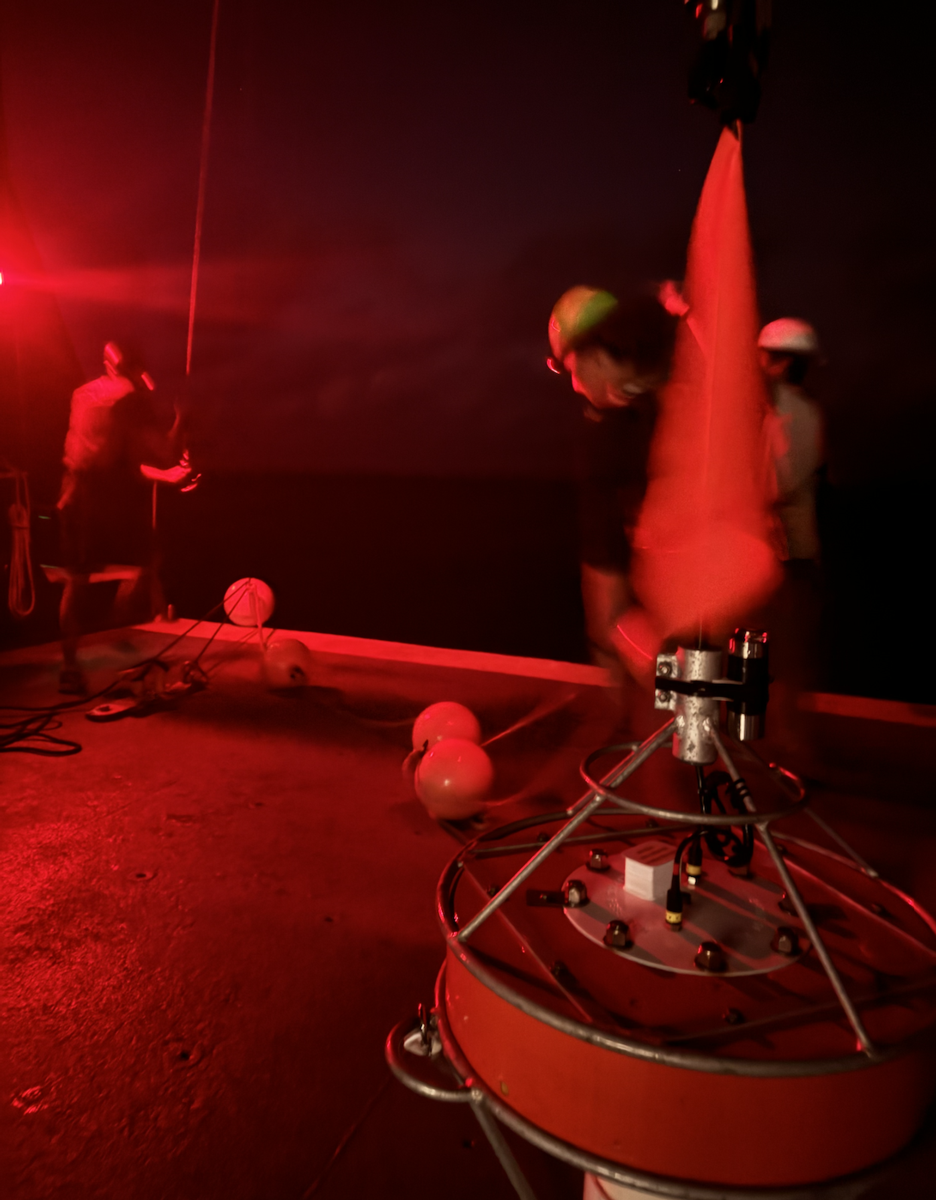
There were a lot of moments that blew my mind this week (like seeing a whale shark in the wild!), but I’d say one of the most impactful things I observed on the cruise was a Gas Array experiment take place from start to finish, a true testiment to the rigors of doing science at sea! By the time my shift started at 3am on 10/12 the CTD had already been brought up and was ready for water sampling. Mattias (an undergrad researcher) and Dan Sandler (HOT Cruise OG) invited me to collect the water in jars and enrich it with N15, a stable isotope that can help track the net production of Nitrogen by Nitrogen fixing plankton. Once those water jugs were filled, they were attached to metal rods and then attached to a line and then deployed on a buoy using the A-frame. These water samples are to sit in the water column at the depth that they were collected for 24 hours before being retrieved.     The retrieval process however, is quite dramatic given that it’s done in the pitch of dark (10/13 at 5:30 am) and the Kilo Moana is a double hulled boat that could potentially “run over” buoys or have it get caught in the propellers if the navigation team and scientific crew are not careful. I watched in suspense as we approached the buoy the samples are attached to and watched the bouy slowly dogde the middle of the R/V Kilo Moana and float past the side of the hull, phew!!! Mattias and Hunter (fellow UNOLS-MATE intern) bravely threw grappling hooks overboard to get some control on the buoy, and swing it to the stern of the boat, where the Ocean Technology Group (OTG) and deck crew were ready to latch a stick with a hook to the line and start wringing in the buoy on the back deck using the boat’s A-frame. Once the bouy was on the ship we all breath a sigh a relief, we had succesfully retrieve our samples without any issues!  

It’s astonishing how well HOT Cruise #354 went, the scientific party and crew have this expedition down to a T! HOT Cruise #354 proved to be a wonderful primer to the type of work we’ll be doing on the South Pacific Cruise I’ll be embarking on next week. We expect to be doing a lot of CTD Rosette Cast, Gas Arrays, Primary Productivity arrays and more so these skills will most definitly come in handy! 

– Fellow HOT Cruise #354 volunteers 🙂

Cheers,

Briana Prado

* hehe, here is said whale shark, taken via go-pro by one of the AB’s on aboard! 


L3W2: HOT Times in Honolulu

Howdy and Aloha from Honolulu everyone!

I can’t believe I’m finally here for my six-month internship’s third and final leg. After the USCGC Cutter Healy had some technical issues delaying the scheduled October to December GO-SHIP cruise, I had the opportunity to come back to Hawaii and work aboard the R/V Kilo Moana for round two! It feels great to be back and I’m stoked to be working with the awesome Hawaii Ocean Time Series (HOT) and Ocean Technology Group (OTG) teams again.

 The R/V Kilo Moana (photo credit to Multibeam Advisory Committee, UNOLS)

– Honolulu sunset from Magic Island

These past two weeks have been a whirlwind of activity as we gear up for some exciting science at sea. I’ve been assisting in the preparation of these cruises where possible and helping the researchers who are knee-deep in pre-cruise checklists (including old mentors such as Dan Fitzgerald and Tully Rohrer)! From maintaining instrumentation such as SBE 37-SM MicroCATs and CTD sensors on campus to helping with the tedious (but oh-so-important) task of acid-washing various sampling bottles at the UH Manoa Marine Center, I’ve been getting my hands dirty in the best way possible. Along the way, I’ve picked up some mad forklift and splicing skills! We’ve also been testing equipment, such as decade-old temperature incubators, to make sure we’re all set for our upcoming voyages. 

– Getting forklift certified with crew from the Kilo Moana

– A whole lotta 10% HCl acid-washed bottles drying

Speaking of upcoming voyages, fellow MATE intern Briana Prado and I have a packed schedule while we’re here in Hawaii. First up is a 5-day HOT research cruise – short but sweet and luckily something I’m experienced with from last year. It’ll be a great opportunity to review old operations (such as deployments/recoveries for CTDs, arrays, nets, VPR, and Hyperpro) and learn some new skills in preparation for our next cruise. The real adventure kicks off after that when we join a two-month South Pacific research cruise to Tahiti that aims to expand the measurements of primary production and respiration rates in open ocean regions. Two whole months at sea, can you believe it? I’m very excited to join this collaborative expedition between several research institutes and work with a variety of new equipment including wirewalkers, underway CTDs, and Argo floats! 

I’ve got to say, being back in Hawaii is just… *chef’s kiss*. It’s been great to reconnect with old friends and get back to doing what I love. And knowing that I’ll be contributing to important oceanographic research makes it all the more special. 

Please tune in for my next blog post which will include more details about the HOT 354 cruise! I’ll keep you all updated on my adventures as much as I can. Until next time, mahalo for reading, and catch you on the flip side!

-Hunter

UNOLS MATE Introduction: Briana Prado

Hi y’all,

Briana Prado here, I am thrilled to share that I’ll  be boarding the RV/Kilo Moana this October through the UNOLS MATE Internship. I’ll be joining in on 3 legs of expeditions that all have their own unique set of goals and objectives! The first leg entails working on HOT Cruise #353 in a site North of Oahu to conduct a routine sample collection of a suite of environmental variables . The second leg entails traveling from Honolulu to Tahiti on a biological expedition. The third leg would be a transit back from Tahiti to Honolulu doing more observational analysis and assisting in trouble shooting instrumentation. I really look forward to learning about all the different instrumentations and types of analyses we will be doing under these three different legs of cruises and how to best support these cruises!
A little bit about me.

I recently graduated from CU Boulder with a masters in geography where I gained experience in remote sensing, quantitative analysis and geochemistry. In undergrad I majored in Chemistry and Earth Science at UC Santa Cruz and participated in undergraduate research ranging from studying below ground biomass of tree saplings, to the photo-oxidation of plastic under UV light to sampling chemical communities during a time series off the coast of San Diego. Right before graduating I had the opportunity to go out to sea as a volunteer with Dr. Anela Choy and Dr. Phoebe Lam’s deep pelagic food webs cruise which gave me a brief introduction  to an array of oceanographic instrumentation and what a career at sea might look like.

Thus, I am so excited to dive deeper (pun intended) and get practical hands-on experience collecting and processing chemical and biological samples, troubleshooting instrumentation, and supporting the amazing research teams out of the University of Hawaii at Manoa. I know that I will learn a lot! I am so thankful for the opportunity to be out to sea and I’ll keep y’all posted in what I find! 

When I am not in school, I am most likely biking to a coffee shop, going down wikipedia wormholes, reviewing 70’s and 80’s rock indie albums and substitute teaching. 

Cheers,

Briana 

P.s  I really can’t wait to see a Mola Mola (sunfish) in the wild!


Introduction: Sergei Avetisyan

Hi! I am Sergei Avetisyan, though I often go by “Ziggy” informally, and this summer I’ll be interning aboard the R/V Kilo Moana!

I am an undergraduate at the School of Oceanography at the University of Washington, with a focus on marine technology. I absolutely love spending time at sea and solving complex technological problems, which is why I aspire to be a marine technician. My dad, a cunning captain of his 33ft Hunter sailboat, is the one who hooked me on seamanship. After going on an expedition aboard the R/V Thomas G. Thompson, however, I knew that big ships out in the big ocean were the place for me. The intersection of intellectual and physical challenges is where my happy place lies, and the opportunity to work in this intersection while at sea is what excites me so much about being a marine technician!

Some fun facts about me:

  • I have a love-hate relationship with chess
  • Traditional woodworking with hand tools is how I unwind and relax
  • Leathercraft is one of my more recent hobbies, I enjoy working with something softer than wood now and then.
  • I play guitar decently and piano poorly
  • Rowing (crew) is my sport of choice

I’m so thankful to the Kilo Moana crew for having me on board, and I can’t wait to see what exciting work this internship brings!


Week 5: HOT 346

Howdy all,

The fifth and final week of the MATE internship was another opportunity to work at sea on HOT 346. This cruise repeated the same operations performed during week one of the internship.

Once again after loading for the cruise on Friday and setting sail Saturday morning we were on our way to Station Kahe to perform our weight test cast, hyperpro casts, and trace metal cast. After these successful operations we were on our way to Station Aloha to start our main sampling operations. After having worked on one HOT cruise already I was much more confident performing deck operations, using radios to communicate, and getting more involved with whatever task was at hand. This included launching and recovering the rosette/CTD system, prepping for trace metal casts, performing hyperpro casts, assisting with net tows, launching/recovering arrays, launching/recovering the VPR system, and firing niskin bottles in the CTD lab. 

The cruise was going smoothly until a weather hold had to be issued because sea conditions were too rough to risk deck operations. For approximately 9 hours, all sampling and equipment deployments had to be halted for the safety of the HOT team, crew, and equipment. This delay forced the sampling schedule to be reworked to maximize the remaining ship time. Again, this was another opportunity to learn about the challenges of working at sea. Conditions such as this are not abnormal when working during the winter months around Hawaii and have to be accounted for. 

After the weather hold was lifted operations continued like normal and we were able to finish our sampling at Sttaion Aloha, the WHOTS mooring, and Station Kaena.  Upon returning to the marine center and unloading the equipment that was the end of the internship. HOT 346 was a great opportunity to actually practice some of the skills I had developed over the last cruise and over the weeks on land. Overall, the MATE internship was a positive experience that gave me valuable skills and insight I will need to work as a marine technician. 

Best,

Hunter

Week 5: Rockin’ and Rollin’

Happy Saturday! We are back on the R/V Kilo Moana for the last cruise of the internship—just 5 more days of sea-time and adventures in the North Pacific Ocean until I return home to Seattle. The nice part about the cruise is I know exactly what is happening this time and feel more confident assisting with deck operations and asking better questions. Most marine techs I have met have explained this exact feeling—each cruise gets more familiar and you will feel more confident with your skills as you continue to settle. I am counting down the days until my next cruise, wherever that will be!

The days of the cruise tend to blur together for me but I remember the exact moment the excitement happened. I was assisting Trevor with a CTD deployment in choppy waves and decently strong winds. I held the walkie-talkie and was communicating with the bridge when the CTD was starting to drift under the boat. Almost immediately, Trevor took back over control and was not-so-calmly asking the bridge to move the ship ASAP because the wire angle was too much and he worried the CTD would get stuck in the prop—an expensive issue. From that point on, the weather dictated most of our operations and made it difficult to fall asleep with the crashing waves between the hulls of the ship. The big waves and strong winds halted operations for 8 hours while the science and OTG teams created a new plan.

The following 3 days blurred together with deployments and recoveries happening back-to-back to make up the time we lost. Lots of CTD casts, trace metal casts, net tows, and VPR casts kept us busy. Kelsey, on the science team, was armed with a camera through most of it. To wrap up my blog for this internship, please enjoy many photos of my last few days on the Kilo Moana.

I absolutely loved my time on board the ship and created many great memories throughout the internship. I would like to give a huge thank you to the HOT team, OTGs, and the crew of the Kilo Moana for hosting me and supporting me through an unforgettable 5 weeks in Hawaii this fall! Thank you so much!

Jenn

(Dan Sadler, Fernando, me, Hunter, Carolina, Dan Fitzgerald)

Page 2 of 5

Powered by WordPress & Theme by Anders Norén