Hello world,
Justin Miyano reporting from the Bering Sea/Bering Straight. It is day 7 of my MATE internship and day 5 since we have gone underway. The water has been a little rough today but nothing unexpected.

Figure is of our current location.
I realized that I had not introduced myself in my trial blog post so here it is:
Born and raised in Japan, I have always been drawn to the ocean whether it be hanging out at the beach, learning how to surf, or seafood. That led to my undergraduate career pursuing a degree in biology with a focus in marine biology. I graduated from the University of Hawaii at Manoa in 2014, and after a few volutneer positions, internships, and working for UH, I made it here as a Marine Advanced Technology Education (MATE) intern! Ever since I first sailed on a University-National Oceanographic Laboratory System (UNOLS: https://www.unols.org/) vessel and observed the techs onboard, I have been attracted to the career of a marine technician. While the USCGC Healy is not a traditional UNOLS vessel, being on an icebreaker and witnessing the colleboration between various research institutions and the US Coast Guard is pretty spectacular, not to mention I WILL BE IN THE ARCTIC.
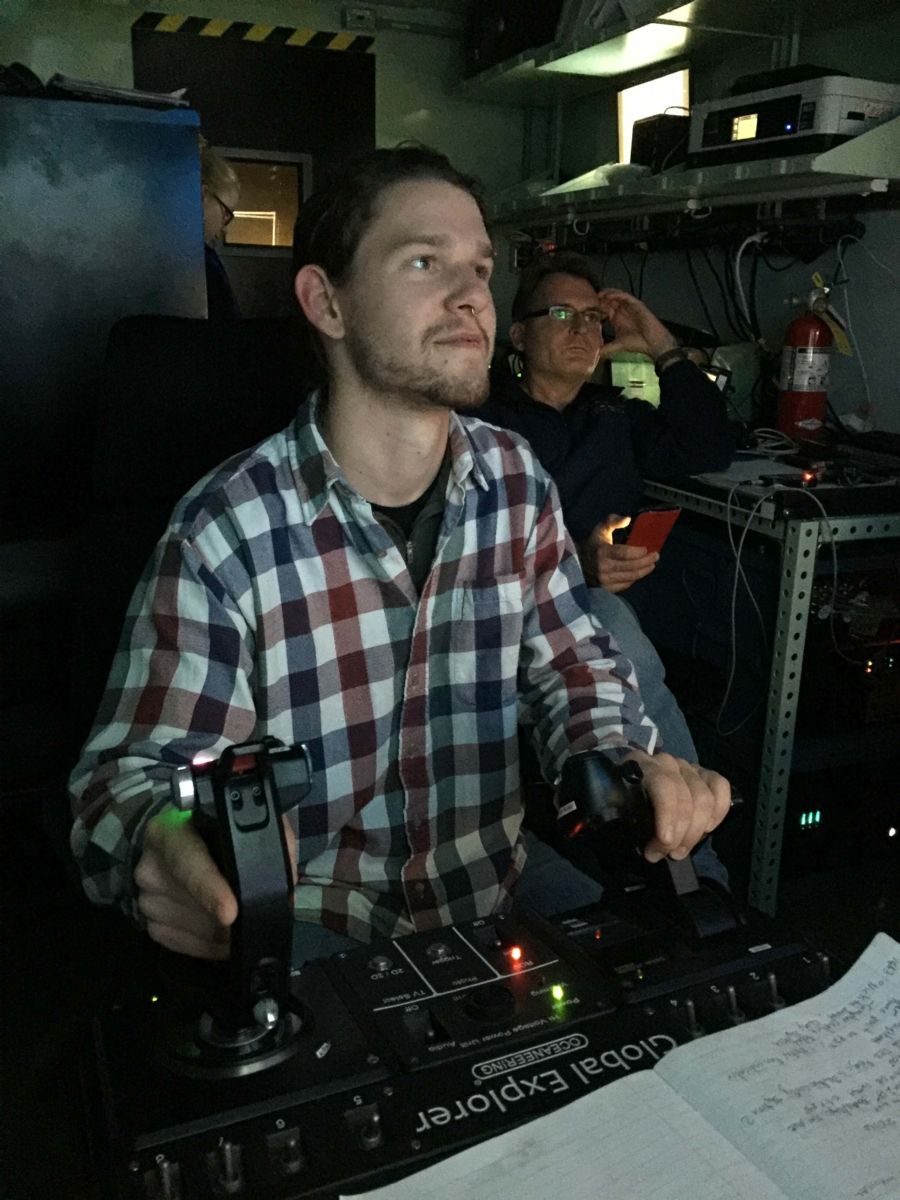
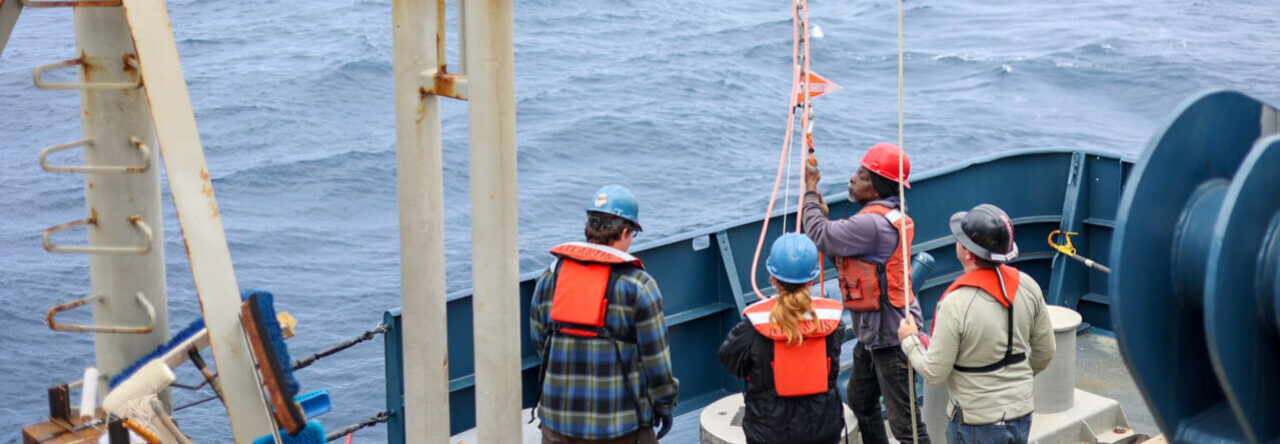
So here we are, day 5 underway. As a MATE intern, I have been shadowing the two STARC (Ship-Based Scientific Technical Support in the Arctic) technicians Brandon D’Andrea (Oregon State) and Keith Shadle (Scripps) as they prepare for the science mission ahead of us. Onboard we have scientists and personnel from Scripps Institute of Oceanography, Woods Hole Oceanographic Institution, Naval Postgraduate School, University of Miami, Oregon State, and OASIS INC.
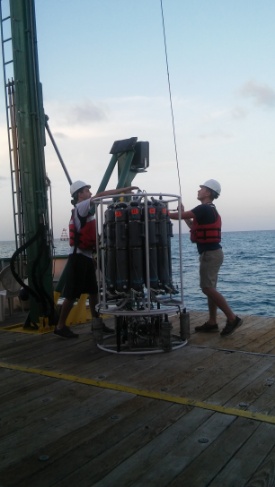
Under the umbrella of resposnsibilities of marine technicians, there are equipment and sensors that collect data such as meteorological data (i.e. air temperature, wind, humidity), vertical depth profile data (echosounder/singlebeam acoustics), position and orientation of the ship (multiple GPS systems and Motion Reference Units (MRUs – sensor for roll, pitch, and yaw)), seafloor mapping (multibeam acoustics), and the Conductivity-Temperature-Depth system (CTD; a package of electronics and large bottles that are sent down to collect such physical properties of the seawater corresponding to depth and can also capture water samples). Some of these I have seen and worked with a little, but each ship has its own unique set up, and it has been fun following the technicians and learning about how to prepare these devices/systems. As a matter of fact, there have been issues where some of the computers were not reading the incoming meteorological and GPS data, and the technicians have been running around the ship to locate the source of the problem. There are still some other systems that I have not listed that are critical to research cruises but I will talk about them another time.
We will probably enter the Arctic Circle tomorrow. I am fully expecting to be greeted by some narwhals at the entrance.
*Because of limited internet, I could only post one image. More to come in the following posts.