Category: Host Page 34 of 85

Week 4: Making connections to the Network and Plumbing Projects

I am really enjoying the work environment and crew onboard the F.G. Walton Smith, it is very collaborative as we brainstorm solutions on how best to do projects or how to fix problems that arise. Everyone trusts, respects, and has each other’s backs while also joking around and having laughs all day. It’s the little things. Over the weekend, we went kayaking out to an old wooden shipwreck ~2nm offshore, where we anchored up and went snorkelling, it was super fun! 

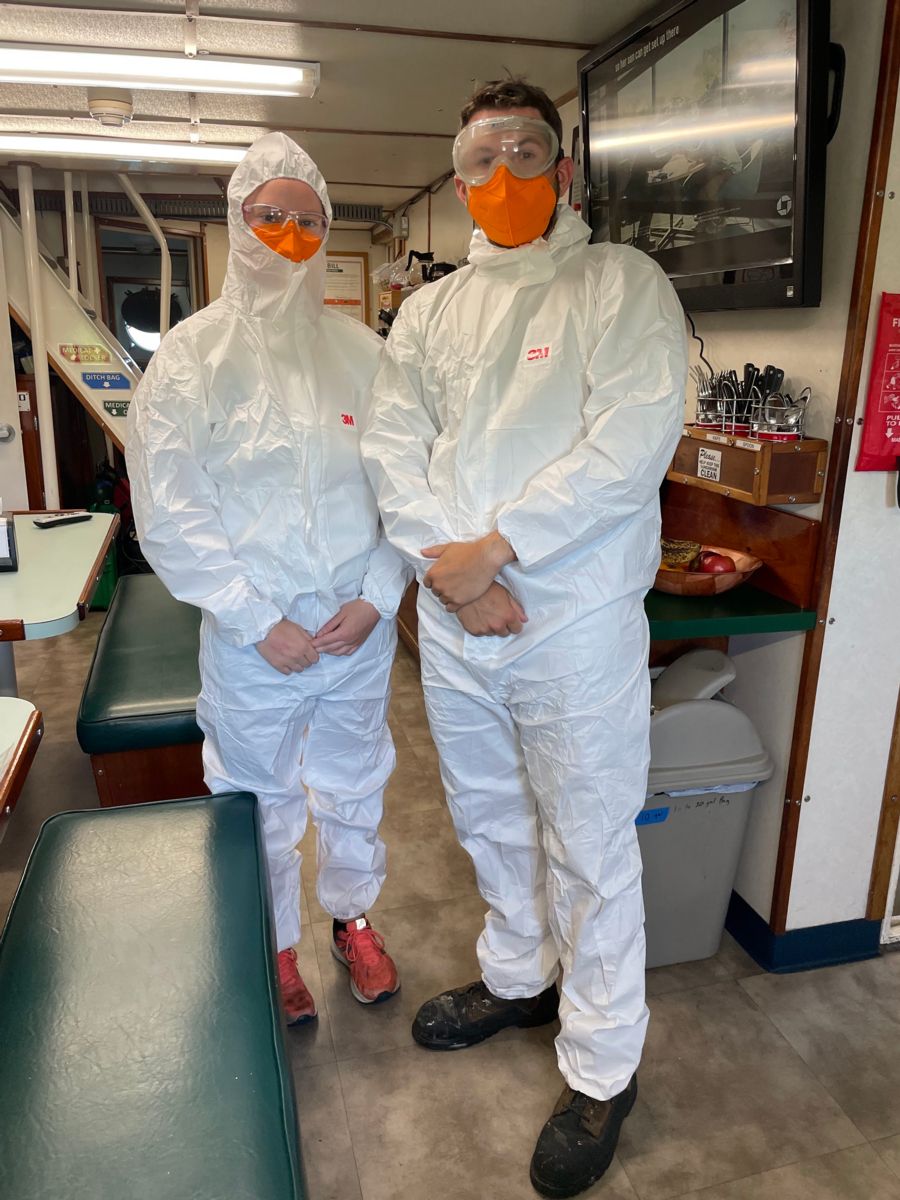
On Monday, Alesha and I attacked the Head Vacuum Pump that created suction for the head system and fed into the blackwater tank. It was a dirty job, nonetheless we suited up and took the pump apart, cleaned the duckbill valves, and replaced the torn rubber gasket that created the suction for the pump. This is a picture of us suited up in Tyvex suits, goggles, and gloves:

Tuesday morning, we finished putting the vaccuum pump back together, after the silicon had dried on the rubber seal and pump shaft. In the afternoon, we continued our project with the Marine Tech on running Cat 6 wire from the Marine Tech Lab (where the terminal port is to connect to the switch, which then can be connected to Campus Safety’s server). Eventually, we will set up two more exterior cameras that will look down the port and starboard sides. We will use our newly acquired skills to make RJ45 connections to make a terminal connection in the overhead so that we can run an exterior grade wire out of the main superstructure to an overhang on both bridgewings. The picture below are the common tools that a Marine Tech may use for testing, creating, and removing connections through wire. This includes a multimeter to test voltages, amperages, resistance, and continuities when troubleshooting electrical issues, a scanner that can determine length of wire, connections between pins, wire cutters, and crimpers. 

On Wednesday, we started up the engines at 0800 and got underway around 0930 for a quick jog down through Stiltsville as a Vibration Technical Expert ran a vibration analysis on the hull of the ship. They are testing the ship before and after the engine swap in order to make sure the hull doesn’t lose any integrity from the vibrations of the engines. We made it back around 1100, just in time for lunch. Around 1230 we helped out with some crane operations to get the two life rafts off of the O-1 Deck to send off to get recertified and checked out by the manufacturer. We continued removing bulkheads to find a pathway for our wires in the afternoon. 

On Thursday, we got our wiring figured out, had to make a few cuts in the 2x4s in the overhead and fix some of the wooden bracings in the bulkheads. We then worked with the Chief Engineer to fix the broken check valve in the hot water system. After fixing the hot water system, we attempted to move the commercial sized refrigerator to do a favor for the cook and plug in a cord leading to the toaster. As we started pallet jacking it up, we accidentally snapped an old pipe that was from an older ice-box system, and water rushed out flooding part of the kitchen. We quickly shut off the potable water (part of the system we had just been working on with the hot water heaters) and went to work dewatering with a recipriocating pump. We ended up cutting a hole in the wall to put a permanent plug on the leftover piping. 

It has been a busy but highly productive week and it is rewarding to check some projects off the list and to work with this stellar crew. I learn a lot everyday and enjoy the people I am working with. 

Week 4 R/V Sharp

This week started the last leg of the survey as we headed out of Woods Hole and back out to sea. We started with habcamming briefly reverting back to a 12 on 12 off schedule to better assist the science team with the habcam and with annotating the pictures from the habcam. While it was mostly more of the same with the species seen through the habcam we did see plenty of younger scallops, more than were in leg one I believe. After a few days of habcam we went right into dredging once more in which we managed around 5 dredges per shift, though these dredges were smaller than dredges on the previous leg. Near the end of the dredging, the CTD winch stopped being able to rewind itself in the middle of a cast so the crew was forced to pull it back by hand, and we stopped doing CTDs after that as it wouldn’t have worked as well without the automatic rewinder. Dredging itself, minus the increase in loads done and the decrease in what was being brought up, was more of the same with the exception that halfway through dredging the net had to be switched out and replaced with a newer net as the previous one had some damaged links and was no longer completely safe to be using. It also had to be set up with a rock chain on it to prevent very large rocks from being brought up to the surface, rocks were brought up but nothing that couldn’t be brought to the side and thrown back into the sea. Other than those instances the final leg went by as usual dredging and collecting any scallops that came up with it until it was over. We took the scientists back to Woods Hole where they disembarked and took both the habcam and the dredging nets as well as several other items from the ship that they used over the course of the cruise. It was then an uneventful cruise back to Delaware where we took apart the rest of the machines and facilities used during the survey and stayed on the ship able to relax until the next day when the other intern and I would fly back. I really enjoyed this survey and I would be happy to do it again if I ever got the chance. I learned a lot of practical skills involved in working on a boat and I had a good time overall.

Introduction – Syenna Graham

Hey guys!

My name is Syenna and I am a junior in ocean engineering and computer science at Virginia Tech.

Ocean exploration is my dream job after reading 20,000 Leagues and then proceeding to obsess over deep sea fish and submarines since. 

Something rememberable about me for you all:

  • I drag race submarines 
  • I have a tortoise named thortoise

Looking forward to having you guys read along on my ocean robotics journey this summer.

Walton Smith Week 4: Completing many jobs for the Marine Tech, Chief Engineer, and Bos’n

This week has been very unique to say the least. We started by finding out that one of the crew members aboard had contracted the COVID-19 virus. They were put into isolation onboard and there was limited crew working each day.

Over the week, Kyle and I cleaned all the AC units onboard, with a biodegradable all-purpose cleaner, to remove any mold growing within the turbines. This took a few hours to do each as we had to take off the case, filters, and condensate drain to be able to access the turbines. All of that was cleaned along with the turbine before the AC unit was put back together and ran again. This was a nice project to do as it was very repetitive for each AC and did not require any assistance from any of the crew. I was just a small project for us interns. Another job we did was cleaning out the back of the golfcart. There was junk in the back to throw away as well as tools that were organized and put away. The back was then washed along with the rubber mat too.

At one point, the Marine Operations Manager passed along a video about a future cruise (October/November ’22) about deploying moorings. This was a very interesting video to watch. These moorings were to be set along a transect from Jupiter, FL to the Bahamas to record current data about the Gulf Stream. This data would show how the currents change over time and between stations. The data would be collected with nine inverted echo sounders, one at each station and would be collected for five years.

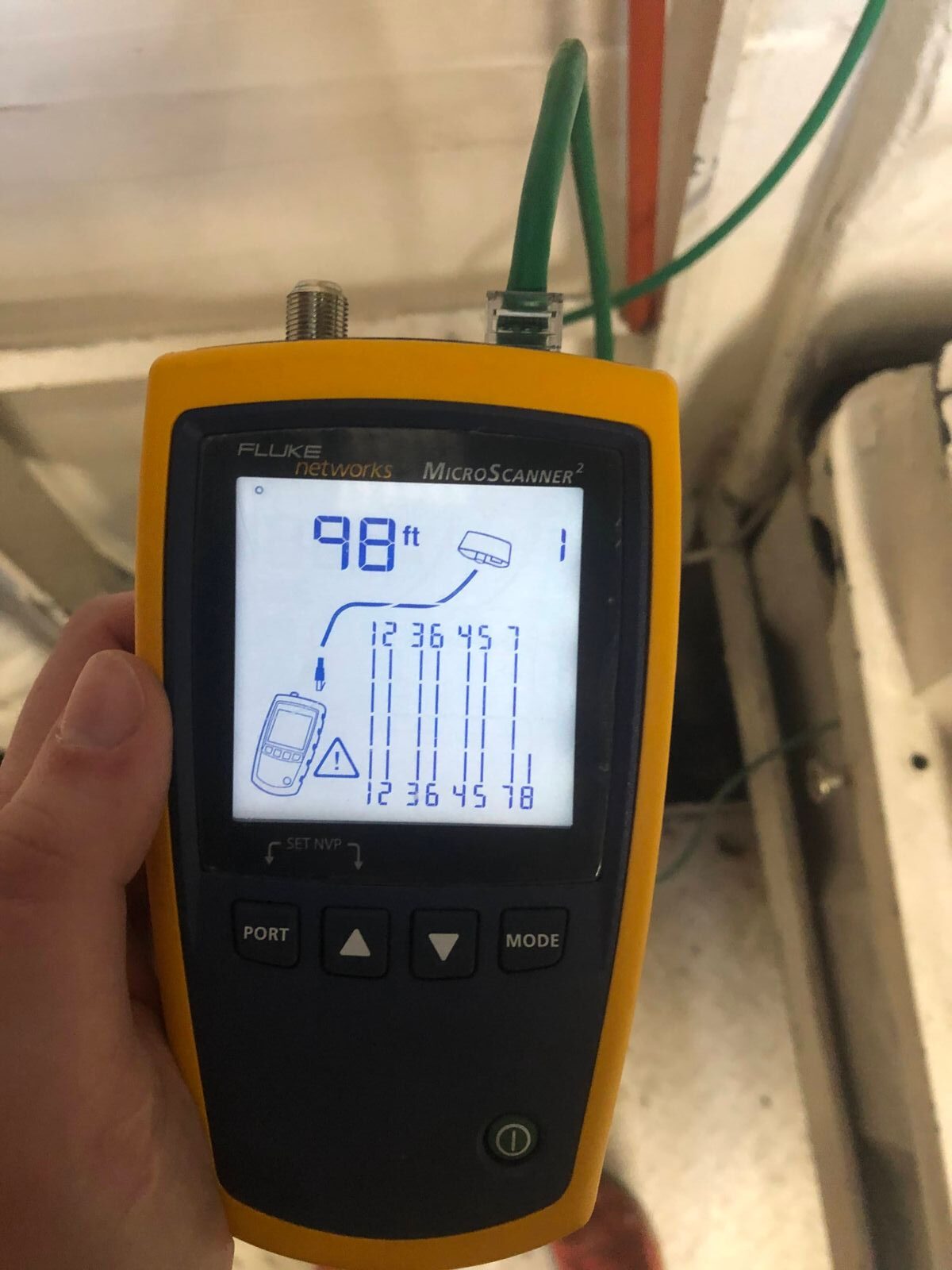
On the tech side, I watched some YouTube videos about Linux, networking basics (switch, router, gateway, firewall, and DMZ), IP addressing, and subnetting. We learned how to crimp Cat 5 wire to a RJ45 connector along with the keystone jack. After given that knowledge Kyle and I were tasked with the job to add a keystone jack to the existing wire to the camera in the bridge and then create a patch cable (length of Cat 5 cable with RJ45 connectors on each end) to connect the camera to the existing wire. Once that was completed and the camera was connected it was finally working again. We than did the same thing to the port engine room camera wiring. Once done, we connected the bridge camera, as the engine room camera is broken, to find out it still would not work. The marine tech then showed us some of the tools he has onboard to test cable to ensure that the cable is in working condition. We used a MicroScanner Cable Verifier to troubleshoot the cable and connections. This device was able to tell us if there was a short in the wire, open or crossed wire, and the length of the wire. After scanning from different connections that the wire would transmit to, it was determined that the wire was in working conditions and this was a problem on the campus IT side. After this project, our new project was to run cat 5 cable from under the port and starboard nav light platform (to add new cameras) all the way down to the tech space to connect to the switch. In a few hours we were able to run the cable through the ceiling of one of the staterooms and onto the racetrack where it then was able to follow the other wires down to the tech space.

The last job completed with the engineer was finally replacing the rubber diaphragm to the pump for the black water. Today, 6/13, Kyle and I were able to remove the diaphragm, with guidance from the engineer on the best way to remove the connecting rod and assembly. We were able to remove the diaphragm and connecting rod and clean it and then silicone it to the new diaphragm per the manual instructions.

Over the weekend, I took it easy and relaxed one day, while getting a nice sunburn. The next day Jon invited Kyle and I along on a paddle board/kayak trip to a shipwreck on a shoal off Key Biscayne where we snorkeled the wreck. It was interesting to see as there was growth all over the ship the many fish lived in and around it. The ship sunk nearly 100 years ago and is now Florida’s seventh Underwater Archaeological Preserve. After we came back from the trip, time was spent relaxing in the water when there was word of a manatee coming our way. It passe within 6-10 feet of us. It was a great experience to see.

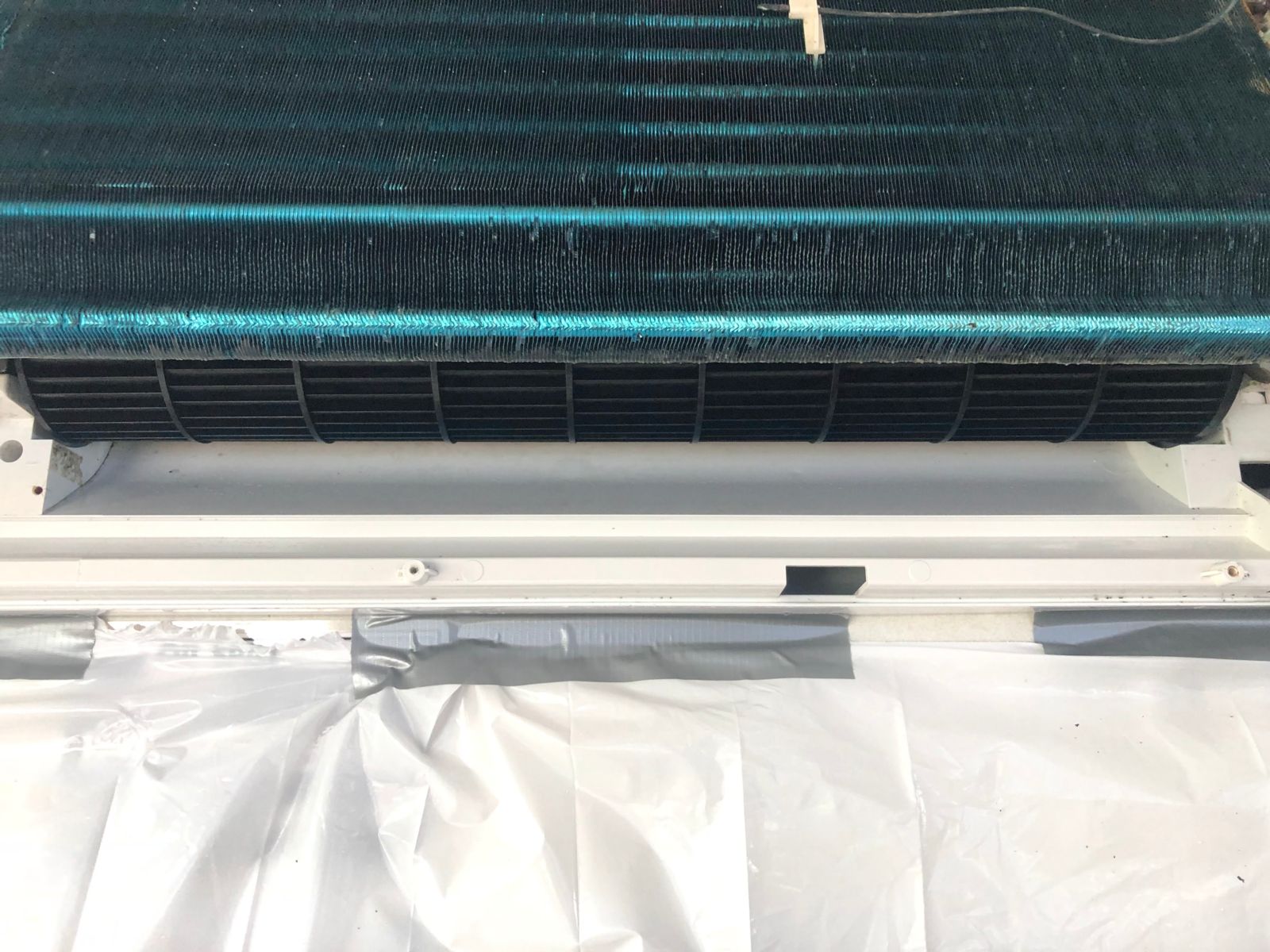
A freshly cleaned AC unit cleaned with PurplePower

The Microscanner Cable Verifier. It is showing that the cable it is connected to is 98 feet long, there is no crossover in the wire (all the numbers match to each other and not a different number i.e., 1&3, 2&6), and there is a connection problem with prong 8 of the other end of the cable that is connected to the wiremap adapter (not shown).

Kyle and I all suited up in our Tyvek suits getting ready to fix the head system pump. It was a gross job the included my glove ripping.

3rd Week with JASON

Week 3 (6/4-6/10)

Saturday (6/4)

Today the R/V Thompson went back to shore to drop off a member of the scientific party. The trip back was approximately 14 hours, and as soon as the “drop off” was concluded, we were on our way back to the mission site.  

During this time, the JASON crew had extra time to work on miscellaneous tasks such as:

  • Rewiring the Brow pan/tilt Camera. It spontaneously will refuse to pan for one shift, but then be completely operational for the next. This camera is perched at the central top of JASON’s “face”.
  • We also replaced the connections from the motor-control pods to the thrusters. The previous dive ended when three thrusters had to be disabled due to grounding issues. JASON was able to still operate with two thrusters down, but when the third became problematic, the dive was aborted, and JASON was recovered.

Sunday – Thursday (6/5-6/9)

Each day JASON was launched and recovered within 20 hours. The launch and recovery procedure takes approximately 30 minutes to have JASON deck-to-water and vice versa. It is the ascent and decent of 3200 meters that usually takes around two hours. While the rise or dive is being initiated, the pilot and navigator stay in the motor-control van, while the engineering member is on Winch Watch.

This week’s dives have all been successful with no issues and all desired samples were obtained.

Thursday evening the weather was too severe for another launch, so it was postponed until

Friday(6/10) afternoon at 2pm.

This week was especially exciting not just because of the success of the dives, but I was able to pilot JASON for a portion of the dive on Tuesday (6/7). I was surprised how stable JASON was when maneuvering around the area. A big difference from the smaller observation ROVs that I have flown in the past. Though it was a shorter dive, it was one of the most exciting moments I have ever experienced!

What extra time I had this week was spent learning different hydraulic fittings. I was even quizzed on them later in the week.

We only have a few days left on this cruise, so the team will try and get in as many dives as possible before we head back to port. I am lucky enough to remain on the vessel and accompany the next cruise, which will go until July 2nd.

This week’s tip: Napping & Rain Gear

On a cruise such as this with the different shift times, you will most definitely want to become accustomed to napping. Some days that may be the only sleep you get. If recovery and launch times fall in between your shift, then a few naps are what you will get. But after a couple days of this reoccurring, your shift leader will work it out to where you can take a whole 6–7-hour sleep time.

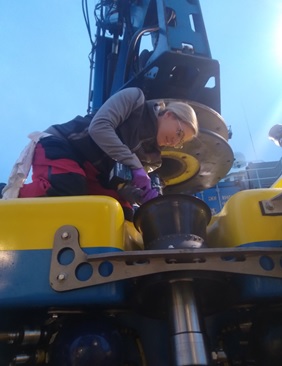
Also, if you are to venture out on a project like this, make sure you bring rain gear. Even if it is not raining, it comes in handy! When recovering JASON, you complete post-launch checks which require you to climb up into the vehicle. And you WILL get soaked! I brought a pair of water-proof bibs, so those have been quite beneficial for this endeavor.

Week 3: Learning Network Infrastructure, Data Acquisition, and Working on Small Projects

After last Thursday (06/02), we prepped the F.G. Walton Smith at the pier for an incoming Tropical Depression over the weekend. The storm itself didn’t seem all too bad, despite rocking the boat a bit more than usual. We have become accustomed to the daily 2pm thunderstorms that roll in fast and leave fast, normally lasting 30 minutes to an hour. The Tropical Depression seemed like one of those just lasted a lot longer, ~12 hours. The top wind speed logged by our anemometer on top of the bridge logged 25 knots. Alesha, Jonathan, and I decided to go rock climbing to pass the time as the storm rolled over South Florida. It wasn’t until later that day, we found out that one of Jon’s friends we were with tested positive for Covid, so we started going through Covid protocols on the ship. 

We started testing ourselves for Covid Saturday evening and then again Monday morning. Jonathan, our chief engineer, unfortunately tested positive. While, Alesha and I somehow remained Covid negative, even taking tests until Thursday (06/09). We had to start wearing masks indoors on the ship and Jonathan was moved into quarantine in the scientists’ bunk down a deck. With some of the major projects we were working through with Jonathan, such as the black water pump seal tear, the hot water/potable water contamination, and A/C compressor contacters/relays on hold, we worked with the Bosun onboard to clean the A/C units throughout the vessel and take care of some odd jobs that needed to be done. 

Dennis, our Marine Tech, came onboard Thursday to show us how to make RJ45 terminations while teaching us about the specs and history of electrical/network connections and wiring. He then gave us a project to fix some of the cameras onboard that are routed from our Local Area Network (LAN) to the Campus Safety’s Wide Area Network (WAN). We used what we had just learned with Dennis on making proper terminations and using the testers to test connections from different areas of the network and cables to fix the camera on the bridge and add a signal jumper box to it, while also troubleshooting what the problem with our port engine camera might be. It is very interesting as Dennis has tools from working with IBM and networking back in the 80’s as well as the tools that are more commonly used by techs nowadays, so he can show us a wide range of what we might encounter or have to deal with in a Marine Tech role. Especially, as ships are a lot of times retrofitted or systems are changed piecemeal (normally when they fail or start to have issues) seeing the old stuff and the new stuff can be enlightening. It is quite funny working with Dennis as he has salt, is reserved, super knowledgeable, and can be a bit grumpy sometimes, but he is a great teacher and has a soft heart deep down. I’ve worked with many people like Dennis on boats before this one and its makes it all the more exciting when you work with them and they get excited in what they are telling you or what we are working on. It is all the more rewarding when you get a compliment or a crack of a smile out of them. Working on these terminations and testing different connections to these cameras physically really helped me understand more of the abstract networking infrastructure we were talking about last week with Dennis. I’m beginning to get a grasp on the data link, how voltages are read through pins of the connections, and how that might communicate with the router or switch to the network. Of course, it’s just the tip of the ice berg and Dennis says, “That was was only a small introduction.” I think what is a small piece of the puzzle for Dennis is a huge learning curve for me, lol. I am enjoying all of the important tidbits of knowledge that are being imparted on Alesha and I.

Walton Smith Week 3: Learning about networking and completing jobs around the ship

This week has been a wealth of new information. Since we are dockside waiting for the new engines, we have lots more time to dive into learning about networking and time to complete jobs around the vessel. To start off on learning about networking the Marine Tech explained the flow through water system we have onboard and how those instruments connected to it send the data to the tech space through physical connections. He explains that most problems that arise with the equipment onboard are through the physical layer connections, which is as simple as forgetting to plug a wire in or it shimmying out of place in rough seas. In everything we are learning about Internet Protocols (IP)m modems, switches, network programming, and PowerShell vs. command prompt. Slowly but surely, I am learning how computers are able to talk to each other. In the process about learning about networking and how information is sent. With the help of YouTube videos, I am able to get a better grasp at these concepts and dive further into them on my free time. The Marine Tech explained how the data collected onboard is sent to Columbia University and added to an online database that compiles raw data from 49 vessels. This database includes 8,655 cruises and 13,805,504 downloadable files. All this data is available to the public at www.rvdata.us.

For vessel work we have been working on the AC system with cleaning the sea strainer and checking refrigerant pressures and the temperature associated with that part of the system. We then compare those values to pressure-temperature charts based on the type of refrigerant used. Our next job was the hot water system. We were having problems were sometimes there would be no cold water, only hot water coming out of the spicket when the cold water was turned on. To begin, the engineer get us a run through of the system and how we have a recirculating system which allows for us to have hot water on demand and not waiting some time wasting water. After isolating certain areas of the system, we figured out that one of the check valves was not working and/or broken. This allows the heated, recirculating water to enter the cold water supply pipes, and enter our drinking water. Another small job we completed was using 5200, a permanent marine adhesive sealant, to prevent the ignition, on the fast boat, from spinning when the key was turned to start the engine. We “locked” it in place. The last small jobs to finish this week was to add Sikaflex, a marine watertight sealing adhesive, to the through hull wires that came into the bridge and galley and then to replace the valves for the water hose spicket on the bow and adding the male adapter end to the hose so we can attach a sprayer nozzle.

For the weekly marine life that has been spotted, while working of the ignition of the fast boat we saw a Southern Stingray swim under the vessel.

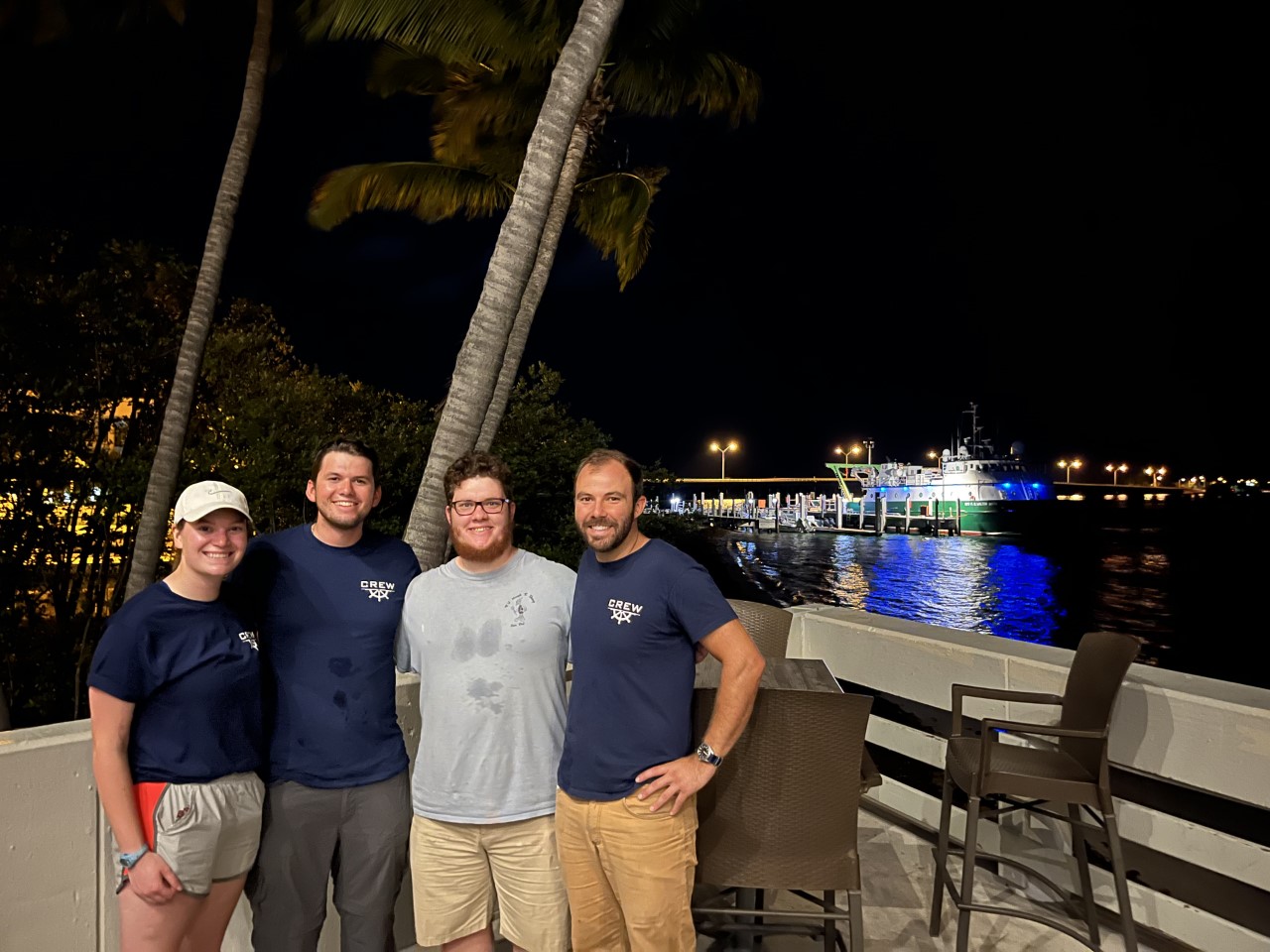
Past and present MATE interns from the last cruise. From left to right: Alesha (F.G. Walton Smith, Summer ’22), Kyle (F.G. Walton Smith, Summer ’22), Sebastian (Hugh R. Sharp, Summer ’19, now a scientist onboard), and Jon (F.G. Walton Smith, ’20, now the Chief Engineer)

Week 3 R/V Sharp

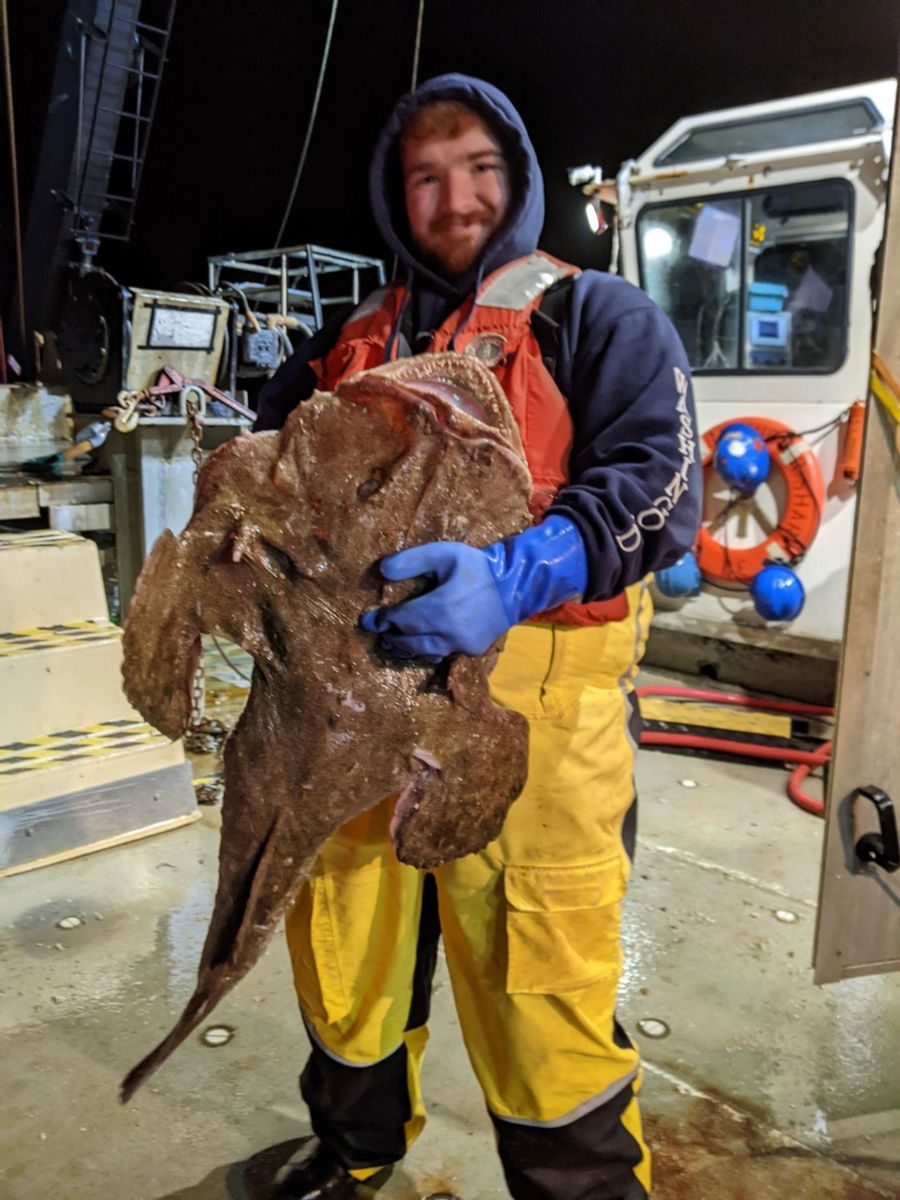
This week we finished up leg 2 in its entirety both in dredging and habcamming. We started by briefly switching from dredging to habcamming in order to take pictures of the ocean floor and determine scallop numbers from that as well. I assisted in annotating some of the obtained pictures, many of which this time included seeds which are basically baby scallops that require special markings different from regular scallops. This continued for a few days and then we got right back to dredging. The loads often varied between what made up the majority of the catch sometimes it was sand dollars and other times it was groups of barnacles or shell fragments. The sizes also varied, sometimes it was a very small load that only took about five minutes to massive loads that could take up to thirty minutes and needed help getting all of the catch out of the bag. In between these different dredges, we would take a device called a CTD which we would prep and send down to nearly the ocean floor to measure the salinity, temperature, oxygen level, and fluorescent level along the water column occasionally taking water samples from the bottom. I was typically in charge of setting up the winch camera and watching the data, communicating with the winch operators when it was close to the bottom and when to bring the CTD back to the surface. I also sometimes helped wash it down with fresh water to keep salt from building up on the CTD. We continued this schedule,(finding many interesting species like the biggest monkfish I had ever seen), until around Saturday where we once again docked at Woods Hole to bring on the last round of supplies and replacement scientists for the third and final leg of the survey. I have been very much enjoying this voyage and I have been learning many practical skills such as how to transfer data and identify many of the native species. I hope to learn even more on the final leg.


2nd week with WHOI

The second week of work has been quite the challenge.

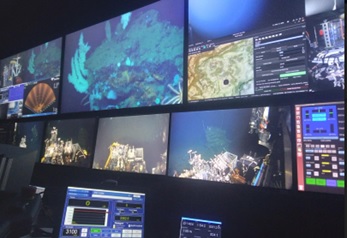
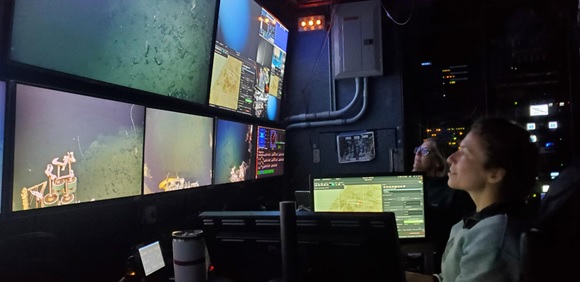
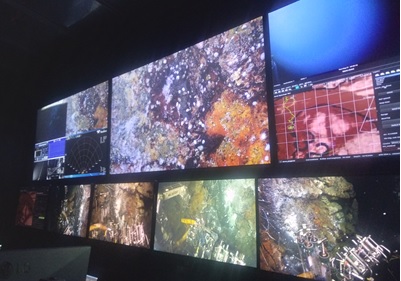
Due to weather conditions, JASON was unable to safely deploy on Saturday (5/28). This hiatus gave extra time to train in the Control Van. That is where the magic happens! There are twelve screens that allow us to see and operate all of the camera angles on the ROV, JASON’s hydraulic pressures and sensors, wench diagnostics, navigation settings, sonar displays, and so much more! To monitor and operate JASON while diving, it takes three people.

The pilot sits in the center, where they have the best views of all the screens. The Navigator sits on the left and is responsible not just for the navigation of JASON, but also the R/V Thompson. They also document the target points and locations as well. Lastly, the Engineer Tech sits in the right chair (this is where I will be). I will be responsible for maintaining, operating, and overseeing all of JASON’s hydraulic equipment such as:

  • Thruster Comp Pressures                            
  • Main Comp Pressures
  • Manipulator sensors
  • Camera settings and positioning
  • Ground Fault alarms
  • Basket (front retractable porch), slurp (suction system for retrieving samples), side sample bio-boxes, niskin sampler triggers, etc.
  • I also am able to help operate the manipulator arms as needed by the pilot
  • Completing hourly checks of all temperature and pressure levels, alarm systems, and reacting to every alarm that may go off.
  • Tether management

I would be lying if I said I was not nervous, but the WHOI team training me are so helpful and insightful and I have no doubts they will support me the whole time.

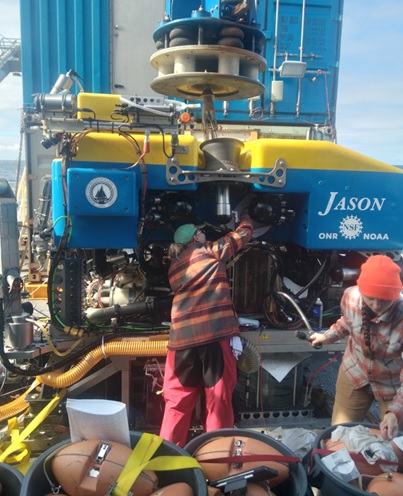
The rest of today was spent rebuilding the sampler MAJORS from last week. These devices, when triggered, retract, and suck up whatever water or sediment they are inserted into. I ended up replacing the inner seals because they were worn and had a build up of gritty residue on them.

I also lead the Pre-dive check for the vehicle, which consists of over forty-five checks ranging from:

  • Upper Vehicle & LARS checks
  • J-Boxes & Comps
  • Powering Up the vehicle/devices
  • Laser & Light testing
  • Thruster checks
  • Hydraulics
  • Manipulators
  • Misc. checks like vehicle safety vests, securing inner cables/wires, etc.

Sunday (5/29)

First JASON dive is a go!  

– Completed Pre-Dive checks.                                                  

– Secured and arranged sampling tools inside JASON’s front porch/basket.

– Added front weighted plates and rear weighted bricks that can be removed during the dive.

JASON was successfully launched at 11 am.

For my 4-8pm shift, I sat in the Engineering Tech seat in the Control Van and was witness to the amazing capabilities of JASON. This vehicle is capable of unbelievable things, but it is the crew that makes it possible. The dive was successful with its decent and sample collection at over 3200 meters, but towards the end of our shift, it was noted that JASON’s Thruster Comp levels plummeted from 9 to 0.5, and the decision was made to recover the vehicle.

It takes almost two hours for JASON to get to the surface, but only 40 minutes to get him safely back and secured on the vessel. The team removes all 38 tether floats (which are quite large and heavy). One person ropes off the cable to bring it closer to the side of the vessel, another holds the float ropes to secure it and one last person unlatches the lock. With the crane operator timing the retracting carefully, it only takes minutes to clear the cable and finish the recovery.

It would be too long to list off everything that happens with each of these tasks, but I can tell you that everyone has several responsibilities, and each one is vital to mission success.

Monday (5/30)

4-8am shift:

  • JASON investigation revealed possible water seepage into one of the thruster lines. Cleared and bled thruster lines.
  • Pre-Dive checks at 6am
  • JASON launch at 8am
  • Unfortunately after securing all of the tether floats onto JASON’s cable, a thruster alarm triggered and JASON was brought back onto the vessel.
  • The day was spent replacing the vertical thrusters and trouble shooting cable issues.
  • Though my shift is scheduled 4-8, when JASON is down, everyone is working. We spent the whole day triple checking all of the adjustments and hope tomorrow’s dive is successful.

Tuesday (5/31)

  • 12 – 1am – JASON was deployed.
  • Both 4-8 shifts were completed in the Engineering Tech position.
  • Sample collection was successful and JASON operated without issues.
  • Some of the sampling tools did not perform as expected, so it was noted and will be addressed upon recovery/ post-dive.
  • 8pm – JASON was recovered and secured on deck.

Wednesday (6/1) – Friday (6/3)

  • JASON was launched each day and successfully completed sample collection objectives.
  • The normal dive time was approximately 20 hours each dive.
  • Trouble shooting and repairs were completed during post and pre-dive times.
  • The brow pan/tilt camera suffered ground fault issues and was replaced.
  • The thruster control pods for the vertical thrusters were disassembled, cleaned, repaired, and reattached.
  • All lines were continuously bled for air and the junction boxes \checked for water leakage.

This week’s lessons:

  • Oil pads are lifesavers! (We call them diapers) While replacing thruster lines, camera lines, whatever lines…they are all filled with either royal purple (an oil) or mineral oil. Even with clamps, sometimes the amount of oil lost can be substantial. So plan ahead, layout a “diaper” to collect whatever oil may spill. Clean everything!
  • I was able to diagnose a thruster connector leak by making sure to clean the area after replacing the vertical thruster.
  • Be meticulous. Ask questions. Double and triple check everything. Have someone else check your work. Good practice!

Week 2: Prepping for engine overhaul F.G. Walton Smith

Following our exciting week out at sea, we have arrived at the dock and are spending each morning with the Marine Tech going through the Local Area Network (LAN) Infrastructure and how the sensors and scientific equipment communicate to each other. We are then spending the afternoons with the Assistant Engineer going through figuring out projects that have been on the list to do for awhile as we await the new Cummins Diesel Engines to be delivered for the Engine Overhaul scheduled on June 16th. These projects include replacing a torn rubber seal on the diaphragm pump for the head system, changing out faulty relays for the A/C compressor system, recharging the A/C compressor refrigerant, and fixing a faulty check valve in the hot water recirculation system as it is mixing with the potable water. 

I have been learning a lot working with the Marine Tech on how data from sensors are packaged, read, transported, and understood by computers as the physical layers of voltages and amps become this sort of metaphysical data stream. It is quite interesting as the further I dive into it, the more boggling it gets, how we can convert something tangible (but not perceptible to the human eye; electrons) turn it into something intangible (a bitt or packet of information) and transport that across atmospheric space, between systems, to receive and be able to comprehend the information on the other side. From working with Dennis, I think most computer engineers would argue that none of it is actually intangible, but to me it is very abstract. However, I am enjoying the process of learning about Internet Protocols (IP), Firewalls, Modems, Switches, Access Points, Software vs. Hardware, and Network Programming. I have been learning a lot about binary and hexidecimal languages as well. I am beginning to understand that is how these scientific instruments are communicating via the network of operating systems and storage devices. This is very important as a Marine Tech as understanding the basics and layers of the local network and how the local network connects to the wide area network (WAN) or satellite connections while out to sea can help when troubleshooting issues that arise in the tech. Dennis has us learning the Open Systems Interconnection (OSI) Model, which describes 7 layers of interfacing with the equipment; the physical, data link, network, transport, session, presentation, and application layers. Dennis has made it clear that 99% of the time when troubleshooting the problem lies in the physical layer between connections and electrical terminations. We are beginning to learn the tools of how to troubleshoot network issues and establish connections to the equipment. It is also in the plan in the next couple of weeks to get some practical experience making new connections and terminations to the 3-2-2 cable and parts of the seabird CTD. Looking forward to that experience!

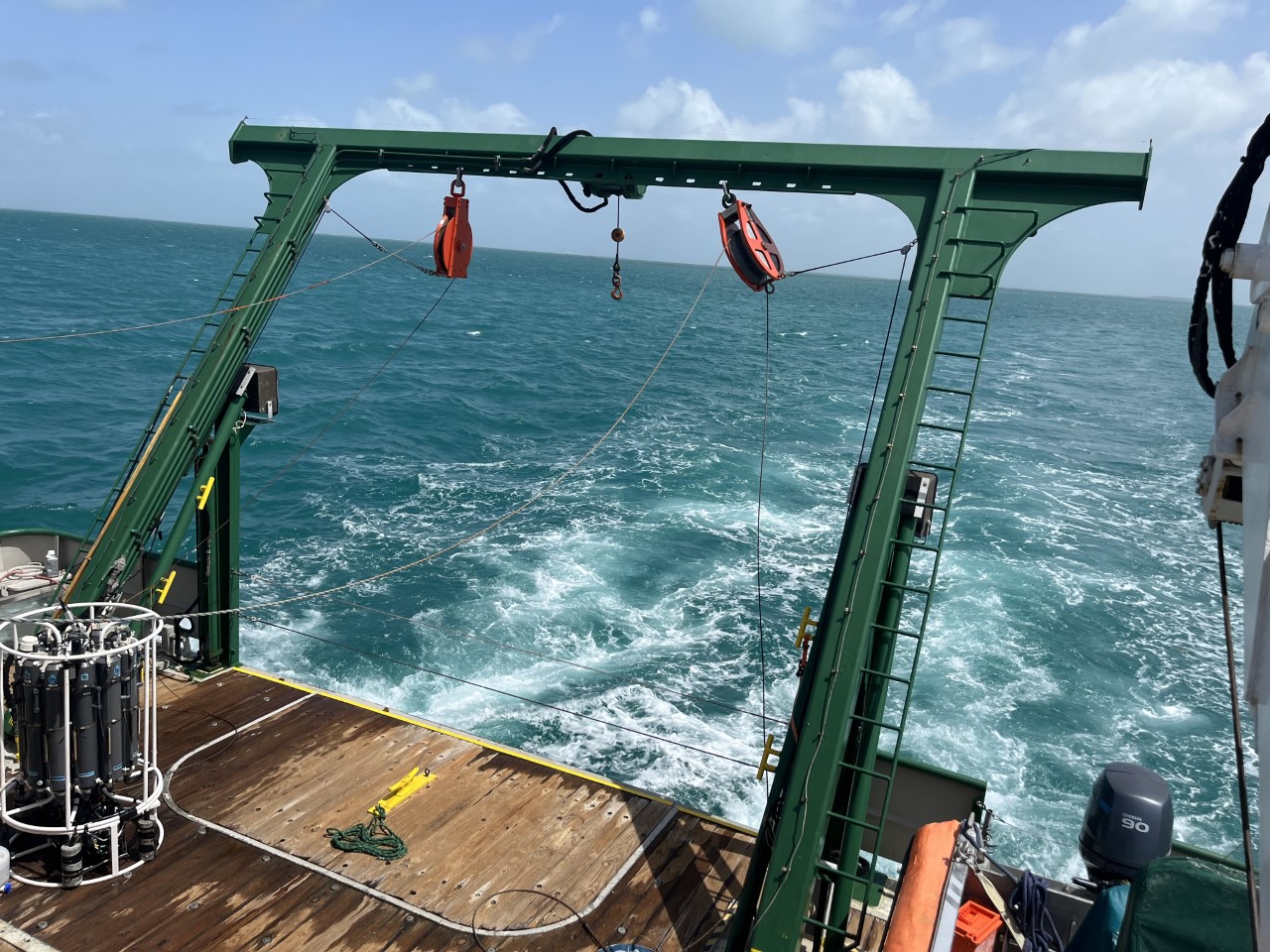
As a tertiary (but also super important) element to this internship I am enjoying the networking and relationships that I am forming with the crew and scientists, as there is a stark contrast from the climate onboard the F.G. Walton Smith research vessel with the tugboats I am used to working on. It is a collaborative, interesting, and thoughtful work environment that is both challenging and rewarding! Everyone shares enthusiasm for the environment, animals, and learning, which promotes everyone to become interested and involved in different areas of research or technical expertise. Here is a picture featuring Alesha Gregroire (left), Jonathan Raymond (Far Right), Sebastian DiGeronimo (Middle Right), and I (Middle Left) all Mate Interns at one point sharing our experiences after the cruise! Below that is a picture of the stern of the R/V F.G. Walton Smith with the CTD connected by the 3-2-2 wire to the starboard side hydraulic winch drum.

Page 34 of 85

Powered by WordPress & Theme by Anders Norén