Following our exciting week out at sea, we have arrived at the dock and are spending each morning with the Marine Tech going through the Local Area Network (LAN) Infrastructure and how the sensors and scientific equipment communicate to each other. We are then spending the afternoons with the Assistant Engineer going through figuring out projects that have been on the list to do for awhile as we await the new Cummins Diesel Engines to be delivered for the Engine Overhaul scheduled on June 16th. These projects include replacing a torn rubber seal on the diaphragm pump for the head system, changing out faulty relays for the A/C compressor system, recharging the A/C compressor refrigerant, and fixing a faulty check valve in the hot water recirculation system as it is mixing with the potable water.
I have been learning a lot working with the Marine Tech on how data from sensors are packaged, read, transported, and understood by computers as the physical layers of voltages and amps become this sort of metaphysical data stream. It is quite interesting as the further I dive into it, the more boggling it gets, how we can convert something tangible (but not perceptible to the human eye; electrons) turn it into something intangible (a bitt or packet of information) and transport that across atmospheric space, between systems, to receive and be able to comprehend the information on the other side. From working with Dennis, I think most computer engineers would argue that none of it is actually intangible, but to me it is very abstract. However, I am enjoying the process of learning about Internet Protocols (IP), Firewalls, Modems, Switches, Access Points, Software vs. Hardware, and Network Programming. I have been learning a lot about binary and hexidecimal languages as well. I am beginning to understand that is how these scientific instruments are communicating via the network of operating systems and storage devices. This is very important as a Marine Tech as understanding the basics and layers of the local network and how the local network connects to the wide area network (WAN) or satellite connections while out to sea can help when troubleshooting issues that arise in the tech. Dennis has us learning the Open Systems Interconnection (OSI) Model, which describes 7 layers of interfacing with the equipment; the physical, data link, network, transport, session, presentation, and application layers. Dennis has made it clear that 99% of the time when troubleshooting the problem lies in the physical layer between connections and electrical terminations. We are beginning to learn the tools of how to troubleshoot network issues and establish connections to the equipment. It is also in the plan in the next couple of weeks to get some practical experience making new connections and terminations to the 3-2-2 cable and parts of the seabird CTD. Looking forward to that experience!
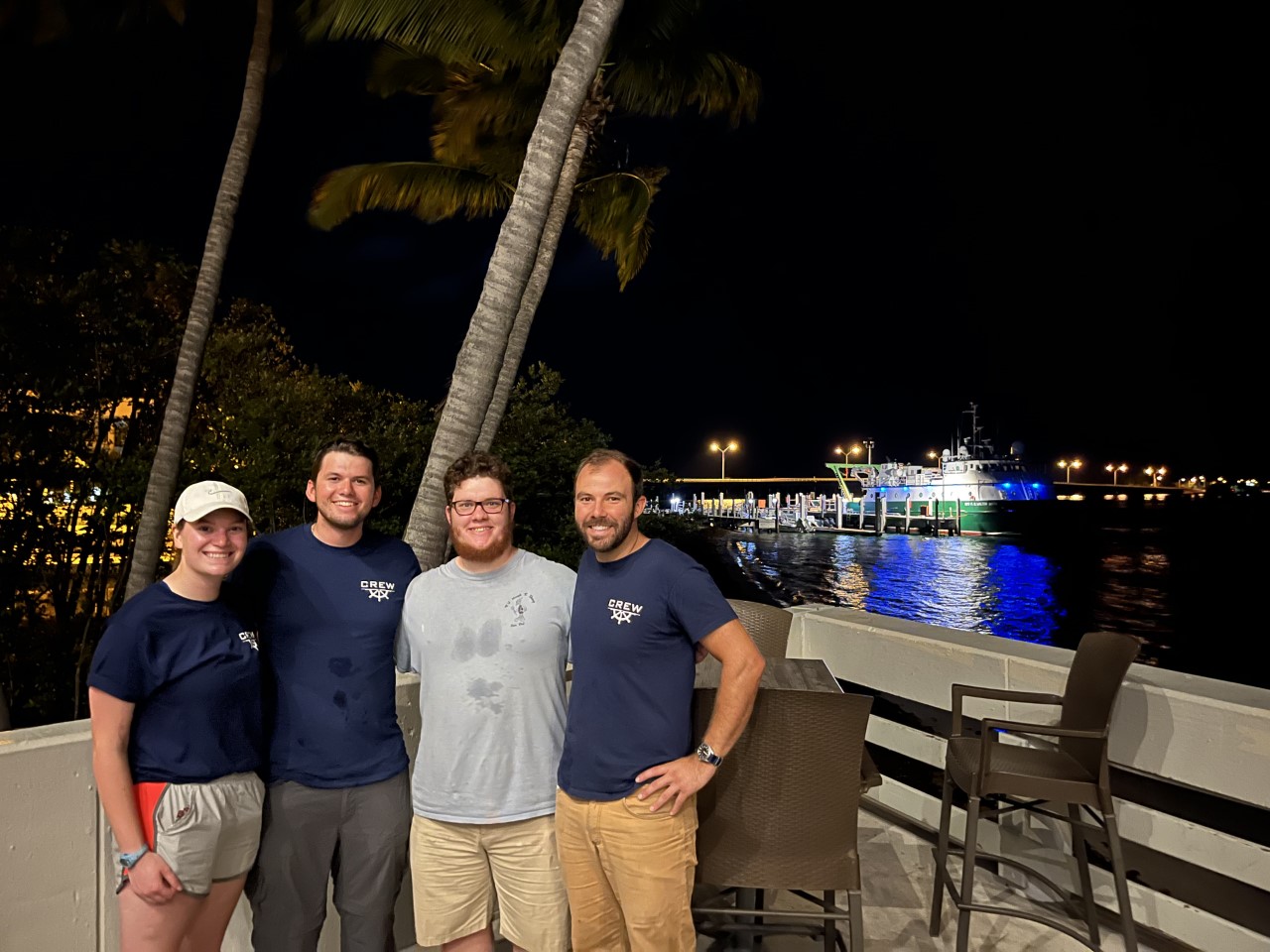
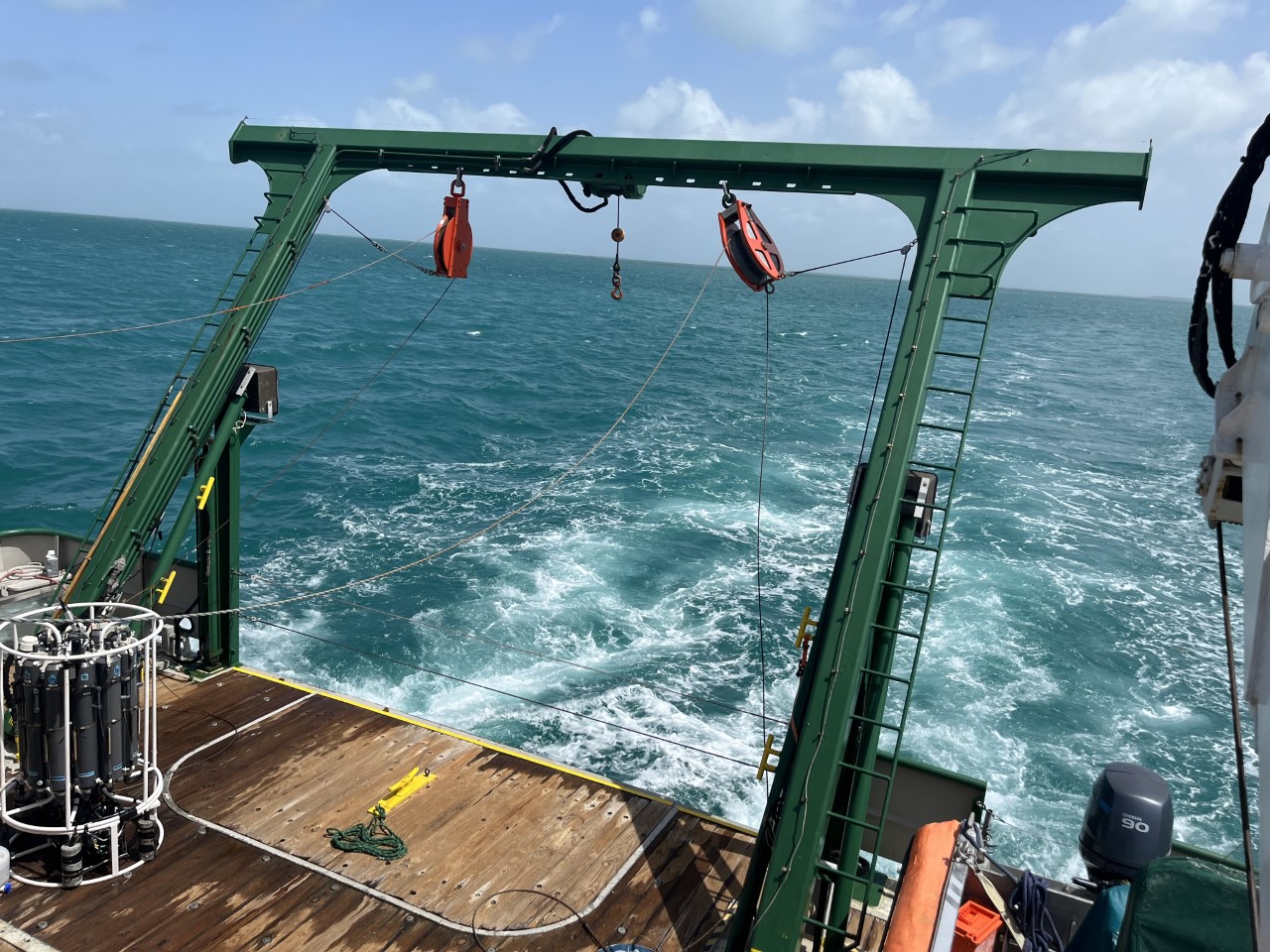
As a tertiary (but also super important) element to this internship I am enjoying the networking and relationships that I am forming with the crew and scientists, as there is a stark contrast from the climate onboard the F.G. Walton Smith research vessel with the tugboats I am used to working on. It is a collaborative, interesting, and thoughtful work environment that is both challenging and rewarding! Everyone shares enthusiasm for the environment, animals, and learning, which promotes everyone to become interested and involved in different areas of research or technical expertise. Here is a picture featuring Alesha Gregroire (left), Jonathan Raymond (Far Right), Sebastian DiGeronimo (Middle Right), and I (Middle Left) all Mate Interns at one point sharing our experiences after the cruise! Below that is a picture of the stern of the R/V F.G. Walton Smith with the CTD connected by the 3-2-2 wire to the starboard side hydraulic winch drum.