Walton Smith Week 1: Arrival and first cruises

To start my MATE internship, I boarded the R/V F. G. Walton Smith Monday afternoon and set out for a cruise that evening. The mission of this cruise was to recover 3 moorings, that were deployed over the past 5 years, and deploy 2 others in Jupiter, FL. My job for this cruise was to stay within close proximity to the divers with the vessel while they were in the water because our vessel was flying the dive flag. Before we left the docks I was able to help the chief engineer with the pre-departure checklist and starting the engines and generator.  As we were leaving Miami Channel I got to see about 8 dolphins riding the bow. That night as I was on watch we lost the port engine, it wasn’t until early the next morning that it was able to be turned back on. We finally made our way to Jupiter that evening before sunset and the divers were able to located and tag one mooring to recover the next morning. Having engine problems, we were only able to deploy one mooring and recover instruments off another. We were able to limp back to port on one engine and about an hour to two hours out from the university we were able to restart the port side engine to have full maneuverability to get to the dock. After docking, I met the other MATE intern and we helped the engineer with trying to troubleshoot the engine problem. We swapped the actuator from the starboard engine to the port issue engine to see if that was the problem, but unfortunately not, it had to be the engine computer. To fix this I was able to crimp wire to run from the battery to the engine. Before we left for the next cruise I was able to help with the fuel delivery, replacing the racor filters for both engines and added a switch to the wire that was place the day before Sri the port engine. 
 

For this second cruise, the scientists onboard ere collecting data on red tide aloof the Florida keys and into the Gulf of Mexico along the western coast of Florida up to Saint Petersburg area. They are performing net tows, CTD casts, and collecting water samples to observe trace metals. For this cruise I am helping in the bridge with bringing the boat from station to station, holding the boat steady with the wind off the stern for CTD casts, and helping out on deck with steadying the CTD upon entering and exiting the water. So far for this cruise, the only wildlife I’ve seen was a sea turtle and a bunch of pelicans. I’m still on the hunt to see more aquatic life everyday.


Dolphins off the bow. 


Preparing to venture out!

Well hello and good evening from Traverse City, Michigan!

I actually just completed my PCR Covid test and now am organizing all of my clothing and supplies into my large, dusty blue duffel bag. The last two weeks I have been diligent in maintaining safeguards to remain as healthy as I can before departure. 

I am filled with gratitude and excitement to be partaking in this amazing opportunity. Maria (MATE Internship Coordinator) and Kevin Kavanagh (from WHOI) have been wonderful in sending me lists of suggested items to pack, reminders, and tid-bits of valuable information to better my preparedness. This is my first internship in the Marine Technology field and I could not be more thrilled to watch, learn, and work alongside the WHOI team members. I was also invited to join the ROV JASON team’s weekly zoom meeting and that has been helpful to begin engaging with these individuals who will be mentoring me throughout the next 6 weeks. 

Tomorrow I fly out to Portland, Oregon, then Sunday will travel to Newport, and finally get to board the R/V Thomas G. Thompson on Monday (pending negative covid tests). That will be my new “home” for the following 6 weeks.

 **** Here is my dog, Emma!

I cannot imagine what different things await me and am looking forward to each and every one of them. 


Week 1 R/V Sharp

This week The other MATE intern and I were introduced to the R/V Sharp and our mentor. Our mission is to support a NOAA fisheries science team in a scallop survey. Christian the R/V sharps technician has spent this week introducing us to the onboard computer system and how collected data is managed and backed up. This week consisted of primarily habcam operations and has been very light work on the technical side of things. I therefore have been spending most of my time supporting the NOAA team by piloting the habcam winch and annotating images of the sea floor by marking scallops. Overall the workload has been relatively light I am very excited for the dredging during the second leg of the cruise.

Week 1 R/V Sharp

This week the other MATE intern and I were introduced to our mentor for the voyage and given a tour of the R/V Sharp and its different functions as well as how data is collected and stored within the ship’s computer system. Our job is to work with a NOAA fisheries science team and assist them with their scallop survey where ever we are needed. For the past few days, this has mainly been in the form of co-piloting or piloting the habcam directly, keeping it about 2 meters off the seafloor and taking pictures as it is dragged along, or in annotating the many pictures that come from the habcam marking any species of mention like sea robins or snake eels. and measuring the scallops we are able to find. So far this is all we have been required to do as this entire first leg will habcam only, the next leg will have both habcam and dredging up the many different species we have seen and marked with our annotations. I am looking forward to getting to see the different species in person.


Pre-Cruise Introduction


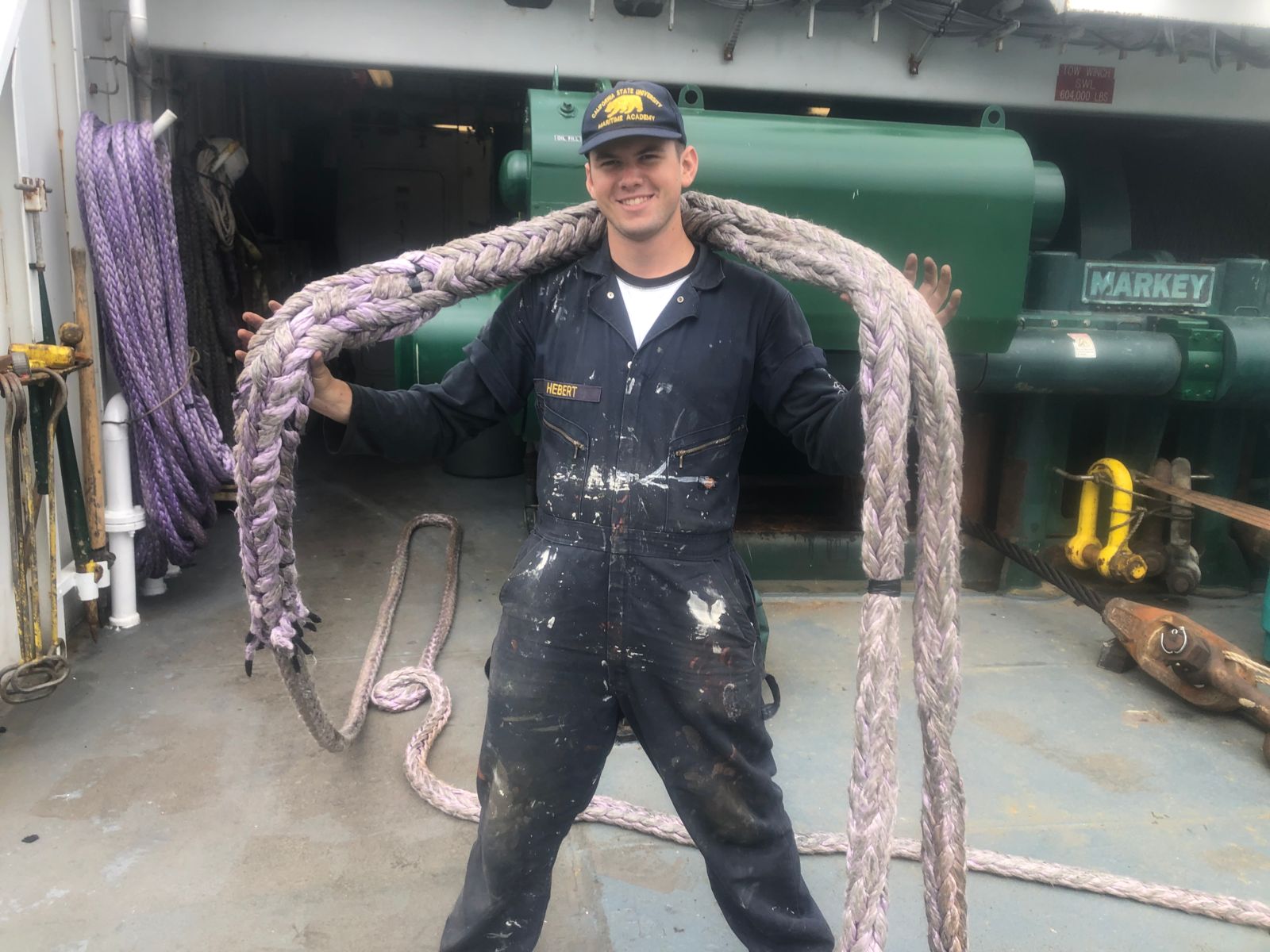
My name is Kyle Hebert. I just graduated from the California State University Maritime Academy as a Marine Transportation major with a minor in Marine Science and a US Coast Guard 3rd Mate unlimited tonnage license. While at Cal Maritime, I enjoyed blending my experiences as a deck cadet learning deck safety, cargo operations, and how to manuever vessels with scientific studies. Including optimizing a methodology to measure ammonium concentrations in the Carquinez Strait, maintaining a YSI 6600V2 Sonde in collaboration with San Francisco State University, and going out on research cruises with the R/V Questary throughout the San Francisco Estuary. I have found a passion collecting samples and working in the lab that has given me direction for my future. I am extremely grateful for the opportunity to work with the Rosential School of Marine and Atmospheric Science at the University of Miami onboard their research vessel, F.G. Walton Smith. I hope to be a helpful hand wherever I am needed and to soak up the knowledge and expertise required to be a well-rounded Marine Technician in the UNOLS Fleet. 

Introduction

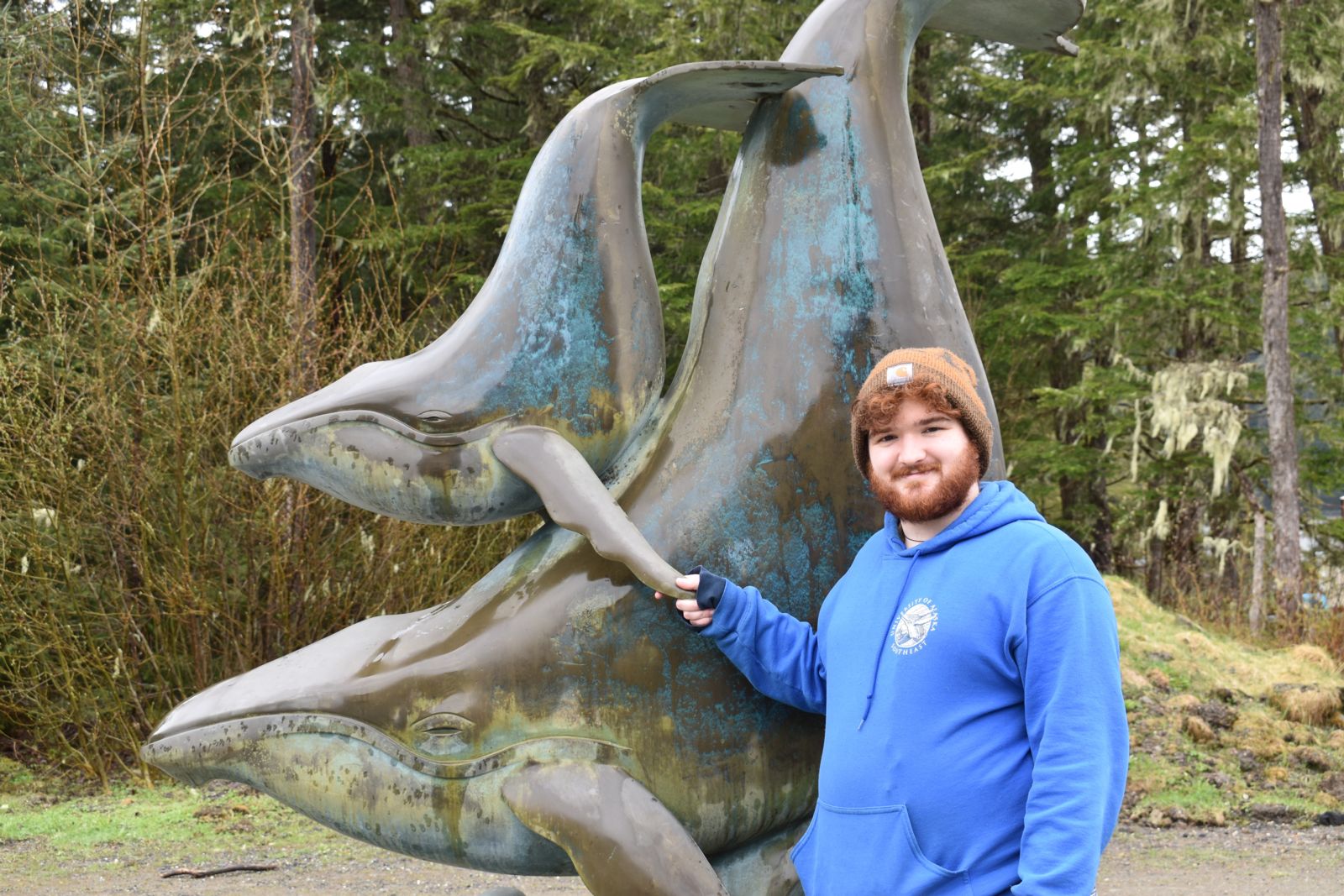
I am Danny Brunet and I am headed to Delaware to board the R/V Sharp to support an NOAA Fisheries Science Party with a Scallop survey as a Marine Tech intern. I have just finished my junior year at the University of Alaska Southeast and am pursuing a Bachelor’s in Marine Biology.

This is my first time going offshore for multiple days as my prior experience has been limited to day trips on smaller research vessels. I have had some experience with different marine technology before but I am excited to learn even more especially about the operation of the Scallop Dredge and Hab-Cam. I’m excited to learn plenty from this survey and see all the different technologies and meet the crew that I’ll be working with as well.

Introduction

I am Jackson Hollocker and tomorrow I will be flying to Delaware to board the R/V Sharp to help support a Scallop Survey with an NOAA Fisheries Science Party. I have just finished my junior year at Northwestern Michigan College and I am pursuing a Bachelor of Science in Marine Technology. 


This will be my first time offshore for an extended period of time. My current boating experience is only day trips aboard my school’s research vessel the 56-foot R/V Northwestern. My Marine Technology experience includes working with the deployment of ROVs and multiple sonar systems both from shore and the R/V Northwestern. Working on the Hab-Cam and the Scallop Dredge will be very new to me. I have a lot to learn and I am extremely excited to board the R/V Sharp and meet the equipment and crew I will be working with. 

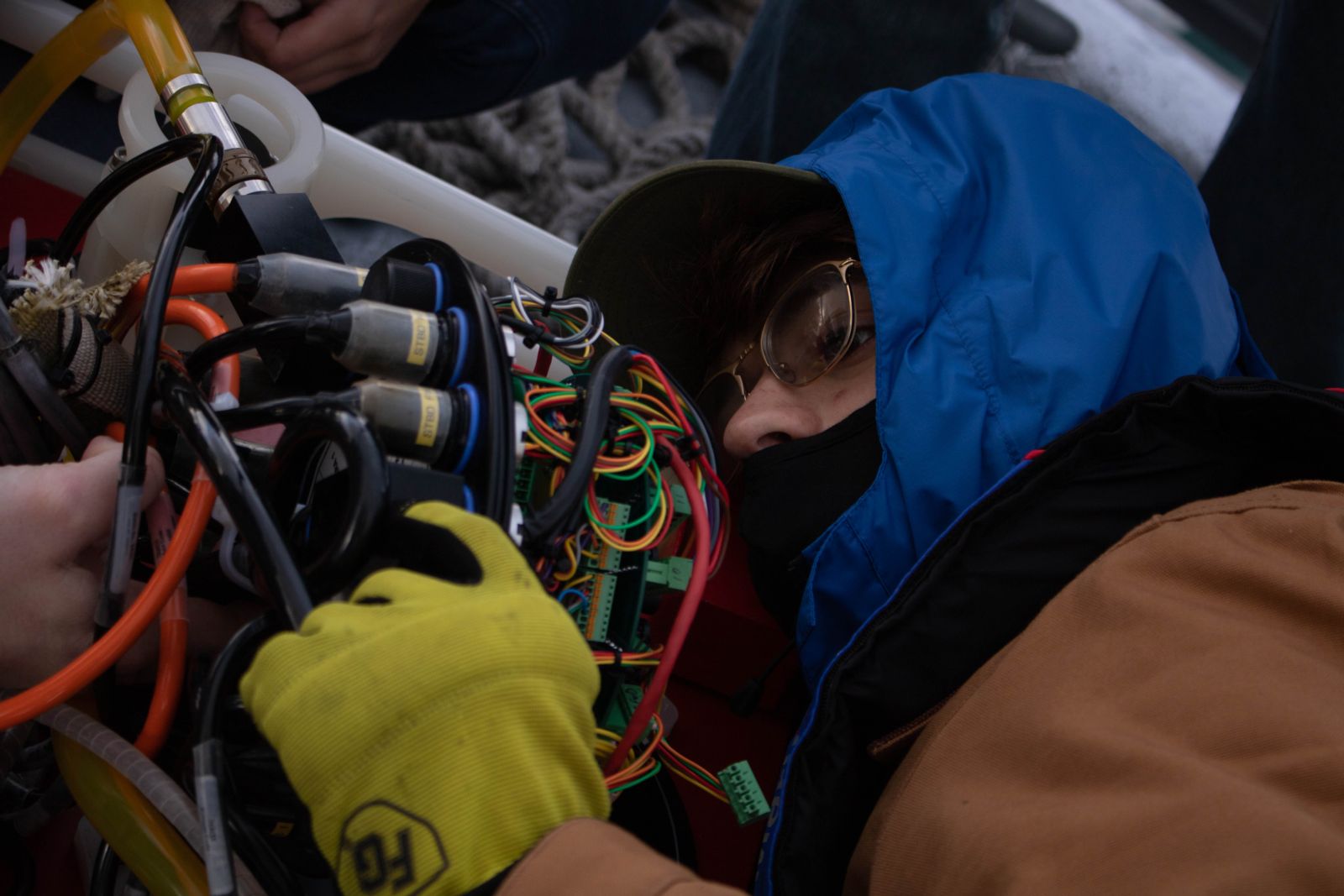
Attached is an image of me learning about troubleshooting procedures for the Falcon ROV. 


Pre-Cruise Introduction

Hello everyone! 

My name is Alesha Gregoire and I am a recent graduate of Maine Maritime Academy. I graduated with a Bachelor of Science degree in Marine Biology and Small Vessel Operations where I got my able body seaman certification and a 200 ton mates license.

I am excited to join the Rosenstiel School of Marine and Atmospheric Science at the University of Miami aboard the F.G. Walton Smith. I am excited to help out with anything on board, as I have prior deckhand experience and some engineering experience through school. This is perfect for the engine replacement project that is scheduled while aboard.

More about myself, I am a certified PADI SCUBA diver, I love being on or around the ocean (whether that is boating or performing science or sitting at the beach), and during the winter time I enjoy skiing. I recently completed my undergrad project on investigating the clearance rate of microplastics in the Jonah Crab’s digestive system.

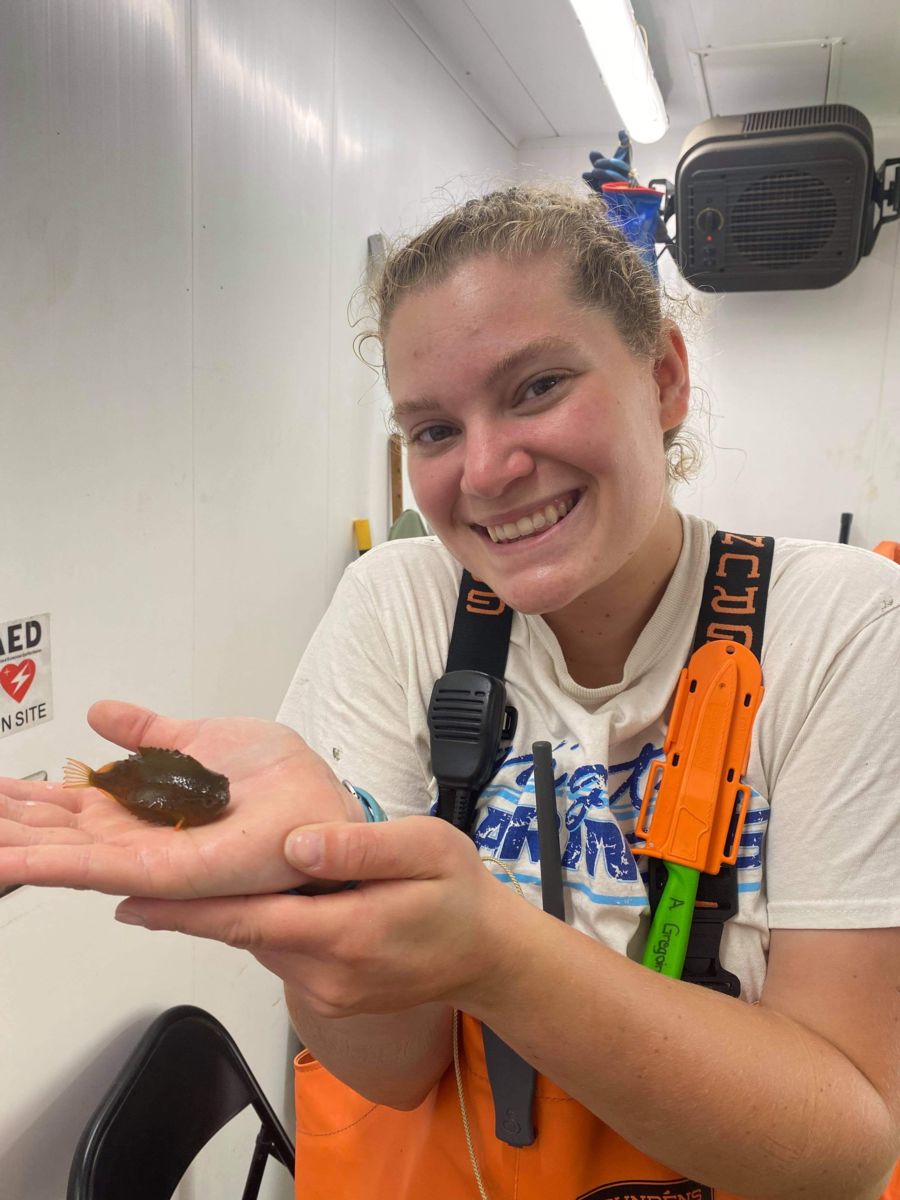
A small lump fish that was recovered during salmon treatments, Summer ’21. 

Leg 2 of OOI Pioneer 18 and Internship Conclusion

May 10th: The last few weeks have been a busy time filled with more exciting science operations and a wonderful conclusion to my MATE Internship. Now that I am safely back home in Seattle, I have been able to finalize my last blog and provide lots of details and pictures. Apologies for the delay between my blog entries! 

Taking a step back and picking up where my last blog left off:

During our one-day port stop in Woods Hole on April 18th, a huge windstorm swept over the area overnight knocking out power and significantly stirring the seas. Our original plan was to get underway from the WHOI dock on April 19th to begin the second leg of the cruise. However, the chief scientist, Al, and ship captain, Mike, decided to postpone our departure time until the next morning due to the extremely rough sea conditions in the area. As it is most feasible for the ship to leave and enter the WHOI dock during a low tide, it was determined the best time to leave on April 20th was at 6:00 AM.

Leaving the WHOI dock for Leg 2. It was a calm, sunny day. However, the seas were still rough from the recent windstorm. 

It was a beautiful sunny morning as we departed from the WHOI dock, but the seas were still very turbulent from the recent high winds. Almost as soon as we pulled away from the dock and rounded the corner into Vineyard Sound, the waters became extremely choppy, and my old friend seasickness was awoken. Quoting Croy, it was “pretty wiggly for the Sound”. Unfortunately, as soon as we switched from our land line internet to the ship’s internet, some of the underway status Raspberry Pi’s that I had recently configured with WiFi dongles began acting up. I troubleshooted them for a while in the Linux terminal trying to figure out why they were not connecting to the WiFi properly. It was a challenge as I fought through some nausea. I ended up putting in new WiFi dongles which seemed so work, but I later realized it was only a temporary fix. Croy helped me figure out a main cause of the issues- the Raspberry Pi units did not have enough power capabilities to support the WiFi dongles which was causing them to intermittently work and then fail. I ended up reconnecting ethernet cords to the two Pis that could not sustain WiFi connectivity with the dongles. It was a good experience to troubleshoot during the rough seas. I took a quick break to calm my stomach before helping lead the deck during a CTD before lunch. Emily and I demonstrated the ship’s CTD cast protocol to a few of the scientists who had embarked for this leg of the cruise and would be assisting with the casts and collecting samples from the Niskin bottles. Then I helped Emily troubleshoot the pipes and pump that take uncontaminated seawater from the bow and run it throughout the ship. Two incubator tanks were on the bow deck for scientists to store samples at in-situ temperature. The uncontaminated seawater had suddenly stopped reaching the tanks to replenish them. Emily identified a pump that was running warm, suggesting seawater was not flowing through as it should during normal operation. We received assistance from one of the Oilers, James, who helped us locate the valve to let air out of the line. A significant amount of air had entered the line, most likely during the large rolls the ship had experienced that morning. This solved the problem and allowed the pump to re-reprime and continue sending water up to the incubation tanks. That afternoon, while moving between stations, we got a call in the tech shop from the bridge that whales were spotted on the starboard side of the ship! Luckily, I didn’t have an immediate task pressing, so I quickly climbed the stairs to the second deck. I figured that I would have to spend a few moments locating the whales once I reached my lookout spot. But to my surprise, it took no time at all to spot the whales! There was a pod of pilot whales swimming very close to the ship. They were splashing and enjoying themselves in the nice sunny weather. It was my first time seeing marine mammals up so close in the wild and it was spectacular! 

Pilot Whales!

Thursday, April 21st: On Thursday morning, I helped with a CTD cast. During the afternoon, I worked to configure a WiFi router as a backup extender. In the evening, I watched a glider recovery before helping with a CTD. I helped with another CTD cast later in the evening followed by a ring net cast which collected interesting clear salps (gelatinous zooplankton). After the casts, the science plan was to move into an EK80 survey overnight. Croy had turned on the EK80 while the CTD cast was still in progress. I then noticed something humorous happen- for a few minutes one of the transducers of the EK80 was pinging the CTD which made the software think the CTD was actually the seafloor.

Science Humor: One of the EK80 transducers was interpreting the CTD as the seafloor (256.5 m) as compared to another transducer which was finding the correct seafloor depth (1552 m). The CTD cast is also visible on the data viewing software. 

Friday, April 22nd: In the morning, we did a CTD. After the mooring operations during the day were completed, I also helped with a CTD survey in the late evening. The data for these casts was of interest to the Long-Term Ecological Research (LTER) scientists that had joined the cruise for the second leg.

On Saturday, we did a CTD in the morning followed by a ring net cast which was also of interest to the LTER scientists studying phytoplankton. The ring net casts consisted of a small phytoplankton net with a plastic collection container at the bottom. The collection container was attached with tape to a stone weight so that the net would remain upright as it was cast through the water column. The weight and the top of the net was attached to the starboard winch to perform the cast. 

Phytoplankton Ring Net Cast 

April 24th: Sunday morning I helped with the CTD and net cast as usual. While mooring operations were happening during the day, I did a weightlifting workout with Max, one of the ship’s crew engineers. It was my first workout at sea, and it was a lot of fun bonding with Max. The Armstrong has a well-equipped gym down in the bottom of the ship where the transducers are mounted to the ship’s hull. After my afternoon break to work out, I assisted with another CTD and net cast in the evening. The overnight operations were a ADCP and EK80 survey. Some of the acoustic instruments on the ship ping with a frequency that can overlap with one another. One example is the ship’s speed log that the bridge uses. During most acoustic surveys, we would ask the mates in the bridge to turn it off, so it doesn’t interfere with the scientific acoustic instruments. However, some scientists want to run two acoustic scientific instruments at the same time (as in the case with this survey). Running both acoustic instruments simultaneously can cause distorted data when the frequency of the pings of each instrument overlap. To avoid this, the Armstrong has a K-sync machine which groups the ADCP and EK80 separately so that each instrument has a distinct interval and time window to ping. This allows each instrument to collect data without interfering with each other. Croy took this opportunity to explain and show me how the K-sync interface works.

Monday, April 25th: In the morning I helped with a CTD cast, and then in the evening a CTD and net cast. We then conducted an overnight CTD survey with 6 casts at 5 nautical mile spacing. Between casts, I learned more about the two 3D printers the ship has in the computer lab. I also helped make the status camera for the 3D printer more adjustable. The printers can be used to fabricate small parts with the click of a button while at sea which can be useful. These items include stands, holders, and attachments for instruments and equipment. It can also print fun items like models of the ship or a bathymetry model of a certain area. The later items are popular among the scientists and crew and Croy distributes models of the boat to anybody on board that is interested. The models are neat to examine and helpful when understanding the design and features of the Armstrong. When picking up the model, the flat bottom immediately stood out to me. I learned from Croy and Emily that the flat bottom of the ship was designed to try and reduce bubbles reaching the acoustic transducers that are mounted in the hull. Given that the Armstrong conducts many acoustic surveys, this was to be an asset in helping collect the most high-resolution acoustic data as possible- at least in theory. According to Croy, Emily, and others on the ship, bubbles are still prevalent. And unfortunately, the lack of a keel on the ship’s hull makes the ship ride worse in rough weather. 

A replica of the Armstrong being created by one of the 3D printers on board. This particular model was made for Captain Mike 

On April 26th, CTD casts were the primary science operation of the day. The plan was to perform a CTD survey with 12 stations spaced 5 nautical miles apart along the continental shelf from east to west. It was a long day of CTDs, and I helped on deck for each one. Towards the afternoon, my energy began to wane. Luckily, I was helped out when a sudden task came up which put the CTD survey on hold. Another research vessel in the area, Endeavor, reported to us that the light on one of the recently deployed OOI surface buoys was not working the previous night. The chief scientist decided to break off from our CTD survey transect to travel to the buoy so that the Mooring Operations team could replace the light. The transit to the light and back to the next CTD station took a few hours which allowed me to take a nap and catch up on some much-needed rest. After finishing the remaining CTD casts by midnight, I talked to Croy about the overnight ADCP survey and then went to bed, anticipating another full day of CTDs starting in the morning. 

The CTD on its platform on the starboard deck. While the ship is underway, the rosette frame is rachet strapped down to the platform. For this leg of the cruise, the SUNA nitrate sensor (black, bottom left) was installed below the CTD sensor package using supports extending from the rosette frame. Also pictured is the orange tether line. This is for safety during deployment of the CTD. If a high-tension event were to occur on the CTD wire during deployment, it would ideally prevent loss of the CTD. 

CTDs casts resumed at 8:00 AM the next morning (April 27th). This time the CTD survey was across the shelf and consisted of 14 stations from south to north. It was another fun day gaining experience with CTD casts and I enjoyed working on deck with scientists Jess and Brett. In between casts, scientist Taylor explained to me the Imaging FlowCytobots (IFCB) that she manages. These instruments, designed at WHOI, image phytoplankton and measure their chlorophyll fluorescence in order to catalog them for analysis. It was remarkable to see high resolution images of phytoplankton from throughout the cruise that were only microns in size and had been captured by the ship’s underway seawater system and then sent through the IFCB. We arrived on station for the final cast around midnight. The cast was only to a target depth of about 20 m, as the actual seafloor depth was only about 25 m. The shallow target depth was quite humorous to everyone involved with the cast- scientists Taylor and Al in the lab, Brett, Croy, and I on deck, and the winch operator Keenan. After having a good laugh about it, the CTD was brought back on deck for the last time during the two-leg cruise. It was also a cast that had a bit of sentiment for me- it was my last CTD as a MATE Intern! Between the two legs, I helped on deck for over 50 CTD casts. It was one of my favorite tasks that I completed. 

During the final CTD cast of the cruise, I tend to the safety tether and remove it from the CTD rosette once it is lowered into the surface of the ocean during deployment (photo credit: Croy)

The seas and winds were calm enough that Croy was able to fly his drone from the main deck during a CTD cast. On the starboard deck, scientist Brett stands by as I tend to the safety tether (Drone Photo/Video Credit: Croy)

With all the cruise goals successfully completed thanks to the hard work and dedication of the science party and crew, we were able to head for home after the last CTD cast. The next morning (April 28th), we waited in Vineyard Sound until low tide, and arrived at the WHOI dock about 10:00 AM. Unloading of all the science gear began quickly as everyone was happy to be home on land. Emily gave me the honor of handing over the data storage unit (that contained all the data for the cruise) to the chief scientist. I thanked the chief scientist, Al, for a great cruise and for letting me take part and help with the CTDs. He thanked me for my help and told me that he saw my confidence build from the beginning of the cruise. I was very proud to receive a compliment from such an accomplished scientist. 

Over the next couple days, I helped with a few small tasks as my internship came to an end. I enjoyed my last days spending time with the crew and on the ship. I also spent more time enjoying the amazing town of Woods Hole and Falmouth. At the suggestion of Emily, I stayed a few extra days once my internship was complete and before I headed home. I visited Martha’s Vineyard and traveled to North Falmouth where I saw my mom’s house from when she was growing up. It was a wonderful place to explore on my first trip to the east coast. After saying my goodbyes to all my friends and mentors on the Armstrong, I headed for Boston. I spent an overnight in Boston which allowed me to fulfill another dream of mine – attending a Red Sox game at Fenway Park! My sight-seeing days after my internship were the perfect ending to a fantastic trip. 

Before I headed home from Boston, I got amazing last-minute tickets to a Red Sox game at Fenway Park. It was a huge thrill for me! 

The MATE Internship has enabled me to gain experiences and make memories that I will never forget. Being a MATE Intern has been a dream come true for me and is an accomplishment I am very proud of. This internship has allowed me to help with research cruises which has been a goal of mine for many years. It also gave me the valuable opportunity to develop skills and acquire knowledge and training that will jumpstart my career. The internship has given me an excellent platform as I seek to become a marine technician in the UNOLS fleet.  

In closing, I want to acknowledge the following people who have made this opportunity a positive and successful experience for me: Maria Osiadacz, Sarah Fuller, Emily Cheung, Croy Carlin, YT Lin, Al Plueddemann, and of all the scientists and crew that were part of AR65 and AR66 aboard the R/V Neil Armstrong. Thank you so much! 

As always, thank you to my family and friends for their love and support. And thank you to the readers of this blog for following along on my journey! 

All the best,

Tyler Peterson

MATE Intern Spring 2022

Me and my MATE Internship Mentors: Croy and Emily. Thanks for everything! 

(Photo Credit: Andrew Reed) 

Excitement from Leg 1 of OOI Pioneer 18

On Monday morning (4/11), during the first leg of the OOI Pioneer 18 cruise, I watched the third and final buoy/mooring deployment. Then, one of the gliders was located and recovered before we did a CTD in the late afternoon. At night, the OOI team performed a dive with ROV Falcon. It was awesome to see my first ROV dive. The goal of the dive was to locate a mooring anchor and instrument package that had been caught by a fisherman and dragged away from the anchor’s intended location. I was able to watch and participate first-hand as the ROV was launched off the back deck through the A-frame. I helped by operating the A-frame and its winch. Emily stood by to supervise and give me tips of how to manipulate the two levers to adjust the A-frame and winch as commands were called out by the operations team on deck. While it was a simple task, it was exciting for me to get hands-on experience during the launch and recovery of the ROV. During the dive and as it descended, the cameras on the ROV picked up fish swimming and groups of star fish on the seafloor. It was interesting to see live biological action from the water column! About 45 minutes into the operation, Jared, the ROV pilot, located the anchor and the mooring line. The anchor and instrument package had dug into the seafloor while being dragged, which essentially buried it. In addition, it was still caught in the fishing gear that had originally caused the problem. It was determined that we could not safely recover the anchor. The mooring line was inspected higher up in the water column. At this location there is a valuable ADCP instrument. It seemed that it could be possible to detach the ADCP via a release that could be triggered by the ROV. However, this operation could not be completed until day light hours. If we tried to do the work during nighttime, the ADCP would be released to the surface and we would not be able to locate where it resurfaced as it does not have lights to signal to us where it was. Overall, the dive was quick and successful as a reconnaissance dive. The chief scientist said that it was low on priority at this point in the cruise, so the dive to release the ADCP will occur at a later date when there is time available. It was a unique experience and I loved watching the screens from the ROV’s cameras. It was also awesome to watch the lights on the ROV disappear into the dark ocean abyss on the way down and gradually appear when it resurfaced.

Deck Operations Leader Chris talks via radio with ROV pilot Jared to complete pre-dive checks of the Remotely Operated Vehicle (ROV) Falcon 

On Tuesday, I watched the recovery of the first buoy that is being taken back to WHOI for maintenance. I also began working on a Raspberry Pi project. There was a blank screen in the computer lab, so I was tasked with making it into a screen showing the underway status of the ship. I updated the Pi’s operating system and hooked it up via ethernet. The seas were calm enough that I did not use any seasickness meds.

Recently serviced OOI Surface Buoy being deployed using the A-frame. Each buoy and its attached mooring is normally deployed for 6 months

On Wednesday, to our delight, the conditions were calm again. I changed out the monitor in the computer lab that was not working. I then finished hooking up the newly configured Raspberry Pi to continuously show the underway status screen. In the afternoon, we did a CTD. At this point, my CTD training from Emily and Croy had been completed. I was now leading the CTD casts along with Jess from the science party. For each cast, I tie a safety tether line around the rosette frame and secure the CTD on its platform upon its return on deck. I also communicate by radio with the bridge, main lab, and winch during the cast to make sure everyone is on the same page as each step is initiated and carried out. That evening while cleaning, Croy and Emily happened to find a collection of Raspberry Pis and Wifi dongles that were not in use. 

A beautiful sunset during calm seas 

Thursday’s science plan was straightforward but exciting for me. From 8:00 AM to 6:00 PM, ten CTD casts were performed on a straight line, 5 nautical miles apart. Working as a team with Jess, I helped lead the casts from on deck. Once we feel we have arrived on station, we check with the bridge to confirm that we have stopped and ask for permission to undo the straps that secure it to its platform on deck while we are underway. Once the CTD is unstrapped, we let the winch operator know that it is ready to deploy. The person in charge of operating and monitoring the science package of the CTD in the lab then chimes in that the lab is ready for deployment. Once the CTD is cast, the lab communicates to the winch operator to a pay out the amount of wire so that the CTD recaches the bottom of the water column but does not hit the seafloor. The lab also tells the winch operator when to stop so that the Niskin bottles can be triggered to close for water collection at desired depths. Once the cast is complete and the CTD is recovered, we help resecure it to its platform on deck. Then we let the bridge know the cast is complete and it’s safe to move on to the next station. In between casts, we flush the sensors with fresh water and use fresh water to rinse off the CTD package to protect it from the corrosive properties of seawater. 

On Friday, I checked out all the Raspberry Pi’s that had been recently found. I made note of if they were still working and what was downloaded on them. I used the WiFi dongles that were found to eliminate ethernet cords connected to three of the underway status screens around the ship, including the one I had made on Wednesday. In the afternoon, we did one CTD cast. It felt a little funny only doing one CTD cast compared to the ten casts from the day before.

On Saturday, I woke up early to help with another CTD cast. The REMUS AUV that had been deployed the previous night, completed its mission overnight and was recovered at 6:30 AM. The CTD cast followed it at 7:00 AM. After the cast, I sat down and discussed more of the ship’s acoustic instruments with Emily. This was a great follow up conversation to the one I had with Croy about a week ago, where I learned more about the nuances between each instrument and their ideal uses. This time, Emily gave me a more in-depth demonstration of what the data from each of the instruments looks like and how to adjust settings while using each instrument in order to get the most out of each survey. It was a perfect time to discuss these instruments- the previous day, we had located an anchor using the EK-80, which is essentially a high-performance fish finder. It seems the anchor had not properly been pulled to the surface when the acoustic released had been triggered. 

EK-80 data showing the located anchor in the bottom of the water column as the small brightly colored object on the blue background

This called for a second ROV dive to connect a line to the anchor that could be reeled in by the ship to recover the anchor. Before the dive, I helped lower the ship’s USBL pole so that it could register on the Sonardyne software along with the USBL tracking beacons on the ROV and its line connecting it to the ship. This setup provides the pilot a reference of where the ROV is in relation to the ship. This second ROV dive of the cruise was successful, as pilot, Jared, skillfully hooked the anchor with a rope line and clasp. This anchor again had remnants of fishing line which may have caused the release not to work properly. After a lunch break, the operations team repeated the process – during lunch we had moved to another anchor site. This anchor was from past operations and had been on the seafloor for approximately 4 years. I was able to help operate the A-frame again during this second ROV operation of the day to recover the 4-year-old anchor. This time, I had more responsibility because the deck was consecutively recovering both the ROV and the anchor it had just clipped on to. My previous experience recovering the ROV on Monday night helped. Luckily, the job was made easy by the extremely skilled and patient mooring operations team and the Bosun of the ship. I appreciate them allowing me to help with this recovery. When the anchor and one of the water column floats came back on deck, they were covered with biological activity. Significantly more biofouling had occurred on this anchor compared to the others which had only been deployed for 6 months. Most of the science party gathered around, taking pictures of what we had just pulled from the seafloor ecosystem. 


Operating the A-frame controls to help recover an anchor that was hooked using the ROV (photo credits Emily)

Biofouling after 4-years in the ocean 

After the exciting anchor recoveries, we began conducting a survey with the EK-80 and the 150 kHz ADCP as we headed for WHOI. With leg 1 coming to a close, we continued heading for WHOI overnight and arrived back at the WHOI dock at 11:30AM. The recovered OOI buoys and mooring instrumentation and gear was offloaded Sunday afternoon. Yesterday, was the nicest weather I have experienced so far on land in Woods Hole. Emily and Croy wanted me to have some time to rest and relax, so I walked to a nearby beach to eat lunch. The sunshine and cool breeze felt amazing, and I enjoyed the walk to and from the beach. In the afternoon, I stopped by the WHOI gift shop to get souvenirs for my family. After a calm restful day in port, I am ready to get back underway. The ship has been reloaded with fresh, smaller-sized buoys and equipment that we will deploy during this second leg. I look forward to sharing the upcoming details!

Until next week!

Tyler 


Page 41 of 103

Powered by WordPress & Theme by Anders Norén