Week Four: 6/30-7/6
With our first three (00, 01, and 02) stations in the rearview, we started week four in transit to station 03 at Orphan Knoll, a feature of the ocean floor about 320nm off the coast of northern Newfoundland.
On Tuesday, we arrived to the site. The first core cast came up with 6 usable cores! Yay! However, by the time the second cast hit the deck, the science team has determined the structure of this sediment was not suitable for their project. It was too coarse-grained, which means it is advective sediment that water flows through rather than getting trapped in. Also, trying to centrifuge the water out of it doesn’t work as well.
We started steaming again and started fresh on Wednesday morning, now calling this site 4, just a little east of station 3/Orphan Knoll. The water is deeper here, which means more wire time and longer days, but hopefully better mud.
Wednesday and Thursday we cranked out four casts per day, pulling 5 or 6 cores off each of them. This sediment contained rocks! Which is exciting, if you like rocks. The rocks are all a sooty black color, until you crack one open to reveal granite or dolomite. This dark outer coating is manganese oxide. Dolomite is a very common bedrock where I live, so I got a nerdy little thrill out of holding pieces of it that we had pulled up through 4000 meters of seawater.
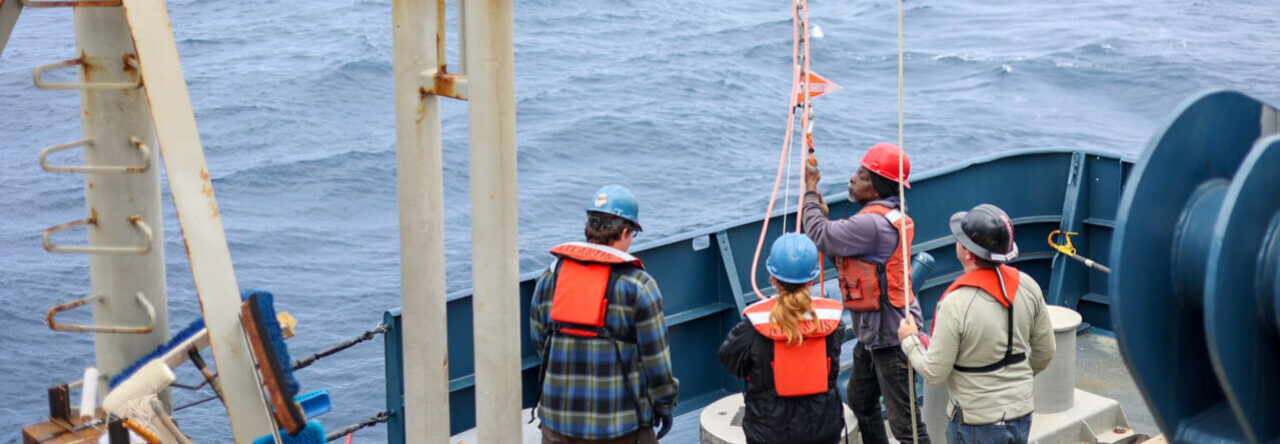
On Friday, we had collected enough mud after cast three of the day, yay! This site was our second of three designated places to deploy an Argo, so we sent that off the stern as we headed out. At first, the Argo laid flat in the water, but within a few seconds, it “came alive”, righted itself, and immediately began a “dive” to 2000m.
In the evening, we spent some time tracing wires and troubleshooting because our echosounder isn’t receiving data properly from the GPS. Then, we played some MarioKart. The following days in transit went similarly; projects and troubleshooting anything acting up, then MarioKart. On Monday we expect to be on station and coring.