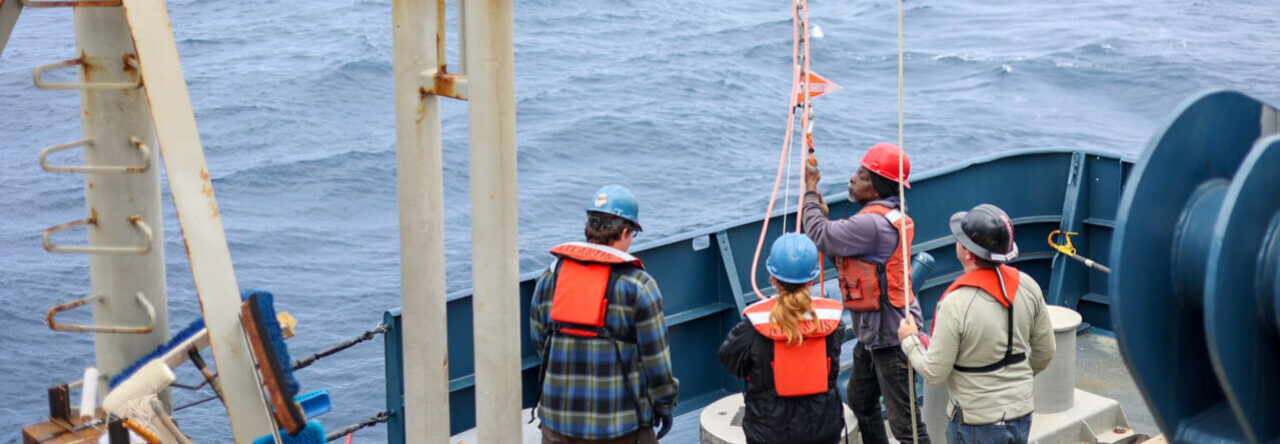
Today marks my 13th day aboard the R/V Thomas G. Thompson. What a fantastic whirlwind so far! The science crew onboard has gotten up to a little bit of everything, and it has been a privilege to be a part of the action. This cruise has had its fair share of deployments, recoveries, troubleshooting, and deck operations under the searing sun.
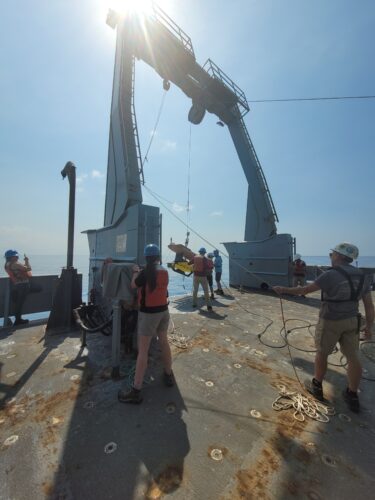
The ABs and the Marine Technicians aboard have a special role to play while assisting the scientific crew with their mission. Safety of both people and gear is of the utmost priority when working on the deck. With the help of the experienced crew, the science team can rest assured that their gear will get into the water with no incident. Using the A-frame, a large winch powered lift on the stern, we can pick up large gear and deploy it into the water. As the Marine Tech intern, I was allowed to operate the A-frame for a few deployments (That’s me at the controls in the photo, hi me!). We helped the science team deploy 4 wave gliders and 3 sea gliders, as well as countless wave drifters. Each instrument has a specific purpose, and measures a different ocean parameter. The data collected by this equipment is vital to oceanographic research and works towards the scientists ultimate goals.
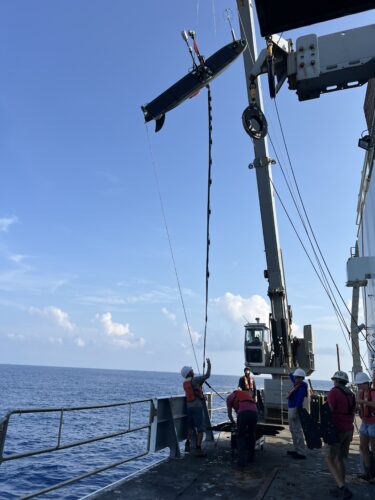
Another aspect of research at sea is troubleshooting. One of the wave gliders that we had previously deployed was having some issues, according to the software connected. The science team made the decision to bring the glider back on board, and attempt to repair it. This time, we used the starboard side crane to retrieve the drifter from the water. In this situation, as you can tell from the photo above, there are many moving parts that everyone on deck must be aware of in order to avoid accidents. We work slowly and thoroughly, talking through each phase of the operation so that everyone is aware of what is going to happen. Through patience, team work and coordination, the drifter was recovered successfully! The science team got well under way with their repairs, and we re-deployed it.
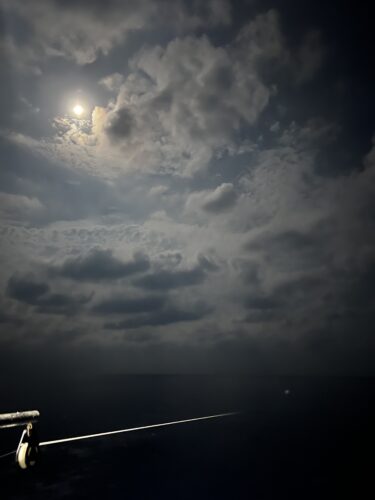
Science never sleeps on board, not when there is data to be collected! Arguably, what we have done the most of is UCTD operations. This is a device that is towed behind the ship, and collects sea water parameters as we move, such as conductivity, temperature, and water depth. We pulled the UCTD for up to 6 hours straight, for several days. This operation requires two people on deck at all times, meaning we had to work in shifts to ensure that everyone was able to rest fully. Often times, we would pull the probe through the night, and into the wee hours of the morning. We’re willing to do anything for the data!
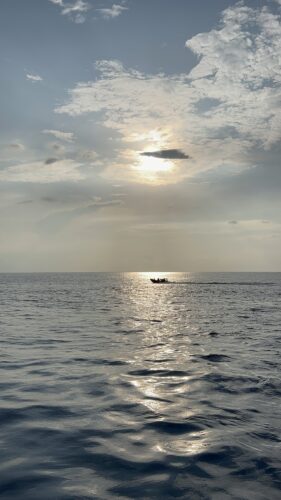
As the first leg of this research cruise is coming to a close, we are all still busy as ever. Breaking down equipment, preparing for port call, and getting the ship ready for the next set of scientists is no easy task! Though it is sad to see the first round of scientists move on to their next mission, the next group will need our help to get their scientific mission underway. So, it’s a good thing we’re here to help!
Micah Barton -God Bless – 05/13/2025