Transits move fast! After an easy flight from NC to VA, I met up with the STEMSEAS cohort in Norfolk. All the students were excited to meet each other and get on board. If you’re not in the loop, STEMSEAS is a program designed to get undergrads time at sea and expose them to different types of science and careers. Joining us in this expedition are two ChOP fellows, Drs Piffer-Braga and King. They’re on board as chief-scientists-in-training. I’m excited to work with them, as one of the biggest things I learned in school is that the job of a marine technician is to act as scientific support. We also have two doctorate students joining this cruise, so there’s a whooooole lot of academia happening on board. Leading the cruise as the chief scientist is Dr. Joe Montoya of Georgia Tech. He’s led several cruises in his time as a professor, and also provides a wealth of knowledge. Plus a strong interest in sargassum.
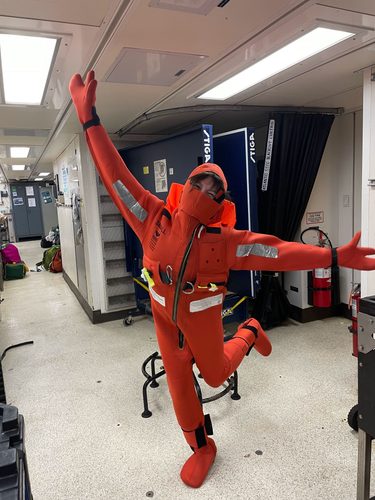
Due to an incoming nor’easter, the captain of the Atlantis made the decision to leave port the night of the 22nd instead of the following morning- this meant we hit the ground running with onboarding procedures and getting settled in. Most importantly, learning how to put on immersion suits (aka Gumby suits).
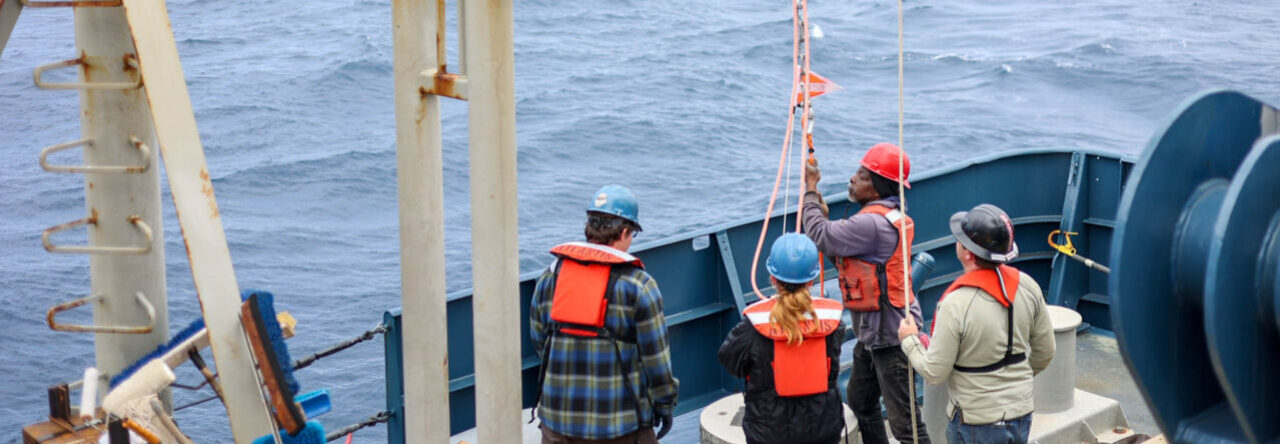
The first night was a bit sporty out of Norfolk, but it eventually calmed down! The first day on board was a bit mellow, with some of the cohort not feeling too hot in the rolling of the ship. The mentor group started setting up the lab, and the students that were up and about started getting to know the ship and her crew. We hit calmer waters by the 24th, and then we could get down to business! The business of science, that is. I got to help perform a deck test of the CTD the day before we deployed it, which was a great chance to refamiliarize myself with the instrument. It’s been awhile since I used one! We got a demo of CTD casting led by the fearless ChOP fellows and the SSSG the morning of the 24th, and the students were all excited to be out on deck learning how to conduct science. This meant proper deployment and recovery, as well as good sampling habits. On my end, I got to attach the various instruments that can work with the CTD.
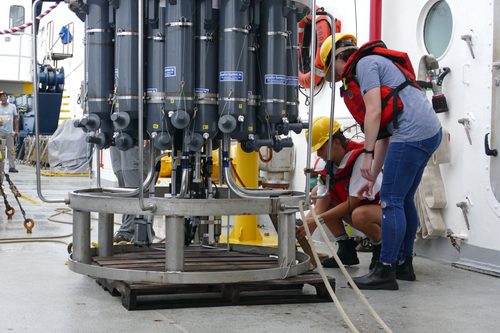
I’ve spent my time in an even split between shadowing the SSSG’s on board and also working with the STEMSEAS cohort. In the mornings, the students sit in lectures before moving onto the starboard deck to participate in CTD casts and ring net tows. It’s been fun watching them learn deck ops, and get so excited about collecting samples from different depths. There’s also been a pretty noticeable interest in the mechanics of flying fish (belonging to the family exocoetidae)! A few of the poor guys have flung themselves on deck, and most of the students had never seen a fish that could fly. Part of the STEMSEAS experience is for students to create a project while on board and have it ready to present by the end, and a couple of them have decided to put their focus on the winged creatures. Along with our CTD casts we’ve done several ring net tows to bring up phytoplankton. Dr. Montoya has also been vigilant in his sargassum collection, and is always on the lookout for floating patches of the stuff.
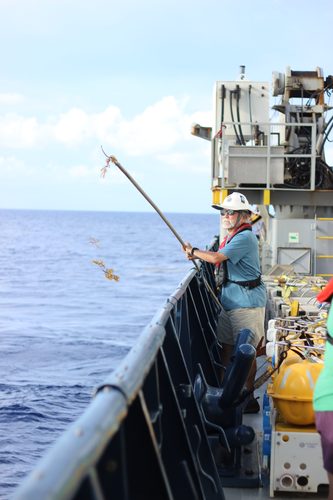
There’s been a lot of learning opportunities on board, not only in the realm of marine technician work, but all the parts that go into making a research vessel run smoothly. We toured the engine room, the forward water wall, the bridge and all the laboratories on board. And the Atlantis has a LOT of labs. Plenty of room for science! Luckily for this transit, the two doctorate students on board are collecting samples to use in projects back at their home lab, so it’s a real-life collection scenario. I’ve also gotten some traditional intern grunt work, like cleaning tools, organizing hardware and fixing little things around the ship. Also learning how to use an angle grinder! It’s been pretty enlightening, seeing all the pieces that go into making a successful MT.
We’ve also gotten to participate in a hallmark of the STEMSEAS experience that I was completely unaware of, called the “Shrinkage Event”. If you take a regular styrofoam cup, (decorated, of course) and then tie it to the CTD rosette for a deep cast (approximately 3000 M!) it will shrink to a teeny tiny version of itself from the pressure. The quality of styrofoam cups has come into question from those more experienced with crushing them- apparently close-cell styrofoam is superior.
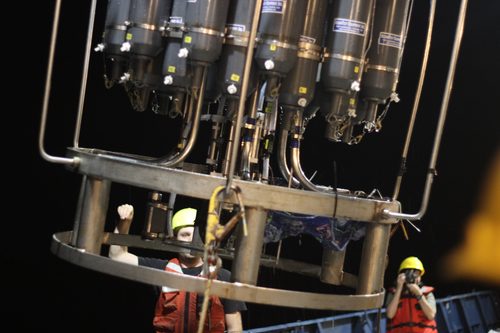
Outside of daily operations, we’ve all been enjoying each others company and having heated debates fueled by questions left on the galley whiteboard. Most notably, if a tomato is a fruit, is ketchup a smoothie? I am firmly in the NO category. You can come to your own conclusions though.
As we near the Panama Canal, the work starts to wrap up as we prepare to offboard, and the students have been hunkering down to finish their projects. We’ve been treated to some incredible stars now that the moon has waned, and even some bioluminescence! There’s still a little bit of time left in this cruise, but for now, I’ll see you on the other side of the canal!