Monday August 28th – Sunday September 3rd
Started off this week with multiple dives on the midnight to noon shift. My team continued to swap out junction boxes, BEPs, and cameras. I was excited on Monday to take the port vertical thruster apart to replace the seals, clean, and reassemble it. During the previous dive, I noticed that the thruster comp had dropped slightly, so I knew there was a slight leak somewhere. Once JASON was on deck, I was able to identify the leak coming from the port vertical thruster.
On Monday, August 29th, I sat copilot until 6am, and then was able to finish off the dive flying JASON for an hour while transiting to an undervator location. I was able to practice flying laterally around objects on the seafloor, landing JASON without kicking up sediment, and maintaining appropriate altitudes so science could complete visual inspection of the area being covered. Once this dive ended and we recovered JASON, we finished our post-dive checks and began our transit back to port.

Unfortunately, over the last few days, multiple covid cases were verified on board so when we reached port, the JASON crew was sent to a local hotel to help minimize the potential exposure. We spent 2 nights there and enjoyed a much-needed rest. By Thursday morning, we were back in action prepping the vehicle for the 3rd leg of the Kelley Cruises by draining the junction boxes, wiring in, and testing the science cables, and then filling the j-boxes and bleeding out the air bubbles. We were originally scheduled to leave port this afternoon, but due to weather concerns, our transit was delayed until the afternoon on Friday, September 1st.
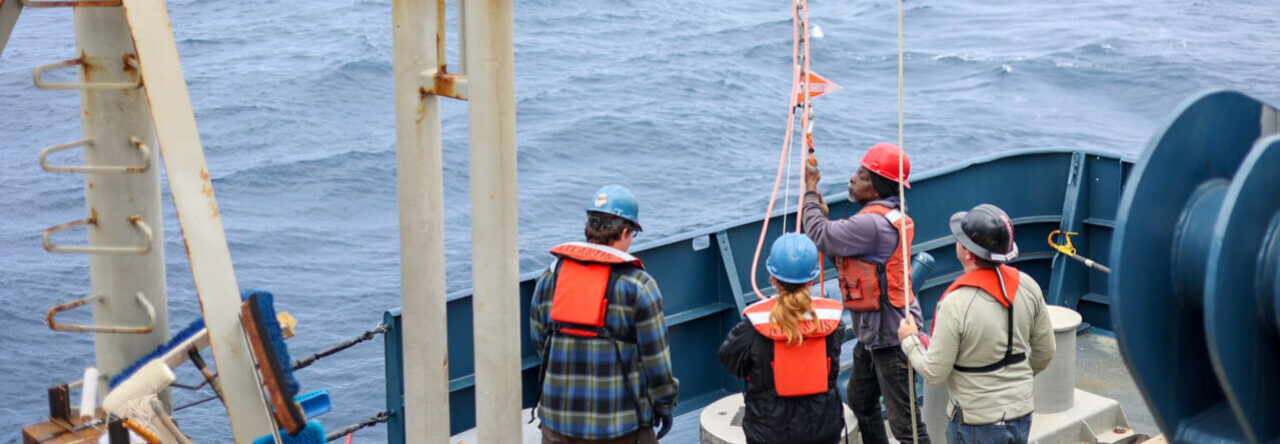
For this leg, we started out near the Axial Seamount, which meant around a 24 hour transit, so Saturday was spent transiting and completing notes/logging/data management tasks. When we first arrives onsite, the weather was not adequate enough to safely launch JASON, so my shift completed predive checks and set up the basket so when the weather calmed down, we could go right in the water. Luckily, by 9am, the weather subsided, and we began launching JASON at 11, but while the rov was hovering over the water, about to be lowered down, the winch’s emergency stop alarm was raised, so we immediately returned and secured JASON onto the deck. The vehicle was in good condition, but the next shift who relieved us after this incident would have to work on identifying and fixing the winch issue.

Tip of the week: “Covid caution is still appreciated.”
We have been lucky the first 7 weeks to have no covid issues on board during previous cruises. The covid protocols were no longer in effect as of the spring, but caution is appreciated for these kinds of jobs, especially working so closely with others for extended periods of time. Even though people have relaxed a bit surrounding covid, it can quickly end a cruise when not taken seriously. Before coming out on the Thompson, I minimized my exposure for 2 weeks and made sure to test a week before leaving, 3 days before traveling, and the morning I boarded the ship to keep my possible exposure at a minimum. When at sea, if someone becomes ill or is injured in any way, there is minimal medical assistance out here, and depending on where you are located, can take days to get back to port for emergencies.
In this situation with positive covid cases, it was nice to see that people responded appropriately, and worked together (or technically, separately) to stop the spread so we could continue with our work.