This week on the Thompson we are finishing up the deployments of the first OBS array. After a final deployment Friday night, we are starting to head to the western array, taking a detour to map more of the seabed that is critical to answering this cruise’s research questions.
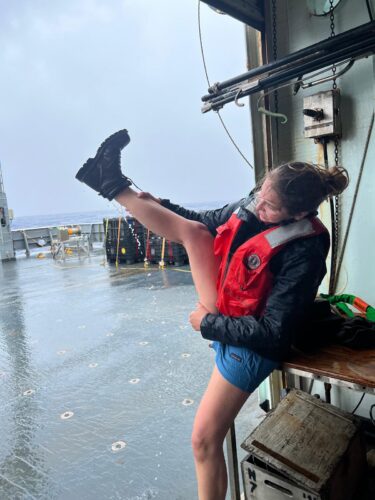
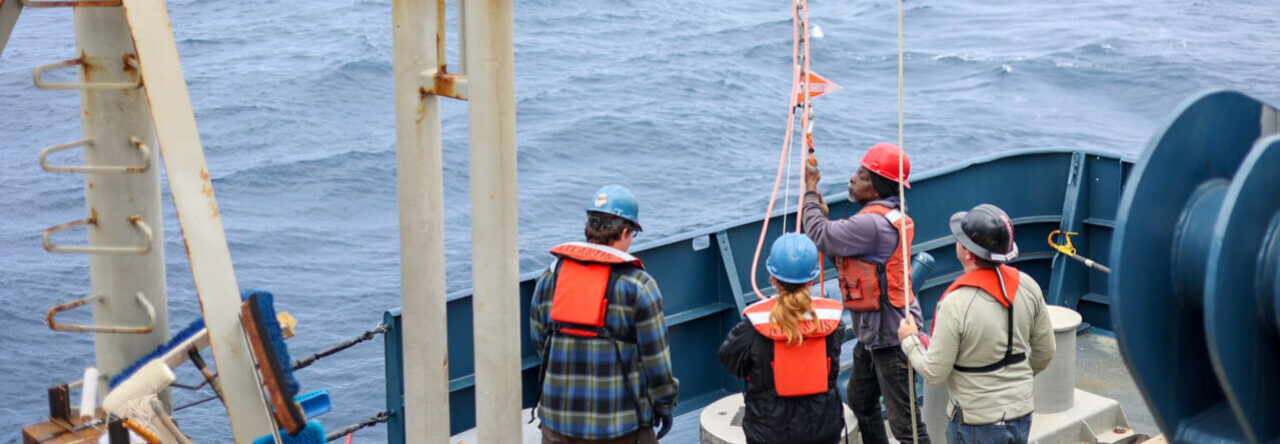
The aftermath of deploying the magnetometer (Maggie affectionately) during a downpour
During these long stretches of multi beaming surveys, when deployments are on hold, we have more down time. Trying to take advantage of this time when we aren’t needed for operations, the marine technicians have been showing Avery, Benny, and me the components of being an at-sea technicians and the responsibilities they have during their 12 hour watches.
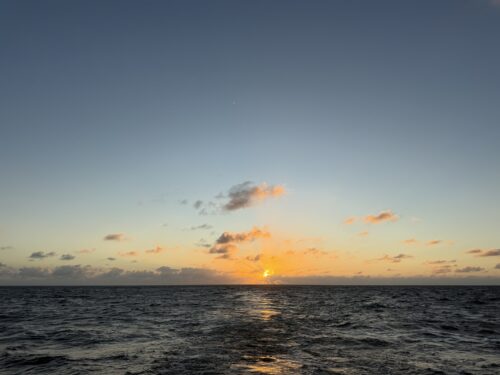
Sunrise on the fantail. One of the perks of waking up at 0100
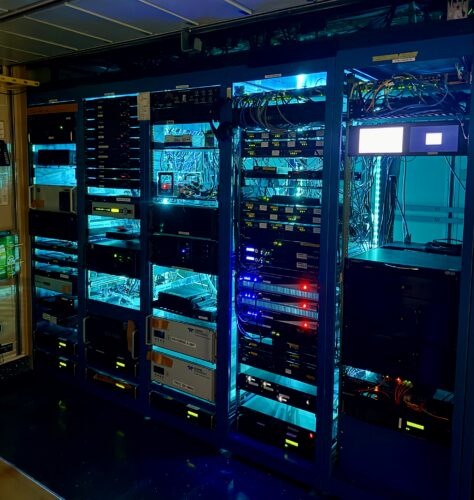
On the last few survey/transit days, we have been tackling all things networking and cables. Because of the central role that the ship’s server plays in all of the operations, networking has become a major component of the MarTech role.
So far, Liz and Andy have gone over the basics of networking and how it is applied to the ship and their day to day activities. Once we have an overall concept of how things work, they give us tasks to apply what they taught us in scenarios similar to ones they would be responsible for troubleshooting. Andy started us out with a switchboard troubleshooting assignment where we had to reconfigure a switch and the setup of 2 laptops so that we were about to communicate with them through a management computer. Liz Then had us working with network cables starting out with terminating ethernet cables and splicing and soldering wires together. More recently, we had the task of taking an ethernet cable and terminating one end into a converted DB9 connector.
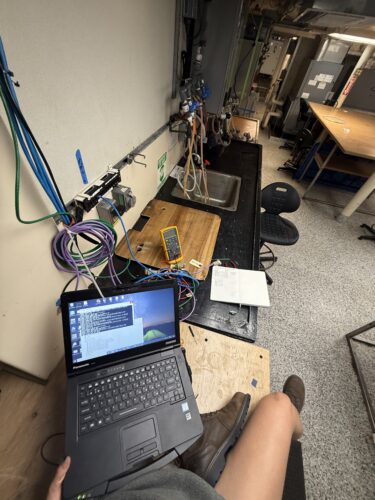
Successful data stream from converted ethernet to DB9 cable activity
We have been very grateful to the technicians for going out of their way to introduce us to their jobs and keeping us busy, especially during these quiet survey periods.
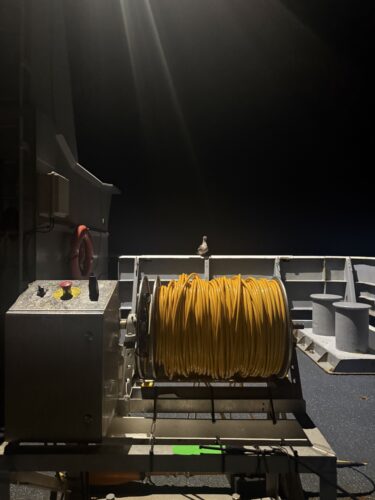
Bonus! A Booby impeded our Maggie deployment this morning. He was quite irked when we interrupted his feather cleaning