09/29 – 10/06
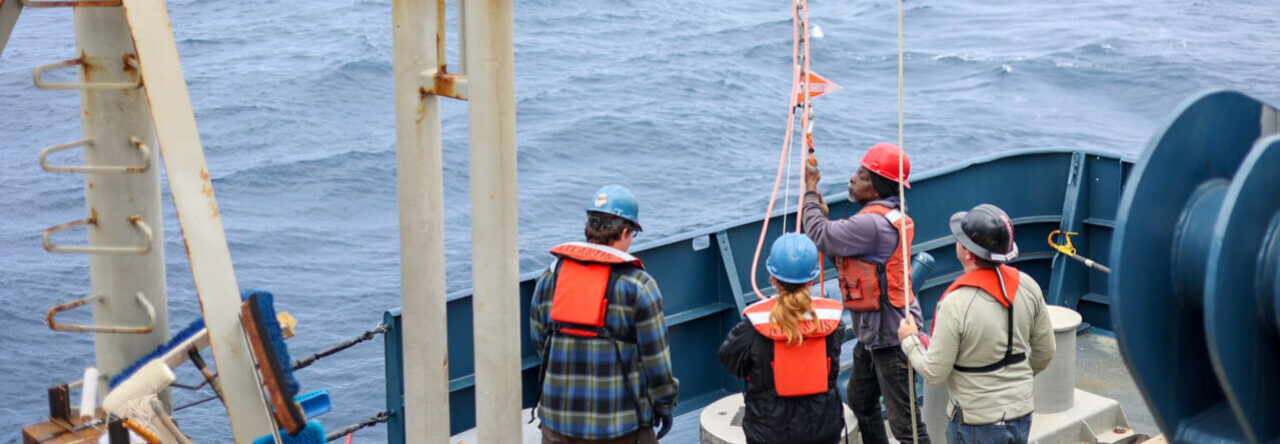
This week was filled with ice station deployments and more polar bears. There were three main ice stations in which the ITP, WIMBO and AOFB were all being deployed and then there were two secondary stations in which one more WIMBO was being deployed. The first ice station started off slowly as everyone was getting used to their roles on their teams and figuring out how to do everything. I was personally working with Peter Koski of Woods Hole to deploy the ITP. We first had to use a two-foot diameter auger to drill holes in the ice for the AOFB and then the ITP itself. At the first location the ice was over nine feet thick. This took quite a while to do and ultimately made the day long. The ITP itself is fairly straightforward to deploy. We connected four 70 pound weights to cable and then lowered the weights about 690 meters deep. Then the ITP was connected towards the top of the hole. We ran some tests on the Iridium communications and tested the ITP again. The ITP is set to profile the ice and will move itself up and down the cable to get certain data measurements at specific programmed depths. The scientists back at Woods Hole have decided the best method for surveying, so we were in charge of making sure it was deployed correctly. The cable also holds two Seabird Microcats (small CTD’s) which rest about one meter and two meters below the surface of the ice. Once the ITP was connected we transferred the cable load and then strung the rest of it through the buoy and then slowly lowered everything down. Our first time doing this whole process took about 8 or 9 hours. The second two times we were able to pre-drill the holes the day before and we had a better understanding of what we were doing, this cut down on our deployment time drastically. The image to the left is the finished ITP buoy and Iridium sensor deployed through ice.


While setting up for the ice stations we had a couple of small setbacks. During the second station, we picked a lot of the equipment to the ice with the crane and then someone from the bridge noticed a crack in the ice. This ended ice operations for that day and all the equipment had to be returned. During the second station we drifted about 50 yards aft of where we wanted to be and the bridge had to take the ship around a full circle in order to better position us to be connected to the floe. Both were small setbacks thankfully and did not eat up too much time.
We saw a mother and yearling polar bear about 300 yards off the port side of the ship during the morning of the third ice station. It was an amazing sight to see as the sun was rising and the polar bears were just crossing over our path we cut in the ice. Pretty amazing to see these animals above 80 degrees north in the Arctic.

The science party seems a little pressed for time, and as I was saying earlier, there were setbacks during the mooring deployments that ate up some of our spare days. After cranking out these ice stations though, I think we are in good shape to get done on time or even early. We are unable to pull into Dutch Harbor for port early, but there will not be as much of a rush to get science ops done.

-Nick