The reality of a 35-day geophysical remote sensing cruise is that it can be quite boring. Especially when your duties are repetitive. However, it’s up to you to make the best of the time on your hands. Think to all the instances in which you wished you had had more time. To finish a project. To read a book. To learn a language. To study for something. To practice a skill. When you start to look at empty time on a ship as a long-awaited opportunity for growth rather than a void to fill with games and minor tasks, it gets so much easier to look at a calendar and realize that you still have 3 of 5 weeks left.
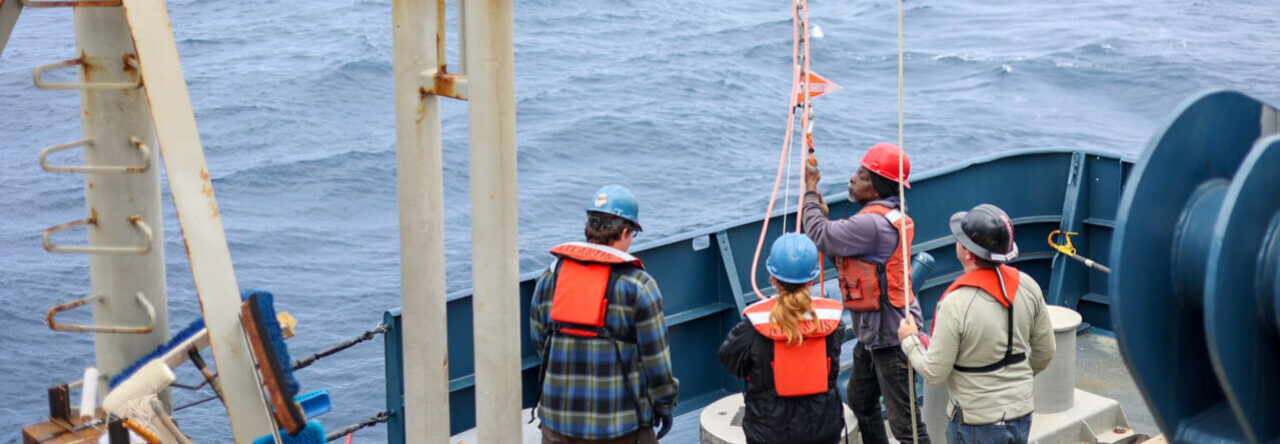
Everyone on the ship has been wonderful about sharing what they have, from their skills, to their art supplies, to their books in foreign languages. I have, of course, been continuing to stand watch and monitor the multibeam, sub-bottom, magnetometer, and gravimeter data, and have been learning new skills from the SSSG’s and other crew members. In fact, my time between watches, when the other MATE interns and I are introduced to new skills, is often the time of day that I look forward to most. We’ve learned to solder, climbed in the dome and learned about our satellites, learned about the EK80 and other major instruments on board, been introduced to networking, and more. Although many of these skills and instruments are not relevant aboard the current cruise, meaning there is little hands-on experience to be gained, members of the crew have been extremely generous in taking the time to teach them to us anyway.
In other news, many of the guys on the science team have taken up knitting (hats, sweaters, tiny scarves a.k.a toe cloths), taught to them by MATE intern Ella and German student Linus. In my own free time I’ve been learning Spanish, refreshing my German (by reading one of Linus’ books), water color painting on the bridge with Ella, working out (with ear muffs given to me by the electrician to drown out the multibeam), studying for the GRE (and sharing my study books with others), and doing origami (given to science by one of the mates). Each of these examples is just one instance where someone onboard offered what they had and made someone else’s day better. Perhaps a cheesy message, but truly one of the most important things I have learned to keep in mind aboard long cruises, and any cruise for that matter.