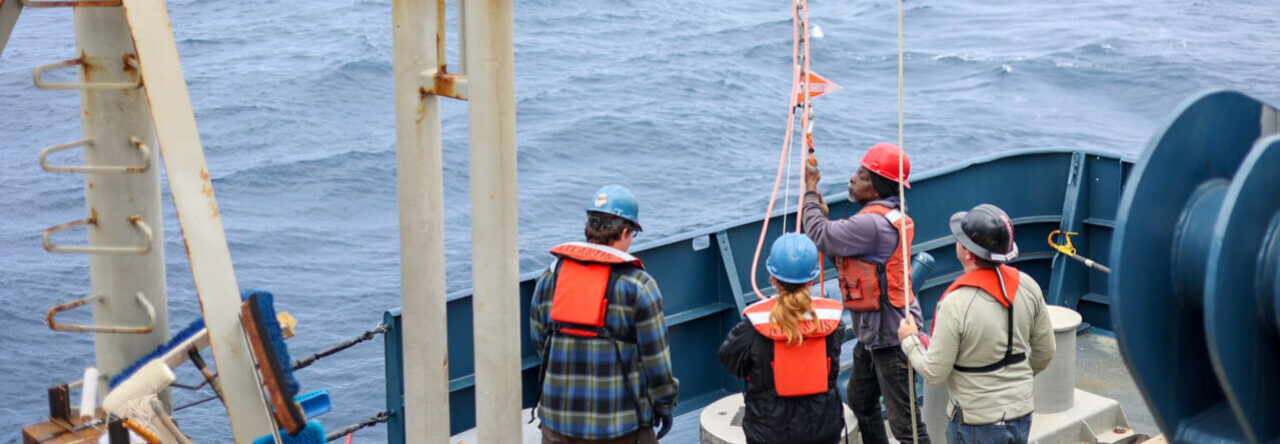
Just because our cruise doesn’t require any deployments of the rosette sampler, doesn’t mean we haven’t had the chance to learn about it. This instrument is the bread and butter of chemical and physical oceanographic sampling. The most basic of its type collect seawater samples and measure the water column temperature, salinity, oxygen, and pressure (depth) with more sophisticated models like WHOI’s having additional sensors measuring water column turbidity, chlorophyll, and light, and the rosette’s depth from the seafloor. During our free time this first week, Lila and Jacob, the other two MATE interns aboard the R/V Neil Armstrong, and I have dismantled all of the instruments from the rosette, serviced them, and reattached them along with all 24 Niskin bottles.
In past jobs and educational cruises, I’ve been responsible for filling samples from the Niskin bottles and monitoring the water column data as it is being collected, but I never felt confident in my understanding of the instrument operation. Now that I’ve held each sensor in my hand, connected their wiring and tubing, and scripted their operational files, I look forward to a cruise where I’ll be able to make use of my knowledge in action.
Although this cruise is bathymetry data focused, it has given us the opportunity to hone our data cleaning intuition. Much of this process includes repeatedly rejecting ridiculous data points from the multibeam that result from the imperfection of the instrument – often times due to simply the pitching and rolling of the ship – which can make the task seem mundane at times. When this happens I have to take a step back and remind myself where I am: on one of the most technologically advanced oceanographic research ships in the world, with scientists from all over the planet, mapping the ocean floor. This reminder humbles me back to reality, but losing touch of the uniqueness of these seagoing opportunities is not uncommon, especially when everyone surrounding you is operating business as usual.

Photo: Ella cleaning bathymetric data using the Caris software package.
Photographer: Maria Repczynska, Icelandic Student