Week 1 in the books!!!! (7/2-7/9)
Sunday (7/2)
Here we go!!!!!! I’m leaving……on a jet plane………and heading from Traverse City, MI to Portland, OR. The official start of MATE’s long-term internship 2023!
Luckily these flights were merely delayed a few hours, so I made it to Portland by 3pm.
This first evening will be spent catching up with the JASON team members who I worked with last summer. We reminisced about the previous science cruises, successes, and struggles while discussing this summer’s objectives.
Monday (7/3)
After breakfast, we divided into groups and loaded up to head from Portland to Newport. The few hours spent transiting allowed a few of the newer individuals to get to know each other before reaching our next hotel. We stayed the night at a location right on the coast and celebrated our arrival with dinner at the hotel restaurant while watching the sunset over the ocean. I really enjoy watching the JASON team members come together like an extended ROV family, sharing stories of their previous endeavors, future goals, and many laughs throughout the night. It really sets the tone for the upcoming cruises.
Tuesday (7/4)
Happy 4th of July!!!!
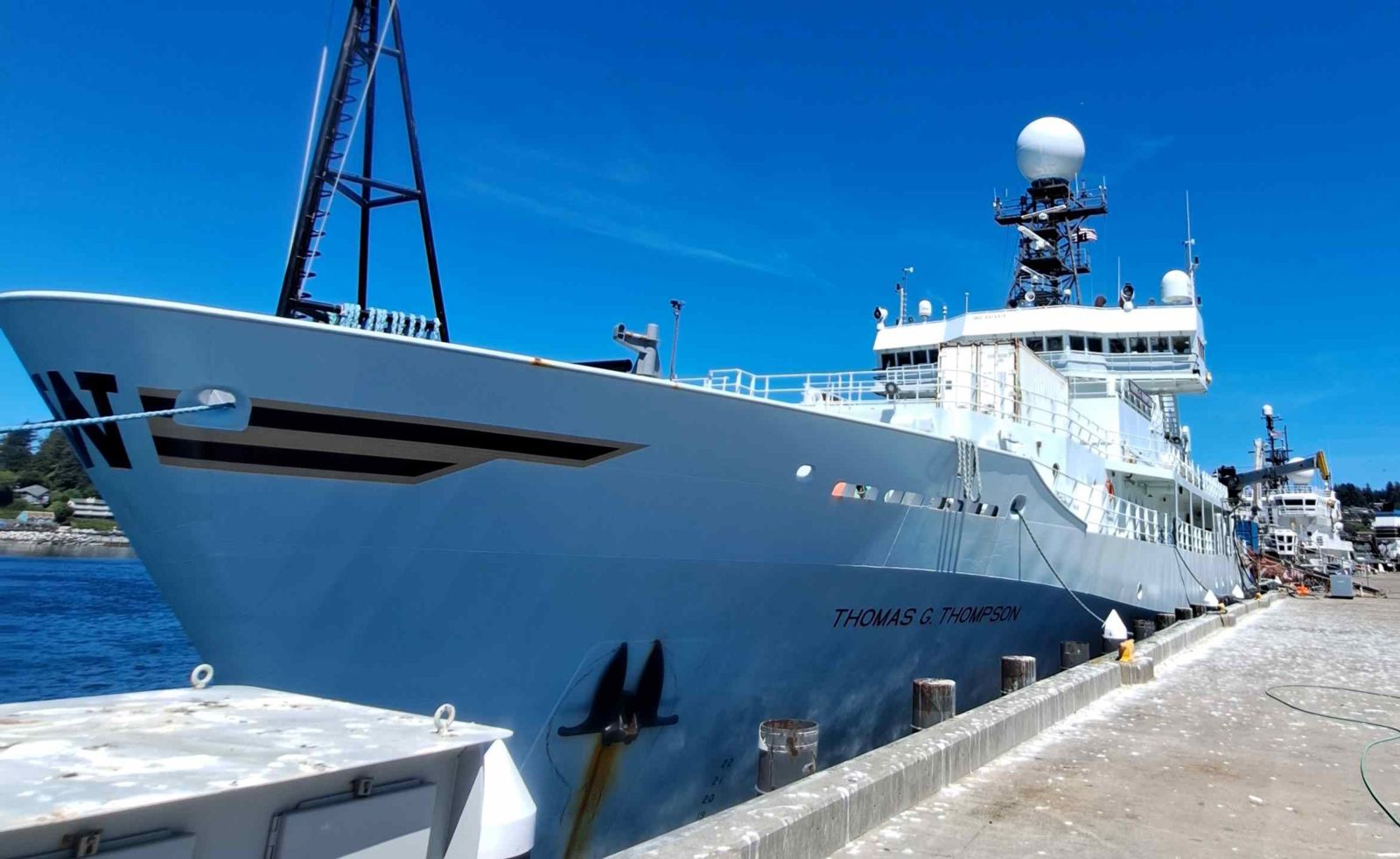
Up and at ‘em early! We arrived on the Thompson early enough to unload our belongings into our berths and begin work at 8am sharp!
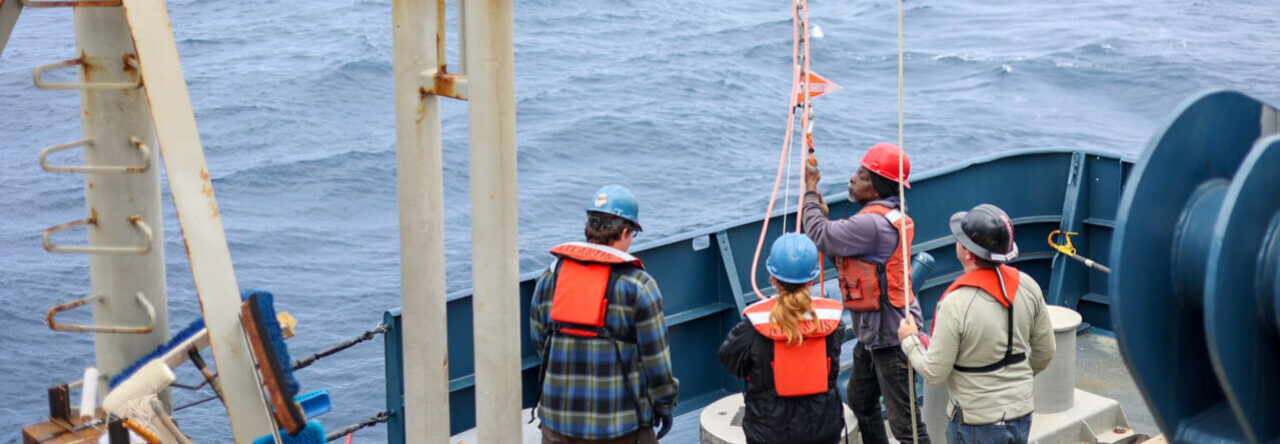
Mobilization is the name of the game! This morning was intentionally started early so the crew could prepare the back deck so the tool and rigging (equipment/storage) vans could be loaded and secured in place. We were able to load the control vans on top of the tool and rigging vans before having to break.
There is a local race every July 4th, and runners come through along the dock, which pumps the breaks on our mobilization efforts.
Once the vans were secured and runners exited the dock area, we set up the stairway to the control vans, unloaded all the storage vans, set up the ROV lab, and brought JASON onto the deck of the ship.

It is impressive to see how quickly an empty back deck can transform into a major ROV workspace. The communication and teamwork make the process faster than one would expect.
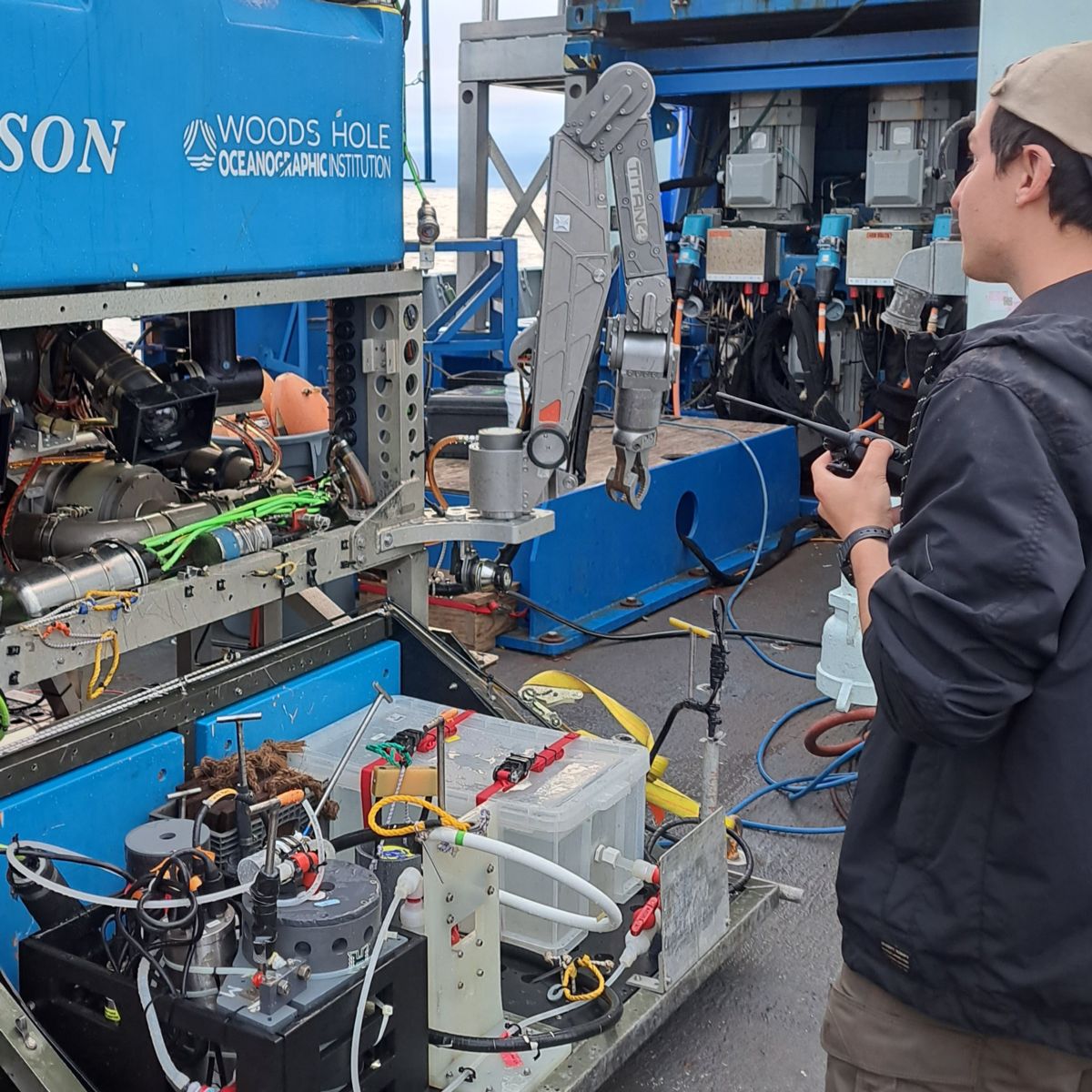
Towards the end of the day, we began vehicle checks and focused on the pan and tilt(p&t) cameras. We removed, cleaned, filled the comps, and remounted the pilot and science cams.
Wednesday (7/5)
While in port, the schedule tends to be from 8am to 5pm, but once we depart and dives begin, the shifts change to the 4-on and 8-off split. For this cruise, I will be on the 8-12 shifts, so 8am-12pm and 8pm-12am.
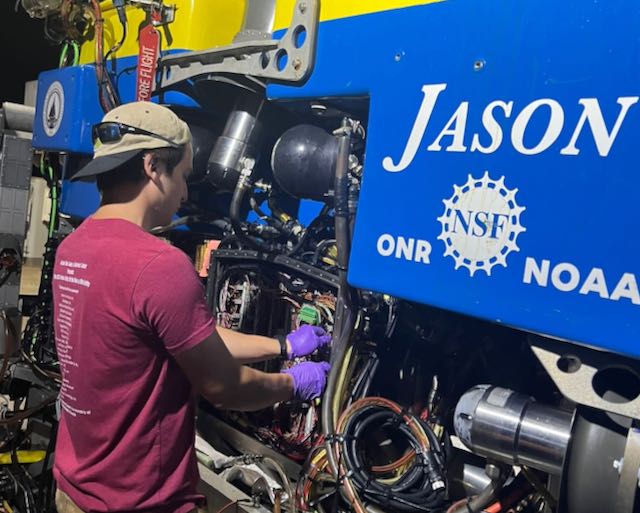
For today, the team divides to conquer mobilization tasks. The team I am working with focus on vehicle checks and maintenance.
In continuing the work from yesterday, we verify the brow p&t is good to go, but had to comp the aft p&t.

Mounted 2 deck cameras, secured their cables, and tested their systems.
Retermination of the Optical Fiber****
I was really excited to be involved in this! My marine electronics fiber fusion splicing practice was essential here! Once we finished connecting the new fibers to JASON’s aft, port-side junction box (j-box), we tested and verified light levels. And success!!!! This was a bit tedious and the retermination process is too much to try and describe here, but it is a favorite of mine. Last summer I was only able to observe, but this year with having completed classes specifically relating to this, I was able to assist with completing this.
Thursday (7/6)
Continuation of mobilization:
Wired science cables into the front port-side j-box and verify voltages.
Tested fiber cables and cleaned connectors, then rested.
Brought up Jetway voltage (105 volts).
Completed Predive checks for ROV.
Friday (7/7)
Last morning in port! The team’s goal is to wrap up loose ends and prepare for departure. The first dive is scheduled for tomorrow, is all goes smoothly.
Tasks completed today included:
CTD configuration and mounting.
P&T camera adjustments
Fill junction boxes
Bleed all of the air out of everything! -J-boxes, comps, manips, cams, etc……on the hunt to remove any and all air bubbles from lines.
Preparing for departure included securing everything that could move once the ship is underway.
Completed Predive checks.
The Thompson departed at approximately 4:45pm and we are officially at sea!
Saturday (7/8)
Back at it again with adjusting the Pilot p&t motion adjustments. We had to ensure that it only rotates a certain distance left-right, and up-down. This morning was spent verifying topside and predive checks.
I identified a small amount of water in the port-side aft j-box, so we drained it, removed the water, and refilled the j-box with oil.
We then completed another set of predive checks, which were successful.
4pm: JASON’s first launch
I was able to participate in the first launch, and it went very well.
This first dive should be around 800 meters deep and is scheduled to last anywhere between 6-24 hours.
8pm-12am: First split shift
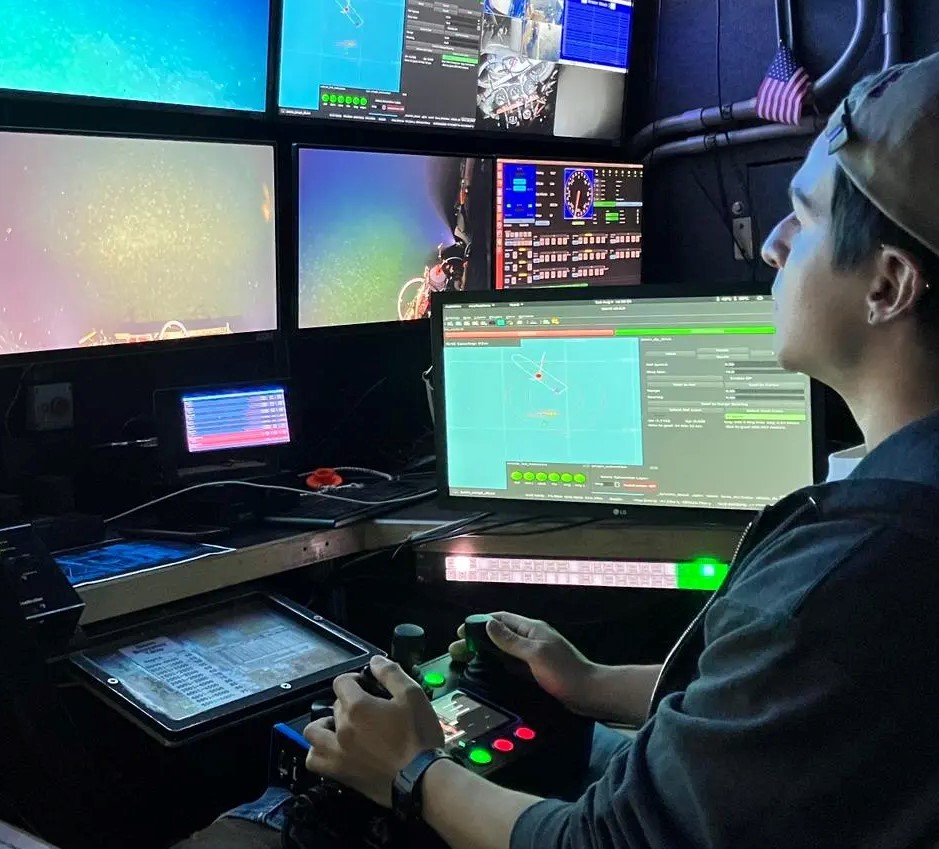
Co-piloted from 8-10:30pm, overseeing the vehicle’s systems and completing hourly voltage, pressure, and temperature checks.
By 10:30pm we completed dives tasks and added objectives before recovering vehicle.
10:30pm: Recovered ROV, completed visual inspection, and washed it.
Sunday (7/9)
This morning we completed Post-dive and Predive checks, tidied up the tool van, and now have some free time on our hands.
We will be transiting to our next location, and our second (and possibly last) dive will be in a couple days.
My first week back with JASON has been wonderful. There was no “readjustment” period, it seems we all stepped right back to where we were last summer. The group is fantastic! Each willing and enthusiastic to share their knowledge with others.
Last summer I shared a weekly tip, so I will do my best to carry on this tradition.
Tip of the Week: “See something, say something.”
-In this line of work, the idea of double-checking and triple-checking your work as well as other’s work is essential. Sometimes a fresh pair of eyes, no matter how experienced they are, is just what is needed. If you are newer in this field, always ask questions. The only bad question is the one not spoken. Or even just an observation. A small amount of water in a j-box could prove to be detrimental to mission success, so pointing it out to your team lead is vital.
Everyone contributes to these cruises, and everyone has a voice. This team makes you feel included, heard, and important.
So let’s do this!