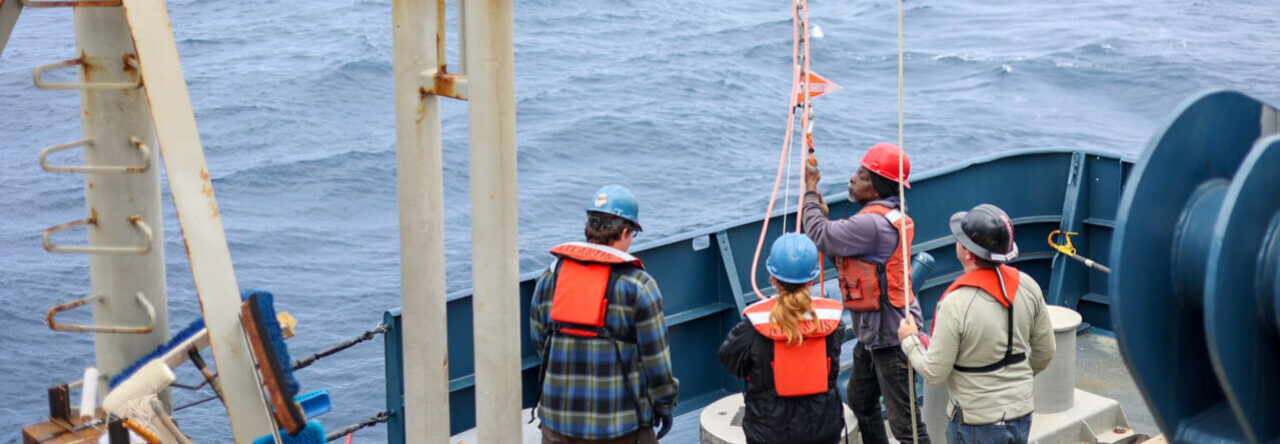
I have been on board the R/V Hugh R. Sharp for a full week now and am having a really great time. I meet the boat last Monday in Woods HWhole. The plan was to leave on Tuesday evening, but due to a new part for the radar not being delivered we ended up not leaving until Wednesday evening. I got to the boat late on Monday and went to a restaurant near the boat and got dinner. First thing Tuesday Mat, another MATE intern on board, and I accompanied the cook Lee to the supper market to stock the boat for the coming trip. We spent nearly 4 ½ hours at the store and filled numerous carts. We bought so many groceries we had to tie some of them to the roof of ourt rental mini van. When we got back to the boat we spent a long time unloading groceries and putting everything away. By the time everything was put away it was time for dinner and then bed. On Tuesday, I accompanied Max, the technician on board, and TR, a deckhand, to the UNOLS Northeast Winch Pool we were shown how to operate a new winch that we will be bringing with us on our next trip. Most of it went straight over my head but I understood parts of it. In the afternoon my parents came and took me out to lunch and dropped off some last minute things, and at 6 we left the dock. I helped Max with the pre departure check list for all the tech. equipment. Once underway we turned on the flow through system that takes constant seawater measurements. We also dropped the keel so it is flush with the hull of the boat. There is equipment in the keel so itwhich gets pulled up inside the hull when the boat is in port. Depending on the equipment the keel can be dropped down further if necessary. I am standing a 12 hour watch from 5:30 am to 5:30 pm with Max, so after the flow through and dropping the keel I had dinner and went to bed. The first night underway I woke up to the rocking of the boat several times. On Wednesday morning we started dredging at the beginning of our watch. We have a group of scientists on board from NOAA, who are doing scallop surveying. We dredged all day Wednesday, Thursday and Friday. There is a lot of work and steps involved in pulling the dredge up and emptying it onto a table to be sorted. Sometime on Friday night we finished the first group of dredges and switched over to Hap Cam, which is a sort of sled that hovers over the bottom of the ocean and takes video, which is then reviewed by the scientists. The Hap Cam can stay in for days at a time so there is very little to do during this leg of the trip so I have been hanging out on the bridge doing a lot of reading and getting to know the crew better. This cruise goes to the end of the week and then we will bring the boat back down to Lewes, DE where we will have about a day until the next group of scientist joins us.