A new cruise is underway and we were loaded up and off the docks by 7:00 am. This week we are back to CTD measurements, but this time we are doing shallow water deployments down along the Florida Keys and in the Gulf. The objective of this cruise was to characterize changes in water quality and conditions along the Everglades outlets by measuring oxygen content, salinity, temperature, and collecting planktonic samples for later processing. The majority of data collection was gathered from flow through surface measurements. We spent our first day sailing down the keys and occasionally deploying the CTD. However, we quickly found out that the altimeter mounted on the CTD was faulty and was off by 10 meters, which we unfortunately discovered when the CTD hit bottom. Once we recovered the CTD we visually inspected the sensors for damage and flushed them out with fresh water. Luckily, it looked like we pulled the CTD off the bottom fast enough to prevent any damage.

The treat of the day was getting to release a tiny baby loggerhead turtle into the wild for the Seaquarium. We waited until we were in relatively shallow waters and around a decent seaweed trail and gingerly lowered the little guy into the water. We all watched as the tiny turtle swam away quickly disappeared into a little pile of sargassum.


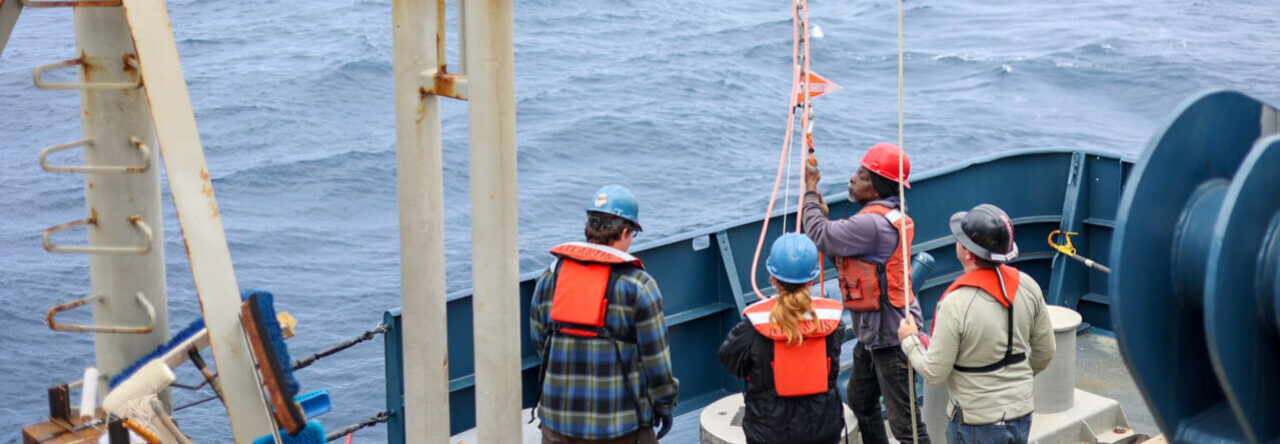
Since a significant amount of data was being collected from surface flow, I got an opportunity to learn to troubleshoot the salt-water intake. We observed a drop in the intake on the computer display and went down into the bow to shut off the intake for a couple minutes. Since we were sampling so close to shore, debris, sargassum, and seagrass can often clog the intake valve, so simply turning off the suction should clear the intake, and indeed it did. We also had some slightly rougher weather, which complicated CTD deployment and recovery. We had to set up a cleat on the back deck and run a tag line through it. Once we did that it was much easier and safer to control the wildly swinging CTD as we tried to drag it back on board.

The week seemed to fly by in a series of rapid-fire CTD deployments interspersed with flow-through measurements. The majority of stations were no deeper than 10 meters so the CTD measurements never took long.
We did have a bit of good luck while out by Shark River on the southern coast of Florida as several dolphins started following the boat around. Crew and scientists alike crowded to the back deck to watch the dolphins play in the wake of the boat. It was a great experience and very fun to watch. Eventually the dolphins got distracted by something more entertaining and were off to other endeavors, and the crew and scientists followed in suit.
On the longer transits between station, Don took some time to walk me through the Seabird software and the sensor outputs, teaching me the electronic side of CTD deployment and data collection. It was fascinating to see the real-time data outputs and the ease with which the software allowed us to trigger the Niskin bottes for water sampling.
We also got our first swim call on this cruise when we found ourselves in calm waters near shore. Since we had to take out the dingy to ensure it was still fully operational, I got a quick ride out around the boat and manage to get a great picture of the Walton Smith out on the water before joining the rest of the scientists on the refreshing and much needed swim call.


The technical highlight of this trip was that, after assisting with several CTD deployments, I was allowed to run the deck and, under Don’s supervision, I was in charge of deploying and recovering the CTD. I learned all the hand signals to direct the crane operator, the safety measures taken to ensure none of the equipment was damaged, and how important communication is for successful deployment and recovery. I felt like a true marine technician.

On the last couple of days of the cruise I took the opportunity to hone my skills with the CTD. Don walked me through all the sensors again and the expected outputs. We also tried to fix the altimeter but to no avail. While waiting to arrive at each of the final CTD stations I helped the engineers on board check and perform some maintenance on the ship’s air conditioners. I also had the opportunity to speak with the scientists onboard about their projects, which ranged from physical oceanography and marine biology.
Once we were done with the CTD stations and making our way back up the Florida coast, I spent some time up on the bridge where I got my final lesson on knots. I learned several ornamental knots, such as the Turks Head know and Carrick Bend. I also helped the first mate make new mooring lines for the ship, which turned out to be a great opportunity to learn the eye splice.

We made it back to the docks that afternoon and as we helped the scientists unload all their gear I was hit with a bittersweet sensation. That had been my last time out at sea, perhaps for a while, and I will truly miss the sensation of a swaying boat at sea. The internship was an invaluable experience full of lessons learned, skills acquired and amazing characters met, all of which will not soon be forgotten.
