Weekly Up-date July 29th
On this day the Healy is in Kodiak. Several of the technicians that were on the transit have packed up and gone home leaving behind two technicians and two MATE interns to oversee the transit to Nome Alaska where the Healy will welcome the science party and two additional technicians.
First day on board- July 21st
We got a brief tour of the ship and some of the STARC instruments on board and then got settled into our rooms. After that, we hung out in Seattle for a bit.
Second day on board- July 22nd
Mary gave everyone a start-up cruise intro where we learned about the MET (MET is a Scripps application) and how to start it up at the beginning of the cruise (setting cruise name, linking to .acq file, etc). The start-up cruise crash course also entailed an overview of the networking used on the ship and the communication of data between instruments and the network.
We learned about the interworking parts of communication of data as well as the importance of monitoring the flow of this information. The crash course provided a solid foundation for the continued education to come in the next couple of days.
Still getting lost on the magnificent Healy. Healy finally starts heading out of the pier.
Third-fifth day on board- July 23rd -July 26th
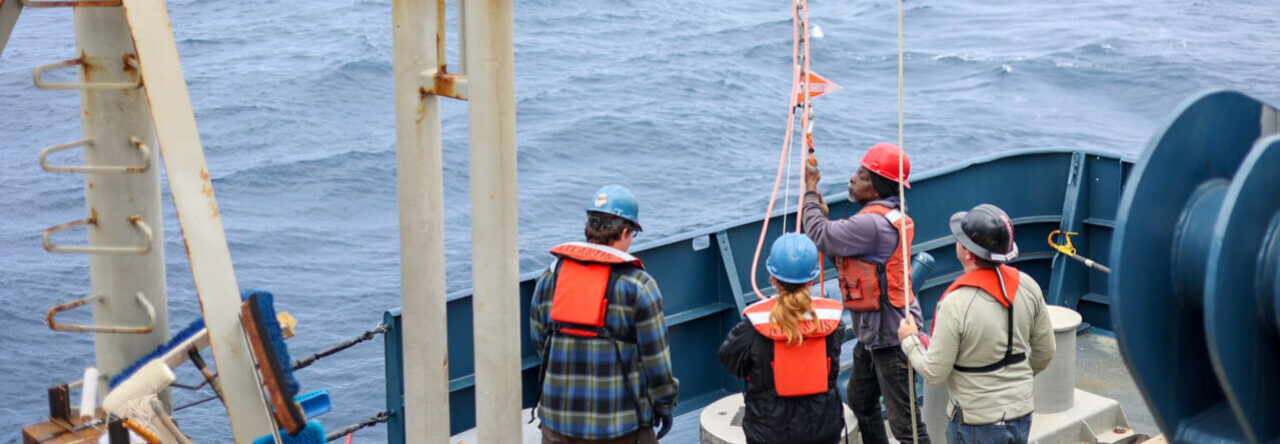
As the week progressed at sea the days seemed to blur together, but in the best way. We were constantly busy learning everything we could. So many new things to learn that extended beyond the daily operations of a Marine Tech. The Coast guard is doing their training which occasionally involved our participation (filing in to the science conference room for checks). There were a couple of times where the training got a little wild and an actual casualty occurred; before I would have been kind of worried about this but the coast guard does a really good job at keeping things under control. On the other hand…In the computer lab we have monitors that tune into the flight deck so we got to take a little break and watch the coast guard do flight crash training on the flight deck.
*Side note—I got sick during this time with a cold and the classic sea sickness. The best way I can describe it is by comparing it to the way you might feel after getting off a roller coaster that you’ve road 43 times straight while simultaneously trying to read Moby Dick.
Now back to the important stuff: The information download consisted of many more parts than the ones I will discuss below.
Two of the things that really grabbed my attention were the CTD and the Science Seawater Flow Through. I enjoyed learning about the set-up of the different instruments in the science seawater flow through, why the instruments are positioned the way they are (“real estate” as Mary likes to say) and what each instrument measured and how this contributed to different scientific research. The Healy has two science sea water flow throughs (SSW). The SSW on the port side is the only one of the two that has a pCO2 (one of the reasons why it’s the primary SSW flow through). The water that flows through the PortSSW will flow through the secondary SSW flow through located in the Biolab. Both of the SSW flow throughs have to be monitored and tinkered as the flow through from the main pipes can change. this is important becase of the mechnics in the TSG (conductivity and temperature). The MET helps us check the values when we are in the computer lab.
The CTD is probably my favorite instrument. There are several names to refer to the CTD (i.e. Fish, Rosette, CTD). I will probably be talking more about the CTD when we start casting! But for now: we learned how to open and close the pumps attached to the rosette as well as the different instruments connected to the fish and rosette. I like to creep on the CTD from my computer using the IP address of the camera placed in the Starboard Staging Bay. Its doesnt do much but sit there while we are in transit but there is a sense of satisfaction when I can sit in my bunk before bed and tap into the nanny cam.
July 27th– 28th
We ported in Kodiak and went through the end cruise protocol for the instruments. Made sure the pumps were turned off for the SSW (dont want to suck up all the gunk and filter it through the system). The EM 122 and the Knudsen were also turned off.
We got to explore Kodiak a bit. The second day we went to the south side of the island and hung out a bit. I saw a baby sea otter and got pretty close to it (Houston doesn’t have a lot of these hanging around downtown). There is a photo floating around somewhere and I will try to get that up later.