Category: Host Page 65 of 85

Week 1 on R/V Sharp

After quite an overnight transit adventure, I made it to the airport in Salisbury, Maryland. There I met Tim Deering, the Ocean Services Coordinator at the University of Delaware, as well as Drew, another marine tech who was hired on a temporary basis just for the scallop cruise. Tim drove us to Lewes, Delaware, where we met the ship as it was being offloaded from its last cruise. I met Ken “KG” and Chirsitan, two of the other technicians that worked onboard.  Tim gave us a tour of the boat, including the kitchen, which was well stocked and extremely impressive! My room was very nice (with a TV!) which I would be sharing with Paul, the oncoming cook. The crew and technicians eventually went home, giving Drew and I some free time on the boat. Over the weekend, we worked with the crew to prepare the boat for the first leg of three of the scallop trip.We loaded scallop dredges and repaired hydraulic lines for winches that would be used during the cruise. On Sunday, only Sean, the relief captain, Drew, and I were working, so once we finished Sean drove us to Cape Henlopen State Park and gave us a tour of the area. The views on the point were breathtaking. We then had dinner in town which was very nice. So far, the crew has been very good to work with. On Monday the scientists showed up, and it was all hands on deck to get the van, or shipping container on deck serving as additional lab space, on board. I worked with Christian to load test the CTD (a probe that measures water quality), and helped the scientists set up thier computers and habcam, a large device that will be towed that takes pictures of the ocean floor.

Tuesday we finally left to begin surveying off the coast of Virginia. It was a beautiful, calm day to be out on the water. I stood my first 12 hour tech watch with Christian, where we worked on fixing the cellular internet, which was having issues, lowered the keel that contained transducers for various instruments such as an acoustic depth current profiler (ADCP), Knudsen echosounder, and surface mapping system (SMS), and cleaned out the filter on the flow through system. We helped drop the habcam in to the water and the scientists spent the next few days towing it along transects and taking pictures of the bottom. The equipment was working well, so we did not have a whole lot to do for several days besides occasional network issues and cables and monitors that needed to be hooked up. We continued to monitor our water quality data, It was a good chance to get some reading done, spend some time working with the second mate on the bridge, and look at the deep ocean fauna, including loggerhead turtles, pods of dolphins, a massive ocean sunfish, and even a baby whale. The weather stayed nice, and it was both wonderful and intimidating to be out at sea with no land anywhere in sight.

Today, Friday, was a little more interesting. I began my shift on deck rather than inside on another beautiful day, to find the scientists crowded around the drege table sorting through massive mounds of material from the bottom rather than watching cameras. I helped them separate scallops and crabs from sand dollars, sea mice, worms, and mud that had been pulled up. We collected gallons of scallops, and I got to try my hand at shucking them. The scientists even purified several so Christian and I could try them raw. Not bad…but hopefully the cook will make us some of the leftovers that aren’t being studied! We dredged a second time, sorted, then packed up the dredge and dropped the habcam back in. Jimmy, the captain, after viewing our slightly slow work, joked that “we’re lucky to not be on a scallop boat because we wouldn’t last long.” Now hat the dredging is done, the scientists will continue to run the habcam on transects until we get back to port in Delaware, hopefully by Wednesday, to complete the first leg. So far, my time on the Sharp has been interesting and I have learned so much already about marine technology.

Note: Since the internet is pretty slow on board, I’m going to only post pictures in each port between legs, wheteher it is a blog day or not. Until next time!


Huxley
 

Preparation for Internship aboard R/V Atlantis

My name is Dan O’Grady, I am from the great State of Ohio. Presently I am attending Stark State College in North Canton, Ohio. Originally, I’m from a town called Gahanna, just outside the city of Columbus. I was first introduced to MATE my junior year of high school when I signed up for the Underwater Robotics Class. That was an unusual class to have for a high school that was in the middle of farm country. The teacher of that class (who is one of my greatest supporters) was Mr. Donelson. He had created an afterschool club for students who were dedicated and enjoyed Underwater Robotics. As a club, we competed in MATE’s Rover competition. At the time, we were the only high school in Ohio who were competing so we to travel to Michigan for our regionals. We made it to internationals my first year but placed second at regionals my senior year. Now in college I am finishing an Automation Manufacturing Robotics Degree and have been interested in pursuing more with Underwater Robotics. I have been fortunate to be selected by Woods Hole to be an Intern on their Ship R/V Atlantis.

Five Days ago, I finished my last my last final examines for the semester and travel to Virginia where my family just moved for my father’s job in Washington DC.  I will be beginning my travels tomorrow, May 16, flying to San Jose, Costa Rica where I will be meeting up with the submarine pilot and electrical technician to travel to Puntarenas and catch a 10:00 launch to the ship. I look forwarding to this opportunity to experience life as an Oceanographic Technician. 

Docks and Landers in the Gulf

For the remainder of the week, I worked on environmental monitoring with our instrumentalist Amanda. We have a “Meet the Fleet” event coming up in Baton Rouge soon- a large PR event that broadcasts our boats, instruments and different areas of research and education within the LUMCON facility. We are currently working on a weather monitoring station for the event, to rig on board within one of our labs. Amanda spent the week picking up the last of our supplies: PVC piping, and a mounting block that we will attach our sensors to for display. We spent the day rigging our display, and adding last minute aesthetic touches such as blue spray paint. The boat will return tomorrow afternoon- in the meantime, I am swinging by New Orleans to pick up my mentor John at the airport after work. All in all, I am very excited to be back on the boat with the crew!

Back at it again:

Back on the boat for demobilization and loading: We have a short three-day cruise coming up tonight until the 16th. During my very first cruise on the Pelican, a group of scientists dropped a lander at the bottom of the Gulf of Mexico. This particular lab group has now returned and will be joining us on a cruise to retrieve their deployed sensors. Several CTD and MIDAS flow-through samples will be taken on the way, to maximize additional research on our transit to our lander station. I am excited to return, and this three-day cruise should be a relaxing transition back onto the boat!

We spent the first day in transit, and picked up several CTDs along the way. I spent some of the morning driving, testing our boat’s alarm systems and learned more about our navigation and anchor lights. By mid afternoon we made our way to our lander station and retrieved our device using a transducer and hydrophone system, which brought our lander afloat. We were able to pick the device up with our back a-frame and did not need to deploy our small boat. Unfortunately, upon arrival on deck, we had the discovery that the lander was fried in several spots and only recorded about ten days of data. Our chief scientist ruled out several possibilities and believes there is an issue with the stepper motor, which draws samples and data. A new part was ordered and will be delivered tomorrow morning at C6C- a common station within the Gulf of Mexico only 3 hours from LUMCON.

Following day:

Our new stepper motor was delivered around 11am, hooked up around lunchtime and tested several times. However, while the stepper motor is fixed, the issue lies in several fried wires. After a long few days of troubleshooting- to no prevail- we had to turn around and are hopeful that we can send a small boat out tomorrow to get our lander back in the water. Heading back now, we should be arriving at dock around 7pm. We will quickly mobilize, bring items on the boat for Meet the Fleet and our scientists will stay on board until our small boat trip tomorrow.

We are leaving late tonight for Meet the Fleet in Baton Rouge. Most of the boat is packed up and our scientists are planning to leave soon to deploy the lander. The wires are fixed and our boat’s MATE will be leaving soon to deploy.

 But, I am very excited for our PR event!


Getting Ready for my Internship on R/V Hugh R. Sharp

My name is Huxley Conner, a student at Maine Maritime Academy and newly selected MATE intern for the summer of 2017. I have grown up and lived in the area around New Haven, Connecticut. From a young age, boating, going to the beach, and learning about marine science have been passions of mine. I could not imagine a life where I was not on the water. I even attended a city magnet high school that specialized in marine science and technology, which inspired me to desire a career on the water and apply to a maritime academy.


At Maine Maritime Academy, primarily made up of students training either to be a deck or engine officer on merchant ships, I have completed junior year studying Marine Science and Small Vessel Operations in the small but close knit Corning School of Ocean Studies. This program, with its own dedicated research vessel and unparalleled access to conduct research on the coast of Maine, has been immensely helpful in preparing me for a science career on the water. I originally discovered the MATE internship through two former interns of this program and graduates of my academy, Allison Mitchell and Julianna Diehl, who encouraged me to apply.


Not even a week ago, I have finished finals and have arrived home to Connecticut. Since I leave for Maryland to meet my boat, the R/V Hugh R. Sharp, in three days, I have been busy packing and reading up on how to use and maintain the equipment I will be working with. At the same time, I have been saying my goodbyes to family members and friends at home, who I likely will not see again until Thanksgiving because I am moving to Maine to be a science and sailing instructor at a day camp as soon as my cruise ends.


I will be meeting the boat in Ocean City, Maryland, and will be flying by myself from New York City to get there, a new adventure for me. I will be taking two overnight trains and a bus to get to La Guardia Airport, and then two planes! At least I have family members and friends with a lot of flying experience that I have been learning from. I remember there being an aquarium in Ocean City…but I doubt I will have time to stop. From this internship, I hope to meet many different individuals on board and find out what their experiences are like. I am eager to discover if I can see myself working on a research vessel once I graduate. I cannot wait to get started!

First Month Down

Our cruise in Mexico is now over and I have set my legs on land. I spent the last day before entering my dorm on the boat and assissting in several technician projects that needed to be done prior to the following research cruise. The science crew showed up later our first day back and most of the day was spent preparing for their needs on board. More specifically, I worked on preparing our CTD. Our CTD rosette was lost to sea last cruise and now we must employ a much smaller option. There are many sensors mandatory for this trip, even a horizontal niskin bottle that must be rigged to the bottom, so it has been difficult to make room for everything. Nonetheless, my mentor and I successfully rebuilt a whole CTD sensor and pump system. The experience was extremely beneficial for me, as I was not only allowed to switch our sensors, but also rig a complete system from scratch.

After working on the CTD, fixing our weather station attenaes aboard our mast, and supplying an extra hand on deck, I made my way back to my dorm. While it was sad to see the vessel leave, I am excited to enhance my technician and boating skills in a new environment.

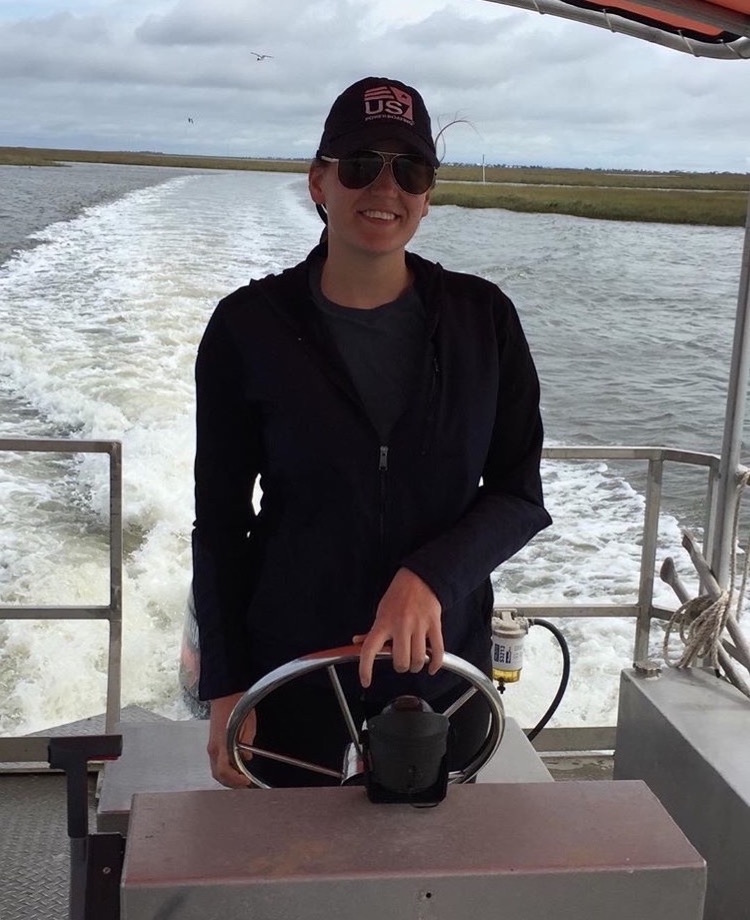
My first few days back on land I worked with our small boat manager, Carl, for the remaining of the week learning about boat fueling, repair and maintenance. I will also be helping with the environmental monitoring systems as well towards the end of the week. My first day back was slow and I mostly shadowed Carl around the ship yard fixing small boats. I spent the remainder of my time driving and preparing our pontoon boat, as I will be captaining an education class come Monday. Prior to my time on docks, I have never driven a pontoon boat- but the same general rules of small boating apply. The pontoon boat uses a two-stroke engine and I spent the day driving around the bayou in preparation for Monday. The bayou area is very low and tidal influxes are small in range- unlike up North where you can see a ten-foot change within only a few hours. With this in mind, I went through the bayou for a while with Carl to get a feel for new landmarks and areas of precaution, such as oyster beds. It is a tricky area and you have to constantly pull your engine up to prevent from sucking in mud. Luckily, mud is not as damaging to an engine as sand and you can easily clean your engine out with flexible wire while driving, if your “piss” hole becomes clogged. Attached below is a very smiley picture of me driving my first pontoon boat!

Pontoon trip:

My class arrived around 8:45, which gave me time to set the boat up in the morning, start my engine, prep my ropes and prepare my life jackets. There were several educators on board, which made captaining much easier as I could just focus on driving. I gave a quick safety brief in the beginning and then drove them over to a marsh platform for sampling. Essentially, I edged the top of my boat unto the marsh in neutral, so we can sit around for a while without drifting or floating away. Around noon, the class was ready to return and I used a boat hook to push us away from the marsh and slowly backed up without churning up mud in the very shallow areas. All in all, it was a successful trip. I spent the remainder of the day helping out Carl.

I spent the remaining of my time this week running a few day trips on our research vessel the R/V Acadiana- which is much smaller than the Pelican but is a very capable vessel. Before our trip, we added in new windows, new navigation systems, new tile and a new captain’s chair and counsel. The task was lengthy but we are all prepared for tomorrow. We are set to leave around 7 am with a class and plan to go around the Gulf of Mexico (a very short drive from LUMCON) and spend the day doing mud coring- a memo I did not receive when I showed up in my brand new sneakers- lesson learned.

R/V Acadiana Trip

I met with our deck hand and other tech at the boat around 6:30 am to prep for our morning departure. I spent the morning cleaning windows, starting the boat engines up and removing the boat from shoreline power. It took a few hours to get to our first station, which gave me a great opportunity to drive to our location. The Acadiana does not have auto-pilot yet, so I manually drove the boat- which is far trickier than the Pelican because the steering is very sensitive and deviates from your position, so you must constantly turn your lever back and fourth to keep a straight course. Throughout the day, we did about 50 or more mud cores and around 4:30, headed back to make it to the docks around 7:30 pm. I spent the evening cleaning off the boat, which was covered in mud, and turning the rest of our switches off. It was nice to drive another research vessel, as every vessel steers and drives differently.

Attached below is a picture of the R/V Acadiana.


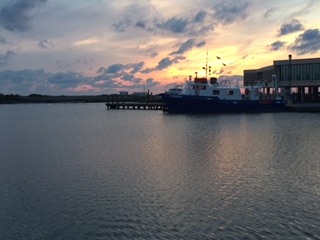
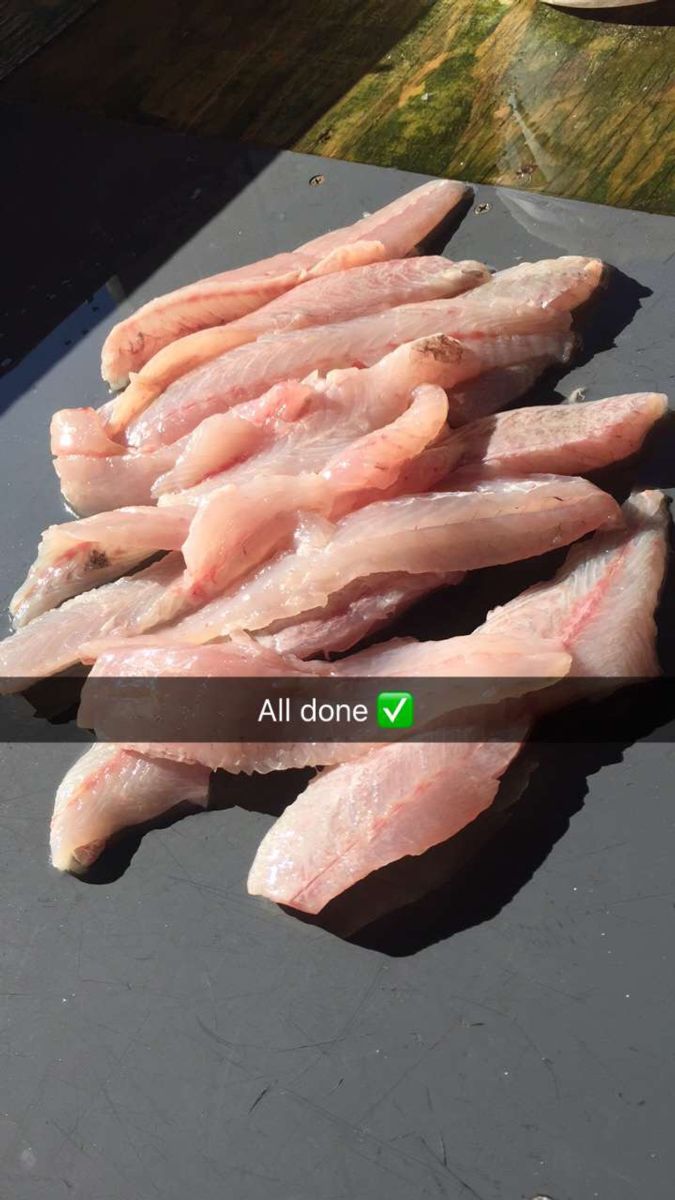
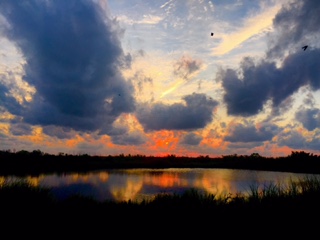
A story of Southern hospitality at its finest: During this week we had a very large storm which made many food places closed. Our chef was out for the week and it was hard for me to find good food. Our security guard Kenneth, an older guard at Lumcon, caught a surplus of fish for me, taught me how to fillet them (it was my very first time) and fried them with me for several nights in a row! He even made me beignets, brownies and brought me several other snacks and goodies throughout the week. I have never met Kenneth, but we treated me like family and I will be eternally grateful for his kindness- and even the gut I grew during my time! I posted a pictur below of a sunset we saw while fishing and a set of my first filleted fish. Enjoy!

Mexico, Storms and Drones

Well, it can’t be all fun and games- after returning from New Orleans we were back to the wire preparing for our Mexico cruise, and this time, my passport finally got put to use! The Gulf of Mexico is off the coast of Louisiana and while we do explore the Gulf, it is not considered Mexican or ‘International Waters.’ However, this cruise we traveled to the Bay of Campeche which is Mexican territory. Before the science party arrived, we spent a majority of our time adding the rest of our sensors to the CTD on our back deck. Every cruise involves different sensors, dependent on the scientists needs, and this cruise involved two aquatracka sensors and a CDOM sensor- which measures the “colored dissolved organic matter” within the water. Once the chief scientist arrived, we were able to add the last aquatrack sensor and finish wiring our c-cable with zip ties. Adding sensors to the bottom of the CTD is a lengthy process- especially considering that some may have to be moved around to fit all your necessary needs. It’s like the age long game of Tetris! We use hose clamps to rig the sensors to the bottom rosette platforms, then a cable plug (matching with the sensor) is run to the other end (channel) of the rosette pump. The cable prongs needs to be cleaned with contact cleaner, canned air and then silicon is added for extra lubrication and hold.

Due to the need of a 24 niskin bottle rossette- which is much large than a regular 12 bottle- it was neccessary to deploy our CTD off the back a-frame using our Dynacon Winch. Deployment off the back deck involves a process called tag-lining. Tag-lining is a simple- yet sometimes hard to maneuver- task that involves wrapping ropes on both ends of the rosette and loosely rigging the ropes around our two side cleats on aft deck. While our chief engineer uses our back deck winch to control the CTD, two people hold tightly onto the taglines and maneuver the CTD into the water as smoothly as possible. The tasks involves great tension and pull on the ropes to ensure the CTD does not crash into aft deck during descent. Once the CTD is in the water, two workers quickly pull the rope off the CTD and walk around our winch wire and off aft deck. While tag lining is a simple concept, it is also very dangerous as there are several “pinch points” where the CTD can potentially pin or slide into a worker. Like all things on a vessel, it is very important to always keep a watchful eye and ear for potential hazards. While bringing the CTD to surface, we use a hook called –for lack of better word- “a happy hooker”, which can be used to attach rope on both sides of the CTD to pull up for ascent. Due to the lack of visibility with the aft deck winch, a third worker is needed to signal our chief engineer when the CTD is at surface. During our daily CTD casts and tests, we noticed several anomalies coming from our temperature sensors during up-cast- which consequentially affected our salinity readings as well. After several modifications, we eventually changed out our temperature sensor, channel station and cable to ensure any possible issue was resolved. So far…so good.

Our biggest issue with this cruise was our constant need to terminate our CTD winch wire. Due to deep casts, and the inevitable spinning of our CTD underway- caused by currents, waves, winch spead and boat position, it was a reoccuring issue. We later found the issue of our winch wire, which needed to be replaced, compounded the issue greatly. Our technician and I were up all hours of the night and day terminating. A swivel device can easily fix this issue, but it is expensive and we do not always have all the equipment we need at sea- hence the need to always think on your feet. Terminating a winch wire is a long process (3-4 hours at a descent speed) and involves multiple layers of wire, plastic and internal termination. Despite the stress of constant termination, I learned a lot during the process and am happy for the new skill!

Unfortunately, despite the most valiant efforts, our CTD was lost to Neptune on our last day of sampling. Luckily, 99% of our CTDs were done and we returned in time for a lovely Cyclone- Seriously, someone pissed off the Sea Gods during this cruise. In the end, everyone landed safely and the spanish crew and our crew celebrated our stresses away the following evening on the docks. I am thankful to have met so many interesting, vibrant and unique individuals during the cruise!

Week Two: The Sound of Pelicans and the Smell of New Orleans!


Hello, All!

It has been a long few weeks, and due to a few technicial errors, it has been longer than I expected since my last post. Boy, can things change overnight!

I will start at the end of my first cruise, and continue with my New Orleans trip to summarize week two:

The ending of my first cruise, in comparision to the beginning, ended very smoothly with only small technical issues caused by wifi- which seems to be a commonly occuring issue in all marine realms. In all honesty, despite how good the wifi network, there is also issues with connection and perhaps one or two overzealous wifi users downloading copicious amounts of data. But, can you blame them? With the crew particiularly in mind, it is natural to want to stay in contact with your loved ones back home. I ended my first cruise on Easter Sunday, where I truly began feeling the effects of what it is like to be a marine technician- that is, a worker bee. We did not arrive back on dock until very late Easter Sunday, as the scientists chose to prolong the cruise because we were ahead of schedule (scientists are too busy to celebrate holidays). It is sad to miss events such as family holidays, or graduation, and a small part of me feels as if I am being robbed of priceless moments, but the experience of being out to sea- with the accompaniment of beautiful sights, smells and sensations- is equally as gratifying and priceless. Last night, a fleet of sea birds and pelicans swarmed the boat during sunset because we were churning up fish. The sight of sea birds, dolphins, sunrises and moonsets, are making this experience well worth the energy I am putting in. Not to mention, the beautiful dinner our chef made to make us all feel at home. The crew truly is a family, and I am honored to have been welcomed into it so gracefully.

Week 1: The Gulf of Mexico and Dolphins!

So, here we are! I boarded the R/V Pelican mid morning, April 5th, after spending the night in Kenner, LA. Upon arrival at the LUMCON facilities, I spent the day meeting the crew and becoming accustomed to the R/V Pelican. Around noon, the crew and I used the a-crane to deploy the vessel’s small boat into the water for a test run, prior to our cruise. The marine technician and I were lucky enough to take the small boat for a test run, but even luckier to find a few pods of dolphins swimming around- A sight I later found is blasé to the crew who always sees them. After performing small boat ops, I helped the crew prepare for the cruise. Our vessel’s freezers were down, so I spent most of the later noon removing old freezers and helping to rig them to the top of the ship to store food and additional science samples. Through early evening to dusk, most of the science Intel had arrived and I spent my remaining time exploring the LUMCON area and facilities. Cruise departure time: 12am

While most of my first day tasks slid onto the backburner, I learned an important lesson: ALWAYS bring seasickness medication, despite whether or not you have been seasick before. Evidently, “sea legs” are earned, and I spent most of the day recovering from illness. Though, I can’t complain about the amazing food on board- it was so good I tasted it going both up and down several times…Despite not feeling up to par, I did my best to complete and learn as many new tasks and instruments as possible. I learned the basics of CTD casts both within the tech lab and on aft deck. After observing and assisting in my first on board CTD cast, I removed the tubing for our sensors and did a clean: triton x, DI, bleach, DI and a good spray down prior. In down time, I perfected my soldering- using the hot glue gun method- and worked on terminating RJ 45 Ethernet cables and rewiring them for practice. After the first day, I began to gain my sea legs, just in time for the chaos that would ensure days latter.

By the third day, we had run into every CTD issue possible-which functioned as a phenomenal learning experience. Overnight, an oxygen sensor imploded under pressure during a deep cast. Due to the incredible variation in depth within and along the Gulf of Mexico, sensors must be changed according to their depth range, prior to casts. This oversight resulted in only one of our two oxygen sensors working. In addition to the oxygen sensor imploding, the firing mechanism within the top carousel of the CTD was not closing all our bottles- an issue resulting from either a “dirty” firing mechanism, or an issue within the internal firing unit of the CTD. Our vessel’s technician and I began by soaking the firing carousel in a detergent bath, a troubleshooting method less time consuming than changing out the internal firing unit. After several soaks of our firing carousel- in addition to replacing the top with a new carousel- the issue persisted later into the evening, which told us there was a potential internal issue- but it is important to follow up with deck tests before committing to a big change. While the firing carousel was soaking I assisted in replacing our missing oxygen sensor with a new one, which worked beautifully. But, of course, it’s never that easy and as one issue plummets, another surely surfaces. During a CTD cast, a scientist removing the sensor tubing broke a small screw holding our sensor in place. The sensor was rigged with zip-ties the first time, and a second time when the same issue occurred with another sensor. Part of my job as a marine technician is to function as a liaison between the crew and science Intel- unfortunately sometimes warnings about equipment are not always followed. We made our way to “jacked-up-city”- which I later learned is a sea name for a set of oilrigs that are clustered together, during periods of non-use. An interesting sight, but we were here to deploy sensors and perform box coring. I assisted in lifting a box core off the back a-frame, using the Appleton crane. After performing box coring, and receiving extra equipment from folks at Lumcon, we performed more boat ops. Using the crane, our small boat was lifted out of the vessel, and into the water. A science member, John and I, drove the boat close to a rig, and deployed an instrument attached to a mooring. The experience was exciting and I couldn’t help but to hum the Hawaii-five-O theme song in my head, as soaring through the Gulf. After some circuit issues were resolved in the tech lab, we called it a day.

After my morning tasks and duties, it was back to the white elephant in the room: our CTD. We began by troubleshooting the CTD with several deck tests- one of which involves an on deck procedure of firing and checking bottles. Through radio, our marine technician and I communicated (one on deck, the other in the technician lab firing bottles) to assure the firing mechanism was working before casting again. It is important to use tubing in both the top and bottom of the bottles before firing- as to assure the bottles do not crack under stress or pressure. Another test involves a very similar firing procedure, but instead of cocking the bottles, a technician places a screwdriver at each magnet of the firing carousel, awaiting a click for confirmation that it fired. After several on deck tests, and a discovery within the internal firing unit, it was confirmed the issues were internal, and the SBE 32 unit did indeed need to be changed. In order to change the SBE 32 unit, several CTD bottles were removed, as well as the top shackle, which involved a sensor being removed and covered in electrical tape for protection. After changing out the unit, several more tests were completed, one more firing mechanism soak, and we were back in business. Due to our long transit time, several lanyards were also replaced.

 During longer transits later in the week, we performed a transmissometer field calibration test. The test includes filing all the CTD rosette bottles with fresh tap water, going through calibration standards within the computer and our manuals, and running an on deck test to assure our values are similar to the calibrated ones. The calibration ran smoothly and I worked on several lanyards for the CTD. Yesterday, we added heat shrink to some stoppers on our lanyards, and while heating accidentally melted away some of our plastic lining. I replaced these, finished my firing mechanism soak and reattached the firing mechanism on my own. During down time throughout the week, I have been shadowing our vessel’s Captain, in the hopes of driving by the end of the trip. I have my USGS 6-Pak License, so learning the rudder mechanisms, boat mechanics, and steering has been incredibly interesting to me and is a goal I plan to pursue throughout my internship. I have been reviewing radar, navnet, AIS, radio station etiquette (if fishermen, rig workers and captains ever actually follow it), along with the basics of throttle, propulsion and steering. An important aspect within the computers, and especially with all the boat traffic and rigs of the Gulf, is CPA- other known as the distance to stay away from boats or rigs that may have line, pipe, etc. hanging around.

All in all, after learning the stresses of being a marine technician, I seized ship and am the new Captain (see below). Just kidding. Disclaimer: auto-pilot is a great way to pretend like you know what you’re doing.


Almost on my Way!


My name is Amanda Dostie, a recent UConn BS graduate, and a soon to be MATE Intern. With only a number of days left before my departure, I am overwhelmed by a complex variety of emotions. Beyond all else, I am overcome by a deep sense of honor and excitement in beginning this wonderful opportunity. I will start my journey in New Orleans, LA, aboard the R/V Pelican and R/V Point Sur, at the LUMCON facilities. For approximately three months I will learn the ropes of a new world, become accustomed to the life of a marine technician, and in doing so, grow tremendously. Following my time in New Orleans, I will make my way to Bermuda, working alongside BIOS and other institutes.

My journey to where I am now began with my love for the ocean. From a young age, my childhood was enriched with vivid memories along the coastline- swimming, exploring and boating along the waters. Later, my passions lead me to pursue a career within marine science. During my undergraduate career, I immersed myself in a number of academic and personal endeavors surrounding the environment and natural sciences. I took advantage of the research opportunities within my institute, and worked as a research technician for over four years. I worked under several water quality projects studying nutrient pollution, eutrophication, algae blooms, hypoxia, TNT/RDX and other related biochemical interactions. My experience as a research technician exposed me to work aboard large and small vessels. My passion for working in the field, lead me to instruct marine science and other naturalist subjects within outdoor-education. During this time I earned my USGS 6-pak Captains License, and other useful certifications. I finished college deck handing for my institute’s vessels and pursuing personal research endeavors. My personal research endeavors involved algae bloom quantification, remediation, as well as NGO and municipal work, in the hopes of pursuing a business in algae remediation. Upon graduation I was intrigued by the MATE Internship- an exciting opportunity that will utilize and blend my research and mechanical interests. Although I will be extremely out of my element, I am excited to learn as much as I can, especially in fixing instruments!

I am spending my remaining days with friends and family, enjoying the simple moments we too often put on hold, and scrounging up any last-minute travel necessities. Oh, and of course, there are the copious amounts of reading I will be doing. To my surprise, a bulk of my packing was completed early- though I am still gathering together my smallest creature comforts, like books and personal items, which I will be especially grateful for on long cruises. As I wait through my last few days, I am overwhelmed with both nerves and excitement. In a short amount of time, my routine and perspective will completely change, and in lieu of my trepidation- I could not be anymore excited to take this step. My process will last a little over half a year; easy by no means, but perhaps one of the most rewarding adventures of my life.


Conclusions on the R/V Sikuliaq

And so, my time on the Sikuliaq comes to a close. Many CTD lines and supersucker attempts later, we’re done collecting data.Since we got done early, we were able to set up an ice station off of the Wainwright line. After a day of searching, we found a piece of sea ice that was large enough to be stable. Paul, our boson, drove the landing craft to get to it. We drilled and sawed into the ice to take samples and see if there was any ice algae. Afterwards, we shuttled groups of crew and science back and forth to let everyone get out on the ice. I got in a snowball fight, made snow angels with some crew friends and generally had a good time out on the ice. Afterwards, we got a speedy boat ride back through the sea ice. Nothing as  exhilarating as zooming through and around sea ice in a small boat in the Arctic!

We also were able to visit Point Hope, a small Alaskan Native village, for a day. We got to see the ceremonial whale burial grounds, and stopped in the town hall and grocery store. Afterwards, I walked around the north side of town for some alone time and a great view of the Brooks range. Those were some really gorgeous mountains. We took the landing craft back to the ship and set off again!

The ship navigated some choppy waters back through the Bering Strait. We anchored off shore near Teller to weather the storm. The next day, we finally docked in Nome and went to go celebrate a good cruise. It’s been a good time; I’ve learned a lot about CTDs, coring, nitrogen fixation and primary productivity, the Arctic, maritime life, how rigorous science is, and what it means to be a marine technician. I learned a lot about this cruise’s experiments, the ship’s seawater system, sonars, pco2 monitoring system and other underways. I also got to see the glider and super sucker and learn about both of them. I learned about deck ops and the AON morning. I got to help with sampling and even learned some about engineering. Interning has also taught me how to be more proactive, communicate professionally and work in a team. I mostly like the biological aspects and the technical aspects, and could be interested in specializing in one or both. I could be really interested in deep sea work, which would be very biological and technical. I’m also interested in doing work that’s more people oriented, working with local communities or front-line communities, perhaps implementing traditional knowledge or working with them on climate justice issues. All in all, this was a great internship to take right after school. It taught me about professionalism and oceanography, exposed me to marine careers, and gave me a better idea of what I want to do. But for now, I’m off to venture around Alaska!

P.S. I’ll put up one more photo blog. Stay tuned for pics! 🙂

Page 65 of 85

Powered by WordPress & Theme by Anders Norén