Category: Host Page 21 of 85

Week 5: Rockin’ and Rollin’

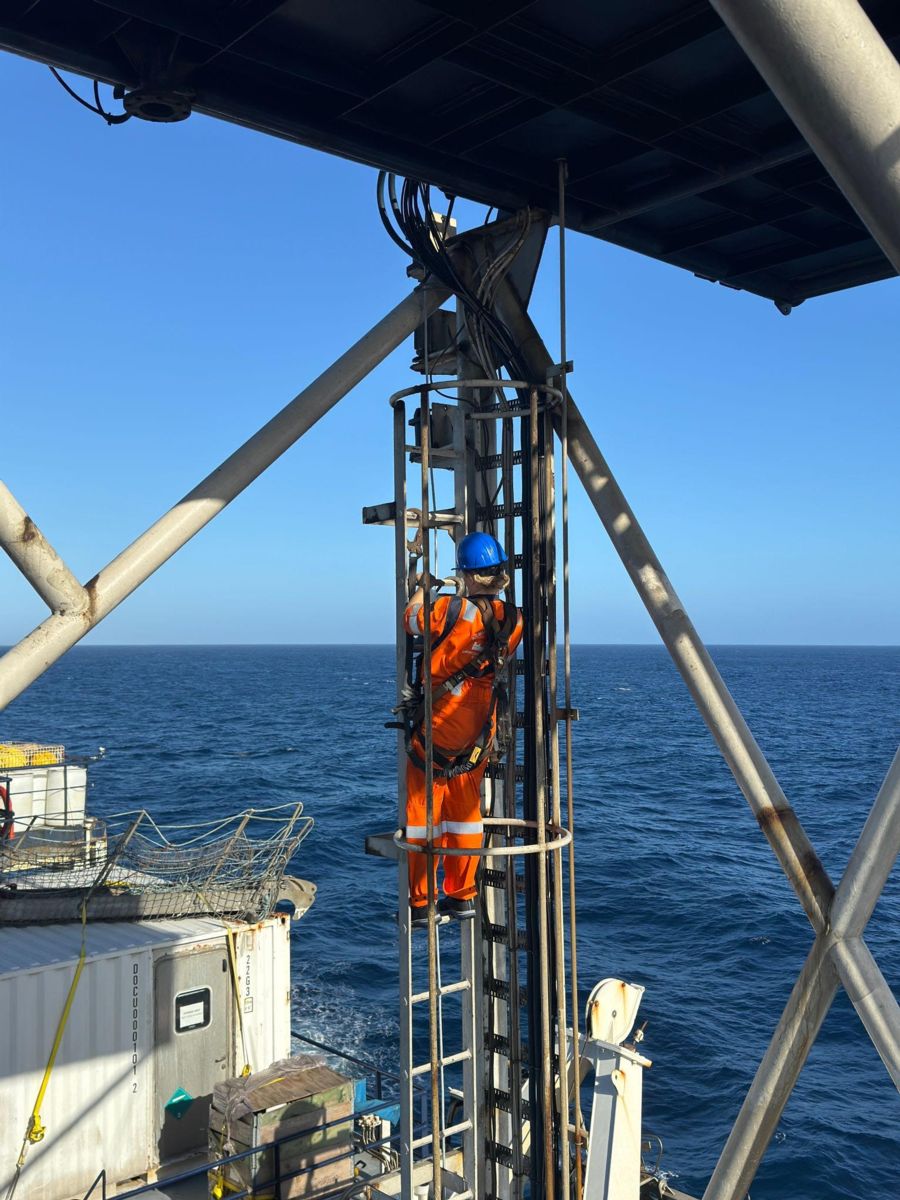
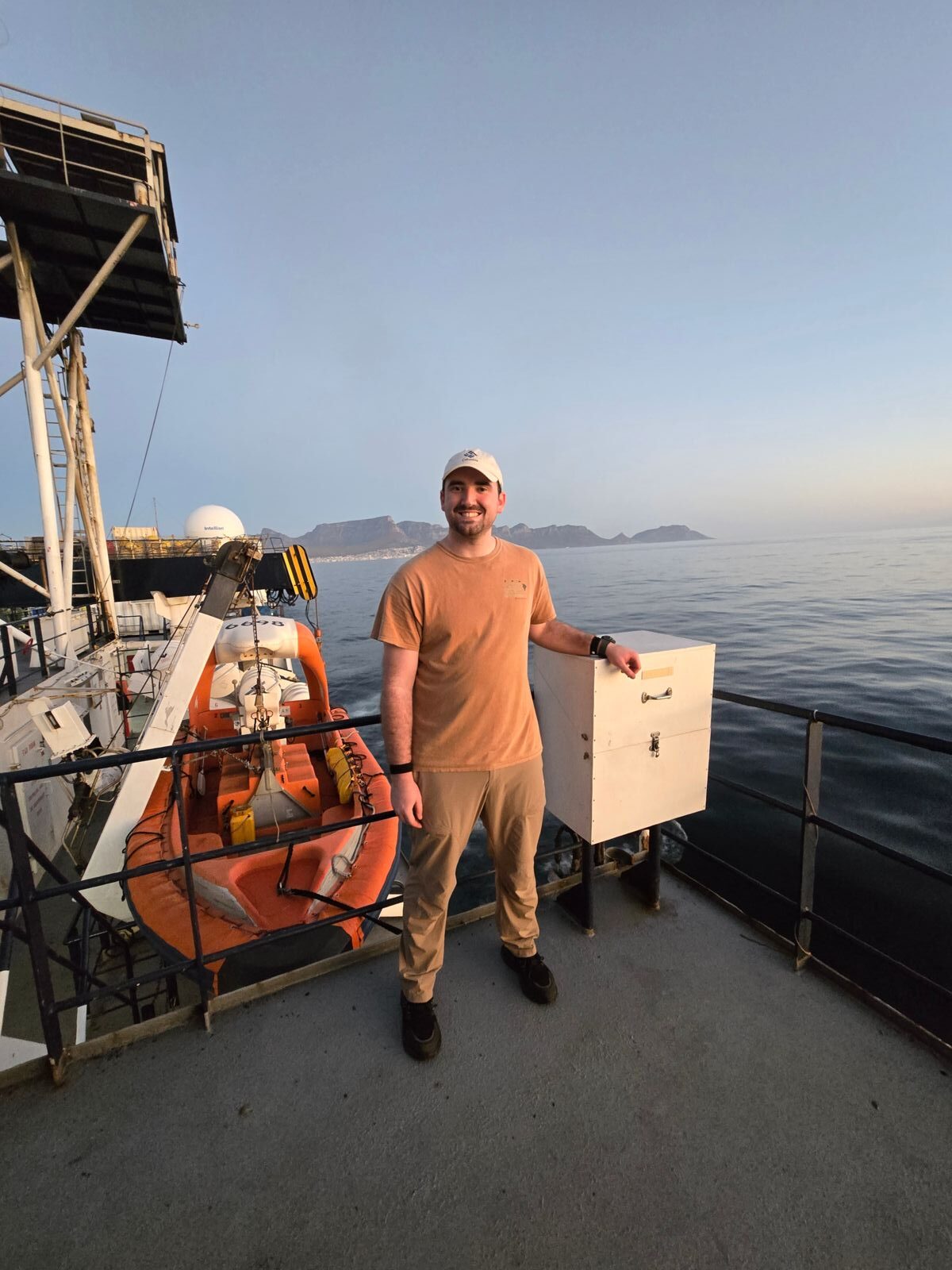
Happy Saturday! We are back on the R/V Kilo Moana for the last cruise of the internship—just 5 more days of sea-time and adventures in the North Pacific Ocean until I return home to Seattle. The nice part about the cruise is I know exactly what is happening this time and feel more confident assisting with deck operations and asking better questions. Most marine techs I have met have explained this exact feeling—each cruise gets more familiar and you will feel more confident with your skills as you continue to settle. I am counting down the days until my next cruise, wherever that will be!

The days of the cruise tend to blur together for me but I remember the exact moment the excitement happened. I was assisting Trevor with a CTD deployment in choppy waves and decently strong winds. I held the walkie-talkie and was communicating with the bridge when the CTD was starting to drift under the boat. Almost immediately, Trevor took back over control and was not-so-calmly asking the bridge to move the ship ASAP because the wire angle was too much and he worried the CTD would get stuck in the prop—an expensive issue. From that point on, the weather dictated most of our operations and made it difficult to fall asleep with the crashing waves between the hulls of the ship. The big waves and strong winds halted operations for 8 hours while the science and OTG teams created a new plan.

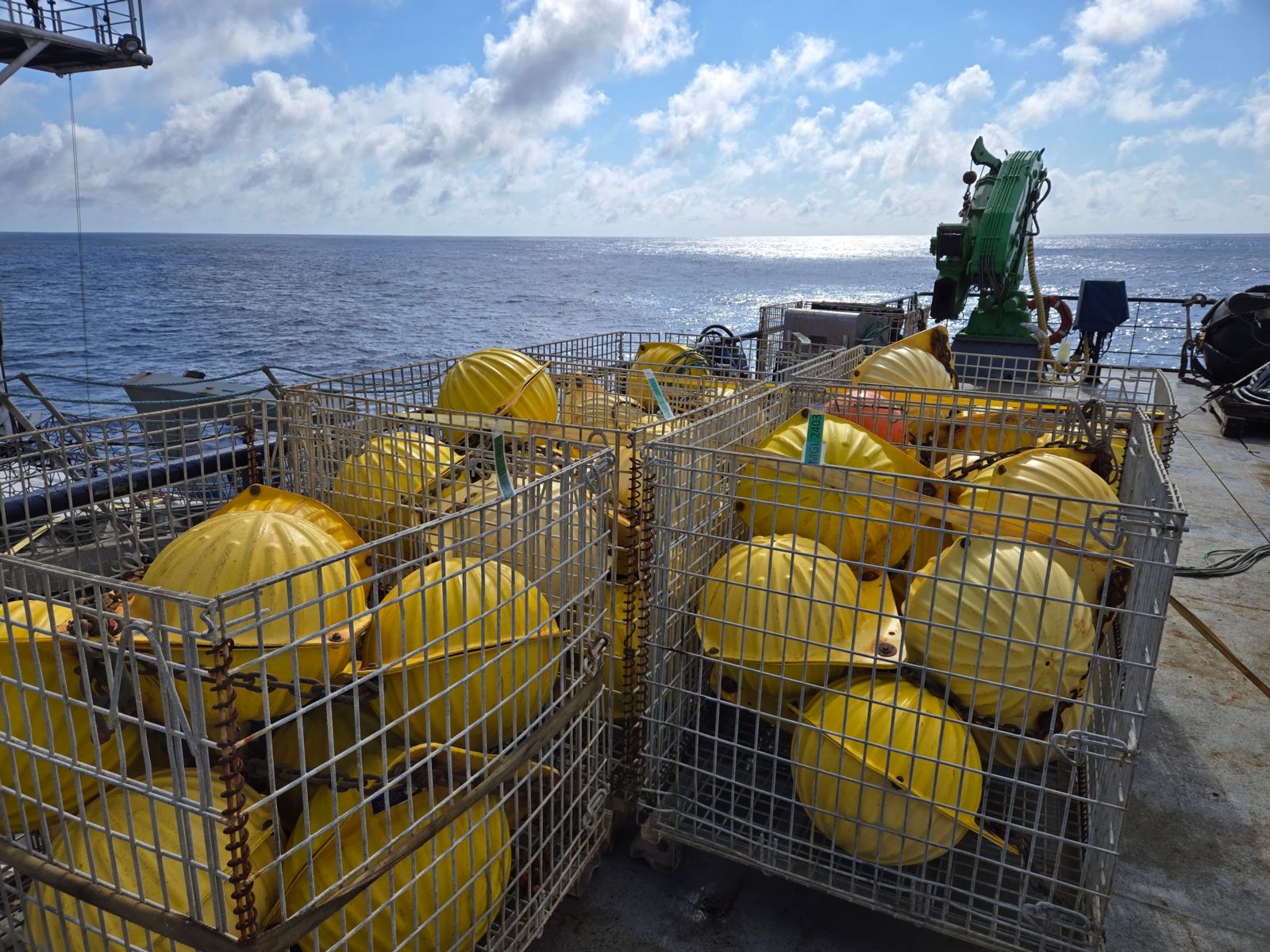
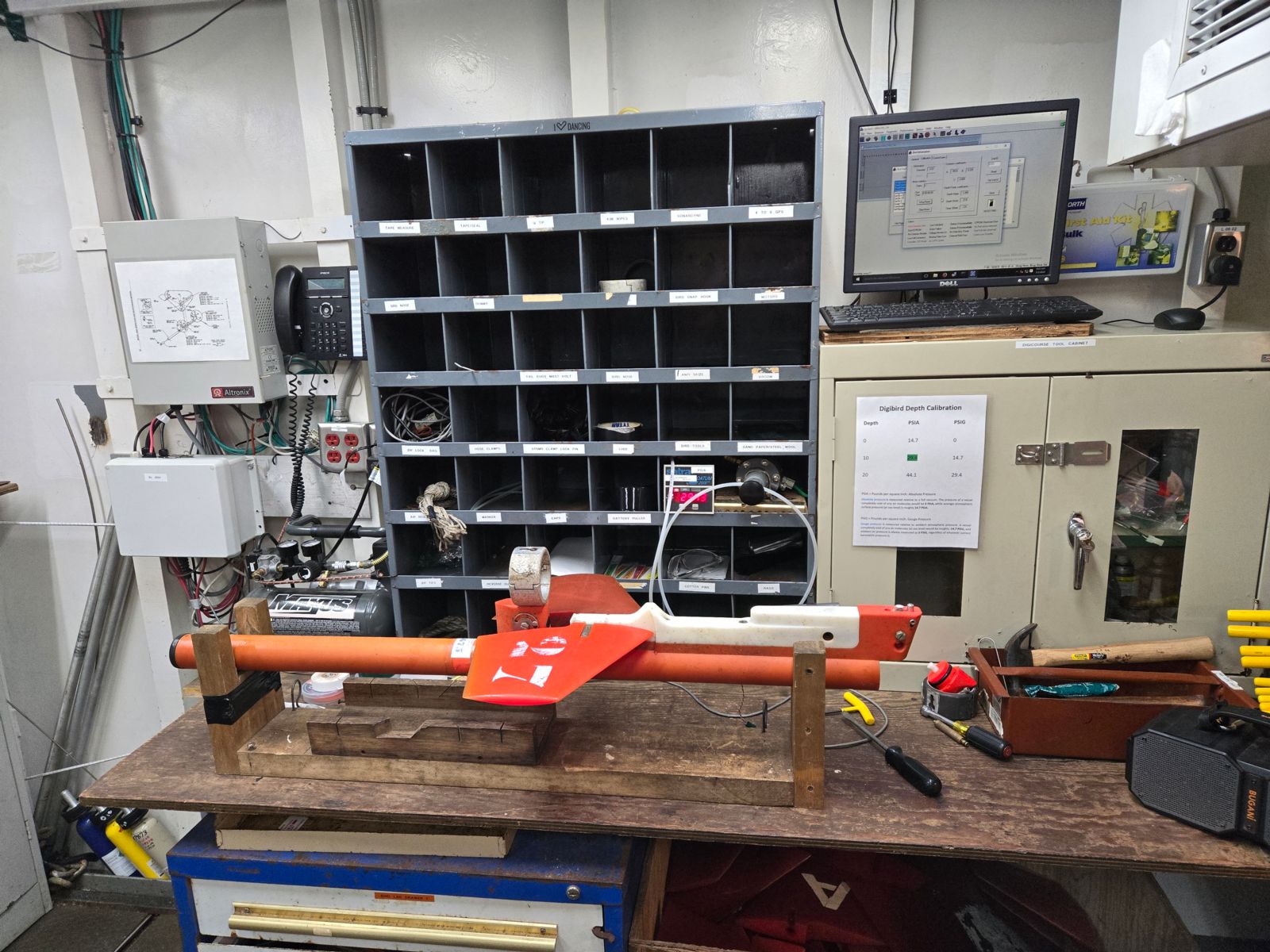
The following 3 days blurred together with deployments and recoveries happening back-to-back to make up the time we lost. Lots of CTD casts, trace metal casts, net tows, and VPR casts kept us busy. Kelsey, on the science team, was armed with a camera through most of it. To wrap up my blog for this internship, please enjoy many photos of my last few days on the Kilo Moana.

I absolutely loved my time on board the ship and created many great memories throughout the internship. I would like to give a huge thank you to the HOT team, OTGs, and the crew of the Kilo Moana for hosting me and supporting me through an unforgettable 5 weeks in Hawaii this fall! Thank you so much!

Jenn

(Dan Sadler, Fernando, me, Hunter, Carolina, Dan Fitzgerald)

Week 5: Ice, Ice, Baby!

As the title suggests, it’s all about ice, ice everywhere. 


Operations continue as we venture deeper into the ice, and I find myself on deck as a line handler on the crane. Being a part of these operations, getting the REMUS and their other instruments out of the water, is always challenging, rewarding, and a great experience. Our Bosun and deck crew are amazing, and they always get the job done, even in single-digit weather with a -12 degree Celsius wind chill. This is definitely the coldest I have ever experienced, even with the mustang suit.


Apart from my daily duties, we are nearing the end of the cruise and internship, and now I get to work on more side projects. I’m focused on gaining more experience with 3D printing and designing. So, naturally, I found a mini version of the REMUS (left) that we’ve been deploying and recovering for a month, and I printed it. He’s adorable and ive started to paint it (it’s a work in progress!). I also was able to print a surprise birthday gift for my dad (on the right) since I am going to be on the boat for his birthday. He reads these blogs so surprise! Happy Birthday Dad! I’ll see you soon. 

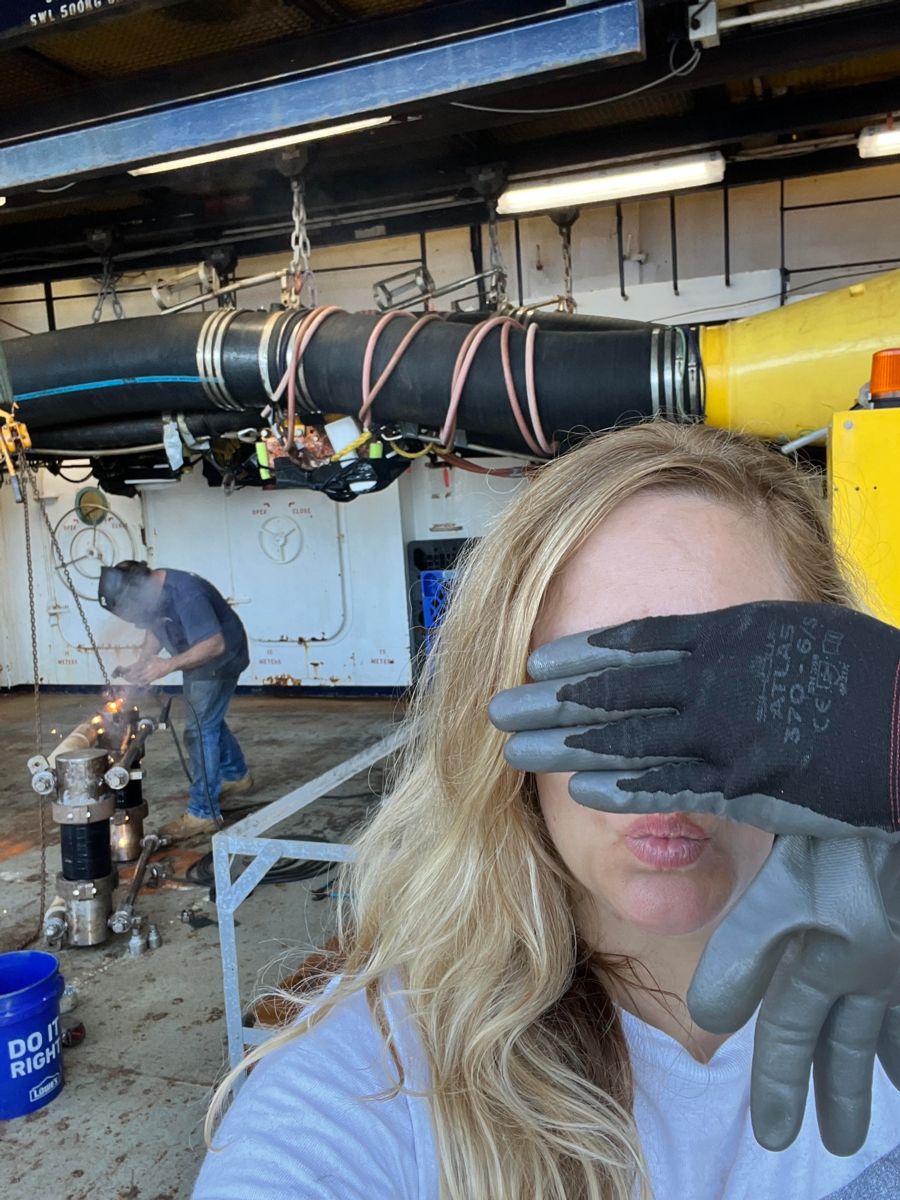
I also get to practice some more complicated soldering techniques since we have all the equipment.

Between all the fun projects, I celebrated Halloween for the first time on a ship, which was very enjoyable. Everyone was excited for Halloween because we knew the chef was hiding all the candy somewhere. On Halloween morning, it was like Christmas because on each table, there was a huge bowl of different types of candy. All the chocolate was gone by the afternoon; it was like the candy hunger games. I’m not kidding. Once again sharing our pumpkins below that the crew and I made to celebrate. You can also see more of the halloween decorations that were in the mess hall in the background. And lastly i wanted to share my family’s small ofrenda we did this year for dia de los muertos since I missed it.  


As mentioned earlier, as we approach the back half of the trip, we need to prepare for the deployment of the big buoy we have on board. It’s enormous, weighing almost 6,000 pounds, and it’s an awkward lift. I attended the first meeting (out of the two we will have) that lasted about an hour, discussing the logistics of safely lifting this massive buoy off the ground. It will undoubtedly be a challenge, and since I’m new, I won’t be part of the lifting team. This means I get to stay warm and watch the entire lift, which promises to be an impressive endeavor. While still attending meetings, ice briefings, and training sessions (including ship safety jeopardy), we performed our first deep CTD cast of the trip. I took part in launching and recovering, as well as keeping an eye on the winch to ensure it didn’t coil in on itself. We went to approximately 3780 meters.

Operations continue every day like clockwork, with each person having their specific role. I usually serve as a line handler for the crane. As we repeat the process, we continue to refine and make changes, and it goes smoothly every time, which has been nice. However, on this second-to-last night before we headed further into the thicker ice and farther north, into the upper 70 degrees North, we encountered a malfunction. We were lowering our AUV over the backside of the ship with our A-frame, and suddenly, the hydraulics malfunctioned, with fluid spraying like a fountain. It seemed that a gasket had frozen and broken. So, we had to halt all operations and check each other to ensure we didn’t have any hydraulic fluid all over us. Everyone was fine, and the captain called for an immediate stop, but we had to get the AUV back over the side and pivot to use the crane instead.

Amidst all these operations, I had a strong desire to learn more about sea ice navigation. I had the opportunity to do a full shift with the chief mate on the bridge, steering the boat, navigating through ice ridges, and learning about sea ice radar reading. It was an incredible experience, as I got to drive a 260 ft polar-class vessel! It’s undoubtedly one of the top 10 life experiences for me. I wish I could share the video because the chief mate started to play Pirates of the Carribean music for me as I was driving the ship. Im at the helm lookng out the window at the spotlights and steering by hand. It was terrifying and awesome. 


So, with all the deployments and recoveries we’ve been doing, we knew at some point, the scientific team would conduct their ‘dress rehearsal day’ for their AUVs. We didn’t know exactly when it would happen, but when I woke up (my roommate is a scientist), she told me that ‘today was the day!’ they would pull out all the stops. This was the final test before we headed up north to the upper 70s, where they would launch it, and it would remain under the ice for the entire year. Everyone was in high spirits, thinking we were finally moving closer to one of our last mission objectives before we transit to the upper 70s, drop off everything, and start preparing for the journey home. Little did we know that their dress rehearsal day would turn into the biggest operation of the entire trip, something we hadn’t anticipated. It quickly went downhill.

Their dress rehearsal transformed into something known as the Long Walk. It doesn’t happen often if the ship and crew can help it, but sometimes it’s necessary, as we discovered today.

We found ourselves in a position in the ice where we thought the open water would hold and not completely freeze over, but we were wrong. The ice pressed in from all sides. This wouldn’t normally be a problem, but we had an AUV in the water that we needed to recover. Unfortunately, it became entirely trapped under the ice and was malfunctioning, causing it to swim further and further away from the ship. We couldn’t move too much, risking hitting the AUV. So, we had to wait in the dark on deck and watch as a flickering light under the ice blinked at us, trying to come closer. It was beeping, trying to alert us to its location. It was a distressing sight and the scientists had it beeping as loud as it could, yet we could still barely hear it. The ice was at least 2 feet thick.

In this situation, the only thing we can do is send someone out into the dark to walk on the ice with saws and tools. They would have to cut through the ice to create a hole large enough to clip the AUV to the crane, allowing us to pull both the AUV and the person out. When we realized what was happening, the captain, Bosun, and Chief Mate had to decide who would go out onto the ice to perform this task, and the chief mate volunteered. We had emergency sleds ready for him, lowered over the side. Back-up team members were prepared, suited up in case they needed to go out and assist the chief mate if he fell through the ice or if something worse happened. It took the entire crew and most of the science team to ensure every safety measure was in place, with polar bear guards on alert, before the chief mate descended onto the ice in the pitch-black darkness. When I say pitch-black, I’m not exaggerating; you can’t see anything beyond the ship’s lights. You only hear the crunching and shearing sounds of the ice colliding.

I, once again, served as a line handler, and aided in hoisting his safety equipment over the side of the ship for him to use. Our captain made a final attempt to get as close to the AUV as possible to minimize the chief mate’s walk. The captain’s driving skills were impeccable, and he covered half the distance. The chief mate then climbed over the side of the ship on a metal ladder. As he descended, he reminded everyone of our responsibilities in case he fell through the ice or became trapped beneath it with the strong current in the area.

He ventured over the side, and the entire ship and crew fell completely silent, holding our breaths as he descended the ladder and got on his emergency sled. We turned off our lights, and then we spotted it—the blinking lights of the AUV, trying to break through the ice surface, accompanied by its loud beeping. As a last-ditch effort, the scientists hit the command for the AUV to come home (back to the ship), and miraculously, it worked. The AUV started swimming towards us, and we saw its lights drawing closer. It reached the ship, and we handed down ice picks and spears over the side while our chief mate hammered away at the ice. However, the ice wasn’t breaking; it even broke one of the tools. In a desperate attempt, we dropped the 600-pound crane on it, but it remained unmoved. 

My mentor, Bern, found a huge ice saw in the tool shop, and that did the trick. We finally saw the AUV beneath the ice, but we weren’t done yet. Because of the boat’s position and the strong current, we had to be extremely careful not to hit our chief mate and the AUV with the ship. Our chief mate hooked it and within seconds he  got back onto his sled.  When we heard that click, like a normal procedure, I was attached to the crane hook, ensuring that the hook and the AUV didn’t swing as it was hauled over the side. However, this time, I had never pulled a rope faster in my entire life. I hoisted the AUV back onto the ship, and we finally had it on board. Our chief mate was next, and our captain was there to pull him back to the ship with a safety rope attached to the chief mate. Once the chief mate was close enough, he climbed the ladder and was safely back on board. Cheers erupted from the crew, the scientists, and from the bridge over the radios. We had successfully recovered our chief mate and the AUV together, safe and sound.

The only thing left to do was get the emergency sled back on board. My rope was once again attached to the crane hook, and I hauled the emergency sled back onto the ship. The crew unhooked my rope, and we went back to business as usual, but everyone’s adrenaline was still running high. I couldn’t sleep for a couple of hours, so I kept looking at all the photos and videos of our chief mate on the ice, ive shared a few I have below. In one of the pictures that was taken of the crew watching, you can see me in the back hoisting my fist in the air because our chief mate found the AUV and had broken it free. We had successfully completed an long walk.


Now, we’re heading to the upper northern latitudes to complete the last part of the mission—dropping off the AUV and the buoy. We are currently at 75 degrees North and 142 degrees West on our way to do just that, breaking through the ice. Then, we’ll start our journey home. It’s hard to believe it’s almost over. Thanks, as always, for reading.

Mari 

Week 4: Oxygen and the RV Kilo Moana

Howdy all,

Week four was shorter than other weeks with the HOT team but presented opportunities to review auto oxygen titrators, nutrient analysis, and work on the Kilo Moana.

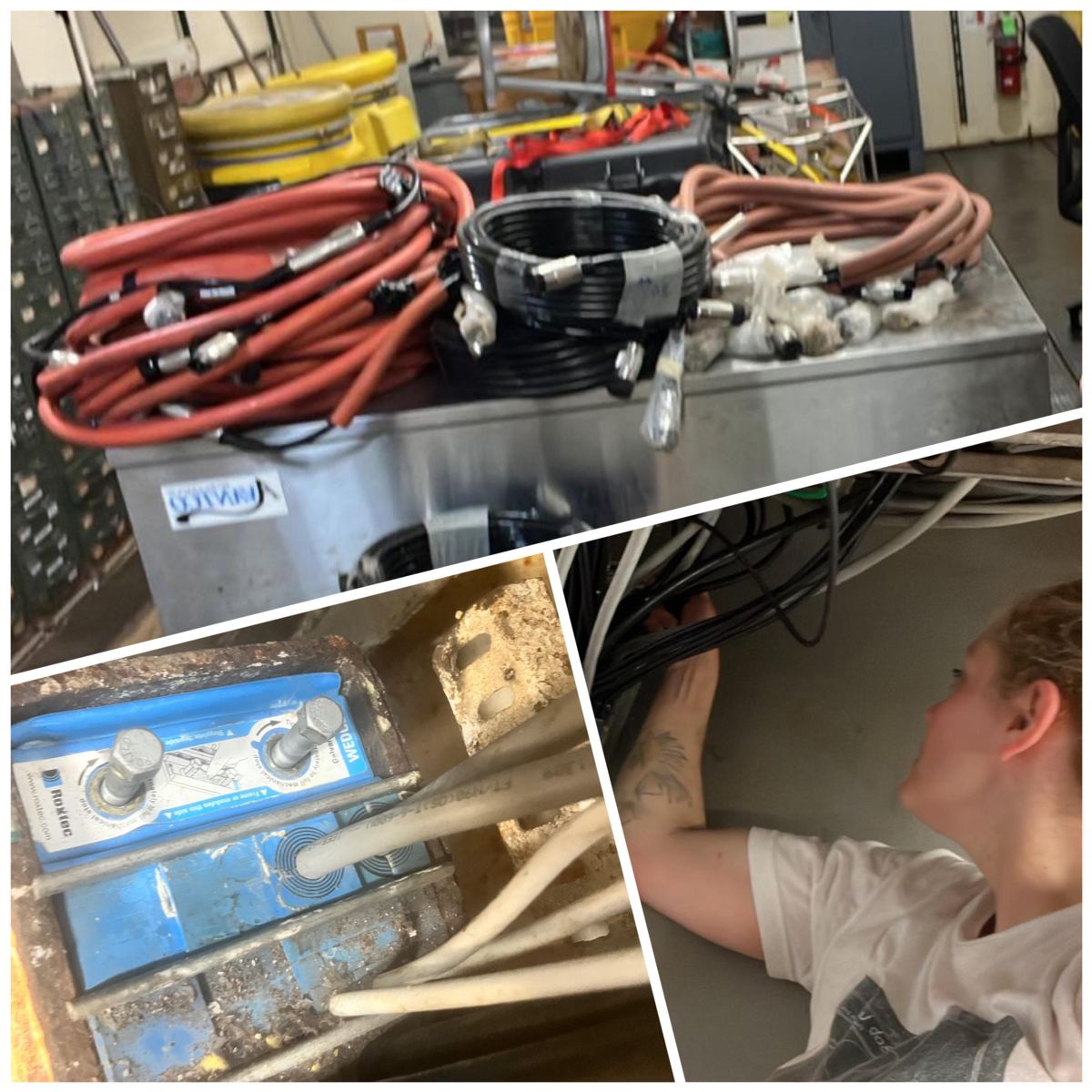
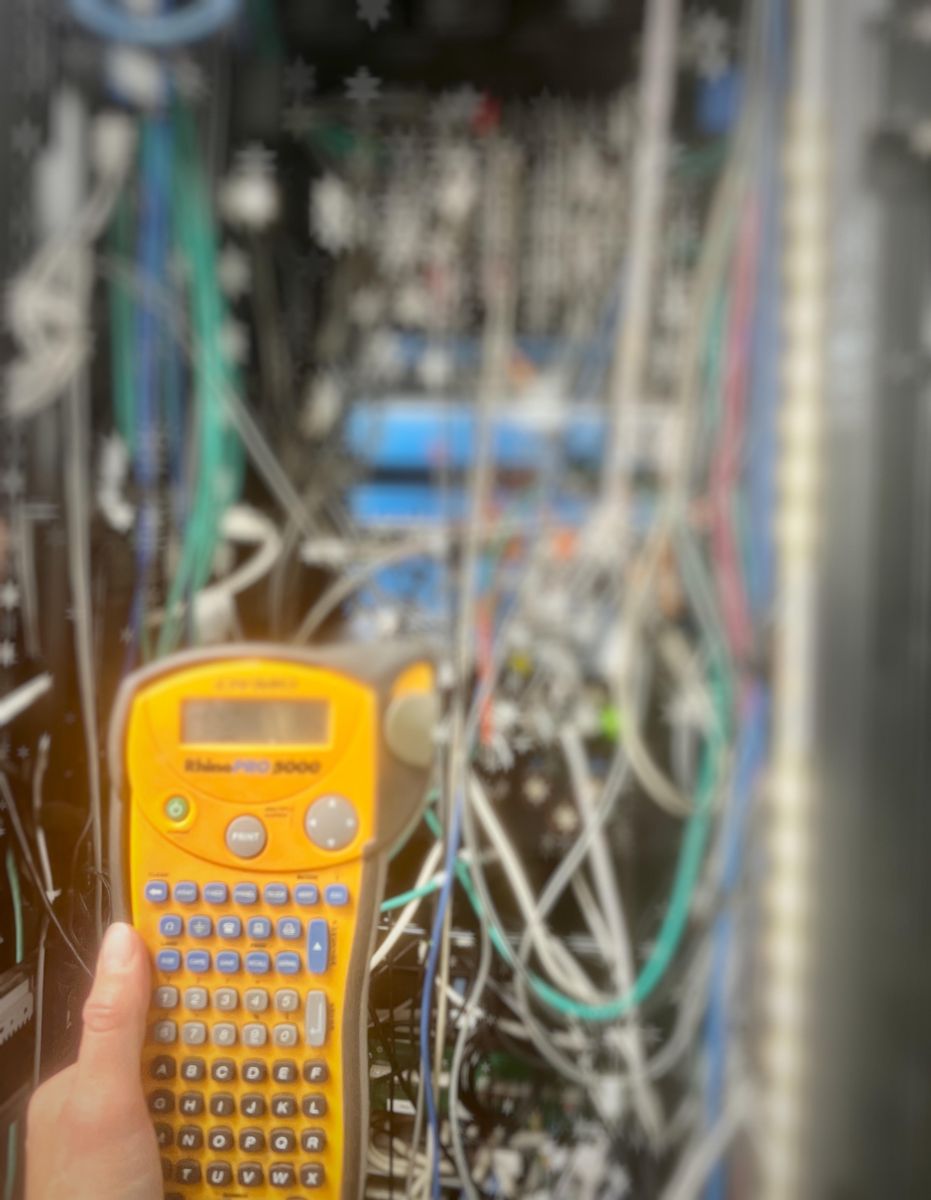
On Monday, we took a trip to the marine center to calibrate the oxygen auto titrators that are used to analyze oxygen samples during the HOT cruise. This was a great opportunity to review the software/methods that operates this equipment while also learning why the calibration is important and how it is performed. Tuesday we reviewed how nutrient samples are processed and also received an introduction to the total DIC sample analysis system. To finish the week before loading for HOT 346 we worked on the RV Kilo Moana on Wednesday. Aboard the ship we learned new cable splicing methods, how to connect new computers to the ships networking system, and how to perform troubleshooting for the ships sound velocity probe found in the sea chest. 

This week introduced us to more of the research that this time series performs while also giving us the opportunity to foster new technical skills related to work as a marine technician. 

Best,

Hunter

Week 4: Big To-Do List

With the cruise plan pushed back an extra day, we spent extra time in the lab on Monday and Tuesday with last-minute preparations. On Monday, Hunter and I joined the chief scientist, Dan, in the Marine Center Lab. Dan primarily focuses on chemical analysis of the samples we collect on board including dissolved oxygen samples—which can be temperamental. He has an automatic oxygen titrator system that makes it quick and easy to collect great oxygen data on the boat but the machine tends to drift so we need to calibrate it often. Hunter and I assisted with the calibration procedures and competed against each other to see who was the more accurate titrator…it was a tie according to Dan.

The next day, we worked with Carolina in the labs at CMORE to make enriched seawater for the cruise. I was expecting a fancy machine to dissolve the nitrogen gas into the water but was happily surprised that this required more hands-on effort. Colder water holds more gas so we let the bag of filtered seawater chill in an ice bath for an hour before introducing the Nitrogen gas. Carolina then took out a fly swatter and started smacking the crap out of the bag over and over! Hunter and I were cracking up that the method was actually working and didn’t need any fancy machinery, just some built-up frustration to take out on the bag.

On Wednesday, the OTG team invited us to help them onboard the Kilo Moana. James, one of the 3 main OTGs we worked with, escorted us all the way down to the sea chest (unfortunately not full of gold). This adventure took us down 2 flights of stairs and then 2 additional ladders to crawl down to the bottom of the hull. Submerged inside the sea chest is the sound velocity probe. This probe is technically still working but there was serious corrosion around the instrument and James taught us how he troubleshoots these issues with a multimeter. Hunter and I agreed that we still have a lot to learn about electronics and how we can use a simple tool like a multimeter to check connections and dissect the issue. After testing our cabled connections multiple times to be sure, we decided to send the instrument back to the company for them to fix the internal issue.

Upstairs, Ben and Trevor showed us a few more network components and the hot glue method for cable splicing. I am looking forward to being back on the boat in a few days to keep learning from them.

Carolina and Dan gave us the day off on Thursday (our last day on land) to explore. I rented a car for the day and took off East to drive through the Botanical Gardens near Kaneohe which were stunning! After watching the sunset and going for a swim, I returned to the campus housing and packed up for the cruise on Friday.

Loading Day! I am always impressed by how organized and efficient this team is at loading and unloading their boxes and instruments for the cruise. It is seriously one big game of Tetris to fit everything but they have a system down after doing this cruise for 35 years. The weather forecast says to expect some stronger winds this time around so I am looking forward to an exciting cruise to Station ALOHA tomorrow!

Jenn

Week 3: RVTEC and biogeochemical sample analysis

Howdy all,

Week three with the HOT team has been a great opportunity to network with other marine technicians at the RVTEC conference and participate in biogeochemical sample analysis with the HOT team.

To start this week, I attended Cyber Monday at the RVTEC conference and learned about the IT needs and priorities for the UNOLS fleet. This included presentations discussing IT staffing, OmniSOC security solutions, HiSeasNet, and Fortinet. Monday showed me how important IT and networking experience is becoming for marine techs across various institutions. 

The next few days were spent processing and analyzing biogeochemical samples collected from the last HOT cruise. On Tuesday we acid washed sample bottles to prep for the next HOT cruise at the UH Manoa marine center. I was also able to attend an icebreaker event and meet with former MATE alumni and other marine technicians through the RVTEC conference. Wednesday, we processed chlorophyll samples using a fluorometer and uploaded the raw data to a processing spreadsheet. Thursday, we processed particulate inorganic carbon (PIC) samples by dissolving the collected carbon on filters and recording the subsequent CO2 raw data. 

To finish the week I was able to attend a serial communications and electronics workshop with Tom Wilson at the RVTEC conference. These workshops were a great introduction to these topics and provided many resources on better learning these topics.

Overall, I appreciated learning about the science that we were contributing to as marine technicians and I enjoyed the opportunity to meet other marine technicians at RVTEC.

Best,

Hunter

Weeks 3 and 4: Transit and Arrival North of the Equator 66.5°N

This week has been a bit of a catch-up for both this blog and our preparations for the cruise. Technical issues with the blog site have led me to combine updates for weeks 3 and 4. We’ve officially set sail, leaving port behind as we make our way toward the icy waters of the Arctic. Yay!  My time spent helping with lines and maneuvering the boat in Dutch Harbor however has been invaluable practice, especially in the challenging weather conditions: Hail, Rain, Sleet (you name it we had it).

This picture below (left) is the culprit and was the cause of all our problems. The other picture (right) is a picture of us lowering the engine part down from the top deck to the engine room 6 floors below us.  


As we head further north, the darkness of the Arctic winter settles in. Week 3 marked the farewell to our last day of real sunshine, and we know we won’t see a clear blue sky and sunlight like that again until we complete our mission objectives and depart from the Arctic Circle in mid/late November. Below is the last picture I got of the sun. 


Now that we’re en route to the ice, the real work begins, and our daily routines fall into place. Each morning, I start my day by working with OLEX, our ship navigation software, to update routes, locations, and schedules, while keeping a close eye on our course. I also check and log data for our underway sea water systems, pumps and flows to ensure everything is running smoothly. Additionally, I utilize the 3D printer to produce various parts and equipment as needed. Cataloging and maintaining our technical equipment is another crucial part of my responsibilities. We regularly conduct CTD casts, using our handy CTD system, and present the resulting data to the scientists to aid them in their work. Toward the end of the day, I assist the first engineer with any additional tasks that may arise. Recently, I had the chance to fabricate and carve parts out of aluminum for the sea gliders that the scientists needed. There’s always something to do, and I thoroughly enjoy it. 


We’ve (being the marine technicians) encountered our fair share of technical challenges, such as fixing the Gravity meter by replacing the gyro, crucial for maintaining balance as the ship moves. Interestingly, the technology we use has connections to missile guidance systems, which was a fascinating discovery. We also had the daunting task of fixing our ice radar, just as we are getting underway. In between these big marine technician projects, our daily schedule is filled with ice briefings, boat fire/evac drills, and safety meetings.


 One briefing brought news of a potential change to our trip’s destination due to the extended time we spent in port for engine repairs. Originally planned to end in Nome, Alaska, we may now need to consider Seward, Alaska, as the dock in Nome might be frozen over by the time we return later in the winter. The final decision is still pending, and we find ourselves uncertain about our position next month. 

While we do have quite a bit of work to do, it’s important to find moments to relax and unwind. During my downtime, I’ve been enjoying various activities with the crew. We’ve been watching football, engaging in ‘friendly’ Mario Kart competitions (the engineering boys are really competitive), and indulging in scary movie nights with all the candy you can eat. In fact, we even managed to carve pumpkins, injecting a touch of seasonal festivity into our journey.


As I am writing this we are at 74 degrees 53.799’N and 150 degrees 39.407’W and recovering gliders. I am officially writing to everyone from the top of the world, we finally made it. 


See y’all next week and to those who celebrate, happy all hallows eve, samhain, dia de los muertos, etc. 


 Mari  

Week 3: Conference and Calcium Carbonate

The stars aligned this week with the annual RVTEC conference in Honolulu while Hunter and I are on land here in Oahu. Our mentor, Carolina, was incredibly generous and let us attend the conference on Monday and Friday of this week to learn and meet marine technicians from other UNOLS ships. The first day of the conference was exciting and intimidating all at once. The theme of the day was cybersecurity and networks which was almost entirely new information for me but it was great to learn where the field is going in the future.

On Tuesday, Hunter and I helped Brandon clean most of the sampling bottles from HOT 345 in preparation for next week. We worked through the pile of bottles, rinsing each with a hydrochloric acid solution and then deionized water to ensure any microorganisms were all rinsed out and would not contaminate our new samples next week.

After our day of lab work, we rejoined the conference networking event in the evening. I loved meeting techs from other ships and hearing about their experiences as MATE interns and how they transitioned to a job afterward. Connecting with the alumni and current techs from boats like Scripps and WHOI has been a highlight of my internship. I feel reassured that this is the right path for me and it reinforced my enthusiasm to start applying for marine tech roles on these ships when I return home.

On Wednesday, we worked in the CMORE (biogeochemical research) labs on campus with Brandon analyzing chlorophyll samples with the fluorometer. The instrument we used was built in the 80s and is incredibly accurate and reliable…however, it took almost 3 hours to analyze a single rack of samples. Sometimes the older technology has pros and cons.  

After work, we attended the conference dinner at the Waikiki Aquarium which was unbelievably beautiful! The dinner was wonderful and I loved meeting even more people in the community including a technician visiting from Australia. It warms my heart to see a community of people who usually are all working in different oceans of the world all gathered in one place.

Thursday was our particulate inorganic carbonate analysis day. This was my first time doing a gas analysis to measure the CO2 as a proxy for the calcium carbonate in each sample—very cool! Hunter and I spent the afternoon carefully working through each sample from our sediment traps. It is amazing to see the data after everything is analyzed because you can gain more context for the work we do out at sea. The magic is absolutely in the data we collect and it is even more rewarding to collect samples at sea when you have the bigger picture in mind.

Our final day this week was a half-day attending the intro classes by Tom Wilson at the conference. Even though these classes were a bit more intense than I expected, I still learned a ton about electronic design and serial communication. I am excited to continue learning independently online and out in the field in my first job. One of the biggest takeaways from the week at the conference was that everything is specific to each ship. I can barely contain my excitement to get started in this world and learn how these systems are tailored to the next boat I have the opportunity to work on.

I’m looking forward to another week on land preparing for the HOT 346 cruise departing next Saturday!

Jenn

Week 2: Processing, splicing, and maintaining

Howdy all,

Week two with the HOT team has managed to equip me with a greater understanding of how CTD data is processed, new equipment is made in preparation for research cruises, and instrumentation is maintained between cruises. 

On Monday we learned how the Hawaii Ocean Time team processes their CTD data by following a standard processing procedure after each cruise. This procedure involves removing duplicate data points, binning data, and communicating with databases to store the roughly processed data. After this is completed, a series of quality control checks is performed by the HOT team research associates and data reports are generated. The majority of this processing is fully automated using a mix of MATLAB, Python, and Bash scripting. After learning how HOT processes their data we were introduced to the Seasoft method of CTD data processing and learned the advantages and challenges of converting to this processing system. 

On Tuesday we learned how to properly splice different CTD-sensor connecting cables together for the next HOT cruise. With this introduction, we checked wire continuity, soldered connections, and properly waterproofed the connections to handle extreme pressures and temperatures. On Wednesday we disassembled, inspected, and cleaned a Seabird carousel. We learned how the device worked and the common maintenance checks that should be performed after each cruise to ensure its continued operation. On Thursday, we learned how to horizontally plumb a backup CTD to ensure that the temperature, conductivity, and oxygen sensors work properly. We also disassembled, inspected, and cleaned a LADCP system and learned how its data is recorded. 

Come Friday, we took a trip to the University of Hawaii Manoa Marine Center to install the new carousel on the HOT rosette, disassemble the Niskin bottles, and test new CTD orientations and mounting ideas. 

Overall, this week was a great introduction to new equipment, data processing best practices, and hands-on technical experience!

Best,

Hunter

Week 2: Technically Speaking

We are back on land this week to help Dan and Carolina in the lab. And with a view like this on my commute across campus, I cannot complain!

This past week we focused on physical oceanography with our mentor Dan. He worked as a marine technician on board the R/V Kilo Moana for 10 years before joining the HOT team so he is the go-to guy for marine tech questions! The first job for the physical oceanography team is analyzing the salinity samples we collected on the cruise using the Salinometer. Fernando explained how the instrument works and that it can be sensitive to changing temperatures in the room so we had not one, not two, but three different thermometers to ensure our samples stayed cool. It was high maintenance!


Fernando was also great at explaining how the team processes most of their CTD data. He broke down their methods and how they have stayed consistent in creating their time series over the last 35 years of the project—everything must be consistent! He gave us great resources to continue learning about data processing on our own time and I am looking forward to practicing my coding skills in my free time.


Back in the lab with Dan, we helped splice cables and switch the CTD configuration from vertical to horizontal. It was surprisingly difficult to move the oxygen sensors and tubing to a different position while still ensuring that water could flow without issues. There is a ton of detailed thinking that goes into how these systems operate and whether the data could be significantly affected by repositioning the instruments. This next cruise will be the second test run to see if the data is heavily impacted but we have faith in the new system because most other UNOLS ships use a horizontal configuration.


Thursday and Friday consisted of taking things apart to see how it works and putting it back together again. First up was the LADCP which is similar to the ADCP we would see on most ships. It was much heavier than I thought it would be and the circuitry was cool to see. Then, we fixed up a new carousel to replace the old one.


On Friday, we took a field trip to the marine center to work on the CTD rosette and take apart a Niskin bottle. Hunter and I took turns un-hooking the spring inside each Niskin (an often-neglected part of maintenance between cruises to prolong the lifespan of the springs). We were able to replace the carousel inside the center of the rosette with our newly fixed version. Accessing the screws to this part of the rosette is deceivingly difficult. I could not reach them by climbing on the top (this was clearly designed by a man with longer arms). Instead, I had to crawl under and inside the rosette like a rock-climber to unscrew the old parts. Dan said it is even more tedious on a moving ship but that maintaining the rosette is a huge part of a marine tech’s job.

This week with Dan was an incredible opportunity to learn more technical skills and do some hands-on maintenance that marine techs would do post-cruise. I cannot wait for next week with Carolina!  

Jenn

Week 2: Aleutian Island Adventures


During Week 2, the old scientist group officially had left to make way for the new arrivals in Dutch Harbor for the AMOS cruise. I settled into a marine tech routine, delving into the ship’s depths to clean filters, prepare the CTD for the upcoming cruise, check the niskin bottles, polish fridges, and set up the lab space for the science party. I even assisted in fixing a fume hood, an entirely new experience for me; I was feeling like a handyman onboard.

After a day of work, one of my mentors, Bern, took me into town to show me around and buy a mustang suit, although it turned out to be the wrong size. Instead, we ended up driving around the town to explore and visit attractions, such as the old Russian church and the beautiful World War II memorials and Coast Guard graveyards. It was an enjoyable day, but while in the graveyard, Bern accidentally stepped on a marble grave shaped like a book with a beautiful poem on it, which belonged to a woman named Jacqueline. Strangely, moments later, as we descended the mountain towards the car, I heard a ‘yelp!’ and turned around to see my 6’4 mentor with his entire leg stuck in a hole in the ground. I couldn’t help but wonder if Jacqueline might have been upset with him, though I’m not superstitious, just a little stitious. I made him apologize, and everything turned out fine.

Back on the ship, we learned that one of our engines was no longer working, and the science party was arriving, along with my other mentor. We were possibly going to be stuck in Dutch Harbor for at least a week or more while we ordered spare parts for the engine, and a major storm with potential 80mph winds was approaching. Despite these challenges, the engineers worked tirelessly to diagnose the engine issue and prepared to replace it.

While all this was happening, the crew and the rest of us who were temporarily stuck had some free time once our shifts ended. I explored the town with the crew, visited a saloon, went hiking, took walks around the town, enjoyed milkshakes, and indulged in my favorite pastime—visiting Alaska Dutch Harbor Supplies to check out the cool gear for sale. I ended up buying a vest, which I’m quite fond of. For those who know me, please don’t judge; my other vest had ripped, and this carhartt vest is incredibly warm.

I experienced my first Friday the 13th on a boat, and superstition prevailed as no operations were conducted that day. Good luck favored me though as I finally got my mustang suit, which would keep me warm and cozy in the icy conditions.

The setback with the engine allowed the science party time to refine their instruments, make necessary adjustments, and conduct numerous tests in the bay over the last two days. Surprisingly, this delay turned out to be a blessing in disguise, as all the instruments were now primed and ready for deployment in the ice. Confidence was at an all-time high, and witnessing the AUV deployments and recoveries was a fascinating experience. I’ve included another set of pictures from my onshore adventures exploring the islands and practice deployments and recoveries. If the engine gets fixed next week, we should finally be on our way to the ice. Fingers crossed. Thank you for reading, and see you next week!


Mari

Page 21 of 85

Powered by WordPress & Theme by Anders Norén