After a week well-spent at the docks, we set out early Monday afternoon for another BATS cruise. As briefly aforementioned in my previous blog post, BATS is an ocean data time-series established in 1988, which provides long-term data for the open ocean of Bermuda. Similarly, a nearby relative HYDRO is another data-time series established in 1954. Together, these two regions have been supplying innumerable data, insight, and measurements within the field of oceanography. Every month we go to these stations to conduct work with a BATS crew and other scientists from BIOS.
A standard BATS cruise involves CTD work, PITS sediment traps, in-situ pumps, primary production arrays, as well as, zooplankton and phytoplankton net tows. Every trip entails 24-hour operations, specialized BATS techs and a very tight schedule. I will briefly describe each process, but for greater details, visit my prior blog posts!
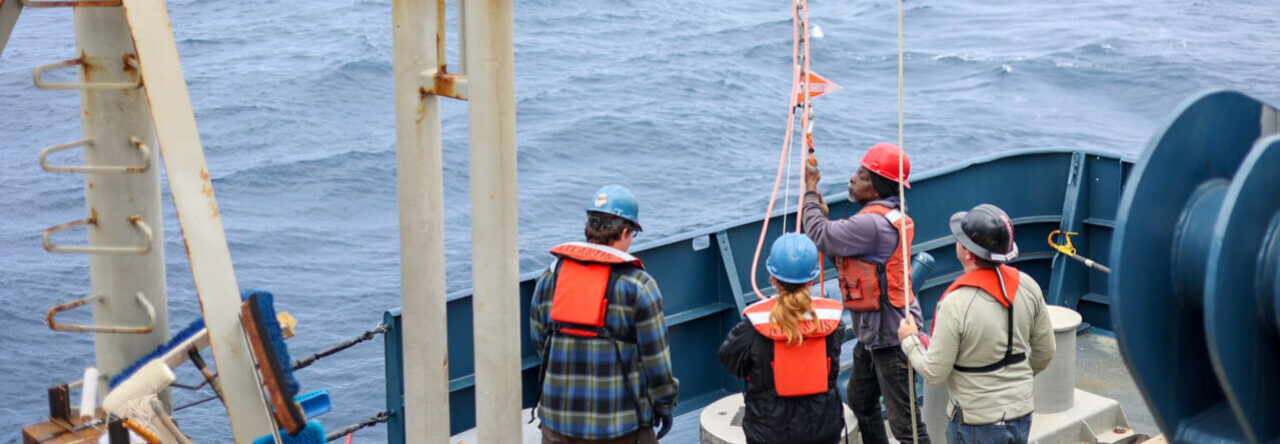
Because this is my second BATS cruise, and we have much more in the foreseeable future, I took on a greater amount of responsibility. Over the duration of our cruise, I led several CTD casts, pump casts, and other associated deck operations. In addition to BATS work, I programmed and configured our R2R event logger- a system which “logs event” during the cruise as a means of electrical back-up- and ran cruise start-up and shut-down processes. Experience is the best way to learn, and I have gained a great amount of knowledge, experience, and confidence in leading several operations.
While CTD casts and profiles are an all day operation, some are time sensitive. For example, our PITS sediment traps and primary production arrays must be deployed before the sun and retrieved during dusk or before dawn. Our pumps and net tows may occur during the day.
