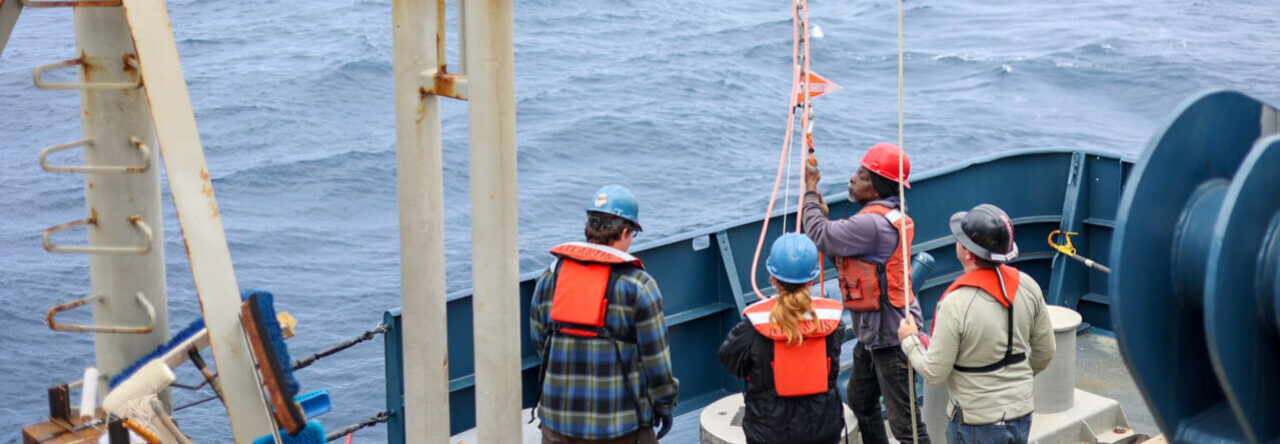
With the HABCAM (and my pride) recovered, we remained in the Nantucket Sound area while the science party assessed the damage to the vehicle. There was little external physical damage, thanks to the monster steel frame the vehicle sits in. Over the next few days, we would dredge while the vehicle was repaired. I assisted in the retermination of the cable for the third time since the start of my internship – a process involving many finely detailed steps, including the use of a sort of “chinese fingertrap” to push the fire optic cable into the wire clevis. Even with the cable repaired, it was determined that the fiber optic connection needed work since the cable had been sheared off. So, just as soon as we had left, we returned to Wood’s Hole for the science tech team to get some shore side support. Little did we know that even greater obstacles were waiting.
After more maintenance on the slip ring that integrates fiber optics into the towing cable, we were set to depart again. Only this time, our window of opportunity began to shrink as a low pressure system developed, threatening bad weather. Though a seagoing ship and capable of withstanding some wind and seas, it is generally dangerous to tow in such conditions and would have made for a long, uncomfortable, and risky towing operation to be out in the weather, so the plan was modified. We wouldn’t be out long enough for this to be of concern however, ass everal hours into returning the HABCAM to the water the vehicle would lose all power and data output. Recovering it from the water, it was determined that an internal fuse had blown, requiring another visit to lovely Wood’s Hole.
During our stay, the weather in the Atlantic would rapidly deteriorate, shrinking our window of available tow time. The HABCAM was returned to fully functional status, but the high winds barred us from returning back to sea. So it was, that the third and final leg of the annual scallop survey ended on a note of caution and appreciation for the many variables, good and bad, that may appear when engaging in ocean research.
So, without a HABCAM in tow for me to find uncharted rocks with, I am free to return to the bridge as we navigate the vessel back to its home port of Lewes, DE. A new, shorter 3 day mooring trip awaits us, and will be the last operation for my MATE internship.


