

I arrived in Honolulu this Tuesday and had the chance to meet the team and assist with mobilization for our upcoming cruise. It was amazing getting to see and participate in the work that goes into maintaining such a high-quality time series dataset!
On Wednesday, I completed a safety training quiz and assisted the HOT team at their onshore labs in the C-MORE Hale building on campus. I helped prepare water for nitrogen fixation incubation experiments, which was a lot of fun – after the team removed other gasses from the seawater, we chilled the water and enriched it with nitrogen. In order to dissolve the nitrogen bubbles into the water, we used a highly technical tool – a flyswatter!
Next, I helped out with acid cleaning to remove any trace metal contamination from some of the HOT team’s lab equipment. In between tasks, I could look out the window and see White Fairy Terns, or Manu o Kū, perching in the nearby trees. The team was very welcoming and showed me a good cafe to eat at for lunch, with amazing banh mi!
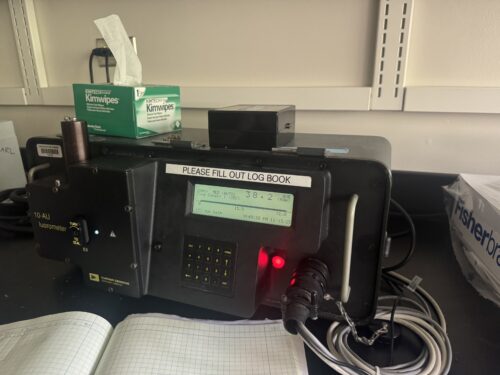
After that, I learned how to run chloropyll samples with the HOT team’s fluorometer. The team had conducted an extra transect between their normal station and shore, and still had samples left over, so I was able to practice. At first the fluorometer was acting up, but the readings returned to normal after we turned it off and back on again!
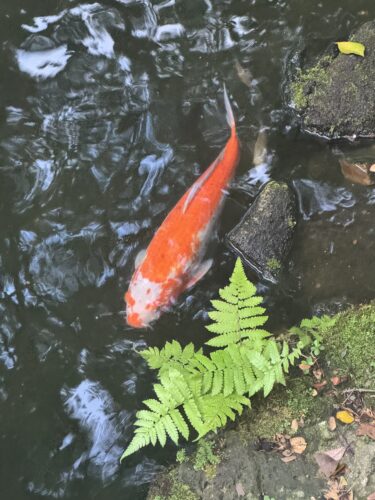
After work, I was able to explore the campus Japanese gardens near my lodging.
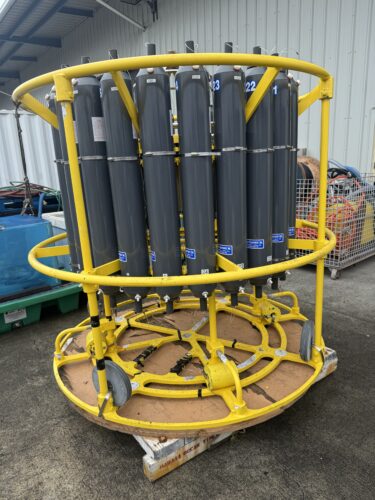
On Thursday, I toured the ‘beach lab’ at the marine operations center and got started preparing a CTD for the cruise. We got to see different winches, sediment traps, wave buoys, and the ROV Lu’ukai, as well as getting our first glimpse of the R/V Kilo Moana!
We learned how to string the niskin bottles on a CTD rosette – which, like a lot of things, is easier with a little teamwork! I had cocked CTD bottles before, but I had never previously worked with the internal springs that hold the caps in place. This experience gave me a much better understanding of how these instruments work – the top and bottom caps of each niskin bottle have to be connected with the right length of cable and spring, without damaging the O-rings that help the bottles seal shut after sampling. The HOT science team re-strings their CTD bottles before each cruise to avoid leaving them under tension and reduce unnecessary wear and tear on their equipment.
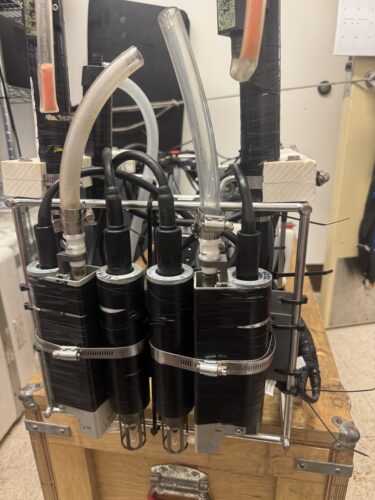
Next, we were introduced to the sensor array on the CTD itself. The CTD had hit the seafloor during a cast on a previous cruise, so they wanted to replace the more susceptible sensors in case of any damage. One of our mentors demonstrated how to replace a conductivity sensor, and then gave us a chance to practice. Then, we learned how to update the calibration files needed for the new sensors. The HOT team uses two duplicate temperature, conductivity, and oxygen sensors on each CTD to ensure consistent measurements, and updates calibrations after each cast by ground-proofing each measurement with lab analyses on water samples.
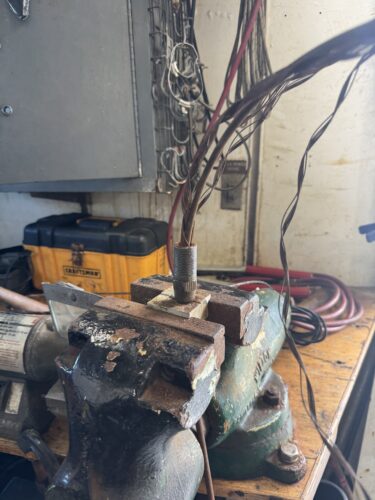
On Friday, we mobilized for our first cruise! The team worked seamlessly to get three vans full of equipment onto the ship and set up in the lab, including positive and negative pressure pumps for filtration. Next, we shadowed our mentor while he completed a CTD cable termination – a process we’ll be able to practice later in the internship. Then, the team tested the termination under tension using a crane on deck. For lunch, we stopped by a local fish market with amazing poke bowls!
All in all, I’m amazed by how much I’ve learned in just three days and I can’t wait for our upcoming cruise!
Leave a Reply