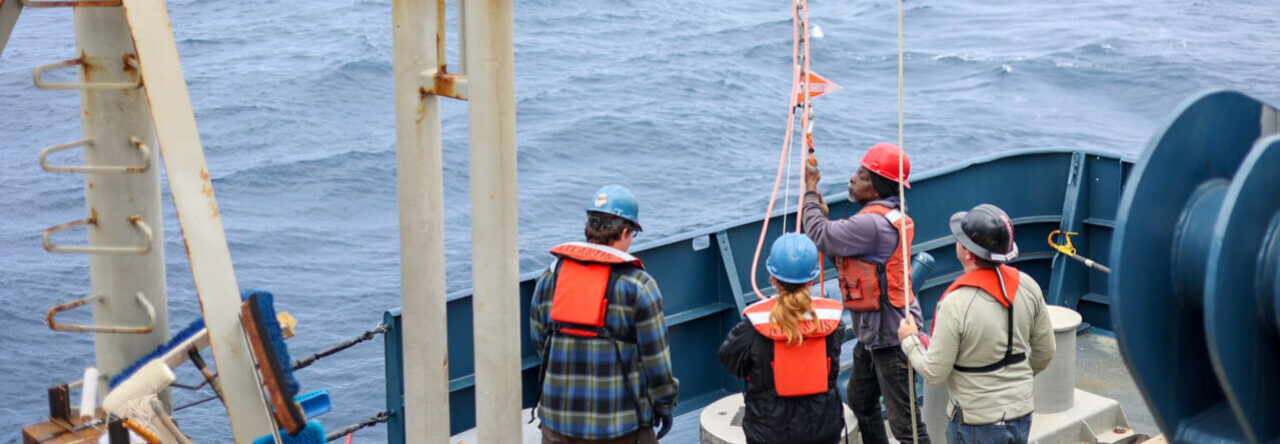
After a long transit we’ve finally started science operations. On our way north, we stopped a couple of times to deploy ARGO floats. Our typical schedule has consisted of CTD casts at night and mooring operations during the day. Following the first few CTD casts, we noticed that the conductivity values from one of the sensors were drifting quicker than normal, so we replaced it with a spare sensor.
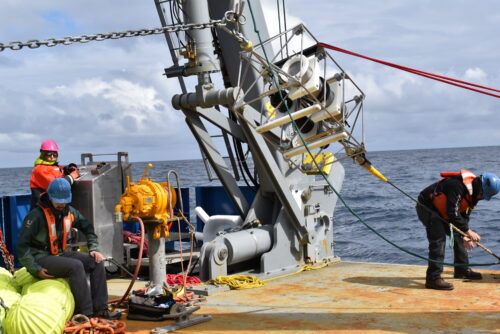
The first few days were spent recovering and redeploying two OOI moorings. Each recovery took place in two stages. We started by recovering the upper 500 meters of the mooring, a process that took about an hour. Shortly after, we deployed the new mooring, which was a multi-hour operation. Once the new mooring was in place, we returned to the original recovery site to retrieve the bottom portion of the previous mooring. During these operations, I had the opportunity to assist with both the A-frame and the winch.
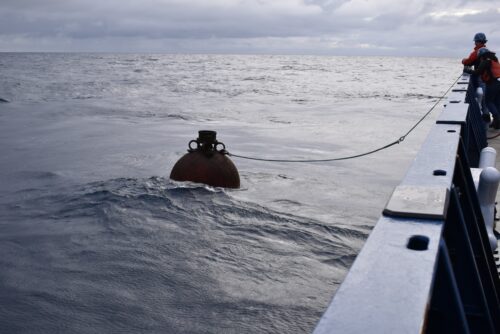
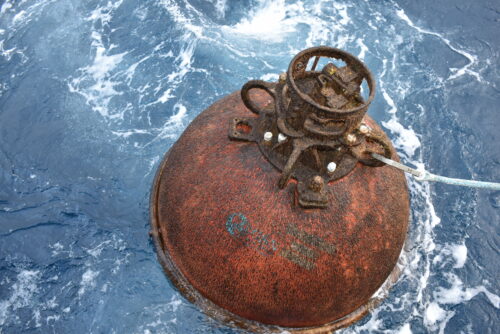
Over the past couple of days, we also recovered and redeployed moorings for NIOZ (Royal Netherlands Institute for Sea Research). Compared to the OOI moorings, these operations have been a bit quicker since the wire is considerably shorter.
Aside from science operations, I also spent some time transferring files to the new backup data drive that I have been setting up. Once the files were copied over, I set up the automated tasks that will be used to run the required scripts if needed.