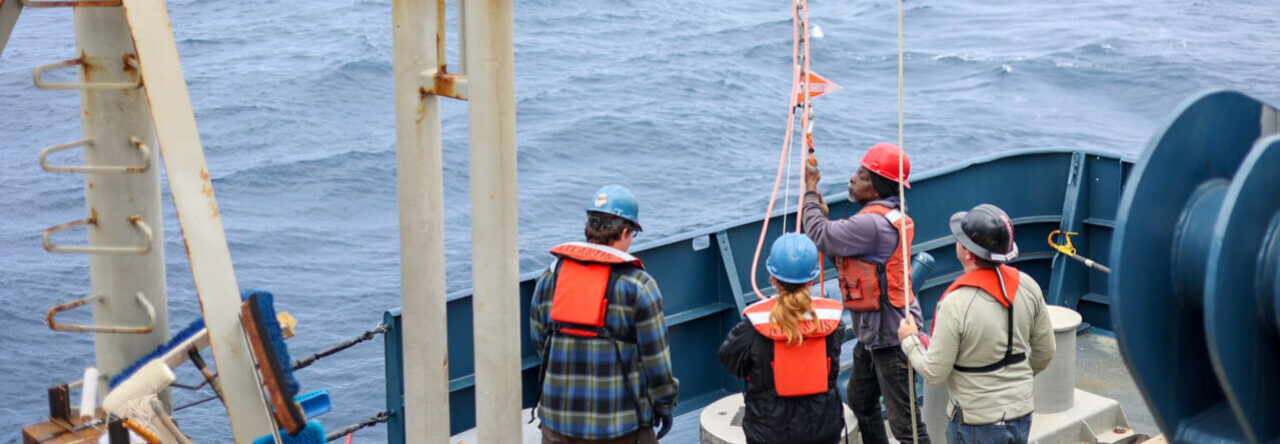
Leg 2 of 3 of the annual Atlantic scallop survey aboard the Hugh R. Sharp, and I’m busily shoveling all manner of marine muck in front of a team of dedicated volunteers. The dredge net, deployed over and over again at stations across Georges’ Bank, hauls back everything from scallops to monkfish (pictured), all of which are measured and analyzed by the NOAA team on board for the survey. Even in the howling wind and rain, Helly Hansens coated in mud and marine viscera, my enthusiasm does not wane. That is, until I watch the tension gauge on the dredge winch spike to a healthy 12,000 pounds, and we haul up a giant bag of rocks. Safety is still the primary concern here, but any missteps or environmental interference in the deployment or recovery process of the net can cause it to “flip” underwater, essentially dumping the dredge load back into the ocean, or even tearing the bag. This leg featured 5 flips (one by yours truly) and 2.5 bag tears, a new record!


In all seriousness, there’s still much to be learned in the dredging operation. My deck safety training comes in useful here, managing winches and the A-frame in a careful dance of hydraulics, wire and mud to get the science team the samples they need. Every few stations, I’ve been able to individually operate the vessel’s CTD. It boasts very impressive, almost completely hands free system, allowing the technician to stay stationed in the data acquisition room, watching the live data stream and communicating the deployment of the CTD to a remote operator. The dredge operations operate almost like an assembly line, but are a welcome break from the endless HABCAM towing days. With leg 2 complete, we enjoy a brief stop in Wood’s Hole, MA, before heading out for the final leg of the survey. More soon!