Month: August 2023

Week 2: Over too Soon

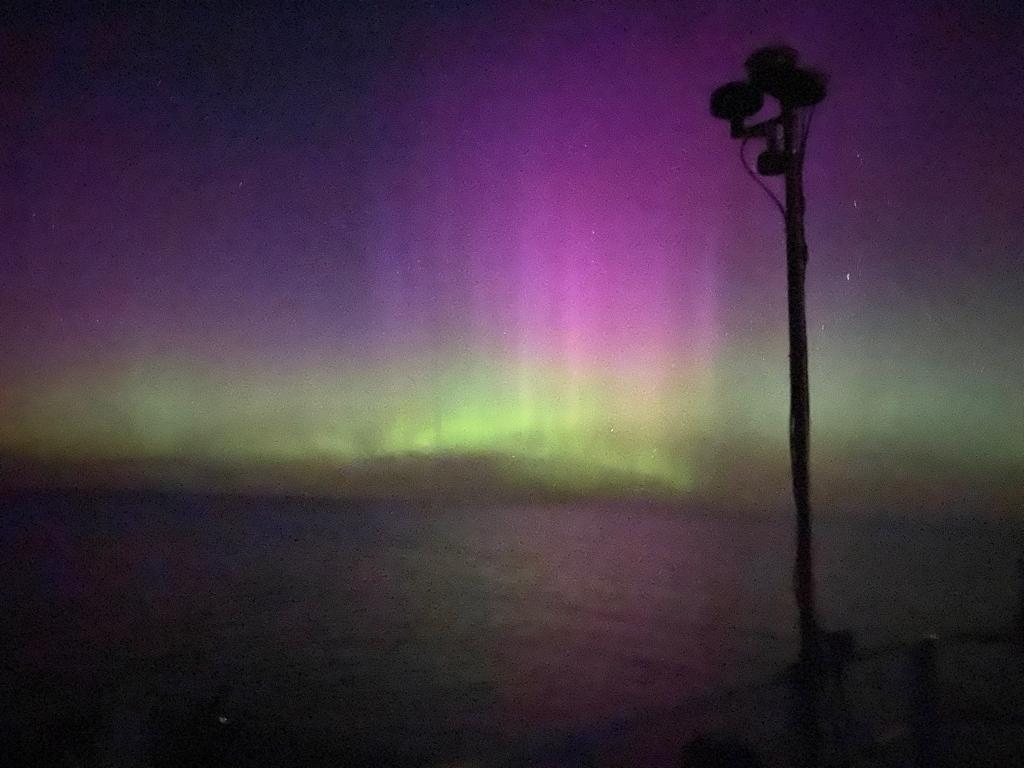
During week two we hit our stride with diving and in turn, I feel like I got into a routine. During the cruise, I worked the 8-12 shift, working 4s was a new concept to me. This took some initial adjustment as I was unable to get a full eight hours of sleep in one go. I eventually settled into a routine of sleeping 6 hours at night and taking a two-hour nap during the day. We continued to have fantastic weather and we even saw the northern lights! I don’t think we could’ve asked for better conditions. 
 
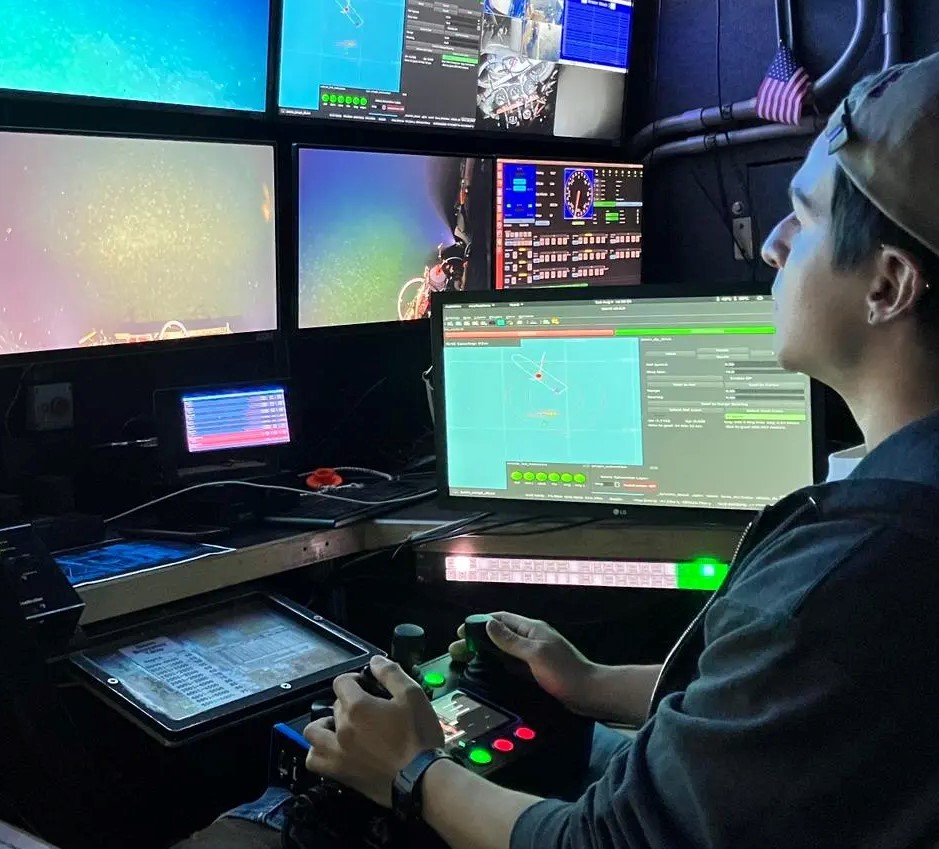
Despite our trouble launching at the start of the trip, we eventually had back-to-back successful dives and even found ourselves ahead of schedule at one point. When this happens the Jason team allows time for pilot training, during which I was allowed to pilot and operate the arms! Being able to control Jason was easily the highlight of my trip, it was such a cool experience. The breakdown of diving operations is fascinating to me. On each watch, three operators act as pilot, engineer, and navigator. The pilot is responsible for the operation of the vehicle and dictates to the rest of the team how to assist the vehicle. The navigator’s primary responsibility is to coordinate with the bridge on moving the ship, and the engineer helps run the cameras, winch, and auxiliary Jason functions (like the hydraulics and power).
 
Further into the cruise, we ended up having more difficulties. The level wind system to coil cable was acting up and the team spent much of their free time trying to fix this issue (including the transit back to shore). Once on shore we had a post-cruise party and continued maintenance Jason. I departed on the 9th.  As quickly as it started my time aboard the Thompson has ended, I feel so lucky to have had this opportunity. It has truly been life-changing

My brief stint as pilot:

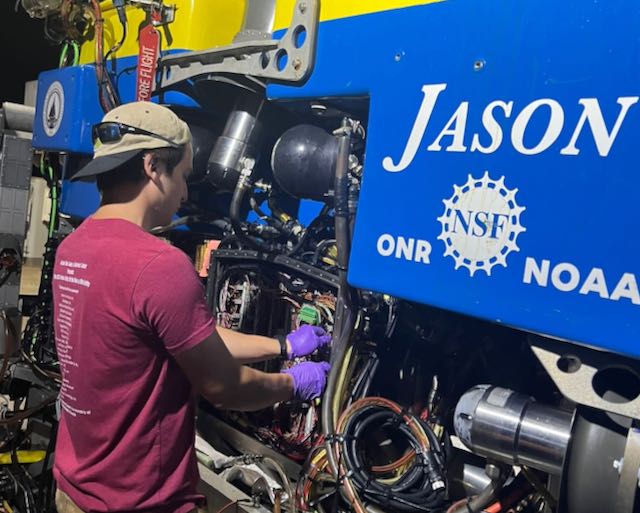
Me assisting in post dive check of Jason:

4th and 5th week with JASON/WHOI

Weeks 4 & 5 with JASON

Holy wow! The last two weeks have been very eventful!

The 4th week we wrapped up the HUBER cruise with 2 more successful dives where we completed water sampling objectives and began our transit back and arrived in port on Wednesday, July 26th. The team got right into demobilization mode and we spent the next 3 days replacing the winch level-wind motor, removing the SUPR sampler from JASON’s aft underbelly, drained the j-boxes and removed all of the science cables/wiring. The most exciting part of this demob for me was that I got to complete a retermination of JASON’s optical fiber on Thursday July 27th. I started at 8am and was overseen by the lead ET (electrical technician). I was able to follow the manual and complete the entire process, including wiring the finished fibers into JASON’s port-aft j-box and testing to ensure minimum signal loss.

On Friday, July 28th, the leaving team members and science crew departed, and it gave those of us staying the chance to relax while also moving our rooms to prepare for a much larger science party to come aboard the following day.

Saturday, July 29th was the official start of the Orcutt Cruise. New JASON and science team members arrived and by 8am, and mobilization began. The port manipulator has to be broken down and repaired since it has started leaking during the last couple dives. The next 3 days our team wired in new science cables, arranged and secured new equipment and mounts on the basket, built and assembled 18 push cores for sediment sampling, filled the vehicle with oil, bled all lines, comps, and thrusters, and made sure the electrical harness was solid. The Thompson departed port on Monday, July 31st and JASON’s predive checks were completed.

5th week:

We launched our first dive on Tuesday, August 1st and continued to recover and launch almost daily until our last recovery on Sunday, August 6th. This last week of dives were successful, but the team faces numerous challenges ranging from port manip leaks, port swing-arm actuator leaks, air motor replacement, temperature probe ground faults, and winch issues. Each one, the JASON team tackled together, and the turn around time for repairs was amazing. This team really loves what they do and are dedicated to vehicle maintenance to ensure science objectives are met. It can be quite daunting when things seem to go wrong, but this crew faces what is in front of them, one thing at a time, and still take the time to teach others about this amazing system.

In the mix of trouble shooting, diving, and water sampling from corks, I was given the opportunity to fly JASON while transiting to new locations. It was so exciting, I felt like I leapt into the main chair! I was able to practice my lateral transiting, landing on fine sediment surfaces without kicking up dust, and centering the vehicle for science cam visuals. It was a blast and I even got to stop and check out a skate, weird sea cucumber-like tailed marine life, and a sort of bubble-like growth at depths of 2600 meters. I still gasp when I see new marine life and absolutely love every minute of being out here. 

The Orcutt cruise dives came to and end Sunday, August 6th when the winch level-wind started making an intense, vibration sound. This lead to cutting the last dive short, but we were able to complete all of the testing and science equipment retrieval before recovering the rov. As we head back to port, we will begin demobilization and continue testing the winch system to identify exactly what this reoccurring issue is.

Tip of the week: Find some balance.

Having a career out at sea has its own set of challenges. Being away from home and loved ones can be a hard thing to adjust to, but also finding some sort of balance for yourself. Some people enjoy watching movies, reading books, or exercising. It is important to find a little “you” time while out here. I try and stick to a schedule, even though it can change considering what is happening at that very moment. Luckily, we have a small gym room, and I really enjoy working out. It is a little time for myself to stay active, work off stress or overthinking, and I always feel better after. Whatever helps ground you, I suggest making time each day for it. Especially if you are staying out for months at a time.
Week 4: Distinguished Visitors + Transit to Astoria, Or.

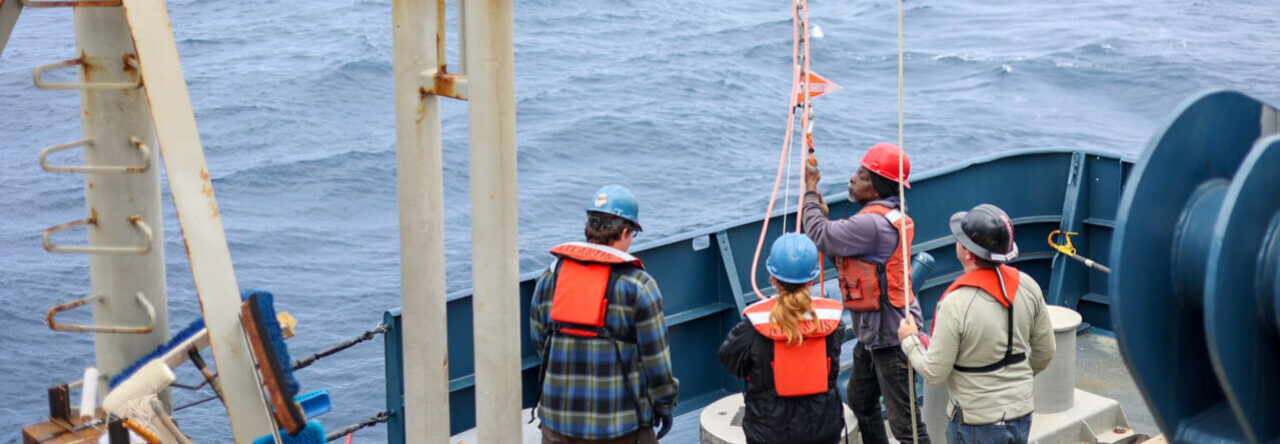
Hey all, this is Mija Wheeler from the RV Atlantis with the Alvin Crew. Since my last post, the R/V Atlantis had the opportunity to host distinguished visitors from ONR, NavSea, the National Science Foundation, and WHOI. During this time, the Alvin Ops team was doing two “bounce” dives daily for a total of three days. This means that once the sub is in the water, there was usually about 30-45 minutes before the A-Frame (or the device that is used to hoist the sub off deck and into the water) had to start its warmups again. I’ve included a picture of the A-frame in action.

It’s safe to say that as tiring as the bounce dives were, the robust efficiency of the Alvin Ops team and the Atlantis crew were on point during this trip. I think one of the highlights of talking to the distinguished visitors was learning about all the opportunities that WHOI and the various government departments have for interested students. Another fun highlight is that during the required safety briefing with all the new people on the ship, I was pulled up as the practice dummy for putting on the emergency evacuation suit! So, I have included some silly photos of me being strapped into what I’ve been told is called the Gumby suit and attempting to do a shaka!!

Once we dropped the distinguished visitors off in San Diego, we left port the next morning on a transit cruise to Astoria, Oregon. At the time of writing this, we have been in transit for approximately 3 days and have experienced a couple of days of mildly rough weather to the point where we had to officially “secure for sea”.

Shortly after leaving San Diego, before leaving California waters, we made a quick stop to recover an errant elevator that was unable to be recovered from a science cruise on another ship a couple of years ago. Outside of that, transit hasn’t been busy, so I spent some time talking to the data people to learn more about how operational data from Alvin is processed and plotted for human use. I think I might even get to learn a bit of Linux so I can attempt to make my own so I’m very excited for the coming weeks.

Till then, aloha!! 


Langseth take 2: Week 2


Its day 19 of this cruise on the R/V Langseth, and we have been deploying the seismic gear for the last 18. After the 12-hour process of deploying the 12-kilometer streamer, 4 strings of airguns, and 2 sensors, we were ready to being “shooting” and collecting data. Once all the equipment is deployed, we must maintain a speed of roughly 3-5 knots to maintain good tension and depth on all the equipment being towing.

As the airguns shoot (approximately every 50 meters or 20 seconds) it sends a sound signal that penetrated miles into the seabed before reflecting and being read by the hydrophones along the streamer. The hydrophones are extremely sensitive underwater microphones that convert the sound signal sent by the airguns into seismic profiles. These seismic profiles show the layers of the seafloor by recording how fast sound moves through each layer.

This week we needed to check the streamer and record videos of it firing. I was lucky enough to be chosen to go on the small boat with a few others. We used a GoPro taped to the end of a metal arm that was then lowered into the water next to the streamer. All these photos came from the video.

The yellow buoys are the head floats on each of the 4 gun strings. Each gun string has 9 airguns on it that are towed at a depth of 10 meters. The airguns are the sound source and critical to the data collection.

Approximately every 20 seconds (or 50 meteres) the 36 airguns fire. When they fire, they create a huge sound wave that makes deep-sea floor mapping possible.

Behind the 4 airgun strings is the streamer with the hydrophones on it. The streamer extends for 7.5 miles (or 12 kilometers) behind the ship, and has 47 Digibirds on it. The Digibirds (pictured below on the streamer) use their depth sensor and wings to keep the streamer at a constant depth of 12 meters.

I’m extremely happy that I got to go on the small boat and check out the equipment that we’ve spent so many days prepping, deploying, and watching on screens. Maybe next time I’ll even get to go swimming…

Week 3 on the Langseth

Day 15 (7-27)
The water was like glass this morning — it was such a beautiful (and blinding) sight! 
The night shift is great for many reasons, and watching the sunrise is definitely one of them. 

Day 16 (7-28)
Inventory day today–lots of counting, stacking, and learning about the uses of LAUMs, TAPUs, and HAUs. 
(Line Acquisition Unit Modules, Tail Acquisition and Power Unit, Head Auxiliary Unit). Thankfully I stored them all in order of their serial number (it made finding the specific one I was asked for later in the day MUCH easier to find–hooray for organization!)

Day 17 (7-29)
The first truly rainy day on the boat today! 
Lightening struck just off the starboard side and it actually took out a few of our systems–the Maggie (the Magnetometer), the Visala (a weather station), and a hydrophone. 
I learned that the PSOs actually cant remain in the tower during these storms, its too windy and the boat heaves more than usual, so they stand in the bridge and keep watch for species of interest instead. 

Day 18 (7-30)
Riley and I learned how to play cribbage today! The night shift continues to be lovely–the ship is calm and quiet when I wake, and every now and again I go outside to watch the sunrise as it lights up the horizon. 
Aside from continuing to write the New-Joiner documentation (like an on-boarding document for new interns like myself) Cody and I went up to the PSO tower today to fix the Visala (the weather station). 
It is a small white device, about the size of a massive grapefruit, mounted on a pole with an antenna on the observation tower.
I learned how to plug into the device and navigate it’s interface, making sure that the correct information (in the correct format) was being communicated to the main lab: wind & wind direction, heading, air temperature, etc. 
After re-mounting and making sure the antenna was facing the proper direction the rest of the day was spent watching the navigation screens, and doing some light reading. 
I often like to sit on the bridge to read in the sun when its not too hot out, or under the shade of the crane on the OBS deck. Its a bit loud at times, but nothing some ear plugs cant fix! Plus, you cant beat this view. 

Day 19 (7-31)
I would recommend all new people remember to bring cash for the slop shop! 

Day 20 (8-1)
I feel like I have really settled into a routine here now! 
The days start so calmly when your shift starts at 1145pm. The boat is (relatively) quiet and its nice to take a walk/stretch your legs by going up to the bow and looking at the stars. 🙂 
Most days are filled with watching the mission control monitors and handling line changes (the EOL/SOL procedures, Navigation Log duties, etc.)
It is really quite nice to get away from the hustle and bustle of everyday life while on the boat, and to focus on the immediate tasks at hand, and learning about the data being taken from the science crew during our chats is an extra plus!
Paper discussions are being held every few days now, which are fun to attend when I get the chance to read the paper that is being focused on. 

Day 21 (8-2)
Now that the schedule has seemed the settle and work remains similar most days, I will mostly just be updating with photos and comments on new and excting happenings on board. 
Happy sailing! 
 

Week 1: Arrival and starting Jason Ops

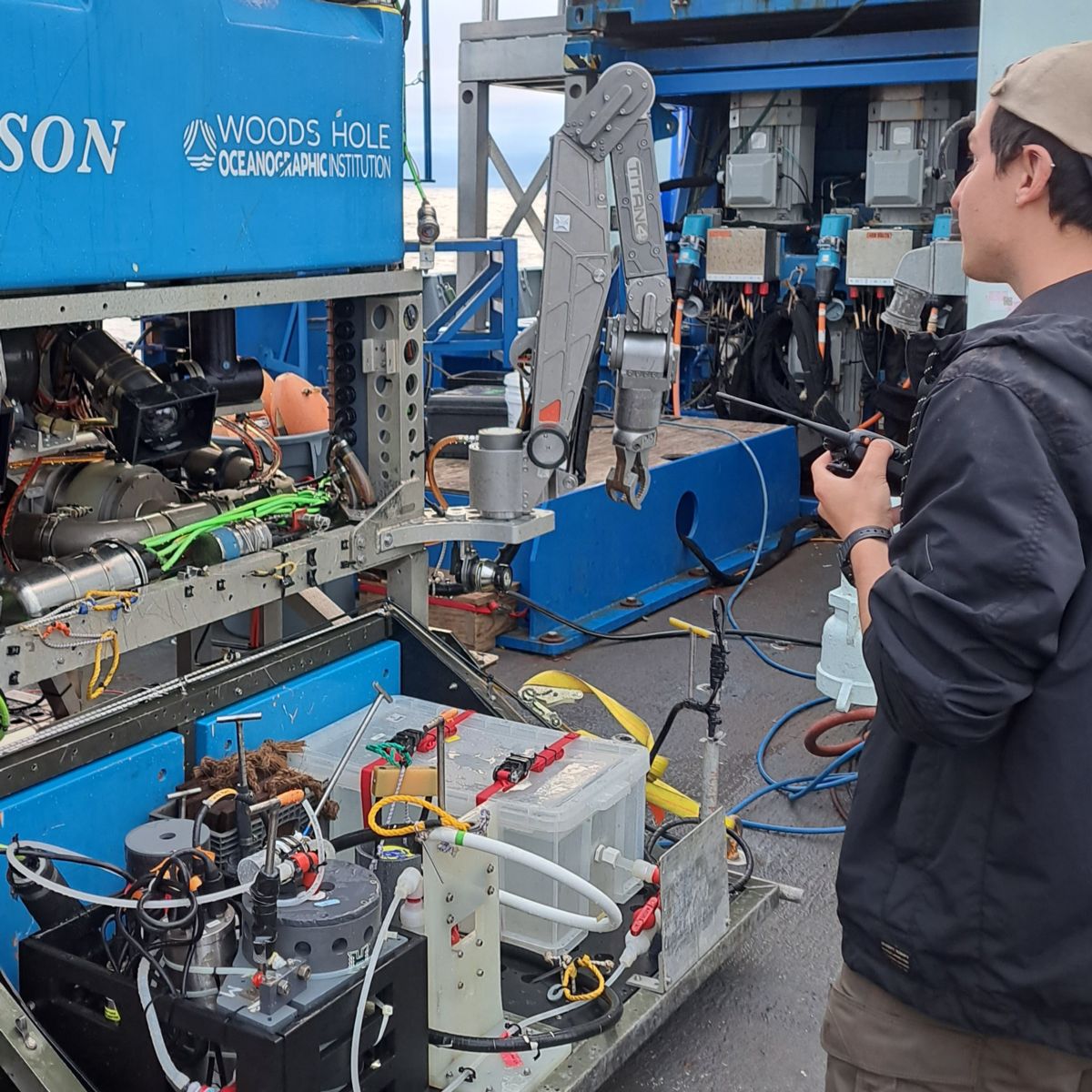
Once I arrived at the R/V Thompson Saturday morning, we began preparing Jason for the cruise. I assisted where necessary but my personal highlight was mounting and troubleshooting the science party’s powered devices. In order to connect the various sensors and actuators to Jason, we drained mineral oil out of the junction box housings then set to work connecting cables. Late into Sunday and Monday morning, we discovered that the MPS and ODI couldn’t communicate. We set to task isolating the fault (wether the issue was subsea or topside) and eventually narrowed down the issue (for both systems) to the adaptor that interfaces the serial connection through the control van (topside) to science’s laptops. Once we realized the issue we were able to build the correct adaptor and fix the issue! It felt great to contribute.


The ship embarked Monday and reached destination Tuesday. Other problems have arisen but as of now we are operating normally. As weird as it sounds, I am thankful I have witnessed issues because it has allowed me to be hands on with Jason. Whether it was building the adaptor, performing pre dive, or sitting in the engineer’s seat for ops, seeing the team troubleshoot issues is a pleasure.


I was nervous going into this experience, primarily because I’ve never spent extended time at sea. Once we started moving I did feel slightly queazy however that feeling has since faded. I was shocked to find the food aboard delicious and the berths are comfy. All in all, this has been throughly enjoyable and I look forward to updating you all as the cruise progresses.


Picture of me wiring Jason’s port side junction box:


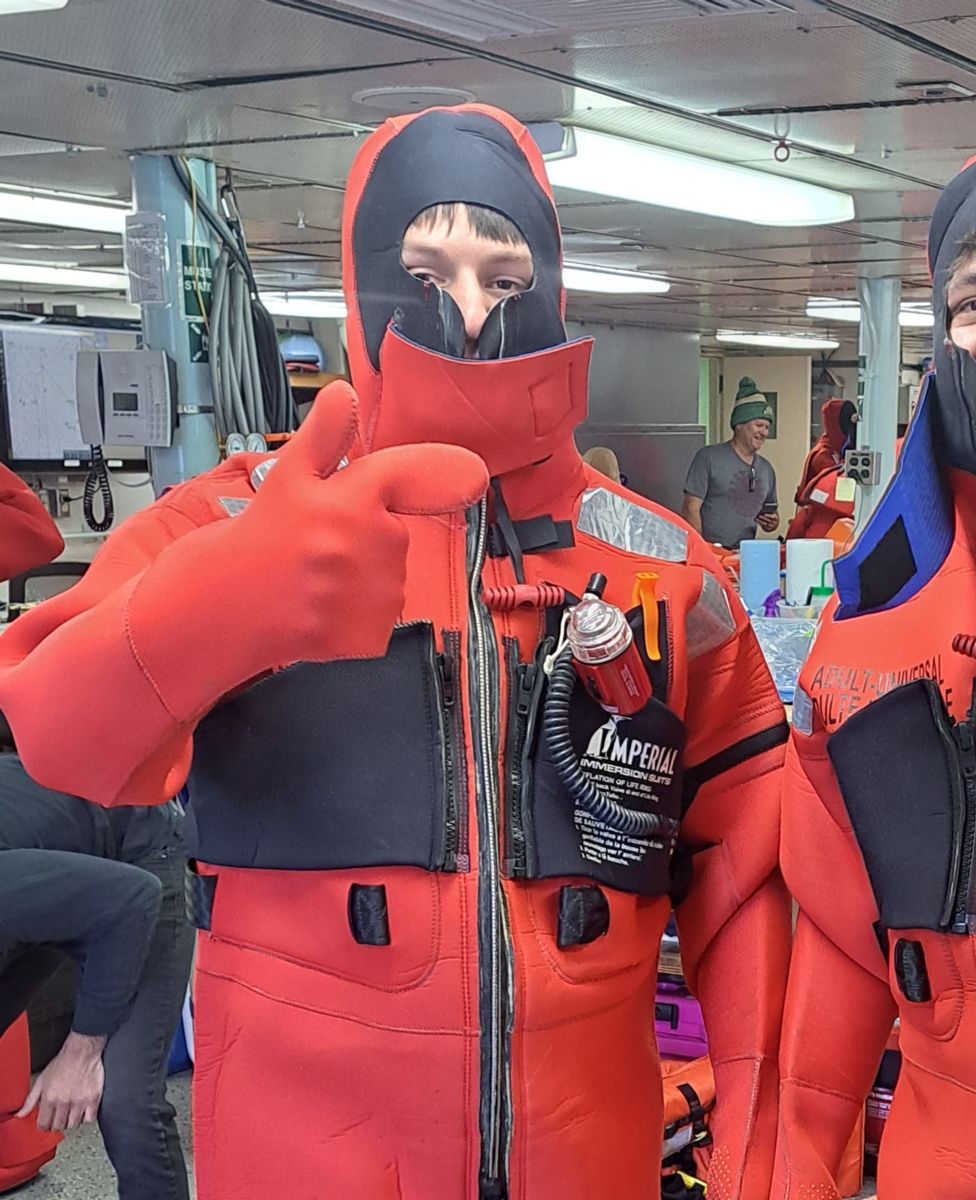
Emergency Suit Drill:


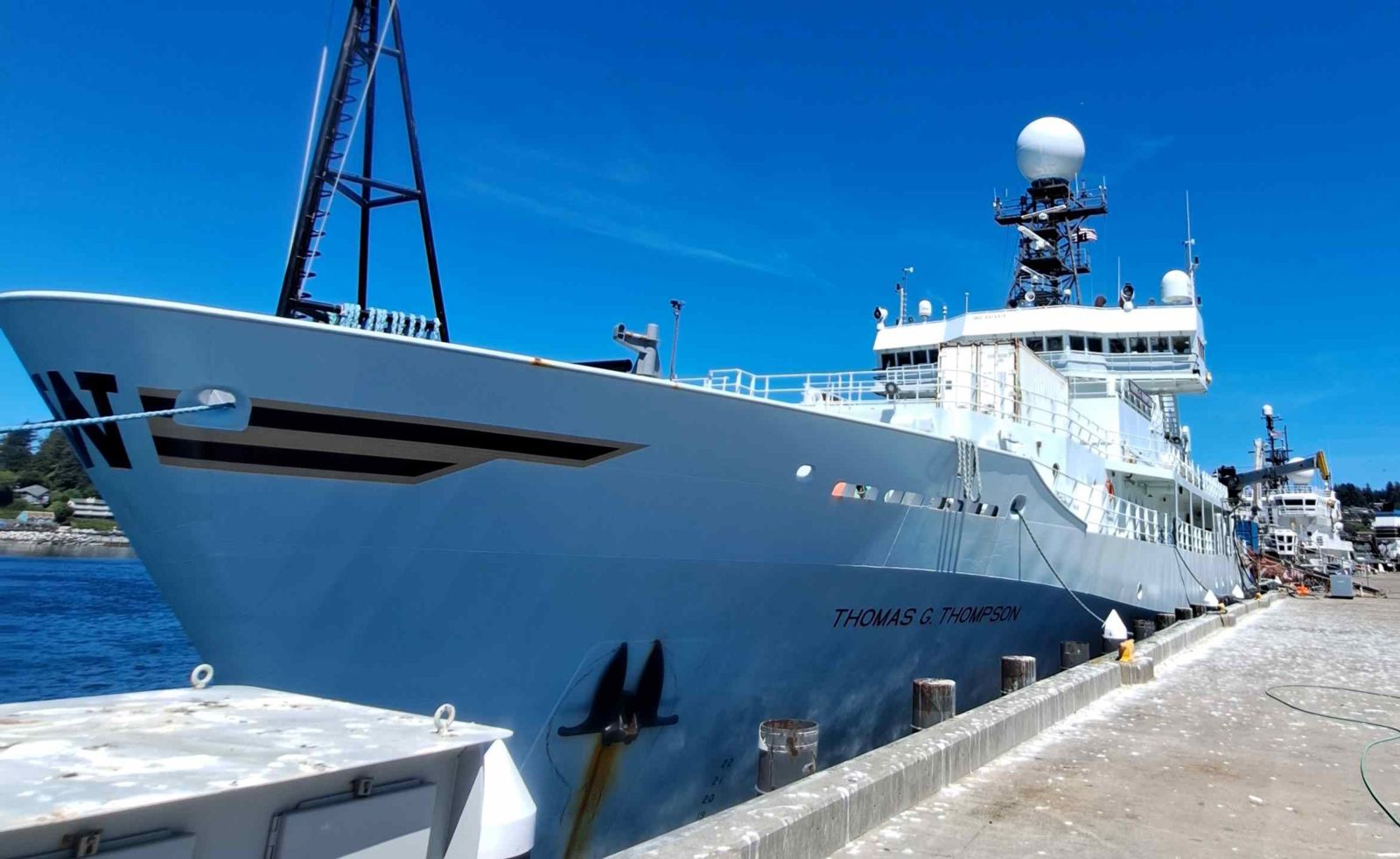
The R/V Thompson:


Week 3 – We finished a science cruise!!

Hey all, this is Mija Wheeler aboard the R/V Atlantis from the Alvin Submersible Operations Crew. There was no post last week because the flu went around the ship which inevitably resulted in several members of the Alvin Ops Crew (including myself) being out of commission for about half the week. Thankfully, no one tested positive for Covid so for all things considered, I’m still in good spirits.

Since my last post, we have officially completed my first science research expedition and demobilized in San Diego.  During this cruise, I was charged with the setup and operation of two deep water underwater cameras called MISO cameras, which are effectively Go-Pros and an external battery inside a water-proof stainless steel casing. During this trip, I used these cameras to capture video footage of all the dives from the perspective of the right manipulator arm and take images from the brow of the sub every 5 seconds. The scientists used all the pictures to create a Timelapse of the dive, so that at the end of every dive they could have a 2-minute video to show all the surface members what happened over the course of the 5-hour dive.

Currently, I don’t have any of the MISO camera photos saved to my hard drive, but I did get some pictures of the animals and bacteria that were pulled up from the bottom of the ocean. I have included my favorite below.

With nearly half of my internship complete, I can confidently say I’ve had the time of my life and have learned so much. I’m excited to see what new things I learn or see next week, till then ALOHA!


.    

Page 2 of 2

Powered by WordPress & Theme by Anders Norén