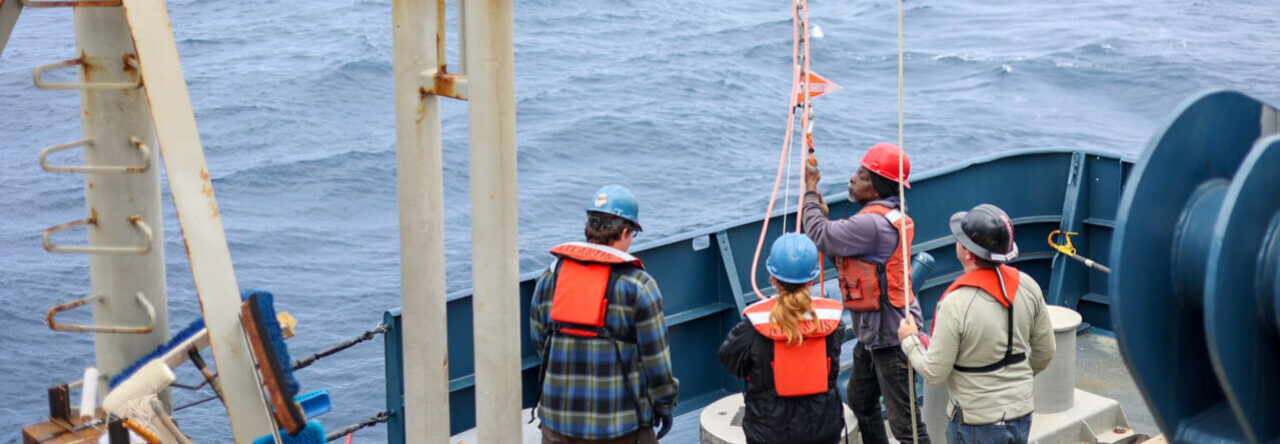
Great news, we are preparing to set sail for the mission. We are set to leave today, the 12th of June. We have been offered a two-week extension on our internship to be able to partake in the scallop mission and then the USGS mission afterward. The plan is to test the ship in the bay and ensure that all the various issues have been resolved properly before leaving to pick up the science crew. If all the systems check out we will transit to Woods Hole, Massachusetts to pick up the science crew should take a day and a half. After we load the science crew will have eight days to dredge and use the hab-cam to collect data on the scallop populations.
In preparation for the mission, the technicians explained the CTD process in more detail and let Alex and I pre-test all the sensors. A CTD is used to create a verticle water column profile that depicts the conductivity, temperature, and density of the ocean in a specific area. This CTD has more sensors than the basic three, including an oxygen sensor and a fluorometer. Attached to the CTD are twelve bottles that can collect water from areas of interest in the water column, they are spring-loaded and seal the water in when the electronic release is triggered. We were shown how to log a CTD scan and how to communicate with the engineers to lower the CTD with the winch. Once a year all the sensors are sent to the manufacturer to be calibrated and have to be updated in the CTD software once they are connected back in the CTD system. I helped with the sensor updating by adding the newly calibrated offsets into the CTD software program and verifying that they were transmitting accurate data.
I am very excited that we are about to set off for the mission, it has been a long wait but all my patience is about to pay off. The extension on my internship is such a blessing and will help allow me to get more sea time and hands-on experience with the various marine technology systems on the R/V Sharp.

Thanks for checking in with Jake the intern.