
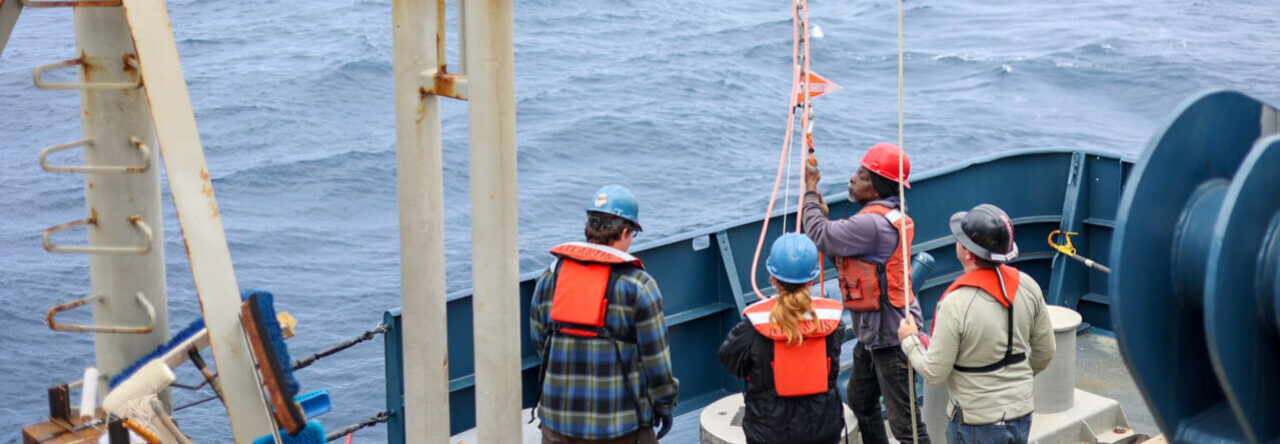
A large part of data collection on this cruise involves sound. We send sound into the ocean over a wide range of frequencies and listen for its echo, allowing us to collect data on the shape of the ocean floor using the multibeam, the nature of the substrate (whether its rocky or silty) using the sub-bottom profiler, what exists in the water column using the EK80, and where the currents are flowing using the ADCP. As I mentioned in my blog post last week, the accuracy of this data can be affected by the pitching and rolling of the ship. The accuracy is also dependent on knowing the speed of sound through the ocean where the data was collected.
Sound speed in the ocean is dependent on the temperature and salinity of the water. In general, salinity is relatively constant through the water column, but temperature can change dramatically. The expendable bathythermographs (XBT) that we deploy approximately once a day measure the temperature through the water column, while the surface flow-through system measures surface salinity. Using this data, we can calculate the sound speed.
The XBT is essentially a sensor attached to a long wire that connects back to a computer where the data is being saved. The electrical circuit that transmits this data is completed when the XBT touches the salty, electricity-conducting ocean water. However, if the circuit is completed elsewhere (by, say, a faulty cable), the computer won’t know the difference between the “data” coming from this faulty completion, and a real XBT deployment. This was the problem we ran into this week, yielding an opportunity for the other MATE interns and I to apply what we had previously learned about electrical circuits to this scenario.
After ruling out some of the easier solutions, we determined that an issue with the cable was likely the cause of our problems. We took an old XBT deployment device with an outdated connector, extended the length of the cable, and added a new connector. This task gave us the opportunity to hone our soldering skills and learn the process of waterproofing our soldered cable joints. After many hours of soldering practice, soldering the cable itself, and applying layers and layers of electrical and self adhesive tape and nocuous electrical insulation, we had our finished product. It has passed our initial test, and in the next few hours we will use it to deploy an XBT at the next planned station. Stay tuned!

Photo: Ella soldering electrical wires on the XBT cable
Photographer: Lila Bellucci, MATE Intern