So just to start, I say that this blog is only kind of about my first week because it only started yesterday. However, that being said, I’ve already learned so much that I never knew before that I feel like I’ve been here for much longer than I have. Also, the ship is setting sail tomorrow for Portland, so I think this is a good time to post an update.
I spent Tuesday travelling to Seward. In total, it took me around 15 hours, which isnt bad considering how many flights are getting canceled or delayed around now. When we finally got to Seward, and it was pitch dark and freezing cold, I thought I had mentally prepared myself to a sufficient degree – I was wrong, but at least the ship is warm inside.
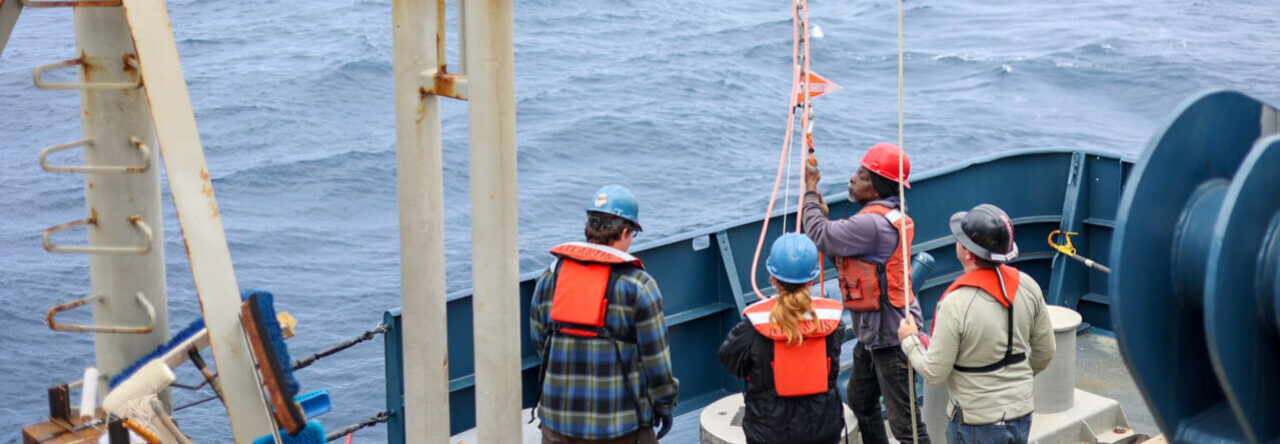
Today was the first day that I was working on the ship. For the first half of the day, I was just getting acquainted with all the spaces onboard, what all the safety plans were, and what life on the ship usually looks like. The second half of the day is where it really picked up. I’m working with the marine technicians for my internship, and its our responsibility to look after all of the ships science equipment, like the winches, the sensors, and all the labs. My supervisor, Ethan, walked me all around the ship and went over everything that was important to us as marine techs. It was a little overwhelming, but I learned so much that I never knew before. Research vessels have so much more going on under the surface than I ever imagined, and it was incredible to pick Ethan’s brain about every little system that we talked about. For example, we spent a while looking at a seawater collection system for the vessel. It constantly collects seawater to analyze its temperature, chemistry, gas content, etc. as the vessel travels. Looking back, it’s clear why a ship with scientific missions would do that, but I never thought about something like it. Another important thing we did was to lower the centerboard in preparation for leaving port tommorrow. It sounds easier than it was; the centerboard on the Sikuliaq is a 15-ton movable keel that holds a number of different acoustic sensors. It exists so the ship can collect data from water not disturbed by the turbulence along the ship’s hull while in transit. Before we put in the water, Ethan showed me what it looked like from the underside, and explained what all the different instruments were for. It was a really cool thing to see, and also something I never would have thought about if I weren’t on the ship this winter. Once the ship is out of the water, we’ll also have a rare opportunity to look at the sensors mounted to the outside of the hull. I cant wait to start working on those.
Tomorrow, the ship is heading to Vigor shipyard in Portland to go into drydock. The ships azipod thrusters were damaged by ice recently, so the ship needs to come out of the water for the repairs to take place, in addition to the annual maintenace period the ship usually undergoes. While in drydock, the marine techs have a number of important things to get done. The first big task we’re going to do is to replace an old cable with a new fiber-optic cable on one of the deck winches. I’m going to have to learn a lot about fiber-optics and electronics really fast, but I’m excited about the opportunity to do something new like this.
I’ll post again after we make it to Portland. Everyone says the transit shouldn’t be super busy, but I’m sure I’ll have a lot of stories to share.