Author: Hunter Adams

Week 4: Oxygen and the RV Kilo Moana

Howdy all,

Week four was shorter than other weeks with the HOT team but presented opportunities to review auto oxygen titrators, nutrient analysis, and work on the Kilo Moana.

On Monday, we took a trip to the marine center to calibrate the oxygen auto titrators that are used to analyze oxygen samples during the HOT cruise. This was a great opportunity to review the software/methods that operates this equipment while also learning why the calibration is important and how it is performed. Tuesday we reviewed how nutrient samples are processed and also received an introduction to the total DIC sample analysis system. To finish the week before loading for HOT 346 we worked on the RV Kilo Moana on Wednesday. Aboard the ship we learned new cable splicing methods, how to connect new computers to the ships networking system, and how to perform troubleshooting for the ships sound velocity probe found in the sea chest. 

This week introduced us to more of the research that this time series performs while also giving us the opportunity to foster new technical skills related to work as a marine technician. 

Best,

Hunter

Week 3: RVTEC and biogeochemical sample analysis

Howdy all,

Week three with the HOT team has been a great opportunity to network with other marine technicians at the RVTEC conference and participate in biogeochemical sample analysis with the HOT team.

To start this week, I attended Cyber Monday at the RVTEC conference and learned about the IT needs and priorities for the UNOLS fleet. This included presentations discussing IT staffing, OmniSOC security solutions, HiSeasNet, and Fortinet. Monday showed me how important IT and networking experience is becoming for marine techs across various institutions. 

The next few days were spent processing and analyzing biogeochemical samples collected from the last HOT cruise. On Tuesday we acid washed sample bottles to prep for the next HOT cruise at the UH Manoa marine center. I was also able to attend an icebreaker event and meet with former MATE alumni and other marine technicians through the RVTEC conference. Wednesday, we processed chlorophyll samples using a fluorometer and uploaded the raw data to a processing spreadsheet. Thursday, we processed particulate inorganic carbon (PIC) samples by dissolving the collected carbon on filters and recording the subsequent CO2 raw data. 

To finish the week I was able to attend a serial communications and electronics workshop with Tom Wilson at the RVTEC conference. These workshops were a great introduction to these topics and provided many resources on better learning these topics.

Overall, I appreciated learning about the science that we were contributing to as marine technicians and I enjoyed the opportunity to meet other marine technicians at RVTEC.

Best,

Hunter

Week 2: Processing, splicing, and maintaining

Howdy all,

Week two with the HOT team has managed to equip me with a greater understanding of how CTD data is processed, new equipment is made in preparation for research cruises, and instrumentation is maintained between cruises. 

On Monday we learned how the Hawaii Ocean Time team processes their CTD data by following a standard processing procedure after each cruise. This procedure involves removing duplicate data points, binning data, and communicating with databases to store the roughly processed data. After this is completed, a series of quality control checks is performed by the HOT team research associates and data reports are generated. The majority of this processing is fully automated using a mix of MATLAB, Python, and Bash scripting. After learning how HOT processes their data we were introduced to the Seasoft method of CTD data processing and learned the advantages and challenges of converting to this processing system. 

On Tuesday we learned how to properly splice different CTD-sensor connecting cables together for the next HOT cruise. With this introduction, we checked wire continuity, soldered connections, and properly waterproofed the connections to handle extreme pressures and temperatures. On Wednesday we disassembled, inspected, and cleaned a Seabird carousel. We learned how the device worked and the common maintenance checks that should be performed after each cruise to ensure its continued operation. On Thursday, we learned how to horizontally plumb a backup CTD to ensure that the temperature, conductivity, and oxygen sensors work properly. We also disassembled, inspected, and cleaned a LADCP system and learned how its data is recorded. 

Come Friday, we took a trip to the University of Hawaii Manoa Marine Center to install the new carousel on the HOT rosette, disassemble the Niskin bottles, and test new CTD orientations and mounting ideas. 

Overall, this week was a great introduction to new equipment, data processing best practices, and hands-on technical experience!

Best,

Hunter

Week 1: R/V Kilo Moana, HOT 345

Howdy all,

This first week in Hawaii has already been an invaluable experience in helping me understand the role and responsibilities of a marine tech in contributing to a vital oceanographic time series. 

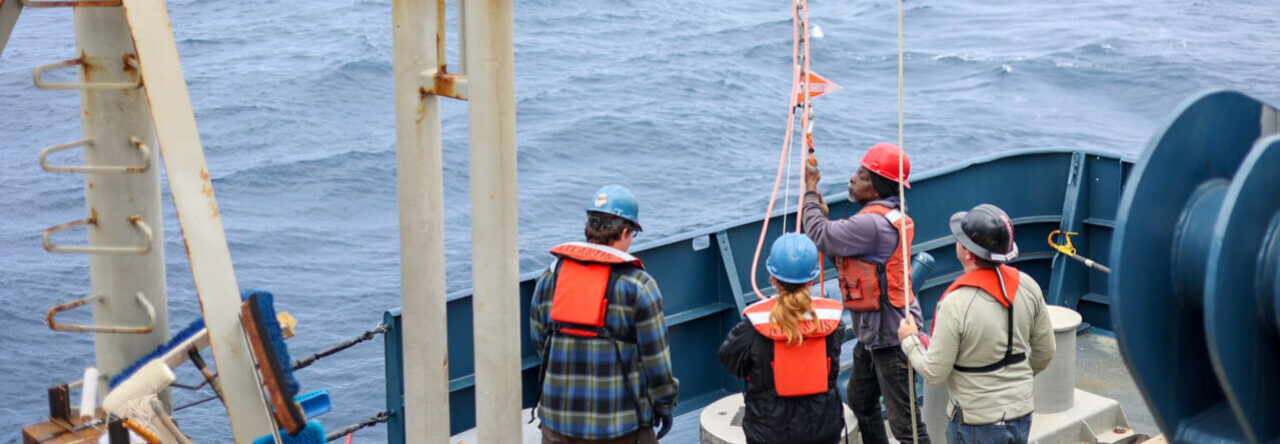
For the first two days of my internship, I was able to spend some time aboard the R/V Kilo Moana where I got to meet the crew and better understand the ship itself. While loading and preparing for HOT 345 with the science team, I learned how a CTD termination is performed, a basic job requirement for any marine technician. After helping the science team and crew pack for the cruise we were off to Station Kahe the next day to weight test the Hawboldt LARS wench system, perform a Hyperpro cast, CTD cast, and a trace metal cast. Even on the first day of the cruise, I was already being exposed to new scientific equipment and sampling techniques. After performing these preliminary tests and sampling we were off to Station Aloha, the primary sampling site for HOT cruises.

At Station Aloha I was introduced to even more new equipment and sampling techniques while learning about directing deck operations and getting to know my cruise mates better. The cruise was business as usual until there was a malfunction in the Hawboldt hydraulics system forcing the rosette and CTD to be moved to an alternative tension-based wench system that routed through the ship’s A-frame. Unfortunately, soon after this new wench system was set up it also malfunctioned when proof of tension was not maintained for the system, forcing the repair of the original Hawboldt system. This series of events required a new termination and hours of work, wasting valuable ship time. While this was not an ideal situation, it showed that anything can go wrong on a cruise and that complex problem-solving is a requirement for a marine tech. In this way, it was a valuable learning experience for me. 

The rest of the cruise remained relatively uneventful, and I was able to learn about computer networking systems and using Linux from one of the marine techs as well as discuss what a career as a marine tech might look like. We were able to complete our sampling at Station Aloha, the WHOTS mooring, and Station Kaena and return to Honolulu without any other issues. I am excited to continue updating this blog with the new skills and experiences I gain over the next week working with CTD systems and processing data.

Best,

Hunter


Week 0: Pre-Internship Introduction

Hello everyone,

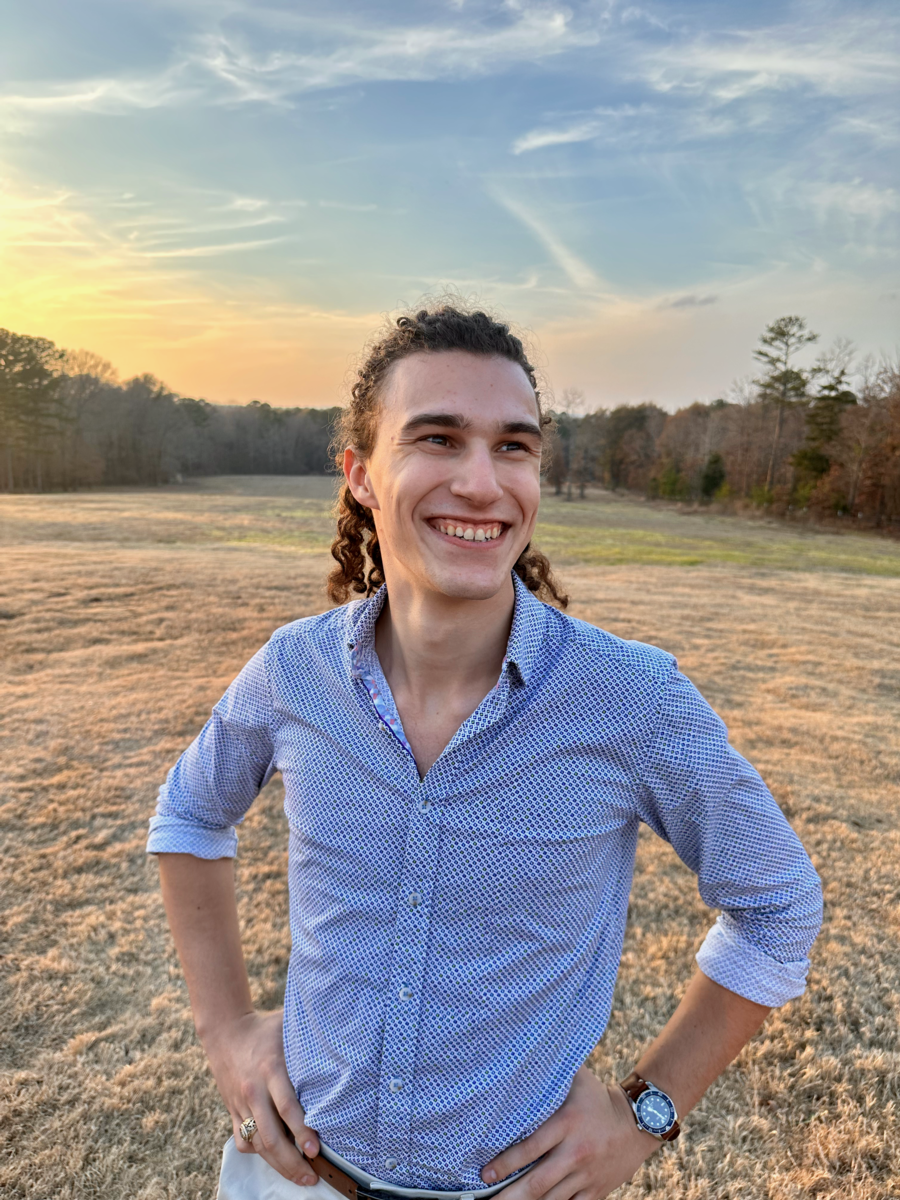
My name is Hunter Adams and I recently graduated from Texas A&M University with a BS in Oceanography and MS in Business. During my time at TAMU, I dedicated three years to researching methane and nitrous oxide concentrations in the northern Gulf of Mexico and participated in multiple research cruises as a result. Additionally, I spent two summers working at Los Alamos National Laboratory, where I studied reduced biogeochemical modeling for the Arctic region. Through these experiences, I’ve developed a special appreciation for ocean research and the importance of shipboard operations in generating consistent datasets for researchers. Outside of studying salty water some of my hobbies include riding motorcycles, spelunking, camping, rowing, and anything that gets me outdoors!

Now, I’m excited to embark on a new adventure by joining the Hawaii Ocean Time-series (HOT) program at the University of Hawaii at Manoa. This opportunity allows me to combine my interests in fieldwork and ocean biogeochemical research while learning the essential skills needed to become a successful marine technician. In just three days, I’ll be on the R/V Kilo Moana in Honolulu to prepare for the upcoming October HOT cruise. I’m excited to finally meet the crew, my internship mentors, and my fellow MATE intern in person after months of planning.

Over the next month, I look forward to keeping you all updated through these blog posts, sharing the incredible experiences and knowledge I gain during this exciting internship!

Special thanks to Dr. Shari Yvon-Lewis, Dr. Chrissy Wiederwohl, Dr. Nicole Jefferey, Maria Osiadacz, Carolina Funkey, Dan Fitzgerald, and everyone who made this all possible.

Page 2 of 2

Powered by WordPress & Theme by Anders Norén