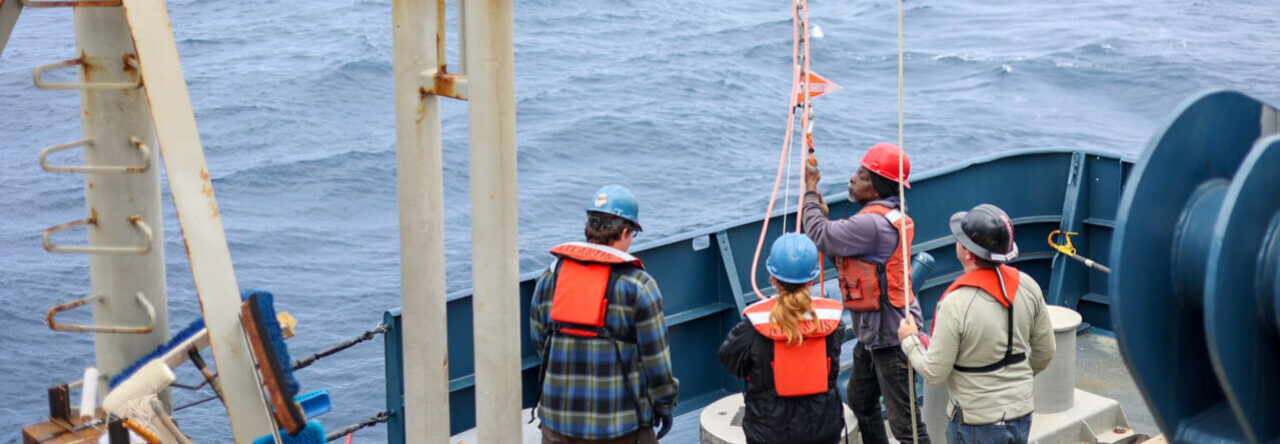
Another week aboard the RV Atlantis has gone by, and we have begun falling into a routine. Recently, we secured lab equipment and started to set up the labs. I am currently sitting in one of the labs typing my blog.
Grace, my fellow intern, and I were tasked to set up the sensors from the saltwater intake at the hull of the ship to the sinks. The system line up from the intake to the outlet is a debubbler (a tool for removal of visible bubbles from water flow streams), flowmeter (allows for the monitoring of a range of fluids), thermosalinograph (measure sea surface temperature and conductivity while the ship is in motion), fluorometer (an instrument that detects fluorescence), transmissometer (measures the fraction of light, from a collimated light source, reaching a light detector a set distance away), pump, and rotor flow sensor. We had to figure out a way to mount the sensors on a 45.5”x21.5” panel in the bow thruster room. We enjoyed working on this project and reading about how the sensors worked while learning how to set them up properly. The data collected from the sensors are displayed in real-time in each of the lab spaces.

***Flow-through system bypassing the debubbler***
For the most part, we experienced relatively calm seas, with the exception of a lightning storm which was amazing as it flashed in the sky and reflected on the water. We arrived in Panama on August 2, and I learned we needed to wait our turn to go through the canal. Smaller ships enter at night, so many of us will be pulling an all-nighter to take in this experience. Everyone I spoke to before my trip told of their time going through the canal and all were awestruck. I feel very fortunate to be an intern on the R/V Atlantis.

***Before lightning storm at sea***


