Author: Alesha Gregroire

Walton Smith Week 6: Lots of Good Memories and and Learning More

This was a short ­­­week for us working because Monday was a holiday that RSMAS observed. I spent Monday relaxing and recharging for the upcoming week. Tuesday, we jumped right in with learning about a new tool for determining the length, condition (whether its fit for use or now), and the category (Cat. 5, 5E, 6, …) of the wire. After we were introduced to the tool we were sent off to take reading of the wire to the port engine room and bridge. After conducting the tests, both wires came back in working condition, further confirming that our wire has no physical problem. Later that day we noticed that the few ants we had inside the cabin had grown significantly and were streaming in. I spent a great time that afternoon killing ants and trying to find the nest. We were removing deck boards in area where many ants were traveling then hosing the area for a few minutes to try and wash anything away that might be there, but by the end of the day we had no luck, the ants were still coming. The next day we spent the morning under the navigation panel in the bridge removing the dynamic position system electronics. This was a very tedious job because of all the wires we had to disconnect to be able to remove different drives. Everything had to be removed from within the housing before we could access the bolts that held the whole component to the bulkhead. Kyle and I also started a new weeklong project of removing and replacing an AC unit in one of the staterooms. Later in the week we removed the CTD and its instruments from the carousel and capped all the connections to avoid any of the pins from being bent. We will further dive into taking apart the CTD next week. For the weekend, a few of us went rock climbing one day and the next we went on a mission to get a Force 5 (a 13’ 10” sailboat) a gentleman was giving away. We met the man at his house and planned to put it in the water (he lived on a canal), rig it there, and sail our way back to campus. When we told the guy that he let out a slight chuckle hoping we were joking, but we weren’t. We rowed it out of the canal before we set the sail and prayed for the wind to pick up. There was only a slight breeze, but it was slowly increasing in speed. There were many unique and very memorable events that happened along the trip. To start off, we arrived at the house with no leaves on the trees moving, fully prepared to row the sailboat the whole way, 8 nm, back to campus. We then decided to stop at an island to resituate ourselves and gear. Once we got to a depth of 3 feet Kyle decided that he would hop out because he wanted out. Well in the process of him hoping out, me and Jon were both on the opposite side as Kyle, so we slid out too as soon as Kyles weight left. We referred to this island as party island because of the amount of people there and food boats (like food trucks but a shed on pontoons with an outboard), as well as the numerous jet skiers that we feared our lives from. Once we got situated and left the island came the next and best memory, we were approaching a draw bridge, with a clearance of approximately 15 feet and we had no clue what our height to the top of the mast was, but as we were within 5 feet of the bridge, we knew it wasn’t enough… we were closing in on the bridge as the horn was sounding to lift the bridge and there was a guy carelessly running along. Within inches of hitting the bridge it starts to open, we cleared it! It was our saving grace. We spent the rest of the trip back laughing and joking about it. As we passed under the Rickenbacker Causeway bridge, we knew it was our final stretch of the journey. This is where it was the roughest, with any wake from a boat, our heading was thrown off and our speed lost. It was a struggle to get closer to land. But once we did, Kyle hopped off and swam to shore. It was only about a half a mile walk back to campus, but we realized the boat was more maneuverable hitting the wakes. We finally made it back to the boat and relaxed in the ocean and joked about the whole journey even more. It was a very successful weekend in my books.


The before and after pictures of the DP system electronics.

Me helping to remove the CTD.

Walton Smith Week 5: Lots of poop (human and rodent, as well as grey water) but finished off on a good note

This week was a doozy and very eventful to say the least. To sum this week up in one sentence: this week was poop, poop, poop, almost (basically) poop, and almost (basically) poop. As I put in my last blog post on Monday, we took apart the pump for the black water tank (poop). We took the diaphragm off, attached the new diaphragm to the connecting rod and placed silicone around it as per manuals instructions. Overnight the silicone dried and Tuesday morning it was time to reattach the diaphragm and get the head system back up and running. This was a tedious job because we had to ensure the diaphragm was seated properly and did not unseat as we were tightening the bolts. IN the process we also replaced 4 duck bills, 2 before and 2 after the pump. Duck bills are a check valve that are an effective way to stop reverse flow within the system. By the time we finished it was lunch and we were told we could take the rest of the day off as we were closely dealing with poop for far too long.

Wednesday morning, we had a pre-vibrations analysis test performed to measure the vibrations that are given off be the engine when we are full speed ahead. These measurements will them be compared the to the measurements taken after the new engines are installed. This is all measured to ensure the ship can maintain its structural integrity with the new engine. While underway the captain tasked Kyle and I to measure the length of the docking lines because it is not a job that can done while dockside. Later that day after arriving at the dock and tying up, we had to remove the life rafts that way they can be sent out and recertified. To finish the day, we removed ceiling tiles from the mess area to find a path to run Cat 6 wire for a new camera on the starboard side. This is where the third day of poop came into effect. Upon removing a bulkhead to take a ceiling piece off, rodent poop came down too. This delay the task a little bit because it was another mess that we had to clean up. After cleaning up the mess we stopped for the day.

Thursday we were able to run the Cat 6 wire from the tach space up into the dry lab, into the mess then through the ceiling. After this job was completed, we helped the chief engineer put a new check valve into the preexisting hot water pipes. While this job happened, we came to the conclusion that the other hot water heater is not properly working. We had to shut the water off the heater that was having a new check valve added leaving only one heater supplying water, which ended up only being lukewarm, were thinking the heating element might have short. That will end up being another job later in the future. Sone once the check valve was placed, we moved onto the next job, gaining access to the electrical outlet behind the commercial refrigerator. We wanted to be able to plug in an electrical cord to it and run that cord to the toaster that way it is off a different breaker as the microwave and coffee maker because the breaker would always be tripped. In the process of raising the pallet jack to raise the refrigerator, one of the forks caught on a piece of piping that would be used for an ice maker. So, that piece snapped off and water started gushing towards us from under the fridge. The water was quickly shut off by the engineer who managed to hurdle 2 trashcans to get down to the shutoff valve. We dewatered the area and then cut a larger hole in the wall around where the pipe was to be able to cap the existing pipe. After we finished with the pump, we brought it down to the laundry area where the grey water tank (almost poop) overfilled and came out onto the floor and drained into the bilge, creating a nasty smell that rang throughout the boat. Unfortunately, we didn’t have time left in the day to pump the grey water, so it was done the next morning, along with cleaning behind the fridge and placing it back. While pumping the grey water out, the pump got clogged. We were able to take apart the pump, remove the clog, and put it back together. I thought this was a really good learning experience as it was a simple pump to learn from. That was the end to a very chaotic work week.

For the weekend Kyle and I were dedicated to our project that started when we cracked open a coconut. After trying the meat inside and realizing that it was so much better than store bought shredded coconut, we decide to collect 7 more and crack those open as well. We saved the coconut water and puled all the meat from the shell. At this point we were already dedicated on making a coconut cream pie and it would be worth it for the 2-3 hours of work that we already did. We made the coconut milk that is used in it by adding the coconut meat to a blender with the coconut water. The pulp that was formed was pressed and the resulting liquid is coconut milk. If allowed to settle and separate, coconut water would be on the bottom and coconut cream would be on top. Once we got all the ingredients needed to make the pie, I started it and let is chill in the fridge overnight. The coconut cream pie was consumed the next day, as we spent it relaxing by the water.

The process of dewatering the gallery area. Refrigerator is to the left outside of this photo. (Photo creds. Kyle Hebert)

The first coconut that we got inspiration from after trying the meat. And yes, we used a fire axe to crack them open.

Separating the shredded coconut meat from the coconut milk. I was there with a fine strainer pressing all the liquid out. (Photo creds. Kyle Hebert)

On the left, blended coconut meat, once dried it can be put into the food processor to make it finer and is then considered coconut flour. I think coconut chocolate chip cookies are next on the list to make. On the right is the coconut milk and if you look closely the water is separating from the cream. The clearer liquid on the bottom is the coconut water.

The final result of the coconut cream pie. It came out delicious!

Walton Smith Week 4: Completing many jobs for the Marine Tech, Chief Engineer, and Bos’n

This week has been very unique to say the least. We started by finding out that one of the crew members aboard had contracted the COVID-19 virus. They were put into isolation onboard and there was limited crew working each day.

Over the week, Kyle and I cleaned all the AC units onboard, with a biodegradable all-purpose cleaner, to remove any mold growing within the turbines. This took a few hours to do each as we had to take off the case, filters, and condensate drain to be able to access the turbines. All of that was cleaned along with the turbine before the AC unit was put back together and ran again. This was a nice project to do as it was very repetitive for each AC and did not require any assistance from any of the crew. I was just a small project for us interns. Another job we did was cleaning out the back of the golfcart. There was junk in the back to throw away as well as tools that were organized and put away. The back was then washed along with the rubber mat too.

At one point, the Marine Operations Manager passed along a video about a future cruise (October/November ’22) about deploying moorings. This was a very interesting video to watch. These moorings were to be set along a transect from Jupiter, FL to the Bahamas to record current data about the Gulf Stream. This data would show how the currents change over time and between stations. The data would be collected with nine inverted echo sounders, one at each station and would be collected for five years.

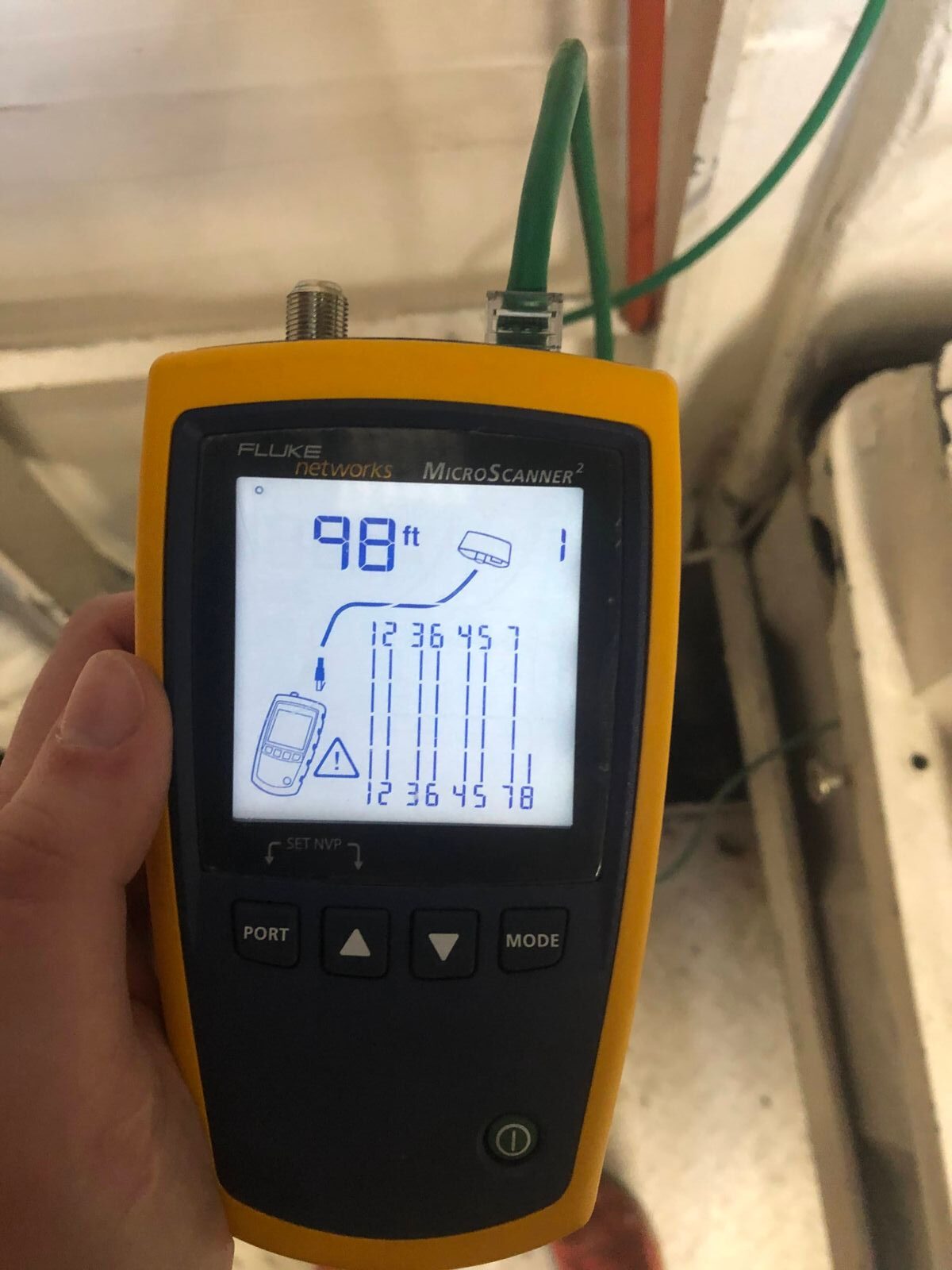
On the tech side, I watched some YouTube videos about Linux, networking basics (switch, router, gateway, firewall, and DMZ), IP addressing, and subnetting. We learned how to crimp Cat 5 wire to a RJ45 connector along with the keystone jack. After given that knowledge Kyle and I were tasked with the job to add a keystone jack to the existing wire to the camera in the bridge and then create a patch cable (length of Cat 5 cable with RJ45 connectors on each end) to connect the camera to the existing wire. Once that was completed and the camera was connected it was finally working again. We than did the same thing to the port engine room camera wiring. Once done, we connected the bridge camera, as the engine room camera is broken, to find out it still would not work. The marine tech then showed us some of the tools he has onboard to test cable to ensure that the cable is in working condition. We used a MicroScanner Cable Verifier to troubleshoot the cable and connections. This device was able to tell us if there was a short in the wire, open or crossed wire, and the length of the wire. After scanning from different connections that the wire would transmit to, it was determined that the wire was in working conditions and this was a problem on the campus IT side. After this project, our new project was to run cat 5 cable from under the port and starboard nav light platform (to add new cameras) all the way down to the tech space to connect to the switch. In a few hours we were able to run the cable through the ceiling of one of the staterooms and onto the racetrack where it then was able to follow the other wires down to the tech space.

The last job completed with the engineer was finally replacing the rubber diaphragm to the pump for the black water. Today, 6/13, Kyle and I were able to remove the diaphragm, with guidance from the engineer on the best way to remove the connecting rod and assembly. We were able to remove the diaphragm and connecting rod and clean it and then silicone it to the new diaphragm per the manual instructions.

Over the weekend, I took it easy and relaxed one day, while getting a nice sunburn. The next day Jon invited Kyle and I along on a paddle board/kayak trip to a shipwreck on a shoal off Key Biscayne where we snorkeled the wreck. It was interesting to see as there was growth all over the ship the many fish lived in and around it. The ship sunk nearly 100 years ago and is now Florida’s seventh Underwater Archaeological Preserve. After we came back from the trip, time was spent relaxing in the water when there was word of a manatee coming our way. It passe within 6-10 feet of us. It was a great experience to see.

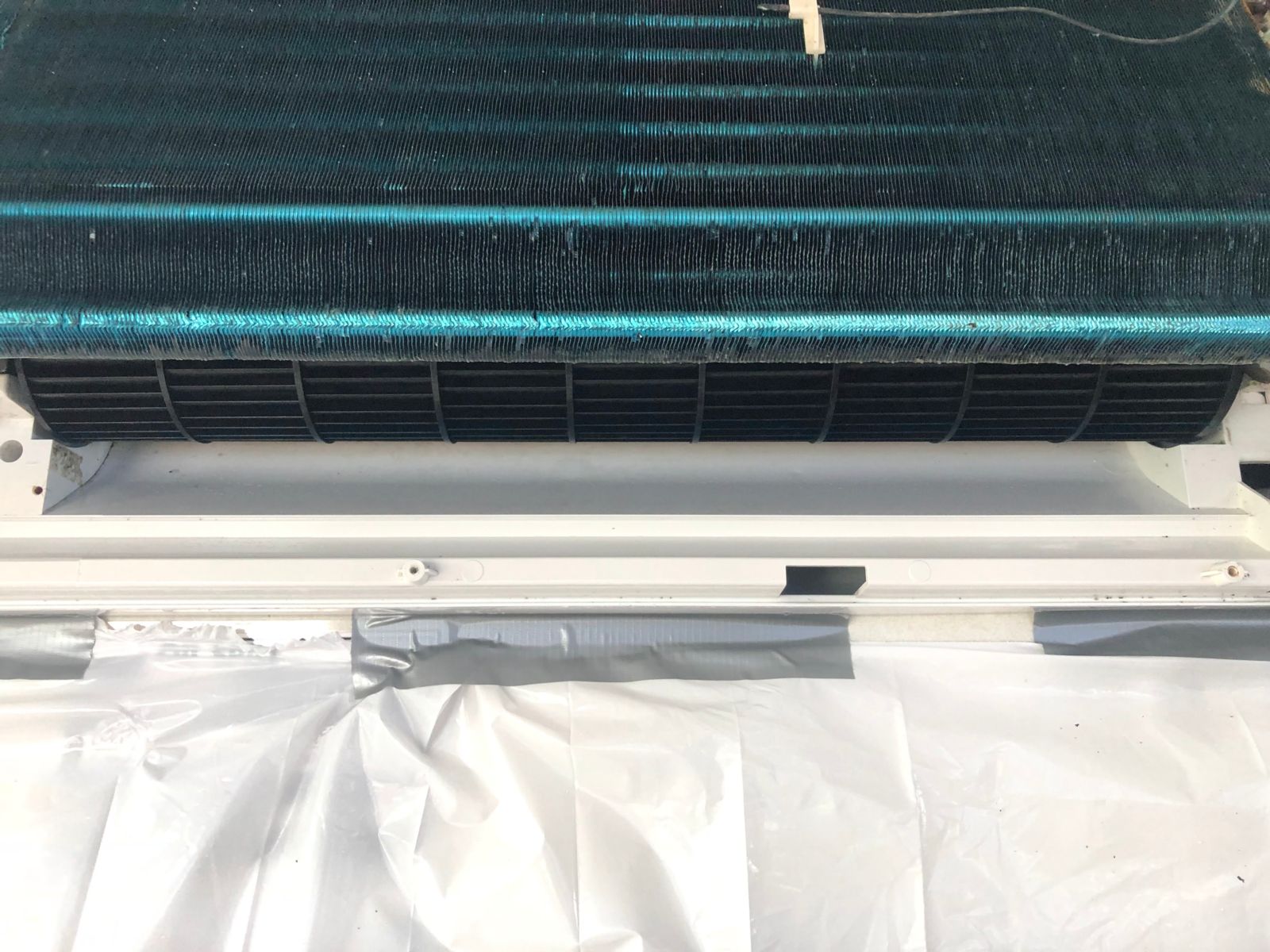
A freshly cleaned AC unit cleaned with PurplePower

The Microscanner Cable Verifier. It is showing that the cable it is connected to is 98 feet long, there is no crossover in the wire (all the numbers match to each other and not a different number i.e., 1&3, 2&6), and there is a connection problem with prong 8 of the other end of the cable that is connected to the wiremap adapter (not shown).

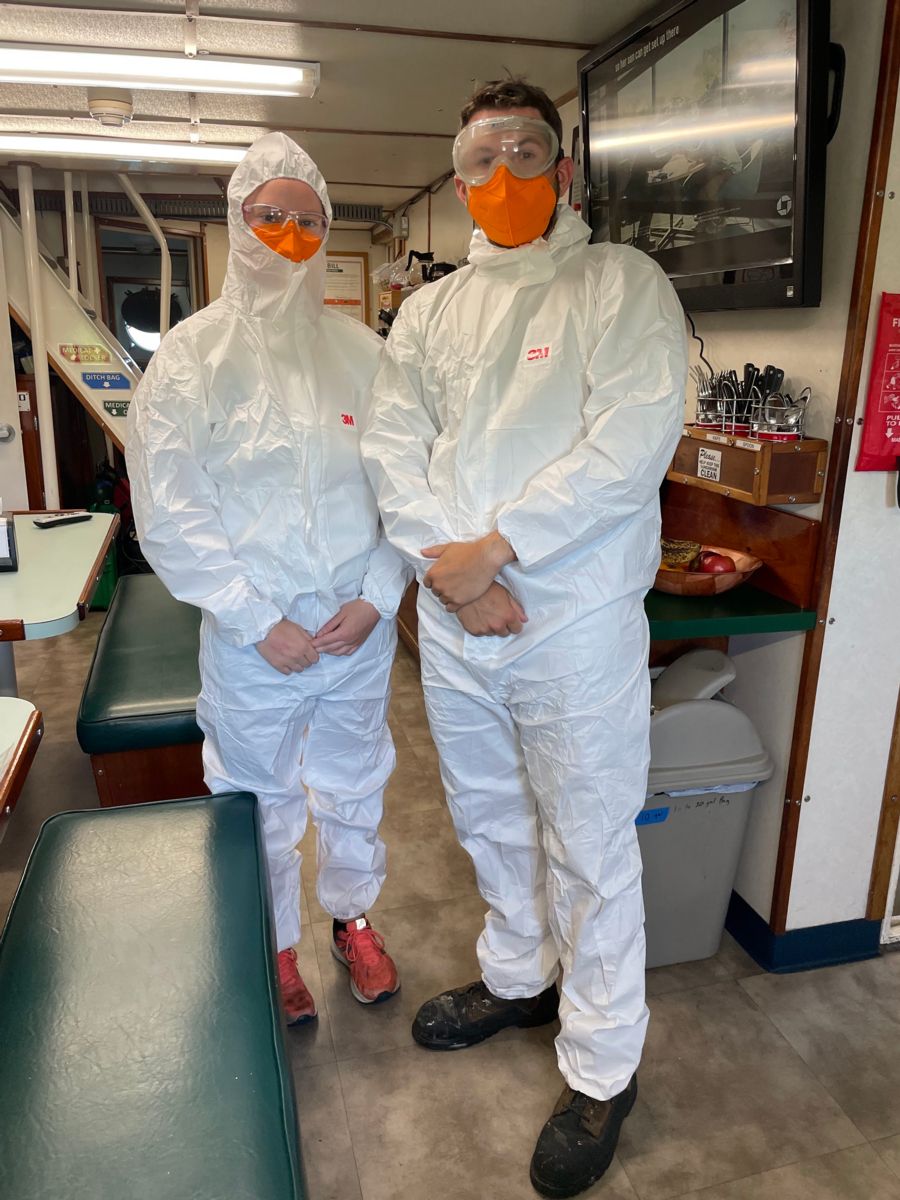
Kyle and I all suited up in our Tyvek suits getting ready to fix the head system pump. It was a gross job the included my glove ripping.

Walton Smith Week 3: Learning about networking and completing jobs around the ship

This week has been a wealth of new information. Since we are dockside waiting for the new engines, we have lots more time to dive into learning about networking and time to complete jobs around the vessel. To start off on learning about networking the Marine Tech explained the flow through water system we have onboard and how those instruments connected to it send the data to the tech space through physical connections. He explains that most problems that arise with the equipment onboard are through the physical layer connections, which is as simple as forgetting to plug a wire in or it shimmying out of place in rough seas. In everything we are learning about Internet Protocols (IP)m modems, switches, network programming, and PowerShell vs. command prompt. Slowly but surely, I am learning how computers are able to talk to each other. In the process about learning about networking and how information is sent. With the help of YouTube videos, I am able to get a better grasp at these concepts and dive further into them on my free time. The Marine Tech explained how the data collected onboard is sent to Columbia University and added to an online database that compiles raw data from 49 vessels. This database includes 8,655 cruises and 13,805,504 downloadable files. All this data is available to the public at www.rvdata.us.

For vessel work we have been working on the AC system with cleaning the sea strainer and checking refrigerant pressures and the temperature associated with that part of the system. We then compare those values to pressure-temperature charts based on the type of refrigerant used. Our next job was the hot water system. We were having problems were sometimes there would be no cold water, only hot water coming out of the spicket when the cold water was turned on. To begin, the engineer get us a run through of the system and how we have a recirculating system which allows for us to have hot water on demand and not waiting some time wasting water. After isolating certain areas of the system, we figured out that one of the check valves was not working and/or broken. This allows the heated, recirculating water to enter the cold water supply pipes, and enter our drinking water. Another small job we completed was using 5200, a permanent marine adhesive sealant, to prevent the ignition, on the fast boat, from spinning when the key was turned to start the engine. We “locked” it in place. The last small jobs to finish this week was to add Sikaflex, a marine watertight sealing adhesive, to the through hull wires that came into the bridge and galley and then to replace the valves for the water hose spicket on the bow and adding the male adapter end to the hose so we can attach a sprayer nozzle.

For the weekly marine life that has been spotted, while working of the ignition of the fast boat we saw a Southern Stingray swim under the vessel.

Past and present MATE interns from the last cruise. From left to right: Alesha (F.G. Walton Smith, Summer ’22), Kyle (F.G. Walton Smith, Summer ’22), Sebastian (Hugh R. Sharp, Summer ’19, now a scientist onboard), and Jon (F.G. Walton Smith, ’20, now the Chief Engineer)

Walton Smith Week 2: Finishing the second cruise

Week 2 was very similar to Week 1, as we finished the second cruise at the end of the week. As time progressed and I had more time on the aft controls, I got more comfortable with maneuvering the boat during CTD casts. I also got to interact with the scientists onboard helping them recover the CTD on deck and learning the computer aspects to deploying a CTD with knowing how deep it is, the depth until it reaches the bottom, how to fire Niskin bottles, and a lot more. During my down time onboard I had the chance to play card games and learn a new one, Scopa, an Italian card game. 
On the way back to the docks, the port engine had troubles once more. This time it was a coolant problem, we had none. Because of that, more coolant was added to the engine and the engineer wasn’t sure if it was a quick or slow leak, so every 15 minutes levels were checked along with engine temperature to try and figure out the problem. It was in fact a slow leak because after 2 hours of checking, the levels were staying the same and the engine temperature was staying consistent. Right before we entered Biscayne Bay, for the final stretch before the docks, we heard a distress call over the radio. All crew was up on the bridge wing looking for flares and informing the Coast Guard of their location.  Once we finally made it back to the docks and tied up it was time to relax for a nice 3 day weekend. It was spent relaxing at the beach, exploring the area on some bikes (getting caught in the beginning of the thunderstorm) and SCUBA diving were I saw many Florida lobsters “bugs”, massive sea stars, lion fish, tarpon, a nurse shark, an eagle ray, some barracuda, and conch.
I cannot wait for more weeks to come to learn more. 

Cape Florida lighthouse, built in 1825, on Key Biscayne, FL. This is the oldest structure in Miami-Dade and has survived almost 200 years of hurricanes. Today, the lighthouse is a cultural landmark and part of the National Register of Historic Places. 

Walton Smith Week 1: Arrival and first cruises

To start my MATE internship, I boarded the R/V F. G. Walton Smith Monday afternoon and set out for a cruise that evening. The mission of this cruise was to recover 3 moorings, that were deployed over the past 5 years, and deploy 2 others in Jupiter, FL. My job for this cruise was to stay within close proximity to the divers with the vessel while they were in the water because our vessel was flying the dive flag. Before we left the docks I was able to help the chief engineer with the pre-departure checklist and starting the engines and generator.  As we were leaving Miami Channel I got to see about 8 dolphins riding the bow. That night as I was on watch we lost the port engine, it wasn’t until early the next morning that it was able to be turned back on. We finally made our way to Jupiter that evening before sunset and the divers were able to located and tag one mooring to recover the next morning. Having engine problems, we were only able to deploy one mooring and recover instruments off another. We were able to limp back to port on one engine and about an hour to two hours out from the university we were able to restart the port side engine to have full maneuverability to get to the dock. After docking, I met the other MATE intern and we helped the engineer with trying to troubleshoot the engine problem. We swapped the actuator from the starboard engine to the port issue engine to see if that was the problem, but unfortunately not, it had to be the engine computer. To fix this I was able to crimp wire to run from the battery to the engine. Before we left for the next cruise I was able to help with the fuel delivery, replacing the racor filters for both engines and added a switch to the wire that was place the day before Sri the port engine. 
 

For this second cruise, the scientists onboard ere collecting data on red tide aloof the Florida keys and into the Gulf of Mexico along the western coast of Florida up to Saint Petersburg area. They are performing net tows, CTD casts, and collecting water samples to observe trace metals. For this cruise I am helping in the bridge with bringing the boat from station to station, holding the boat steady with the wind off the stern for CTD casts, and helping out on deck with steadying the CTD upon entering and exiting the water. So far for this cruise, the only wildlife I’ve seen was a sea turtle and a bunch of pelicans. I’m still on the hunt to see more aquatic life everyday.


Dolphins off the bow. 


Pre-Cruise Introduction

Hello everyone! 

My name is Alesha Gregoire and I am a recent graduate of Maine Maritime Academy. I graduated with a Bachelor of Science degree in Marine Biology and Small Vessel Operations where I got my able body seaman certification and a 200 ton mates license.

I am excited to join the Rosenstiel School of Marine and Atmospheric Science at the University of Miami aboard the F.G. Walton Smith. I am excited to help out with anything on board, as I have prior deckhand experience and some engineering experience through school. This is perfect for the engine replacement project that is scheduled while aboard.

More about myself, I am a certified PADI SCUBA diver, I love being on or around the ocean (whether that is boating or performing science or sitting at the beach), and during the winter time I enjoy skiing. I recently completed my undergrad project on investigating the clearance rate of microplastics in the Jonah Crab’s digestive system.

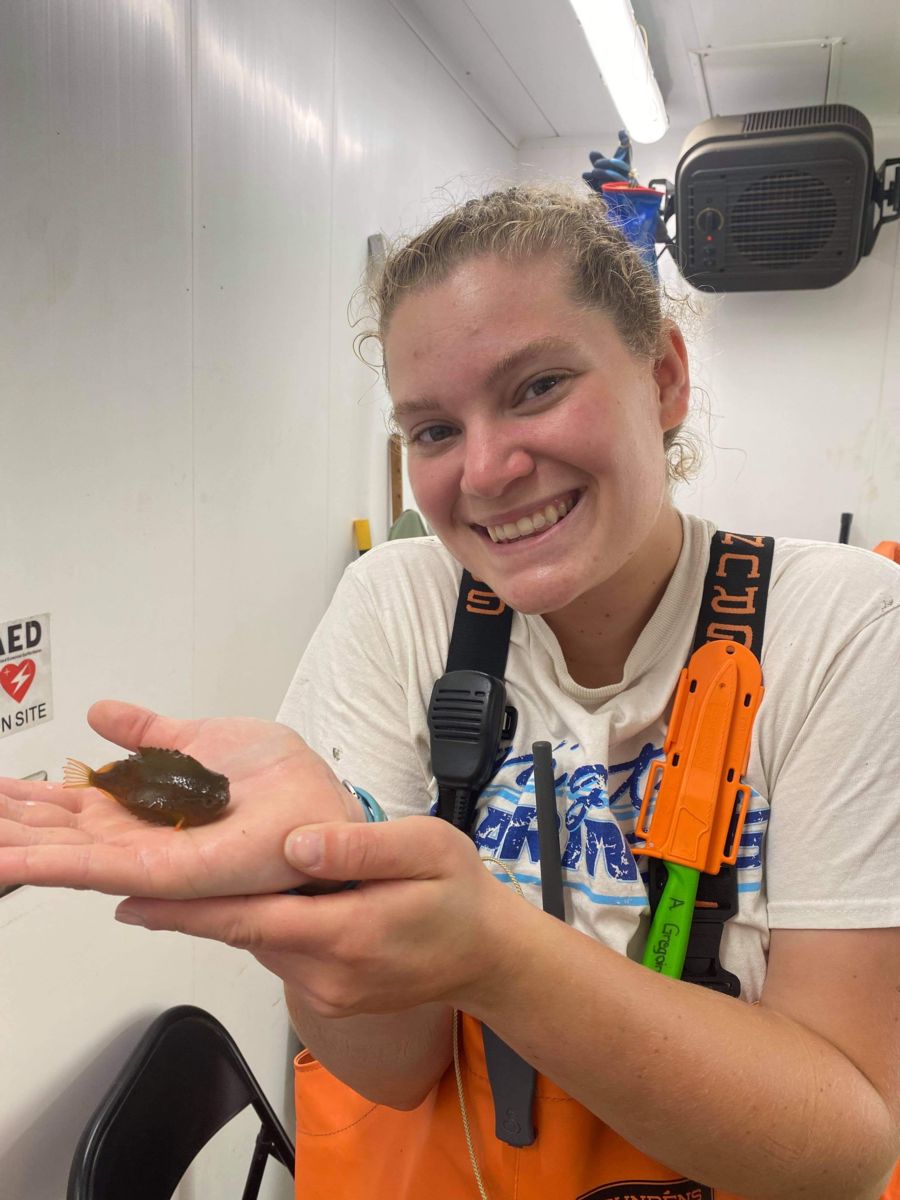
A small lump fish that was recovered during salmon treatments, Summer ’21. 

Page 2 of 2

Powered by WordPress & Theme by Anders Norén