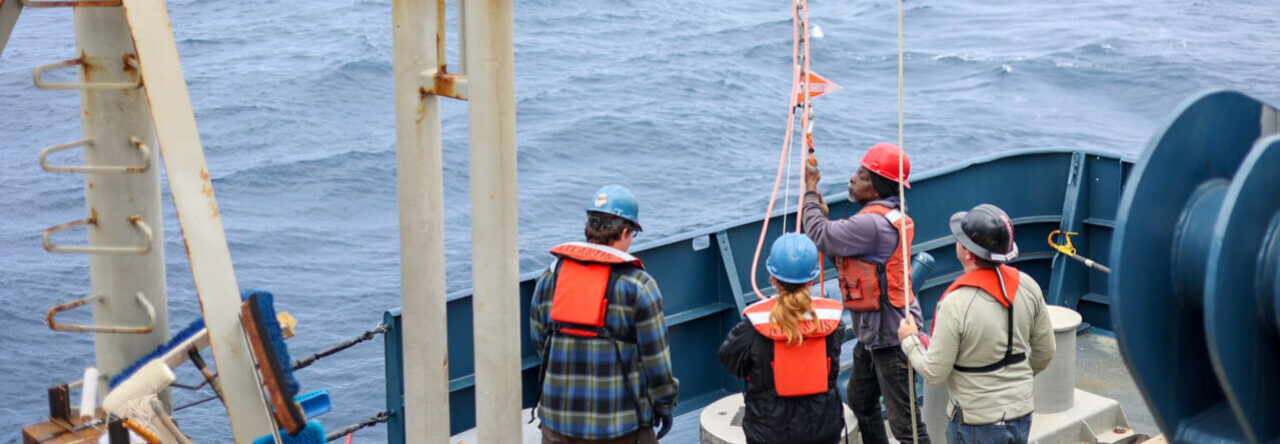
A lot of this week has been learning the basics: cables! Though cables may not be the most eye-catching blog post ever, they are an extremely important part of marine research and are essential in the proper functionality of research equipment. This week, I developed wire mapping skills using a LinkRunner AT-2000. My goal was to trace the unlabeled cables running through our main patch panel to their instruments, effectively filling the gaps in the labeling system. This took me all over the ship – bridge, electricians workshop, mainlab, ect.
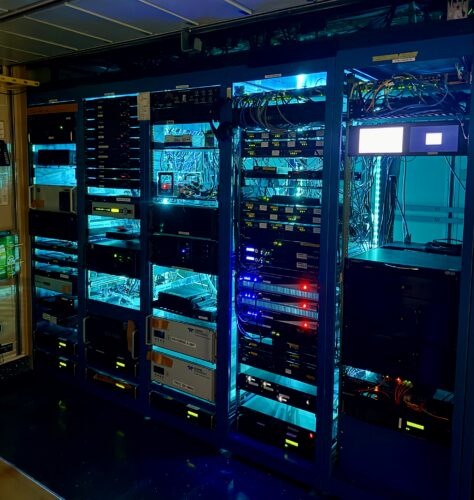
I also gained experience this week pulling and running a new cable for the OS 150 ADCP sonar system. Running a new cable is harder than it may appear – passing the cable through roxtec units designed to prevent any water penetration through bulkheads can be complicated. Additionally, I learned the importance of avoiding cable attenuation, particularly in cables transmitting sensitive data that can easily lose resolution. The Sikuliaq team accomplished replacing the OS 150 cable, running a smooth route through the ship to the transducer flat. The amount of cables onboard a research vessel can be staggering. Knowing how to map and trace their patterns really helped me put together how data is transmitted from one system to the next.
Additionally, this week I prepped the top of the centerboard for welding a new reference position mark. This required full PPE and working in a very tight environment (see photos below for PPE and a view of the workspace before wire wheeling/primer). I wire wheeled the surface of the centerboard to ensure it was smooth, and I will be adding a coat of primer next.
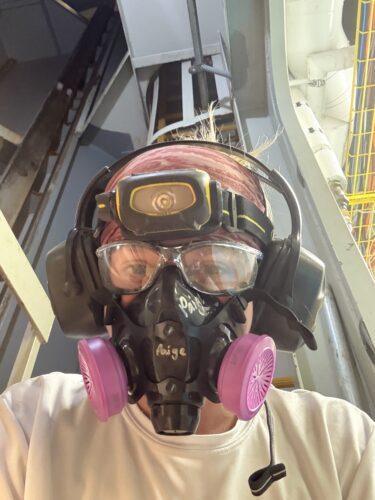
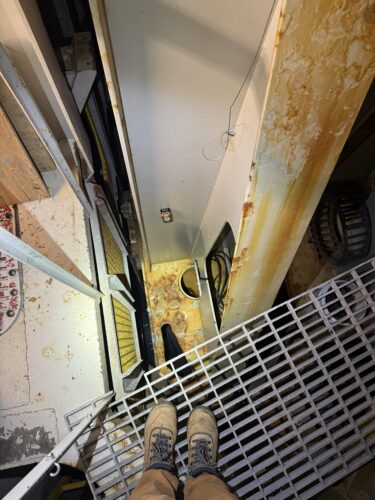
This was a challenging work environment. However, I now feel confident that I know how to properly utilize PPE and accomplish difficult tasks in tiny spaces. Wire wheeling rust away can also be very satisfying.
-Paige FitzPatrick