
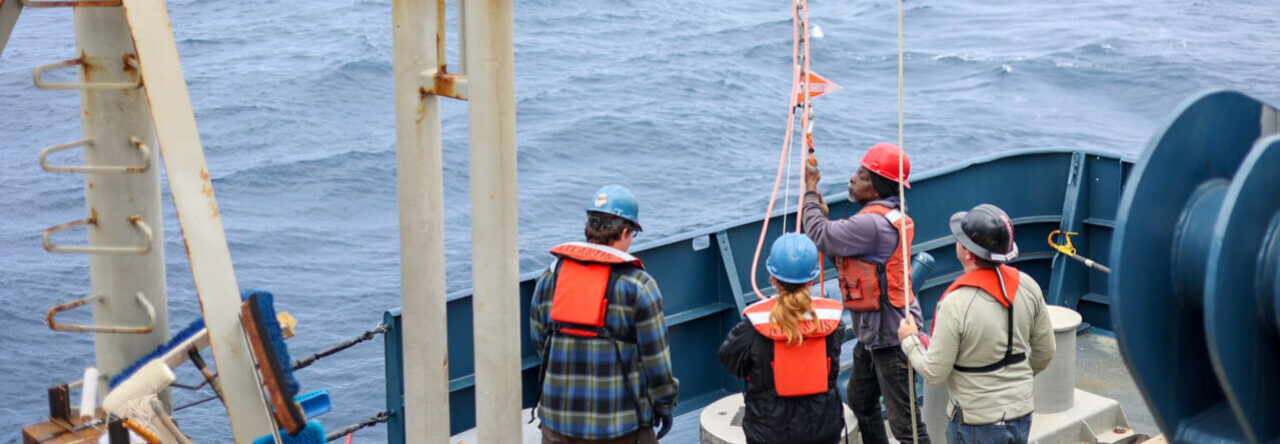
Week two onboard R/V Sikuliaq has primarily featured maintenance on the advanced system of winches. R/V Sikuliaq has an oceanographic traction winch system and two hydrographic winches to support a wide variety of scientific research expeditions. Winch systems play a critical role in oceanographic research. They are responsible for suspending heavy equipment from the ship into the depths, often carrying data directly to the laboratories onboard. This week, we unspooled the winch wires for re-lubrication and maintenance. This required a spooling system on the dock to take up slack and communicate with the winch system onboard. To prevent damage to the wires and to ensure proper wire spooling in the winch drum, tension was kept between the onshore spooling device and the ship’s winches. The many moving parts of this operation required direct and clear communication. If the onshore spooling device continued to run while the onboard winch stopped, the wire could snap. Our team was able to successfully lubricate our winch systems, ensuring proper functionality during upcoming research cruises.
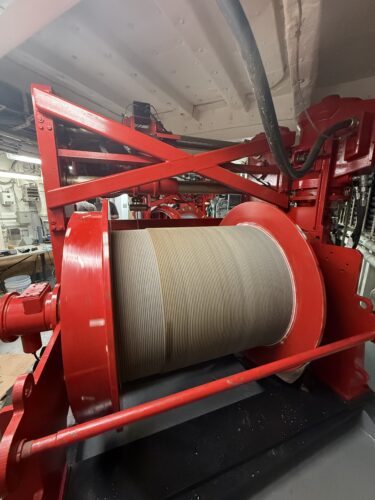
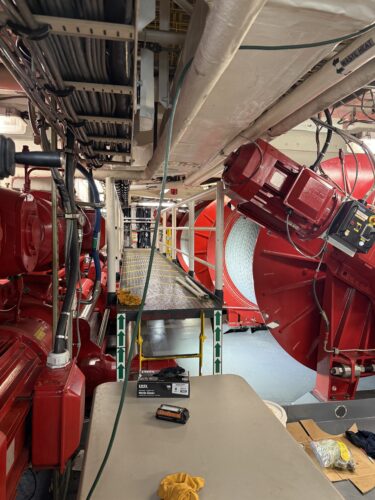
We additionally checked the integrity of the wire insulation using a megohmeter. This test applied a high voltage to the winch wire to measure the amount of leakage coming through the wire’s insulation. We tested both the winch wire and the slipring that connects the rotating winch drum to the data cable leading to the ship’s laboratories.
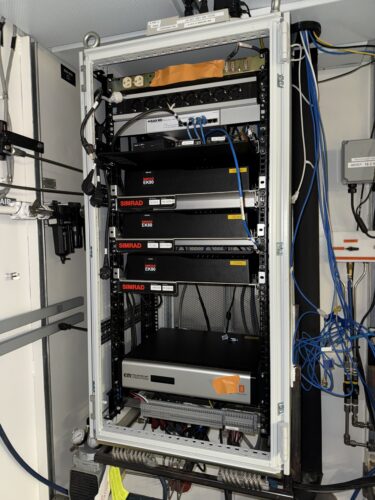
One of my additional projects this week was rearranging the aft mainlab LAN (local area network) rack.
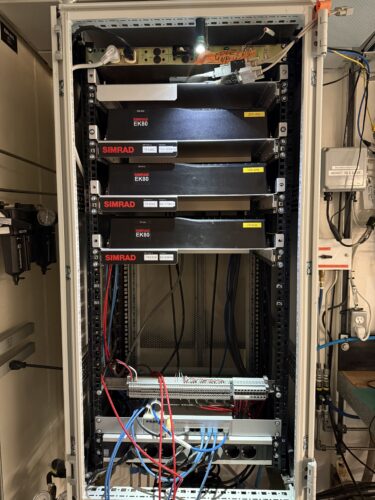
This rack houses the EK80 sonar system transceivers, shown in black. These devices transmit and receive information from the transducers located in the centerboard shoe. To rearrange this rack, I removed the transceivers, power strip, and din rail. I reinstalled the equipment with a more streamlined approach to improve equipment accessibility. Additionally, I installed a new drawer for the Raspberry Pi computers housed in this rack. This quired CAD drawing and 3D printing of a component to secure the shelf to the LAN rack.
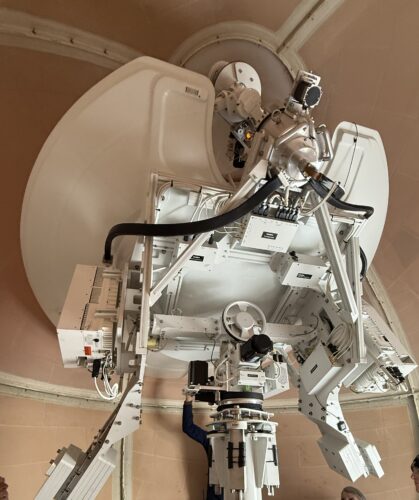
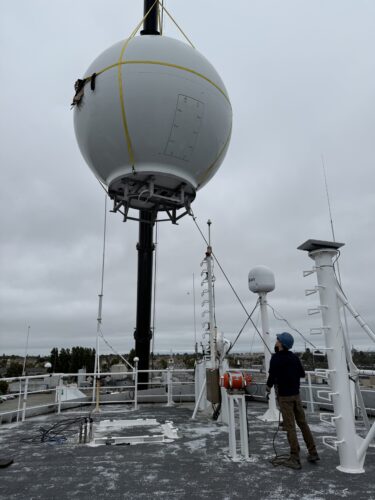
Lastly, we removed the domes! The domes formerly housed a HighSeasNet satellite communication dish. The ship is moving to a OneWeb system, utilizing a low earth orbit (LEO) satellite constellation for our redundant global internet access system.
Connecting how systems send and receive messages has been a critical learning component of this week. I have found it very interesting to see how the software interface operated at sea interacts and connects to the physical sensor units we are servicing at drydock.
-Paige FitzPatrick